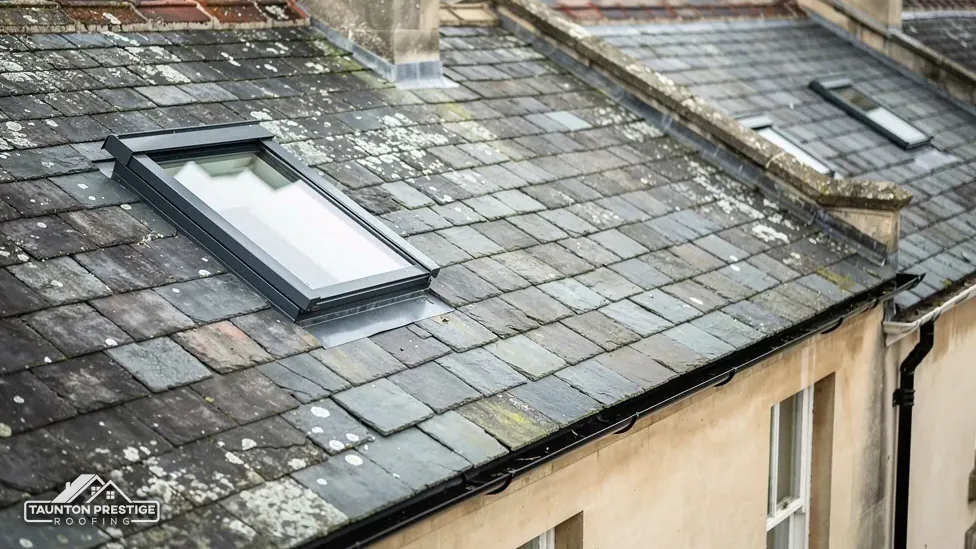
Ford, listed Grade II
Listed on 4 October 1989; re-covering it or altering its ridge goes through listed building consent.
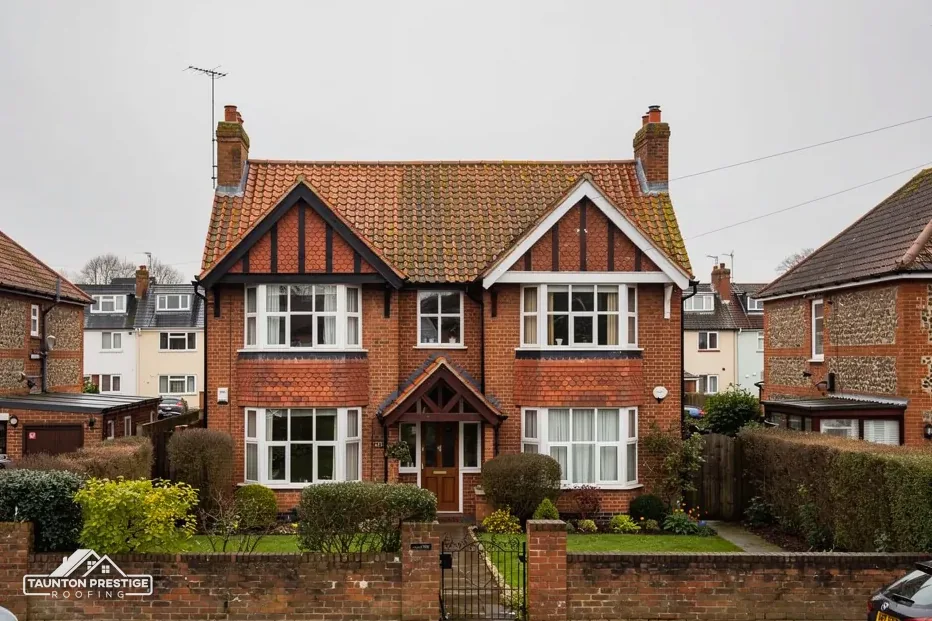
A Grade II farmhouse and ford on the edge of the Quantocks
Treble's Holford is a small hamlet in Combe Florey parish, close to the Quantock Hills National Landscape boundary, with two Grade II listed buildings at its centre.
Listed on 4 October 1989; re-covering it or altering its ridge goes through listed building consent.
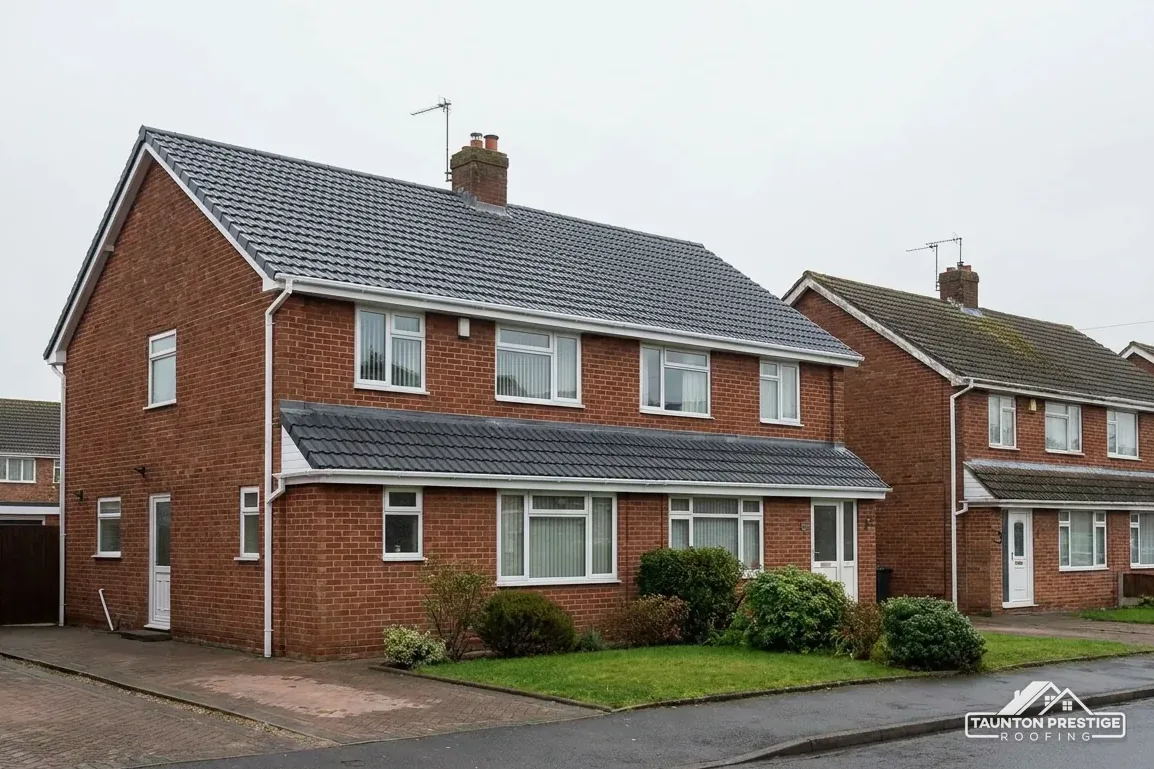
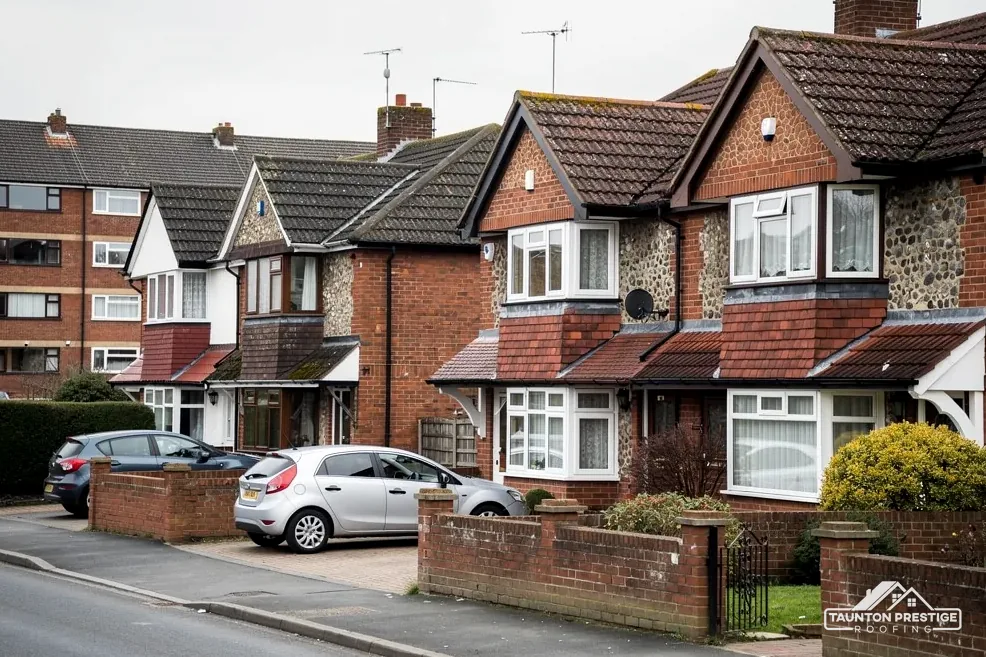
Also Grade II listed; replacing its covering is planned around the listed building consent route.
Part of the ground around the hamlet lies inside the Quantock Hills National Landscape, so each address needs checking.
Street map of Treble's Holford with Rich's Holford, West Bagborough, Eastcombe, Cothelstone marked around it, and Taunton.
Rich's Holford is the next hamlet north-west, West Bagborough is east, Eastcombe south-east and Leigh south-west.
About 7 miles north-west of Taunton, Somerset Council (unitary).
Four checks beside the Quantocks
Four checks for an older house in this hamlet, from the listing to the chimney, and the difference each one makes to the job.
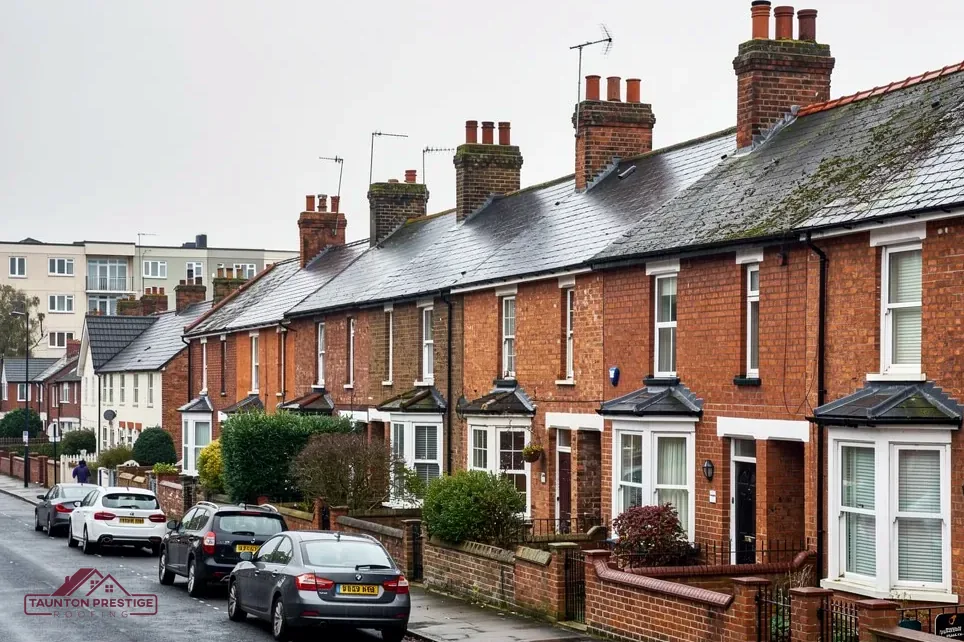
Within 500 metres of the middle of Treble's Holford there are just two list entries: Ford, listed Grade II on 4 October 1989, and Trebles Holford Farmhouse, also Grade II. A pair that small still shapes how we work, because a listed roof and an unlisted one follow different paths. First we find out which sort of roof you have. Only then do we talk about slates, tiles or timber.
It can, with the right paperwork. Any work that would alter a listed building's character needs listed building consent from Somerset Council, and a change of covering often does. Relaying the same slates or tiles to the same pattern, reusing sound pieces and adding matching ones, is the lighter job. A different material, a different ridge or a new opening in a slope is heavier. Our guide to planning permission for roof work sets out the routes, so you know what to expect before the first conversation with the council.
The national planning dataset names Combe Florey, Lydeard St Lawrence and West Bagborough as conservation areas within about 2.5 km of the hamlet. It shows none of them reaching Treble's Holford itself, but its coverage is not complete and a boundary can follow a lane or a field edge. So check your own address with Somerset Council's planning team before you settle on a new covering.
Our survey photographs each slope of your roof in turn, so any talk with the council begins with what is really up there and not with a guess made from the lane. If the house turns out not to be listed, the consent questions fall away, but the question of repair against re-cover stays, and the photos answer that one too. A phone photo from the lane is not enough for a council officer, but a set of close-ups taken from the roof is.
Look for
Treble's Holford sits at the edge of the Quantock Hills National Landscape and not in the middle of it. The planning dataset puts the hamlet's centre point outside the boundary, yet 17% of a 1.5 km square around that point lies within the boundary. That leaves some neighbouring houses covered and others not, and which group yours belongs to is the first thing to settle. If you are unsure, send us your postcode and we will check it against the mapped boundary before the survey visit.
A boundary on the map becomes a rule on the roof, so ask which side you are on.
What decides the price
AONB status came to the Quantocks in 1956, under the National Parks and Access to the Countryside Act 1949, and the name National Landscape arrived with the 2023 rename. For a roof the practical effect is narrow, and it concerns additions such as dormers more than repairs. What needs an application at your address is a question for Somerset Council's planners; the national picture is in our planning guide. Replacing a covering like for like is a separate question from any addition.
Approved Document L (2021 edition) wants 1.4 for the U-value of a roof window in an existing dwelling, or Band B for its Window Energy Rating. The 2.2 figure belongs to rooflights, which are a different product, so a supplier quoting 2.2 for a roof window is quoting the wrong row of the table. A roof window also changes the opening in the slope, and we cut it in with the surrounding flashing kit and a fresh lining. Our roof window installation page walks through the steps. Tell us at the start which slope you have in mind, because the planners will want to know that too.
If your house sits near the line, ask Somerset Council's planning team before you commit to a dormer or a row of roof windows.
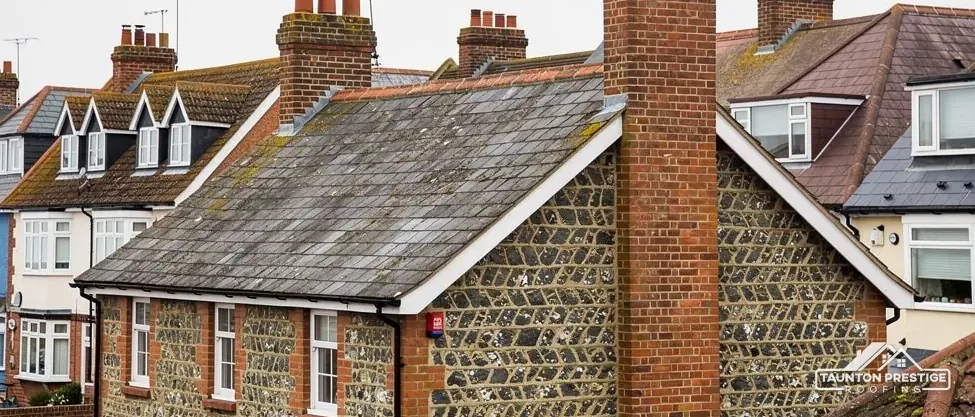
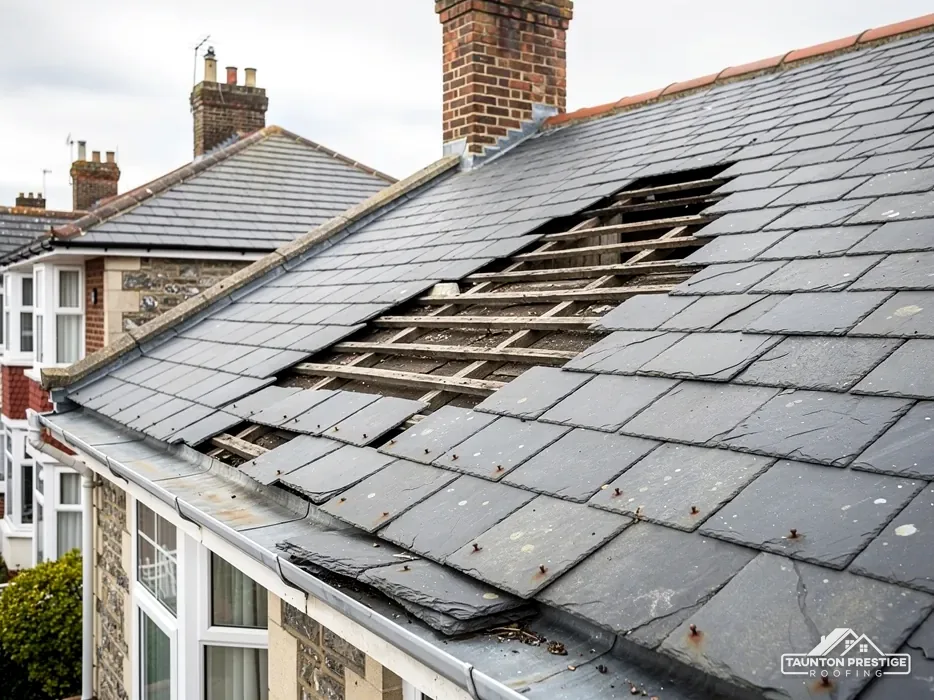
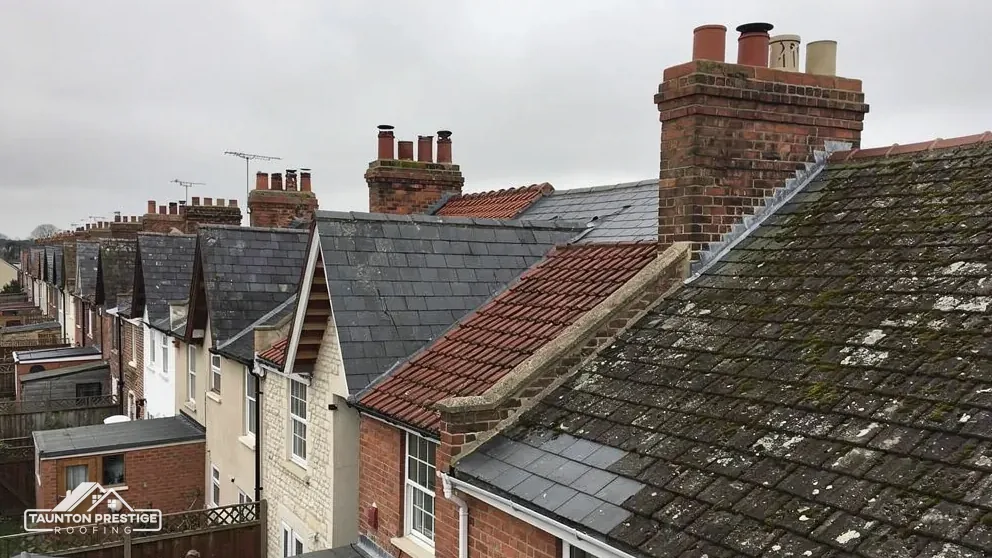
Whatever covers an older farmhouse, trouble usually announces itself with a single piece that has lost its place: a slate hanging low, a hole in a course, or a chip of slate on the path below. Every slate or tile is carried by a batten, one of the narrow timbers nailed across the rafters. Underneath lies the underlay, a membrane catching any water the covering lets through. When a fixing gives way, the piece slides and the underlay is left open to the sky.
What decides the price
Often that is the whole point of a re-cover. Battens that have soaked up years of damp go soft, and nails pull out of soft timber. If we find them rotten at the survey, we tell you, because laying new slates on bad battens only brings the next slip forward. We keep any sound slates that can be reused and mark the ones to replace.
BS 5534 indicates a minimum pitch of 20 degrees for natural slate, so a shallow slope on an extension or lean-to may call for another covering than the main roof. A sound slate is worth keeping wherever its fixings allow, which is why we sort the old ones into reusable and broken before any new material is ordered.
A valley is the inward angle where two slopes meet, and it carries the rain from both. It is lined with lead or a purpose-made tray; a lining that has lifted or split shows up as a brown trail on the ceiling below. We look at valleys on every survey, because they fail quietly.
One loose slate can often be clipped back or exchanged for a match. A run of failures along a course is another matter, and the photographs show you when a slope has reached that point. Sound slates that come off are stacked and counted, so the survey photos and the finished roof can be compared slate for slate.
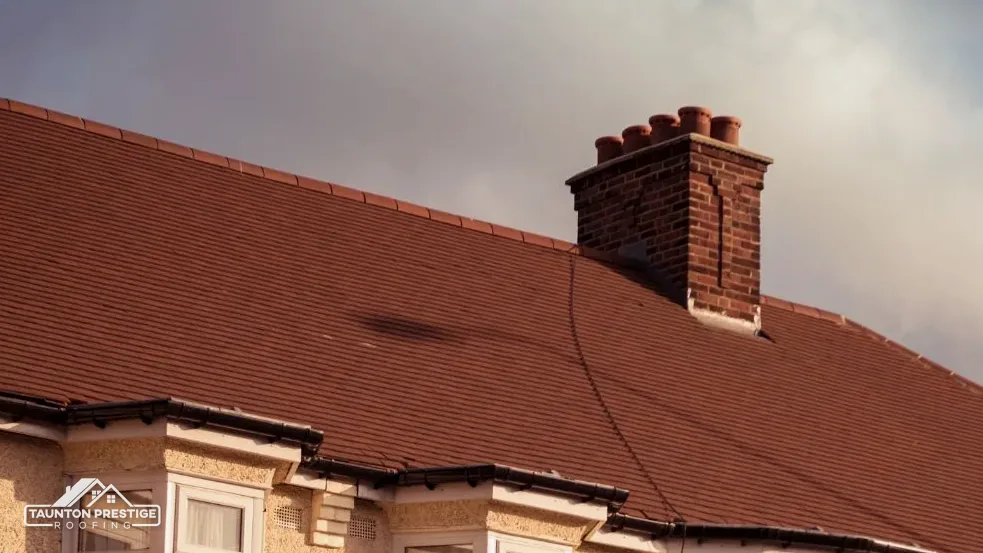
On an old house the chimney stack is often the tallest and most exposed part of the roof. The pots sit in flaunching, the mortar collar that holds them and sheds rain, and the stack meets the slope through lead flashing. Cracked flaunching and loose lead let water in quietly, and a damp patch spreading across the chimney breast indoors is usually where it shows first. Our chimney repairs page covers each part of the stack.
We go over every slope, the ridge and hips, the valleys, the chimney, the gutters and the eaves, and we photograph what we find so that you can see it on your own screen. Each slope is marked sound, repairable or due for a re-cover. Eaves and loft spaces get a look too, because old farmhouses can shelter wildlife, and if we see signs we stop and tell you what to do next before anything is disturbed.
Re-roofing normally needs no building control application when under 25 per cent of the building envelope and under 50 per cent of the roof are affected, which is the Planning Portal's test. Once the new covering adds 15 per cent or more to the weight, Building Regulations approval and a structural check apply. In Treble's Holford that means Somerset Building Control, on 0300 303 7790.
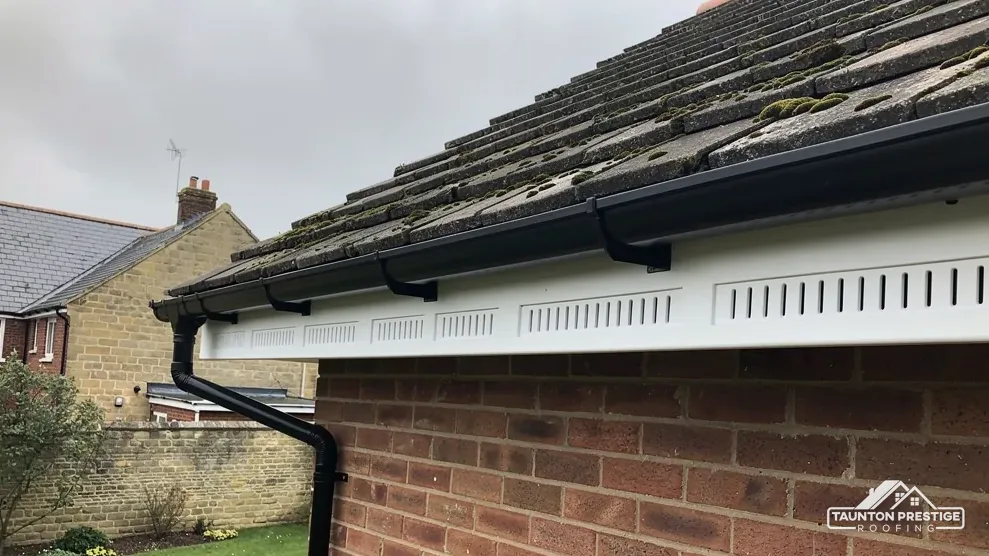
Gutters and the fascia board that carries them get the same attention, since a roof that sheds water well depends on both. Send us your Treble's Holford address and the trouble you have noticed, and we arrange a survey. After it you receive photos of your roof and the written price.
Walked the roof?
When you have read the checks, we walk the roof and show you the photos.
Often it can. A slipped slate or tile is refixed or swapped for a match, and a localised patch of failed battens is opened up and renewed. Stripping the whole slope is reserved for cases where fixings are failing across it. Listed building consent is needed only if the repair would alter the building's character, so check with Somerset Council first.
They apply to land inside the line, which makes your own address the deciding factor. The Treble's Holford centre point is outside it, though part of the surrounding ground is within. Before planning any addition to the roof, ask Somerset Council's planning team to confirm whether your address falls inside the boundary and what that means for the work.
It can be. Water gets into a stack through cracked flaunching, split lead flashing or open pointing, then runs down inside the breast. A gutter overflowing nearby can do the same. We start at the top of the stack, photograph each junction, and tell you where the damp is entering before anything is quoted.
Press them where the slate or tile is lifted. Battens that crumble, snap or hold nails loosely have had their day, and new covering on top will not stay put. Sound ones can stay. We lift a few pieces at the survey, photograph the timber for you, and tell you which case you have.
Give the address and the symptoms, and a date for looking over your Treble's Holford roof will be agreed.