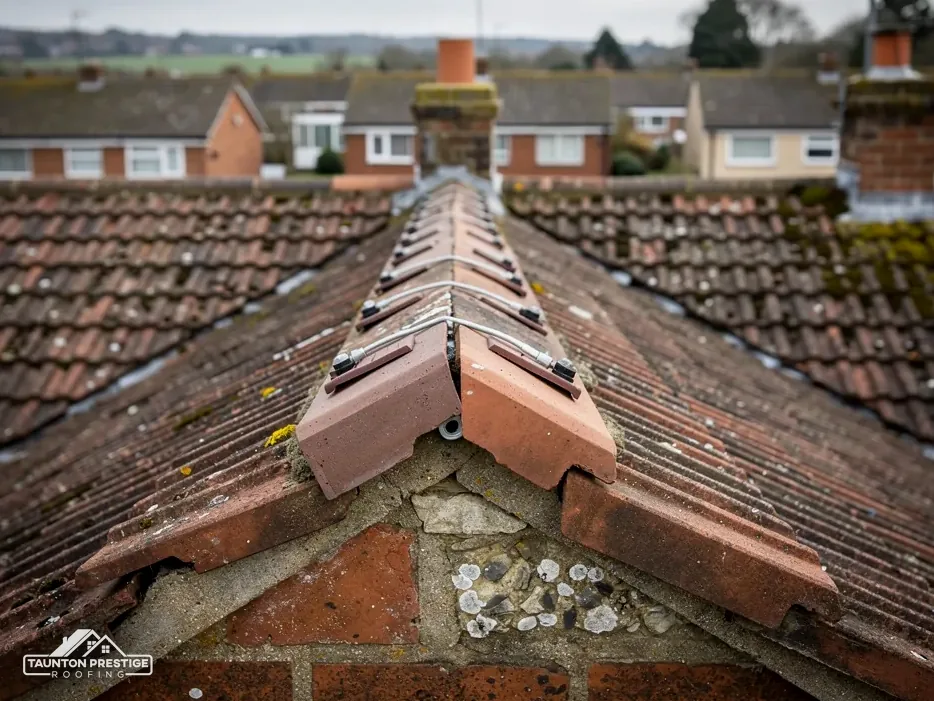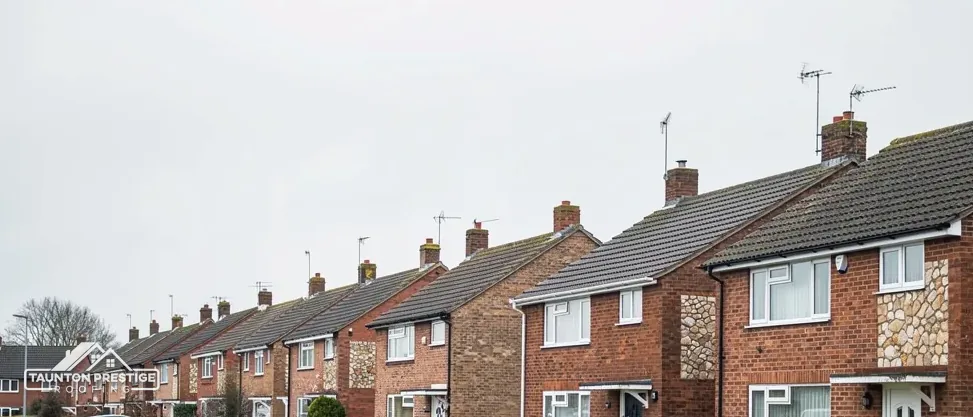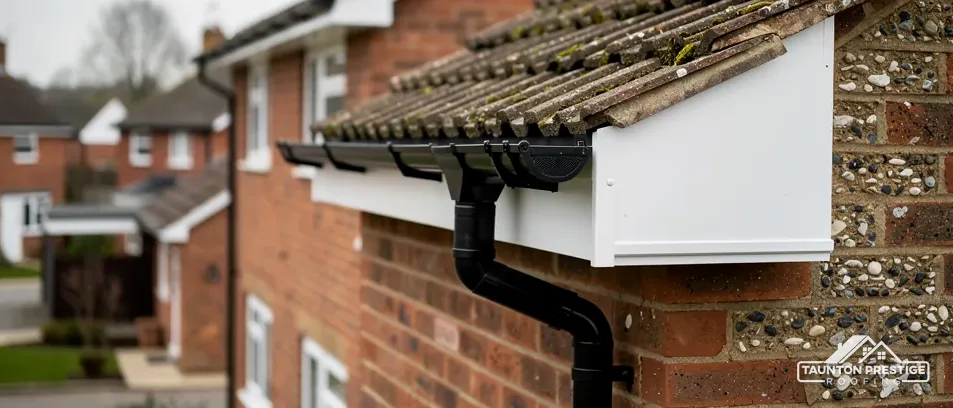
A day out in a historic town usually means looking up at the buildings, and a roofer cannot help looking higher still. Slate, clay tile, lead and stone all show their age in plain view, and much of the work that keeps them there goes unnoticed. This post is a loose walk through twelve places in and around Taunton with real history behind them, plus a note on the roofs and the rules that look after them.
Taunton is a town, and the county town of Somerset, with Somerset Council as its single council since 1 April 2023. Most of our twelve places are conservation areas that the council has designated, so their names and dates come straight from its published table. The rest are Hestercombe, a heritage railway and a canal, each read from its own site. Opening times and prices are missing on purpose, because those change and the places themselves are the right source.
Along the way you will see why a roof in a protected place needs more thought than a roof on an ordinary semi: which consent applies, who gives it, and why a like-for-like repair is rarely as simple as it sounds. For a roof of your own, our Taunton roofing team starts with a survey.
Castle Green and Bath Place
Start in the middle. The council lists Taunton, Castle Green and Bath Place as a conservation area, designated on 15 January 1975 and revised on 26 April 2007. A conservation area is a street or district whose character the council has judged worth keeping, and that judgement shapes what an owner may do to the outside of a building.
What does a conservation area mean for a roof?
Less than many people fear, and more than they expect. The national rules on re-roofing a house, planning permission for roof windows and dormers, and the extra checks that apply in protected areas are set out on our page about planning permission for roof work. Our conservation areas in Taunton page lists the council's designations. A shop or an office follows different rules from a house, and the council's planning officers can confirm which apply before any work is priced. Before any scaffold goes up on a busy street, it is also worth asking the neighbours, because a hoist or a skip can take up half a pavement.
Why does the old covering matter so much?
In streets like these, the roof is part of what was protected. Swap a slate roof for a different slate, a different laying pattern or a thinner tile, and the view from the street changes. The council notices. Our survey records what covers the roof now, with photos, so the written price follows what is really there.
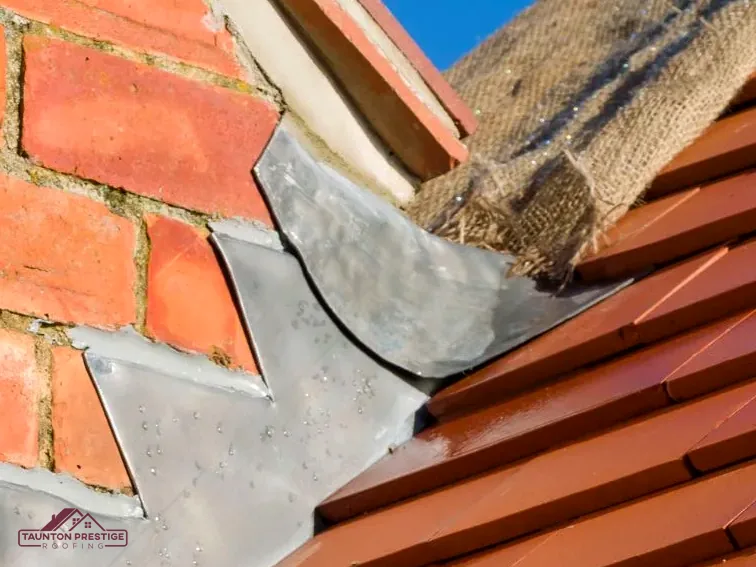
Lead matters here too. Flashings and gutters in lead can last for over 80 years, so repair usually beats replacement, and the repair is dressed to move with the weather instead of splitting.
St Mary and St James
Next, the council lists Taunton, St Mary and St James as a conservation area, designated on 15 January 1975 and revised on 26 April 2007. The name points at the town's two medieval parish churches, and churches are where roof consent gets interesting.
Who gives consent for a church roof?
The answer turns on the building, not the roof. Churches in use belonging to the Church of England follow the faculty system. Some other denominations run their own approval schemes. Listed Quaker and Unitarian buildings, redundant churches and converted chapels need listed building consent from the council instead. Scheduled monuments sit in a class of their own, with consent given by the Secretary of State and never by the council. Our page on church roof repair consent sets out the full list.
What does that look like from the pavement?
Scaffold, usually, and for months. Planning for a tower or nave roof starts long before the first slate comes off, and the gutters, lead valleys and parapets are often dealt with in the same visit.
As a visitor, you can read a lot from the ground. Look at where the roof meets the tower, at the lead dressed over the joints, and at how the gutters are carried clear of the walls. If you own an older chapel or meeting house, send us the address and the survey will report back on what the roof is actually doing.
Park Street, The Crescent and the streets beyond
Walk out from the centre and the Georgian and Victorian streets begin. The council lists Taunton, Park Street and Wellington Road as a conservation area, designated on 15 January 1975 and revised on 12 November 1998. The Crescent and Staplegrove Road share those dates, and the council also lists an Article 4 direction for Staplegrove Road, confirmed in 1977. Two more areas sit nearby: Mount Street and Vivary Park, also on the council's table, and Haines Hill and Trull Road, which came in on 14 March 2023 and is the newest of the group.
What happens when a terrace needs re-roofing?
Terraces share slopes, valleys and walls, so one roof job touches the neighbour's. The roofline is also the first thing the street sees. We photograph the slopes, valleys and chimney flashings before pricing, so everyone agrees what is being replaced. Where work touches a shared wall, a party wall surveyor is the person to ask, and our page on party wall notices for roof work explains when a notice is needed.
Do the chimneys matter too?
Very much. A terrace's stacks are part of the street scene, and they are often where a leak begins, through a failed flashing or a worn mortar bed on top. Repairs follow the consent route for the house. Our page on listed building roof consent covers the extra step when a house is listed.
The council lists an Article 4 direction for the Staplegrove Road area, so check with the planning team on its scope before work starts there.
Hestercombe House and Gardens
Outside the town, Hestercombe is the best-known historic place. Its own site describes a historic house and gardens, around 50 acres of grounds and three centuries of garden design. The council lists Hestercombe as a conservation area too, designated on 12 November 1998.
What does an estate roof ask of a roofer?
Big old houses mix coverings. The main slopes may be slate or clay, with lead lining the valleys and parapet gutters, and flat sections running between the gables, and a run of chimneys that each need their own flashing. The skill is treating every part by its own material. Lead is graded by thickness, with a code number for each weight, so a repair uses the right grade and leaves room for the metal to move with the temperature.
Why does patient repair beat a quick patch?
Because the cheap-looking fix is not always the right one. A smear of sealant over a cracked tile may hold for a season and then trap water. Reusing sound original slates, matching the size and colour of replacements, and fixing them with nails that will not rust all take time, and they are the reason old roofs are still standing.
If you visit, look at where the roof lines meet the chimneys and gables. Those junctions are where water is shed or caught. The estate's own site has the current visiting information, so check it before you plan a trip.
The West Somerset Railway
The West Somerset Railway describes itself as about 20 miles of heritage railway through Somerset countryside and coast, a country branch line of the old Great Western Railway. It runs from Bishops Lydeard, a short way from Taunton, to Minehead, calling at Crowcombe Heathfield, Stogumber, Williton, Watchet, Washford, Blue Anchor and Dunster.
What do station roofs have in common?
Railway buildings were built to a pattern and then repaired for generations. Canopies, waiting rooms and goods sheds each carry their own roof, and each shows the usual weak points: the join between a canopy and the wall, valley gutters hidden behind a parapet, and the bargeboards at the gable. Bishops Lydeard also has its own conservation area, designated on 5 February 1975 and revised on 25 September 1993.
Who looks after a roof like that?
Its owner, and a listed building needs consent when work alters its character. If you own or manage a small business or farm building with a similar roof, our commercial roofing page explains how we survey one.
For a day out, the railway is a simple way to see rural Somerset roofs from a carriage window. Watch the slate, clay and tile on cottages and farm buildings as the line passes, and notice how pitch and colour change from village to village. The railway's own site has its timetable and visitor guidance.
The canal and the villages around Taunton
The Canal & River Trust says the Bridgwater and Taunton Canal runs for a little over 14 miles around the base of the Quantock Hills. It opened in 1827, and its route is mostly rural. At the Bridgwater end sits Somerset's old brick and tile country: a local heritage leaflet records that about 1850 there were 16 brick and tile works within 2 miles of Bridgwater Bridge, with the Double Roman tile added to the list of products later on.
What is a Double Roman tile?
A wide interlocking tile with a two-roll profile. Concrete versions have a 22.5 degree minimum pitch according to Marley, though the product data sheet has the final word. Matching an old clay one on a cottage is among the harder repairs, because the profile, the colour and the thickness all have to sit with the tiles around it. The survey comes first, and sound salvaged tiles are kept wherever possible, since a mismatch leaves a gap water will find.
Which villages carry old roofs?
The council lists conservation areas at Bishops Hull (designated 13 July 1977), North Curry (5 January 1970), Milverton and Wiveliscombe (5 February 1975) and Kingston St Mary (16 April 1975). Planning questions go to Somerset Council's planning team.
If your own roof stands in one of these places, send us the address. We will tell you what the survey shows and which consent route to check, and the written price follows with photos of your own roof.
Old roofs and protected places
Can I re-roof a house in a Taunton conservation area without a planning application?
Putting the same material back on a house roof is normally permitted development, but a conservation area rules out permitted development dormers, and an Article 4 direction can matter too. Somerset Council lists directions for several places, so put your address to the planning officers before you plan any work.
Who approves a roof repair on a Church of England church?
A church in use goes through the faculty system rather than the council's listed building consent. Roman Catholic, Methodist and URC churches run their own systems, while a closed or converted building comes under the council. Outside works can still need planning permission, so check both before work starts.
Is a Double Roman tile the same as a pantile?
No. A pantile has one curved profile, while a Double Roman has two rolls. Both come in clay and concrete, and each has its own minimum pitch on the maker's data sheet, which is the document to check before laying either type.
More on this subject: Roofers in Taunton