When a slate slips in a gale or a ridge tile lets go, priority one is keeping the rain off your ceilings. That priority is a temporary roof repair, often called a make-safe. It buys time. It does not mend the fault, and it works best when everyone is clear about which of the two is being paid for.
This guide sets out what a temporary repair involves, from a sheet of tarpaulin battened down over a damaged slope to a quick patch under the covering. It explains why climbing up to do it yourself in wind and rain is a poor bet, how long a make-safe can be expected to hold, and what to photograph and keep if you are going to tell your insurer. It sits inside our wider emergency roof repairs work around Taunton and Somerset, and it pairs with the page on finding the source of a roof leak.
Make-safe or permanent repair: what is the difference?
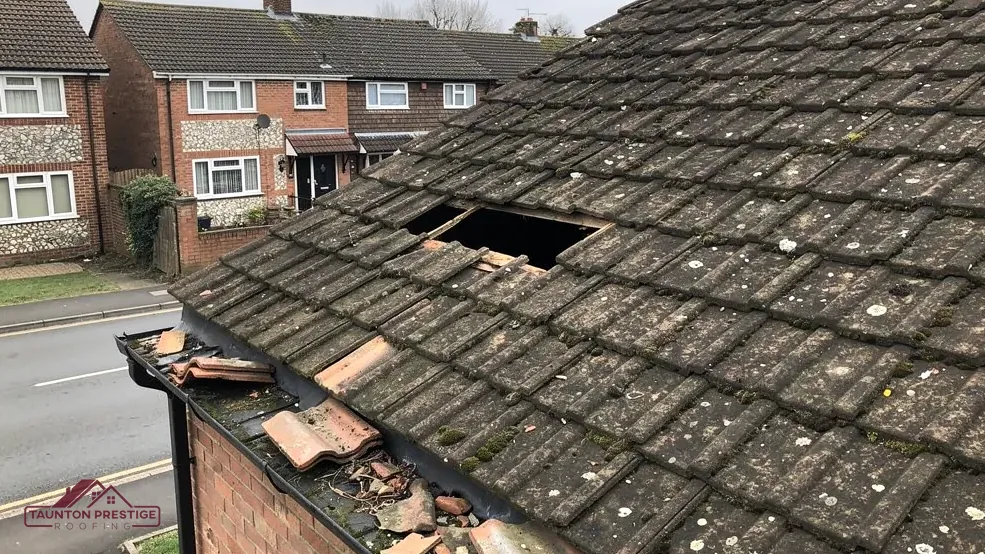
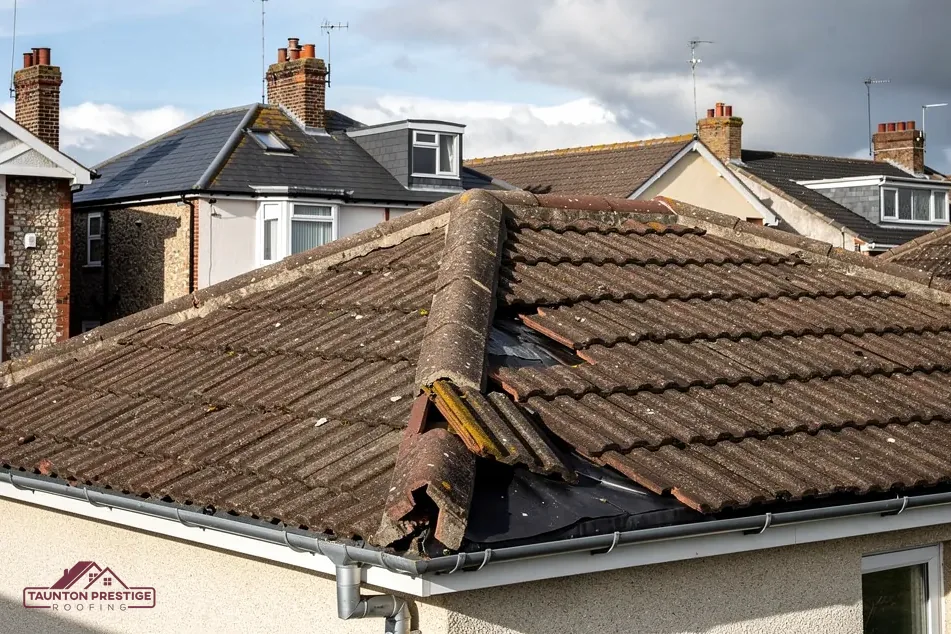
A make-safe has one aim: to stop the building getting wetter than it already is. It might be a tarpaulin over a stripped patch of slope, a sheet of board fixed over a hole, a handful of slates wedged back into their courses, or a bead of sealant across a split in a flat roof. None of these restores the roof. They hold a line while the weather passes and the right materials and the right people can get to the job.
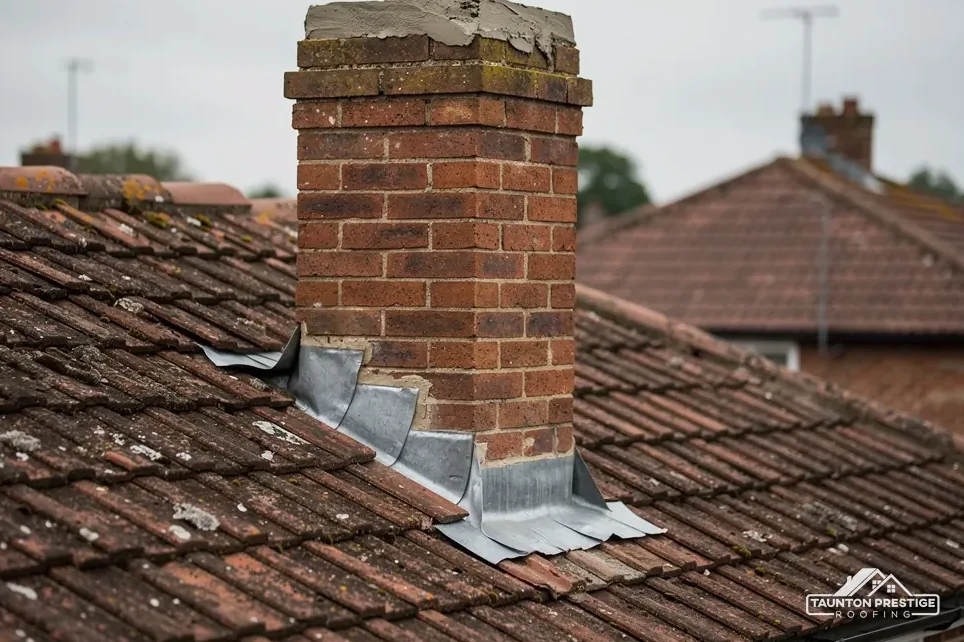
A permanent repair deals with the cause. That means replacing the broken slate or tile, renewing the nailed fixings behind it, re-bedding a ridge tile or fitting new flashing, the metal strip that seals the joint where the slope meets a wall or chimney. It is done once the roof is dry enough to work on and the fault has been properly found.
Why do the two get muddled?
Because a good temporary fix can look finished. A tarp that is tight and neat may keep a bedroom dry for a good while, and the pressure to do nothing more is strong. The trouble is that the damaged section underneath is still open, the timber around it is still taking in moisture, and the next gale tests the cover again. Treat a make-safe as the start of the repair, not the end of it.
Where the damage is small, one visit may do both jobs: the roofer finds the slipped slate, fixes a replacement and the temporary stage never arises. Where the damage is wide, say after a tree limb has gone through a slope or a run of tiles has gone in a storm, covering first and repairing later is the sensible order.
Should you put a tarpaulin on the roof yourself?
For almost every house, the answer is no, and the reasons are about the person more than the roof. Pitched roofs are steep, wet slate is slick, and a tarpaulin in a gusty wind behaves like a sail. Nobody wants to be at the eaves of a two-storey house holding one when it catches. Falls from roofs and ladders are a well-known cause of serious injury in building work, and the people doing this every week still use scaffold, harnesses or edge protection to stay safe.
What can you do from the ground instead?
Quite a lot, and all of it useful to a roofer when they arrive.
- Move belongings, rugs and electrical items out of the way of any drip.
- Put a bucket under the leak and a towel in the bucket to stop the splashing.
- If a ceiling is bulging with water, make a small hole at its lowest point to let the water out into a bucket, standing clear of the bulge as you do.
- Take pictures of the slope from the garden or the pavement, and of the stains inside, with the date set on your phone.
- Keep lights and sockets near the wet area switched off until it has dried.
Our page on doing roof repairs yourself covers the small jobs that really can be done from a firm footing and the ones that cannot.
If you have a flat roof you can safely see from a window or a low step, or a single-storey extension, a sheet weighted at the edges may be tempting. Even there, hold back in wet or windy conditions. Water collects under a loose cover and a sheet blown free can land in a neighbour's garden or on a passer-by.
How is a tarpaulin fixed to a roof properly?
When a roofer covers a slope, the method matters more than the size of the sheet. A tarp that is simply thrown over the ridge and weighted with bricks will flap, chafe through and let water in underneath. The aim is a tight, shaped cover that sheds water down the slope and out over the gutter, not into it from behind.
- The area is checked from the ground and from safe access first, so the roofer knows what has come loose and what is still sound.
- Loose slates, tiles and debris are removed or secured, so nothing slides off in the wind.
- The sheet is laid from the ridge downwards, extending well past the damaged area on every side and over the ridge itself, so rain cannot run beneath its upper edge.
- Timber battens are laid along the edges and nailed or screwed through the sheet into the rafters or the existing battens, the sloping timbers and cross-laid strips that carry the covering.
- The lower edge is kept above the gutter line and tied or battened so wind cannot get beneath it.
Does fixing the cover damage the roof?
It can, if it is done carelessly. Nailing straight through slate leaves holes and cracks, and screws driven into old, soft battens pull out in the first strong gust. A careful make-safe uses the existing fixings where it can, fixes into sound timber, and keeps the number of new holes low. Those fixings are removed when the permanent repair goes in, so the next stage starts with a clean slope.
Where the covering is too fragile to carry anyone, as with asbestos-cement sheets or old brittle slate, access is arranged with boards or a platform before anyone puts weight on it.
Other temporary fixes, from the loft and from above
A tarpaulin is the best-known make-safe, but it is not the only one, and sometimes it is not the best.
What can be done from inside the loft?
A leak that is slow, local and not due to a missing covering can sometimes be slowed from the inside. Sheeting is laid over insulation and under the drip, a tray or bowl takes the water, and wet insulation is lifted clear so it does not soak into the ceiling below. This does nothing for the roof. It protects the rooms underneath and gives a roofer a dry place to follow the water to where it gets in. Where the loft is boarded or used for storage, boxes are moved away from the wet area first.
What suits a flat roof?
A split in a flat roof or a lifted seam can often be sealed with a repair patch suited to the membrane, a few lengths of tape or a local cold-applied coating, as long as the surface is dry and clean enough to take it. This is a stopgap, not a cure. On a felt roof, the patch covers a blister or a crack for a time. On an EPDM or GRP roof, the correct patch depends on the material, since the wrong product does not bond. Our page on flat roofing sets out how each covering is repaired for good.
What about a slipped ridge tile or a single missing slate?
These are often not temporary jobs at all. A roofer with a ladder, a replacement slate and a few fixings can sometimes put things right during the visit. Where the right slate or tile is not to hand, a temporary cover or a loose-laid substitute goes on and the matching piece is ordered. This is the case with old clay and slate, where matching takes longer than finding a modern lookalike.
How long a temporary fix lasts
There is no honest single answer, because the answer depends on the weather that follows, the way the cover is fixed, and the state of the roof around it. A well-fixed tarpaulin over a small area in a sheltered spot can hold through a run of ordinary weather. The same sheet on an exposed ridge in an autumn gale may not. The Somerset Levels and the Quantock and Blackdown Hills bear the brunt of wind-driven rain, so a make-safe there is tested harder than one in a sheltered Taunton street.
What shortens the life of a make-safe?
- Sunshine and wind wear out thin plastic sheeting, and fixings loosen as it flaps.
- Water ponds in sags and finds the fixing holes.
- Tarp edges lift where a gap has been left at the ridge or the verge, where the slope finishes against the gable wall.
- Soft or rotten battens under the cover will not hold a screw.
Plan for the cover to be checked after any strong wind and to be replaced by a proper repair as soon as the roof is dry enough to work on. Leaving it for months turns a small repair into a bigger one: wet timber rots, insulation loses its value and stains turn into damp and mould on the ceiling below.
Ask the roofer what the temporary measure is meant to cope with, and when the permanent repair is planned, so the make-safe has an end date and not just a start.
Insurance, photos and what a make-safe costs
If you plan to claim on your buildings insurance, tell the insurer first. The plain advice from structural engineers and consumer groups is to have a temporary repair made so the house is no longer exposed, hold on to each receipt, and take pictures of the damage, since pictures are the visual evidence an insurer looks for. Take pictures before and after the temporary work, and note the date and the weather. Your insurer decides whether a claim succeeds; a roofer cannot promise it will. Our page on home insurance and a leaking roof goes through the steps. If a complaint ever needs to go further, the Financial Ombudsman Service deals with insurance disputes.
What does a temporary repair cost?
On emergency work, MyJobQuote (Oct 2026) puts call-out charges at between £150 and £300 as a typical UK range, and says storm repairs run to £1,200 or more. Those are national figures, and your own price depends on the height of the roof, how much needs covering, whether scaffold or other access is needed, and what the survey finds once the cover is off.
Where you have asked for an urgent repair visit yourself, reg 28 of the Consumer Contracts Regulations removes the 14-day cancellation period that otherwise follows a contract signed at home. A re-roof planned after a survey is a separate matter, so ask what has been agreed and get it in writing.
Water coming in gets stopped before anything else is discussed. After that you receive photos of the fault and a written total for the lasting repair.
Temporary repair questions
How do you do a temporary roof repair?
A roofer secures loose slates and tiles, then fixes a tarpaulin or board over the opening, running it past the damage on every side and over the ridge so rain cannot get under its top edge. Battens hold the edges down. Indoors, a bucket and a tray protect the rooms below while this is done.
Is it safe to fix a tarpaulin over the roof yourself?
Not in wind or rain. A wet pitched roof is slippery and a loose sheet acts like a sail, which makes a fall a real risk. From the ground you can move belongings, catch drips, photograph the damage and call a roofer, who has the access and edge protection to fit a cover safely.
Will a temporary repair hold for long?
It holds as long as the weather, the fixings and the timber beneath allow, so there is no single figure. A sheltered, well-battened cover can see out ordinary weather, while an exposed ridge may lose one in a gale. Have it checked after strong winds and book the permanent repair soon.
More on this subject: Emergency and general roof repairs in Taunton