Concrete tiles
Scraped and brushed, then treated; a worn face cannot be restored.
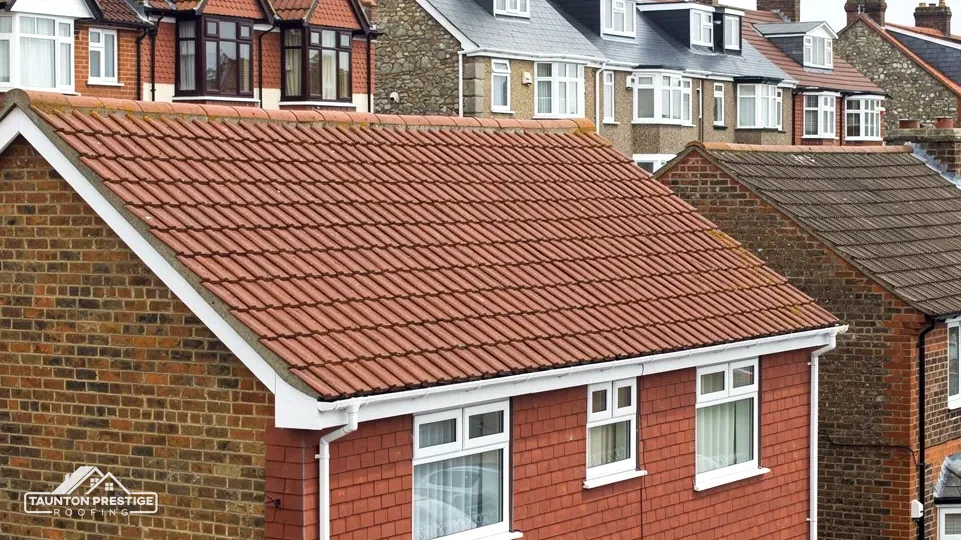
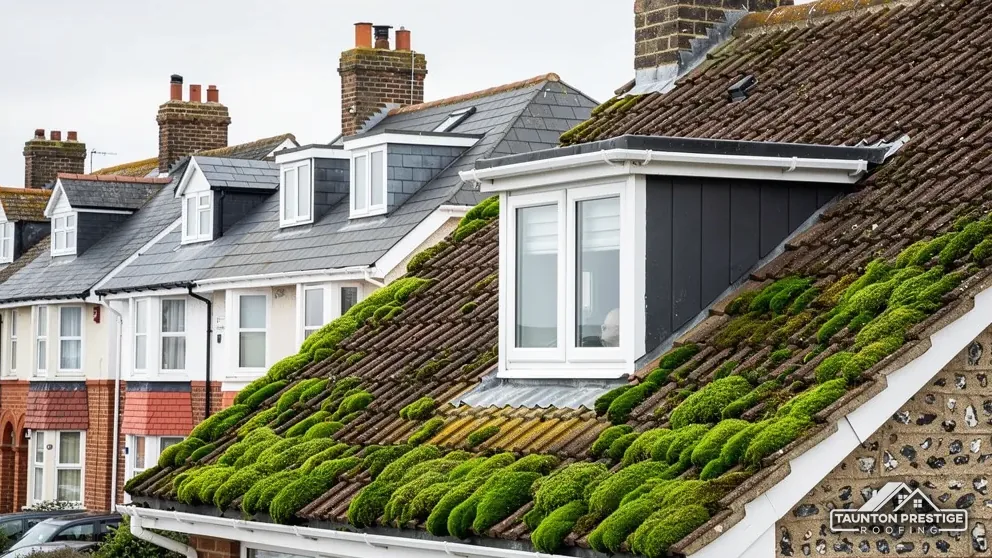
Moss lifted by hand, never blasted off with a jet.
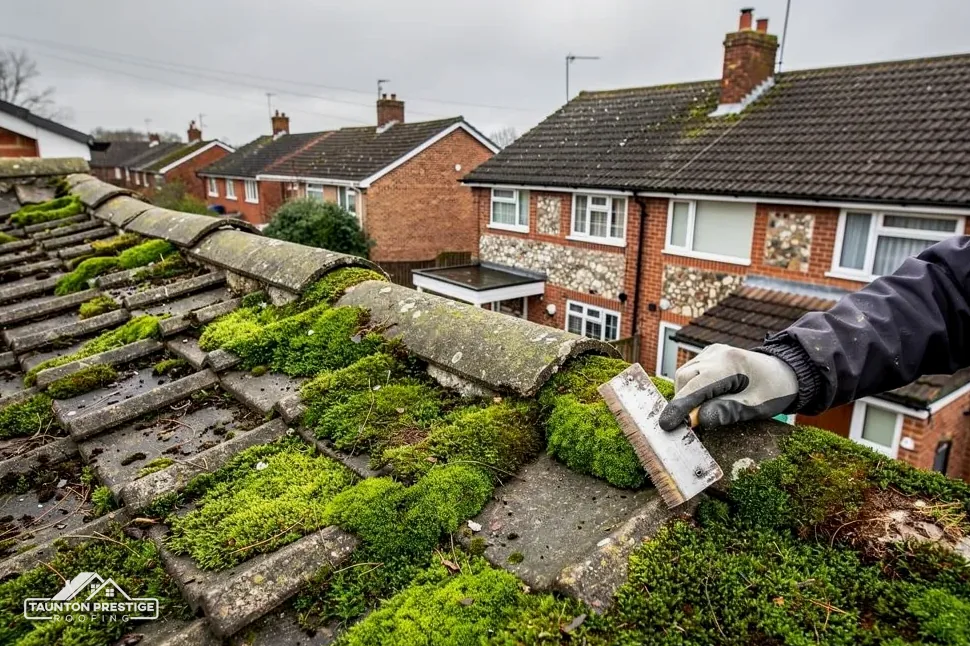
We scrape the moss off by hand, treat the slopes with a biocide, clear the gutters and check every tile and slate while we are up there.
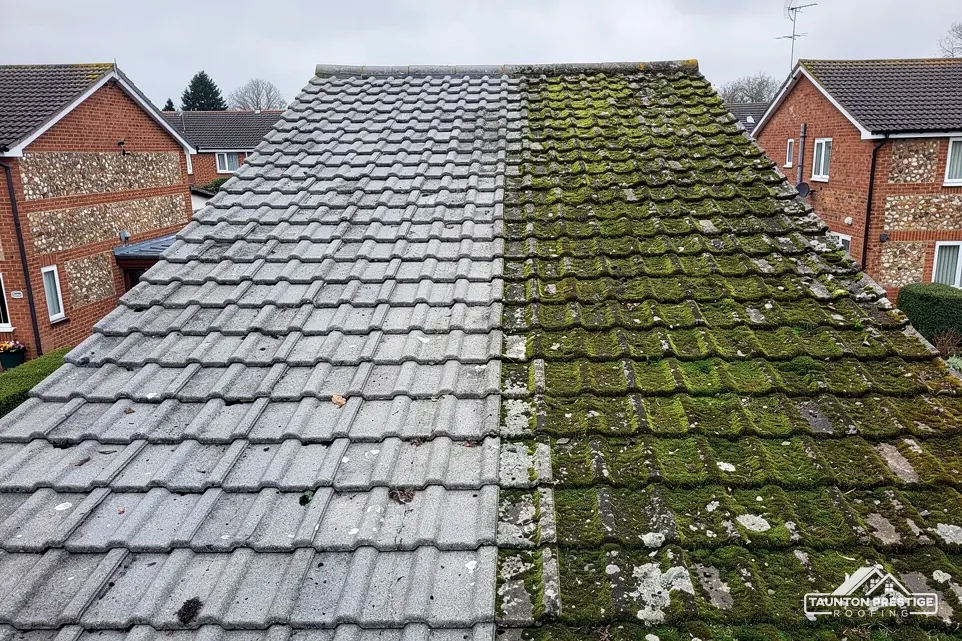
Scraped and brushed, then treated; a worn face cannot be restored.
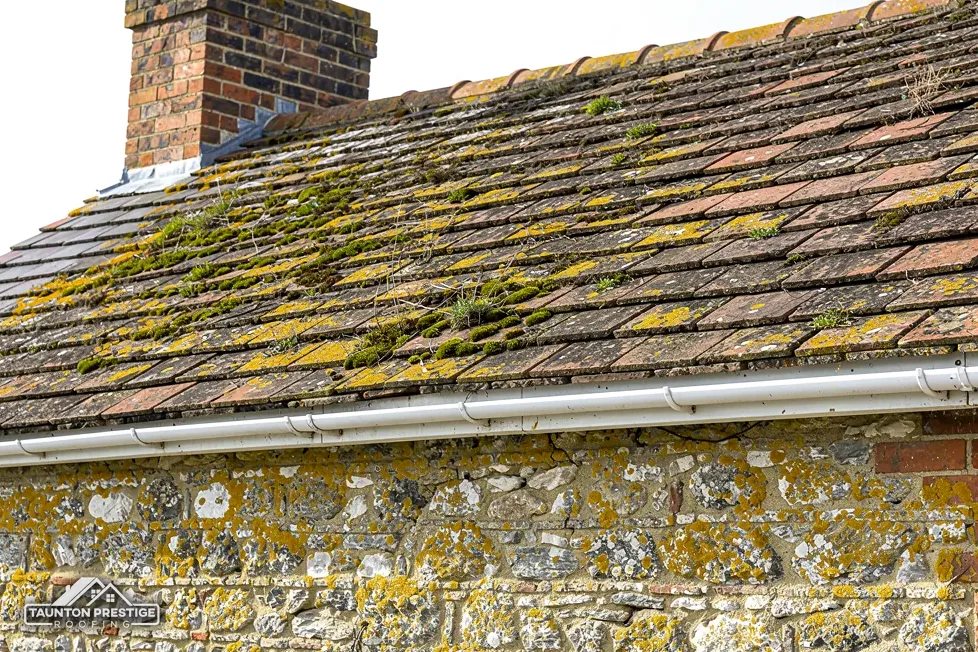
Old handmade clay cleaned lightly, stubborn lichen left to the treatment.
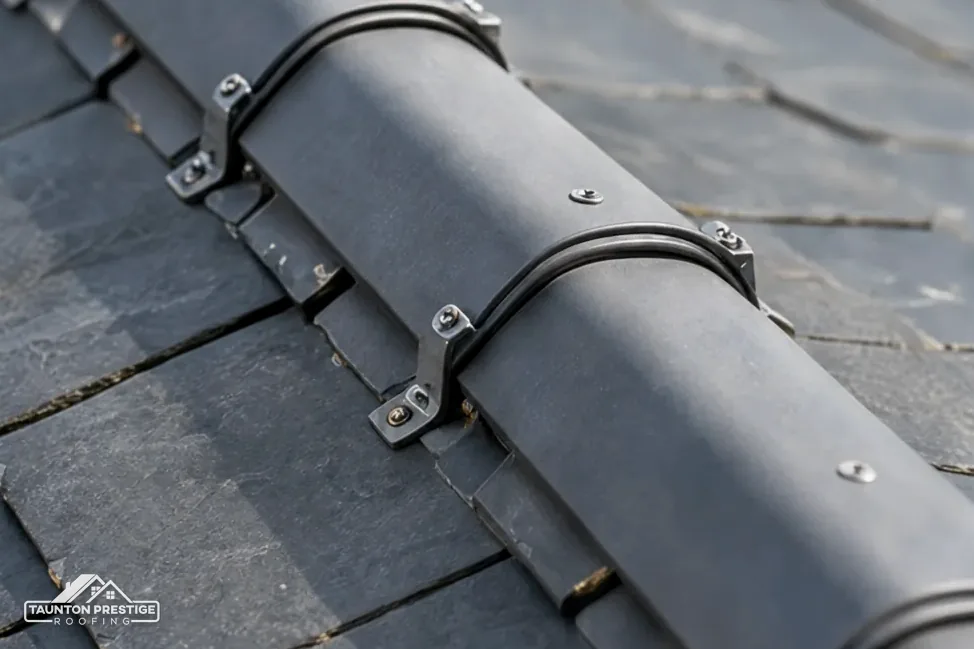
Moss picked out of the joints from ladders that spread the load.
 Moss removal by handScraped from the joints, bagged as we go
 Biocide treatmentA low-pressure spray to slow regrowth
 Gutter cleaningScooped, flushed and downpipes run clear
 Fascias and soffitsWashed down once the gutters drain
 Roof health checkTiles, ridges and flashings photographed
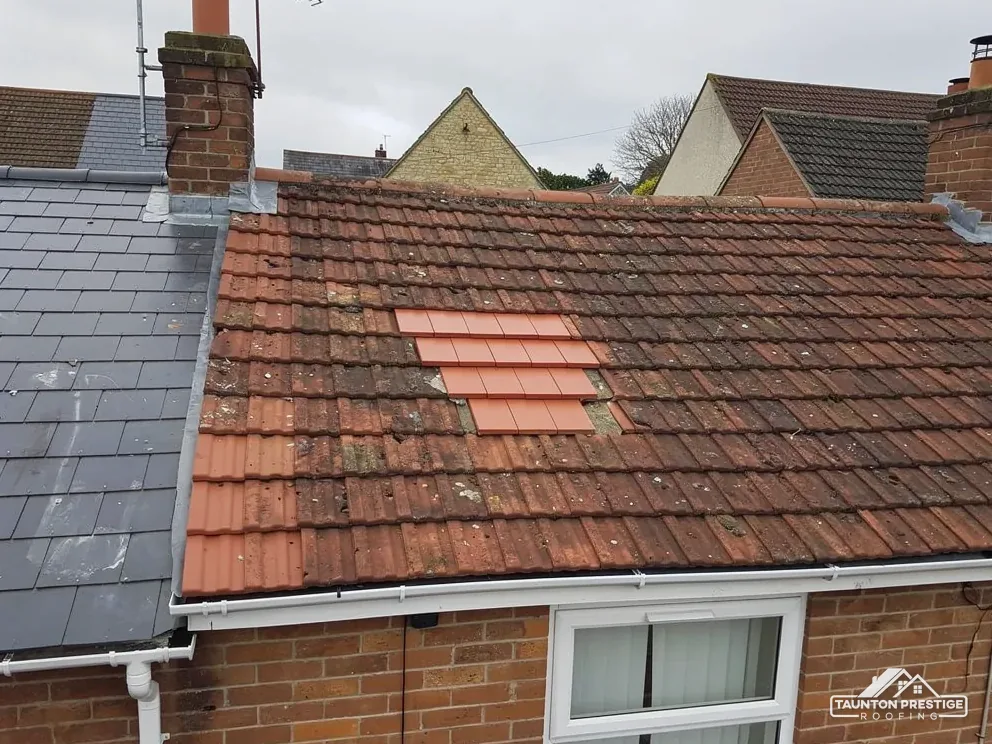 Small repairsSlipped tiles refixed while access is up
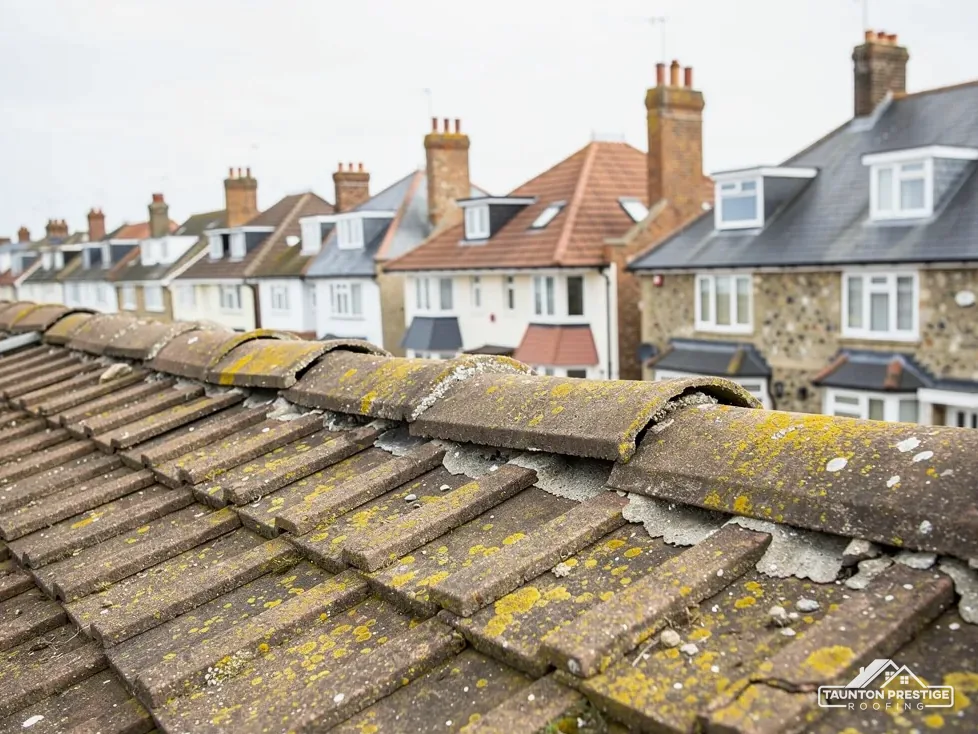
Light lichen and algae on a sound roof, with little moss to lift off.
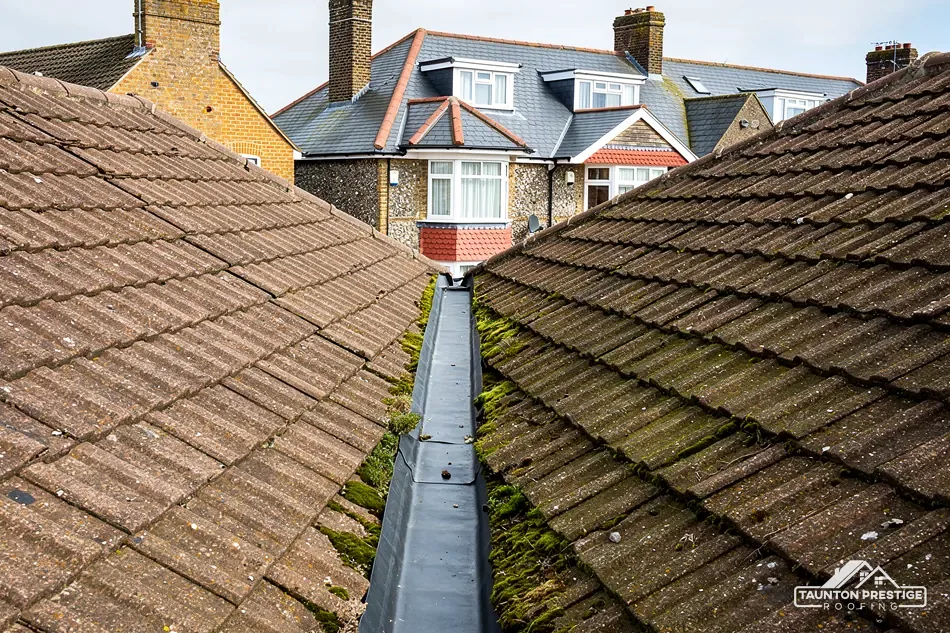
Thick moss packed in the joints, gutters filling and tile edges starting to rise.
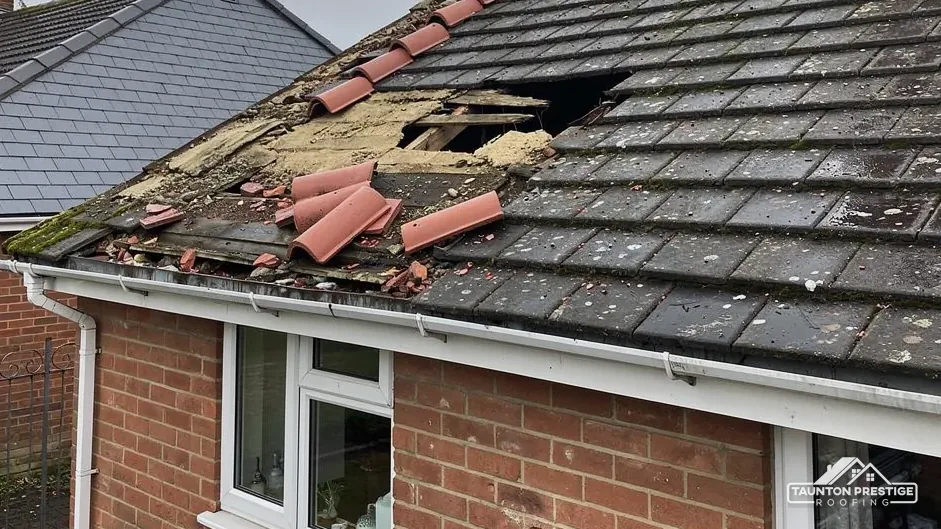
Slipped tiles, a loose ridge or failed flashing hiding under the moss need fixing first.
The roof clean walk
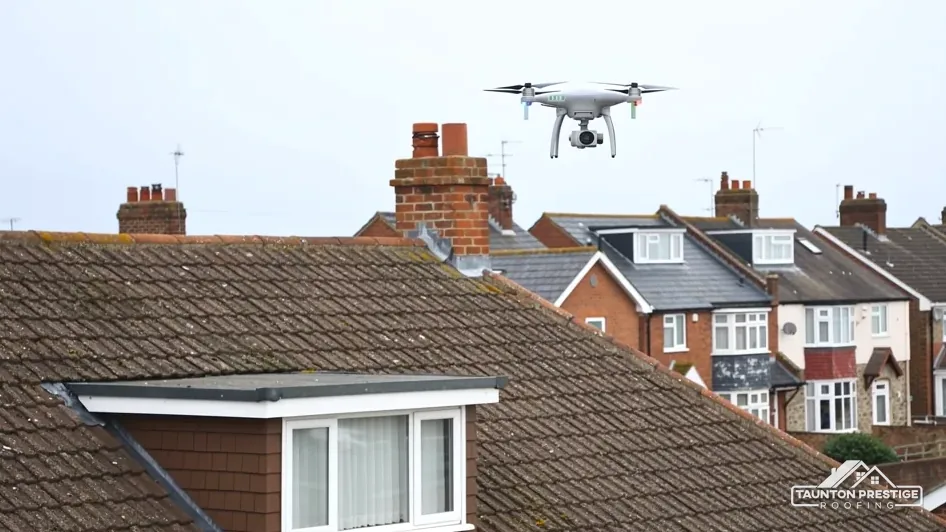
How we read a roof covered in moss before we put a price on cleaning it, and which parts you can look at from the garden first.
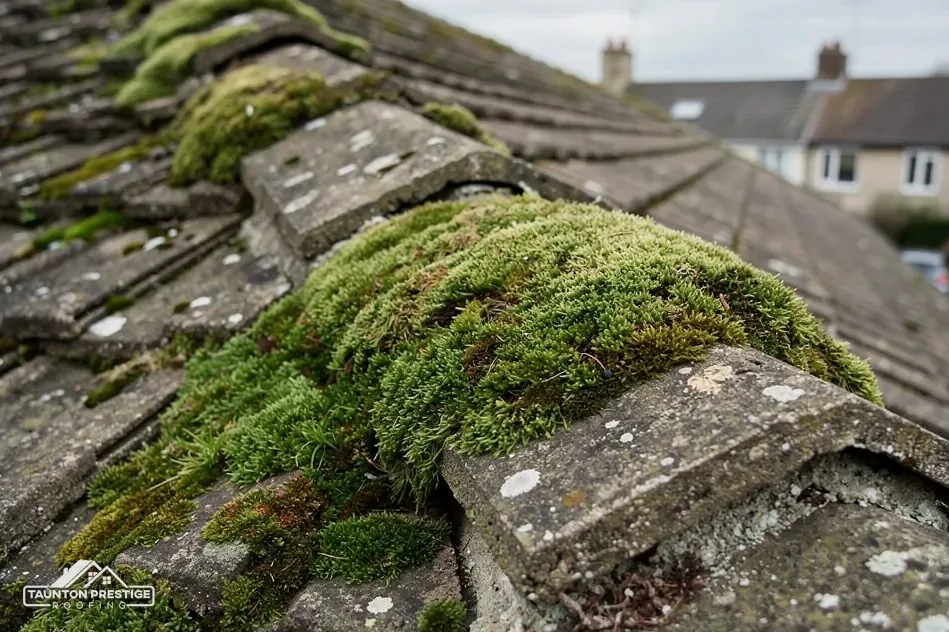
Three different growths turn up on roofs around Taunton, and they do not all call for the same response. Moss is the soft green cushion that builds up in the joints between tiles, along the bottom edges and around the ridge. Lichen is the flat, crusty patch, grey, yellow or pale green, that grips the face of a tile or slate like a stain. Algae is the dark streaking that runs down a slope, often below the ridge or beneath a chimney. All three like shade, damp and a rough surface to hold on to. That is why a north-facing slope, or one under a row of trees, can carry a heavy coat while the sunny side of the same house stays fairly clear.
Look for
Moss is the growth to lift off first; lichen and algae can usually wait for a treatment.
Moss does not eat through a tile. The harm comes slowly, from what it does to water. A thick cushion holds rain against the covering like a sponge, so the tile underneath stays wet for days after a shower, and a tile that is still wet when a hard frost arrives is the one that flakes. Moss that grows into the joints of interlocking concrete tiles can prop up the lower edge of the tile above, opening a path for wind-driven rain. Loose clumps also wash down in every storm and end up in the gutters, the valleys and the downpipes, where they dam the flow until water spills over the edge and down the wall. Our guide to what moss actually does to a roof takes each of these in turn.
Often less than people expect. Algae streaks are mainly a matter of looks. Lichen binds tightly to the surface, so prising it off can take the face of an old tile with it; on many slate and clay roofs we would rather kill it with a treatment and let the weather loosen it over the following months. Moss is the growth we lift off by hand, because it is the one that blocks gutters and keeps the covering soaked. If you are not sure which you have, a clear picture taken from the garden is usually enough for us to tell you.
Roof cleaning adverts love a dramatic before and after, and the roof pays for it later. A jet wash, power wash or pressure wash does damage because it drives a narrow stream of water hard enough to strip moss in seconds, and it strips the surface of the tile at the same time. Concrete tiles carry a thin coloured face over a sandy body. Once that face is blasted off, the tile is rougher and soaks up more water than before, which gives the next crop of moss an easier foothold. Old clay tiles and natural slate can chip, flake or split in layers, and brittle pieces crack under the force of the water or under the boots of whoever is holding the lance.
Marley, the tile maker, is plain about it: "The use of high powered jet washes is not recommended as it can damage the surface of the slate or tile, thus reducing its expected life considerably." That is the manufacturer warning against what is done to its own products, and it is the reason we keep high pressure away from pitched roof coverings. A clean roof that wears out sooner is a poor trade for a few weeks of looking smart.
It can. Tiles and slates are laid to shed rain falling from above, never water fired at them from below or from the side. A lance pointed up the slope drives water back under the overlaps between courses, onto the underlay, which is the sheet laid beneath the battens to catch stray rain, or straight onto the battens themselves on older roofs that were built with none. Some older Somerset slate roofs have torching instead, lime mortar packed into the joints beneath the slates from the loft side, and a jet can wash that out from above. The damp may not show for weeks, and by then nobody links the ceiling stain to the day the roof was washed. There is the mess as well: a jet throws moss, grit and slurry over windows, render, cars and the neighbour's garden. Our guide to pressure washing a roof covers the damage in more detail, along with what to ask anyone who offers it.
What decides the price
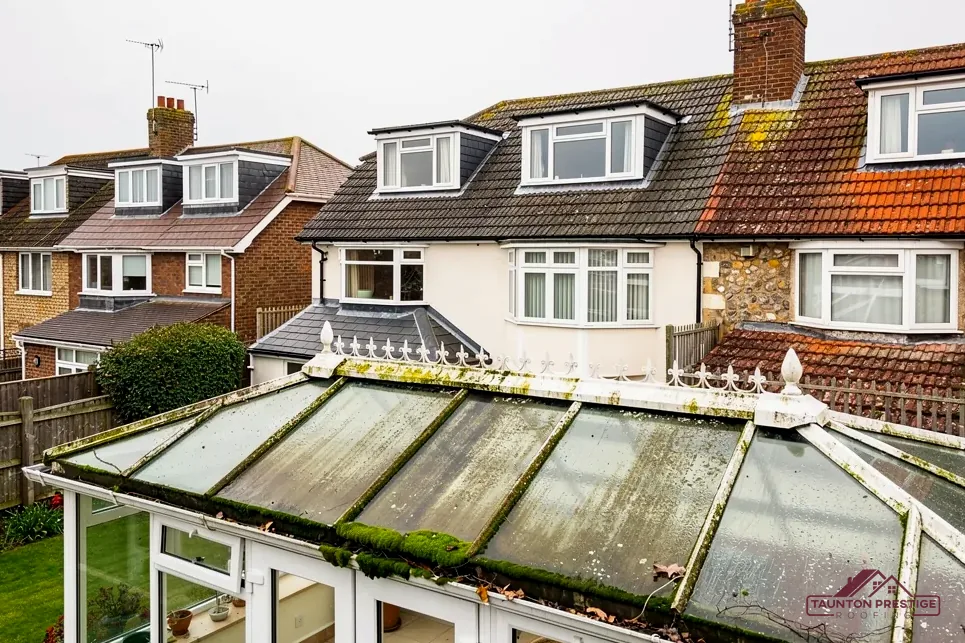
Our roof cleaning in Taunton follows the same three stages on almost every house, with the balance changed to suit the covering. First comes hand removal. Working from roof ladders, a tower or scaffold, depending on the height and the pitch, we scrape the moss out of the joints and off each course with plastic scrapers and stiff brushes, starting at the ridge and working down. Loose moss is bagged as we go instead of being pushed into the gutter. Second comes the treatment. Once the bulk is off, a biocide is sprayed across the cleaned slopes at low pressure, wetting the surface the way a garden sprayer wets a lawn. Third comes time. The treatment keeps working after we leave, and over the following weeks and months what remains of the lichen, algae and spores dies back and the rain rinses it away.
The scraper does the heavy work; the treatment and the rain finish the job.
A biocide is a product made to kill living growth: here, moss, lichen, algae and the spores they spread from. Scraping alone leaves roots and spores in the surface of the tile, so moss comes back sooner; the treatment slows that regrowth. These products are regulated. The retained Biocidal Products Regulation says "Biocidal products shall be used in compliance with the terms and conditions of the authorisation", so the label decides the dilution, the weather it can go on in and how it is applied. Soft wash is the name for putting a cleaning solution on at low pressure and leaving it to work, instead of blasting the dirt off. Our guide to soft washing and biocide treatments compares the products and methods.
Some products are sold for home and garden use, and the label tells you which those are. The stronger roof treatments are not among them. HSE puts it plainly: "Members of the general public should never use biocidal products that are only intended for professional users." Its page on COPR approval conditions adds: "It's an offence to advertise, sell, supply, store or use a non-approved product." Then there is the climb itself. A mossy slope is slippery underfoot and easy to crack, so the work belongs with someone who has roof ladders and safe access set up.
Look for
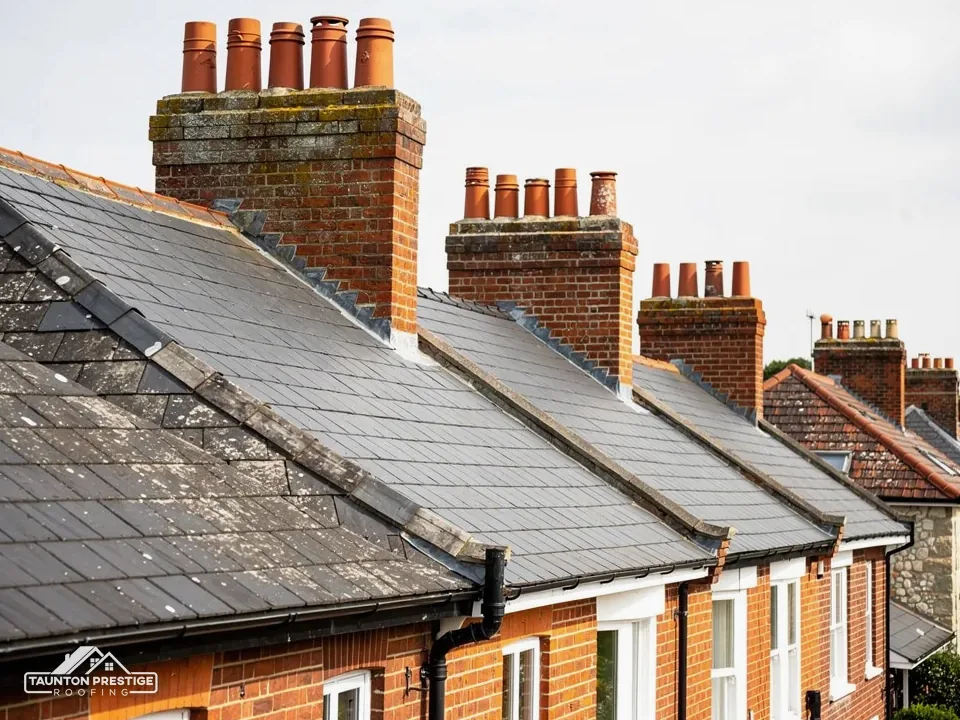
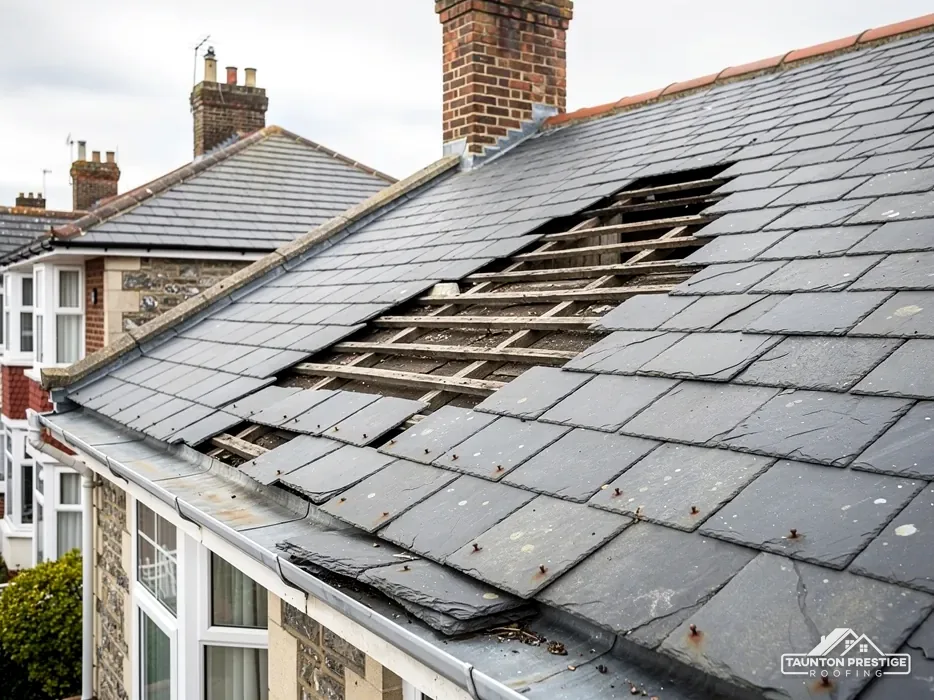
Roof tiles and slates do not all take cleaning the same way, and the method follows what is on the roof. Concrete tiles are the easiest of the three to work on. They are thick, they interlock at the sides and they are held with clips or nails, so they cope well with firm scraping and brushing. What they show is age. The coloured face wears thin over the decades, so a concrete tile roof cleared of moss can look patchy rather than new, and no cleaning method puts back colour the weather has already taken. If the tiles are sound, that is a cosmetic point, and the roof is still doing its job.
What decides the price
It is when it is done gently. Handmade clay plain tiles, pantiles and Double Romans on older Somerset cottages and farm buildings are softer than concrete, and many have been on the roof a very long time. A pantile has a wide S-shaped wave; the Double Roman has two rounded rolls with a flat pan between them. Old clay often hangs on small nibs hooked over the battens with few nails, so a scraper pushed too hard can knock a tile out of its course. On these roofs we lift the moss with a lighter hand, leave firmly bonded lichen to the treatment and keep foot traffic to a minimum, working from ladders or scaffold where we can.
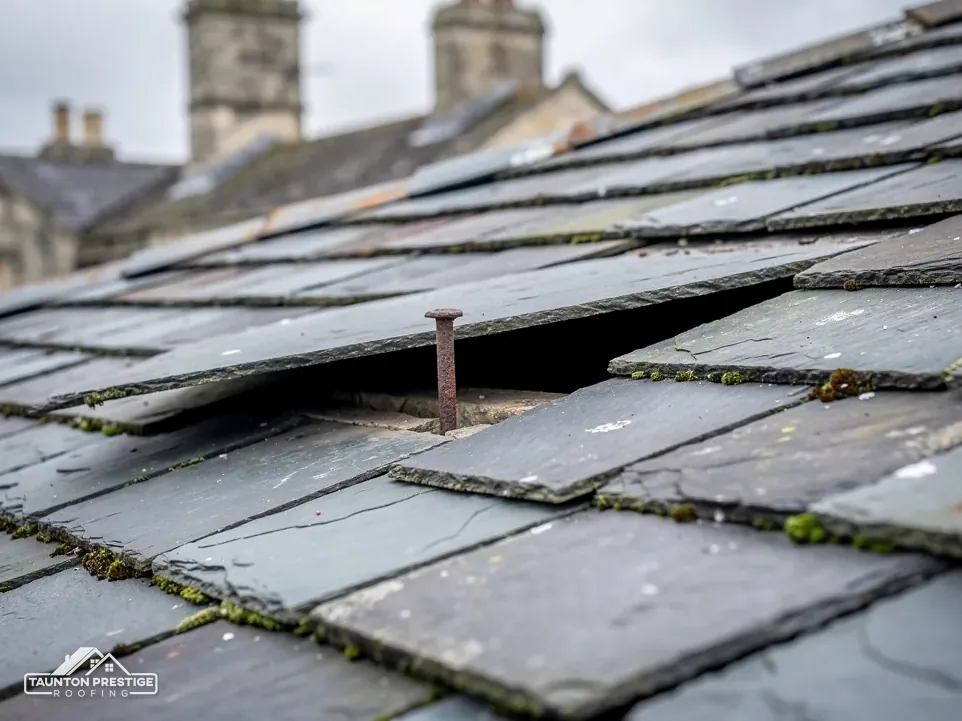
Natural slate is dense and sheds water well, so moss tends to gather in the joints and along the tails, the bottom edges of each slate, rather than across the face. Slate is also brittle, and a slate roof is never walked on the way a concrete one can be. We work from roof ladders that spread the load, pick the moss out joint by joint and treat the slopes afterwards. With the moss gone, slipped slates and rusted nails are easy to spot, so each one goes in the notes for you. On a listed home or in a conservation area, any repair we suggest afterwards uses matching slate or clay, never a modern substitute.
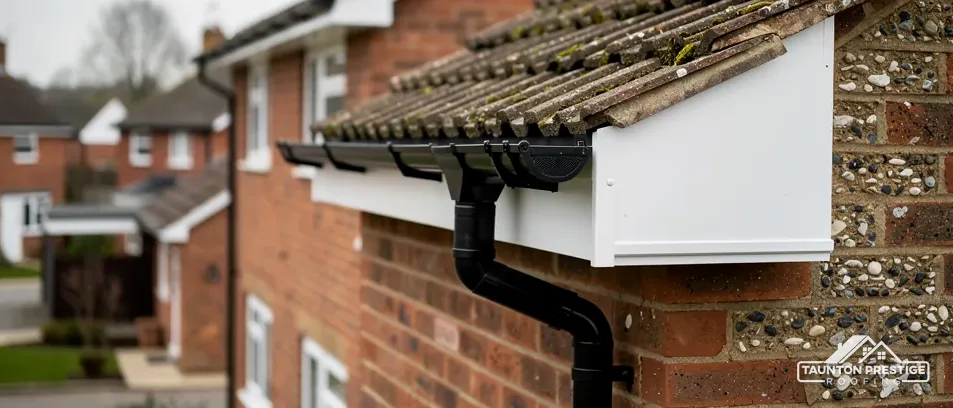
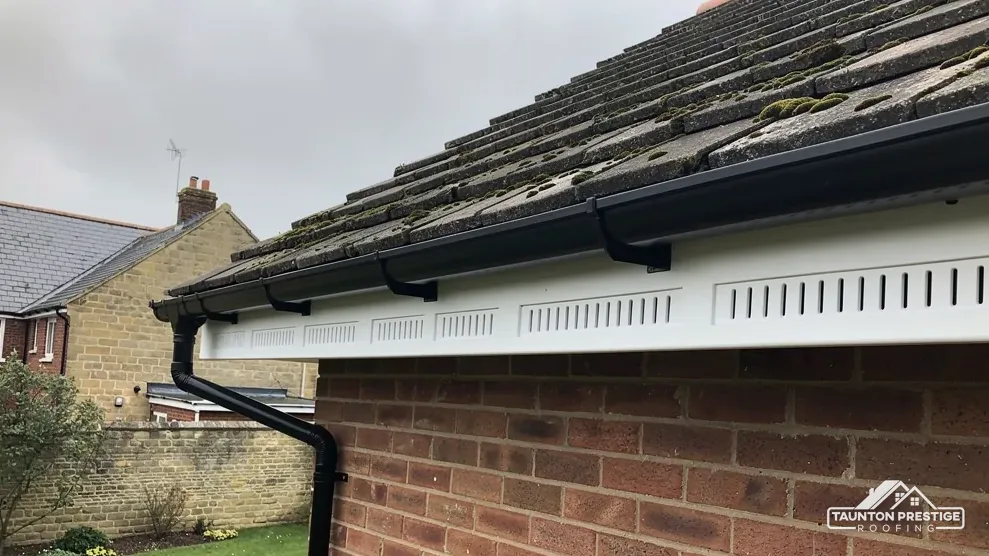
Every roof clean finishes at the gutters, because that is where the moss ends up. Even with careful bagging, grit and small clumps wash down in the first heavy rain, so gutter cleaning is part of the job, never an extra we add on at the end. We scoop the gutters out by hand, flush each run with water to prove it drains to its outlet, and clear any downpipes that have choked at the swan neck, the bend that carries water from the gutter back to the wall. A blocked gutter spills water down the wall in every downpour, and the damp patch it leaves indoors can look exactly like a roof leak.
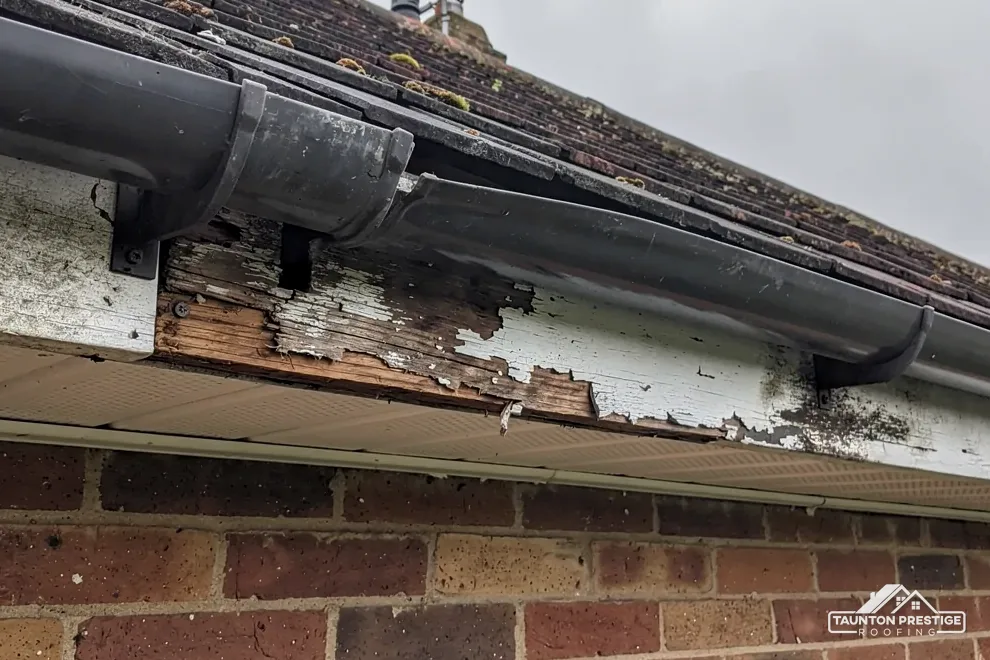
Water overflowing from a gutter runs down the face of the wall and soaks the brick or render, and it soaks the fascia on its way. The gutter brackets screw to the fascia, a long board fixed to the rafter ends at the eaves, and the soffit runs beneath it, sealing off the underside of the overhang. A gutter that stays full for months rots a timber fascia from behind, and a run that sags in the middle holds a puddle and grows moss of its own. Gutters need a slight fall towards the outlet to drain, so a run that has dropped needs its brackets reset as well as a clean. Clearing them once a year is simple maintenance that saves a lot of redecorating indoors.
If the gutter overflows in a downpour, look there before you blame the roof.
Yes, if you would like them done. White uPVC fascias and soffits stain green and black under a dirty gutter, and once the gutters drain properly they wash down with a soft brush and a mild cleaner. Painted timber boards get a close look rather than a scrub, because flaking paint and soft spots are worth reporting. On older houses the soffit board can contain asbestos, so we check what it is made of before anyone touches it. If the gutters themselves are cracked, sagging or dripping at the joints, our gutters, soffits and fascias service covers repairs and new runs, and both jobs can be priced together.
Moss hides faults. A slipped tile, a cracked slate or a gap under the ridge can sit beneath a cushion of moss for years, and the first anyone hears of it is a brown ring on a bedroom ceiling. Once the slopes are clear, the whole roof is on show, and because we are roofers rather than a cleaning firm, we read it as we work. Anything that needs attention is photographed, and you see those pictures of your own roof before we pack up, so you can judge the fault for yourself.
What decides the price
Look for
The same things we look at on any roof inspection. Slipped, cracked or missing tiles and slates. The ridge, the capped peak of the roof, and whether the mortar holding each capping piece is still firm. The verges, where a slope ends at a gable wall. The flashings, the strips of lead dressed over the joints at chimneys and walls, and the valleys, the inside corners where two slopes meet and share one channel. Small faults such as a single slipped tile can often be put right during the visit, with your agreement, because the access is already in place. Anything bigger is written up and priced as a separate job. If you would like the condition of the whole roof set down in a report, our roof inspections service does exactly that.
Some firms follow a clean with a sprayed coating and sell it as protection. We are cautious about that. A coating changes the colour of the roof for a while, but it does not refix a slipped tile, renew a split valley or replace tired underlay, and on a roof with real faults it can hide them from the next person who looks. If the clean shows the tiles are sound, the roof rarely needs anything more than the treatment. If it shows they are failing, the money is better spent on repairs. Our guide to roof coatings sets out when one might earn its place and when it will not.
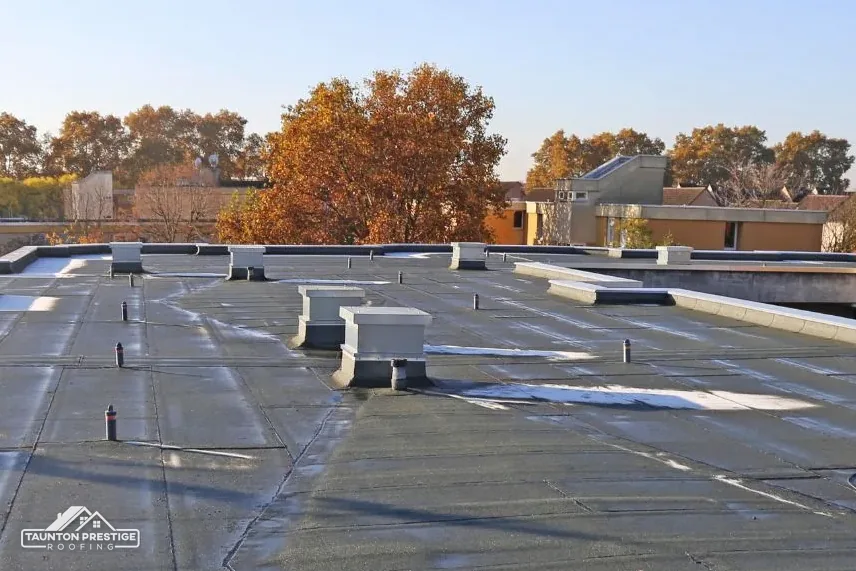
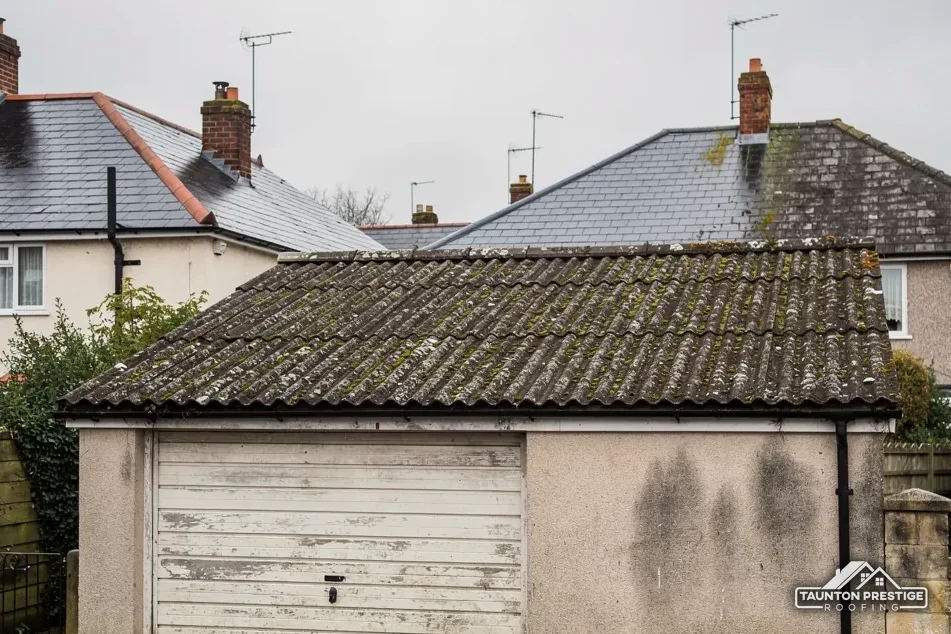
Commercial roof cleaning follows the same rules on a bigger scale. Shops, offices, industrial units and farm buildings around Taunton gather the same moss, lichen and algae as houses, and a valley gutter choked with moss on a large roof can send a great deal of water where it should not go. Many of these roofs are profiled metal or fibre cement sheet rather than tiles. Older corrugated sheets on barns, units and garages may be asbestos cement, so we find out what the sheet is before any work starts, and it is never scraped hard or pressure washed. For landlords we can plan the clean around opening hours, just as we would around a homeowner's week on a domestic job.
What decides the price
There is no single right month. The work goes best in mild, settled weather, when the moss is damp enough to lift cleanly and the biocide gets the dry hours its label asks for; hard frost, strong wind and heavy rain all stop the job. Wildlife matters as much as weather. GOV.UK lists "repairing or replacing a roof" among the activities that can affect bats. Under WCA 1981 s9(4) it is an offence "if intentionally or recklessly" a person disturbs a bat while it occupies a place it uses for shelter, or blocks access to one, and the Habitats Regulations 2017 reg 43 protects their breeding sites and resting places. If we find signs of either, we stop and replan. Our guide to roof cleaning around nesting birds and bats explains how.
The price depends on the size and pitch of the roof, the covering, how thick the moss is, how we reach it and whether gutters, fascias or repairs are included. A bungalow can often be cleaned from roof ladders and a tower, while a tall town house may need scaffolding. Scaffold standing on the highway must have a scaffold licence from the highway authority. In Somerset Council's area, only accredited contractors are issued permits for scaffold on the highway, and the appointed contractor fills in the form, at £124.60 for each 28-day period (April 2026). Our guide to roof cleaning cost goes further. Our patch runs from Taunton's suburbs to Wellington and Bridgwater, up into the Quantock and Blackdown Hills, across the Levels and over the border to Tiverton and Cullompton.
To book a look at your moss, send us a picture of each slope from the garden and the street, and tell us when the gutters last ran clear.
Walked the roof?
Look at what you can from the garden and the street, send us the pictures, and leave the slopes themselves to us.
| Job | Typical range |
|---|---|
| Roof pressure wash on a semi, not advised (Sep 2026) | around £475 |
| Roof survey (Oct 2026) | around £300 |
| Replacing five roof tiles (Oct 2026) | £150 to £200 |
| Ridge tile replacement (Oct 2026) | £225 to £550 |
These are typical UK ranges from MyJobQuote, never our own prices, and the cleaning figure is for pressure washing, which Marley advises against. Your written price follows the survey. Ask, too, whether VAT and scaffolding sit inside any total you are given.
MyJobQuote cost guides, Sep and Oct 2026
Single-topic reads from this service: what moss does to a roof, soft washing, the damage pressure washing does, coatings, cleaning older clay and slate, and working around nesting birds and bats.
 How Much Does Roof Cleaning Cost?Roof cleaning prices vary more than most home jobs, because the technique, the reach and the roof covering each alter the work. Here is a published...
 Is Roof Cleaning Worth It? A Roofer's Honest ViewCleaning a roof can save a repair bill or waste a few hundred pounds, depending on the roof. Here is how a roofer decides which one applies to your...
 Roof Coatings: The Honest Case Against Most of ThemA sprayed or painted coating promises a renewed roof for less money. Here is what a coating can and cannot do to slate and tile, and the questions to...
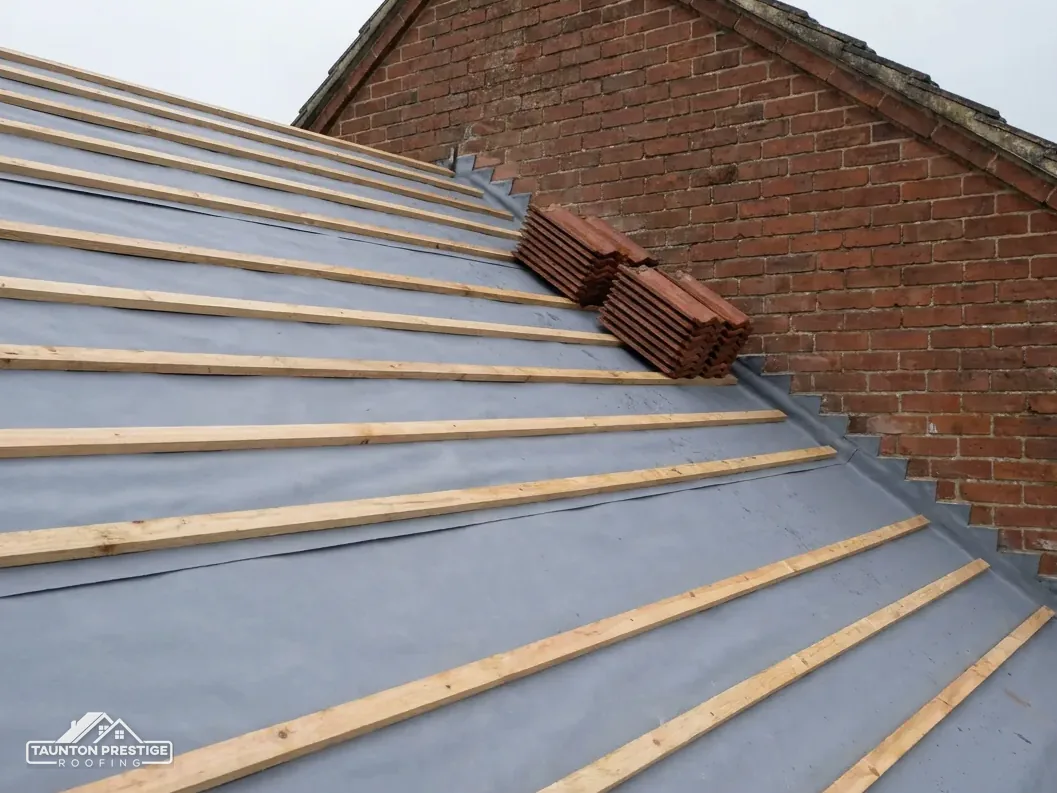 Pressure Washing a Roof: Why It Damages TilesA pressure washer can damage a roof as fast as it cleans one. It strips the tile face and drives water under the covering, which is why roofers avoid...
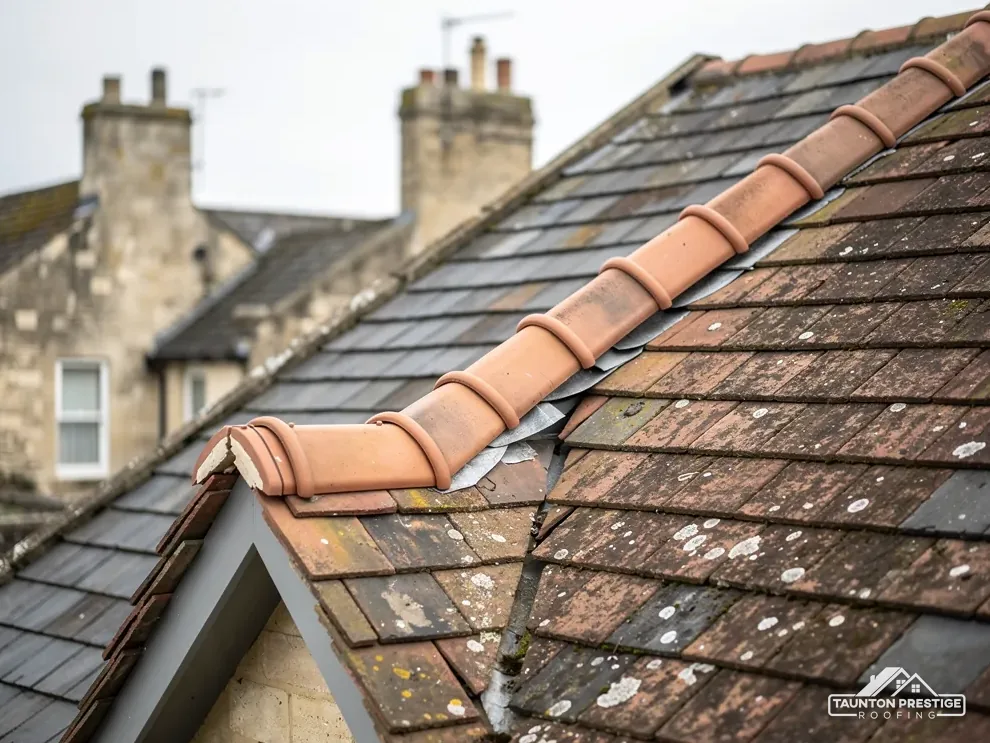 Soft Washing and Biocide Roof Treatments ExplainedSoft washing sprays a cleaning treatment on gently instead of blasting growth off. Here is what is in that treatment, why the rules on it matter and...
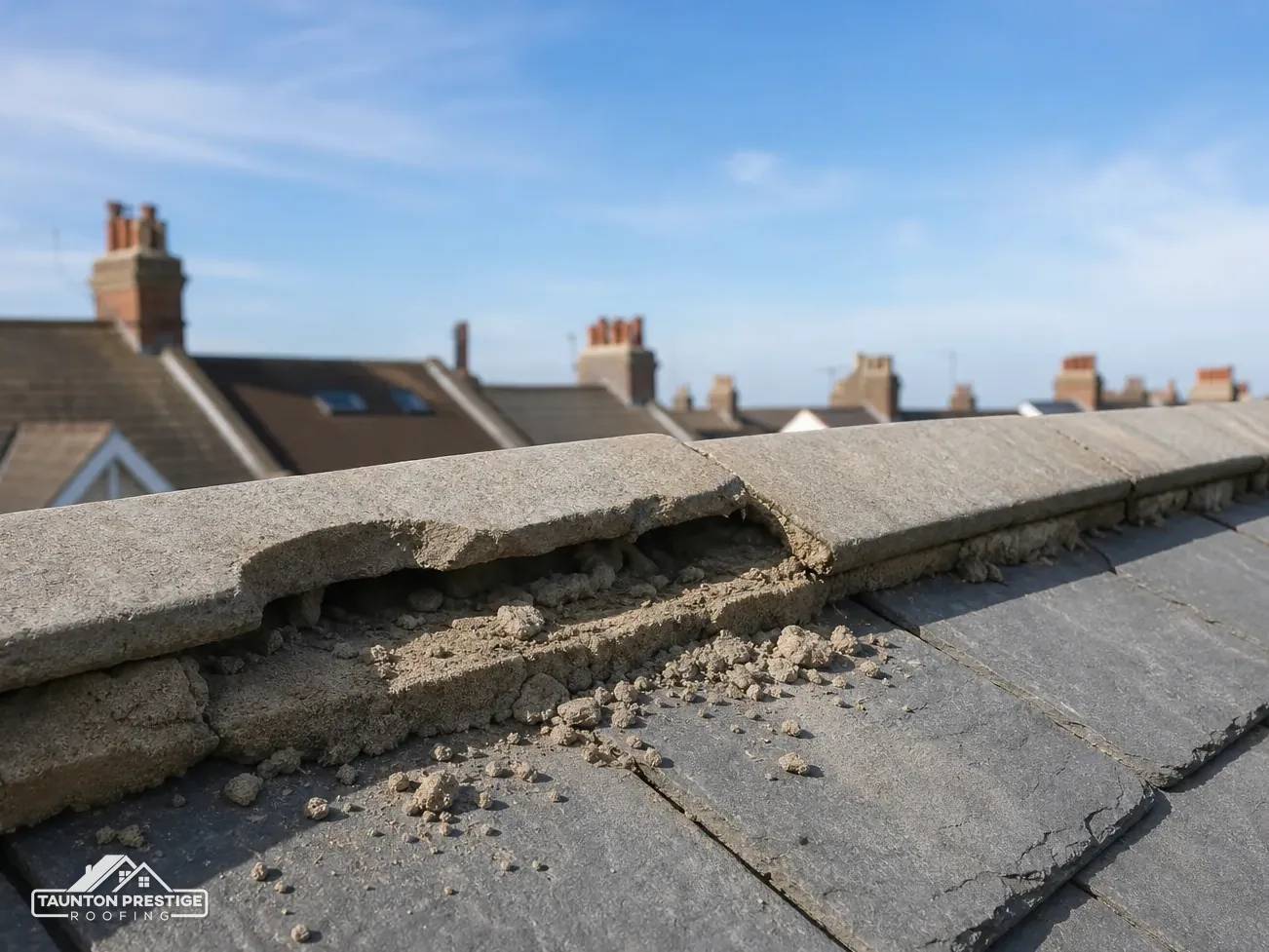 Does Moss Damage a Roof? What It Actually DoesA green roof looks neglected, but looks are not the same as damage. This guide separates what moss really does to slates and tiles from what it only...
MyJobQuote gives a typical UK average of around £475 to clean the roof of a semi-detached house (Sep 2026), but that figure is for pressure washing, which Marley does not recommend. Hand removal with a biocide treatment is priced on the size, pitch and covering of the roof, the depth of moss, the access and whether gutters are included.
It is when moss is thick enough to block gutters, lift tile edges or keep the covering wet, and the clean also lets us spot faults early. For light lichen or algae on a sound roof, a treatment alone may do, and some owners choose to leave it altogether. We will tell you which applies to yours.
There is no fixed timetable. A shaded slope under trees grows moss back far sooner than an open, sunny one, and the biocide slows regrowth without stopping it for good. Look at the joints and gutters from the ground each autumn, and book a clean when moss starts to build up again, not to a calendar.
In time, yes, because spores blow in from trees, walls and neighbouring roofs. The treatment kills what is left in the tile surface and slows the return, and keeping gutters clear and branches cut back helps too. A shaded north slope usually greens up again well before a sunny south one.
We apply every product within the terms on its label, which set out how it is used around plants, water and animals. Before we start, we cover ponds and water butts, move anything delicate from beneath the eaves where we can, and ask you to keep pets indoors while the slopes are sprayed and drying.
Often, yes. A bungalow or a single-storey extension can usually be reached from roof ladders and a tower, which keeps the access simple. Taller houses, steep pitches and roofs above conservatories may need scaffolding so the work is safe. We settle the access when we look at the roof, and it is part of the one price.
Send a picture of each mossy slope, and we will book a visit to see your roof up close.