Parish church, Grade II*
Grade II* on 25 February 1955; its roof work goes through the Church of England's faculty system.
A Grade II* church, a manor house and old tile works
Bishops Hull is a village on Taunton's western edge, south of the River Tone, with a Grade II* church and manor house and a conservation area.
Grade II* on 25 February 1955; its roof work goes through the Church of England's faculty system.
Listed on 2 February 1955, near Bishops Hull House, listed Grade II with its forecourt walls and gatepiers.
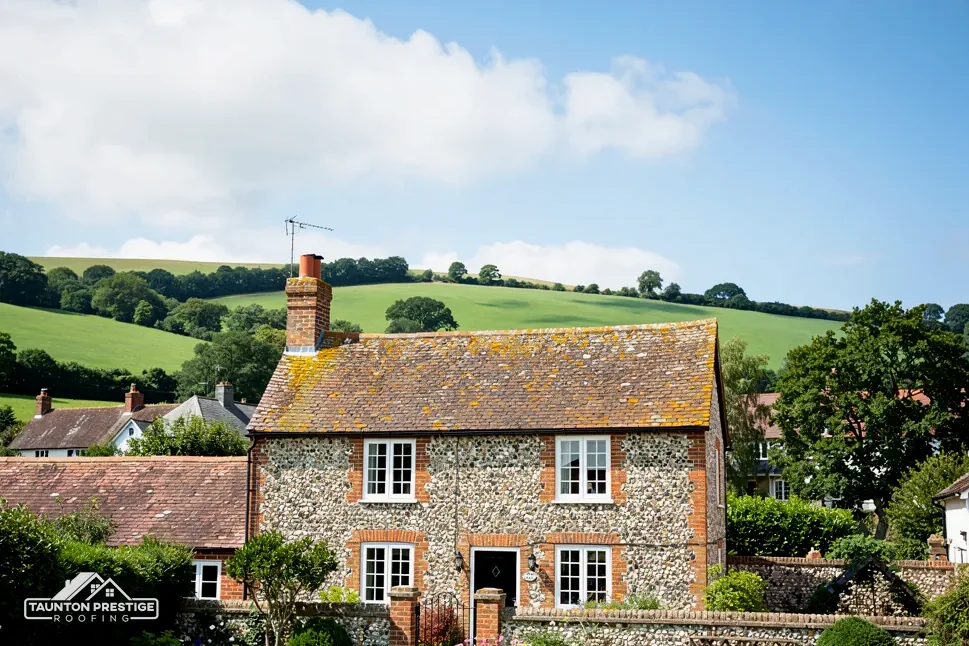
Somerset's heritage record shows brick and tile making here from at least 1851, with production continuing to about 1938.
Street map of Bishops Hull with Galmington, Upcott, Comeytrowe, Norton Fitzwarren marked around it, and Taunton.
Galmington lies to the south-east of Bishops Hull, Upcott to the west, Comeytrowe to the south and Norton Fitzwarren to the north-west.
About 1 miles west of Taunton, Somerset Council (unitary).
A village roof walk west of Taunton
Four checks for a Bishops Hull roof: church consent, clay tile heritage, the conservation area and storm damage.
The Church of St Peter and St Paul has been listed Grade II* since 25 February 1955, and it remains a working Church of England place of worship. That decides the route for any work on its roof. Under section 60 of the Planning (Listed Buildings and Conservation Areas) Act 1990, a building used for ecclesiastical purposes sits outside listed building consent, and the Church of England's own churches fall within that exemption. Work goes through the faculty system instead, which belongs to the Church and not to the council.
The faculty is sought through the Church of England's own system, never from Somerset Council. We price and work to whatever is approved, and our survey photos give the people applying a clear record of the roof as it stands. Other denominations differ: a Roman Catholic, Methodist or United Reformed church that is in use has its own approval system, whereas Unitarian and Quaker buildings, buildings that have closed as churches and chapels now converted need listed building consent from the council. Our page on church roof repair consent sets out each route.
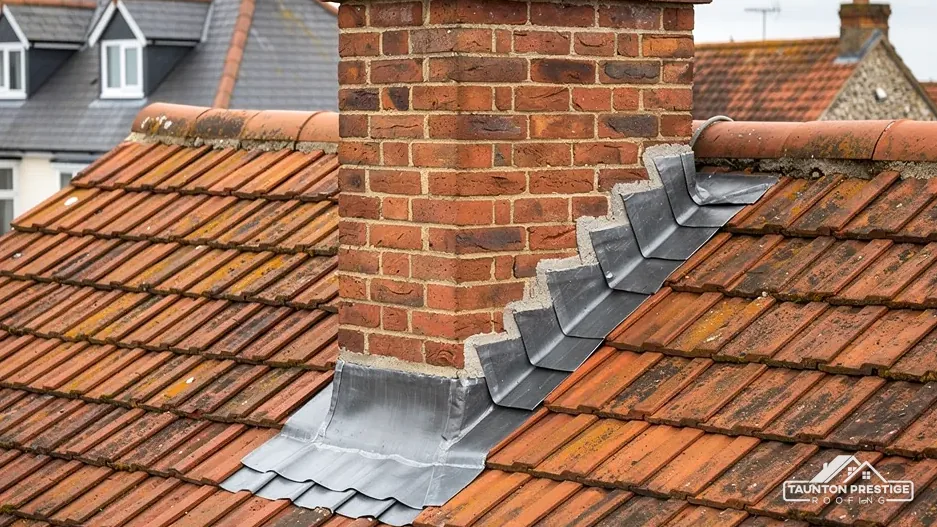
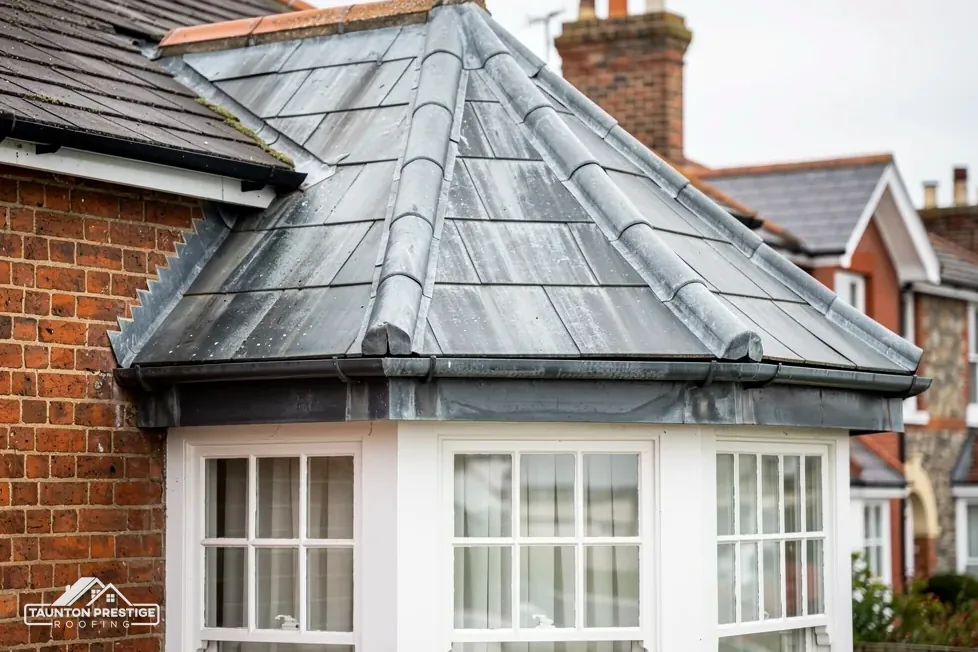
Where a roof or tower carries lead, the sheets are cut and dressed into gutters, flashings and parapet gutters, and each use calls for a thickness. Royston's cast-lead brochure lists codes 5 to 8 for parapet and box gutters. The lead code is the number that stands for the sheet's thickness. Lead flashing "can last for over 80 years" according to MyJobQuote, so a leak is more often a split or a lifted joint than a worn-out sheet. Our lead work page explains the repair choices.
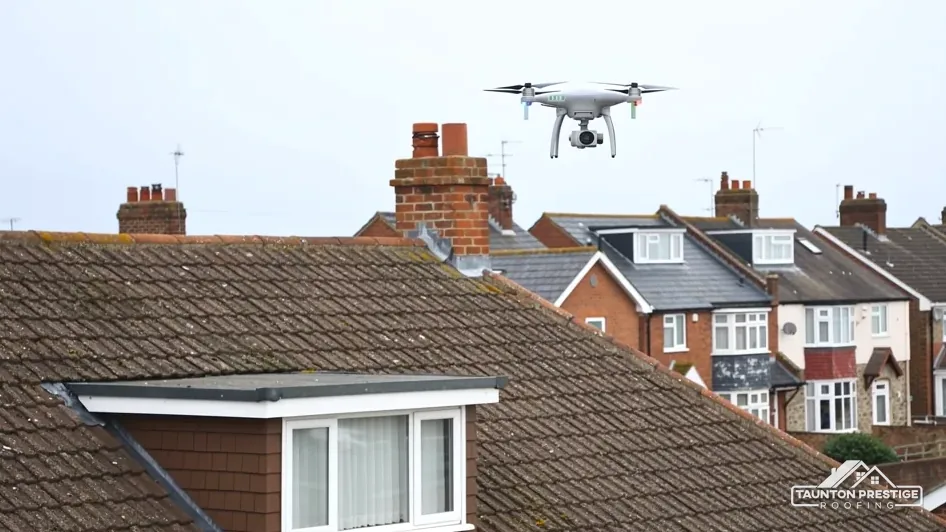
The survey records the roof from the ground and from a safe point above it, and we are clear about what can be seen and what cannot. Access to a church roof can need scaffold or a tower, and that is a large part of the price.
Look for
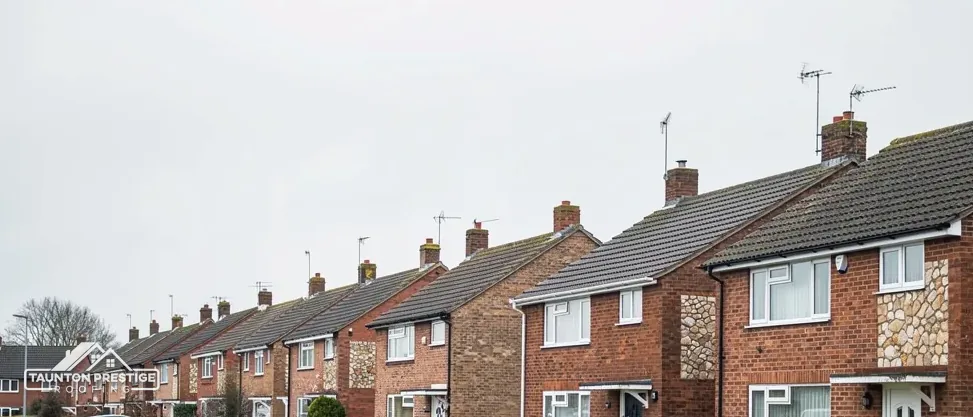
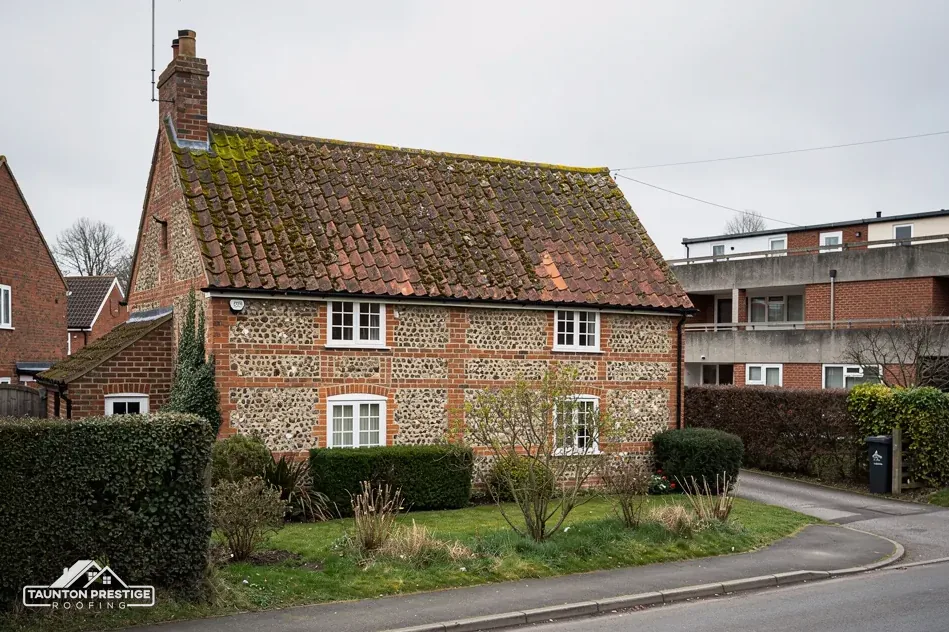
Bishops Hull has a documented tile-making past. Somerset's Historic Environment Record shows brickmakers Robert and William Sharp living at the Brick Yard on New Road in 1851, and by 1883 the New Road works had a kiln said to be able to turn out 55,000 bricks at each burning. The 1904 Ordnance Survey revision shows a continuous Hoffmann kiln there, and a 90 ft chimney with 1898 picked out in engineering brick probably marks its date. The neighbouring Bishop's Hull works joined it in 1915, and production behind Florence Terrace went on until about 1938.
Old kilns tell you what was made nearby; only the survey tells you what is on your roof.
What decides the price
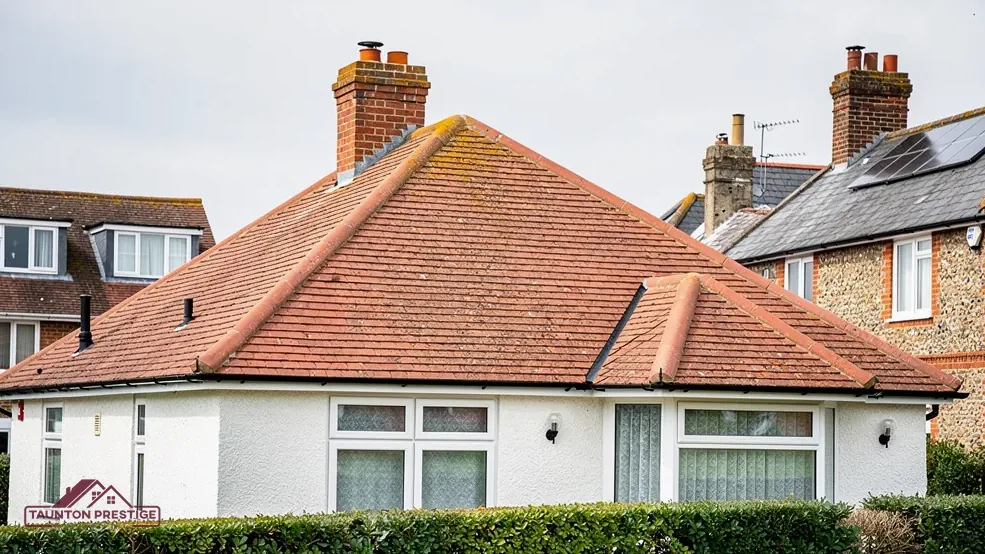
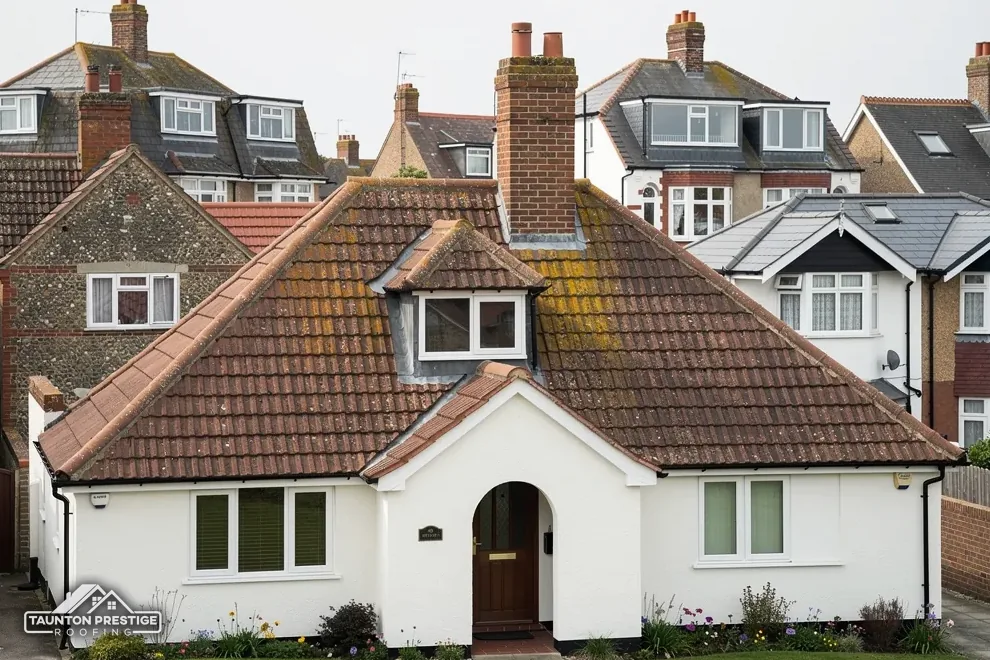
No. Those records tell us what was made nearby, not what is on any roof, and we never assume. At the survey we identify the covering slope by slope: clay or concrete, plain tile or pantile, slate or something else. Identification matters because clay stays clay where it counts, and a like-for-like repair means the roof still looks as it always has.
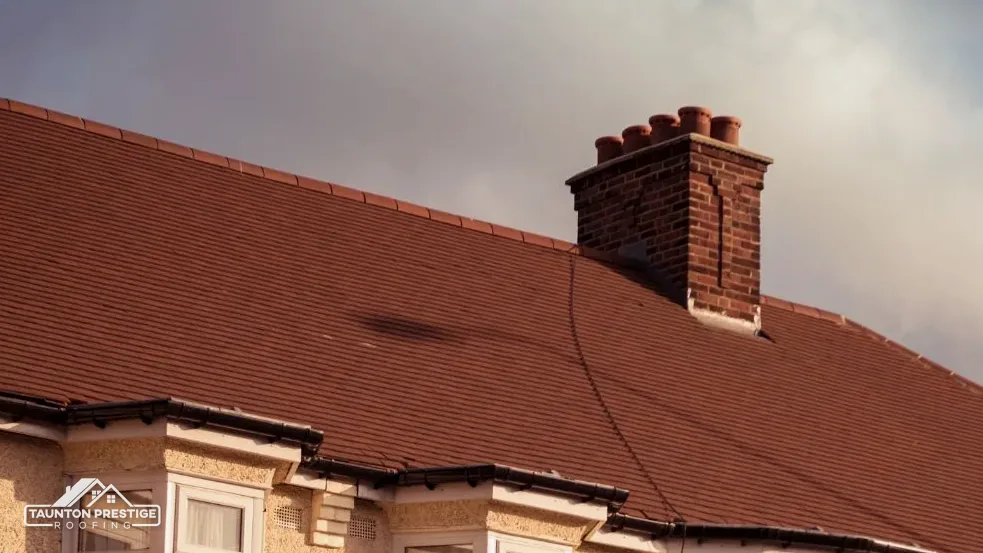
Marley cites the BRE minimum life expectancy of 60 years, a minimum that applies to clay tiles alone, and Building Conservation magazine says that for old peg tile it is clearly not a reliable guide. The condition of each tile and its fixings decides, not its date. A tile can be sound while the nail behind it is tired, and the reverse can be true.
If just a few tiles have failed, we hunt for sound reclaimed ones or a close new match before suggesting anything bigger. Reclaimed tiles vary in colour and thickness, so a handful laid in one patch can look odd; mixing them across a slope usually reads better. If the tiles are crumbling across a whole slope, we tell you plainly and show you the photos.
The Bishops Hull conservation area was designated on 13 July 1977 and revised on 12 November 1998, and it lies within about 0.75 km of the centre. Nearby is the Manor House, listed Grade II* on 2 February 1955, along with Bishops Hull House, listed Grade II together with the walls enclosing its forecourt and its gatepiers, and the war memorial, also Grade II. A conservation area asks for care with anything visible from the road, and a listing asks for more.
Repairs in matching materials seldom raise a question. A dormer in a conservation area needs a planning application, and a changed covering, a bolder ridge or a street-facing roof window may need one too. Ask the planning team before ordering anything that alters how the roof looks from the lane. Survey photos of the existing ridge, verge and any roof windows show them exactly what is there today, which speeds the conversation up.
It can be. A dry-fix ridge uses clips and screws to hold the capping tiles, so no mortar bed is needed, and a well-chosen one looks very like a mortared ridge. Whether it suits a particular street is a question for the planning team. Marley notes that since the 2014 revision of BS 5534, a ridge or hip bedded in mortar also has to be mechanically fixed, so a mortared ridge is no longer left to mortar alone.
The same goes for the verge, the edge of the roof where it finishes at a gable end. Cracked mortar there lets rain behind the end tiles, and a dry verge system holds them with clips instead. Our dry ridge and verge page compares the choices, and the survey tells you what your own ridge and verge need. A dated set of photos taken before and after the work also shows what was done and when, which helps if the house is later sold.
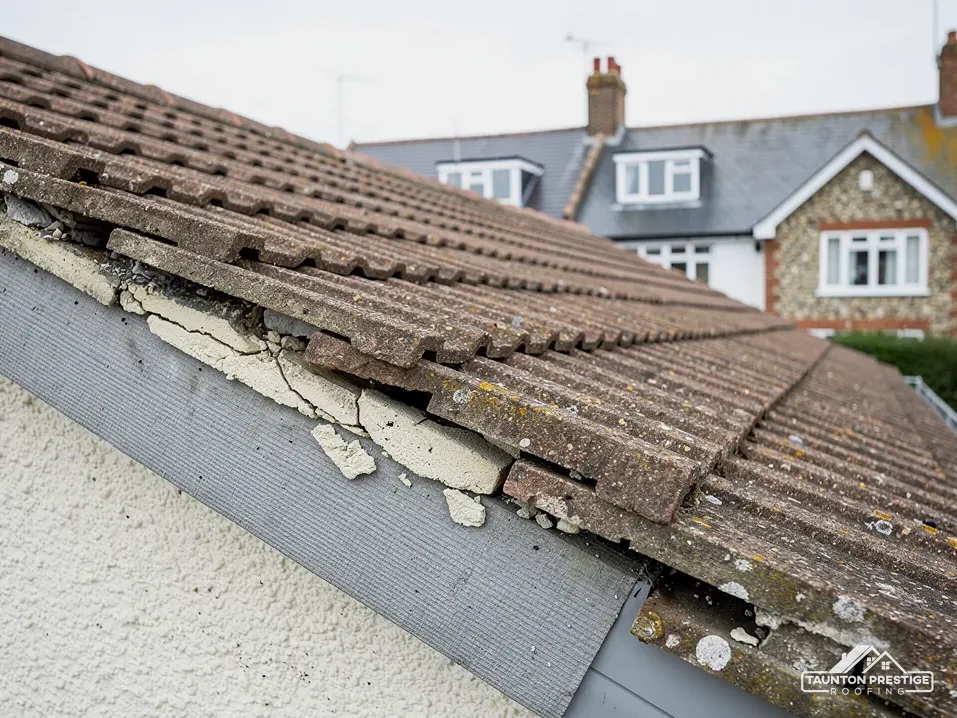
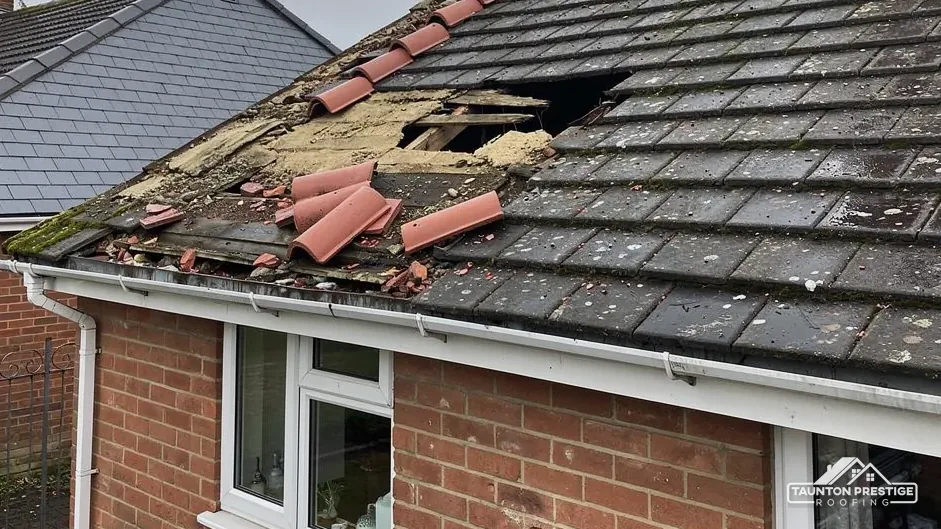
After a gale, the first question is whether anyone is at risk. If slates are down over a path or a ceiling is soaked, keep people clear and tell us. A leaking roof gets made safe before anything else, with a temporary cover or a cleared outlet, and the permanent repair is planned afterwards. Our emergency roof repair page explains the steps.
Tell the insurer first, make the roof safe with a temporary repair, and keep photos and receipts. The Institution of Structural Engineers calls photographs vital in an insurance claim, since they show the damage. Take pictures outside and indoors: the slates or tiles on the lawn, the ceiling stain and any gap that shows sky. Which? reports that only 32% of storm-related claims made in 2024 resulted in a payout, so a claim is never certain.
A temporary repair is exactly that. A tarpaulin or a patch buys time, and the permanent repair follows once the extent of the damage is clear. Keep the receipt for the temporary work, because the insurer may ask for it.
For the Financial Ombudsman Service, violent wind is the heart of a storm, normally arriving with rain, hail or snow. Should the insurer not send a final response within eight weeks, you can take the complaint to the Ombudsman, and the deadline is 6 months from the date of the final response letter. The service is free to use.
Our survey photos record the damage slope by slope, which gives you something to send with the claim, and the written price covers the permanent repair. Send your Bishops Hull address with photos of the damage, and we will arrange the make-safe and the survey.
What decides the price
Walked the roof?
When you have read the checks, we walk the roof and show you the photos.
Often, yes, when a close match can be found. We look for sound reclaimed tiles or a new tile of the same size, colour and profile, and we check the nails and battens behind them. The survey identifies the covering first, because clay and concrete tiles are repaired differently. Inside the conservation area, check any change of material with the planning team.
No, because it remains a working Church of England church, which places it outside listed building consent. Work goes through the faculty system, the Church's own route. The same does not hold for every denomination or every closed church, so check which applies to a building before anyone books a roofer or orders materials.
Not for a like-for-like repair, but a new style of ridge can make the roof read differently from the lane. If your house is inside the conservation area, or is listed, ask Somerset Council's planning team first. Bring the survey photos, which show the existing ridge, so the question is answered about your actual roof.
Make the roof safe, yes. Tell the insurer first, take photos of the damage and keep receipts for any temporary repair. A tarpaulin or a patch limits further harm while the proper repair is arranged. Leave anything permanent until the insurer has what it needs, and send us the photos so the survey can start from them.
Send photos of the roof and your address, and we will fix a survey date.