Open-cell foam
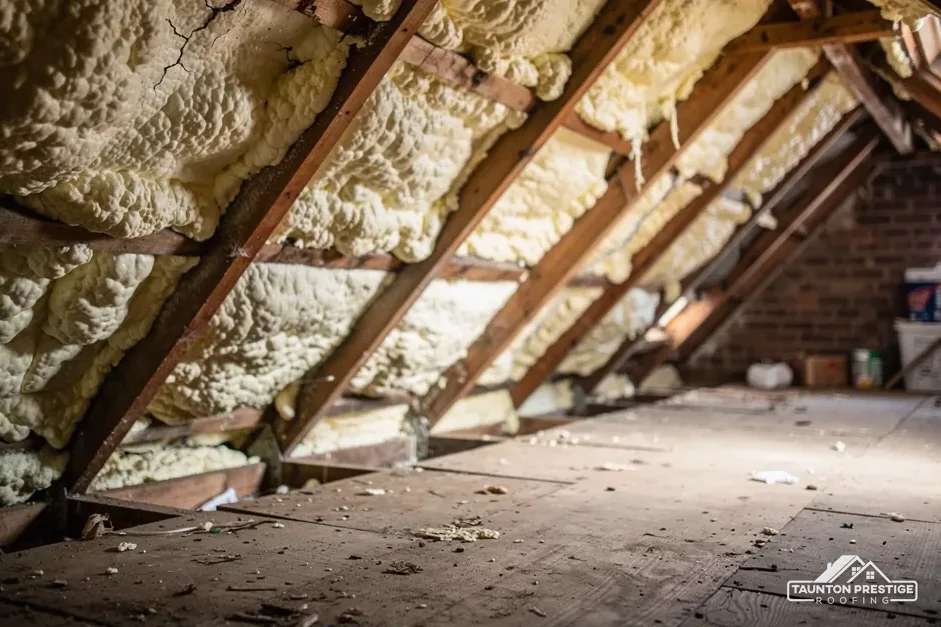
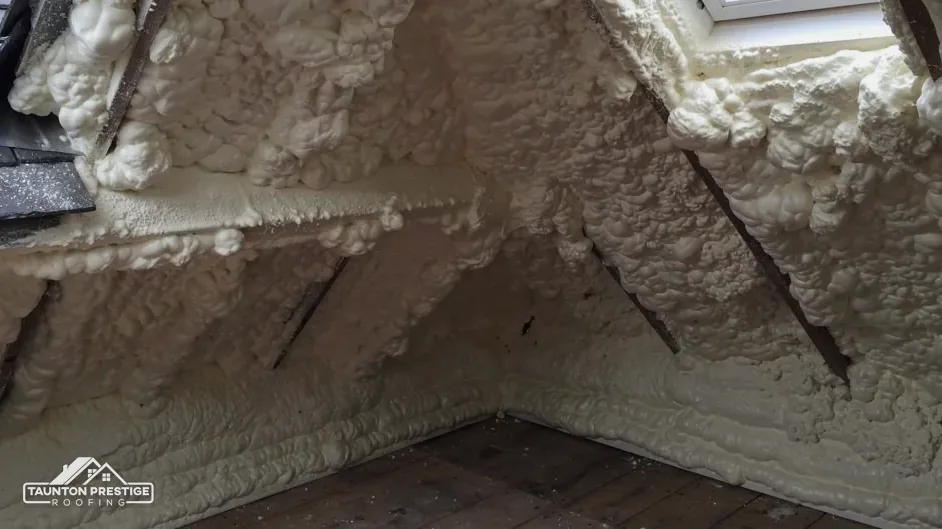
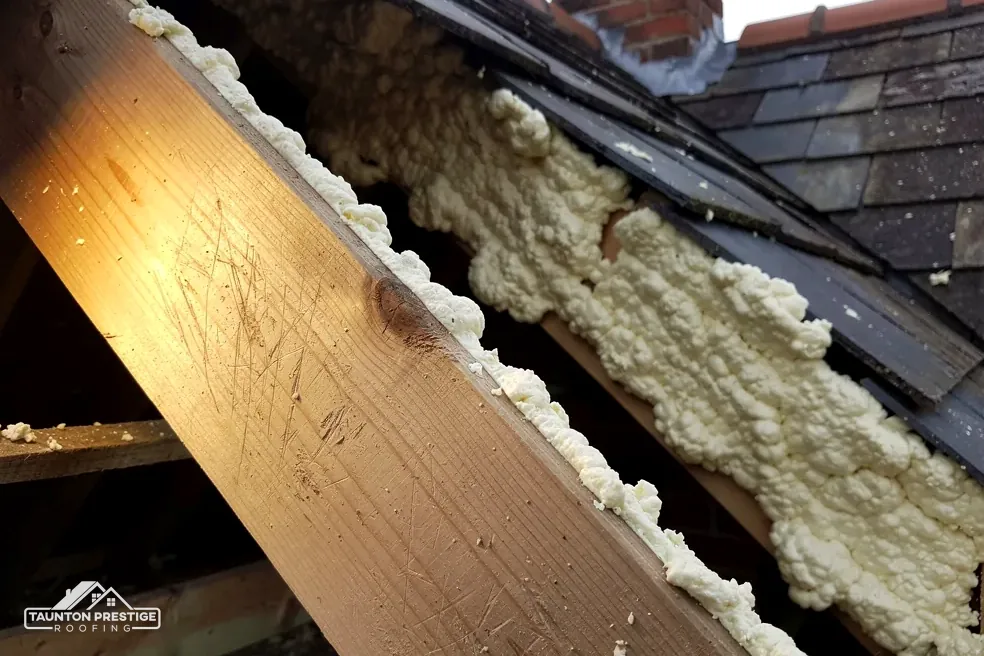
Soft, spongy foam that tears away from timber in clumps.
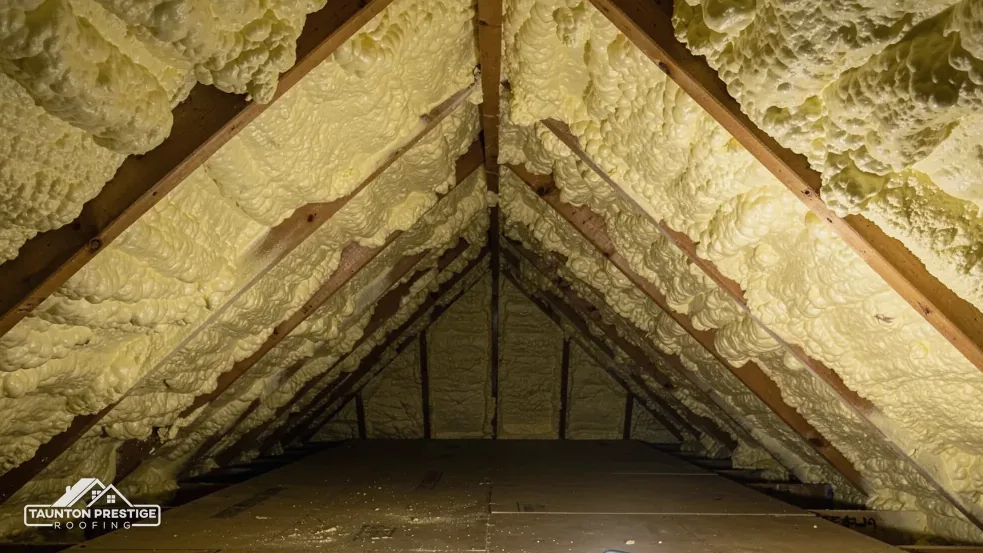
Foam off the rafters, and the roof checked underneath.
Roofers taking spray foam out of Somerset lofts, then reading the timbers, felt and tiles it has kept out of sight for years.
Soft, spongy foam that tears away from timber in clumps.
Hard, rigid foam that often bonds to felt, battens or tiles.
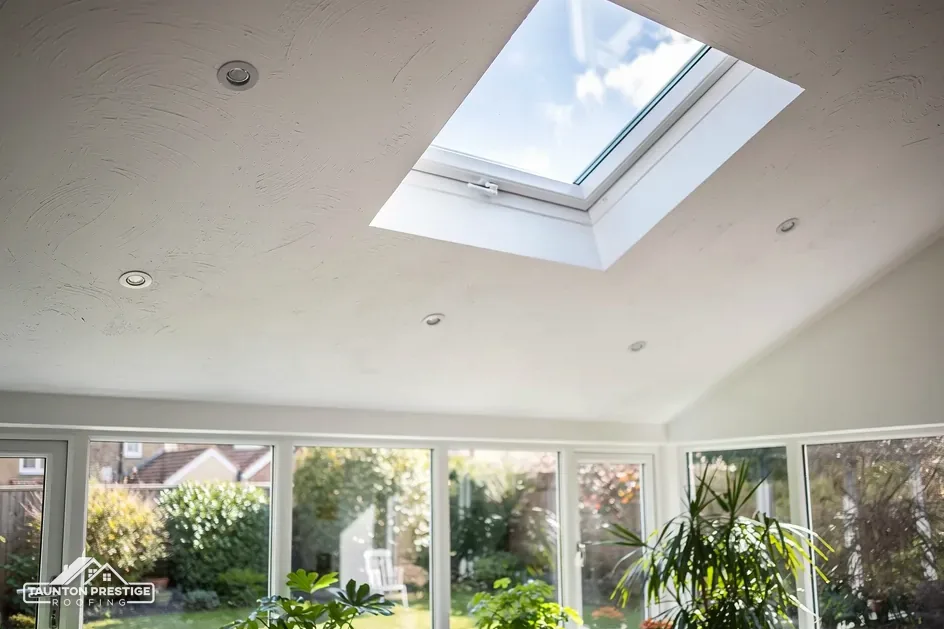
Rolls laid between and over the ceiling joists afterwards.
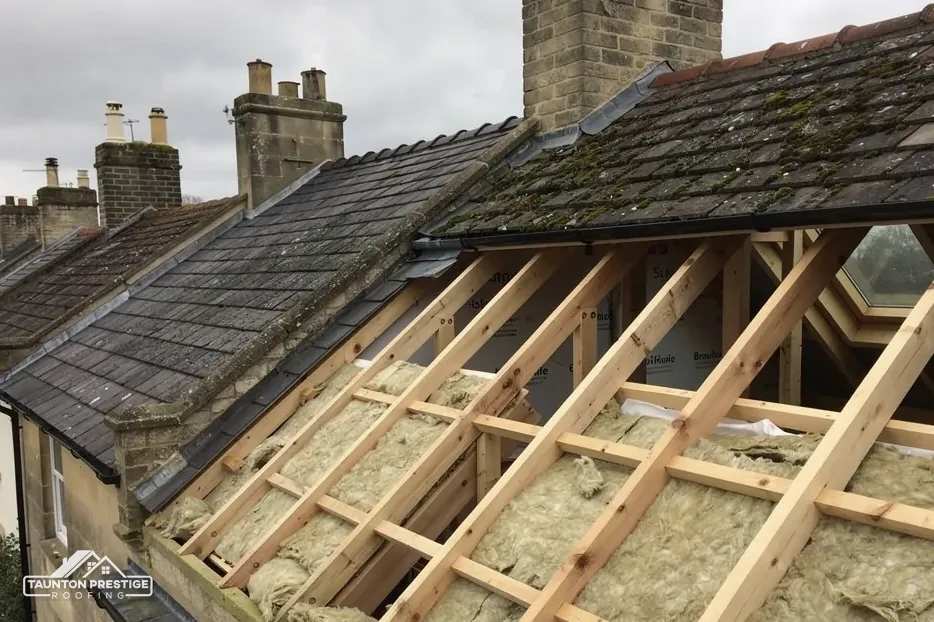 Open-cell foam removalCut and peeled from each rafter
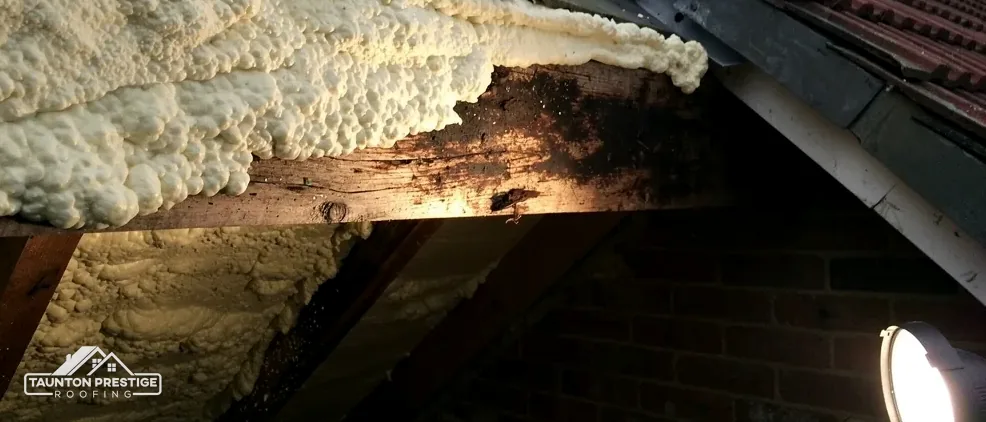 Closed-cell foam removalWorked free without cracking the tiles
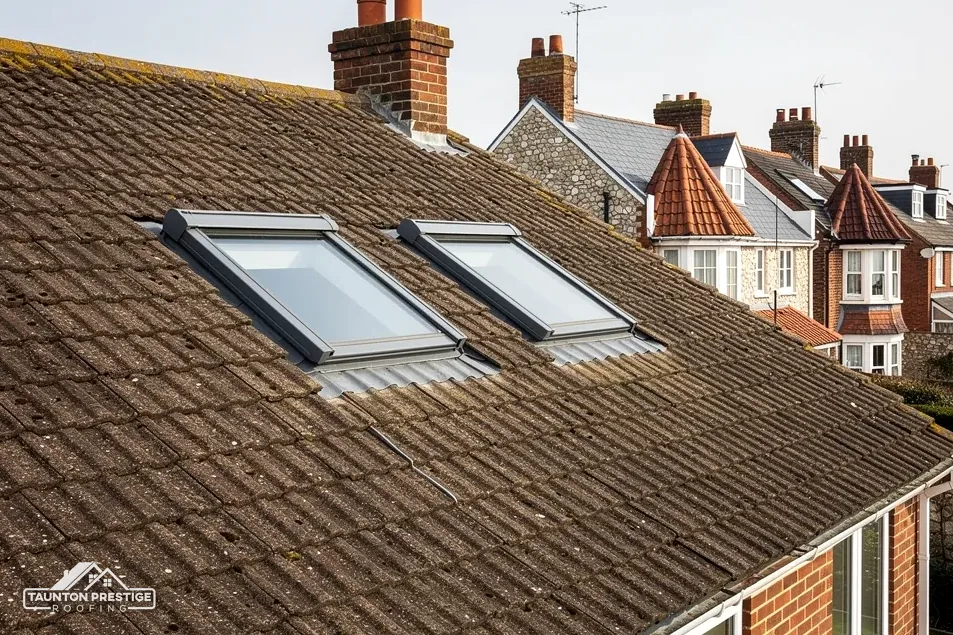 Timber and batten checksEvery rafter examined once it is bare
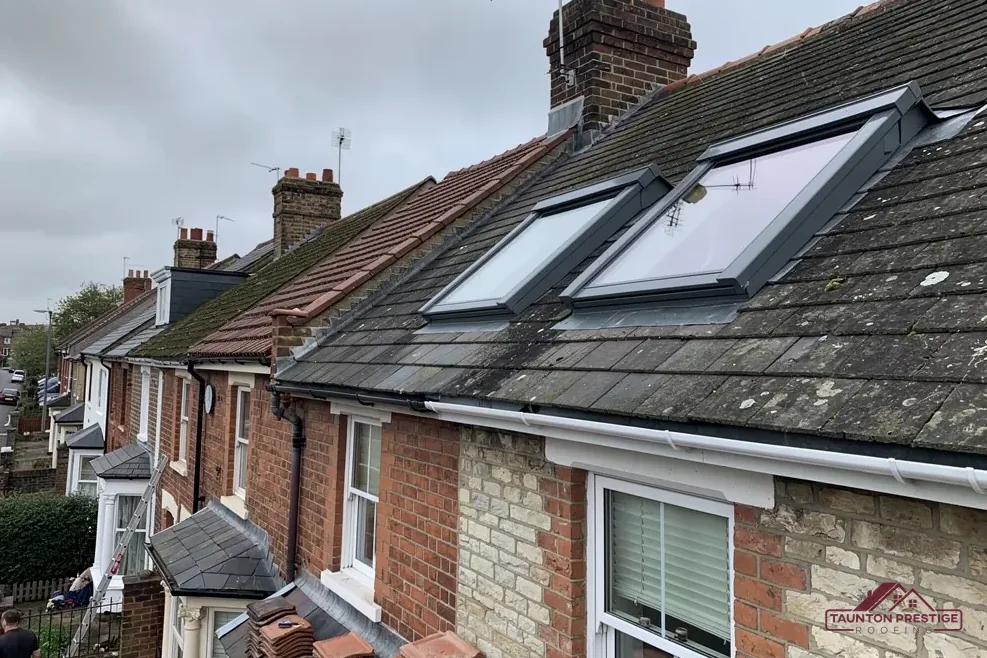
 Felt and tile repairsDamage found under the foam put right
 Loft re-insulationInsulation and airflow set up properly
 Photo recordPictures of your bare timbers, in writing
The foam lifts cleanly and the timbers and felt behind it are sound.
Some soft battens, torn felt or slipped tiles turn up once the foam is off.
Rigid foam is bonded to the tiles, or decay runs along a whole slope.
The spray foam loft walk
How we read a foamed loft, from the hatch up to the ridge, and which parts you can safely look at yourself first.
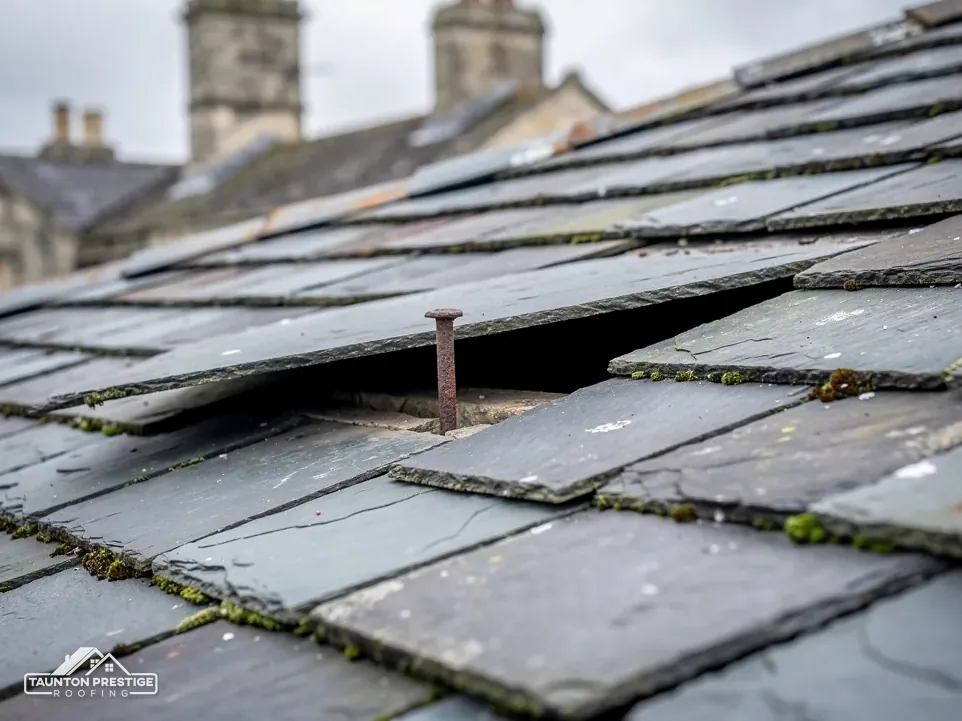
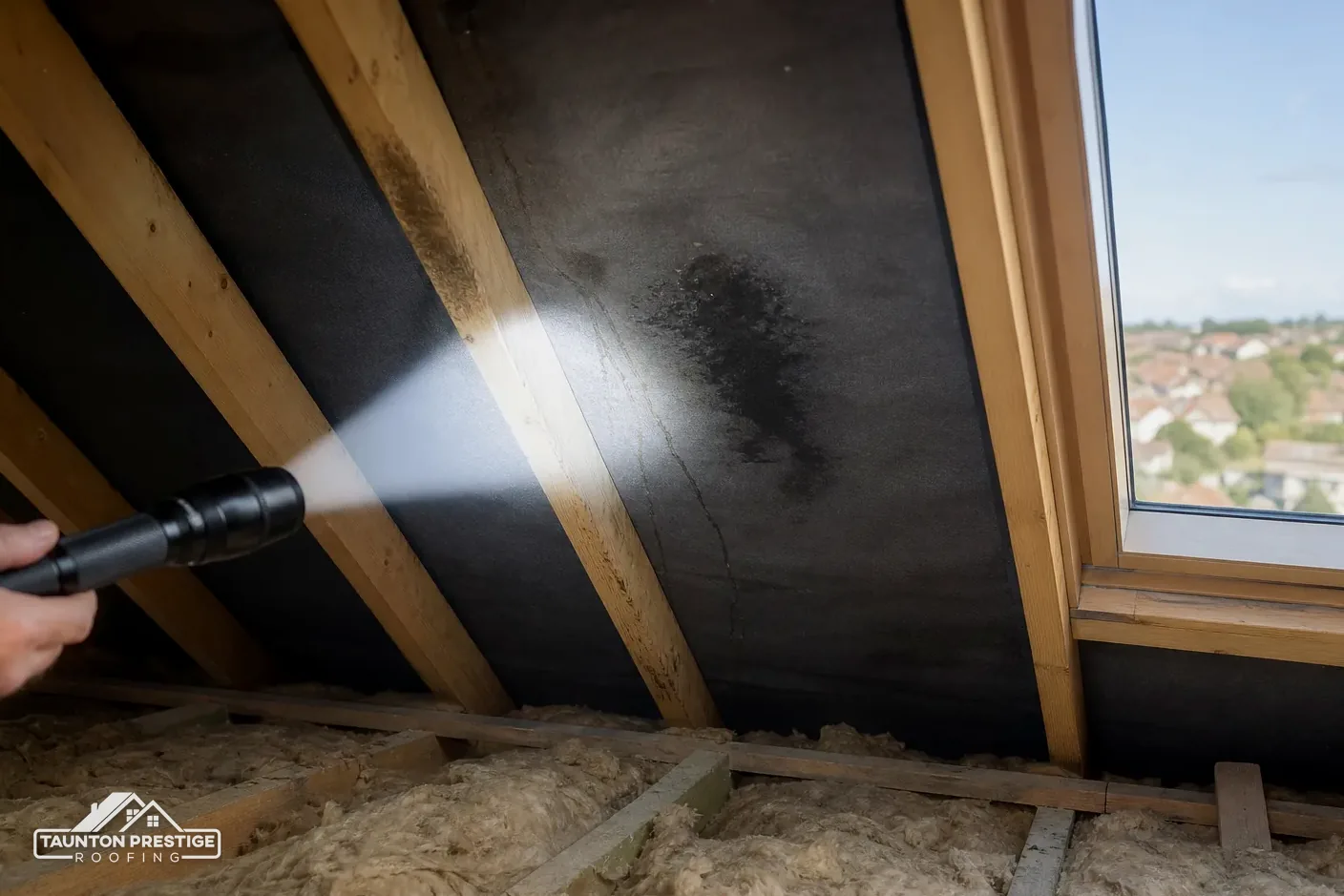
Spray foam insulation starts as a liquid sprayed onto the underside of a pitched roof, where it swells and sets between and over the rafters, the sloping timbers that carry the weight of the roof. It was sold on the doorstep and online as a quick way to warm a loft or hold loose tiles in place, and homes in Taunton and across Somerset were among those that had it put in. Before anyone prices taking it out, settle which kind of foam you have, because the two behave very differently once a blade goes in.
Look for
Soft foam usually lets go of the timber; rigid foam can grip the felt and tiles behind it.
Open-cell foam is soft and light. Press it with a gloved thumb and it gives, rather like a bath sponge, and it is usually pale cream or white. Closed-cell foam is hard and dense: it barely dents, it often carries a yellow or green tinge, and it sets into a rigid crust. In many lofts the closed-cell kind was sprayed straight onto the back of the felt or, where there was no felt, onto the tiles and battens themselves. Our guide to open-cell and closed-cell spray foam sets the two side by side.
Open-cell foam can usually be cut back and pulled from the timber in sections, so the rafters come out of it close to how they went in. Closed-cell foam grips whatever it touches. Pull it off a tile and the tile may lift or crack; scrape it from a batten and the surface of the wood comes too. That is why one foamed loft can be a few days of steady cutting while the loft next door turns into a roof repair as well. Depth counts as well: foam filling the full depth of each rafter hides far more than a thin coat sprayed on the felt.
Have a look from the hatch with a torch and note the colour, whether the foam covers the rafter faces or sits between them, and whether any felt or tile backs still show. Stay on the hatch ladder; never step onto the foam or between the joists. If you kept paperwork from the firm that sprayed it, dig that out as well; a product name or invoice can settle the question early.
The reason a homeowner first rings us about spray foam is often paperwork rather than a leak. A buyer's surveyor or a lender's valuer climbs the loft ladder, sees foam across the rafters and puts it in the report. The sale or remortgage then slows while everyone works out what it means. That can land hard if the foam went in years ago on a sales pitch that made it sound like an upgrade to the house.
Because of what it covers, first of all. A surveyor judges a roof by looking at the rafters, battens and felt, and foam over them leaves those parts out of view. There is also a concern that moisture can sit against timber that is sealed in, where it cannot dry, and that decay could start without anyone seeing it. Rigid foam bonded to tiles raises a further question: whether the roof can be mended later without stripping a slope. The RICS consumer guide on spray foam insulation gives the starting point plainly: "Do check with your mortgage provider whether their lender policy allows the installation of such products". So the first call is to your own lender or broker, to ask what they will want to see.
Nobody outside the lender can promise its decision, and a contractor who does so is guessing. What removal does is take away the cause of the doubt. The timbers are bare, they can be inspected, and any repair is carried out and recorded. A buyer's surveyor can then look at the same thing any other loft would show them. If a report has already arrived, our guide on what to do when a surveyor flags spray foam sets out the order of calls to make, starting with your lender and ending with a booked date.
It helps to share the page of the report that mentions the foam when you first get in touch. It shows exactly what the surveyor saw and what they asked for, so the visit to your loft can answer those points directly instead of starting from scratch. If equity release is the route you are on, the same steps apply: ask that lender what it wants to see.
What decides the price
Spray foam removal in Taunton is hand work. Tools that blast or grind at speed risk cracking tiles and gouging rafters, so the foam comes off with blades, saws and scrapers, a section at a time, working down from the ridge towards the eaves. The eaves are the lowest edge of the roof, where it overhangs the wall. Before the first cut we lay boards across the ceiling joists so nobody puts a foot through a ceiling, rig up lighting, and seal the hatch so the dust stays in the loft rather than drifting across your landing.
Open-cell foam is cut into blocks along each rafter and pulled away, then the timber faces are scraped clean. Closed-cell foam takes more patience. Where it sits on felt, the felt often tears away with it, and where it is bonded straight to tiles or slates, each back has to be worked free piece by piece. Now and then a tile cannot be saved; our answer on foam stuck to roof tiles explains when that happens and what replaces it. Any tile that was relying on the foam to stay put is marked for the roof side of the job.
Rigid foam comes off a tile at a time, never in one sweep.
Yes, though it has to be cleared first. Stored boxes come down, and boarding over the joists may lift for a while so we can reach into the eaves. A loft conversion is harder, because the foam usually sits behind plasterboard and that board has to come off the slope. Electric cables running through the loft are traced before any cutting starts, and nothing buried in foam is cut blind. If you need something from the loft partway through, say so and we will pass it down to you.
Bats get a check too. Roof repairs and replacements both appear on GOV.UK's list of work that can affect bats, so we look for droppings along the ridge and at the gable ends before any foam is touched, and stop to take advice if we find them. Foam is bagged as it comes off and carried straight out to the van, so the waste never piles up in your house, and the loft is swept clean at the end of every working day.
Look for
Once the foam is off, the roof can be read like any other, and this is where having a roofer do the job pays off. Every rafter is looked at along its length, and the battens, the thin horizontal timbers the tiles hang from, are checked where they cross. We push a sharp point into any dark patch: sound wood resists it, while decayed wood gives. Stains on their own are no fault. What matters is whether the timber is still firm and dry. A moisture meter pressed into the wood helps here, showing whether a mark is damp now or just the ghost of an old leak.
What decides the price
Look for
Sometimes, and you should hear that before the job starts rather than halfway through. The usual finds are torn or missing felt, battens gone soft where water sat on them, nails rusted through, and tiles that slipped long ago and were held in line only by the foam. Less often, and only seen once all the foam is off, a rafter has decayed at its foot near the eaves, where the roof is coldest and the air moves least. Our guide to spray foam, condensation and timber rot explains how that can happen behind a sealed layer.
Quite a lot. A weak rafter can take a sound new timber bolted or screwed along its side, a split batten can be supported, and small tears in the felt can be patched. What cannot be done well from inside is renewing a whole run of battens and felt, because the battens sit under the tiles and the felt has to run unbroken beneath them. That part is done from the roof side. If anything structural looks wrong, a structural engineer sees it before we carry on. You see the same photos we take, and we talk you through each one before any extra work is priced.
Foam was often sold as a way to stop a leak, and the Energy Saving Trust, writing about spraying foam onto a leaking roof, puts it simply: "We don't recommend doing this." Any leak the foam was covering gets traced to its source at this stage and fixed in the roof itself, with matching tiles where they can be found.
Taking foam out leaves the house colder than it was, so the job is not finished until the loft is insulated again. The usual answer is a return to a cold roof: insulation laid between and across the ceiling joists, with the roof space above left cool and ventilated. That keeps the timbers in moving air, where any moisture can dry off, and it leaves every rafter and batten on view for the next surveyor who climbs the ladder.
That depends on what lies under the tiles. BS 5250 sets out how moisture in a building should be handled. For a cold roof under HR (non-breathable) underlay, Marley's guidance under that code asks for a continuous 25mm eaves gap at pitches of 15 degrees or less, and 10mm above 15 degrees. Where the underlay is an LR breather membrane and the ceiling below is well sealed, the gaps that ordinary eaves leave by accident may do, as long as the membrane's third-party certification allows it. Old felt that has sat behind foam for years often needs extra vents low down at the eaves, and now and then up by the ridge, to get air moving through the roof space again. Insulation must stop short of the eaves gap, too, or it blocks the very airflow it depends on.
A cold, airy loft lets the next surveyor see every timber for themselves.
It can. Somerset Building Control's fee table includes "renovation of a thermal element to a single dwelling (re-roof/upgrade to insulation)", so ask your building control body whether your job is notifiable before work begins. Where it is, Part L sets the target. Approved Document L 2021, Table 4.3, gives a roof threshold of 0.35 W/(m²·K) and an improved value of 0.16. Under paragraph 4.13, if 0.16 cannot be reached for technical or practical reasons, or would take longer than 15 years to pay back, the roof is brought to the best level that does pay back within 15 years. From 24 March 2027, the 2026 edition's Table 3.3 takes over.
Insulating between the rafters again, in a loft conversion for example, is a different design that needs its own airflow path above the insulation. Our guide to timbers, membranes and re-insulating after removal covers both routes, and what to settle before choosing one.
When the foam has gone, your lender, broker or a buyer's surveyor will want to know what was done. A phone call rarely settles it. What helps is a clear record: photos of the loft with the foam still in place, photos of the bare timbers once it is off, close-ups of every repair, and a short written statement of the work carried out and the insulation put back. That record is what we hand over at the end of the job, and it is yours to forward to whoever needs it.
Each lender sets its own requirements, so ask yours, or your broker, before we start, and we will make sure the record covers what they name. Ask whether they want written confirmation that all the foam has gone, an inspection of the timbers by their own surveyor afterwards, or both. Because the photos show your own roof, slope by slope, they answer the question the original report raised: what state are the timbers in behind the foam? Keep the record with the house deeds, as a future buyer's surveyor may ask the same question again, and your conveyancer can use it when the sale forms ask about work done to the property.
No. A statement from the firm that did the work describes the work. It does not bind a lender, and any contractor who suggests otherwise is overstepping. What it does is give the lender's own surveyor something solid to check against, and it shows the roof was put right rather than simply cleared. If you want a full condition report on the roof as a whole, covering the slopes, chimney and roofline as well as the loft, our roof inspections service does that as a separate visit. Every photo we take is labelled with the slope and the bay it shows, so it can be matched to the roof on any later visit.
A tip for anyone selling: start the record before the foam comes out. A clear photo from the hatch on the first visit, taken from the same spot as the finished photos, makes the change plain to anyone reading the file months later, including a buyer's surveyor who never saw the foam at all.
Look for
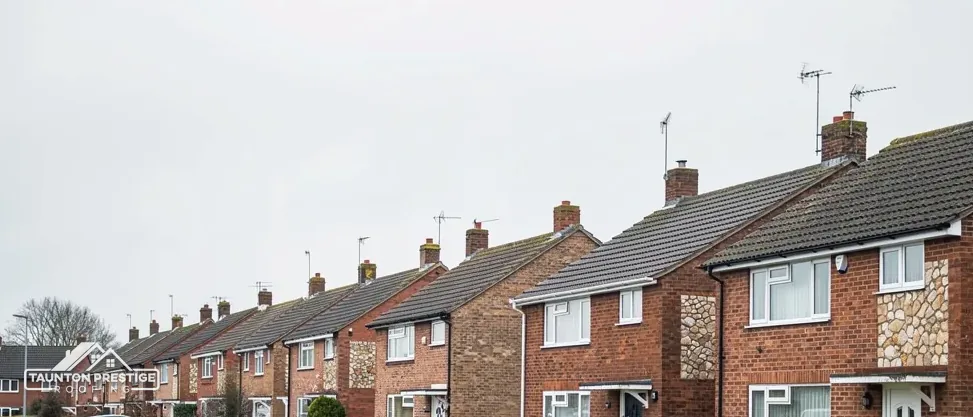
Some foamed roofs are better re-covered from outside than worked from within. If closed-cell foam is bonded to every tile on a slope, freeing them one by one can break a large share of them and still leave the felt ruined. If the battens are soft from end to end, they have to be renewed from above in any case. Then stripping the slope from outside, taking the foam away with the old covering, and laying new membrane, battens and tiles can cost less over the life of the roof and leave a sounder result. It also gives the chance to put a breathable membrane under the new battens and set the ventilation right from the first day.
What decides the price
Often not. Where the foam lifts cleanly and the timbers are sound, the roof stays exactly as it is and only the loft changes. A re-roof comes into the picture when the survey shows damage across a whole slope, or when the tiles themselves are close to worn out and are glued to the foam. Our guide to removing the foam or re-roofing works through both cases, and our roof replacement service explains taking a whole roof off and laying it again.
The Planning Portal's test has two parts: where less than 25 per cent of the building envelope and less than 50 per cent of the roof, no building control application is normally required. A covering that is 15 per cent or more heavier than the old one does need approval, and a structural check before it is loaded out. Somerset Building Control has set no local figure, so ask your building control body before a large job starts. On a house, a new covering is normally permitted development under Class C. A listed home also needs listed building consent, and a conservation area is a good reason to ring the planning team first.
Re-roofing in Somerset weather is planned so that each section opened up is weathertight before the end of the day, with sheeting ready on the scaffold. If a report has flagged foam in your loft, book the loft walk and we will tell you which of the three routes your roof calls for.
Walked the roof?
From the hatch, with a torch, jot down whatever shows without leaving the ladder. The cutting, the timber checks and the roof side of the job are ours.
| Job | Typical range |
|---|---|
| Roof survey | around £300 |
| Replacing 10 to 20 roof tiles | £200 to £275 |
| Front-elevation scaffold, one week's hire | £550 to £750 |
| Full re-tile of an 80 m² roof | £3,000 to £8,000 |
| New roof, national average | around £5,250 |
Typical UK ranges from MyJobQuote, not our prices. Foam removal is priced on the foamed area, the foam type and access, and your written price follows the survey.
MyJobQuote cost guides, Oct 2026
One question per page, from this service: open-cell and closed-cell foam, timber rot, lender paperwork, tiles stuck to foam, re-insulating, and when a new roof makes more sense.
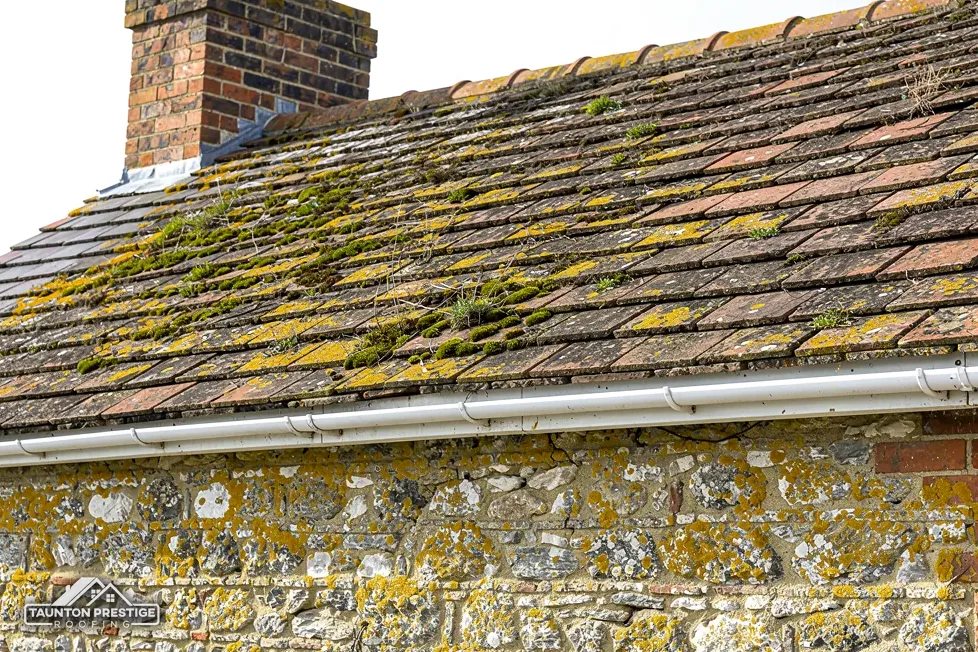 How Much Does Spray Foam Removal Cost?Spray foam removal has no standard price, because no two lofts are alike. This guide sets out what moves the cost, what a sensible quote covers and...
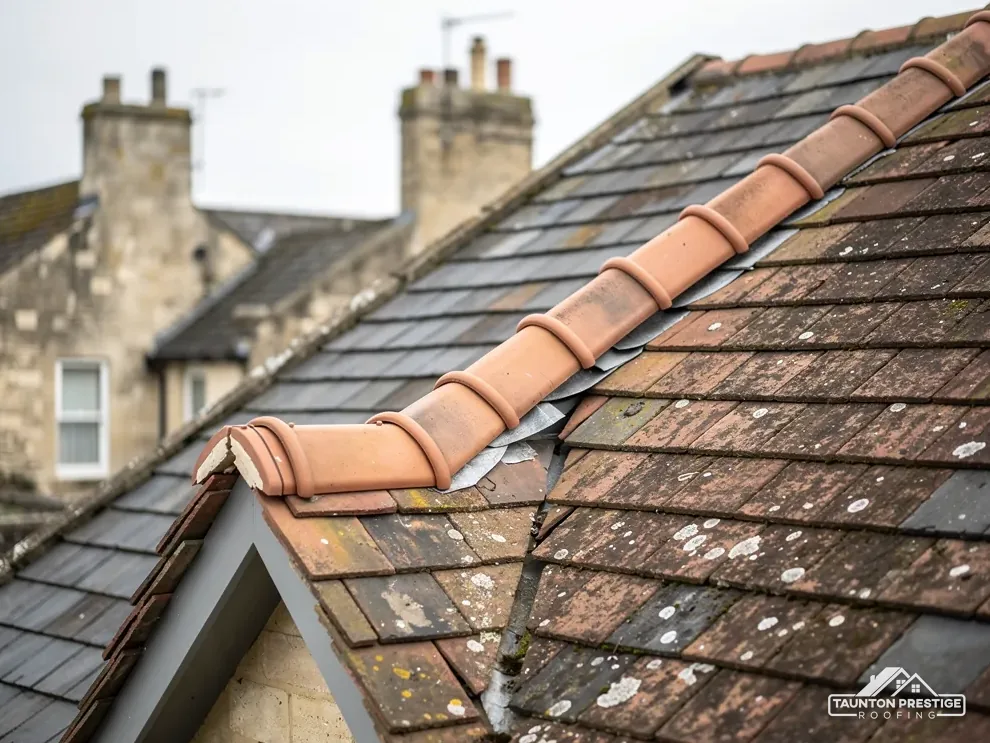 How Is Spray Foam Insulation Removed?Spray foam can be removed, but only by patient hand work that protects the timbers, felt and tiles beneath it. This guide walks through the method...
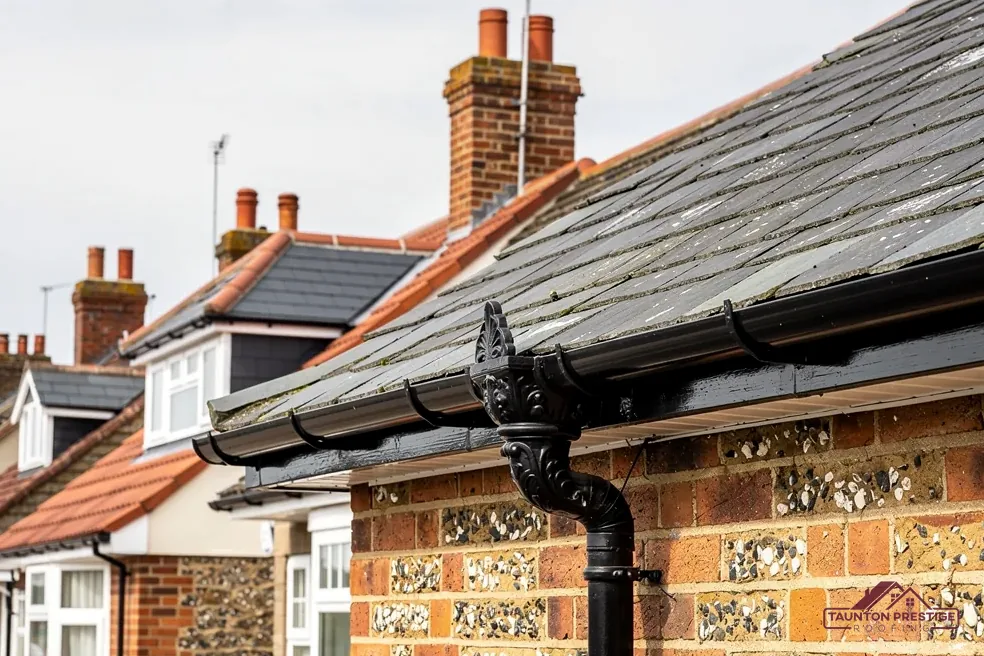 Open-Cell vs Closed-Cell Spray Foam: Why It MattersTwo very different materials are both sold as spray foam. This guide explains open-cell and closed-cell foam, how to tell which one is in your roof...
 After Spray Foam Removal: Timbers, Membranes, Re-InsulatingWith the foam out, the roof is bare for the first time in years. Here is what gets checked, what may need repair, how the loft breathes and how it is...
 A Surveyor Flagged Spray Foam: What to Do NextA surveyor's note about spray foam can stall a house purchase or a remortgage. This guide covers what the note means, what RICS advises, and how a...
 Spray Foam on a Leaking Roof: Why It's Not a RepairFoam sprayed under a leaking roof does not mend the leak. It tends to hide it. This guide explains what the Energy Saving Trust advises and why the...
Yes. Soft open-cell foam and rigid closed-cell foam can both be taken off by hand. Open-cell usually comes away from the rafters in sections; closed-cell takes longer and may bring felt or tiles with it. Once the timbers are bare they are inspected, any damage is repaired, and the loft is insulated again with the airflow it needs.
It turns on the area of loft that is foamed, the type and depth of foam, how easy the loft is to work in, and what repairs turn up underneath. Re-insulating adds to it, and a re-roof adds far more. Seeing the loft is the only reliable way to pin the figure down for your home.
Open-cell foam is slow, dusty work but rarely difficult. Closed-cell foam is harder, because it bonds to whatever it was sprayed on, and freeing it without cracking tiles or tearing felt takes patience. Cramped lofts, foam hidden behind plasterboard in a loft conversion, and cables buried in the foam all add time, so the survey looks for each of them.
It removes the reason the foam was flagged, but no contractor can promise a lender's decision. The RICS consumer guide tells homeowners to check with their mortgage provider, so ask yours what evidence it wants. We then make sure the photos and written statement we hand over cover those points, so nothing has to be chased later.
Often because a survey or valuation picked it up during a sale or remortgage. Others want to see their timbers again, worry about damp, or were sold the foam as a cure for a leaking roof, which the Energy Saving Trust advises against. Others simply want a loft they can use, store things in and inspect.
Yes. Beyond Taunton itself we take foam out of lofts in Wellington and Bridgwater, in hill villages on both the Quantock and Blackdown sides, out on the Levels, and on the Devon side around Tiverton and Cullompton. Foam stuck to old clay tiles needs extra care in those older villages, because a matching tile can be hard to source.
Send us the survey page that mentions spray foam and a photo from your loft hatch.