Castle Street, Grade I
Laid out around 1724 by the duke of Chandos; numbers 1, 10 and 12 are all listed Grade I.
Castle Street's Grade I houses, pantiles and the tidal Parrett
Bridgwater is a port town on the tidal Parrett, with Grade I houses on Castle Street and a clay tile past. Each roof is read before it is priced.
Laid out around 1724 by the duke of Chandos; numbers 1, 10 and 12 are all listed Grade I.
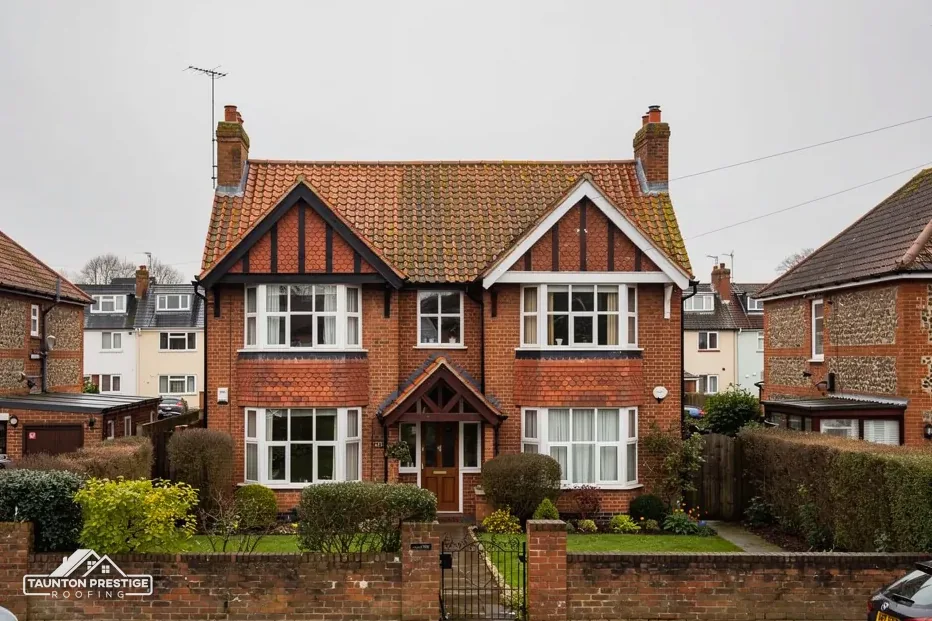
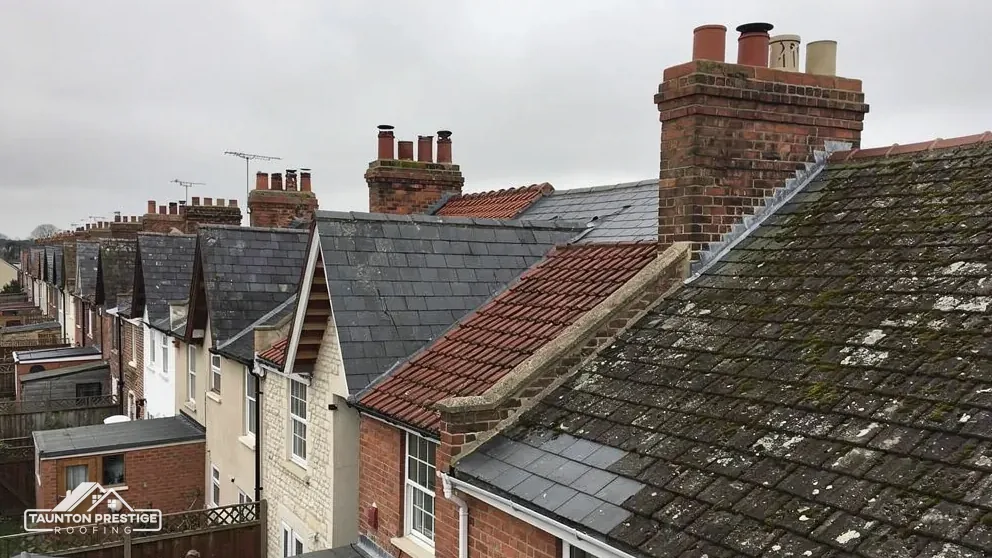
Early houses were generally two low storeys under steep pantiled roofs aligned with the street, says the Victoria County History.
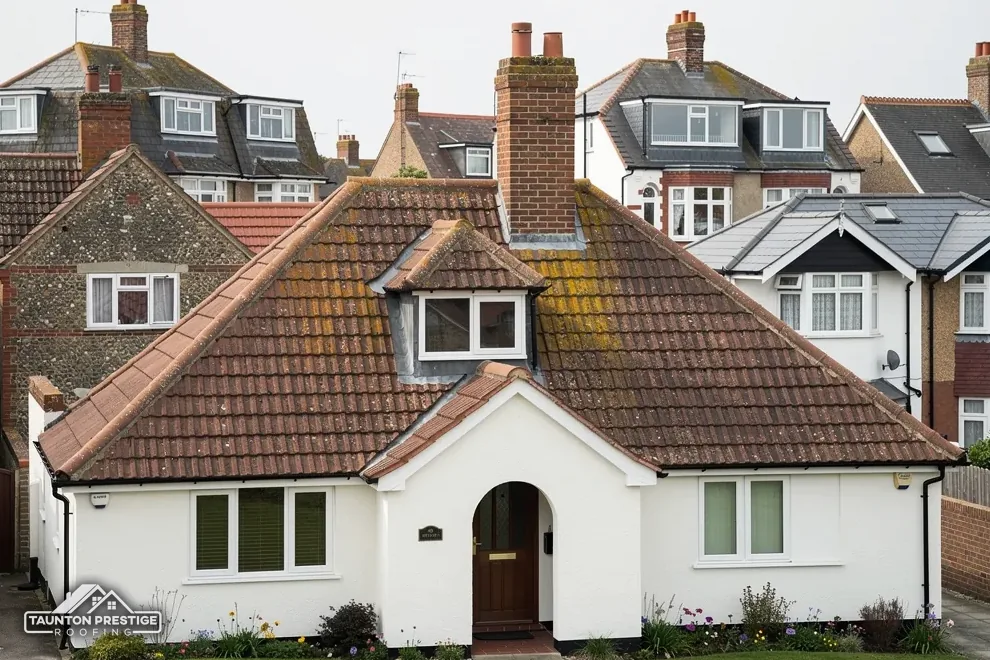
Ornamental bricks and tiles made in Bridgwater decorated even humbler 19th-century terraced houses.
Street map of Bridgwater with Wembdon, Huntworth, Rhode, North Petherton marked around it, and Taunton.
Wembdon lies just north-west of Bridgwater and Cannington further north-west, Huntworth south-east, Rhode south-west and North Petherton to the south.
About 9 miles north-east of Taunton, Somerset Council (unitary).
Four checks on the tidal Parrett
Grade I houses, a clay tile heritage, a flat roof beside a tidal river and the council office in King Square: four checks for Bridgwater.
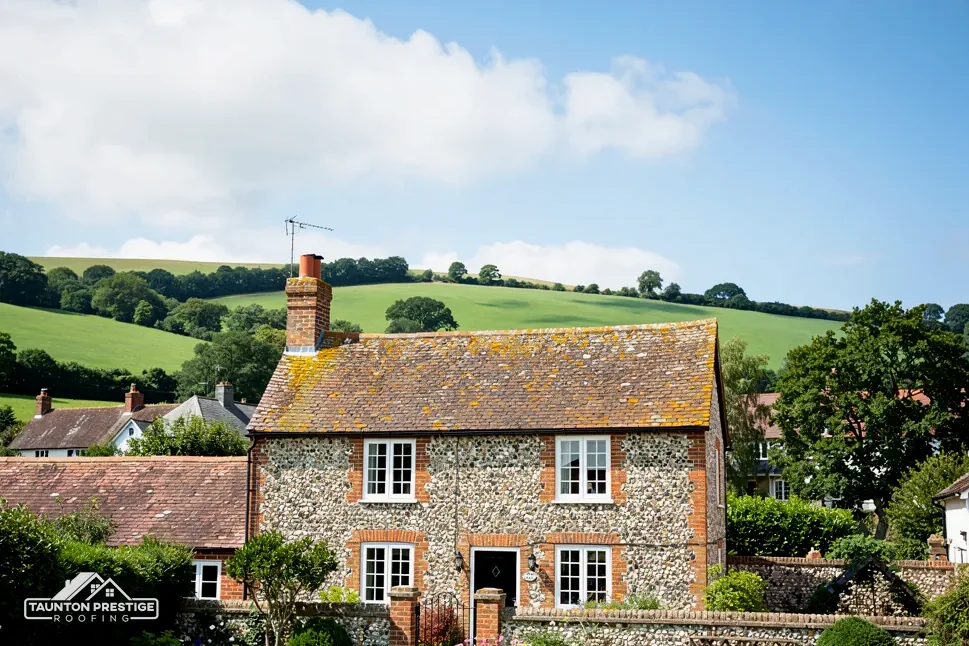
Castle Street is where Bridgwater's roofs start to look grand. The Victoria County History says it was laid out about 1724 by the duke of Chandos, originally as the site for six five-bay houses on each side of a broad roadway. 1 Castle Street was first listed Grade I on 24 March 1950, and numbers 10 and 12 carry Grade I entries too, as does the Parish Church of St Mary. The National Heritage List has 200 entries within 900 metres of the centre, which is a lot of protected roofs for one town.
The national dataset names three: Bridgwater Central Area and Dock, Bridgwater Northfield and Bridgwater St John's. Streets near a boundary can be hard to place by eye, and a house on the wrong side of a line is treated very differently. Somerset Council's planning team holds the definitive maps, and its answer is worth having in writing before a covering is changed. Our guide to planning permission for roof work explains the routes.
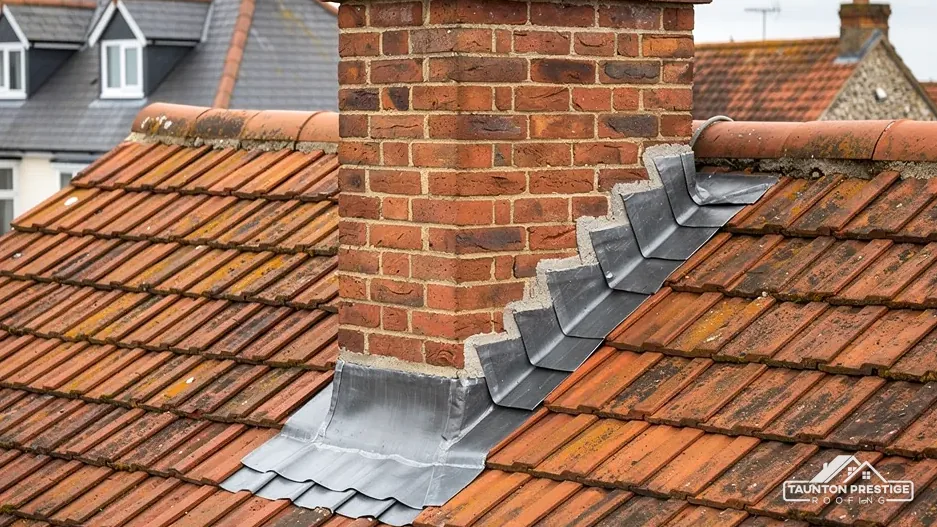
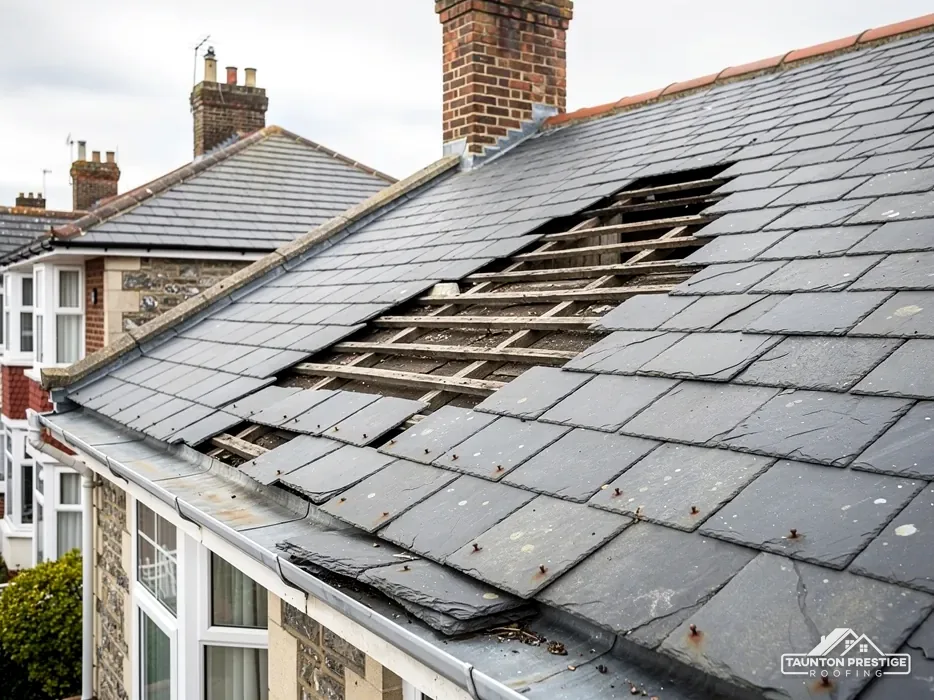
The top grade does not mean a different process, but it raises the stakes. Any work that affects a listed building's character needs listed building consent, and conservation officers look hard at materials, ridge details and chimneys. A like-for-like repair, with the same material set in the same pattern, is the easy case. A new covering, a new roof window or a rebuilt stack is a conversation.
Every slope, every valley and every junction with a neighbour's roof, with photographs, so the council and you work from the same facts. Parapet gutters and hidden valleys, which cannot be seen from the street, are the first things to ask for.
Look for
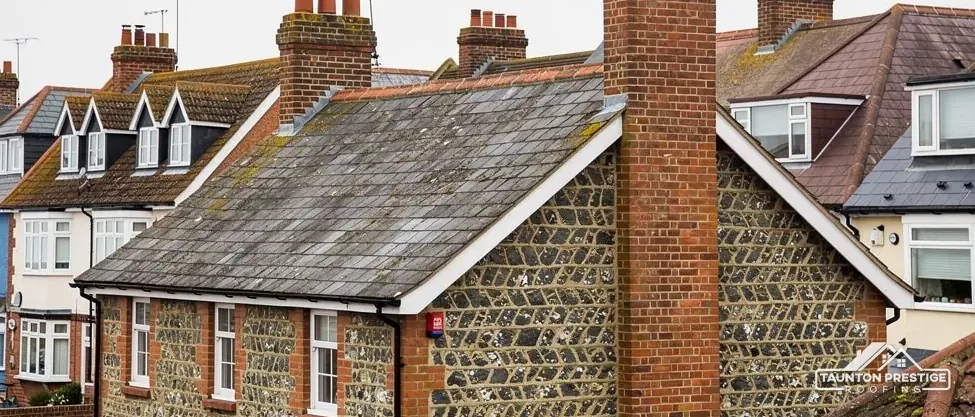
Bridgwater made its own clay products. The South West Heritage Trust says the kiln at the Somerset Brick and Tile Museum was one of six at the former Barham Brothers' Yard in East Quay, last fired in 1965, and that Bridgwater's yards turned out bricks, tiles and terracotta plaques that gave many Somerset towns their look. A local heritage leaflet adds that plain tiles, ridge tiles (once called crease tiles) and pan tiles were made by hand, and the Double Roman tile came later. About 1850 there were 16 brick and tile works within 2 miles of Bridgwater Bridge.
What decides the price
Clay is hard-wearing, but the mortar and fixings that hold it are not. Check the ridge bedding first, replace cracked tiles one at a time, and avoid paint or sealants that trap moisture. Marley quotes the BRE minimum life expectancy of 60 years for clay tiles, while a conservation article on old peg tiles calls that figure clearly not a reliable guide. A survey of the actual roof is the better test.
A pantile is a single-lap clay tile with a curved profile, laid in overlapping rows; Double Roman is another profiled pattern that Marley still makes in concrete. Both can look similar from the street, which is why we identify the tile on the roof itself, from the underside, before we order anything. Matching a historic profile is often the difference between a roof that blends in and one that jars.
Yes. Marley lists the minimum pitch for a concrete Double Roman at 22.5 degrees (smooth), and for its clay Lincoln pantile at 15 degrees. Always check the maker's data sheet for the exact product, and never assume an old profile suits a new pitch. Our pitched roofing page covers how we decide between repair and re-covering.
Bridgwater stands on the tidal Parrett at the edge of the Levels. The Environment Agency's Flood Map for Planning puts Flood Zone 3 within about 250 metres of the mapped centre. GOV.UK says the Bridgwater Tidal Barrier will better protect at least 11,300 homes and 1,500 businesses from tidal flooding. A flood map and a barrier are about the land and the river. What a roof contributes is how quickly it sheds rain, and that is decided by gutters, downpipes and any flat sections.
A flood map describes the river and land, and the gutters decide how fast rain leaves the roof.
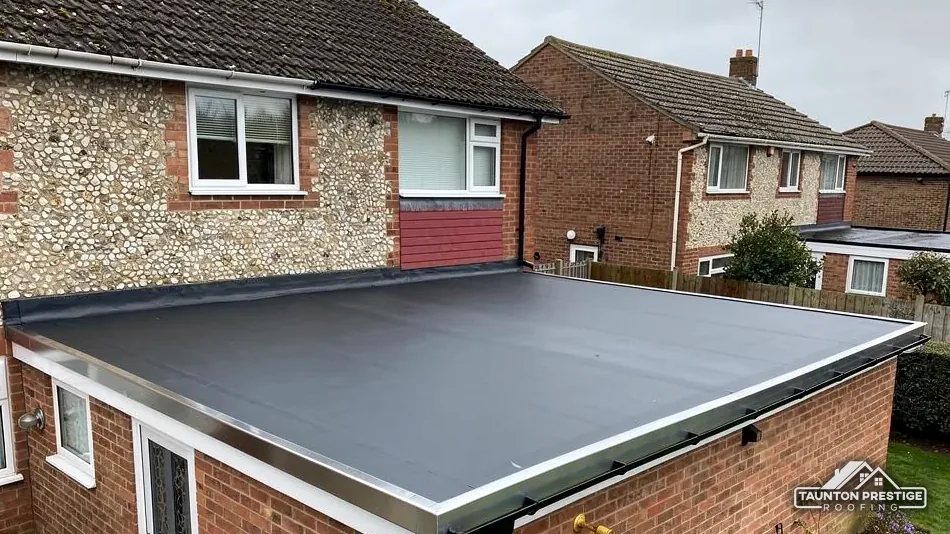
The fall has probably gone, an outlet may be choked, or the deck may have dipped. BS 6229:2025 keeps a minimum finished fall of 1:80, and IKO advises designing for 1:40 so that the finished roof still drains. Less puts EPDM, a one-piece synthetic rubber sheet, at 30 to 50 years, with GreenSpec at 20 to 30, and notes that careful felt work may reach 20 years. MyJobQuote (20 Oct 2026) puts a typical UK range for flat roof replacement at £1,500 to £6,000, with an average of £2,400, and Less gives £1,200 to £2,500 for a 15 m² garage. Area, deck condition and edge details decide yours. Our flat roofing page compares the coverings.
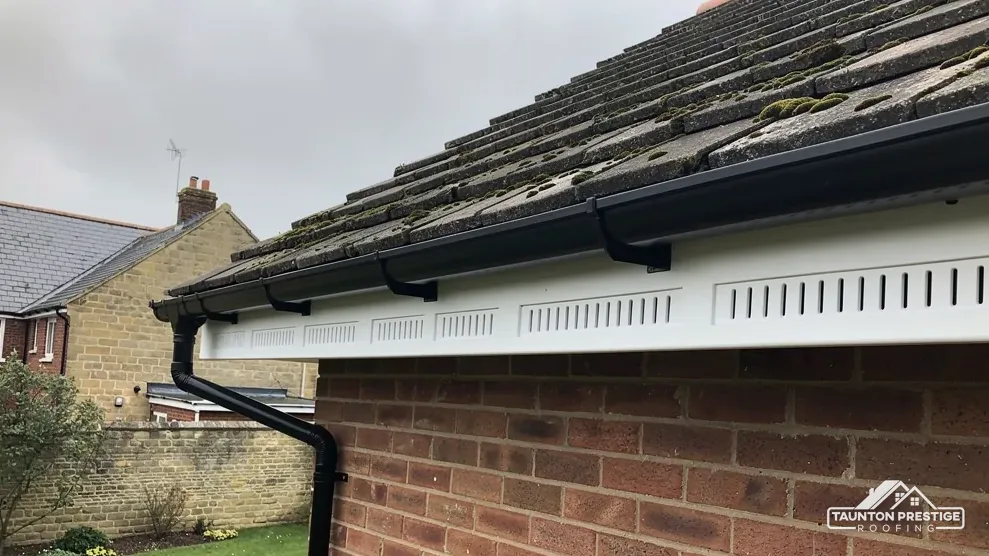
Gutters that overflow in one spot usually have a blockage or a dropped bracket. Brett Martin's guidance gives 1mm of fall for every 600mm of run. Stains running down a wall beneath the eaves are often the gutter, not the roof. On a terrace, one blocked hopper head can send water down a neighbour's wall, which is why the survey follows the whole run and not just the length above your own door. Our gutters, soffits and fascias page explains the options. For flood risk at your own address, GOV.UK has a long-term checker.
Somerset Building Control has its office at Bridgwater House, King Square, Bridgwater TA6 3AR, and covers four old district areas (Mendip, Sedgemoor, Taunton and West, South Somerset). Its number is 0300 303 7790. Applications can be made online, by email or by post to Bridgwater House, and its page asks you not to hand them in at the old Mendip District Council or Somerset West and Taunton offices. Its dangerous structures page gives loose roof tiles and unstable chimneys as examples, and puts the cost of making a building safe on its owner.
What decides the price
For Full Plans applications, Somerset Building Control says to expect a first reply in 10 working days and a decision in about 5 weeks. Regularisation, which covers work done without approval, is available for work carried out after 11 November 1985. Not every roof job needs any of these. On the Planning Portal's test, where under 25 per cent of the building envelope and under 50 per cent of the roof is touched, no application is normally required, but a covering 15 per cent or more heavier does need Building Regulations approval.
Where scaffold has to stand on the highway, section 169 of the Highways Act 1980 requires a licence from the highway authority, which in Bridgwater is Somerset Council. Licences for scaffold on the highway come from Somerset Council, which grants them only to accredited contractors, and the appointed contractor applies, so the scaffolder and we sort the licence between us. The fee is £124.60 for each 28-day period (April 2026), with 10 working days' notice.
We survey first and finish with photos and one written total for the whole job. Send your Bridgwater address and the part of the roof you are asking about, and we will book the visit.
Walked the roof?
When you have read the checks, we walk the roof and show you the photos.
Ask whether a matching profile exists and what pitch it needs. Marley lists the clay Lincoln pantile at a minimum of 15 degrees and a concrete Double Roman at 22.5 degrees (smooth), and the maker's data sheet governs each product. If your house has a listing or sits in a conservation area, Somerset Council should hear about the covering first.
Somerset Building Control is at Bridgwater House, King Square, TA6 3AR, and can be reached on 0300 303 7790. Applications go online, by email or by post to that address. Its page asks you not to send them to the old Mendip or Somerset West and Taunton council offices, so use King Square.
Not while the church serves the Church of England as a place of worship. The Parish Church of St Mary is Grade I, first listed on 24 March 1950, and works go through the faculty system, with the parish applying. Planning permission for outside changes is a separate question, and it stays with Somerset Council.
No. The national dataset names Bridgwater Central Area and Dock, Bridgwater Northfield and Bridgwater St John's, but many streets lie outside them and boundaries can run down a road. Somerset Council's planning team holds the maps, and a confirmation in writing is worth having before the covering of a house is changed.
Tell us which Bridgwater roof worries you and where it stands, and we will arrange the survey visit.