All Saints, Grade I
Grade I since 25 February 1955; its Church of England congregation means roof work is approved by faculty.
Chert walls, Church Road cottages and a Grade I church
Trull has two conservation areas close to its centre and an All Saints church listed Grade I. Each roof is surveyed, and you see photos of it, before any price.
Grade I since 25 February 1955; its Church of England congregation means roof work is approved by faculty.
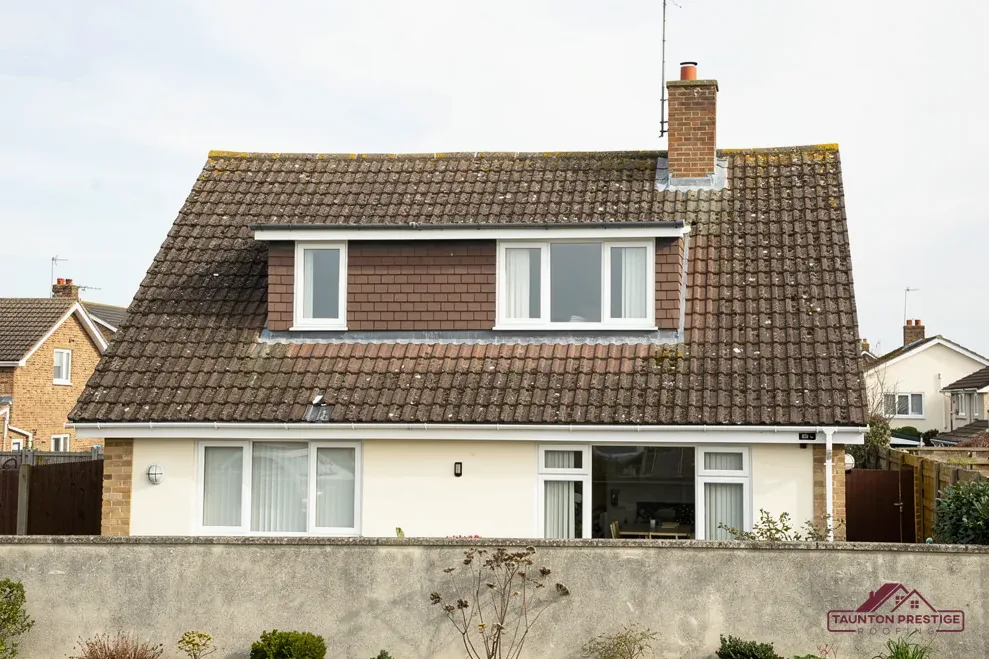
57 and 59 Church Road and Chantry Cottage hold Grade II listings; roof changes there are checked first.
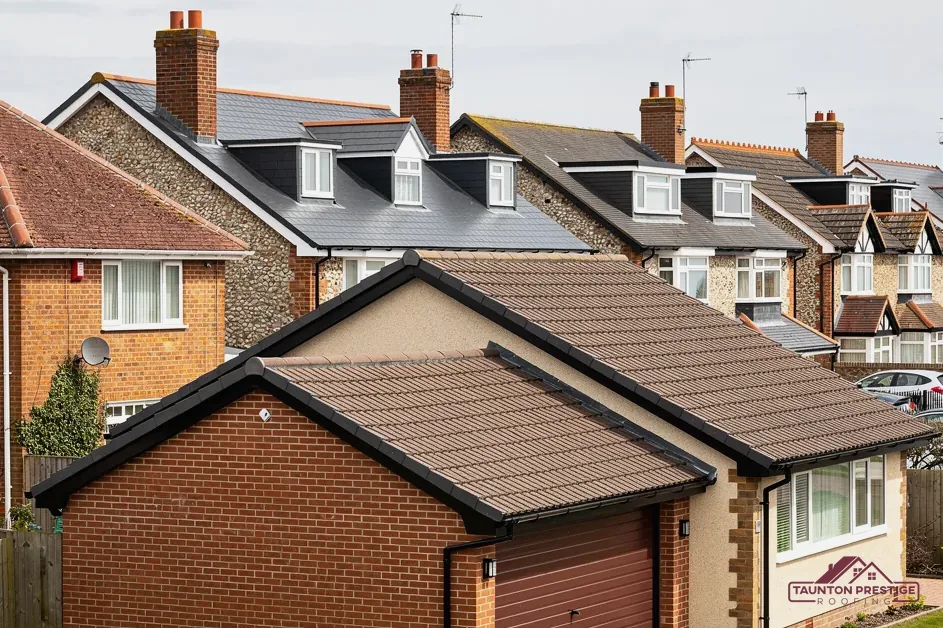
A heritage survey of older buildings recorded chert as 78 per cent of Trull's stone and Blue Lias as 11.
Street map of Trull with Comeytrowe, Galmington, Rumwell, Duddlestone marked around it, and Taunton.
Comeytrowe lies to the north-west of Trull and Galmington to the north, with Rumwell beyond, while Duddlestone sits to the south-east and Pitminster to the south.
About 1 miles south-west of Taunton, Somerset Council (unitary).
Four checks around All Saints
Four checks for a house near Church Road or the village centre, each showing how it shapes the job and the final figure.
Two conservation areas reach close to the middle of Trull. Haines Hill and Trull Road, designated on 14 March 2023, lies within about 0.75 km of Trull's centre, and that boundary search also picks up Trull Village, designated on 12 November 1998. Every Trull address we price is checked against both boundaries first and then against the National Heritage List. Those two lookups settle who must be asked, and sometimes which covering the finished roof can carry. Both take minutes, and doing them before the ladder goes up saves a Trull owner from ordering the wrong slate or tile.
Rarely. Replacement slates or tiles that follow the old size, colour and coursing are the safest choice in any street. A conservation area matters most once the appearance is set to change, for instance through a new covering or a different ridge. Our guide to planning permission for roof work explains the national position, and Somerset Council's planning team can give an answer for your own house.
Within 500 metres of the centre of Trull the National Heritage List holds 14 entries. They include 57 and 59 Church Road, Chantry Cottage and a cider house near Trull Green Farmhouse, each Grade II. On a listed Trull house, alterations touching its special character need listed building consent as well. Changing a Trull ridge from mortar bedding to clipped dry-fix looks minor, so raise it with the council before work starts.
All Saints is listed Grade I and Trull's Church of England parish still worships there, so changes to its fabric go through the faculty system. The parish applies for the faculty, and whoever does the roofing follows the specification it sets, with no council listed building consent involved.
Look for
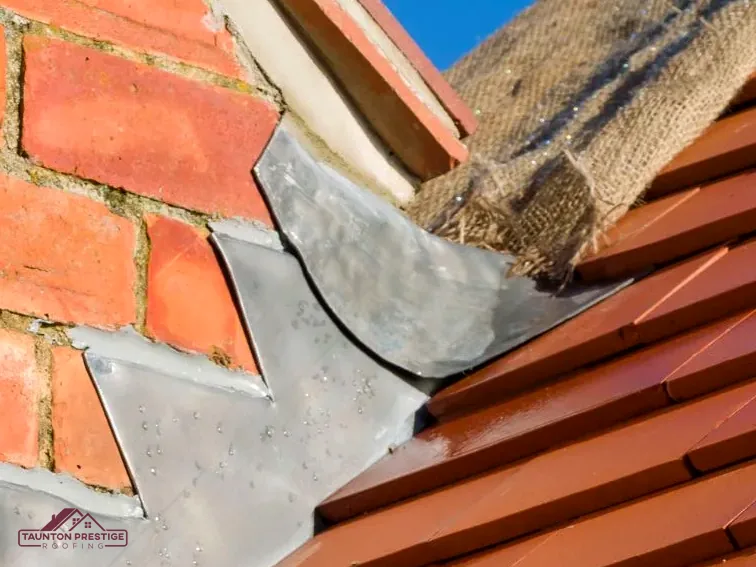
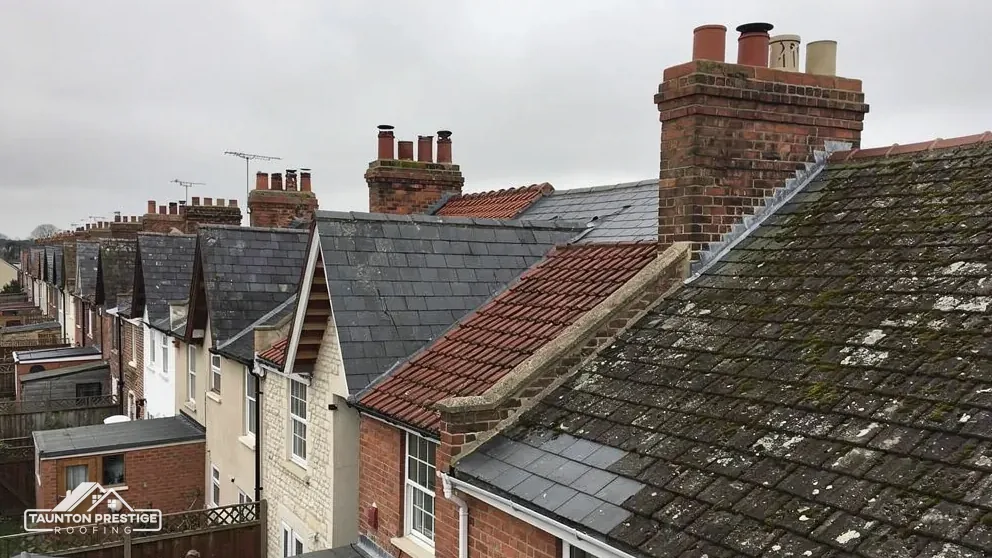
A South West Heritage Trust survey looked at buildings older than 1914 that are visible from the public road and footpath network. In Trull it found chert made up 78 per cent of the building stone, with Blue Lias at 11 per cent. That figure counts walling stone in Trull and says nothing about what sits on any roof. What it does show a roofer is where to look hardest: wherever a slope stops against stone, at a gable, around a chimney or along a wall rising above the roof.
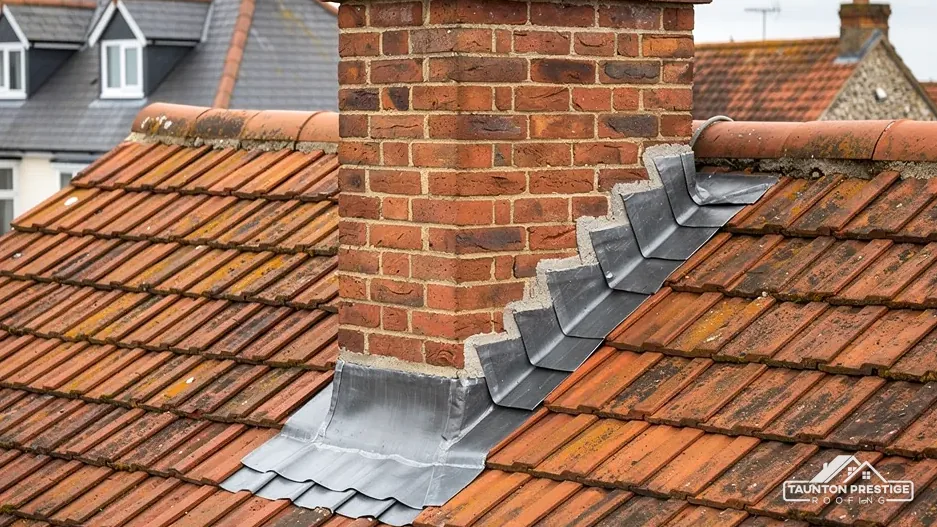
That junction gets a lead flashing: a strip laid over the covering, its upper edge turned into a raked-out mortar joint and wedged tight. Where tiles or slates run up the side of a wall, soakers take over: small folded pieces of lead, one with each course, steering the water back onto the roof. At a gable end the verge, the edge where the slope finishes against the end wall, is bedded in mortar or held with clips.
Sound or needs work
What decides the price
Once the pointing has crumbled, rain finds its way down behind the lead. Outside there is no sign until a brown mark spreads across a bedroom wall. Often the fix is to rake the joint out, reset the lead and repoint it, with no need to strip the slope. From the ladder we check each abutment and photograph it, so the fault is in front of you too.
Lead flashing can last for over 80 years; treat that as a floor, not a pledge. Sheet lead comes in codes set by weight. The Royston Lead brochure lists code 4 for soakers and flashings and code 5 for flashings and valley gutters. Our lead work page explains how we choose.
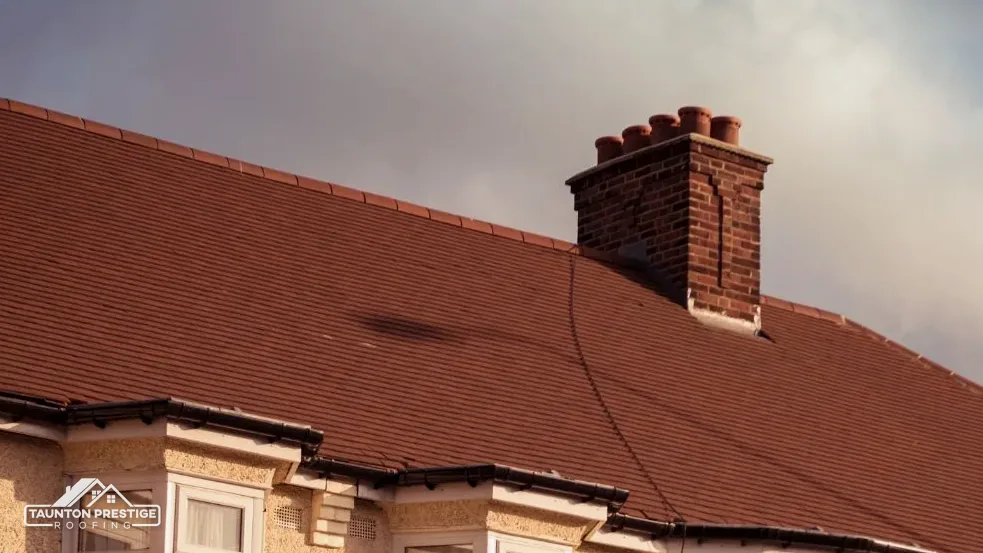
A chimney stack stands clear of the slope, so wind and rain reach it from all four sides. On an older cottage the stack is often the first part of the roof to need work. Three parts are worth knowing by name. Flaunching is the bed of mortar that grips each pot and throws rain away from it. The flashing is the lead dressed round its foot where it meets the slope. The pointing fills the joints of the brick or stone.
A stack gets weather on four sides and attention on none, so it fails before the slope.
Only part of it. Binoculars from the lawn will pick out a cracked mortar bed, a pot leaning over or green staining running down the brickwork. Only someone up a ladder or tower can tap the pointing, lift the lead and tell whether damp has reached the inside. MyJobQuote's guide (Oct 2026) puts chimney repointing at between £450 and £1,200, a typical UK range, with scaffold access moving the figure. What your stack needs sets where it lands.
New flaunching or new lead in the same materials is normally treated as repair. Taking a listed stack down, or rebuilding it to a new height, alters how the house looks and needs listed building consent first. A Trull chimney breast, the indoor section of the flue, carries load; removing it always needs Building Regulations approval. If that breast is on a party wall with next door, the Party Wall etc. Act 1996 may also apply, and that is a question for a party wall surveyor rather than for building control.
Our chimney repairs page walks through each repair, from repointing up to a full rebuild, and the survey tells you which one your stack needs. We photograph the pointing, the lead and the pots from the ladder so that you see the same things we do before you decide anything, and the work is explained in the order it will happen.
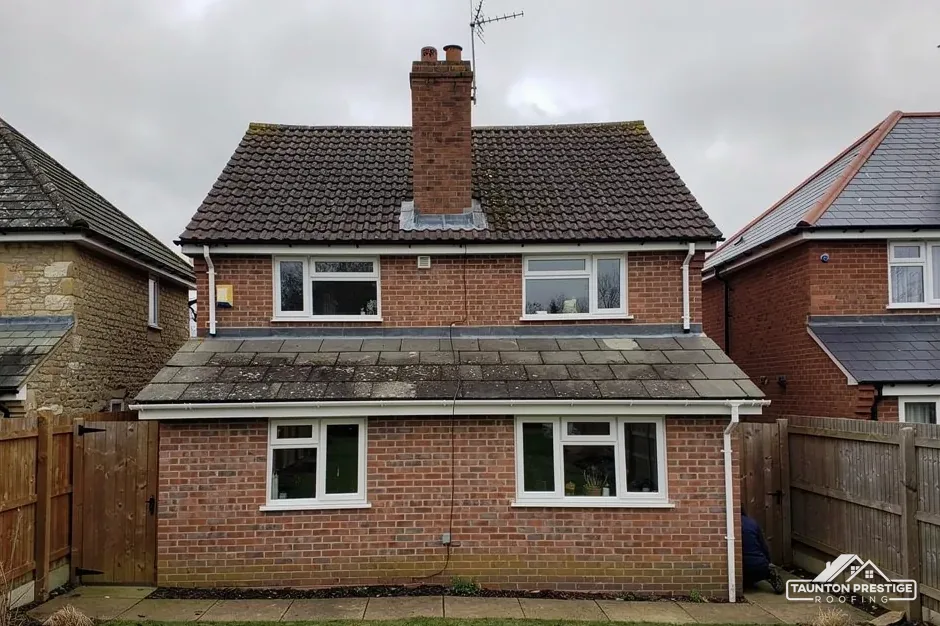
A good many Trull roofs are within reach of a ladder or a small tower. Where scaffold must go up on the pavement or the road outside a Trull house, section 169 of the Highways Act 1980 means a licence is needed, and Somerset Council is the highway authority here. Only accredited contractors receive these licences from Somerset Council, which is why the application comes from the contractor named for your Trull job. Scaffold kept to your own drive or garden is off the highway, and the survey settles which access your house needs.
What decides the price
At least 10 working days, and a fee of £124.60 for each 28-day period (April 2026). If a Trull job runs past its licence dates, an extension is applied for and paid. So the start date is planned around that paperwork, and you hear how the job is going while it is under way, with a note each evening if the weather has moved anything.
Sometimes. The Planning Portal's re-roofing test: no building control application is normally needed if under 25 per cent of the total building envelope and under 50 per cent of the roof are affected. Make the roof 15 per cent or more heavier with a new covering and Building Regulations approval is needed, and the Planning Portal suggests that a structural engineer or surveyor looks at the timbers before any work. Inside both limits a re-roof needs no application, and the survey shows where your Trull roof sits against them. Somerset Building Control covers Trull addresses on 0300 303 7790.
The survey leaves you with Trull photographs showing each weak point, plus a single written total for the job. Tell us the address and what you have noticed, and a visit gets booked in.
Walked the roof?
When you have read the checks, we walk the roof and show you the photos.
It depends on the house and on the work. 57 and 59 Church Road and Chantry Cottage are listed Grade II. Renewing slates or tiles to match is the simplest route, while a different covering, ridge style or chimney alters the appearance and may need consent. Put the question to Somerset Council's planning team before anything is bought.
First we find where the water gets in. Often it is a crumbling joint beside the lead, or a verge whose bedding has cracked. The cure is usually to rake out the joint, set new lead in and point it again, or to re-fix the verge. Replacing the whole slope only makes sense when the covering itself has failed.
They can. Bats can be affected by roof work, GOV.UK says, so a Trull survey looks for droppings and the gaps they use. Birds' nests in use or being built are protected too: the Wildlife and Countryside Act 1981 makes intentional damage to them an offence. If we find either, the work is planned around them.
Signed at home after a Trull survey, the contract can be cancelled in a period ending 14 days after the day it is made. A visit you specifically request because a repair is urgent is excluded under regulation 28(1)(e). For advice on any consumer problem, the Citizens Advice consumer helpline is 0808 223 1133.
Give us the Trull address and describe the trouble, and a survey will be arranged.