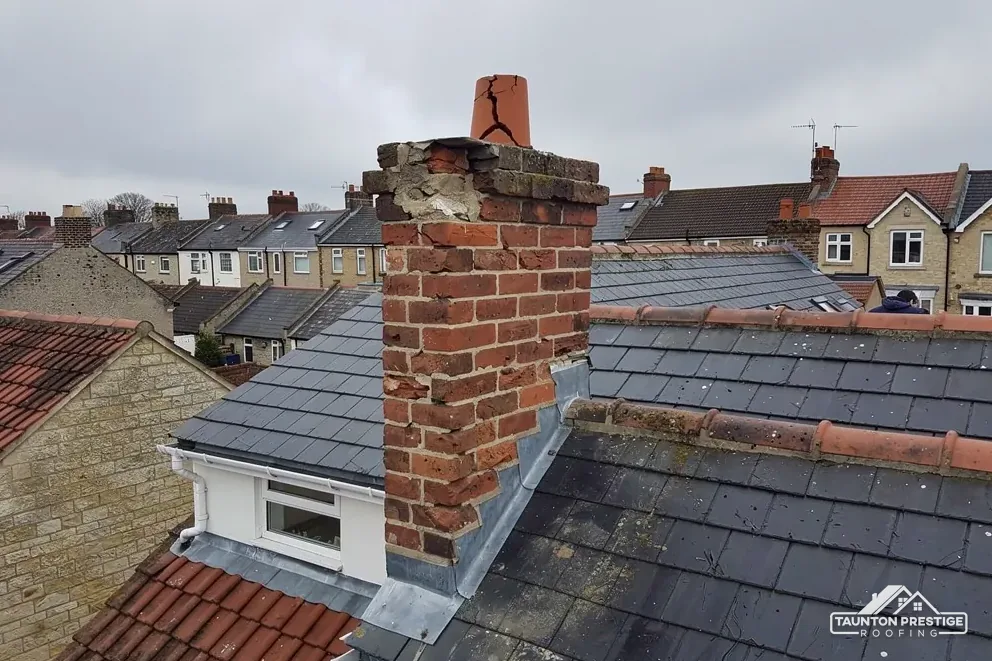
Red brick
Fired brick stacks, repointed and patched with bricks matched by size.
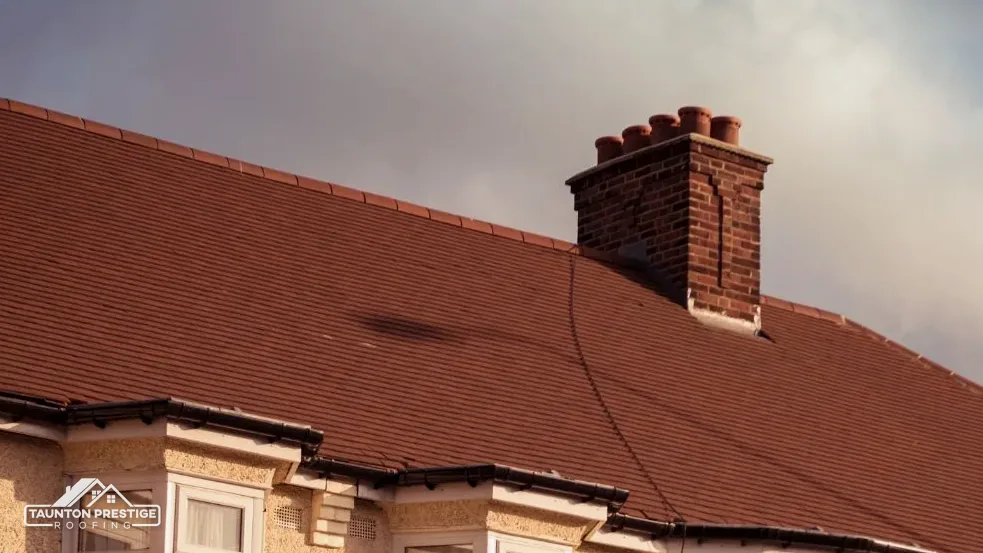
Stacks, pots, flaunching and lead, mended before rain gets in.
We survey the whole stack from a safe platform, show you photos of every face, and price the chimney repair your house really needs.
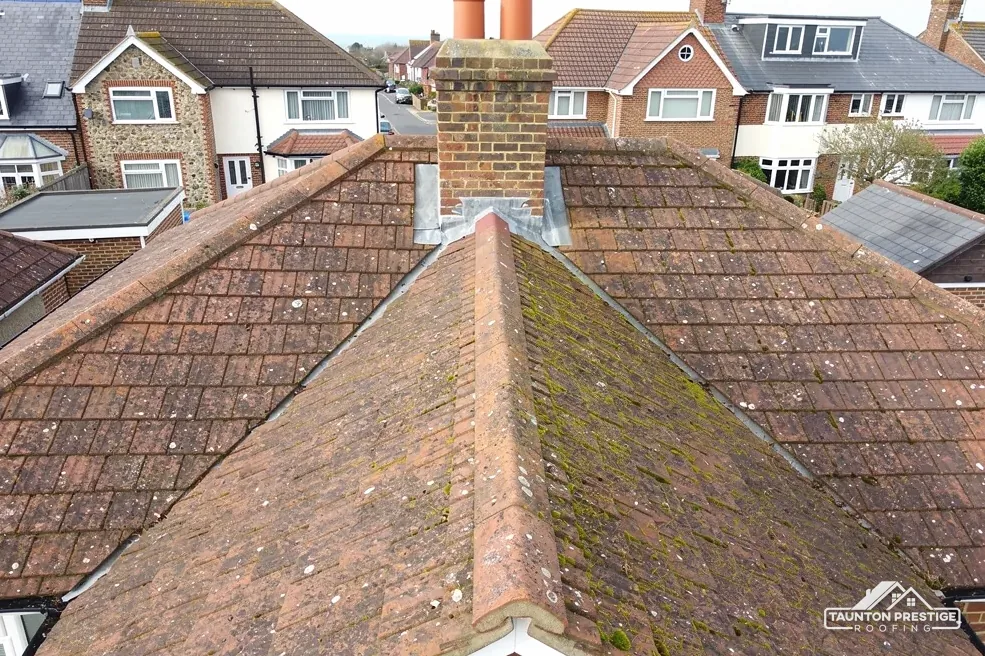
Fired brick stacks, repointed and patched with bricks matched by size.
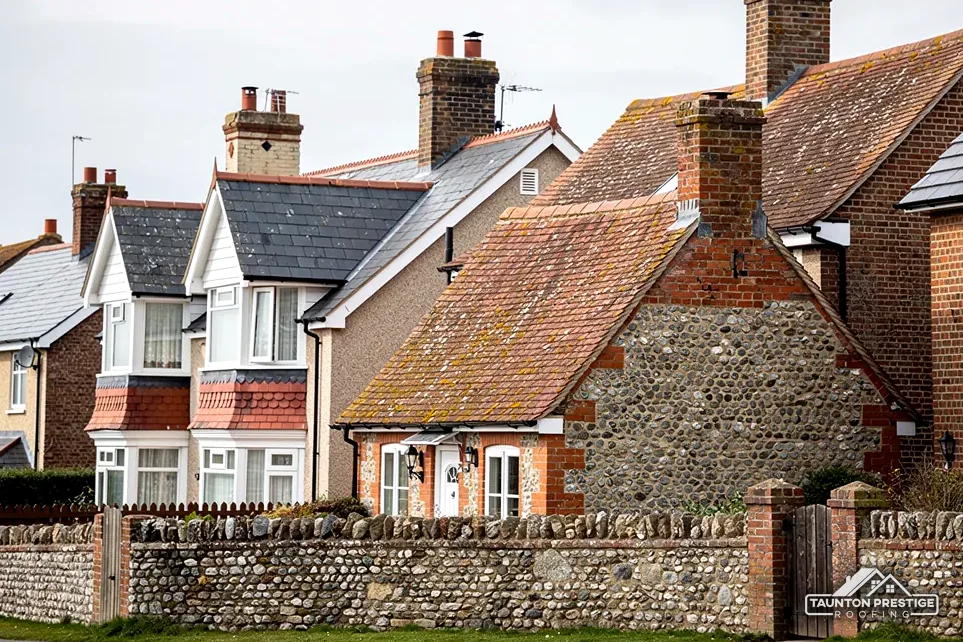
Rubble stone stacks on older cottages, pointed in a soft mortar.
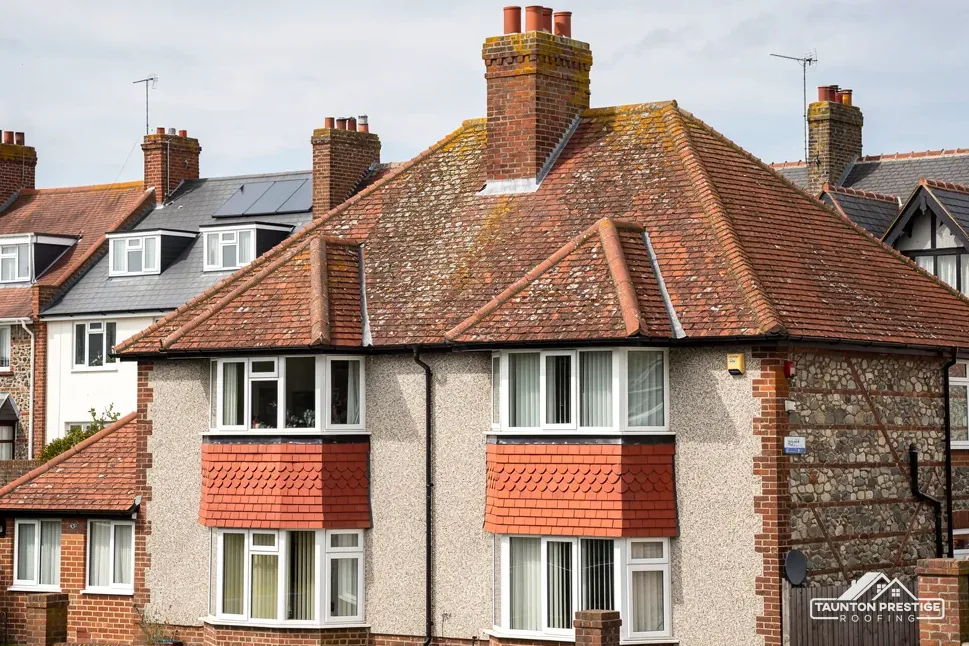
Fired clay pots bedded on top, replaced at the same diameter.
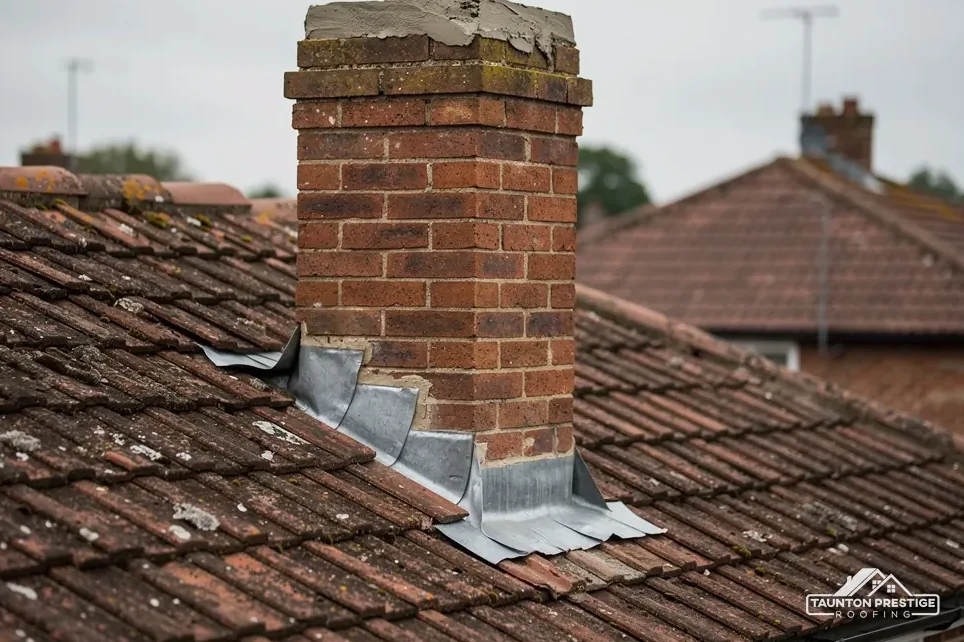 Chimney repointingJoints raked out and refilled to match
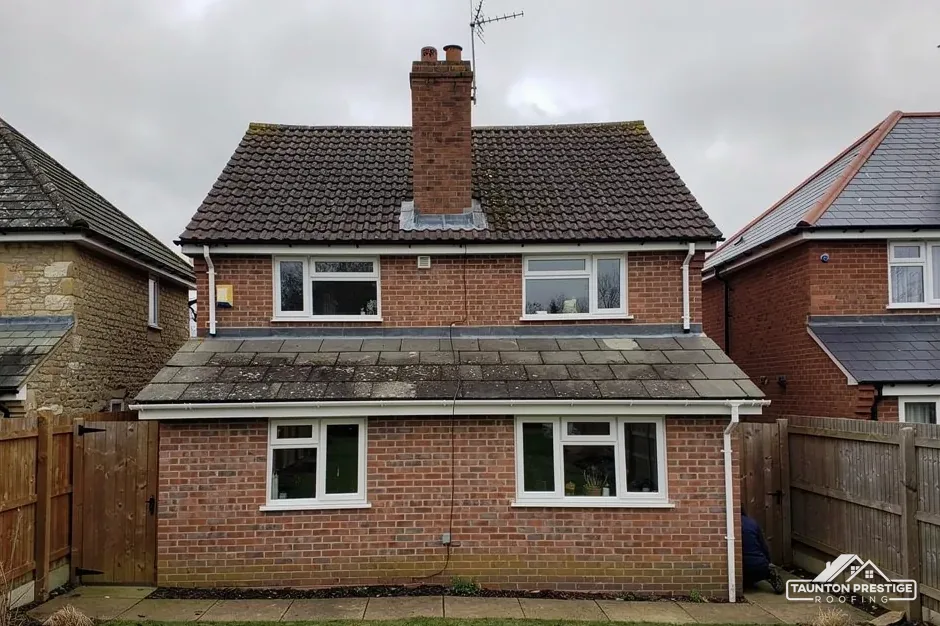 Flaunching and potsCracked tops relaid, loose pots rebedded
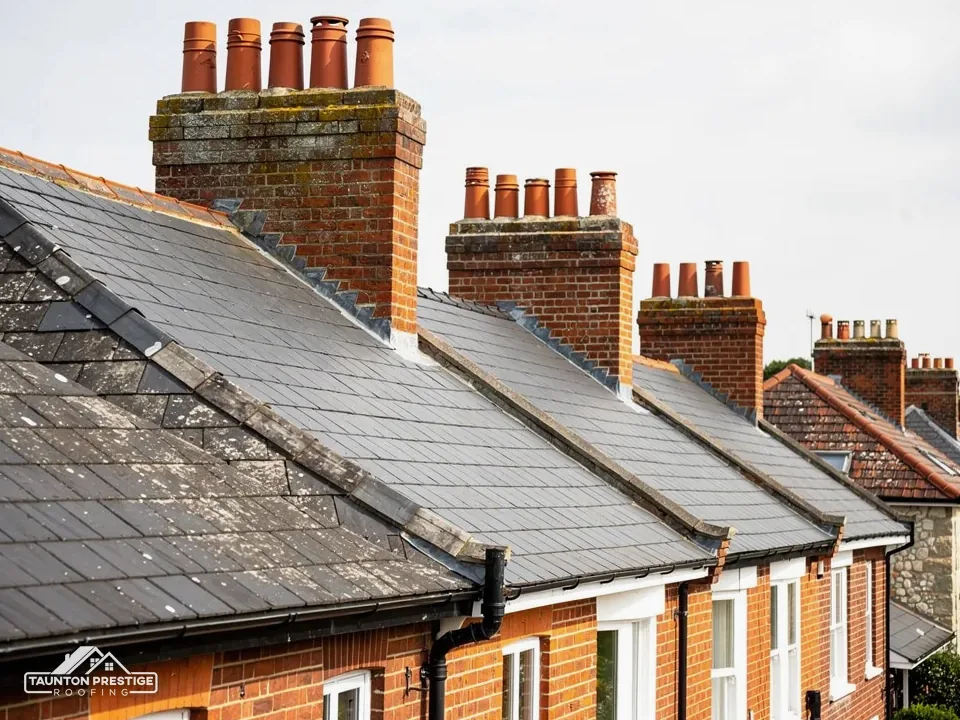 Cowls and capsRain kept out, air kept moving
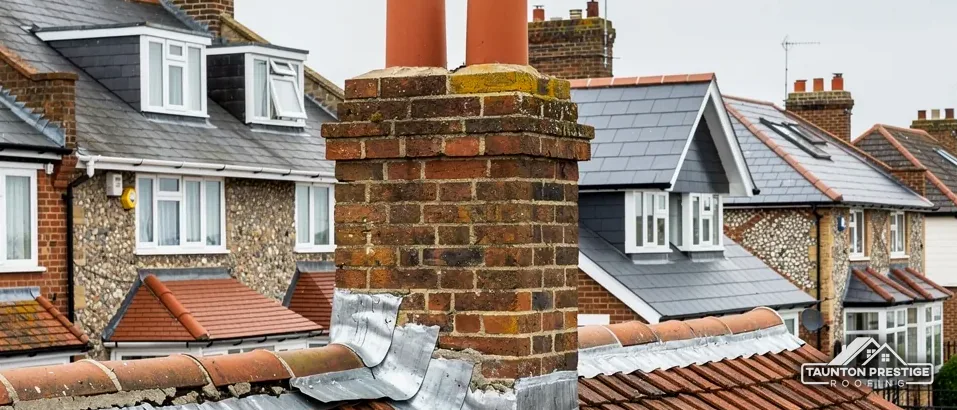 Lead flashingAprons, soakers and back gutters renewed
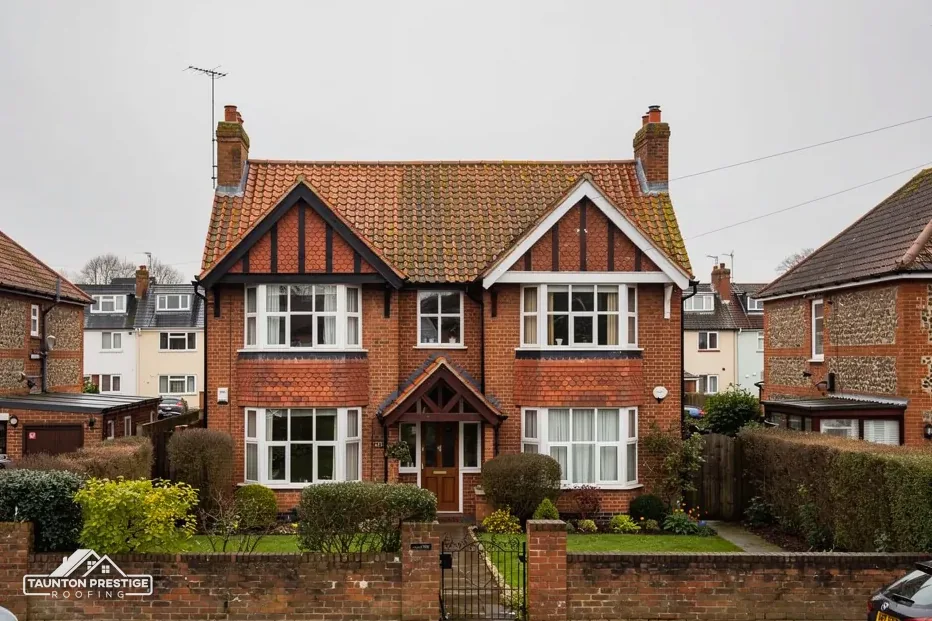 Stack rebuildsUnsound tops taken down and rebuilt
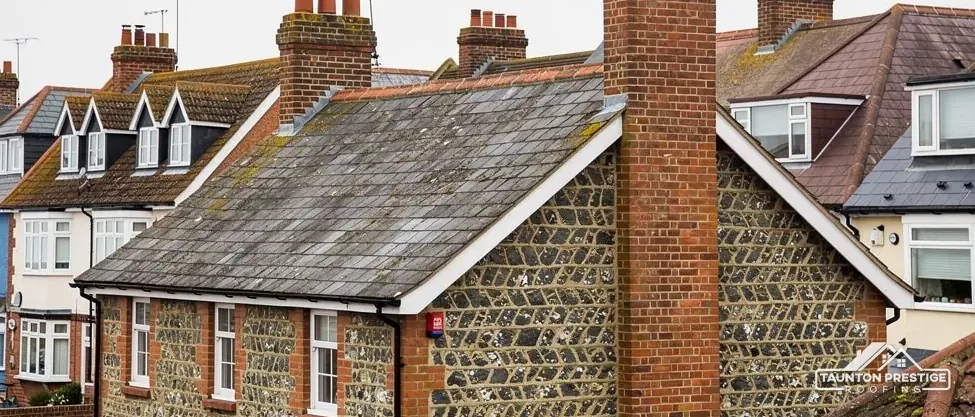 Capping and removalRedundant stacks vented, lowered or removed
An upright, sound stack with tired pointing, cracked mortar on top or lifted lead.
Loose bricks in the upper courses, or a lean that has started above the roofline.
No fire uses the flue any more, yet the stack still needs upkeep.
The chimney walk
The order we work down a stack before putting a price on it, and the signs you can pick out yourself from the garden or the loft.
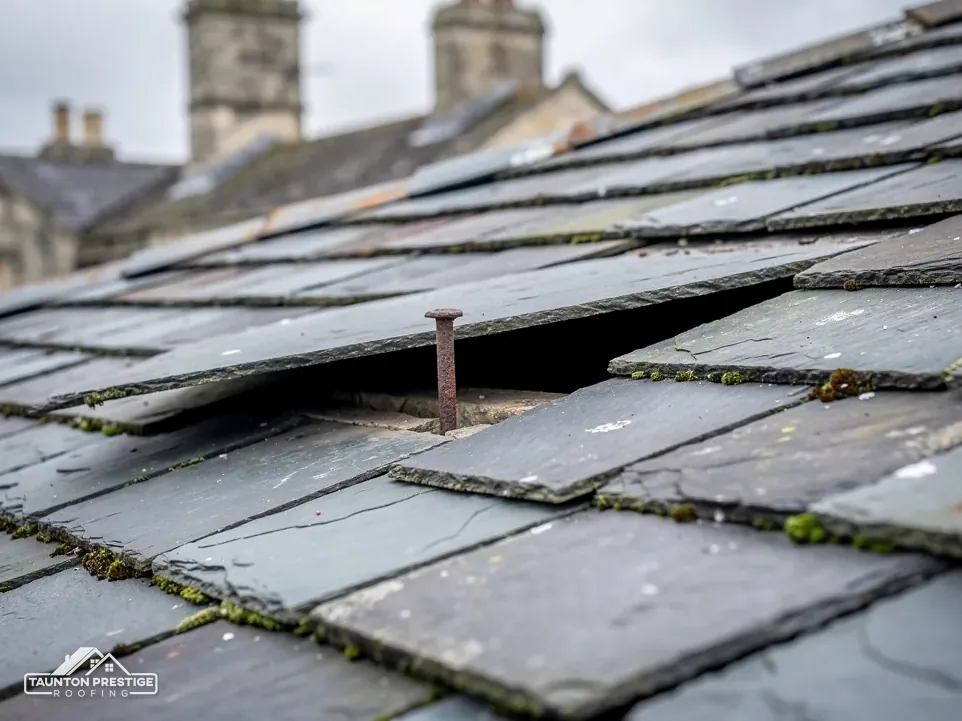
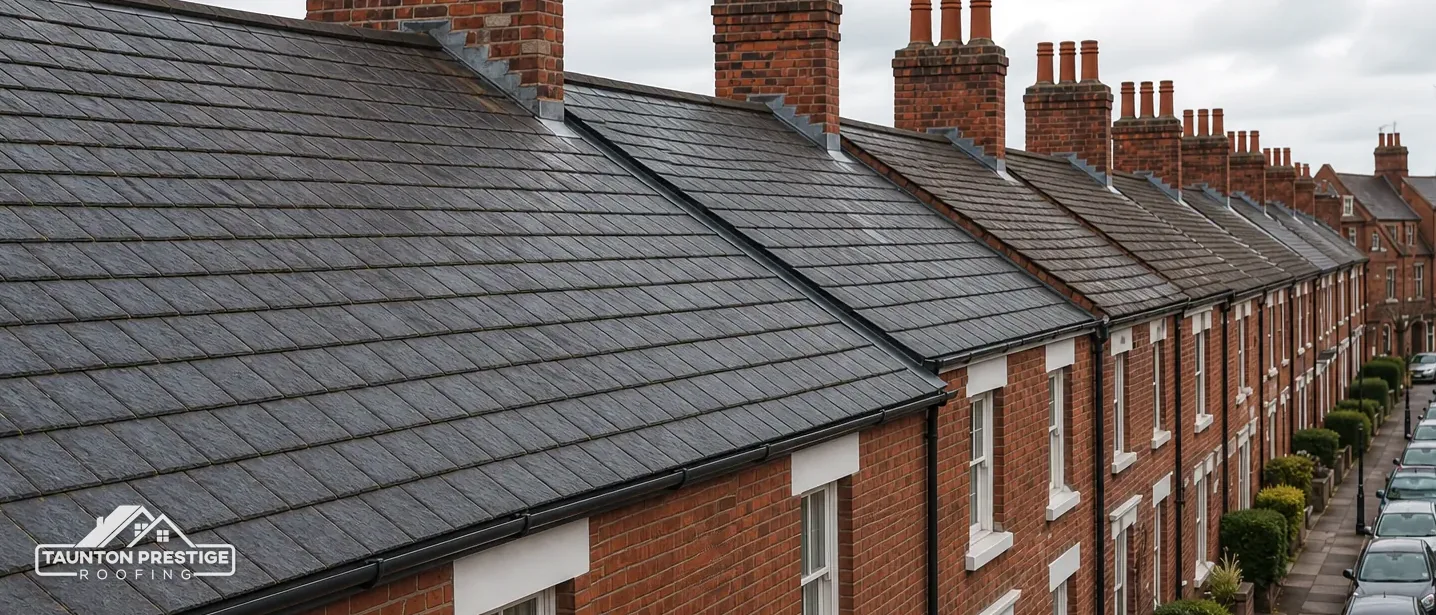
We start at the top, because the top of a chimney takes the worst of the weather and is the part nobody sees from indoors. A chimney stack is the brick or stone column that rises through the roof. The pots are the clay pipes standing on it, one for each flue below. Holding them in place is the flaunching, a sloping bed of sand and cement spread across the top of the stack so that rain runs off the edges instead of soaking into the brickwork. Every survey we do for chimney repairs in Taunton begins here, with photos of the top you would otherwise never see.
Look for
The flaunching sheds rain off the whole stack, so a crack up there matters below.
Flaunching lies out in the sun, rain and frost with nothing above it. Over the years it shrinks, crazes and parts company with the pots. Water then gets into the cracks, freezes and opens them wider each winter, until lumps drop into the gutter or onto the roof tiles below. A cracked top lets water down into the stack, and that water can surface as a damp patch on a bedroom chimney breast two floors down. Fine hairline cracks can sometimes be sealed, but once the bed is loose or sounds hollow we hack it off and lay a new one, bedding each pot back in as we go. Our guide to chimney flaunching covers that repair in more depth.
That depends on what the flue does now. A working flue has to draw smoke out, so any cowl on it must suit the fire or stove below and leave the flue open; ask whoever services the appliance as well as your roofer. A flue that no longer serves a fire is a different case. Rain falling straight down an open pot wets the inside of the stack, so we fit a vented cap or rain cowl that keeps water out while still letting air move up the flue. A bird guard stops jackdaws building in the pot. Pots crack and tilt with age too, and a cracked one can be lifted out and a matching pot of the same diameter bedded in its place.
Below the pots, the stack is a column of brick or stone held together by mortar joints. Pointing is the outer face of those joints, the last few millimetres of mortar you can actually see. It is meant to wear away before the bricks do, which is why a stack that has stood for a century can need its joints renewed while the bricks are still sound. A chimney stands clear of the roof on every side, so wind-driven rain wets all four faces and they dry slowly. That is hard on mortar, and harder still on the face that takes the weather. Look at that face first when you check the stack from the garden, because its joints wear soonest.
From the garden, look for joints sitting deep behind the face of the bricks, joints with gaps or holes, and grit lying on the roof slope beside the stack. Grass or moss growing out of the joints is another clue, because plants only root where water sits. Then look at the bricks themselves. Faces that have flaked off, a fault called spalling, show where frost has blown away the hard fired skin. A handful of spalled bricks can be cut out and replaced in matching brick, salvaged where new ones look wrong beside the old. A stack with many soft, crumbling bricks may need its top rebuilt rather than repointing alone, and that is a decision best made with photos in front of you.
We rake the old mortar out of every joint to a sound depth, brush out the dust, dampen the brickwork and press new mortar in, then finish each joint to the profile the stack had before. The mix matters as much as the method. Older soft bricks and local rubble stone were laid in lime mortar, which is softer than the masonry around it and lets moisture dry out through the joints. We match the new mortar to what the stack was built with, because a mix harder than the bricks can hold water in them. On a stone chimney we pick the joint finish to suit the stone too. Our chimney repointing guide takes you through raking, mixing and finishing one step at a time.
What decides the price
Look for
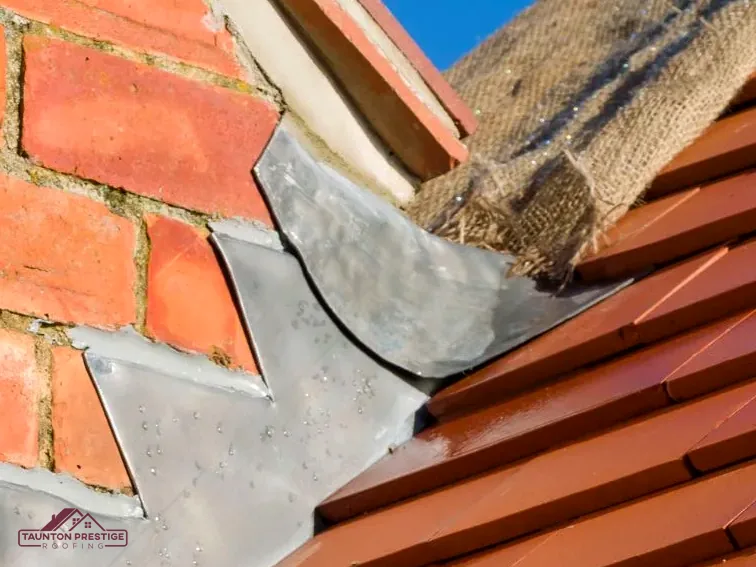
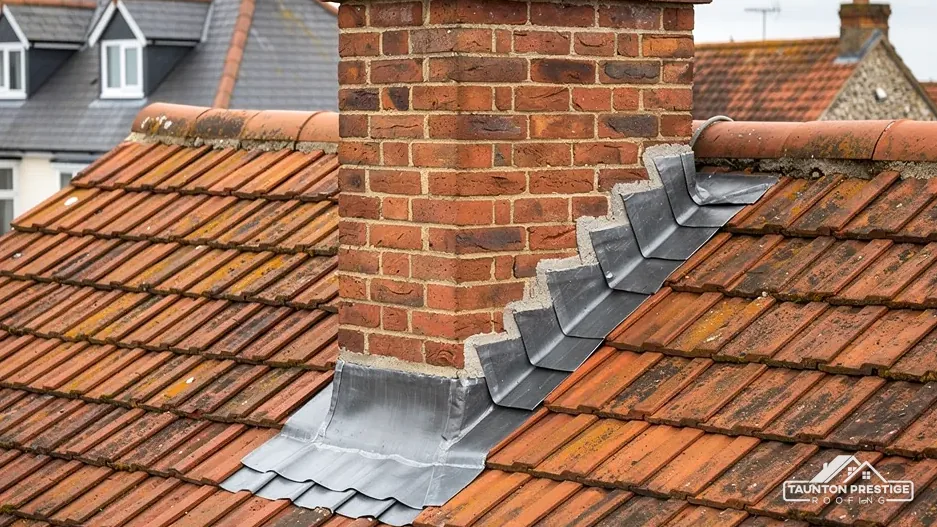
Where a stack passes through the roof, the slates or tiles stop short of the brickwork, and lead closes the gap. Lead is used because it can be shaped by hand round corners and steps, and because it lasts: MyJobQuote's chimney leadwork guide says lead flashing can last for over 80 years. Round a typical stack there are four parts. The apron is the single piece dressed over the tiles along the lower face. Up each side, soakers are slipped between the tile courses and turned up against the brick, with a stepped flashing cut into the mortar joints and dressed down over them. On the uphill side, a back gutter catches the water running down the slope and turns it round the stack.
Sound or needs work
What decides the price
Often, yes, without renewing all of it. One plain fault is the lead wedges and pointing that hold the top edge of a flashing in the brick joints falling out; the lead lifts and rain runs down behind it. We rake the joint, wedge the lead back in and point it up. A split or hole in the lead, a back gutter that holds a puddle, or flashing cut too short in the first place all mean new lead. Mastic or bitumen paint smeared over old flashing may stop a drip for a season, but it cracks and peels, and coated lead cannot be dressed properly again afterwards, so we strip it rather than add more.
Once a flashing lifts, rain finds the gap long before a stain shows indoors.
Lead sheet is sold in codes that rise with thickness. Royston Lead's brochure lists code 3 for soakers only, and code 4 for soakers, flashings, pitched valley gutters and dormers, with heavier codes up to code 8 for gutters and dormers. We cut and dress each piece on the roof to fit your stack, with clips holding the lower edges against wind lift. On a full renewal the tiles or slates beside the stack come up so new soakers can go in, and they go back once the lead is dressed. Leadwork and chimneys are so often one job that our lead work service covers the wider picture, from bay roofs and porches to valleys.
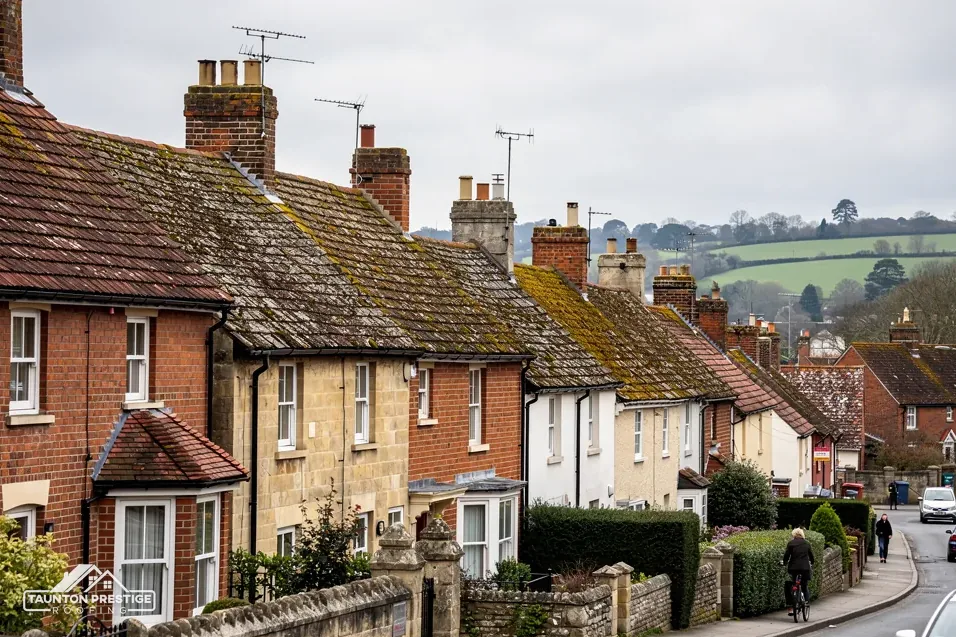
A chimney breast is the section of wall that juts into a room to carry the flue up through the house. When a damp patch appears on it, upstairs or down, the cause could sit anywhere from the pots to the loft, and the repair only works if we find the right one. Water travels inside brickwork and along timbers before it shows, so the stain is seldom right below the fault. We work through the possible routes in order, from the top of the stack downwards, and photograph what we find at each point so you can follow the reasoning.
There are several ways in. Rain can fall straight down an open pot and soak the inside of the flue. It can seep through cracked flaunching or porous pointing on the stack. It can get past lifted flashing at the roof line, or round a back gutter choked with leaves. Some stacks were built with a damp-proof tray, a lead or slate layer set across the stack near roof level to stop water soaking down the brickwork into the house; others never had one. Not every damp breast is a roof fault, though. A flue sealed at both ends with no air moving through it can gather condensation, and old soot inside a flue holds salts that draw moisture from the air and mark plaster in brown patches.
We start by asking when it shows. Damp that appears only in driving rain from one direction points to the face of the stack or the flashing on that side. Damp that stays through dry spells points to condensation or salts. Then we look at the stack itself, check the lead and the top, and go into the loft to see whether the brickwork or timbers round the stack are wet. Sometimes there are two faults at once, and fixing only one leaves the stain coming back the next wet winter, so we price both together and show you why. Our guide to a damp chimney breast covers the indoor side, including what to do about stained plaster once the stack has dried out.
What decides the price
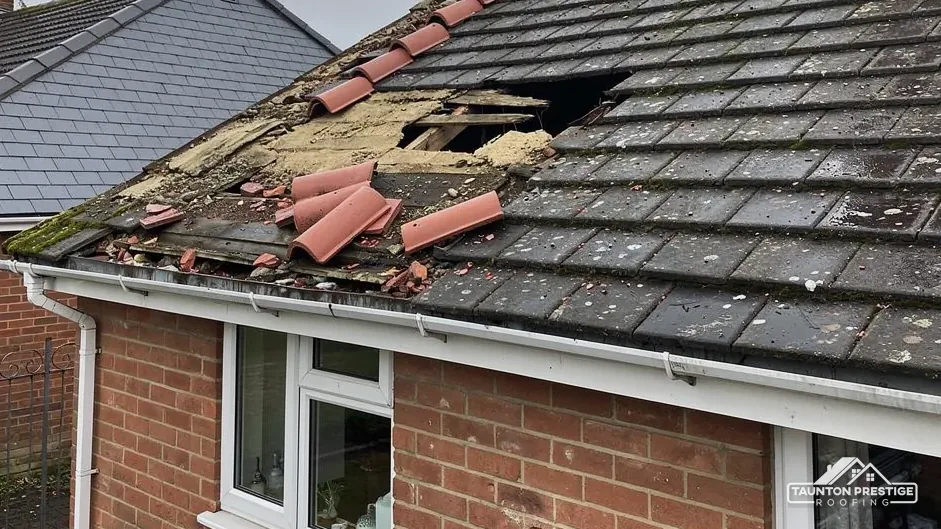
A chimney stands proud of the roof with nothing to brace it but its own weight, which leaves it among the most exposed parts of any house when a gale blows through. A stack can lean for several reasons: joints washed out on one side, masonry weakened by water that has got in over many winters, or movement in the roof timbers around it. A slight lean that has been there for decades may be stable. A lean that is new, or growing, is not, and neither is a crack that runs up through the bricks rather than along the joints. After a storm, if bricks or pieces of pot have come down, keep people and cars away from that side of the house and call us. Our first visit stops the water and secures anything loose; the permanent repair follows once the weather allows. If you think a neighbouring stack is unsafe, Somerset Building Control deals with dangerous structures on 0300 303 7790.
A lean that grows each winter is the one to act on before a gale does.
Look for
When the top courses are loose, the lean is growing, or the bricks are too soft to hold new pointing. A rebuild means taking the stack down brick by brick to sound work, usually somewhere near the roof line, setting aside every brick fit to reuse, and building it back up plumb. A new damp-proof tray can go in at that stage, followed by new lead, fresh flaunching and the pots. Stone chimneys on older Somerset cottages are rebuilt the same way in their own stone and a lime mortar. Matching the old brick or stone matters on any house, and most of all on a listed one. We photograph the stack before it comes down, so the rebuilt top keeps its old shape, its corbelled courses and its pots.
Because water that gets into a stack each winter widens the cracks it came through. Pointing that would rake out and refill this year can, a few hard winters later, leave the top courses loose enough to need rebuilding, with the scaffold, materials and time that brings. Small repairs at the right moment are routine maintenance; left alone, the same faults turn into a rebuild.
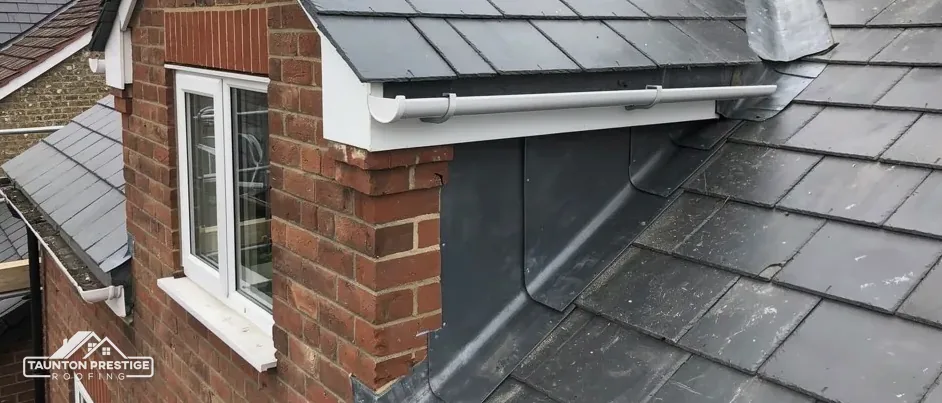
A chimney that no longer serves a fire still stands in the weather and still needs looking after. There are three ways to deal with one, and each has its own cost and upkeep. You can keep the stack and cap it so it stays dry. You can take the top down to a lower, sound height and finish it off. Or you can remove the stack altogether below the roof and close the roof over where it stood. Lowering is the middle course: the top comes down to sound brickwork, a new top and cap go on, and the shorter stack catches less wind. Which one suits depends on the state of the brickwork, whether the stack is shared with next door, and whether the house is listed or in a conservation area.
What decides the price
With ventilation at both ends. A vented cap goes on each pot to keep the rain out, and a vent goes into the chimney breast in the room below, so air keeps moving up the flue. Seal a flue at the top and the bottom and the moisture trapped inside has nowhere to go, which is one cause of the damp breast described above. Our guide to capping a chimney covers caps, vents and what to do with the fireplace opening. Should you open the fireplace up again later, the cap comes off and a sweep checks the flue before any fire is lit.
Yes. We take the stack down below the roof line, strip out the old lead, add rafters and battens across the gap and cover it in slates or tiles matched to the rest of the slope, so the roof is watertight and the patch hard to spot. If the chimney breast inside is coming out too, the Planning Portal says Building Regulations approval will always apply, because the breast is part of the structure, and your building control body needs to hear from you before work starts. In a conservation area or on a listed home, check with Somerset Council's planning team before a stack comes down, or with Exmoor National Park Authority inside the Park. Our guide to removing a chimney stack weighs the cost against the upkeep it saves.
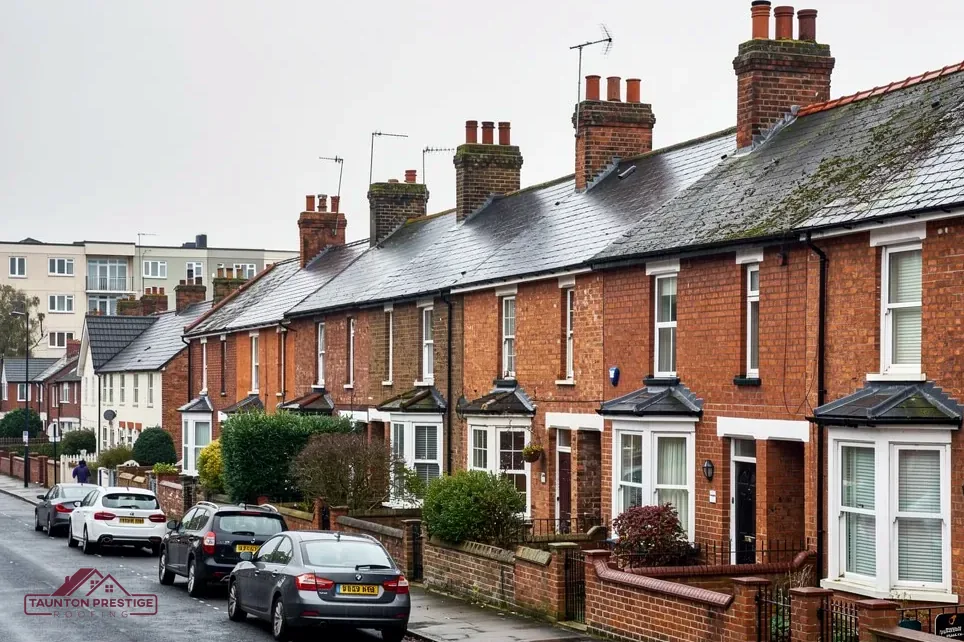
Chimneys sit high, often right on the ridge, and almost any repair beyond a look means working round all four faces at height. A quick check of a low stack can sometimes be done from a roof ladder. Repointing, new flaunching, a lead renewal or a rebuild needs a proper platform: a chimney scaffold built round the stack, reached from a scaffold or tower on the ground. On a terraced street, where the front wall meets the pavement, that scaffold may stand on the highway, and it then needs a licence under section 169 of the Highways Act 1980. Somerset Council says its permits "are only issued to accredited contractors" and that the application "must only be completed by the appointed contractor", so we organise it through the scaffold firm and tell you the dates in advance.
For most work done properly, yes, and it is safer for everyone, including the people walking past. Old mortar, broken pots and lead offcuts come down in bags rather than being thrown off the roof, the site is tidy at the end of each day, and the waste leaves with us. If a re-roof is on the cards within a year or two, doing the chimney while that scaffold is up saves paying for access twice; our roof replacement service plans the two together.
It depends on what the survey finds and how the stack is reached. Height, the number of faces needing work, whether the stack is shared, and the materials all move the price, and scaffold can be a large share of a small job. The typical UK ranges below give a sense of scale for the jobs listed. Our price is one total, in writing.
Sometimes. Policies treat sudden storm damage differently from wear and tear, and the wording of your own policy decides it. Tell your insurer first, have a temporary repair made, and keep photos and receipts; if you disagree with the outcome, the Financial Ombudsman handles complaints. Our answer on insurance and chimney repairs goes further. When you contact us, send a photo of the stack from the garden or street, and we will survey it and show you each face.
What decides the price
Look for
Walked the roof?
Note what you can see from the street and the loft hatch, and leave the stack itself to a roofer working from a proper platform.
| Job | Typical range |
|---|---|
| Chimney repointing | £450 to £1,200 |
| Chimney leadwork, patch repair | £150 to £250 |
| Chimney leadwork, full renewal | £350 to £920 |
| Chimney breast removal | £1,200 to £3,500 |
| Front-elevation scaffold, one week's hire | £550 to £750 |
Typical UK ranges from MyJobQuote, shown for scale and never as our own figures. Your chimney gets one written price after we survey it; check that any quote says whether VAT and scaffolding are included.
MyJobQuote cost guides, Aug to Oct 2026
Longer reads and quick answers on single chimney questions: flaunching, repointing, damp breasts, capping a flue, taking a stack down and what insurers look at.
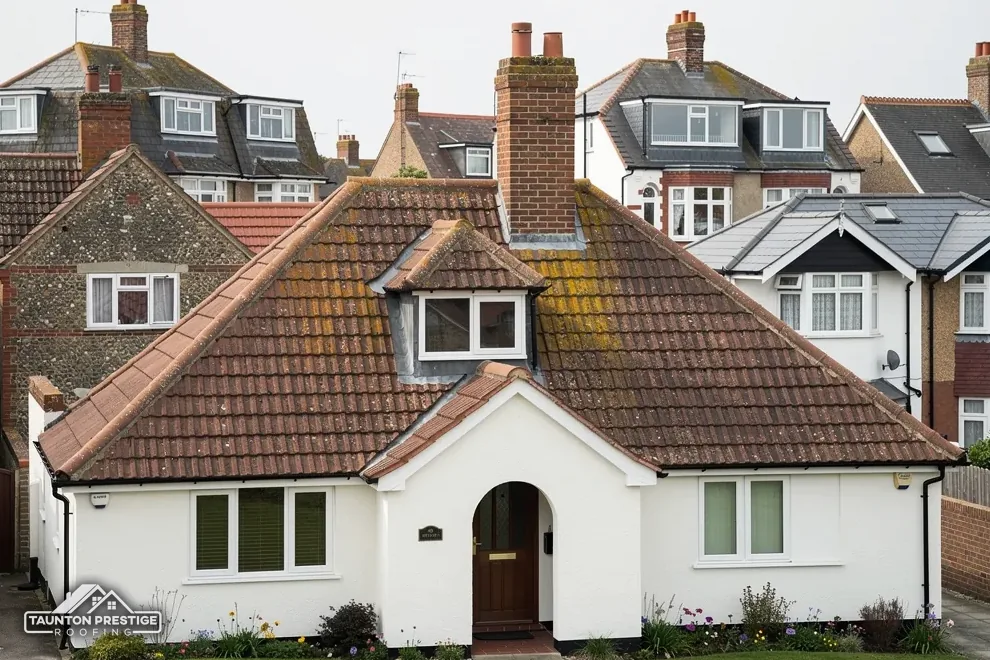 Parts of a Chimney: Pots, Flaunching and FlashingA chimney is a stack of small parts, each with its own way of failing. Here is what each does, from the pot down, and how to tell which one lets...
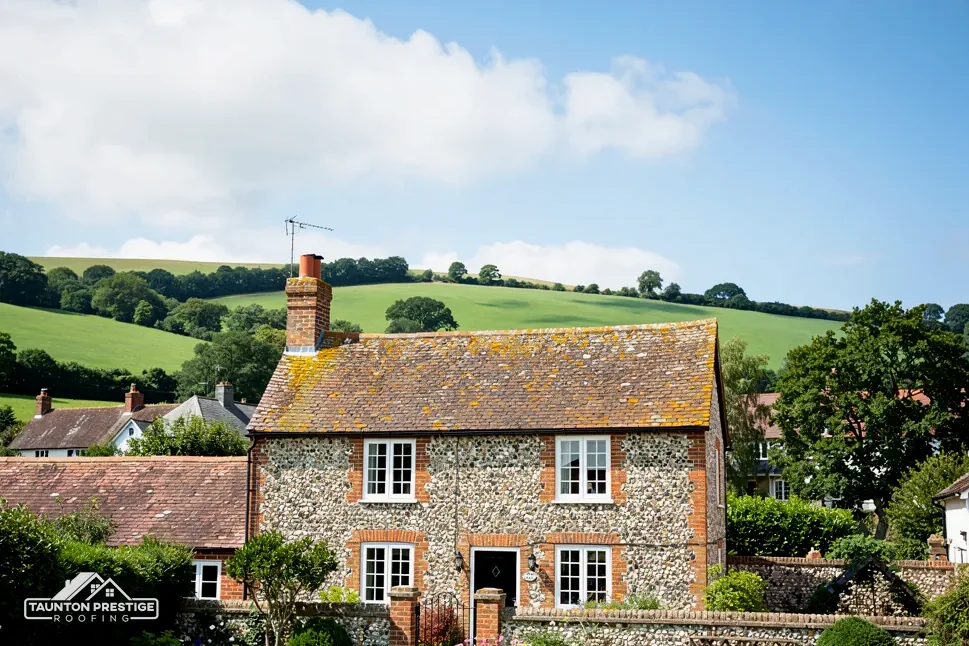 Chimney Repointing: When It's Needed and What's InvolvedPointing fills the joints between the bricks, and on a chimney it takes the worst of the weather. Here is how to spot it failing, what the job...
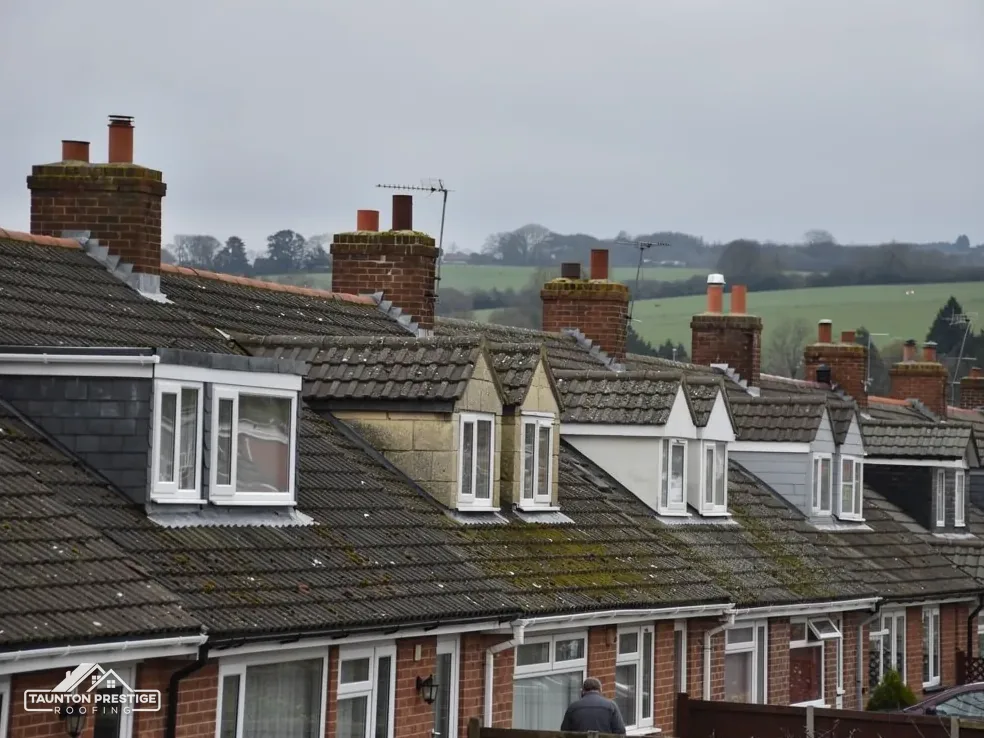 Removing a Redundant Chimney Stack: Is It Worth It?A chimney nobody uses still costs money to keep sound. Here is what capping, partial removal and full removal each involve, and what to settle before...
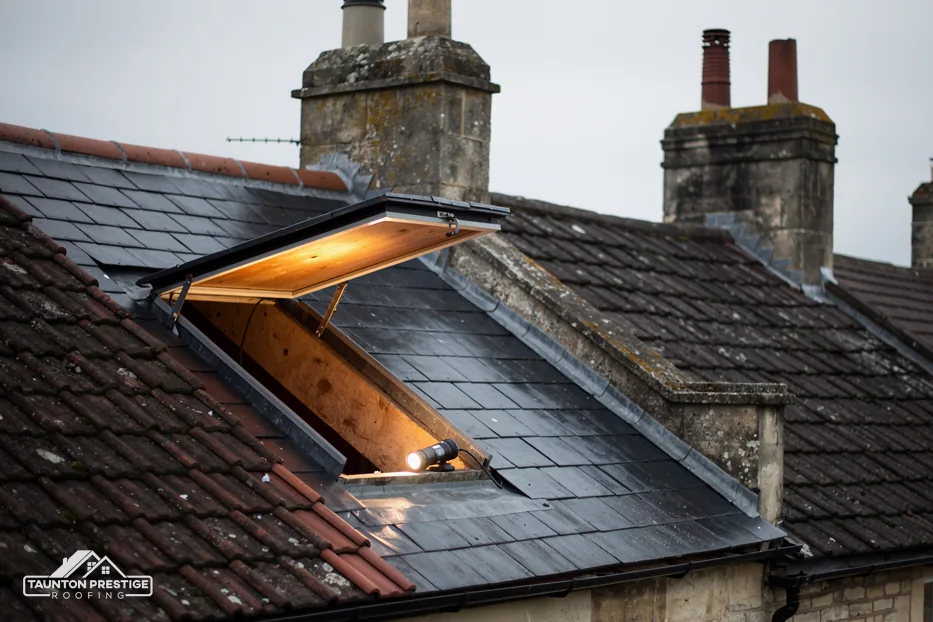 Chimney Breast Removal: Building Regs and Party WallsTaking out a chimney breast frees up floor space, but it is structural work. Here is what the rules ask for, who needs notice, and where the roof...
 Capping a Disused Chimney: Why Ventilation MattersClosing off an unused chimney sounds simple, but a sealed flue is a damp flue. Here is how a capped chimney should still breathe, and what goes wrong...
 Damp on a Chimney Breast: Causes and FixesA brown stain or peeling paint on the chimney breast is a message from the stack above. Here is how to read it, which causes are common and what puts...
There is no single figure, because chimney work runs from a patch of lead to a full rebuild. MyJobQuote puts chimney repointing at £450 to £1,200 (Oct 2026) and full chimney leadwork at £350 to £920 (Sep 2026), both typical UK ranges. Height, access and scaffold can move the total a long way.
Roofers repair chimney stacks as a matter of course, because the stack and the roof round it fail together. We repoint, rebuild tops, relay flaunching, fit pots and cowls and dress the lead. A chimney sweep cleans and checks the flue from inside, and a stove fitter deals with liners, so those jobs go to them.
There is no fixed interval. Pointing wears at a pace set by exposure, the mortar used and how well the top sheds water, so a stack high on a hillside in the weather can need it far sooner than a sheltered one. A look with binoculars each spring, and after any big storm, shows when the joints start to open.
Usually, yes. The scaffold is already up, the tiles round the stack are coming off anyway, and new soakers and flashings can go in with the new covering. Leaving a tired stack untouched on a new roof can mean paying for scaffold again a few years later. We look at the chimney on every re-roof survey.
The Wildlife and Countryside Act 1981, s1, makes it an offence for anyone who intentionally damages or destroys a wild bird's nest while that nest is in use or being built. If a nest is active in a pot, work on that flue waits until the birds have gone, and a guard goes on afterwards to keep them out.
Listed building consent is needed for works that would affect the building's special character, so a like-for-like repair may not need it while a change of brick, pot or mortar, or a lowered stack, may. Check with Somerset Council's planning team before work starts, or with Exmoor National Park Authority if the house is inside the Park.
Send a photo of the stack from the garden or street, and we will book a survey.