St Mary's Grade I church
A Perpendicular church whose tower dates to no later than about 1470; roof work there follows the faculty route.
Listed houses, a Grade I church and homes below the Quantocks
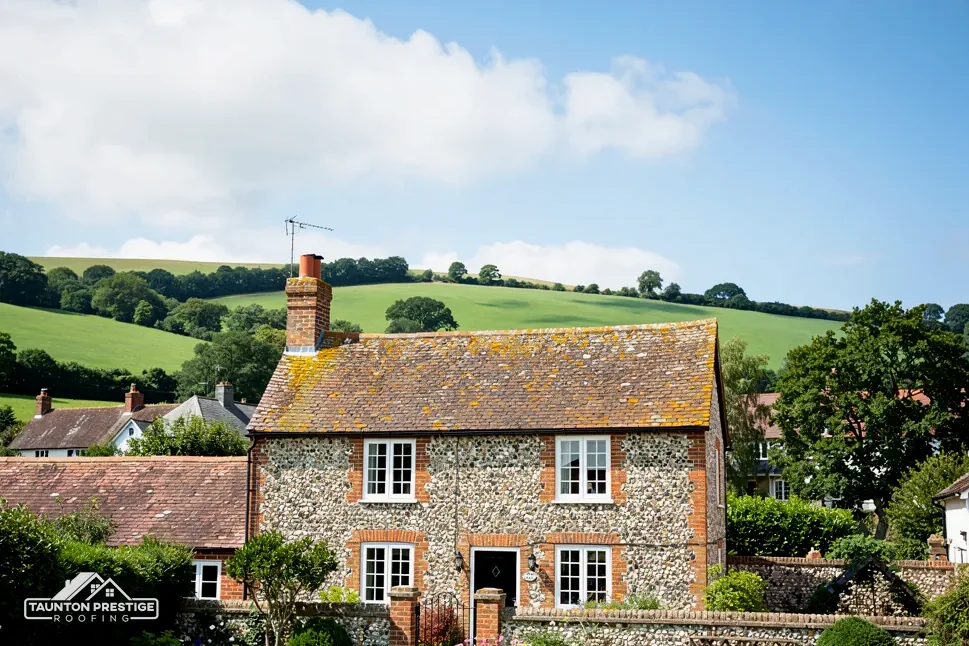
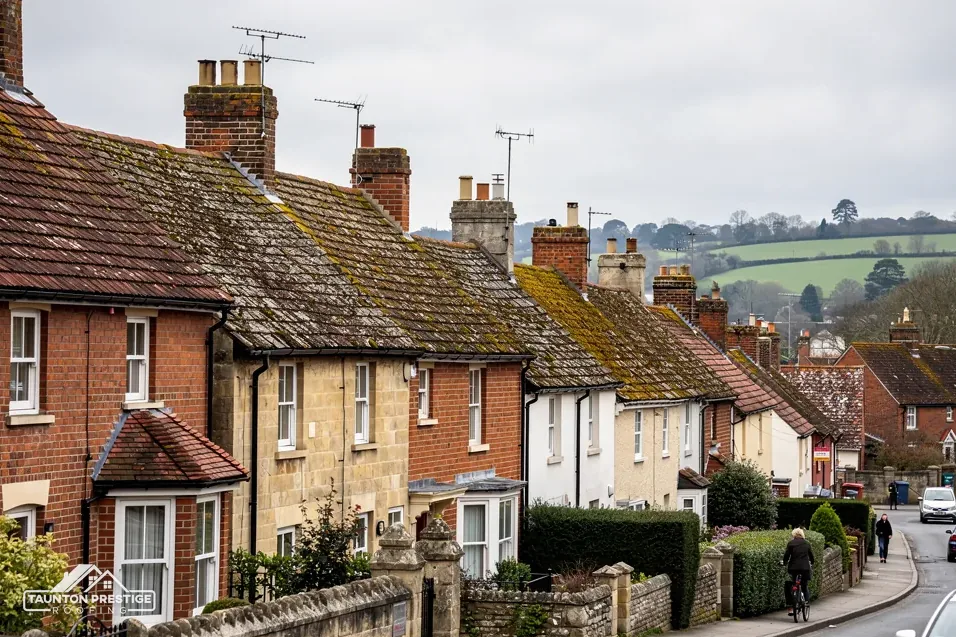
Bishops Lydeard sits at the foot of the Quantock Hills, with a 1975 conservation area and 27 listed buildings near its centre. Each roof gets a survey before any price.
A Perpendicular church whose tower dates to no later than about 1470; roof work there follows the faculty route.
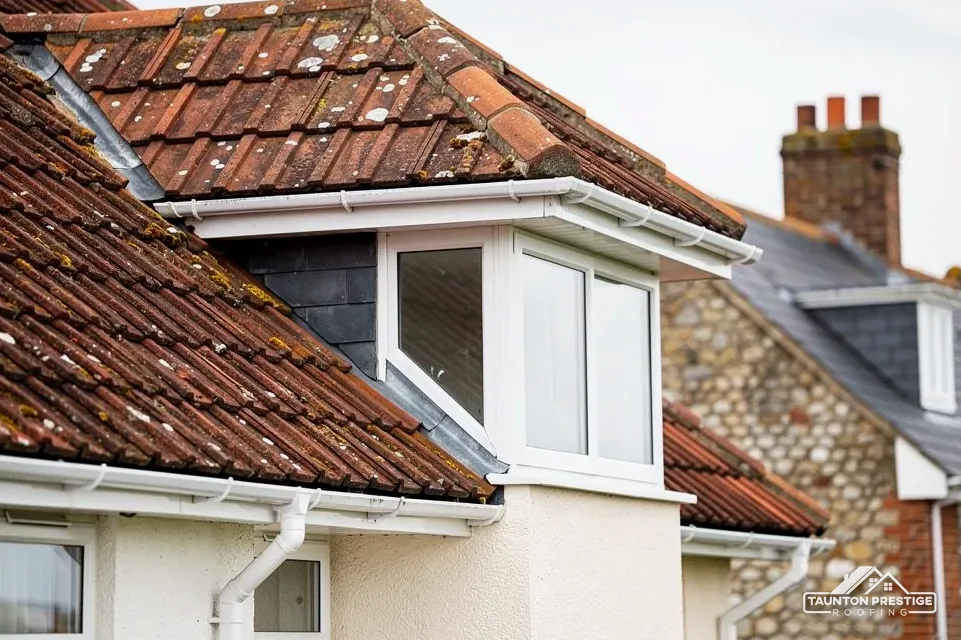
25 Church Street and Farringdon Farmhouse are both listed Grade II, so repairs there must respect their character.
Designated in February 1975 and revised in 1993, its edge lies within about 0.75 km of the centre.
Street map of Bishops Lydeard with Eastcombe, Cotford St Luke, Pickney, Toulton marked around it, and Taunton.
Cotford St Luke lies just south of the village and Halse to the south-west, while Cothelstone and Toulton sit to the north-east and West Bagborough to the north.
About 5 miles north-west of Taunton, Somerset Council (unitary).
Four checks under the Quantocks
Four things to look at on a house in or near the conservation area, and how each one shapes the job and its price.
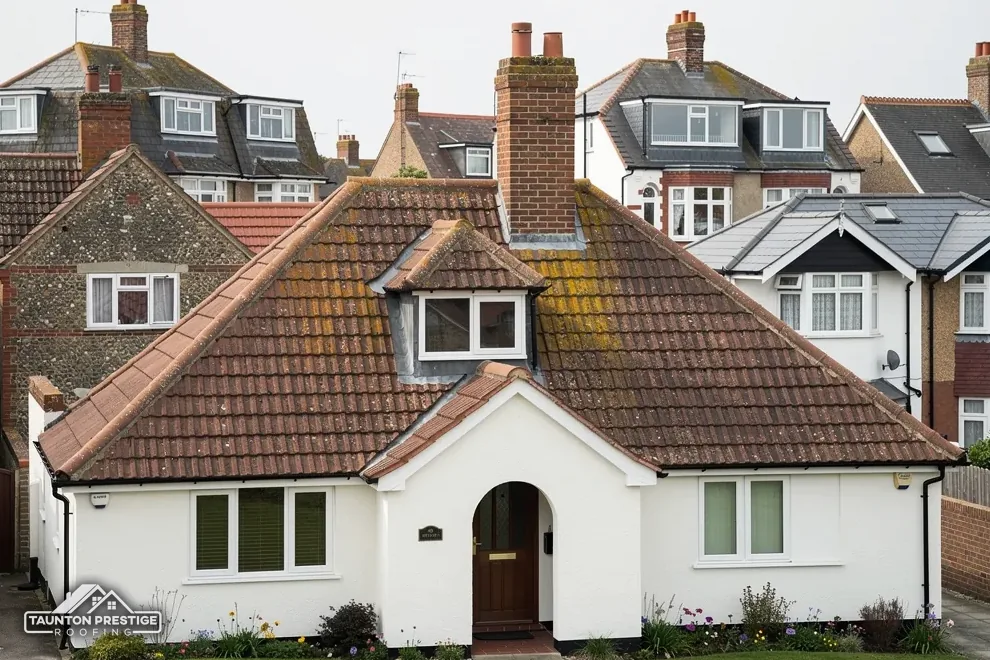
Bishops Lydeard has a conservation area. Somerset Council's table gives it as designated on 5 February 1975 and revised on 25 September 1993, and its boundary lies within about 0.75 km of the village centre. Before we price a roof here, we check whether your address falls inside it, and whether the house itself is on the National Heritage List. Those two answers decide who has to agree to the work, and they can change what the roof is put back in.
Putting back what was there, in the same material and the same pattern, does not normally need planning permission on a house. The question changes when the look of the roof changes: a different covering, a new style of ridge (the capping line at the apex), roof windows on a slope that faces the street, or a dormer. A conservation area narrows what can be done without an application, and we set out the detail on our page about planning permission for roof work rather than repeat it here. If there is any doubt, check with Somerset Council's planning team before materials are ordered.
There are 27 listed buildings within 500 metres of the village centre. One is 25 Church Street, listed Grade II on 14 October 1996; Farringdon Farmhouse and the war memorial are Grade II as well. A listed house keeps its ordinary permitted development rights, but any work that would alter its special character also needs listed building consent. That can catch changes that look small from the lane, such as swapping a mortar-bedded ridge for a dry-fix system, which holds the ridge tiles with clips and screws in place of mortar.
Our survey records what the roof is covered in today, slope by slope, so any application starts from what is really up there.
Look for
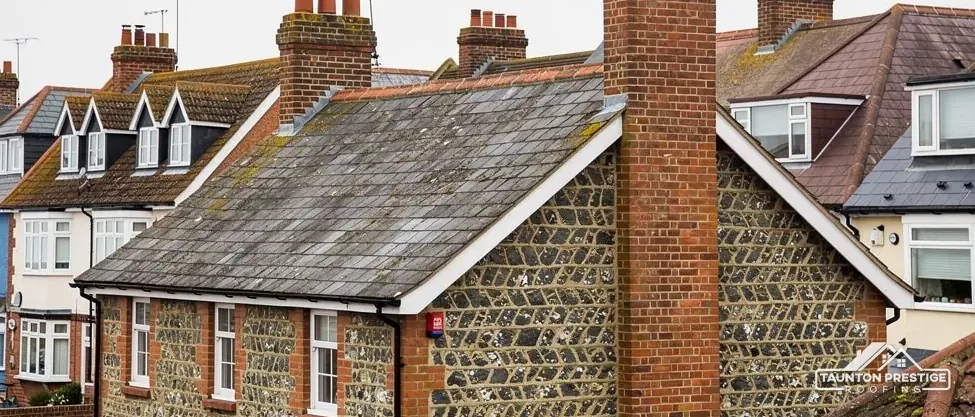
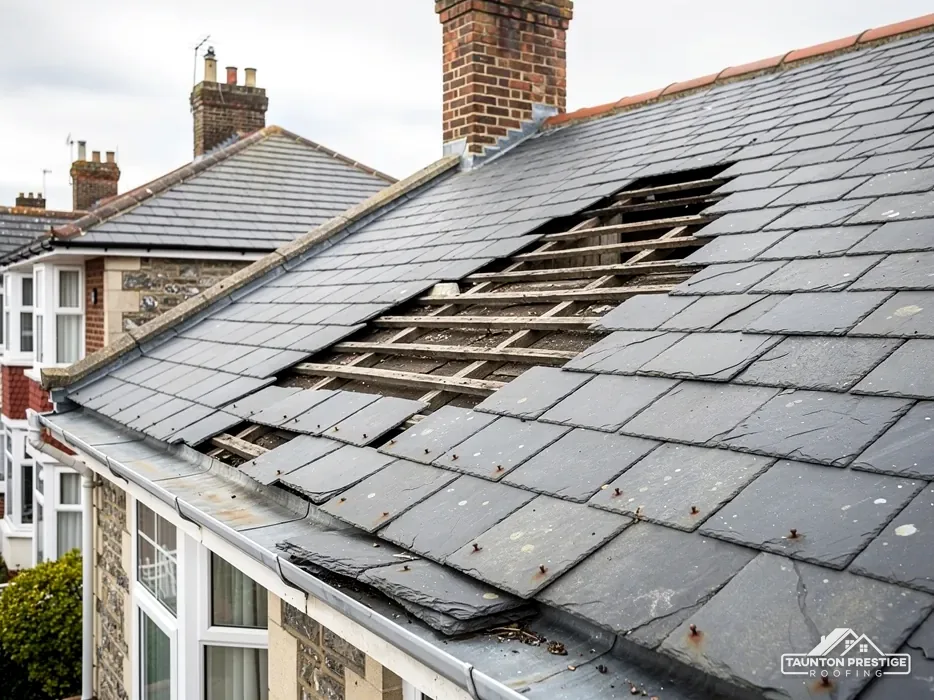
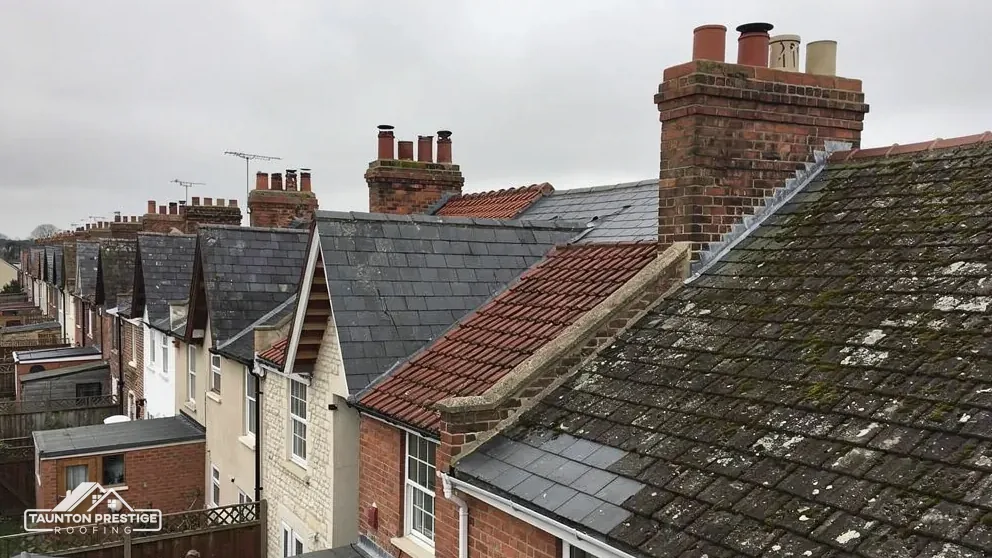
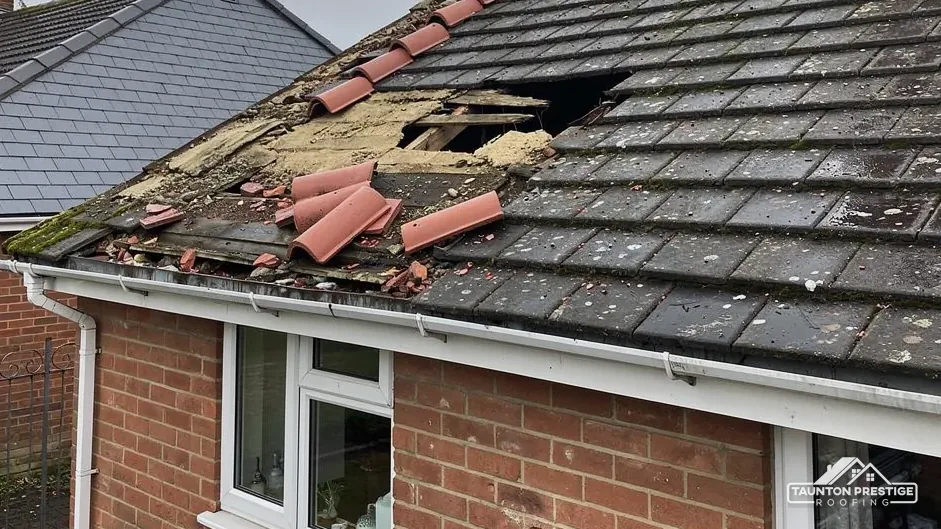
Bishops Lydeard sits at the foot of the Quantock Hills. Whatever covers your roof, natural slate, clay tile or concrete tile, the first sign of trouble is often one piece out of line: a slate hanging lower than its neighbours, a gap in a course, or a broken corner lying in the gutter. Each slate or tile hangs on battens, the slim lengths of timber nailed over the rafters, and is held with nails or hooks. When a fixing fails, the slate slides down and leaves the underlay, the membrane under those battens, open to the weather.
What decides the price
Usually, yes. A single slate can be slid back and held with a clip, or swapped for a matching one, without stripping the slope. We look along the whole slope first, because one slipped slate beside several others tells a different story from one on its own. Where a whole run of fixings has gone, patching turns into a cycle of visits, and stripping that slope and laying it again on new battens is the better buy. We point out which case you are in at the survey. Matching matters too: on a listed house or inside the conservation area, the new piece should match the old in size, colour and texture.
Published guidance gives typical lives, never promises. The Confederation of Roofing Contractors (CORC) says natural slate, if well maintained, can last 100+ years. Marley cites the BRE minimum life expectancy of 60 years, a figure for clay tiles only. For concrete tiles Marley gives a separate estimate of around 60 years and adds that this is not a guarantee. An old roof can still be sound, and a younger one can fail at its fixings. Ridges count as well: Marley explains that since the 2014 revision of BS 5534, mortar alone is not relied on to hold ridge tiles, so a re-bedded ridge gets mechanical fixings too. If slate is your covering, our slate roofing page goes further.
The Environment Agency's Flood Map for Planning puts the mapped centre point of Bishops Lydeard in Flood Zone 3. That is a planning map about flooding of the land, and it says nothing about any single roof. For your own address, use GOV.UK's Check your long term flood risk service. What a roof can do is shed rain quickly and send it to the drains, and that job falls to the gutters, the downpipes and any flat roof on the house.
A flood map describes the ground around you, while your gutters decide where the roof's rain ends up.
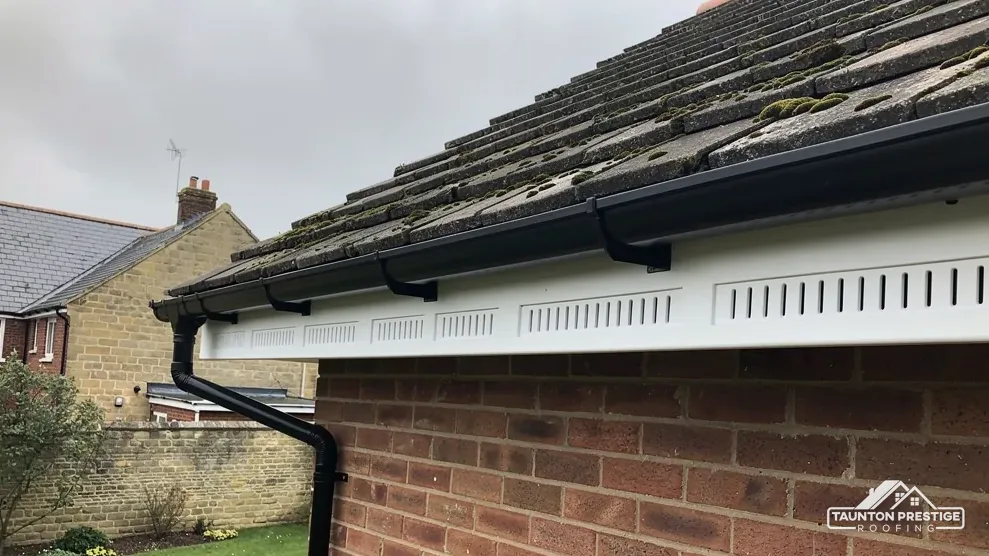
Water spilling over at one point usually means a blockage, a joint that has opened or a length that has lost its fall. Brett Martin recommends a fall of 1mm for every 600mm of gutter, so one dropped bracket can soon leave water standing. Gutters hang on the fascia, the board along the foot of the roof, with the soffit closing the gap beneath it. If overflow has soaked the fascia for a season or two, the timber softens and the brackets lose their grip. We check both before quoting, and our gutters, soffits and fascias page explains the choices.
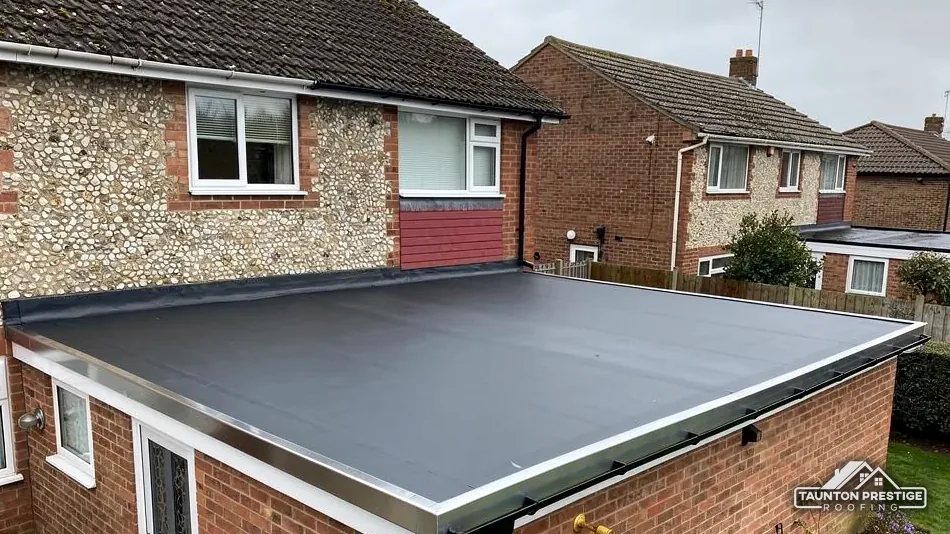
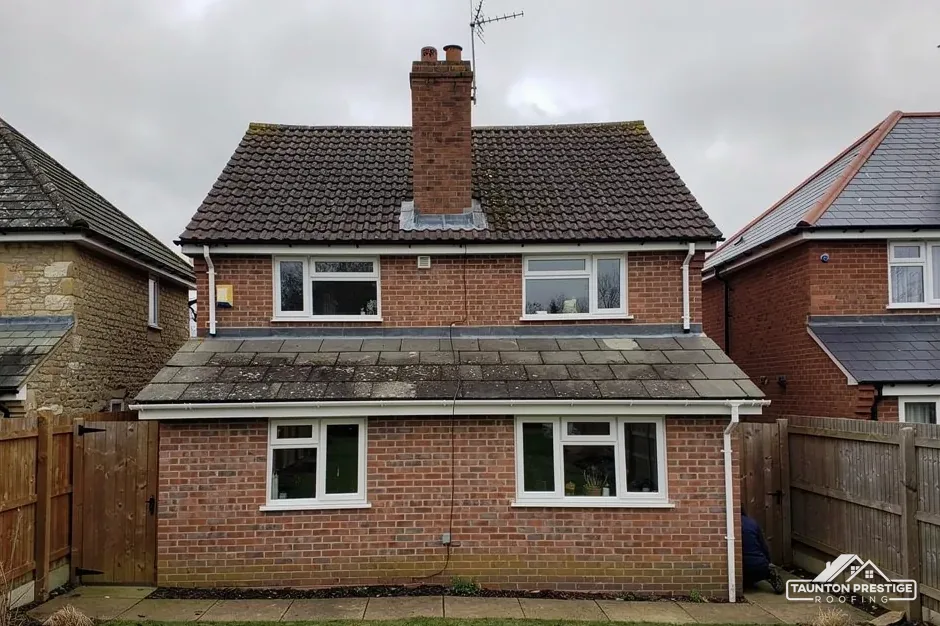
A flat roof is never quite flat. BS 6229:2025 keeps a minimum finished fall of 1:80, and IKO advises designing for a fall of 1:40 so the finished roof still drains. Ponding that lingers long after the rain stops points to a fall that has gone, a blocked outlet or a deck that has sagged. The covering matters too. EPDM, a synthetic rubber sheet laid in one piece, has a typical life of 20 to 30 years according to GreenSpec and 30 to 50 years according to Less. GRP, glass-reinforced plastic laid wet over matting, is put at 25 to 40 years by Less, and torch-on felt at 10 to 20. Our flat roofing page sets out where each one fits.
Some roof jobs need scaffold, and where it has to stand on the footway or carriageway, section 169 of the Highways Act 1980 requires the highway authority's licence. In Bishops Lydeard that authority is Somerset Council: its permits go to accredited contractors alone, and the contractor engaged for the work makes the application. Scaffold that stays inside your boundary, in a garden or on a drive, is not on the highway. A small repair can sometimes be reached by ladder or a tower, and we tell you which access your job needs once we have seen it.
What decides the price
Somerset Council asks for at least 10 working days before the scaffold goes up, and charges £124.60 for each 28-day period (April 2026). If a job overruns, the licence has to be extended. We build that lead time into the start date we give you, so nobody is waiting on paperwork with the roof half open.
Replacing a whole roof can bring it in. The Planning Portal's test says an application to building control is not normally required where less than 25 per cent of the building envelope and less than 50 per cent of the roof are affected. A new covering that is 15 per cent or more heavier needs Building Regulations approval and a structural check. For Somerset addresses the service is Somerset Building Control, on 0300 303 7790. Wildlife counts on older roofs too: bats are protected in law along with the places where they breed and roost, and GOV.UK includes work on a roof, whether repair or replacement, in its list of things that can harm them.
After the survey you get photos of your own roof and one written price for the whole job, and we take every scrap of waste away when it is done. Send us your Bishops Lydeard address and what you have noticed, and we will book that survey.
Walked the roof?
When you have read the checks, we walk the roof and show you the photos.
Yes, and that is normally the simplest route. We look for slate or tile that matches the original in size, colour and profile, using sound reclaimed pieces where new ones would stand out. Like-for-like work keeps the roof looking as it did, which matters inside the conservation area. If a change of material is proposed, check with Somerset Council's planning team first.
St Mary's is listed Grade I and is in use as a Church of England church, so work to it goes through the Church of England's faculty system, not listed building consent from the council. The building is old: its tower is dated to no later than about 1470. The parish arranges the faculty, and the roofer then works to the approved specification.
Not on that nest. Section 1 of the Wildlife and Countryside Act 1981 treats it as an offence where a person intentionally damages or destroys an active nest, meaning one in use or still being built, and GOV.UK confirms that building work is not a purpose for which a licence can be issued. We look for active nests at the survey and set the start date around them.
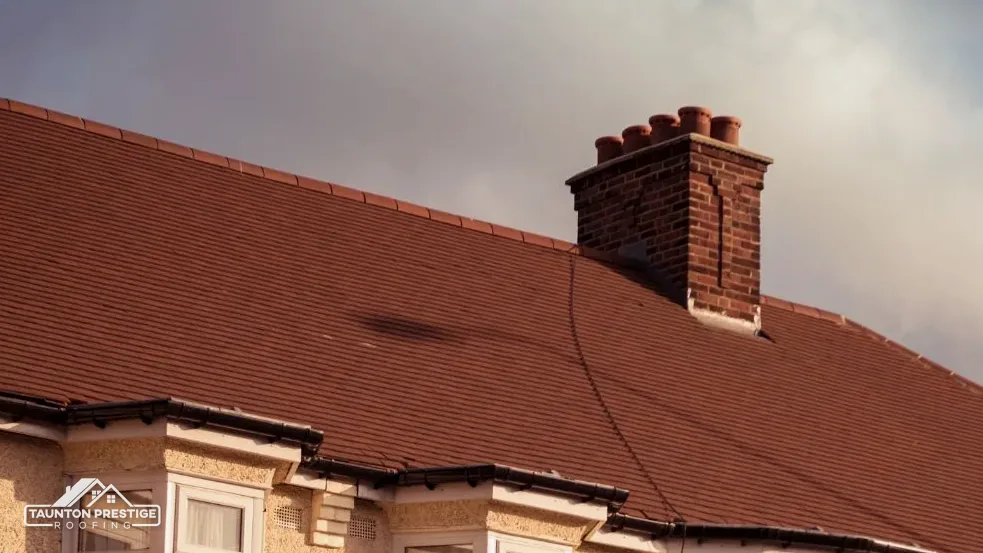
Renewing the flaunching, the mortar collar round the pots, or the lead flashing that seals the stack to the roof in matching materials is normally a repair. Lead flashing can last for over 80 years. Rebuilding, taking down or altering a stack may affect its character and need listed building consent, and removing a chimney breast always needs Building Regulations approval.
Tell us which part of your Bishops Lydeard roof is worrying you, and we will arrange a visit.