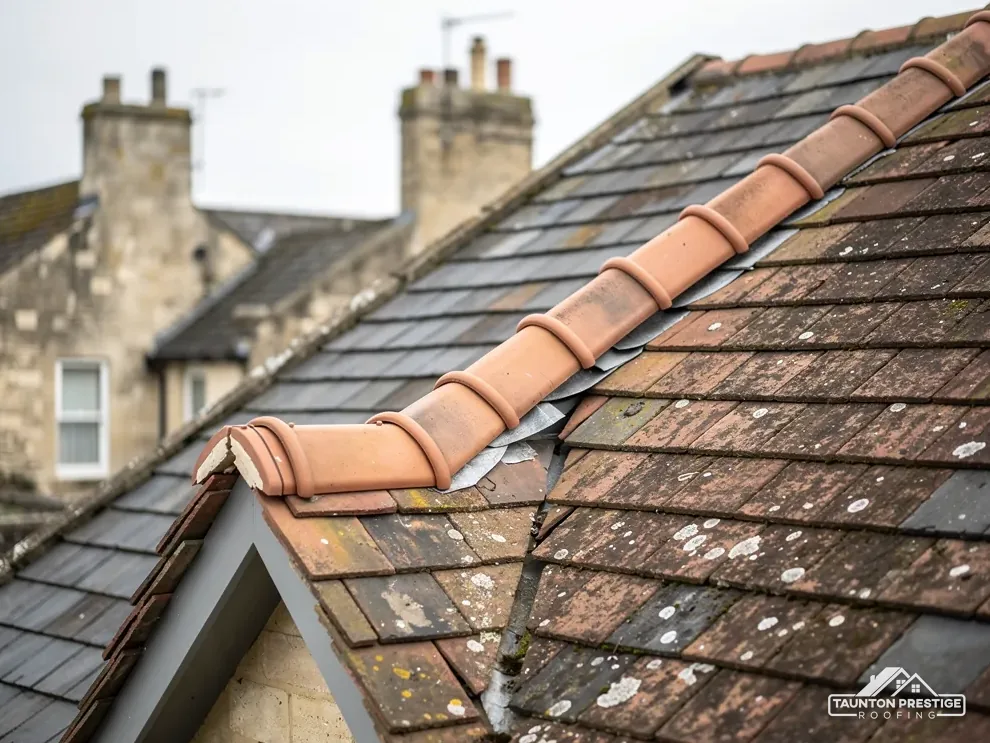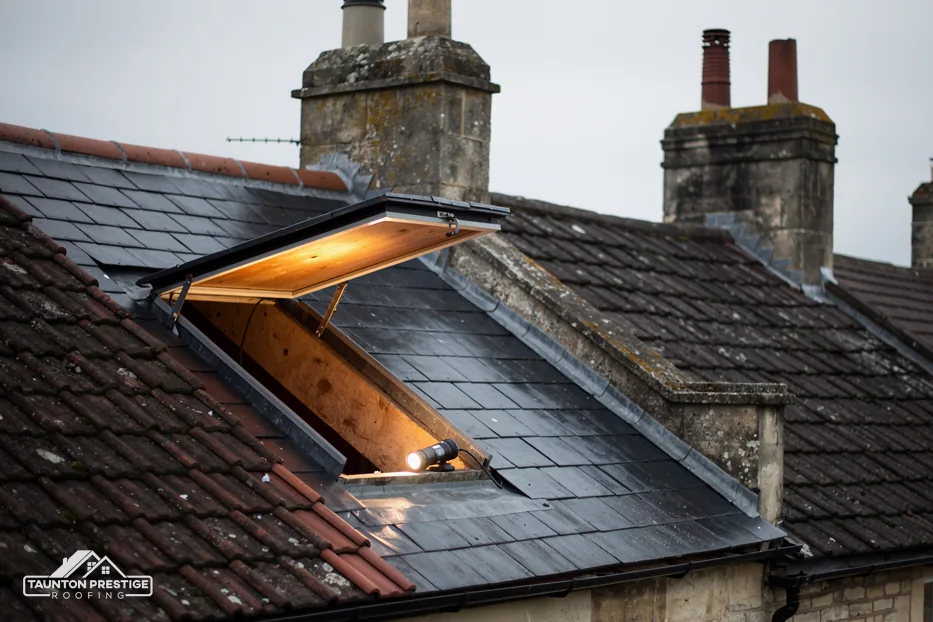
Natural slate
Split stone, thin and dense, laid in overlapping courses on battens.
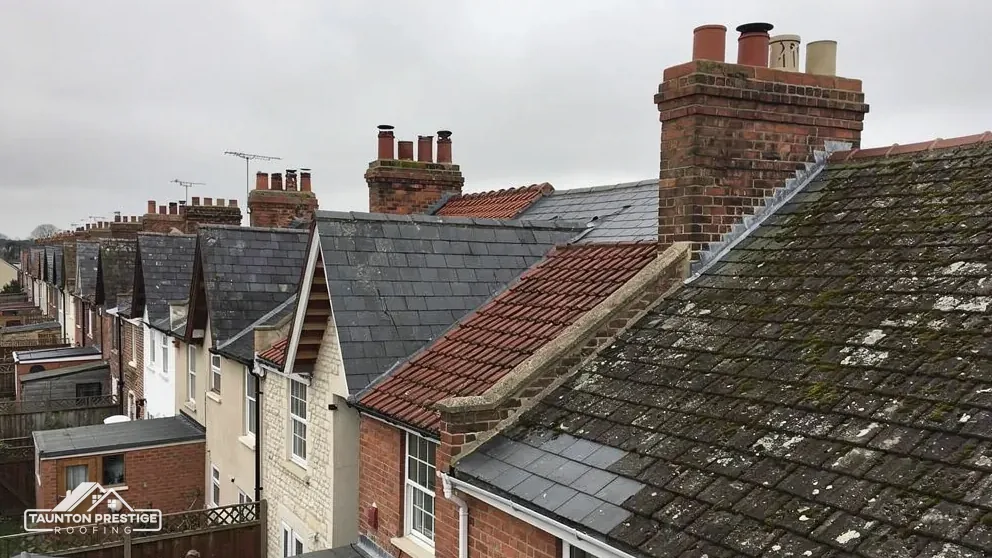
Natural and man-made slate, repaired and re-laid properly.
We go up, photograph every slope, then tell you plainly whether your slates need a few repairs, new nails throughout, or a complete re-slate.
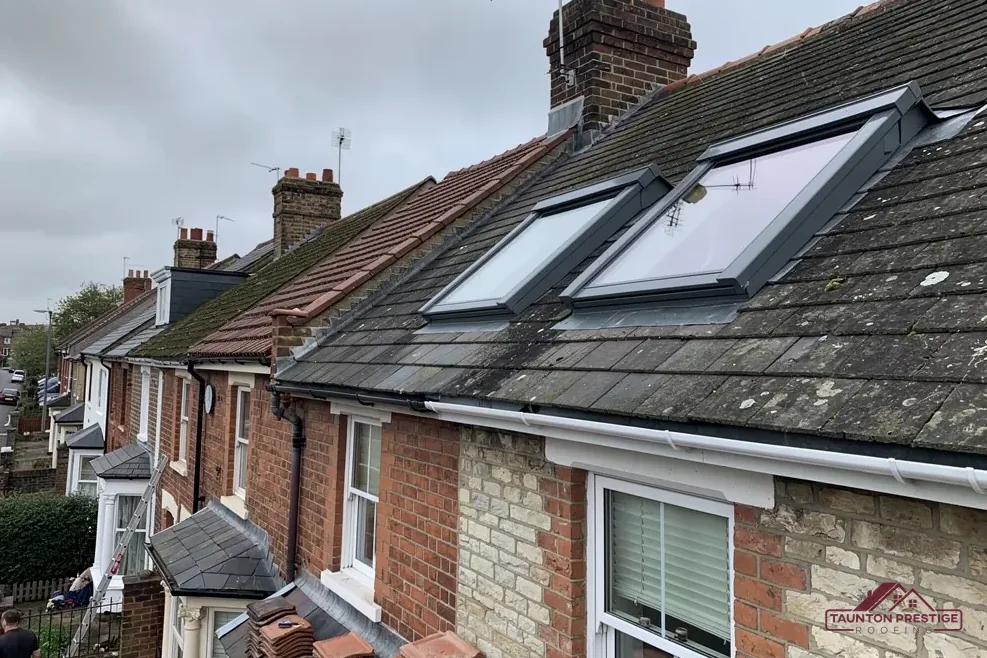
Split stone, thin and dense, laid in overlapping courses on battens.
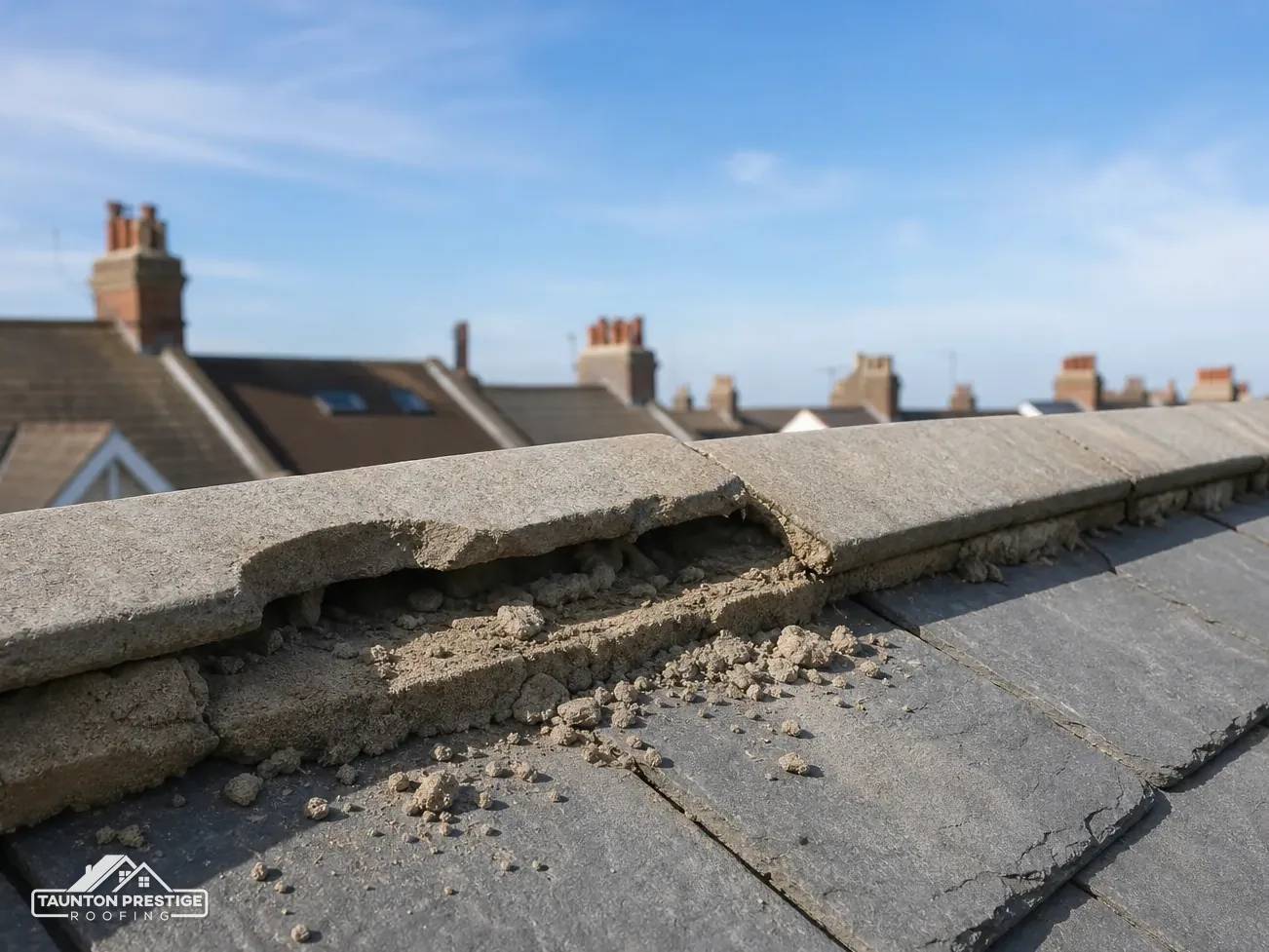
Factory-made slate of exact size, fixed to the maker's own data sheet.
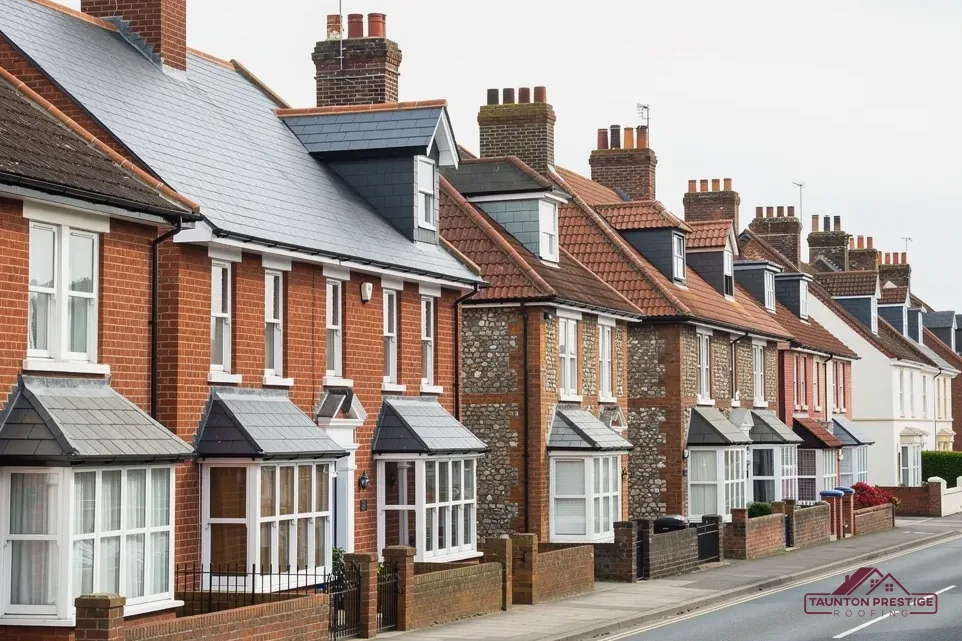
Sound second-hand slates, sorted by size and thickness to suit older roofs.
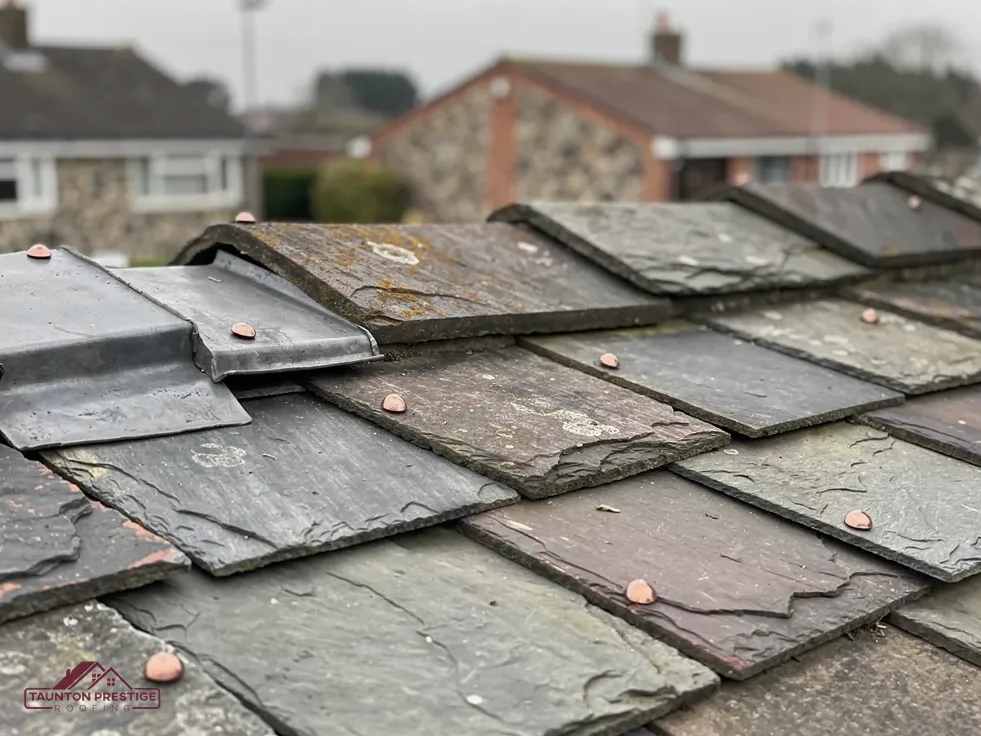 Slipped slates refixedHeld with tingles or slate hooks
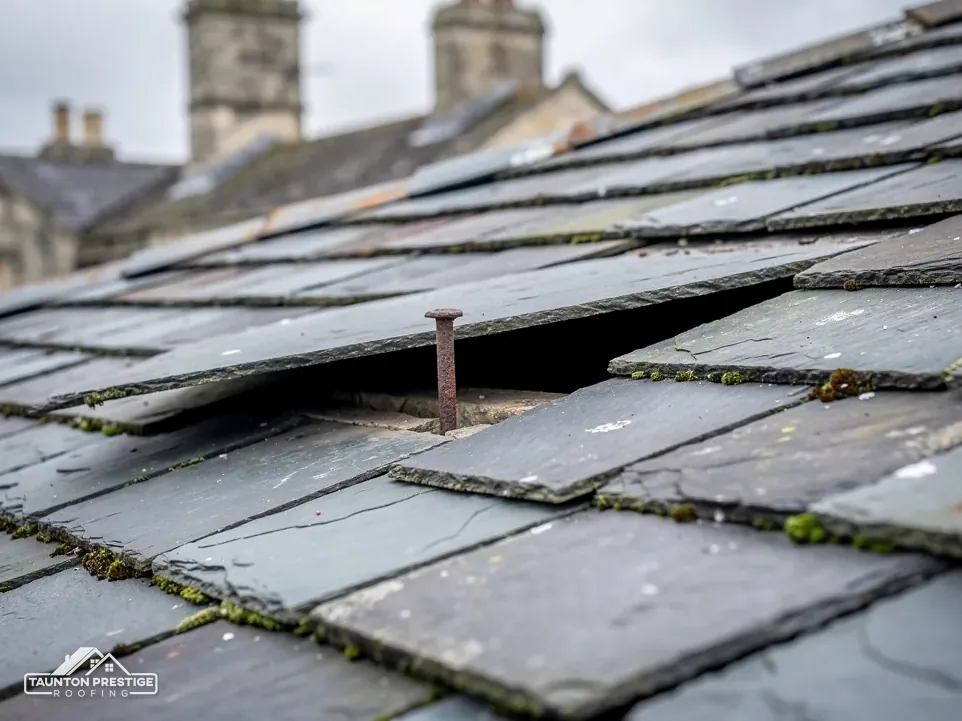 Cracked slates replacedMatched for size, thickness and colour
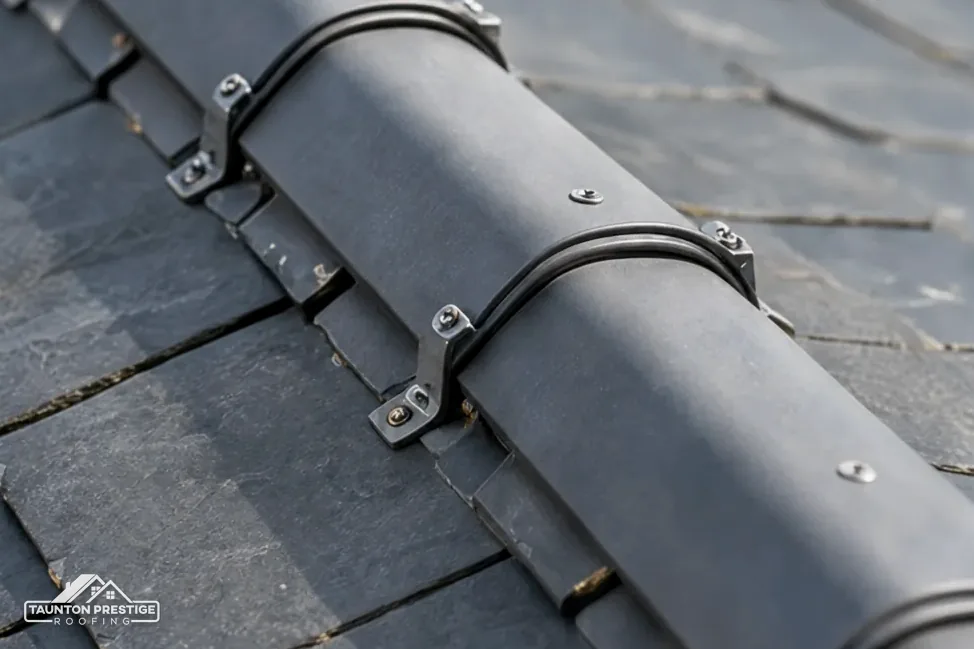 Nail sickness curedSlopes stripped and re-laid on new nails
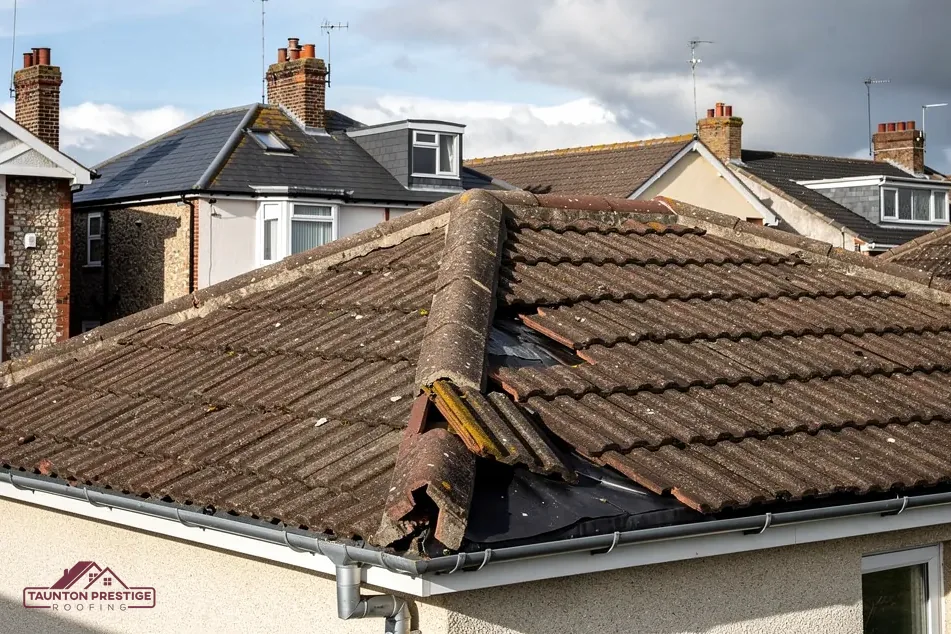 Ridges, hips and valleysRe-bedded, fixed and relined
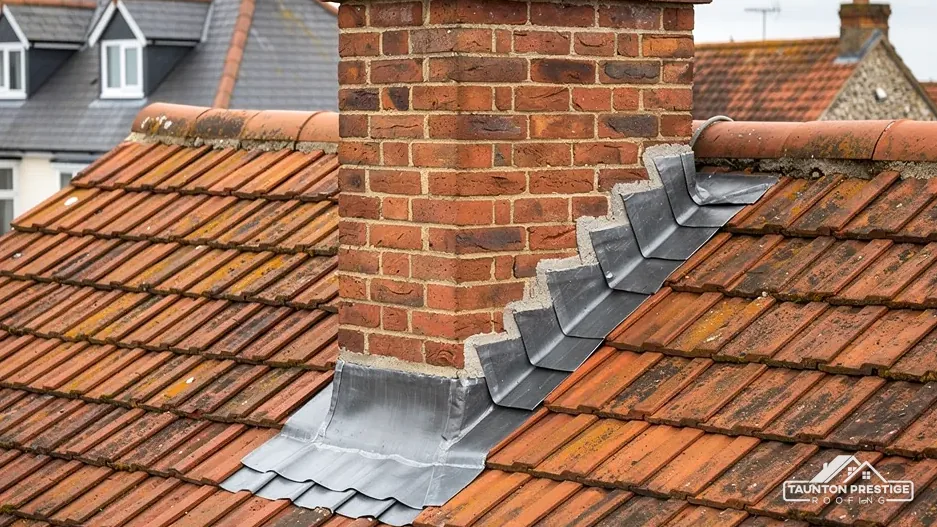
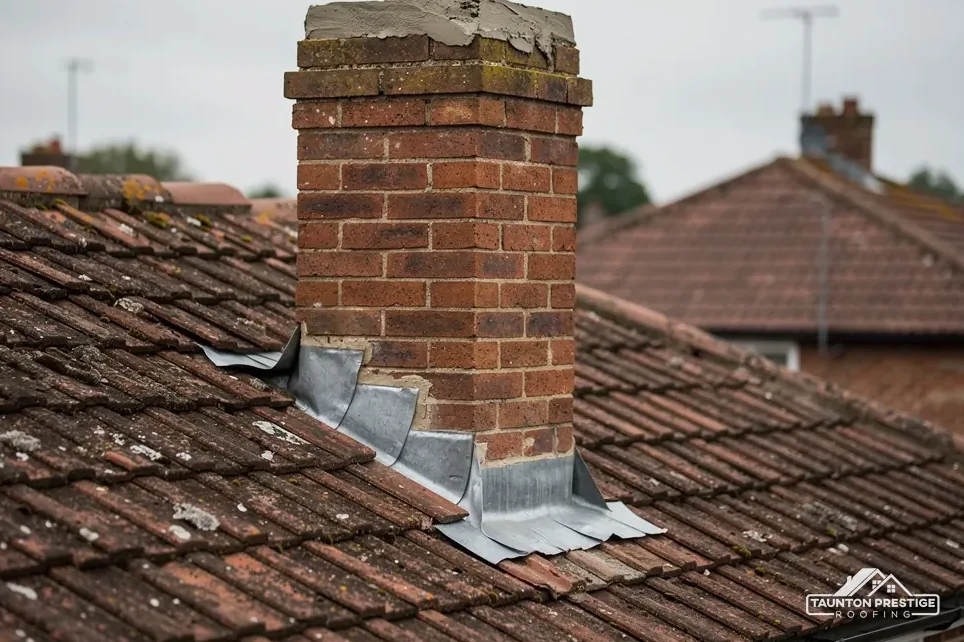 Lead around chimneysFlashings and soakers renewed
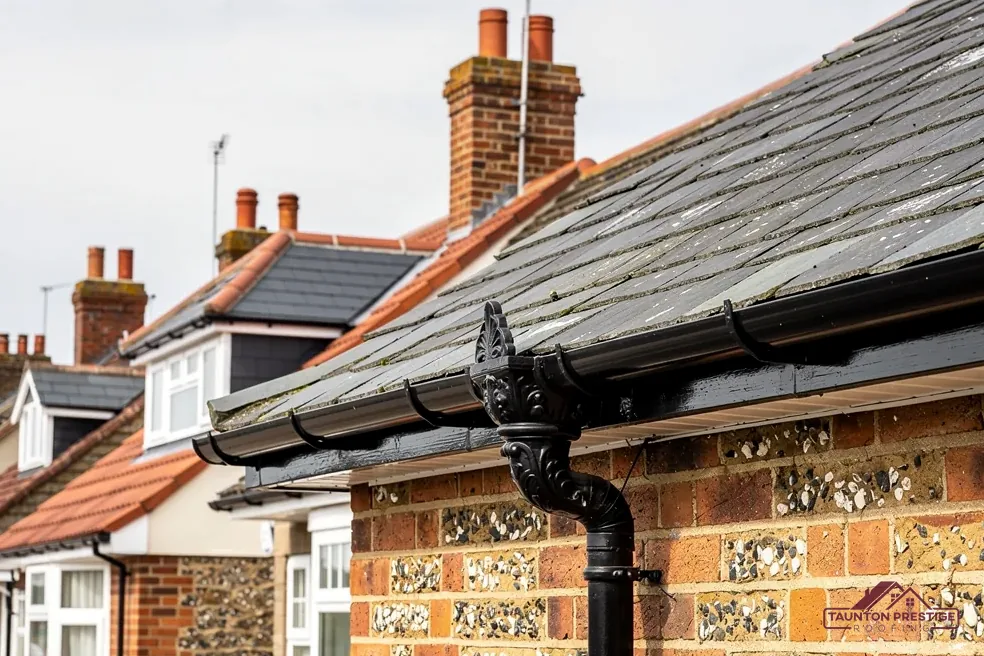 Full re-slatesNew underlay, battens and slate
A handful of slates have cracked or slid on an otherwise sound, well-fixed roof.
Nails have rusted across a slope, yet the slates can go back on new battens.
Slates flaking or soft, felt perished and battens rotten right across the roof.
Reading a slate roof
How we work through a slate roof before pricing it, from the view on the pavement to the nails under each course, and what you can spot yourself.
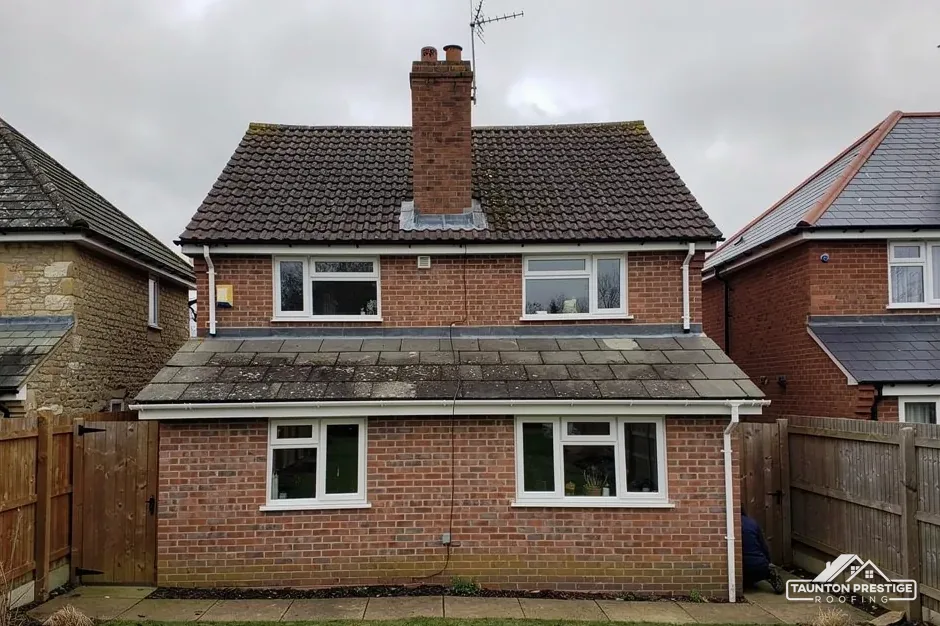

Slate roofing in Taunton covers a wide spread of houses: Victorian and Edwardian terraces near the town centre, stone cottages in the villages, farmhouses on the Levels and newer homes finished in man-made slate. Whatever its age, a slate roof gives warning before it lets water in, and the early signs can often be read from the pavement or the back garden with nothing more than a pair of binoculars.
Look for
A slate roof tends to give plenty of warning before the rain finds a way in.
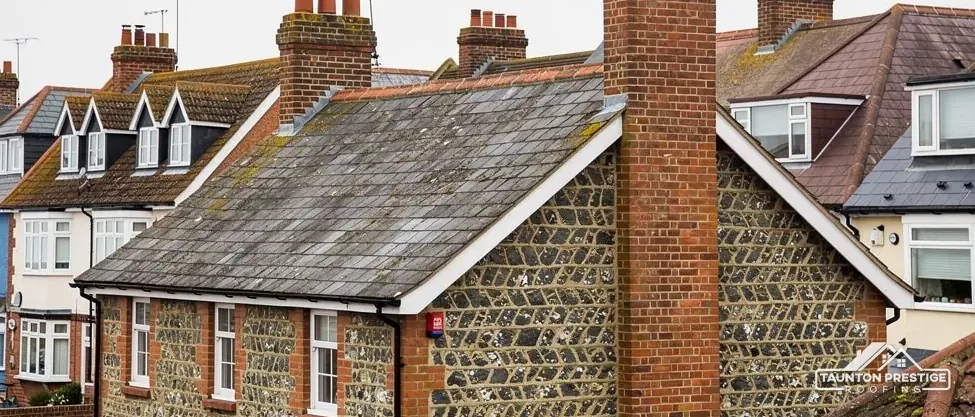
Each row of slates, called a course, should run straight and level from one end of the roof to the other, with the bottom edges forming a clean line. The slates lie flat against each other with no gaps, and the colour stays even apart from the gentle weathering that every slate picks up. The ridge, the row of capping along the very top, sits straight with its joints filled. Along the verge, the sloping edge where the roof meets the gable wall, the slates finish neatly with nothing loose or overhanging.
A single slate sitting lower than its neighbours has usually lost its nail. A gap in a course means one has gone completely, and the pieces may be lying in the gutter or on the path. Strips of lead or metal showing at the bottom edge of slates are earlier repairs, and a scatter of them across one slope suggests the nails on that slope are failing together. Inside, look for damp patches on bedroom ceilings after windy rain, and for daylight between slates when you look up from the loft with the light switched off.
Please do not. Slate is brittle underfoot and slippery when wet, and a ladder leant against the gutter can crack the slates along the eaves. Binoculars from across the street show far more than a shaky climb. Take a few photos from the ground, note which slope and which room is affected, and send them to us. We then go up with proper access and photograph each slope close up, so you see exactly what we see.
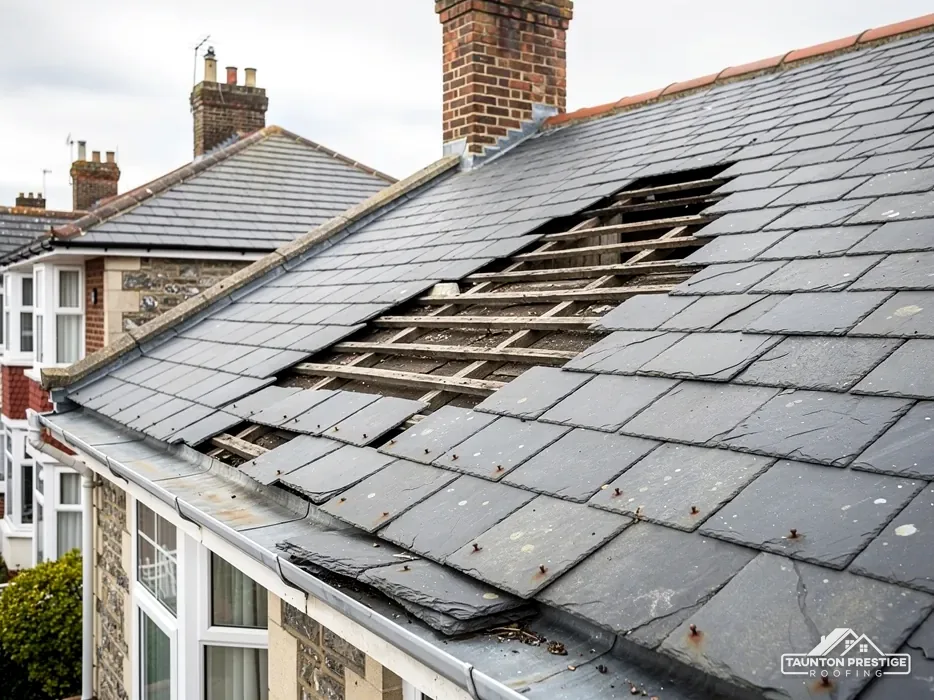
A slipped or cracked slate is a small roof repair when it is caught early, and a much bigger one once rain has been running onto the battens behind it for a whole winter. Slates hang from nails driven through holes near the top of each one, and every slate is covered by the courses above it. That overlap keeps the weather out, but it also means the fixing of a broken slate sits hidden under sound ones.
What decides the price
We slide a slate ripper, a long flat blade with a hooked end, under the broken piece and cut through its old nails. The new slate is matched for length, width, thickness and colour, then pushed up into place. Because its fixing point is now buried under the course above, it is held at the tail by a tingle, which is a thin strip of lead, copper or stainless steel nailed to the batten through the gap between the slates below, then turned up over the bottom edge. Done neatly, a tingle is hard to spot from the street. On some roofs a purpose-made slate hook does the same job. Our guide to slipped, cracked and missing slate repairs sets each method side by side.
Some breaks come from people: a ladder against the eaves, an aerial fitter, or a careless step along the slope. Others come from frost working into a slate that has started to delaminate, which means splitting into thin layers like the pages of a book. Wind lifting a slate whose nail has rusted away will snap it at the hole. Each cause says something different about the rest of the roof, so we look at the broken pieces before we fix anything.
Usually, with reclaimed slate of the same size and colour, or new slate picked to sit quietly beside the old when no reclaimed batch fits. We carry samples up so you can compare them against your own roof in daylight, and we show you the finished repair in photos.
Nail sickness, sometimes called nail fatigue, is the trade name for what happens when the nails holding a slate roof corrode. Where a roof was fixed with nails that rust, the damp air under the slates slowly eats them away. The slates themselves can still be sound, but with nothing left to hang from they start to slide: first one, then a few, then a steady trickle after every gale.
More tingles cannot cure a slope where every nail has rusted through.
Storm damage tends to lift slates along an exposed edge or near the ridge in a single night. Nail sickness shows as slates slipping a few at a time, scattered across a slope, with fresh slips turning up month after month. A slope carrying a growing number of tingles from past repairs is the classic picture. When we lift a slate on survey, a nail that crumbles between finger and thumb confirms it. Our answer on nail sickness explains the signs in more detail.
Not with more tingles. Each tingle holds one slate, but the nails beside it are just as tired, so the slips keep coming. The lasting cure is to strip the slope, sort the slates, set aside the ones still fit for use and re-lay them on new battens with new nails, topping up with matching reclaimed slate. That keeps the look of the original roof and can cost less than a full set of new slate. If too many slates crack or flake as they come off, a full re-slate becomes the better buy, and we tell you that at the survey rather than halfway through the job.
The slope facing the prevailing weather often wears out first, because it takes the wind and the driving rain head on. A sheltered rear slope can sometimes wait a few more years, which spreads the cost. We photograph both so you can see the difference for yourself before deciding. While a slope is stripped we also look at the battens and rafters beneath, because a run of slipped slates sometimes hides a soft batten that the nails could no longer grip, and that timber is renewed before any slate goes back.
Look for
The open slope is rarely where a slate roof leaks first. Water gets in at the joints: the ridge along the top, the hips where two slopes meet at an outside corner, the valleys where they meet at an inside corner, and the edges against chimneys and walls. Each has its own detail, and each gets a careful look on every slate roof we survey.
What decides the price
Slate roofs are commonly capped with clay or concrete ridge tiles, traditionally bedded in mortar. BS 5534, the British Standard that slaters and tilers work from, was revised in 2014, and since that revision a mortar bed alone has not been enough for the capping along ridges and hips. A re-bedded ridge on a slate roof gets a screw or clip through each tile as well, or a dry-fix system tested to BS 8612 instead. Mortar is still allowed; it simply cannot be the only thing holding a tile on. BS 5534 is not required by law, but we work to it because it describes the fixings that keep a ridge in place through a Somerset winter.
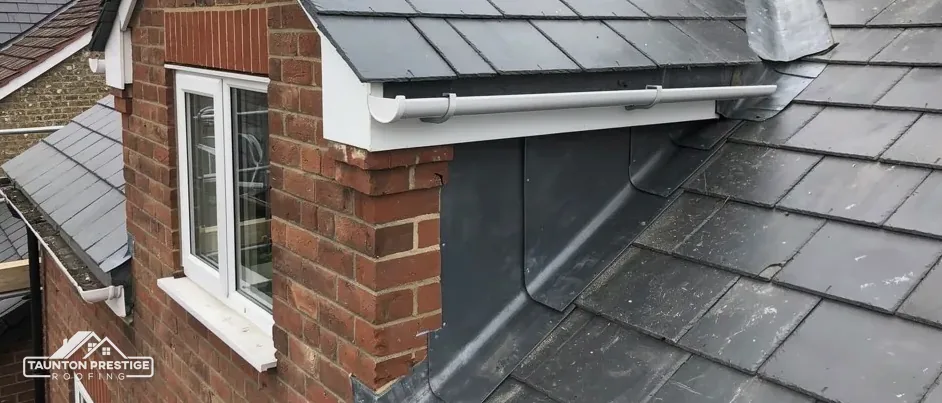
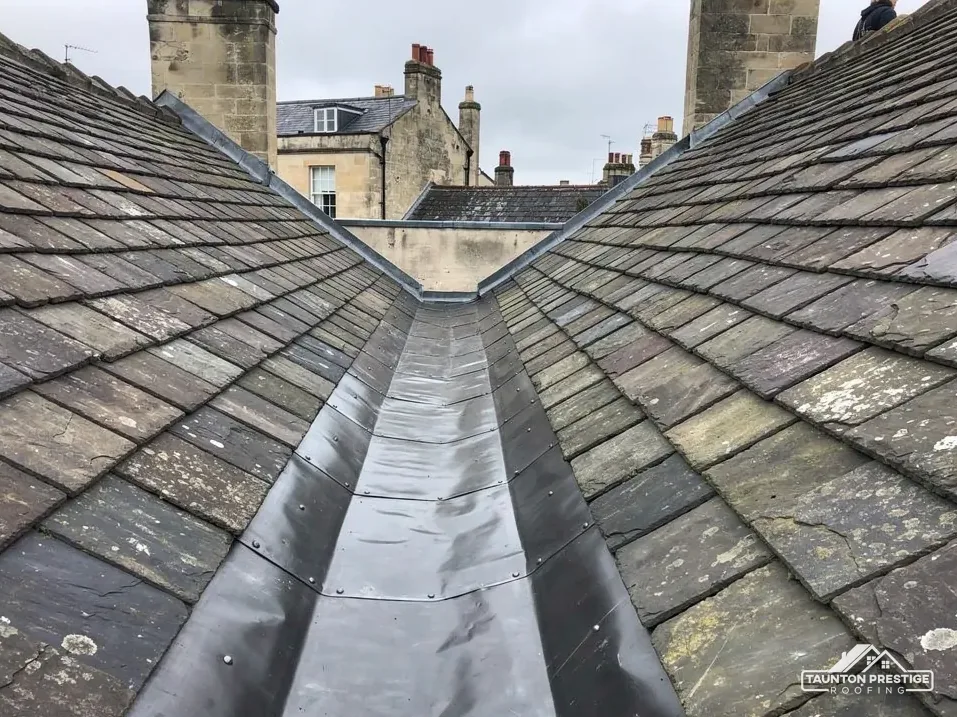
A valley carries the rain from two slopes, so it handles far more water than any other part of the roof. On a slate roof it is often lined with lead, with the slates cut to an angle along each side. Over time the lead can split, the cut slates can slip, and moss and leaves dam the channel until water spills sideways under the slates. Against a chimney, flashings and soakers do the same job. A flashing is a strip of lead dressed into the brickwork and down over the slates; soakers are small pieces of lead tucked between each slate and the wall. Lead flashing can last for over 80 years (MyJobQuote), but one crack or lifted edge is enough to let water through. Our lead work page covers the lead itself, and the valley gets checked with the slates either side of it.
A hip runs down an outside corner, and the slates along it are cut to an angle, so each cut piece has less slate left to hold its nail. Hip tiles sit over those cuts and need the same mechanical fixing as the ridge. Where a hip tile has slid or its mortar has dropped out, rain runs straight onto the cut slates beneath.
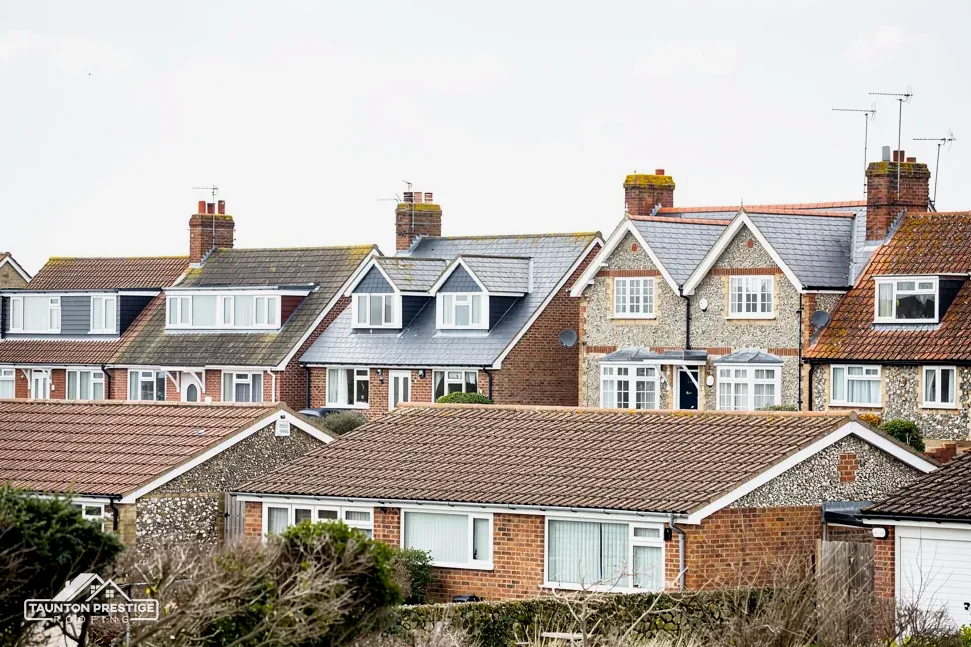
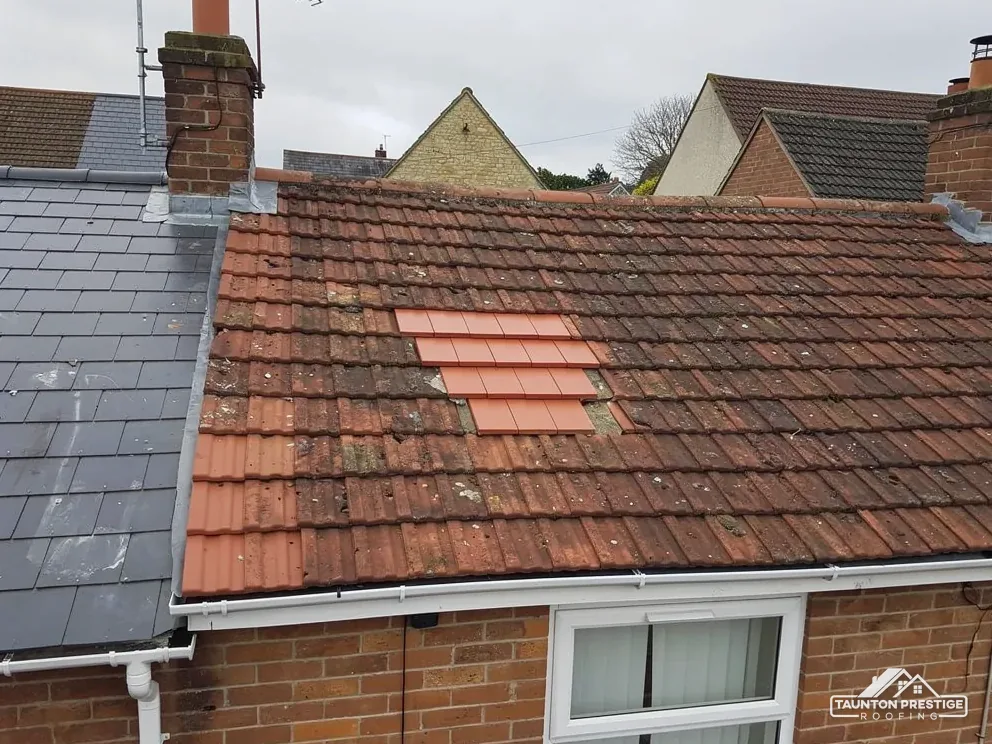
When slates need replacing in numbers, the first choice is between natural slate and man-made slate. From the street the two can look alike when new. Up close, and over the years, they behave differently, and the choice affects the price, the look and how a planning officer views the work on a listed or conservation-area home.
A good natural slate can outlast several sets of the nails that hold it.
Natural slate is quarried stone, split into thin sheets and trimmed to size. It comes from quarries in several countries and quality varies from one source to the next, so we ask for the supplier's test data and the quarry of origin before a natural slate goes on your roof. Fibre-cement slate is made in a factory from cement and fibres, pressed to an exact size and colour. Every slate in a pack matches, which makes it quick to lay, and the maker's data sheet sets its fixings, its minimum pitch and its expected life. Our comparison of natural and fibre-cement slate puts cost, life and looks side by side.
CORC, the Confederation of Roofing Contractors, puts well-maintained slate at 100 years or more. Treat that as a typical figure for good natural slate, never a promise for any one roof. The nails, battens and underlay underneath often give out long before the stone does, which is why an old slate roof can be re-laid rather than replaced. For a man-made slate, read the life stated on that product's own data sheet.
Only with care. Changing natural slate for a different material is the kind of alteration that can affect a listed building's character, so it needs listed building consent, and in a conservation area the planning team may expect natural slate to stay. If your house is neither, fibre-cement is a fair option for an extension or an outbuilding, and we lay out the trade-offs before you choose rather than steering you to the dearer slate.
Look for
Look for
Somerset Council lists a run of conservation areas in and around Taunton, among them Castle Green and Bath Place, Park Street and Wellington Road, The Crescent, South Road, Staplegrove Road and, newest of all, Haines Hill and Trull Road, designated 14 March 2023. Bishops Hull, Bishops Lydeard, Milverton, Wiveliscombe and North Curry have their own. If your slate roof sits in one of them, or on a listed building, the material that goes back on carries extra weight.
Replacing slate with matching slate on a house is normally permitted development under Class C, the part of the planning rules covering alterations to a roof. A listed house keeps those rights, yet still needs listed building consent where the work touches what makes it special, and swapping natural slate for another material is that kind of change. Somerset Council lists an Article 4 direction for Taunton's Staplegrove Road, among others; a direction takes away permitted development rights in a defined area, so check what any direction covers with Somerset Council's planning team before you alter the covering. If the house stands within Exmoor National Park, consent questions go to Exmoor National Park Authority rather than the council. Our guide to slate roofs in conservation areas walks through each consent route.
Our slate work reaches from Taunton's own streets and suburbs out as far as Wellington and Bridgwater, into villages under the Quantocks and the Blackdowns, across the Somerset Levels, and over into Devon for slate roofs in Tiverton or Cullompton. On high ground and across the open, flat Levels, wind and driving rain test every joint in a slate roof, so verges and ridges in those spots get extra care when we re-lay them, and we check the slates along the exposed edges first.
Roof repair and roof replacement both appear on the GOV.UK guidance as work that can affect bats, and the law protects every bat species along with the places they breed and roost. If we see droppings or other signs of bats on survey, we tell you before any work is booked, so the timing and method can be planned properly from the start.
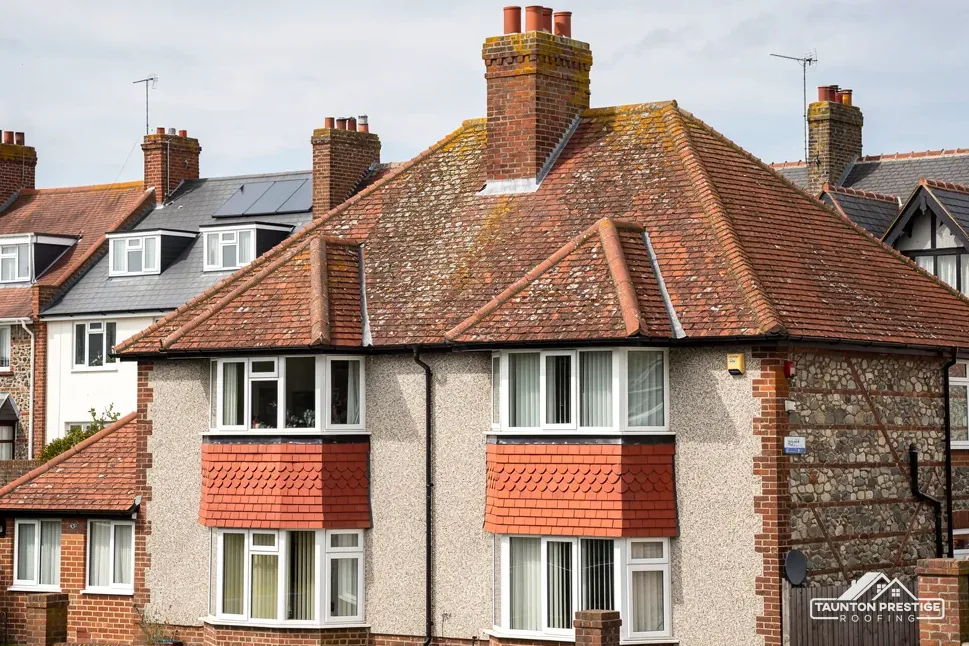
A full re-slate is the right answer when the slates themselves are failing across the roof, not just their nails: flaking faces, soft edges, breaks at every hole, and felt that has perished between the rafters. It is also the job when a new roof goes over an extension or a rebuilt section and has to match the slate on the main house.
Sound or needs work
What decides the price
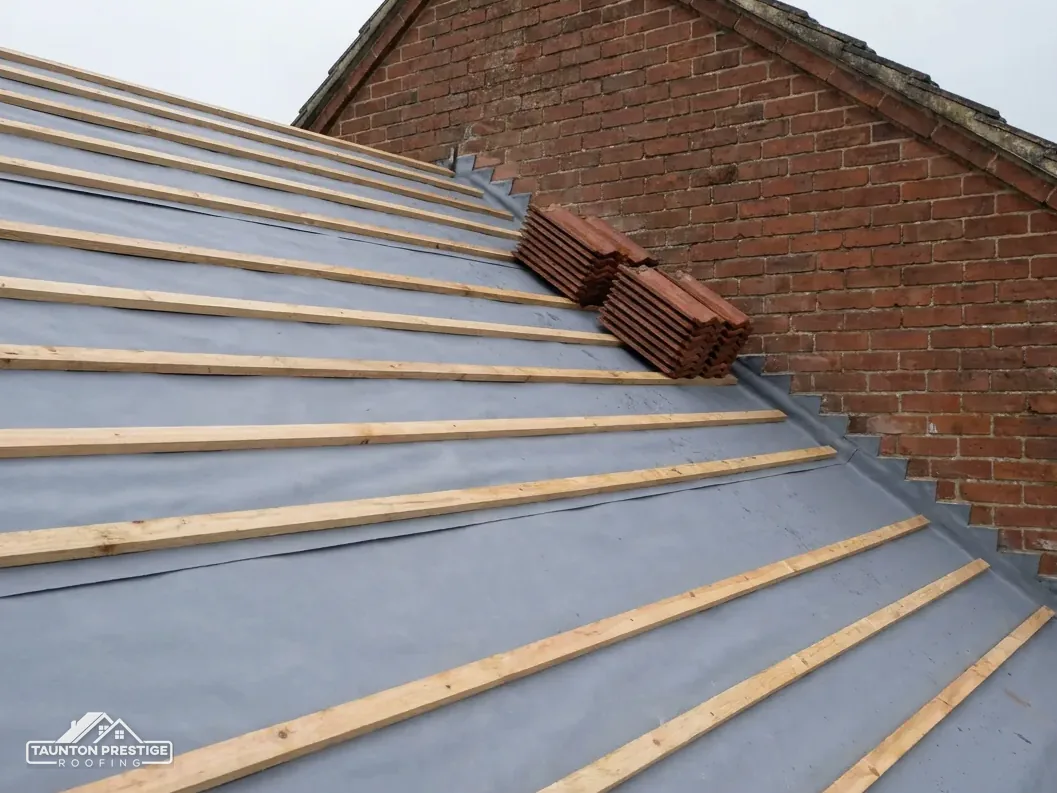
The scaffold goes up first, with a chute or covered bags so old slate and timber come down safely and the waste is taken away as the stripping goes, never left piled in your garden. We open up one section at a time, never more than can be made weathertight before we leave. Sound slates are sorted and stacked for reuse if you want them back on. Then new underlay goes on, the membrane under the battens that acts as a second line of defence, followed by new battens, the timber strips the slates are nailed to, set out to the right gauge for your slate size. The slates go on course by course from the eaves upward, then the ridge, hips, valleys and lead are finished. Our guide to re-slating a roof takes each stage in order.
The Planning Portal's national test says a building control application is not normally needed where the work covers less than 25 per cent of the building envelope and less than 50 per cent of the roof. Beyond that, or where the new covering is 15 per cent or more heavier, it does. Somerset Building Control sets no separate percentage for re-roofing, and when a re-roof is notifiable it falls under the fee category for renovating a thermal element. We tell you which route applies before the job is booked.
Yes, in the usual run of things. You hear each evening what happens the next day, the house stays watertight overnight, and the garden is cleared of nails and slate offcuts as we go. Our slate roof cost guide covers what moves the price of a new slate roof.
If slates are already slipping, take a photo of the worst slope from the street and send it to us with your postcode, so we can arrange a time to go up and read the whole roof.
Walked the roof?
Tick through whatever the garden and the loft show you; climbing onto the slates is our part of the job.
| Job | Typical range |
|---|---|
| New slate roof (average) | around £7,800 |
| New roof, all coverings (average) | around £5,250 |
| General roof repair (average) | around £650 |
| Ridge tile replacement | £225 to £550 |
| Roof valley replacement | around £540 |
Typical UK figures from MyJobQuote, never our own prices. The written price for your slate roof comes once we have surveyed it; check whether any quote you hold includes VAT and scaffolding.
MyJobQuote cost guides, Sep and Oct 2026
Shorter pieces on single slate questions: repairing slipped slates, nail sickness, natural against fibre-cement slate, consent in conservation areas, re-slating and what a slate roof costs.
 How Much Does a Slate Roof Cost in the UK?A published national average gives a starting point for slate roof costs, but your own figure turns on a handful of things. Here is what those things...
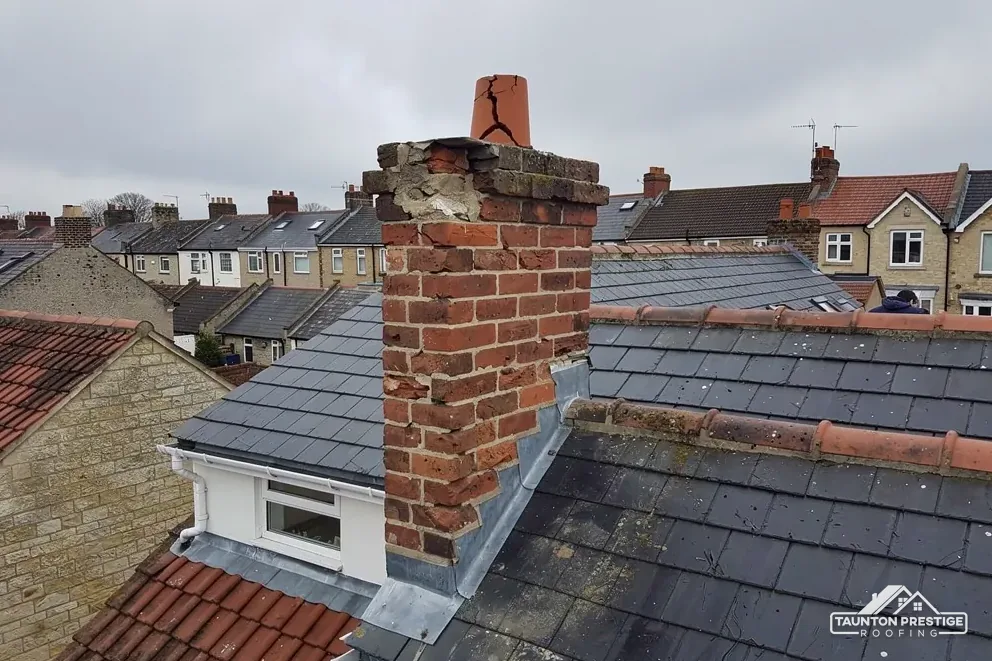 How Long Does a Slate Roof Last?Good natural slate can outlast the house it covers, yet the nails, battens and lead around it do not always keep pace. Here is how to judge the years...
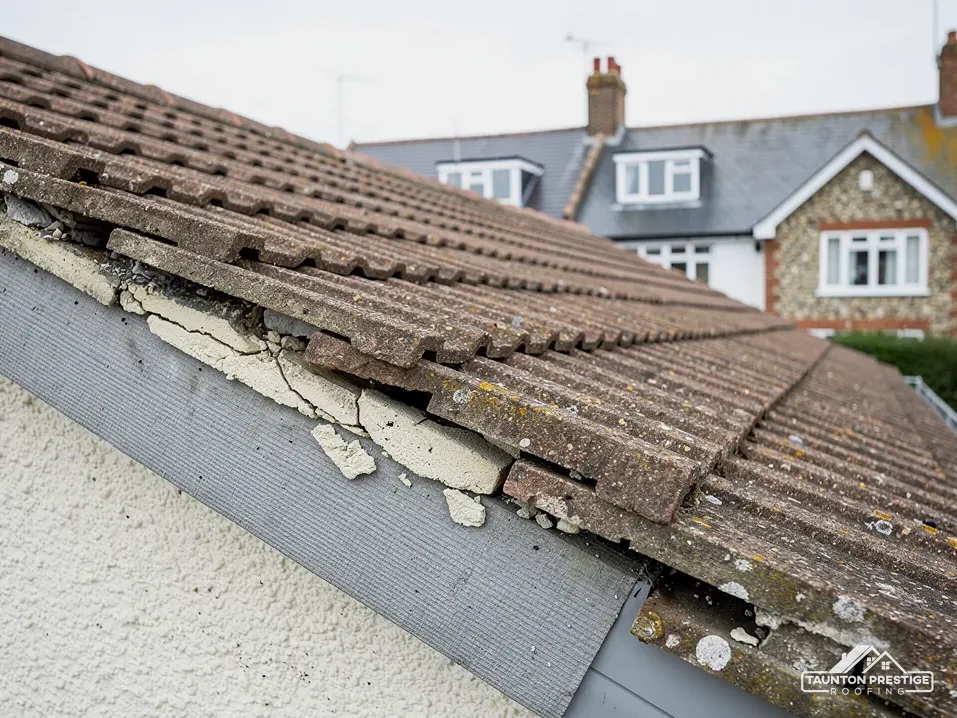 Re-Slating a Roof: When Repair Is No Longer EnoughA slate roof can be patched for years, until the patches start to outnumber the sound slates. Here is how to tell when re-slating beats another...
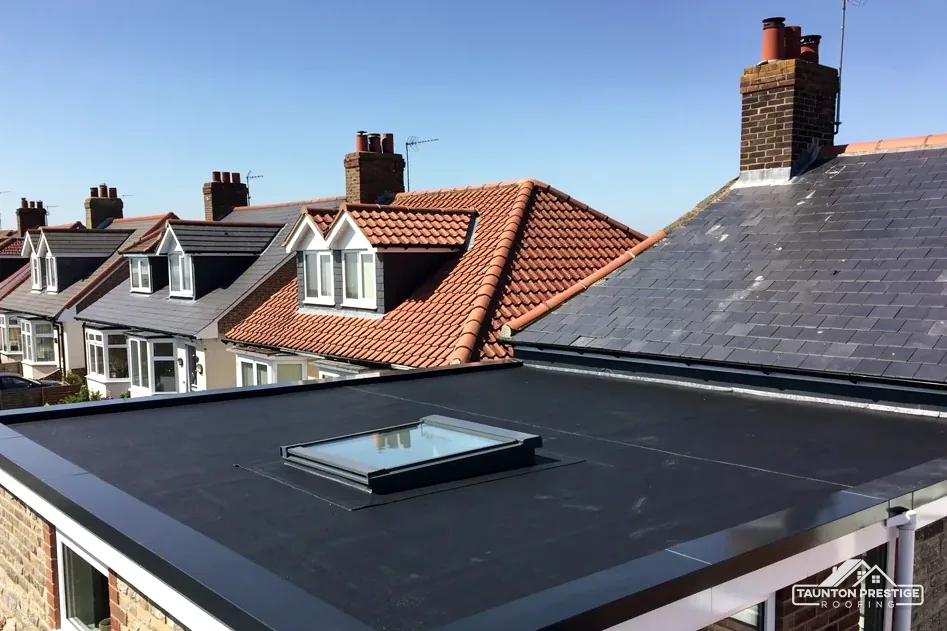 Natural vs Man-Made Slate: Cost, Life and LooksNatural slate is split from quarried rock and fibre-cement slate comes off a production line. Here is how they differ on weight, looks and lifespan...
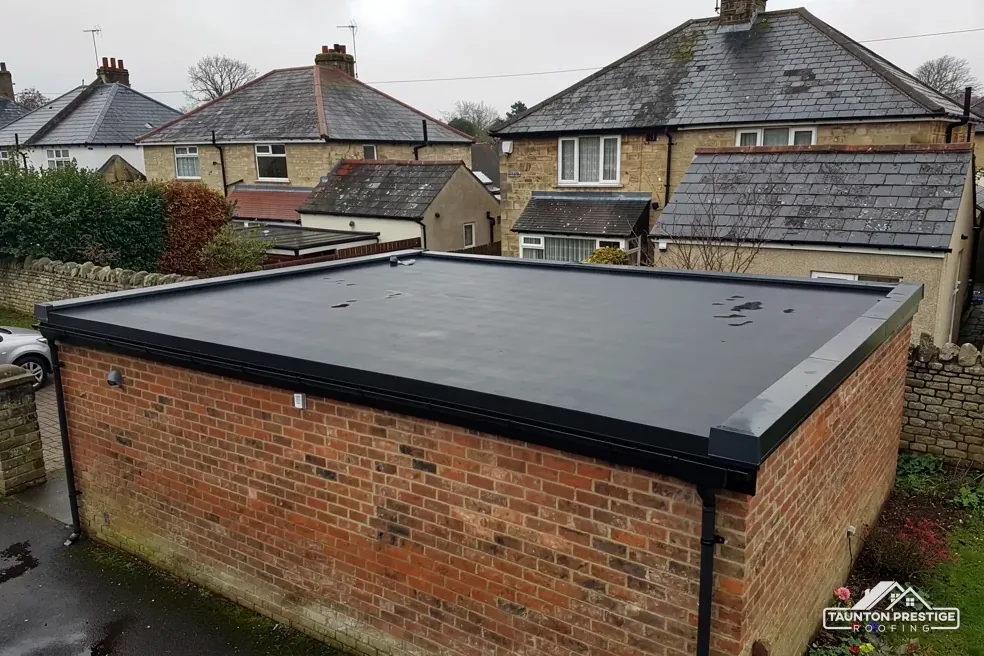 Slating Details: Headlap, Nails and HooksA slate roof keeps out the weather through overlaps and fixings, not through any one slate. This guide explains headlap, gauge, minimum pitch, hooks...
 Natural Slate in Conservation Areas and Listed HomesRe-covering a slate roof in a protected place is usually simpler than owners fear, until the material or the look of the roof changes. Here is how...
MyJobQuote gives around £7,800 as the average for a new slate roof (Oct 2026), a typical UK figure rather than our price. Roof size, the slate you choose, scaffold and the state of the rafters underneath move it most. Reusing sound slates from your own roof can bring the total down.
Tiles, on the national guides. MyJobQuote's average for a new slate roof is around £7,800, while its average new roof across every covering is around £5,250 (Oct 2026). Slate costs more because each piece is nailed individually and sorted by thickness, whereas interlocking roof tiles are larger and quicker to lay.
Cost comes first: natural slate is dearer to buy and slower to lay than concrete tile. It is also brittle, so it cracks under a careless foot or a ladder, and repairs need someone used to slate. On older roofs the nails can give out long before the stone, which brings the slipped slates homeowners notice.
According to CORC, well-maintained slate can reach 100 years or more. That is a typical range for good stone, never a promise. In practice the nails, battens and felt beneath set the timetable, so a domestic slate roof often needs re-laying with new fixings well before the slates themselves are worn out.
Yes. The broken piece is cut free with a slate ripper and a matched slate goes in, held at its bottom edge by a tingle or a slate hook. If slips keep appearing across the same slope, though, the nails are likely failing together, and stripping and re-laying that slope makes more sense than chasing each slip.
Yes. We go out to Wellington and Bridgwater, to villages under the Quantocks and Blackdowns, onto the Levels, and into Devon towns such as Tiverton and Cullompton. On Exmoor, a consent question about a listed or conservation-area roof goes to Exmoor National Park Authority, which is the planning authority inside the National Park, rather than to Somerset Council.
Text us a phone picture of the worrying slope, and we will arrange a survey of your slate roof.