Anyone who has put a bucket under a drip and then watched the fault move to another room knows how awkward leaks are. Water does not fall straight down through a pitched roof. It lands on a slate or tile, finds a gap, then runs along whatever it meets first: the top of the underlay, the face of a rafter, a purlin, the edge of a ceiling joist. It can travel a metre or two sideways before it drops, and in a bad case further.
That is why guessing from the stain so often leads to a repair in the wrong place. This guide explains how water behaves under a roof, how to read the loft with a torch, and which parts of a roof give way first: the flashings that seal a chimney or wall, the valleys where two slopes meet, and the ridge. It also covers look-alikes, because a damp loft is sometimes condensation, not a leak at all. It forms part of our emergency and general roof repairs service across Taunton and Somerset.
How water travels once it gets in
Think of the roof as layers. On top are slates or tiles, which shed most of the rain. Beneath them on many roofs lies the underlay, a layer of felt or membrane that intercepts whatever slips past. Below that are battens, rafters and the ceiling. A fault in the top layer rarely shows up straight below it, because the next layer redirects the water.
The underlay is laid with a slight sag between rafters, and water that reaches it follows the slope downhill, collecting in the dip. It can run along a batten, soak into the timber and follow the grain a fair way, then drip from a joint, a nail or a low point. If the underlay is torn or old, the drip may start at a different place again.
Why does the damp patch sit so far from the hole?
Because every surface it meets is a ramp. Water on a rafter runs along its underside until the timber ends at a wall plate or a purlin, then drops onto the insulation and soaks sideways. Where two timbers cross, it can change direction altogether. By the time it darkens plasterboard, the path may be several metres long. In older houses with no underlay, rain that passes the slates falls straight onto the lath and plaster or onto the loft insulation, so the stain sits nearer the fault. A modern house with a membrane gives you a longer chase.
The clue is always the direction of travel, and a torch held low across the timber makes the tide lines stand out. Dark tide lines on a rafter, rust on a nail tip, a white mineral crust on brickwork and a wet patch that is darkest at the top of the timber all point uphill.
Reading the loft with a torch
Pick a dry day, ideally after rain has stopped but while the timbers are still damp, because damp wood shows the route best. Keep your weight on the joists or on a plank spanning two of them, never on the plasterboard between. Start at the stain and work upwards along the line of the rafters, looking at each timber in turn.
- Dark staining or a tide mark on the face of a rafter, which tells you the direction water ran.
- Wet insulation or a flattened patch of it below a dry-looking roof.
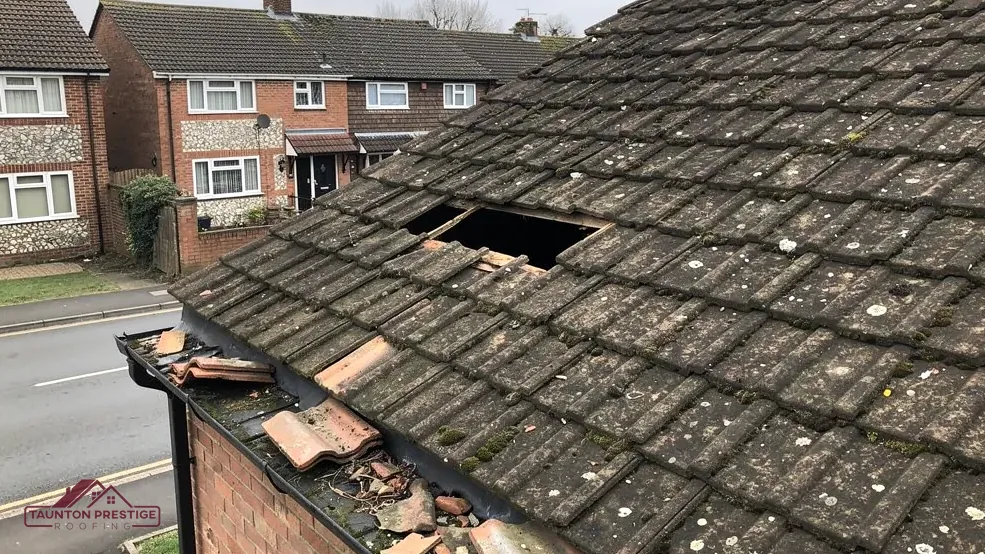
- Pinpricks of daylight where a slate or tile has slipped.
- Torn or loose underlay, especially at the eaves and around the chimney.
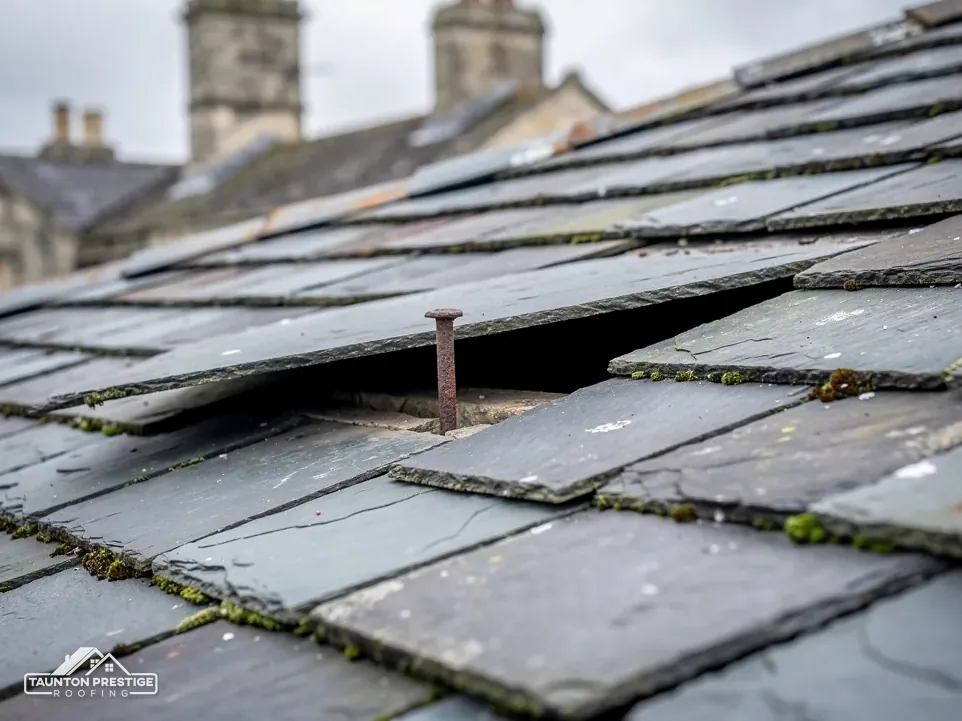
- Rusty nails and wet nail tips.
- Black spotting on timbers, which can mean long-term dampness.
Should you run a hose over the roof to test it?
Only with care and not alone. Wetting the roof section by section, from the bottom up, with a helper watching in the loft, is a method roofers use. But a hose on the wrong spot can push water where the weather never would, and working on a wet roof is the more serious hazard. Without a second person and proper access, photographs from the loft and from across the road are the better first step, and a roofer can do the hose test later.
Photograph whatever you find, with a coin or a pen for scale. A roofer can tell a lot from loft pictures, such as whether the fault is a few slates or something wider. Our guide to temporary roof repairs covers keeping water out while you wait for a proper fix.
Flashings, chimneys and abutments
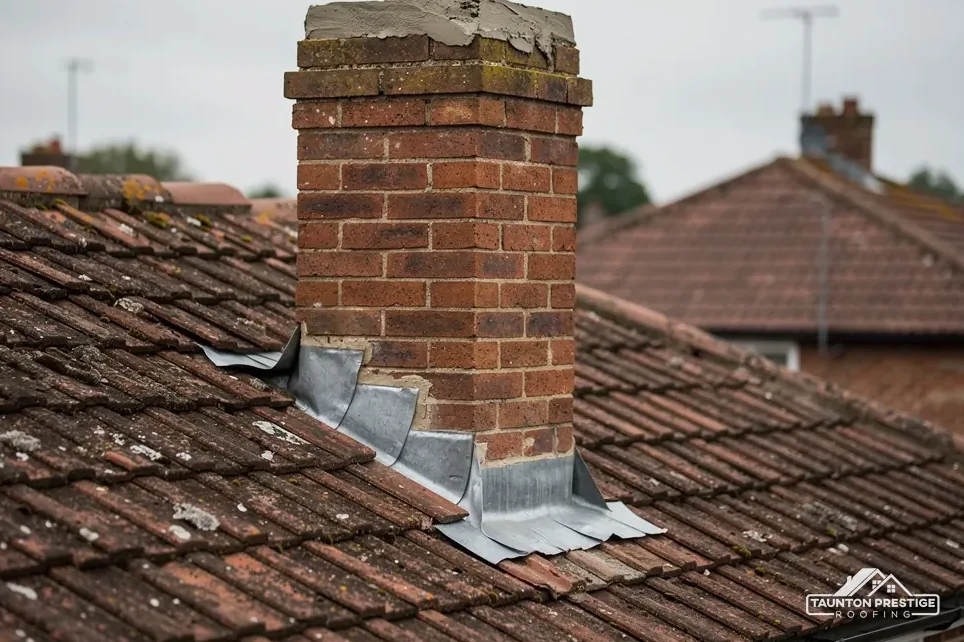
Flashing is the weatherproofing at any junction where the roof meets something vertical, normally in lead: a chimney, a party wall, the cheek of a dormer, a wall that stands higher than the roof. It is a classic leak point because two different materials meet there and move at different rates. Soakers are small pre-bent sheets of lead that slip beneath every course of tiles beside a wall or chimney, with the flashing laid over the top to finish.
Lead is graded by code. Royston Lead lists code 4 for soakers, flashings, valley gutters and dormers, and codes 5 and 6 for flashings as well as valley gutters and parapets. Lead flashing can last for over 80 years, but it can fail earlier where it has been stretched, torn at a fixing or pulled away from the mortar joint it was dressed into.
How do you tell a failed chimney flashing from a leaking stack?
Look at the lead first: lifted edges, gaps, cracks along folds and mortar fillets where lead should be. A cement or sealant fillet instead of lead is a repair that often cracks. Then look at the stack itself. Crumbling pointing, a cracked flaunching, which is the sloping mortar crown at the top that sheds water off the pots, and a damp chimney breast inside all point to the brickwork.
Stains on a chimney breast two floors down may start at either place. If you are unsure whom to ring first, our page on who to call for a leaking roof sets out the order.
Valleys, ridges and the slopes between
A valley is the inward fold where two slopes drain into each other. It takes a heavy flow, because it gathers the run-off of both. Valleys are formed with lead, GRP or a purpose-made valley tile, and a fault there releases a lot of water at once. Leaves, moss and silt build up, the lead fatigues, and the gap between the tiles and the edge of the valley closes up or opens too wide.
A full valley replacement averages around £540 (MyJobQuote, Sep 2026), which shows the scale of the job next to a single tile.
How can you tell whether the ridge is to blame?
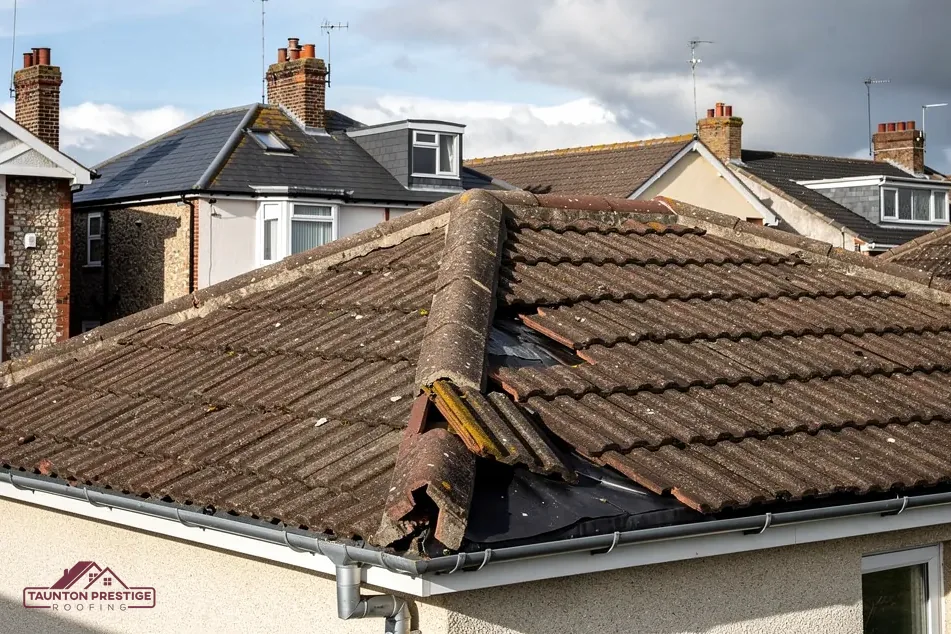
The ridge runs along the highest point, where the two slopes end. Ridge tiles sit on mortar or on a mechanical dry-fix system. Cracked or missing mortar, slipped ridge tiles and gaps at the ends of the ridge let wind-driven rain in at the very top, and the water then runs down under the slope. Stains that run along the upper ceiling or the top of the party wall often start there.
For ridges, the typical UK range for tile replacement is £225 to £550 (MyJobQuote, Oct 2026). Our page on why dry ridge systems fail shows what a failing ridge looks like.
Between the ridge and valley, the open slope can leak too, where a cracked slate, a slipped tile or a worn nail lets water in. Those tend to leave a small, round or finger-shaped stain with a clear path uphill, which makes them the easiest to trace.
Condensation and other look-alikes
Not every wet loft is a leak. Condensation forms when warm, damp air from the house meets cold roof timber or underlay and turns to water. It can drip from nail tips, form droplets under the felt and soak insulation without a single slate out of place. The pattern is usually widespread, worst in cold and still weather, and it does not follow rain.
BS 5250:2021, the British Standard on moisture in buildings, is listed by BSI as current, under review. Marley, a tile manufacturer, gives eaves ventilation figures for a cold roof with HR, non-breathable underlay: 25mm along the eaves for pitches of 15 degrees or less and 10mm for pitches over 15 degrees. A loft without that air path holds moisture. Our page on ventilated dry ridge explains where a ridge vent fits in.
What else can look like a roof leak?
- A dripping overflow pipe or a leaking tank in the loft.
- A plumbing joint on a heating pipe, which leaks whether it rains or not.
- A blocked or leaking gutter running water down the wall and into the wall head.
- Rising or penetrating damp on an outside wall near the eaves.
- Steam from an extractor fan that ends in the loft.
A simple test is whether the drip appears only after rain, or whether it follows cold nights. A drip that arrives with rain suggests the covering. Weather-linked without rain suggests condensation or plumbing. Winter is the hardest time to tell, and our guide to roof leaking in winter goes through it.
What a roofer does that you cannot
A roofer reads the roof from outside and inside, then confirms the cause before anything is replaced. That starts with the ground: slipped tiles, gaps at the ridge, lifted flashing, gutters overflowing at the eaves. Then the roof itself, reached by ladder or tower only where that is safe, and then the loft, reading the same fault from the other side. Matching what is seen outside with the staining inside is what pins the leak to one place.
Why not just seal the stain and wait?
A sealant on the wrong spot hides the evidence and leaves the water to find another way. Mastic on a flashing is a quick fix that often cracks within a season. A leak that has run for months can leave rotten battens, soft rafter ends and wet insulation that need replacing too, so earlier tracing costs less than later repair.
The survey is where we do this. You are shown pictures of the roof and loft as they are, we explain what we found, and the quote is one total price in writing. That price rests on what the tracing turns up: how many tiles or how much lead, what access and scaffold are needed, and any damaged timber beneath. Check whether any quote you are handed includes VAT and scaffolding.
If water is coming through right now, a bucket and a towel are the right first moves, and a photo of the stain with the date is useful. Once the cause is known, the typical UK figures for each repair are easier to weigh.
Tracing a leak
What are the common causes of roof leaks?
Cracked or slipped slates and tiles, failed flashing at chimneys and walls, worn valleys, loose ridge tiles and blocked gutters are the usual suspects. Condensation and plumbing leaks can look the same from below. Rain-linked drips point to the covering; drips on cold nights point elsewhere.
Can a leak show up a long way from the damaged tile?
Yes. Water runs along the underlay, rafters and battens before it drips, so the ceiling stain can be a metre or more from the entry point. Following dark tide marks uphill along the timbers in the loft is the quickest way to find where it got in.
Is a hose test a good idea for finding a leak?
Only with a helper in the loft and safe access, working from the lowest point upward. Without both, take loft photographs and leave the water test to a roofer, since spraying the wrong spot can push water where rain never goes.
More on this subject: Emergency and general roof repairs in Taunton