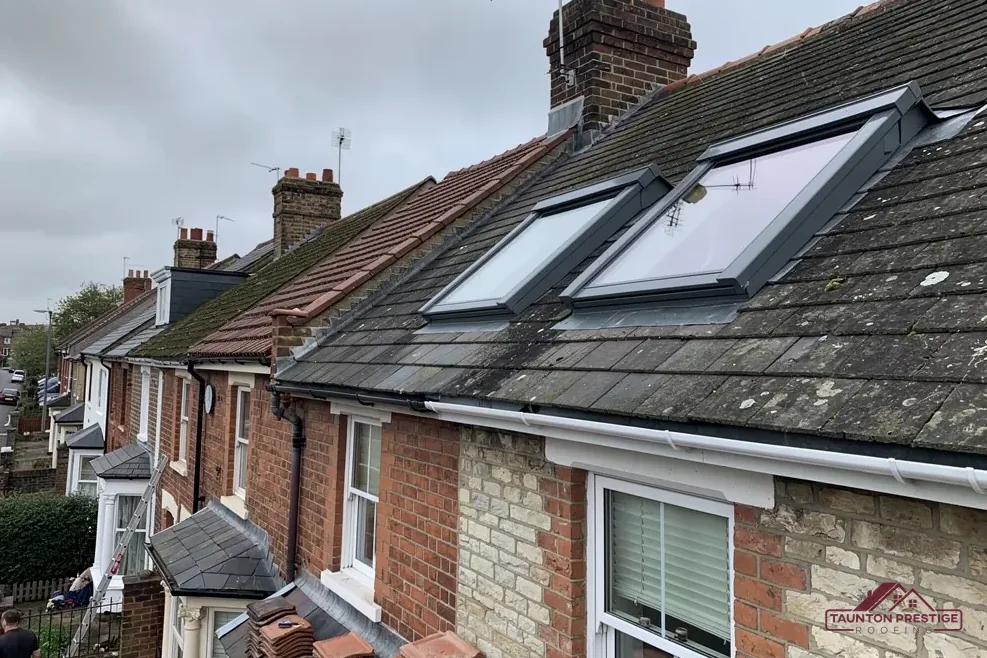
Natural slate
Checked for slips, cracks, rusted nails and old strip repairs.
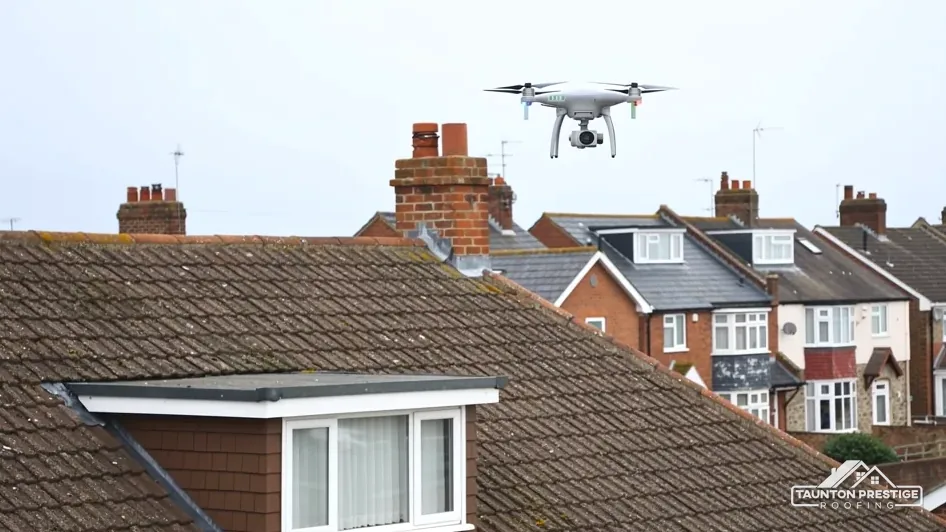
A close look at your roof, with photos.
We walk the roof and the loft, take you through pictures of your own slates, joints and timbers, and say what needs doing, what can wait and what is fine.
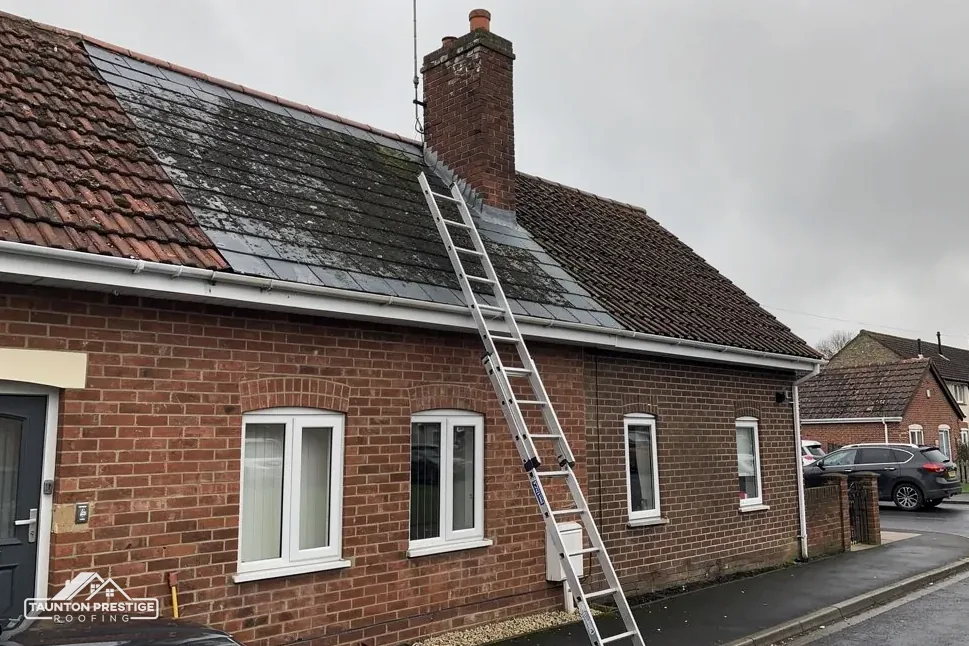
Checked for slips, cracks, rusted nails and old strip repairs.
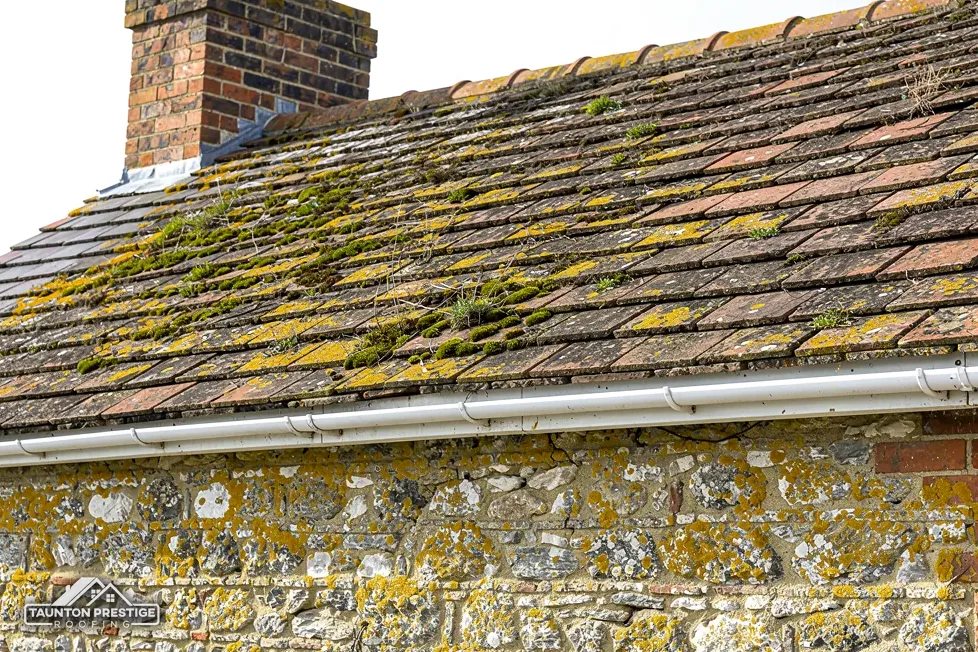
Broken nibs, frost flaking on old clay and cracked corners.
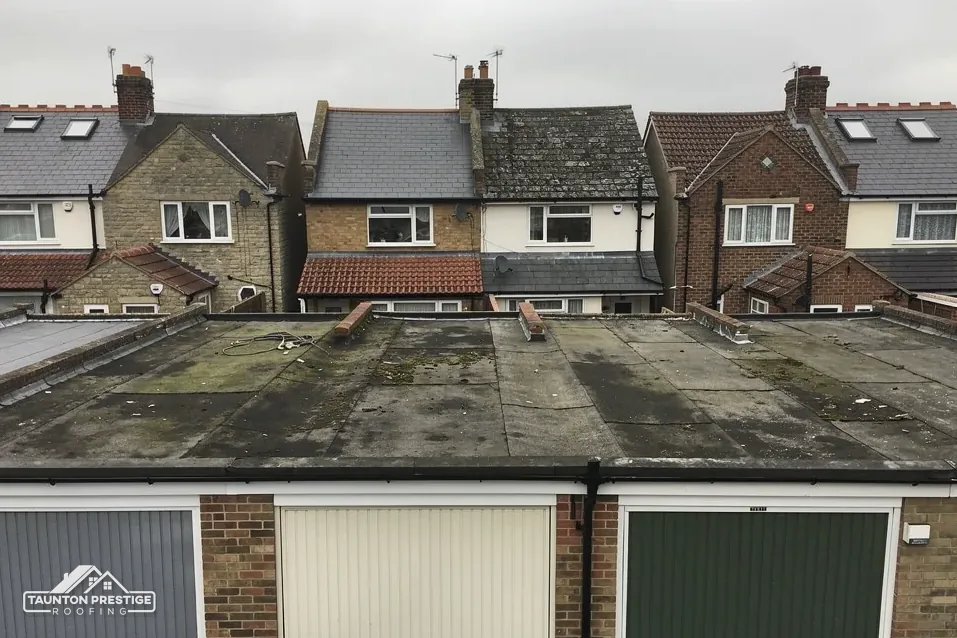
Felt, fibreglass or rubber sheet, checked for splits and ponding.
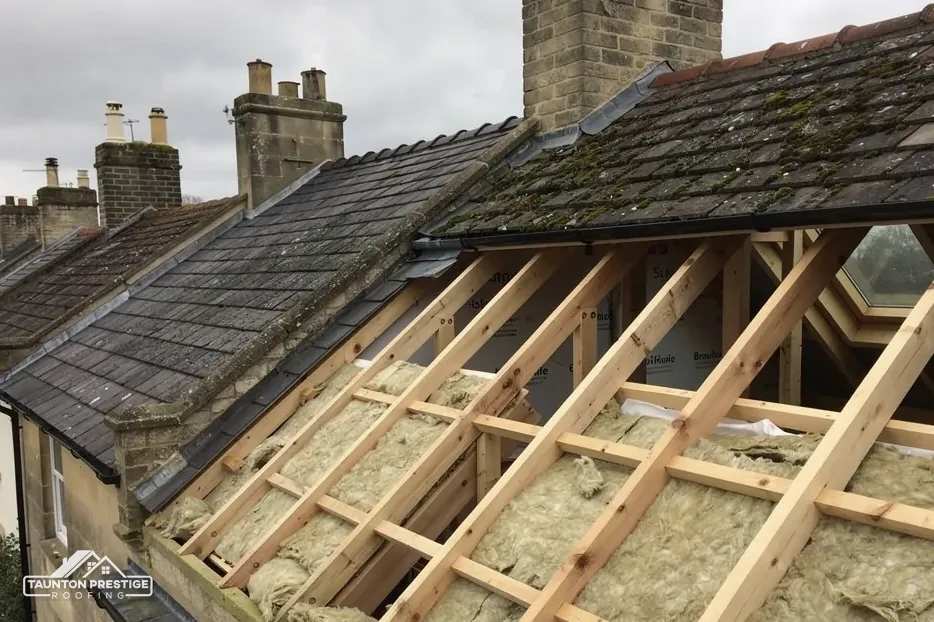 Pre-purchase roof checksBefore you exchange on a house
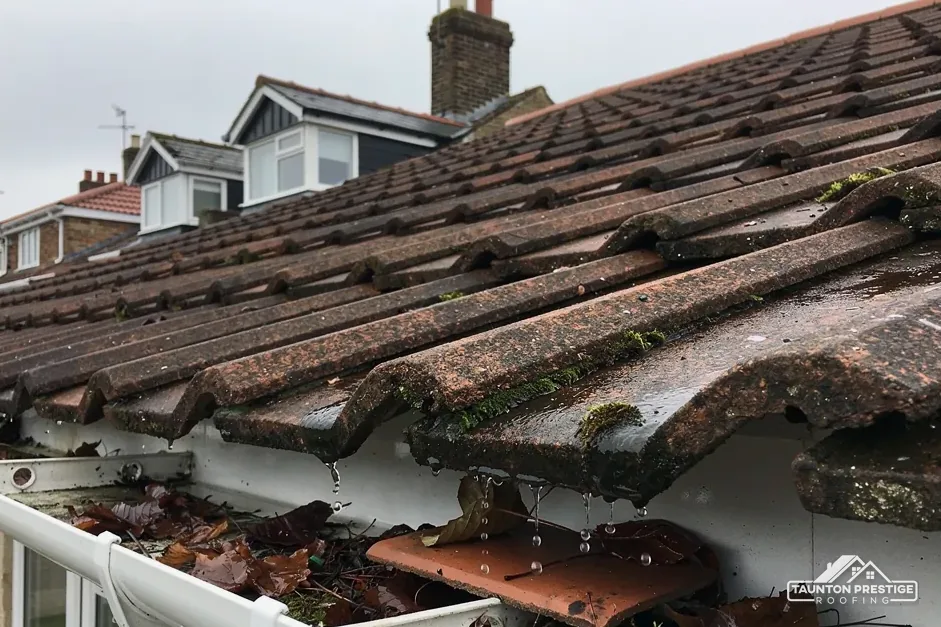 After-storm inspectionsDamage found, recorded and made safe
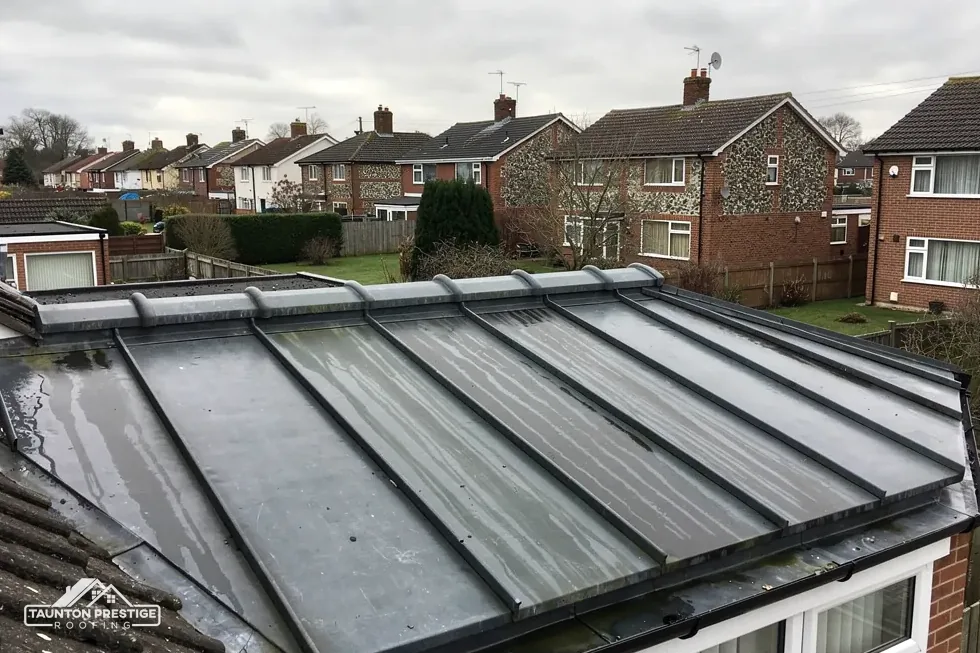 Flat roof condition checksExtensions, garages, dormers and porches
 Chimney and lead checksStacks, pots, pointing and metal joints
 Loft and timber checksUnderside, damp, ventilation and rafters
 Landlord and commercial roofsLets, shops, units and farm buildings
A fault is letting water in, or will by next winter.
Wear is showing but the roof keeps the weather out for now.
Faults across every slope mean patching would cost more over time.
The inspection walk
The order a roof inspection in Taunton runs in, from the pavement to the loft, and which parts an owner can safely check first.
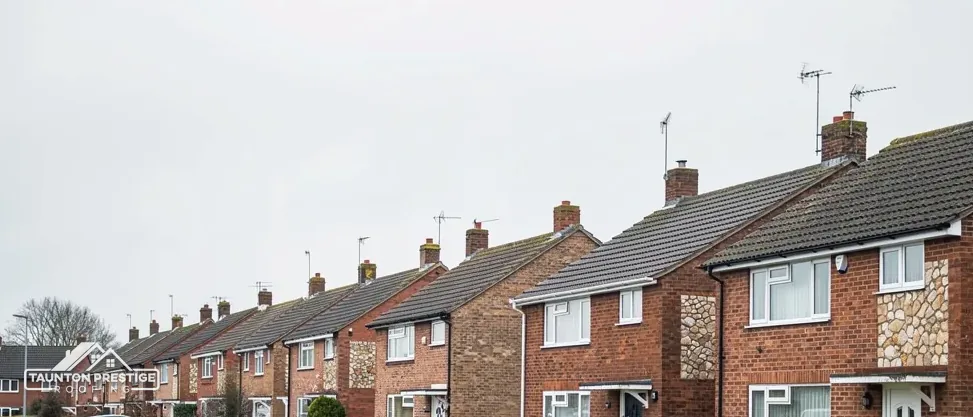
A roof inspection is a close look at every part of a roof that keeps the weather out, carried out by someone who mends roofs for a living. People book one around Taunton for plain reasons. A buyer's survey has flagged the roof. A seller wants no surprises when the buyer's surveyor opens the loft hatch. A landlord needs to know what the next few winters will cost. A gale has passed and a few tiles are lying on the drive. Or the roof is simply old, and nobody has been up close to it for years.
No. A building surveyor reports on the whole house, from the foundations to the chimney pots, and may see the roof only from the ground and from inside the loft. When a survey report says the roof needs further investigation, that is the cue to call a roofer. We get closer, onto the slopes where safe access allows and right up to the joints where the water gets in. Our guide to a roofer's inspection against a building survey sets the two side by side.
A roofer's view before exchange can change the offer you make on a house.
It earns its keep whenever a decision hangs on it. Before you exchange contracts, a roofer's view can change the offer you make, or what you ask the seller to put right first. After storm damage, it tells you if you are looking at a few slipped tiles or something your insurer needs to see. On an ageing roof, it tells you whether roof repairs will carry it for some years yet, or whether a new roof belongs in next year's budget. It also catches cheap jobs early. A washed-out mortar joint or a gutter full of moss costs little to sort before the water arrives, and a good deal more afterwards.
We inspect roofs in Taunton and its villages, and out through Wellington, Bridgwater, the Quantock and Blackdown Hills, the Somerset Levels and over the Devon border to Tiverton and Cullompton. Homeowners, landlords and owners of small commercial buildings all book them, and the walk round is the same for each: outside first, then the loft, then the findings explained in plain words.
What decides the price

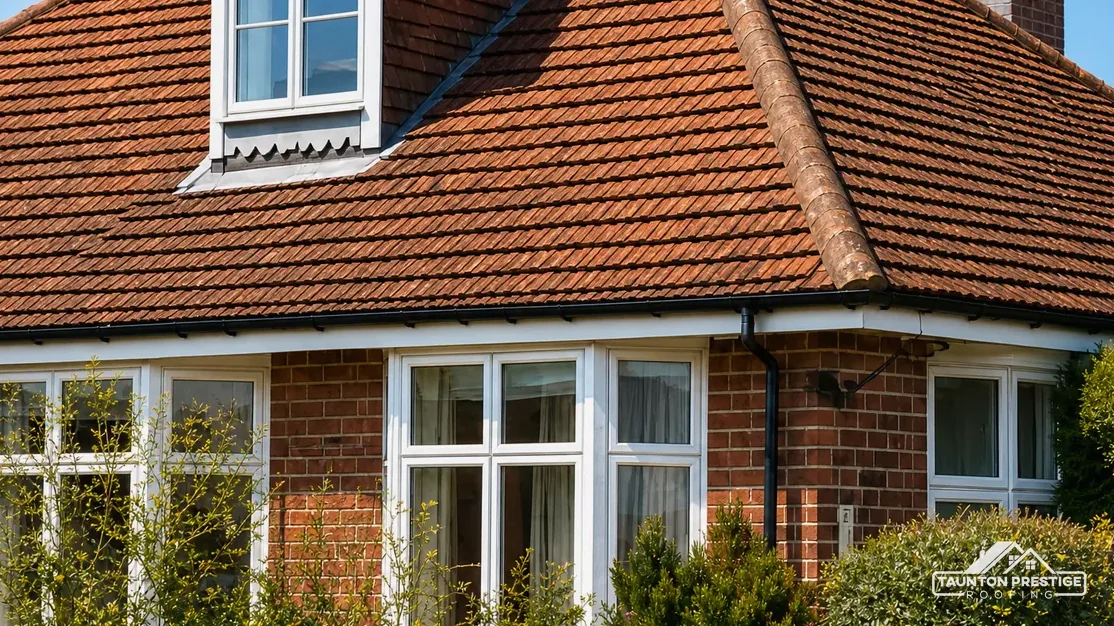
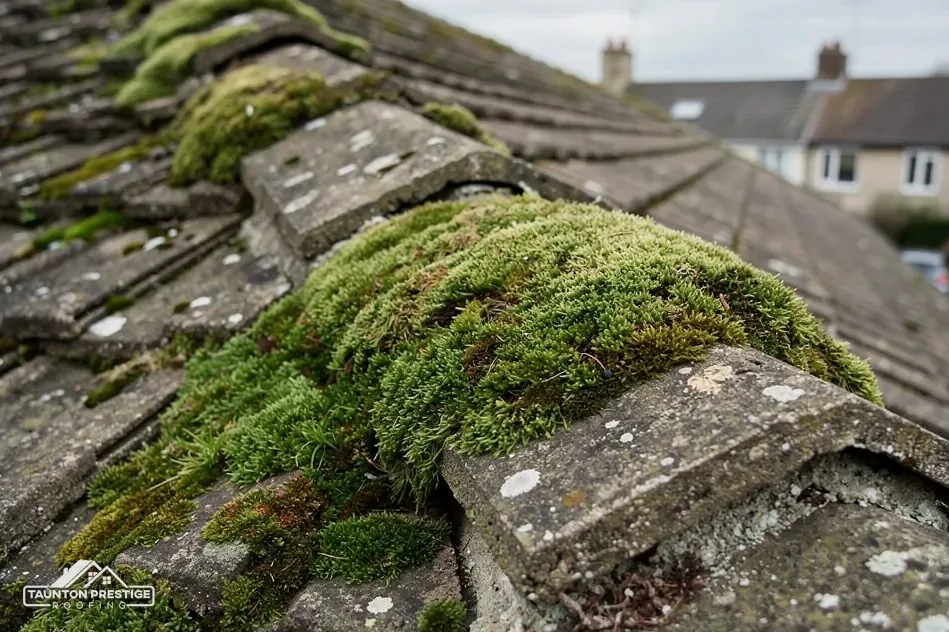
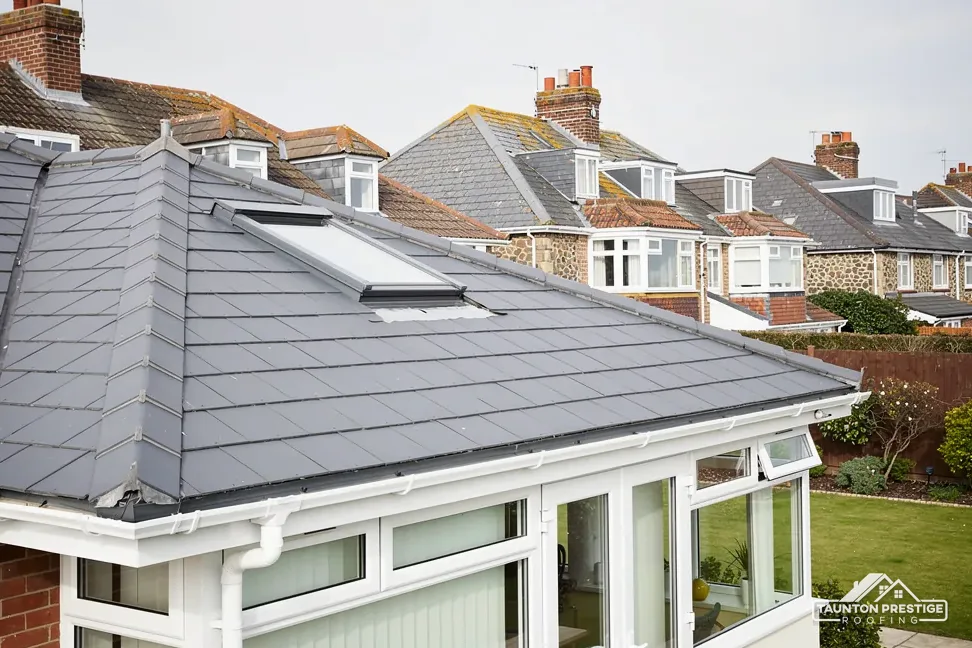
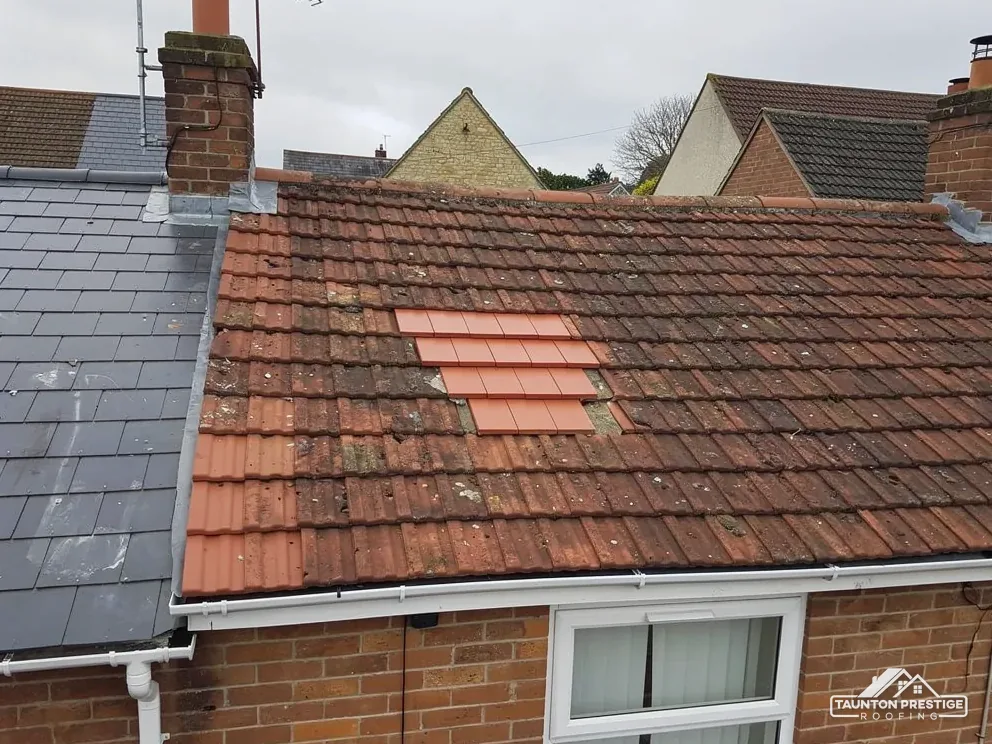
We start outside, standing far enough back to see each slope whole. Slates or roof tiles that sit out of line, a patch that does not match its neighbours, or a dip along the slope tell us where to look closely. Then we name the covering. Natural slate is thin split stone, dark and flat. Clay tiles are fired earth in reds and browns, and they include the Double Roman, a tile with two rounded rolls either side of a flat pan, made in clay and later in concrete. Concrete tiles are bigger, heavier and more even in colour. No two coverings fail in quite the same manner, so no two are mended the same way.
Look for
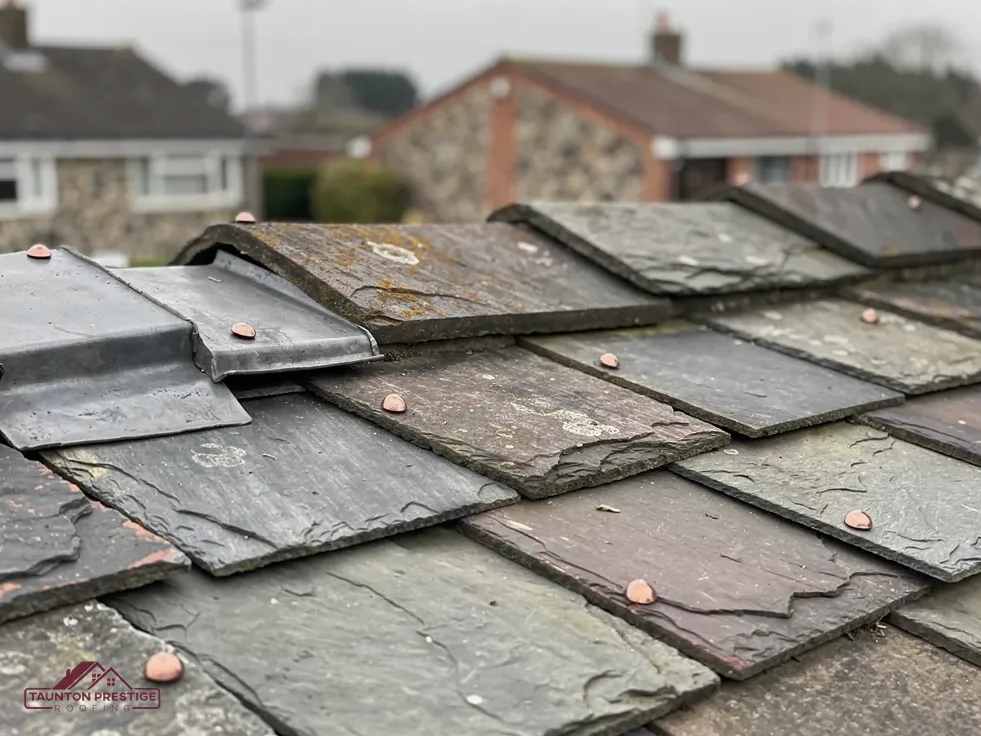
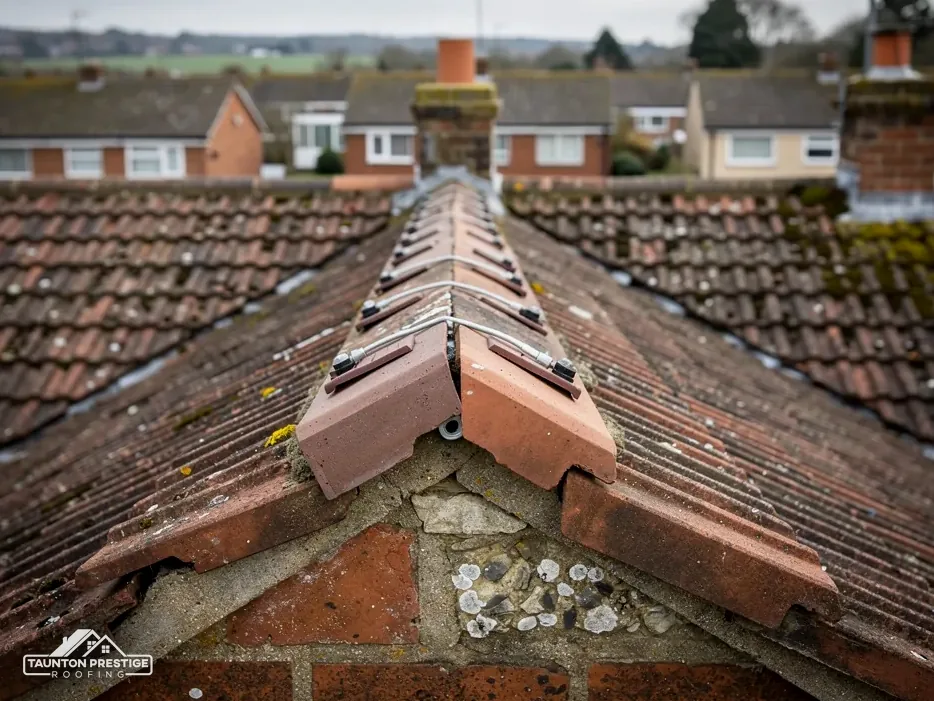
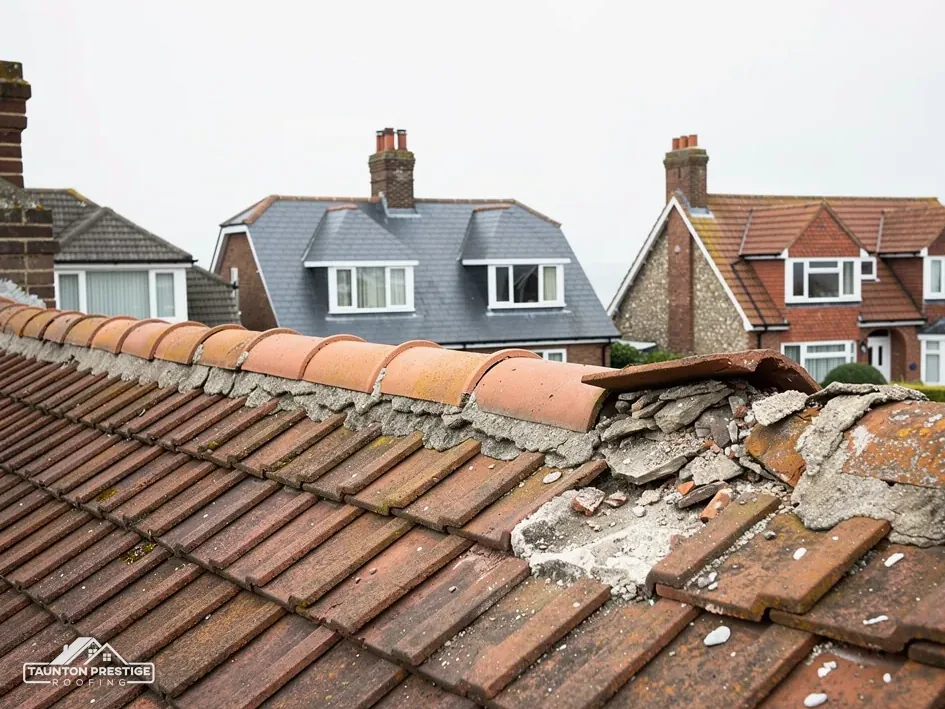
On slate we look for slips, cracks and the narrow metal strips called tingles that mark earlier repairs. A rash of them can point to nail sickness, where the old iron nails have rusted through and the slates are sliding one by one. On tiles we look for snapped nibs, frost flaking on old clay and cracked corners. Then come the edges. Along the top runs the ridge, a line of capping tiles sealing the joint between the two slopes. A hip is a sloping external corner, found where a roof wraps round instead of stopping at a gable, and the verge is the finished edge at a gable end. Older ridges and verges sit on a bed of mortar, and once it cracks the capping starts to rock. Newer roofs often use dry-fix, where clips, screws and plastic caps hold the edge instead of mortar. Marley explains that since BS 5534 was revised in 2014, bedded ridge and hip tiles need mechanical fixings as well as mortar, so loose capping gets clips or screws too.
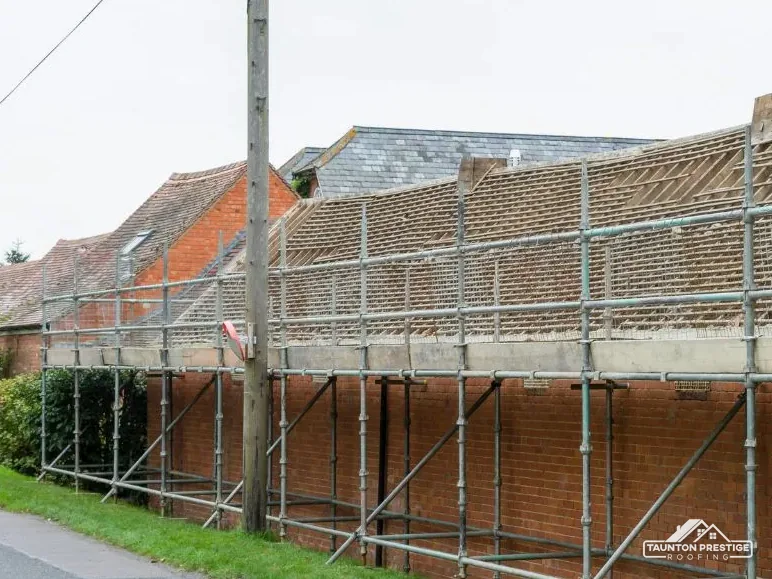
Each has limits. A drone or a camera on a pole shows the slopes and ridge without anyone climbing, but it cannot lift a slate or feel the timber underneath. A ladder at the eaves lets us touch the first few rows and the gutter. Scaffold gives the closest look of all and is usually only worth putting up once work is agreed. Our guide to drone, ladder and scaffold inspections explains which suits which roof.
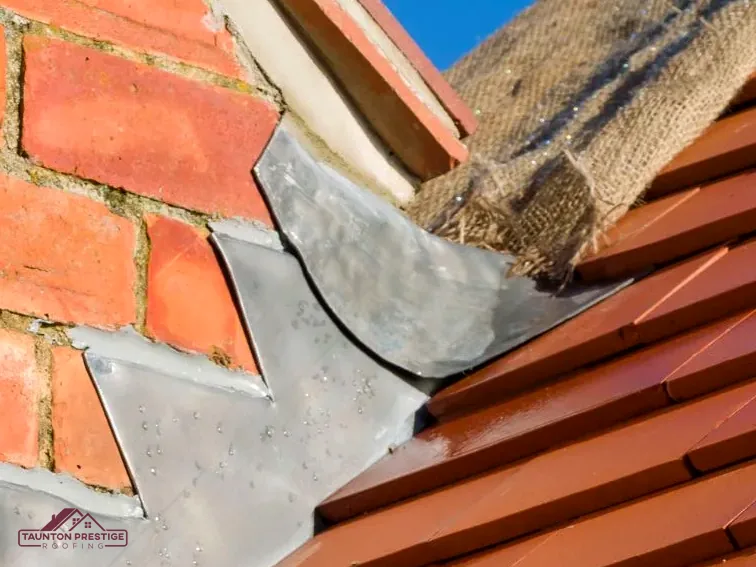
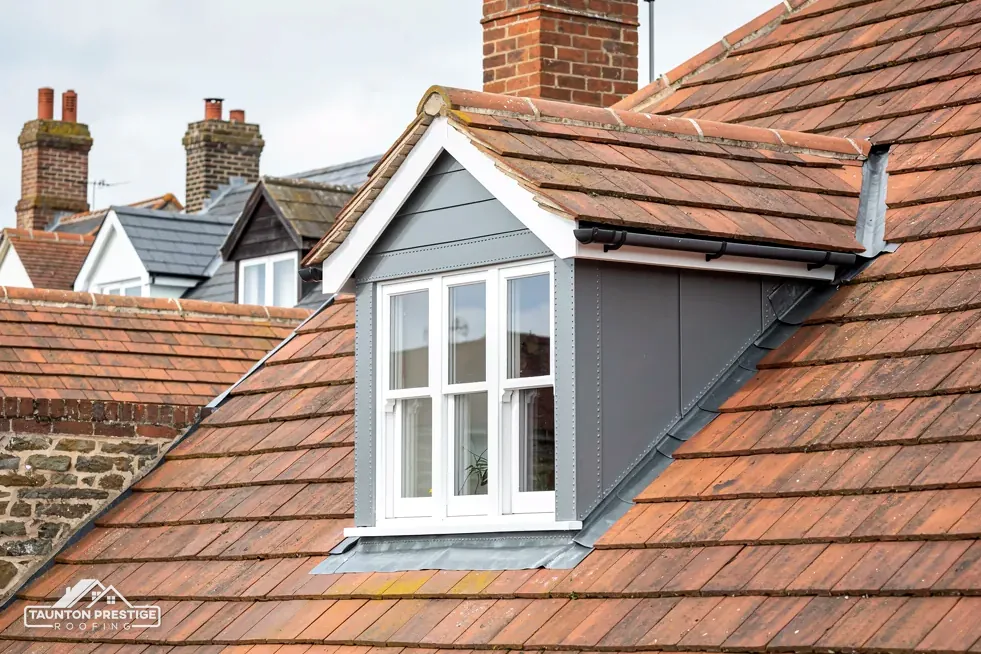
The places where a roof meets something else are where water finds a way in. A chimney stack breaks the slope on every side. A valley is the internal angle formed where two roof planes join, a channel that gathers the run-off from both sides at once. Each joint is sealed with flashing: sheet lead, or sometimes another metal, worked over the junction so the rain is carried past it. If a ceiling stain sits near a chimney breast, or below an inside corner of the roof, these joints are the first suspects.
Sound or needs work
What decides the price
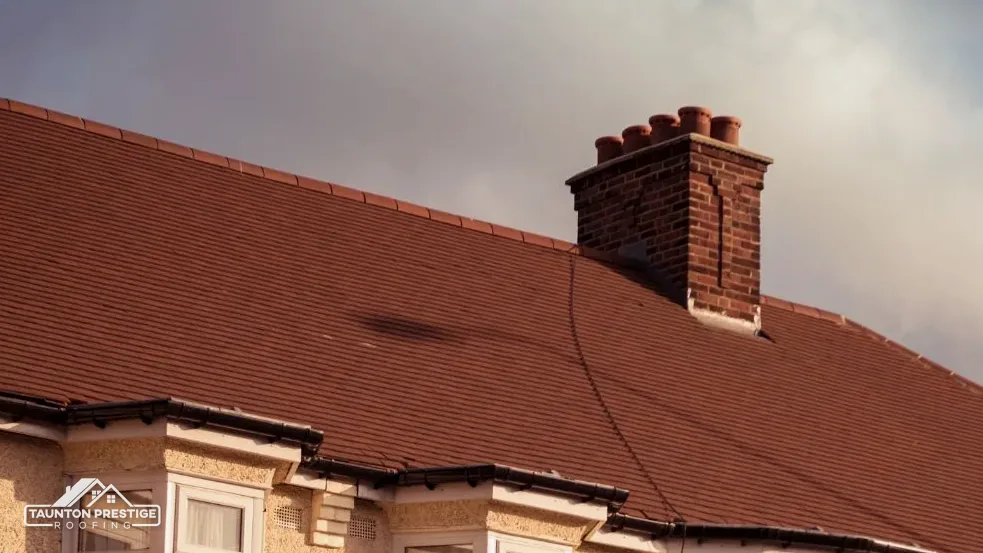
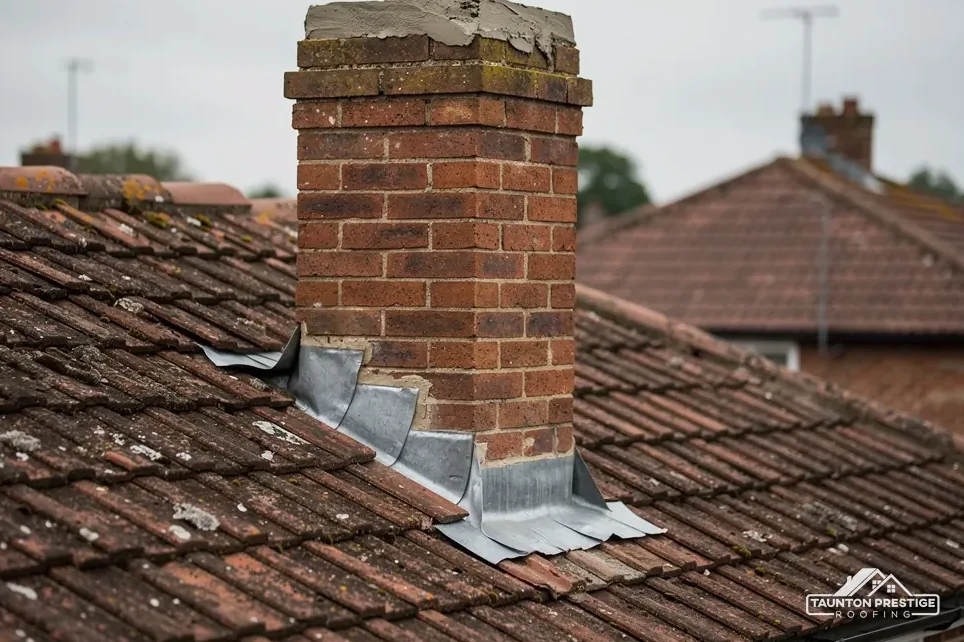
We look at the pointing, the mortar between the bricks, for joints that have washed out or crumbled, because repointing a stack before the bricks loosen is a far smaller job than rebuilding one. At the top we check the flaunching, the bevelled bed of mortar around the pots, shaped so rain sheds off the top of the stack. Once it cracks, water runs straight down inside the brickwork. Pots are checked for cracks and lean. Around the base, the front apron, the side flashings and the small gutter behind the stack all need to sit tight to the brickwork and lie flat over the tiles. Somerset Building Control names unstable chimneys among its dangerous structures, so a stack that leans is reported to you straight away.
A cracked mortar collar on a chimney stays a small repair until rain finds it.
Sound lead lies flat and dull grey, tucked into a mortar joint and dressed close to the tiles. Splits, holes, edges that lift in the wind, or a flashing pulled out of its joint all let water through. Lead sheet comes in thicknesses known by a lead code number, and the thinner codes suit small pieces only. Royston Lead lists Code 3 for soakers only, the small lead pieces interleaved with each course of tiles alongside a wall, while Code 4 and above go on flashings and valleys. Lead flashing can last for over 80 years (MyJobQuote), so an early failure usually comes down to how it was fixed. Valleys may instead be lined with glass-reinforced plastic (GRP) or with purpose-made valley tiles. Whatever lines them, leaves, moss and grit collect there and dam the flow, so we clear what we can reach while we look.
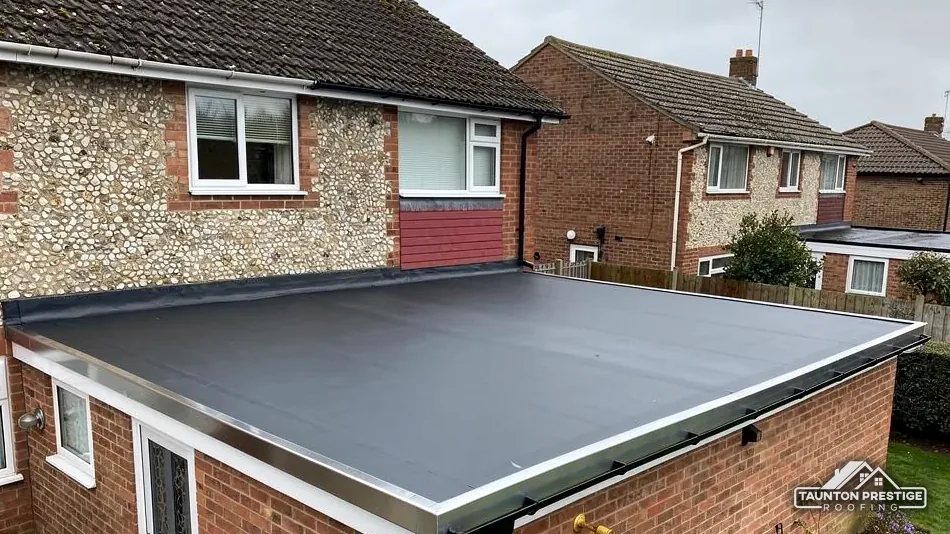
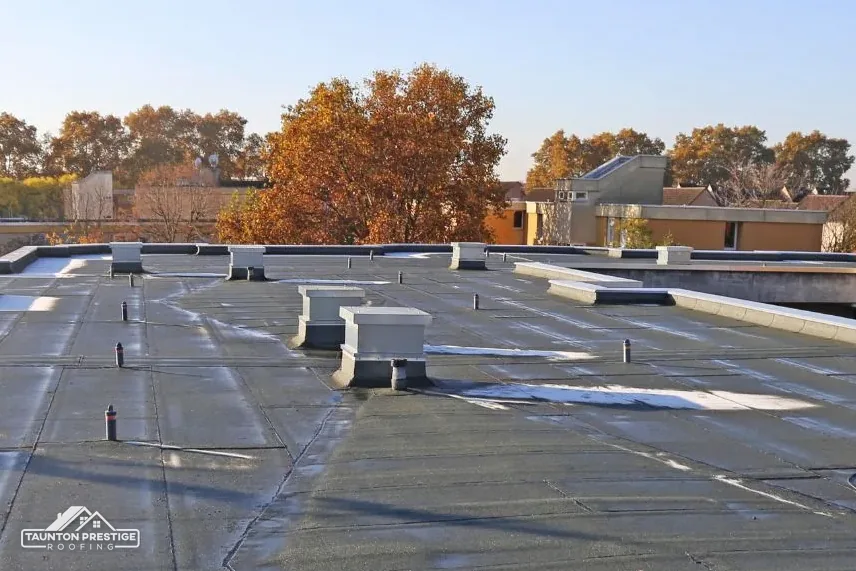
Flat roofs over extensions, garages and dormers deserve a closer eye than the main roof, because water sits on them for longer. A flat roof inspection starts with the fall, the gentle slope that drains it. BS 6229:2025 keeps a minimum finished fall of 1:80, and IKO advises designing for 1:40 so the finished roof still reaches that once it settles. Puddles still standing long after the rain has stopped point to a fall that has sagged or was never built in.
Look for
On torch-on felt we look for blisters, splits, bald patches of chippings and seams that have lifted. On GRP, a glass-reinforced plastic laid wet and set hard, we look for crazing, cracks along the trims and gaps where the sheet meets a wall. On EPDM, a synthetic rubber membrane laid as one sheet, we look for lifted laps and punctures. Age counts too. Less gives torch-on felt 10 to 20 years and GRP 25 to 40 years, while sources disagree on EPDM: GreenSpec says 20 to 30 years and Less says 30 to 50. When a patch will no longer hold, our flat roofing service covers re-covering the whole deck.
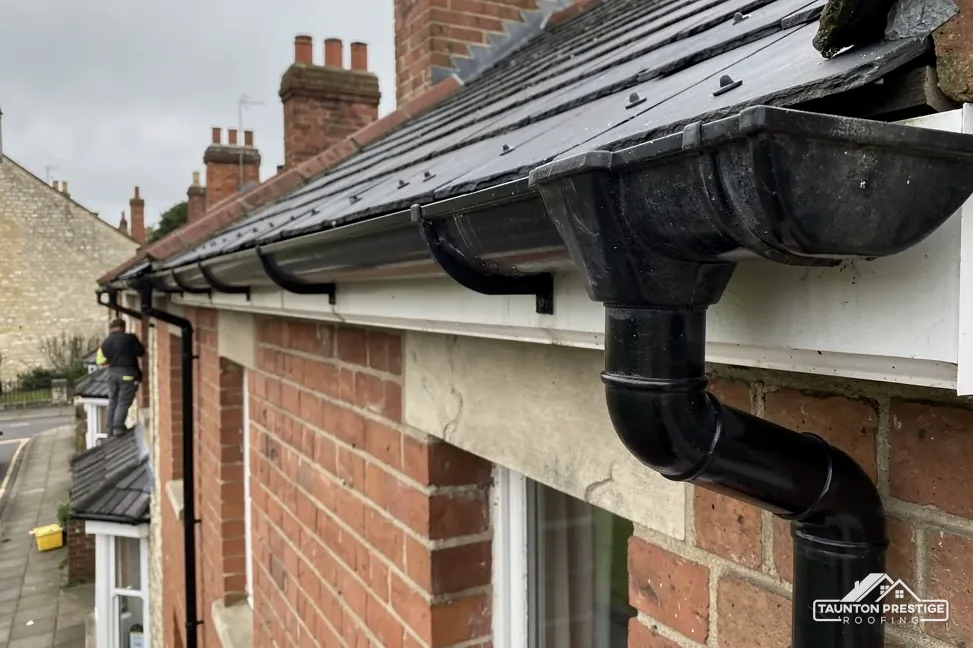
Because every drop the roof sheds ends up there. A gutter that overflows soaks the wall below, and the damp inside gets blamed on the roof. We check that each run falls towards its outlet (Brett Martin gives 1mm of fall for every 600mm), that joints are not dripping and that downpipes run clear. Fascia boards run along the eaves and carry the gutter brackets; soffit boards close off the underside between the fascia and the wall. Rot, sagging boards or open gaps let in water and nesting birds. On older houses a soffit may be asbestos insulating board. HSE says that board is difficult to tell apart from non-asbestos versions, and advises assuming asbestos is present in any building built or refurbished before 2000, so we check before anybody cuts or drills. Clearing the gutters regularly is low-cost maintenance that protects the walls and boards below.
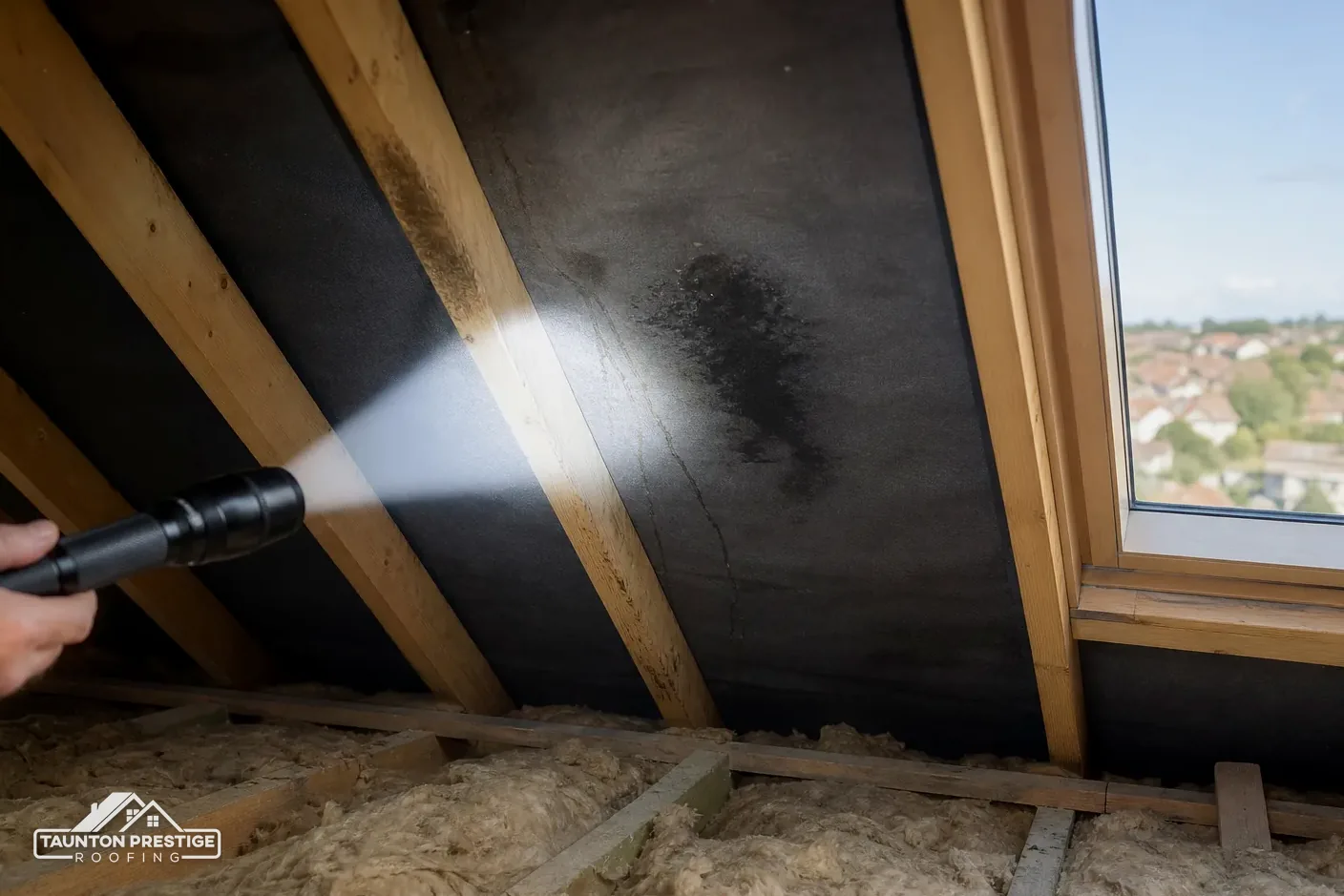
The loft is where a roof shows its condition most plainly, so we ask for access whenever there is a hatch. With a torch we look at the whole underside: the rafters, the battens and the underlay. Battens are thin lengths of timber nailed horizontally over the rafters, and the slates or tiles hang from them. Underlay is the sheet below them that catches any rain blown past the covering. Daylight between slates, wet stains and drips hanging from nails all mean something, and every fault we spot goes into a picture you can keep. Our guide to checking a roof from the loft covers what you can safely look for on your own.
Droplets on every nail tip point to trapped damp, not a hole in the roof.
Water from a leak enters at a single spot and tracks down the timber. Condensation spreads across the whole underside, beads on nail tips and gets worse on cold, still mornings instead of in storms. Warm, damp air from the house rises into the loft and needs a way out, usually at the eaves. Old bitumen felt counts as HR underlay and does not breathe. Under it, on a cold roof, Marley gives the BS 5250 eaves gaps as 10mm along the eaves for pitches over 15 degrees and 25mm for 15 degrees or less. Insulation packed tight into the eaves can block that gap and leave the loft wet under a sound roof.
Soft or blackened rafters, a sagging ridge board and old woodworm holes are all noted, and anything that looks structural goes to a structural engineer. Some lofts have had foam insulation sprayed onto the rafters and the backs of the slates. If yours has, RICS advises that you check with your mortgage provider before doing anything else, and the Energy Saving Trust says of spraying foam onto a leaking roof: "We don't recommend doing this." Droppings or nests are recorded too, because birds and bats use lofts and both are protected. Converted lofts are a separate case: once insulation sits between the rafters, damp air needs a path of its own, so a loft conversion is checked differently from a cold loft.
What decides the price
Look for
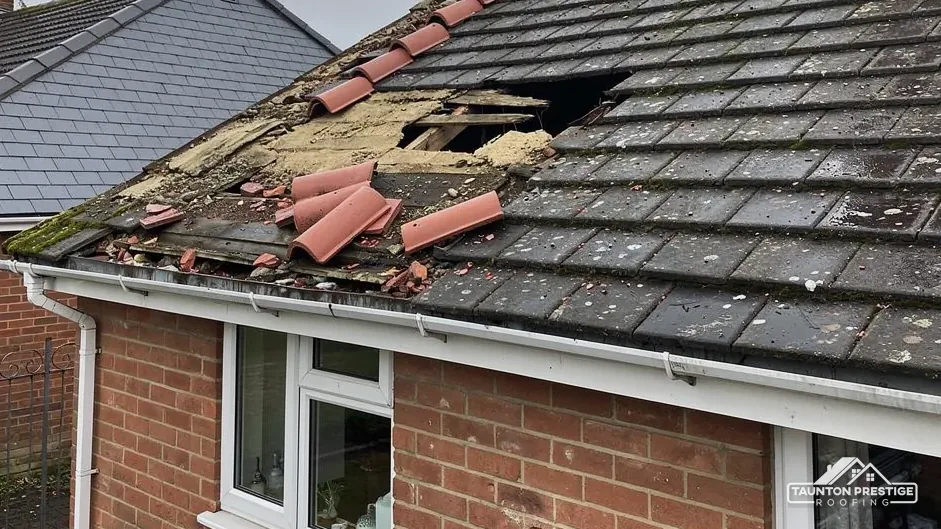
Wind does its worst at the edges of a roof. Ridge tiles get lifted, verge tiles stripped, slates slid out of their rows and flashings peeled back. On the Levels and in the hill villages, where wind and driving rain arrive with little shelter, a gale finds every weak joint. After a storm, start from the ground. Count anything lying in the garden or the gutter, look along the ridge for gaps, and check the upstairs ceilings and the loft for fresh stains. Never climb onto a wet or damaged roof yourself, and keep clear of the house wall below any loose tiles.
Catch the water, move what you can, and if water is near a light fitting, switch off that circuit. If you are insured, tell your insurer first. Make a temporary repair to stop more damage, and keep photos and receipts to back up a claim. The Institution of Structural Engineers stresses that pictures give an insurer visual evidence of what the weather did. Our first job on a leaking roof is to stop the water, using sheets or a temporary patch, and we return to inspect and repair it properly once the weather settles. A visit you ask for to carry out urgent repairs falls outside the usual 14-day cancellation right under regulation 28(1)(e), which is worth knowing before anyone starts.
It can show what failed and how, but no report decides a claim, and nobody can say in advance how an insurer will rule. Which? found that only 32% of storm-related claims made in 2024 resulted in a payout. The Financial Ombudsman describes a storm in terms of violent winds, typically along with rain, hail or snow. If eight weeks pass without a final response from your insurer, or that response leaves you unhappy, the Financial Ombudsman Service looks at the complaint free of charge; you have 6 months from the final response to bring it. Our guide to a roof inspection after a storm lists what to record, and our emergency roof repairs page covers the make-safe visit itself.
What decides the price
At the end of the walk round we sit down with you and go through what we found, slope by slope, using the photos we took of your own roof. Good findings follow the roof in order: each elevation and its covering, then the ridges, hips and valleys, the flashings and chimneys, the gutters and roofline, and finally the loft, from underlay and ventilation to daylight and timbers. Each fault is marked by how soon it needs attention, so you can tell this year's job from one that can wait. Our guide to what goes in a roof inspection report shows that layout in full.
A genuine report shows you the fault on your own roof, says exactly where it is and explains what happens if it is left. A scare-sell turns up uninvited, describes damage you are never shown, and wants a deposit on the spot or a decision today. Citizens Advice recommends collecting written quotes from at least 3 traders before choosing one. Under the Consumer Rights Act 2015, a trader must carry out a service with reasonable care and skill, and a contract you sign at home after a survey normally carries a 14-day right to cancel. For advice, the Citizens Advice consumer helpline is 0808 223 1133. Our guide to genuine reports and scare tactics goes further.
If the roof is sound, you hear that plainly and the inspection ends there. If it needs work, you decide what happens next, with no pressure to sign on the day. Re-covering a house roof is normally permitted development under Class C, while listed homes need listed building consent as well. Under the Planning Portal test, a re-roof normally needs no building control application provided less than 25 per cent of the building envelope and less than 50 per cent of the roof is affected. Any work we recommend comes as one written total price after the survey, so you can weigh it at your own pace. To book, tell us why you want the roof looked at and send us a photo of it from the street.
Look for
Walked the roof?
Tick off whatever you can spot from the garden or the loft hatch, and leave the ladder work with us.
| Job | Typical range |
|---|---|
| Roof survey (average) | around £300 |
| Drone roof survey | £200 to £350 |
| Emergency roofer call-out | £150 to £300 |
| General roof repair (average) | around £650 |
Typical UK ranges from MyJobQuote, not what we charge. Before you book any inspection, ask whether the fee covers the loft, photos and findings in writing, and check whether a quote for any work includes VAT and scaffolding.
MyJobQuote cost guides, Oct 2026
Short pieces that each take one question: what a roof survey costs, how a report is laid out, checks after a storm, new-build roofs and looking at your own loft safely.
 How Much Does a Roof Inspection Cost?National cost guides put a roof survey at around £300 and a drone survey at £200 to £350. Here is what moves that figure and how to read a quote.
 What's in a Roof Inspection Report?A good roof report reads like a walk round the house, with a photograph for every finding. Here is the layout and why each part is there.
 Drone, Ladder or Scaffold: Which Roof Inspection?Three ways of looking at a roof, each with blind spots. Here is what a drone, a ladder and a scaffold can really show, and which suits the question...
 Roofer's Inspection vs Building Survey: The DifferenceA building survey describes the whole house in one report. A roofer's inspection goes up close to the slates, tiles, lead and loft timbers. They...
 Roof Inspection After a Storm: What to CheckAfter a gale the roof may look fine from the pavement and still be admitting water. Here are the safe checks, the signs that mean ringing a roofer...
 Genuine Roof Report or Scare Tactics? How to TellA genuine roof inspection shows you your own roof and lets you decide in your own time. Here is how to tell it from a visit designed to frighten you...
As a typical UK range, MyJobQuote puts the average roof survey at around £300 and a drone survey at £200 to £350 (Oct 2026). The height of the house, how the roof is reached, the number of roofs and whether you want the findings in writing all move the figure. Ask what the fee includes before you book.
It is when a decision depends on it: buying a house, claiming after a storm, or choosing between roof repairs and a new roof. A short check from the ground costs less than a full look at the slopes and the loft, so match the visit to the question you need answered.
Be wary of a knock at the door after a gale, damage you are told about but never shown, pressure to decide today and a large cash deposit up front. Ask for photos of the fault itself, get written quotes from at least 3 traders as Citizens Advice suggests, and read the paperwork before signing anything.
No rule sets a timetable. A look from the ground each spring and autumn, a closer check every few years and an inspection after any severe gale is a sensible pattern. Flat roofs and valleys gather leaves and grit, so they deserve more frequent attention, and clearing gutters before winter is cheap maintenance.
Yes, with the seller's agreement for access, ideally between your survey and exchange of contracts. A roofer can look closer than a surveyor usually does, check the loft and point out what needs attention soon. That gives you facts to take back to the seller, or to your own budget planning.
Yes: shops, industrial units and farm buildings as well as homes. Older sheeted roofs can be asbestos cement, and HSE guidance treats asbestos-cement roofs as always fragile, so they are inspected from safe access and never walked on. Large or high roofs may need a tower or a lift before anyone gets close.
Tell us why you want the roof checked, and send a photo of it from the street.