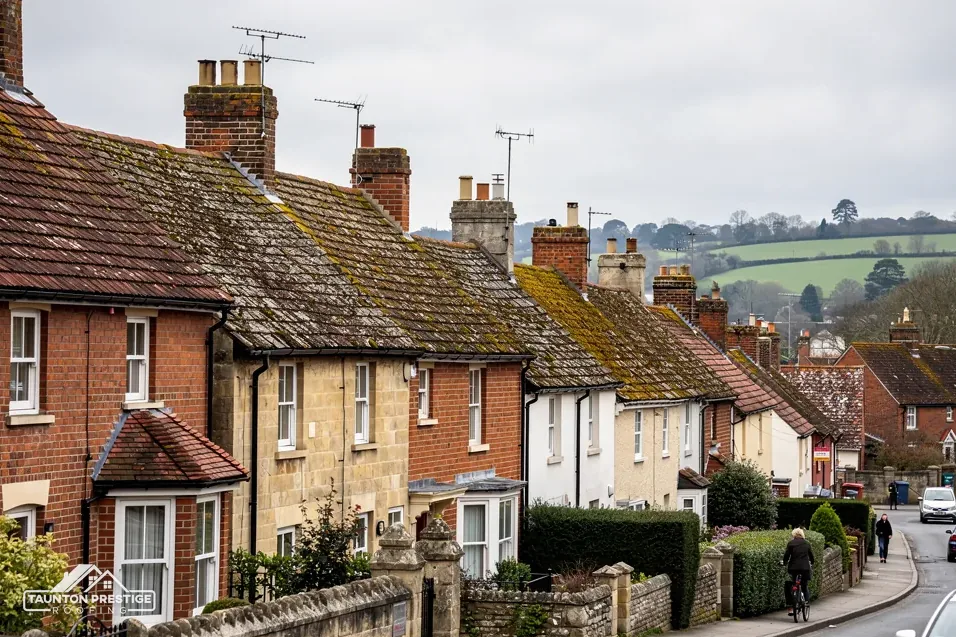
Hele Manor and Mill House
Hele Manor Hele Mill House holds a Grade II listing, so ask the council before altering its roofs.
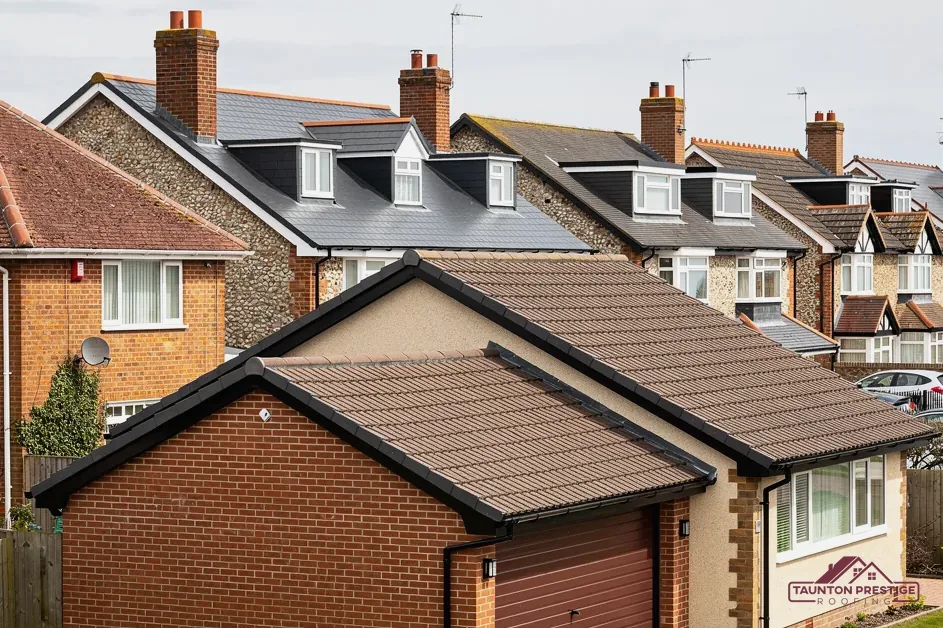
Hele Manor, Mill House and Easton Lodge in a Bradford-on-Tone hamlet
Hele is a hamlet in Bradford-on-Tone parish with five list entries within 500 metres, from Hele Manor to Easton Lodge Stone House. We read the roof first.
Hele Manor Hele Mill House holds a Grade II listing, so ask the council before altering its roofs.
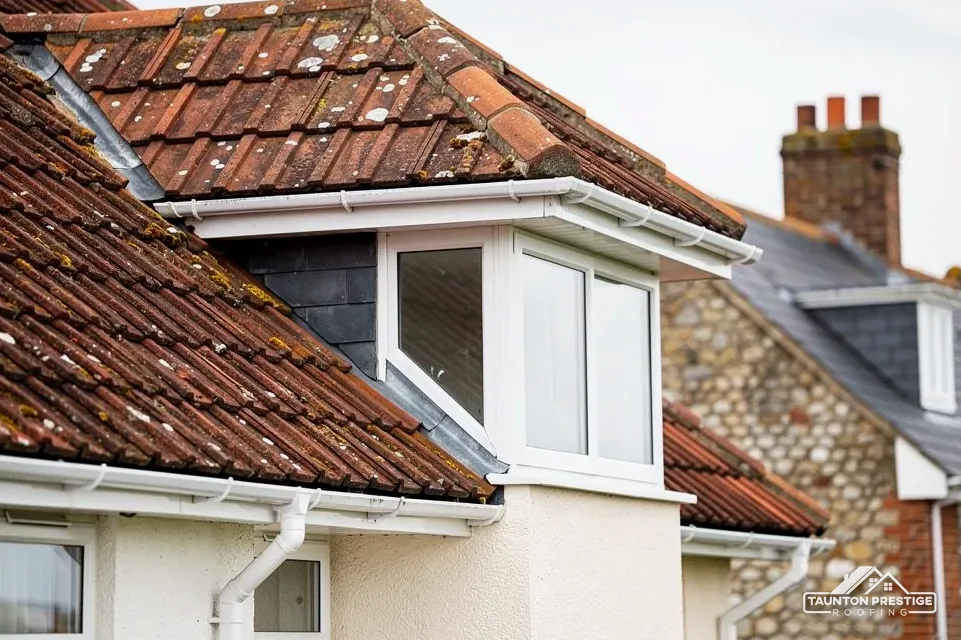
Another Grade II entry, where a roof repair should match what is already up there.
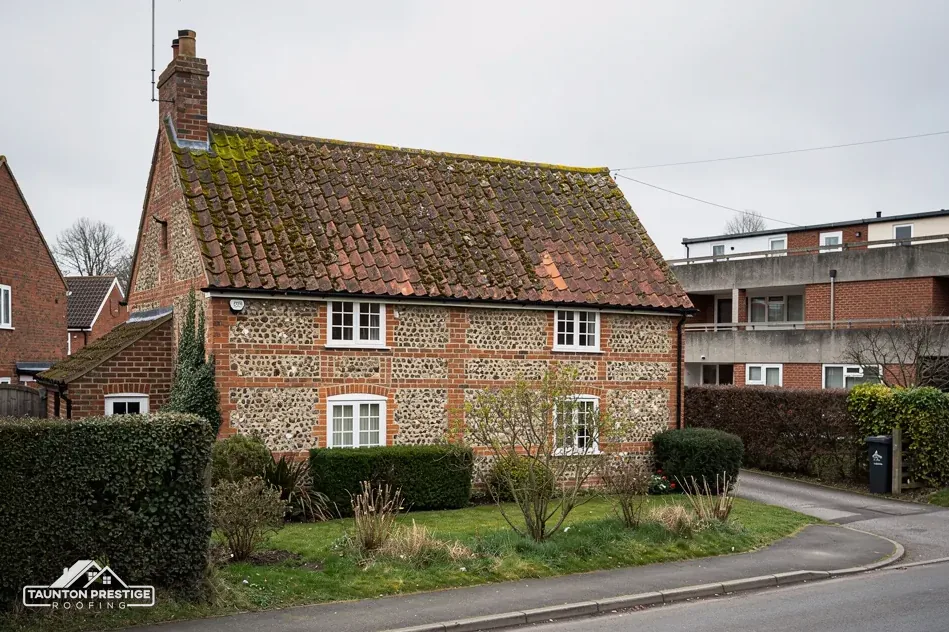
Listed Grade II on 7 August 1986, so its roof falls under the listed building controls.
Street map of Hele with Upcott, Allerford, Rumwell, Norton Fitzwarren marked around it, and Taunton.
Upcott lies just north-east and Allerford to the north-west, with Rumwell to the south-east; Bradford on Tone lies south-west and Hillfarrance west of Hele.
About 2 miles west of Taunton, Somerset Council (unitary).
A hamlet roof walk
A listed manor, a chimney, a flat porch and an old cement-sheet shed each pose a different question, so each gets its own check.
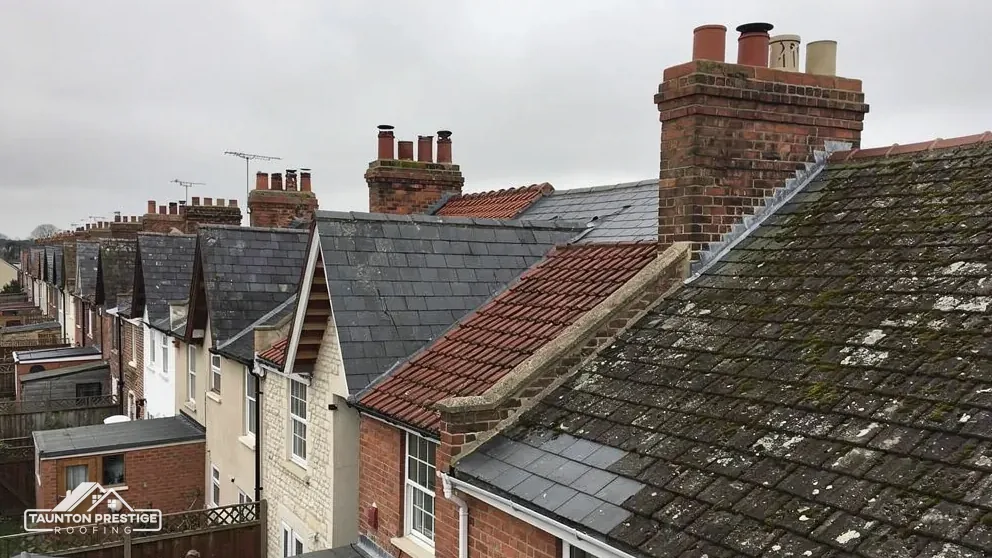
Five list entries sit within 500 metres of the centre of Hele, a hamlet in Bradford-on-Tone parish and not the Hele near Bradninch in Devon. Three names stand out: Hele Manor Hele Mill House, Hele Hill House and Easton Lodge Stone House, all Grade II, with Easton Lodge first listed on 7 August 1986. In a hamlet with so few buildings, each listed roof matters a great deal to the people who look after it.
The council decides, using a test about character. Swapping a cracked ridge tile for a matching one is a repair. Changing the ridge to a different style, or laying concrete where clay has been, alters how the building looks and may need listed building consent from Somerset Council. Because the planning authority is the council and not the roofer, the sensible move is to put the question to its planning team before materials are ordered, and the survey makes that question clear enough to ask properly.
Clear photographs of every slope, a record of what covers it now, and a plain description of what is to change. The survey is built to produce exactly that set, so you can attach it to an application or a pre-application enquiry without taking new pictures. If sound old slates or tiles can be lifted, sorted and refixed, we say that in the report, since keeping original material usually helps a listed case.
Even a repair that leaves the roof looking just as it did is worth a quick email to the planning team on a listed house. It costs nothing and settles whether the work is a repair in the council's eyes. Where slates are the covering, matching them by size, thickness and colour comes before anything else, and a mismatch stays visible for years afterwards.
Look for
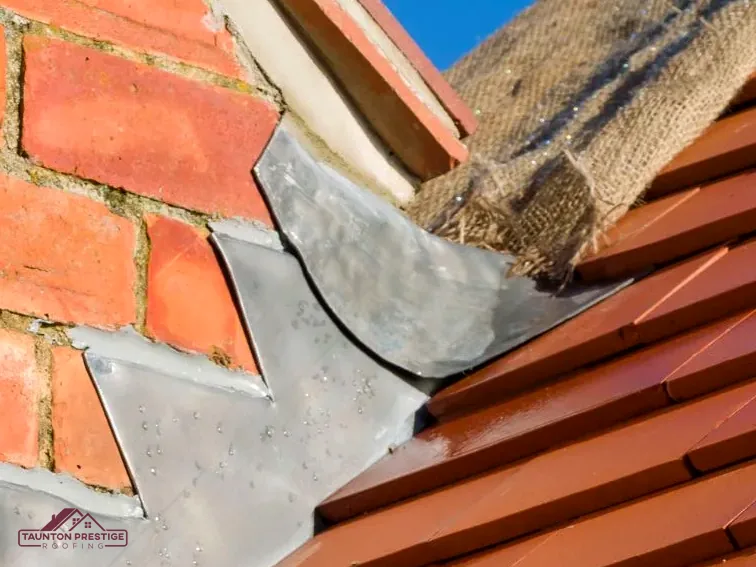
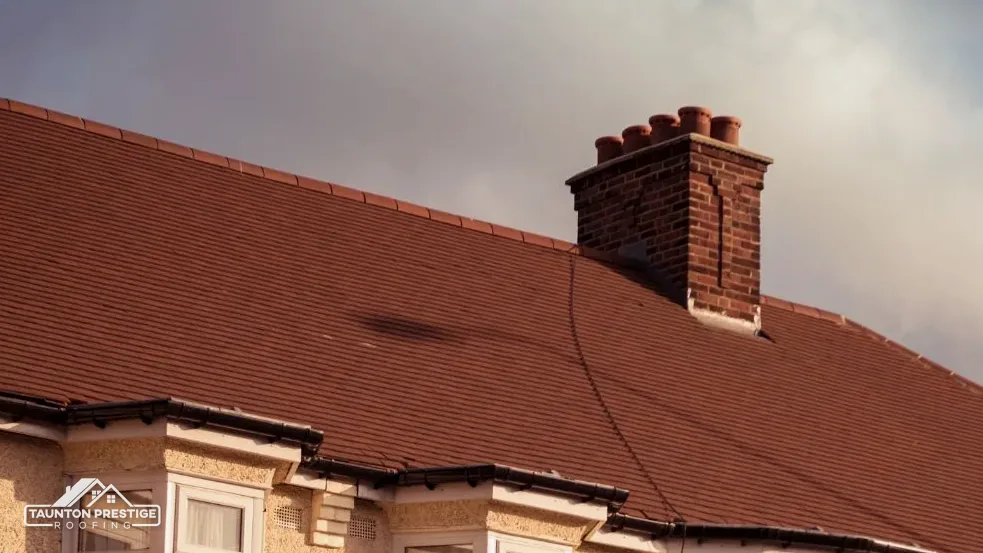
A leak that shows beside the chimney breast is usually one of three things, and only rarely the slates or tiles around it. The first is the flaunching, the sloped collar of mortar around the base of the pots. The second is the pointing between the bricks. The third is the lead flashing, the strip dressed from the stack onto the roof slope to close the join.
A chimney leak is seldom about the roof covering and almost always about a junction.
Start at the top. A hairline crack in the flaunching lets rain run into the flue and soak the stack from inside. Next, look for joints where the mortar has turned sandy or fallen out. Last, look for lead that has lifted at its edge or been smeared over with sealant. Sealant is a patch, not a flashing: it hides the gap for a few months and then peels away. Lead can last for over 80 years, so a sound flashing is kept and repaired in place, and a failed one is renewed in lead, tucked into a raked-out mortar joint.
No. Repointing renews the mortar between bricks, and MyJobQuote's typical UK range for it is £450 to £1,200 (Oct 2026). Re-bedding the pots in fresh flaunching is a different task, and its price depends on the number of pots, the height of the stack and the access it needs. MyJobQuote (Sep 2026) puts full leadwork on a stack at £350 to £920 as a typical UK figure, and scaffold can move that either way. Our chimney repairs page sets out the choices.
On a listed house, rebuilding a stack in a different style can affect its character. Taking out a chimney breast always brings Building Regulations approval, the Planning Portal says, since the breast is part of the structure.
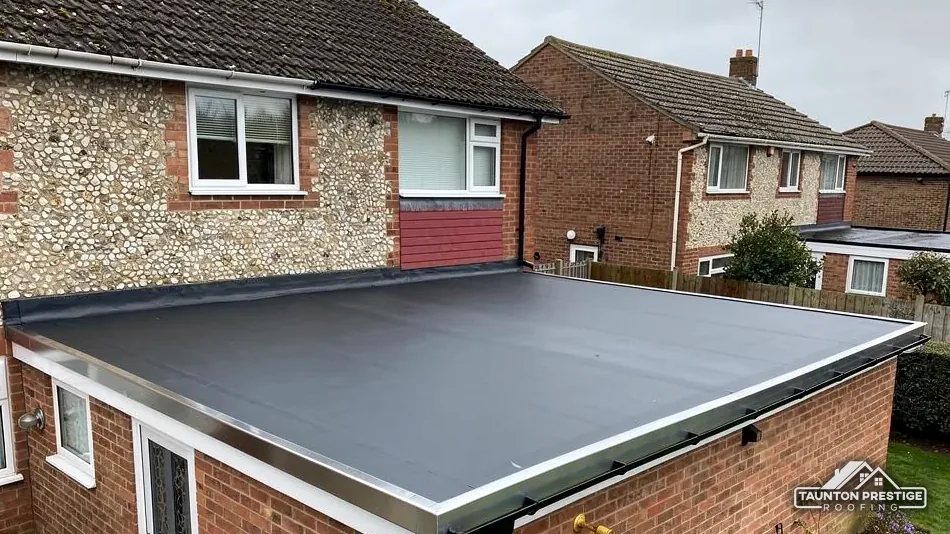
Three coverings are used on flat roofs over porches, extensions and garages. Torch-on felt is bitumen sheet bonded to the deck with a gas flame. EPDM is a rubber membrane delivered as a single sheet cut to fit the roof. GRP, short for glass-reinforced plastic, is cast on wet over the deck and sets hard.
What decides the price
Published life spans differ, and they are typical figures, not promises. Less gives felt 10 to 20 years, GRP 25 to 40 and EPDM 30 to 50, while GreenSpec puts EPDM at 20 to 30. Workmanship moves the felt figure most: a carefully laid felt roof can reach 20 years where a careless one gives out before 10. The deck beneath counts as much as the sheet above it.
A split near one edge can usually be patched. Blistering across the whole surface, or boards that have soaked up water, points to a full re-cover. National guides give a feel for scale: MyJobQuote's range for replacing a flat roof is £1,500 to £6,000, averaging £2,400 (Oct 2026), and Less puts a 15 m² garage at £1,200 to £2,500 (Oct 2026). The flat roofing page explains how each covering is laid and what drainage it needs.
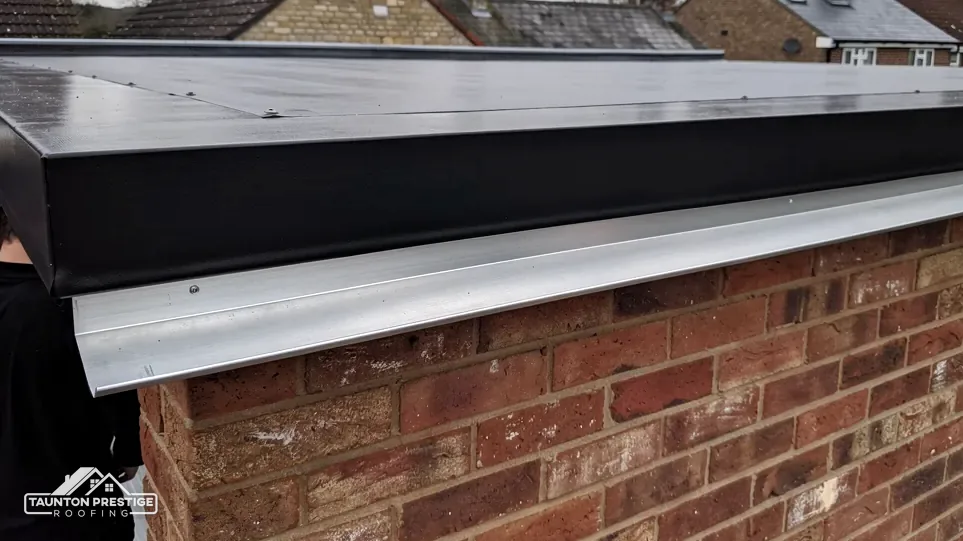
Edges and upstands, the short vertical lip where a flat roof meets a wall, tend to fail before the open middle does, so they get the closest look. A finished fall of 1:80 under BS 6229:2025 is what keeps the middle clear of puddles.
One more point is worth knowing before you ask for a price. Covering a damaged flat roof with a new sheet leaves any wet insulation or soft boards underneath where they are, and trapped moisture shortens the life of the new covering. When the survey finds that, we show you the photographs and say whether the deck should be opened up first.
Sound or needs work
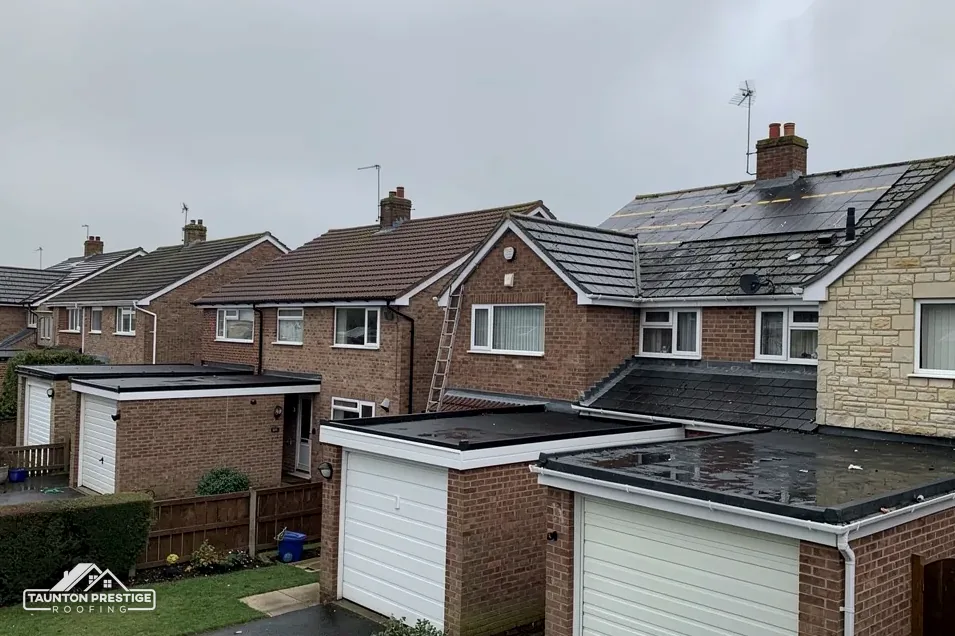
Corrugated cement sheet roofs on garages, workshops and farm sheds may contain asbestos, and the age of the building is the first clue. HSE advises treating a building that dates, or was last refurbished, from before 2000 as though asbestos is in it. So the opening job on an old shed is to identify the sheeting, and to leave it untouched until that is done. A garage built onto the side of a house deserves the same caution as a detached shed, because a roof you thought safe to lean a ladder against may not be.
What decides the price
No. HSE's guidance calls asbestos cement roofs fragile every time, so a foot on one sheet can go straight through it. The danger is a fall first and fibres second. Ladders never rest on the sheets, and a survey is done from crawling boards, a platform, or from underneath inside the building.
Careful removal of asbestos cement sheet, lifted off without breaking it, is non-licensed work under HSE's rules. If sheets will be smashed or substantially broken up, the job becomes notifiable non-licensed work, with extra paperwork. Waste is wrapped twice, labelled and sent with a consignment note by a registered carrier, never to a skip. For scale, MyJobQuote (Sep 2026) gives around £2,750 as the average cost of removing an asbestos roof and £325 for a survey. Our garage and asbestos roofs page covers replacement coverings, and asbestos in roofs goes through the rules in more detail.
Tell us what the building is made of and when it went up, or send photos of the underside, and the survey will plan the safest route. Photos of your own roof come with the survey, and the written total that follows it covers the job in full, including any asbestos waste handling.
Walked the roof?
When you have read the checks, we walk the roof and show you the photos.
Hele is in Bradford-on-Tone parish in Somerset. Since the reorganisation of 1 April 2023, planning for it sits with Somerset Council, which succeeded the Somerset West and Taunton district council. Ask its planning team about listed building consent before changing a covering, and remember that this Hele is not the one near Bradninch in Devon.
Usually, yes. The flaunching is chipped out and re-bedded in fresh mortar, with the pots reset at the same time, and open joints below are repointed. Taking the stack down is needed only when the brickwork itself has failed. On a listed house, ask Somerset Council before changing how a stack looks.
It might if the garage dates from before 2000, so leave the sheets undisturbed. A sample examined by a laboratory, taken by someone competent, gives the answer, and our survey notes what the sheeting looks like from below. Nobody should climb onto the roof to take a sample, since cement sheets can break under a footstep.
The conservation areas closest to Hele, at Hillfarrance, Bradford-on-Tone and Bishops Hull, lie within about 2.5 km. A line on a map can sit closer to a house than distances suggest, so confirm your own address with Somerset Council's planning team before a change of covering is planned, especially on an older house.
Send your Hele address and say which roof is giving trouble; survey dates follow.