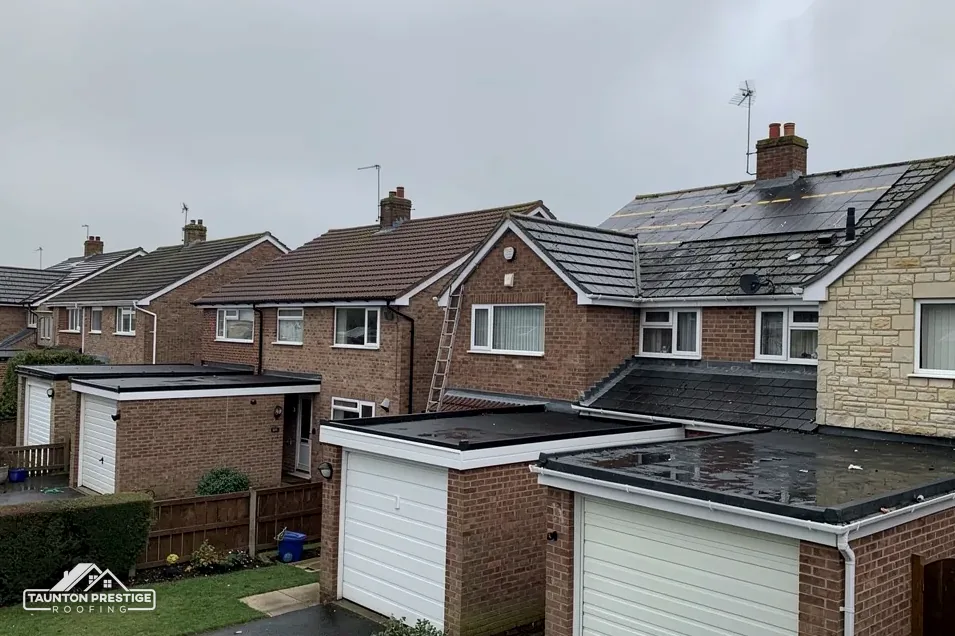
Little Thatch and Japonica Cottage
A long rendered range, probably once a 17th-century farmhouse, with a hipped thatched roof and eyebrow dormers.
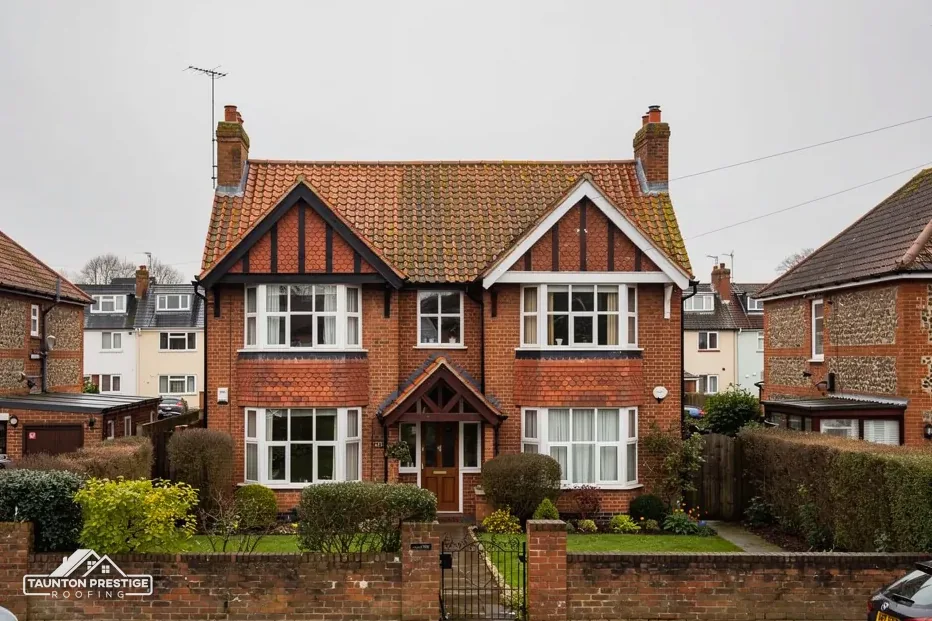
A thatched range, the Crown Inn and Grant's Farmhouse
Rumwell is a hamlet in Bishop's Hull parish with seven listed entries within 500 metres of its centre. We inspect and photograph each roof before quoting for it.
A long rendered range, probably once a 17th-century farmhouse, with a hipped thatched roof and eyebrow dormers.
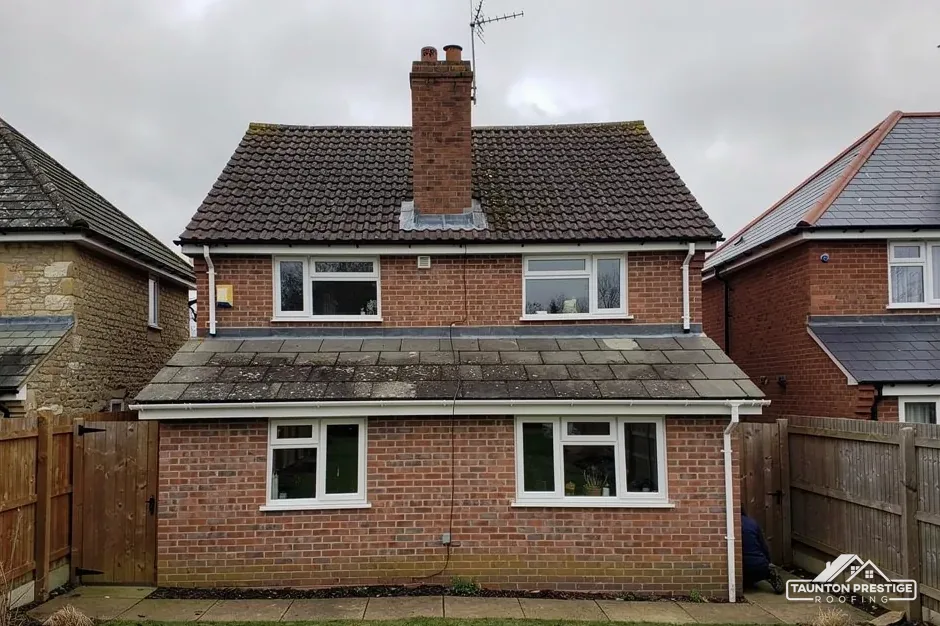
Listed Grade II in May 1985, a public house whose roof counts as a commercial building's roof.
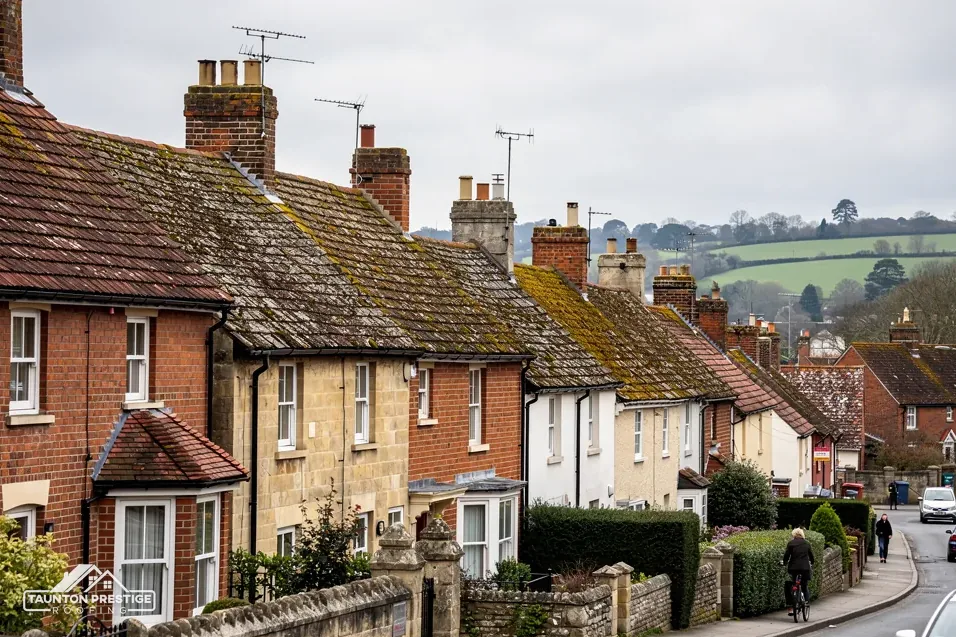
Another Grade II listing among seven list entries within 500 metres of the hamlet's centre.
Street map of Rumwell with Comeytrowe, Hele, Upcott, Bishops Hull marked around it, and Taunton.
Comeytrowe lies east of Rumwell and Hele north-west, while Upcott is due north, Bishops Hull north-east, and Bradford on Tone sits further west.
About 2 miles west of Taunton, Somerset Council (unitary).
Four checks round the Crown Inn
Four checks for a cottage, farmhouse or pub in Rumwell, covering consent, lead round dormers, commercial roofs and the rights you keep once you agree to a job.
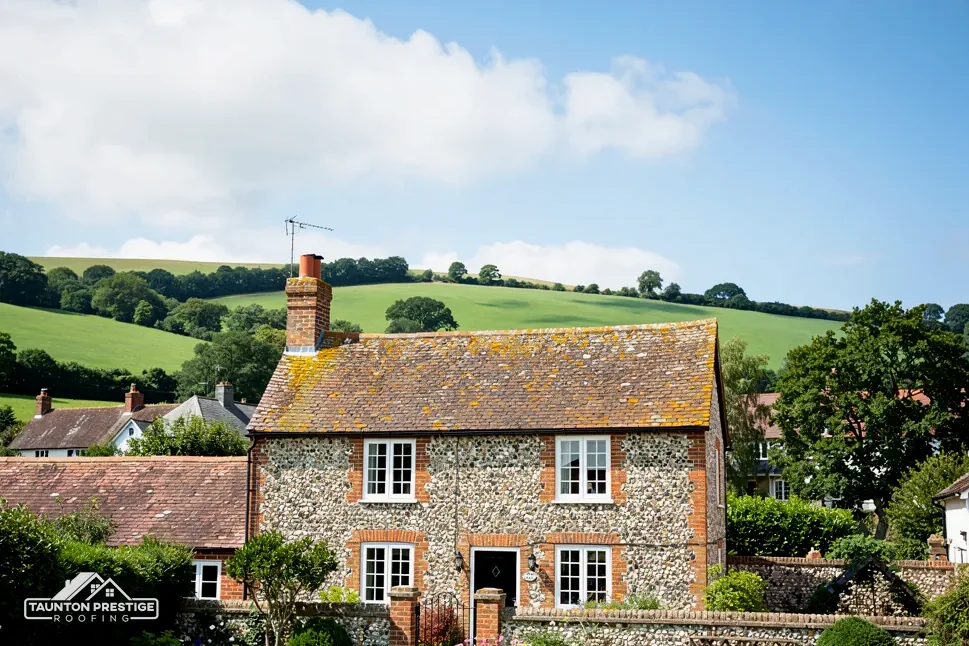
The National Heritage List records seven entries within 500 metres of the centre of Rumwell. The Crown Inn and Grant's Farmhouse are Grade II. So are Little Thatch and Japonica Cottage, which Somerset's Historic Environment Record describes as probably once a single 17th-century farmhouse: a long rendered range with a hipped thatched roof and eyebrow dormers. Hipped means the roof slopes down at the ends as well as the sides, and an eyebrow dormer is a low window set into the roof whose curved top follows the line of the thatch.
A thatcher does. Thatching is a craft of its own, with its own materials and methods, and we would rather send you to the right specialist than guess. What we look at in a house like this is everything around the thatch: the lead where dormers meet the roof, the chimneys, the gutters and the eaves at ground-floor level. The survey tells you which of those need work and which can wait.
On a listed house, swapping thatch for tile or slate would alter its character, so listed building consent is required. Whatever the covering, ask Somerset Council's planning team before any change. Within roughly 2.5 km lie the conservation areas of Bishops Hull, Bradford-on-Tone, Trull Village, Haines Hill and Trull Road, and Taunton's Park Street and Wellington Road. Somerset Council's planners confirm which boundary, if any, takes in your address.
Whatever turns up is written into the survey notes with photographs, so a later owner or a consent officer can read the history of the roof at a glance. It is worth keeping the notes with the deeds. A thatched roof and a lead dormer age at very different rates, and anyone planning work on either needs to know what was done, by whom and when.
What decides the price
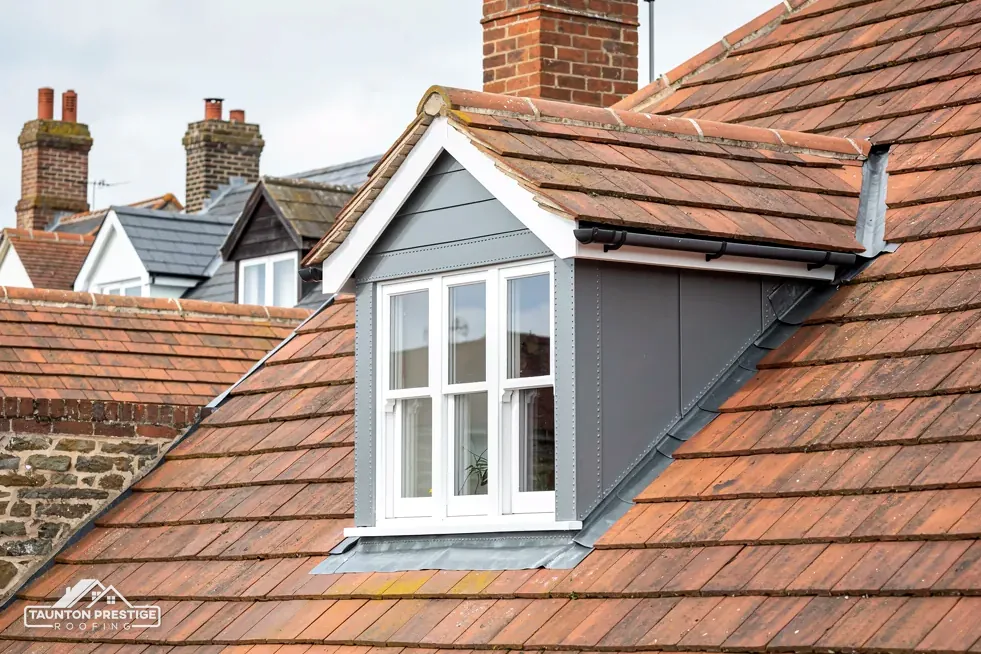
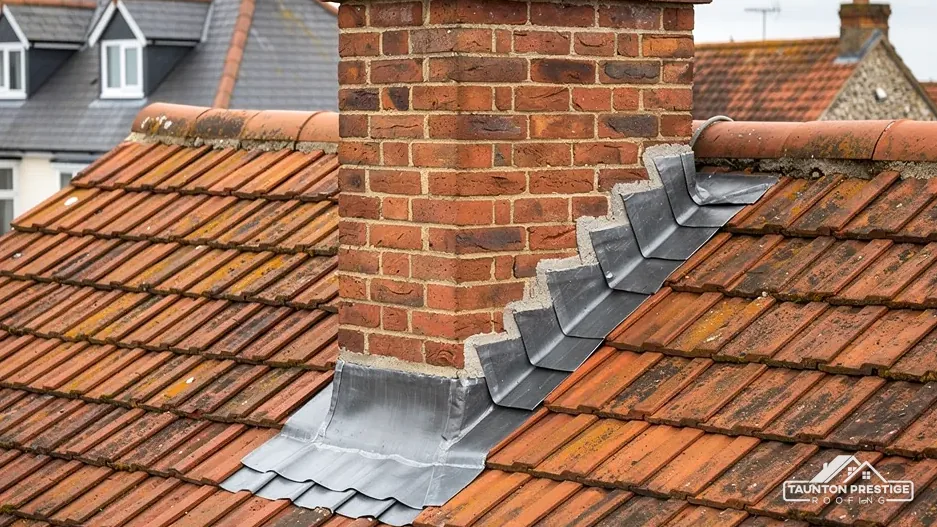
Where a dormer meets the main roof there are more joints than anywhere else on a house: two cheeks, a front, a roof of its own and a channel where it meets the slope. Every one of them has to be watertight, and on an old building with a curved dormer they are shaped by hand. Lead is the usual answer, because it can be worked into awkward forms.
Look for
A dormer is a small house on a roof, with a small house's worth of joints.
Lead can split where it is pinned at one edge and the roof moves beneath it, and it lifts once its fixings fail. Moss and leaf litter collect in the channel where the dormer meets the slope and hold water against the metal. Soakers, the little folded lead pieces tucked under the covering at a wall or cheek, can slip. You see the damage as a stain on the bedroom ceiling below.
Lead comes in a graded series of thicknesses called codes. Royston Lead's brochure lists codes 4 to 8 for dormers, so the choice depends on the size of the dormer, how exposed it is and how the sheet is shaped. MyJobQuote says lead flashing can last for over 80 years, which is a floor rather than a promise, and a repair that keeps the original sheet is often better than replacing it, provided the metal is still sound.
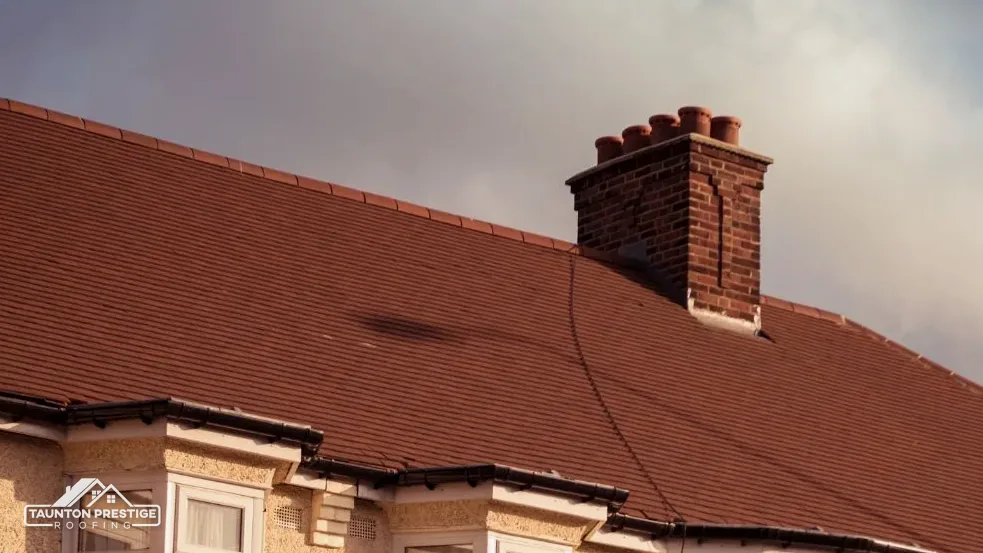
On a hipped roof, the hip is the external corner line running down between two slopes, and it takes capping tiles of its own. Our lead work page explains how we repair and replace each of these. At the survey we photograph every joint close up and mark the tired ones, showing whether you need a patch at one cheek or a new lining for the whole dormer. The pictures also let you show the problem to anyone else you consult.
The Crown Inn has been listed Grade II since 17 May 1985. A pub roof is a commercial roof, and the planning and safety routes differ from a house's, so ask Somerset Council's planning team what applies before any change; as a listed building it also needs listed building consent for work affecting its character. Our page on commercial roof planning permission explains the main points.
The operator of a pub is a business client, and the CDM 2015 rules on client duties apply to it in full, as our commercial roofing page sets out. Every job, small or large, needs a construction phase plan. We plan around opening hours and deliveries, keep the area below the work clear and explain at the end of each day what has been done above, so customers and staff are never walking beneath open scaffold.
It can. Buildings from before the year 2000 are presumed to contain asbestos until a test shows otherwise. Rear extensions, kitchen flat roofs and outbuildings are the usual places to look on a pub. MyJobQuote gives a typical asbestos survey as £325 (Sep 2026), and the test comes before any removal is planned.
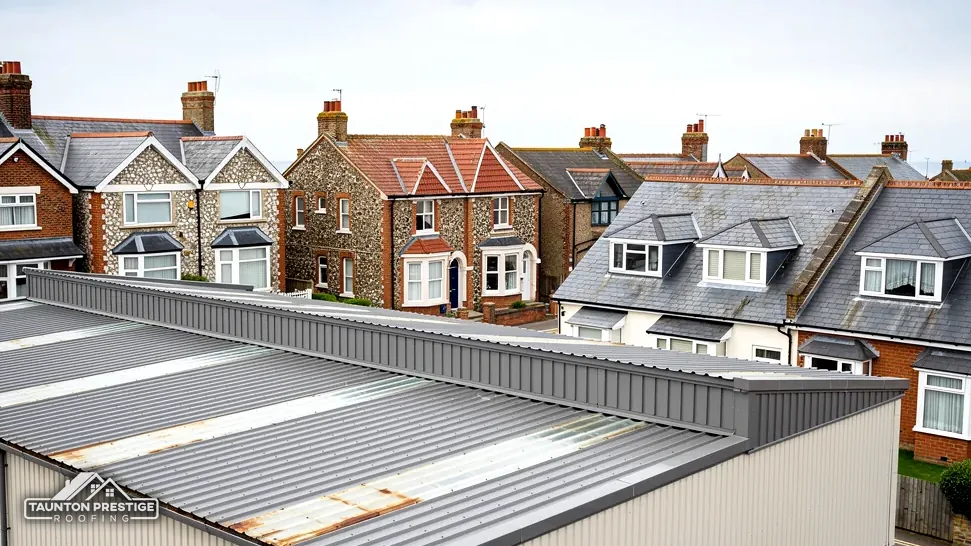
Beyond that, a pub roof has features a house does not: kitchen extraction through the covering, flat roofs over cellars or stores, and a gutter system that serves a much larger area. We look at these with the same method as for a cottage, then explain what we found in plain terms, one part of the roof at a time. If a flat section has to be re-covered, the choice of covering is made with the owner, because a kitchen roof carries heat, grease and foot traffic that a house extension does not.
Anyone who has never bought roof work before will find it easier to know the ground rules in advance. The Consumer Rights Act 2015 (section 49) expects the service you pay for to show reasonable care and skill. That applies whichever roofer you hire, and it is the standard to hold every one of them to.
Look for
If you sign at your own house after a survey, the contract is made away from the trader's premises, and you may cancel without giving a reason until 14 days after the day it was made. If a trader fails to tell you about that right, the period can run on for up to 12 months after the day it would have ended. A repair visit that you specifically ask for because something urgent has happened is excluded under regulation 28(1)(e), so the 14 days does not cover a call-out to make a leak safe.
Write to the roofer first and attach photographs. The Citizens Advice consumer helpline, 0808 223 1133, advises individuals. The Alternative Dispute Resolution Regulations 2015 were revoked on 6 April 2026, and the 2024 consumer protection Act (section 308) now obliges a trader to point the consumer to any ADR or similar scheme on offer when a complaint is not resolved.
For an urgent leak, our emergency roof repairs page explains the make-safe visit. The survey that follows ends with your own roof in pictures, the weak spots marked, and a single price in writing covering the whole job; that written price is the one we hold to. Give us the Rumwell address and say what is wrong, and the visit is fixed. If the roof is part of a pub or a business building, say so, because that changes who signs what.
What decides the price
Walked the roof?
When you have read the checks, we walk the roof and show you the photos.
Not without listed building consent. The range is probably once a single 17th-century farmhouse, with a hipped thatched roof and eyebrow dormers, so a different covering would change its character. Thatching is a craft of its own, and a thatcher is the right specialist. We look at the lead, chimneys and gutters round it.
It depends on the size and exposure of the dormer. Royston Lead's brochure lists codes 4 to 8 for dormers, with the thicker codes for bigger or more exposed positions. By MyJobQuote's figure its life can run past 80 years, and we judge the sheet by its condition at the survey rather than by its age.
The pub's operator is a business client with duties of its own under CDM 2015, not a domestic client. Extra appointments are needed once several contractors share the project, and our commercial roofing page lists them. Whatever the size of the job, a construction phase plan has to exist before anyone starts.
Where a trader fails to give cancellation information, the cancellation period can be extended by up to 12 months after the day it would have ended. The usual period for a contract made at home is 14 days from the day of the contract. For advice, ring the Citizens Advice consumer helpline on 0808 223 1133.
Tell us where in Rumwell you are and which part of the roof concerns you, and a visit follows.