Lead roofs sit on all sorts of Somerset buildings: a parish church, a town-centre bank with a parapet, a school hall, a large Victorian house with a flat lead section behind the chimney. The owner is often a trustee, a committee, a landlord or a facilities manager rather than the person who laid the lead, so the roof can go years without anyone asking how it is doing.
A lead roof rewards a little regular attention and punishes neglect quietly. A blocked outlet fills the roof with water, a split lets damp into the boards, and the first sign inside is a stain on a ceiling that was painted last spring. Meanwhile the roof itself is a place where people can fall, so how it is inspected matters as much as how often. This post sets out an inspection routine you can follow, the rules of thumb for working at height, the part gutters and outlets play, sensible handling hygiene around lead, and the records worth keeping. It is general guidance for owners, and a roofer who has looked at your roof can tailor it to the building.
A routine you can write down
A routine that lives in somebody's head disappears when they move on. Write the schedule on a sheet, keep it with the building file, and name the person responsible for each step. The aim is to catch small things while they are small.
What should be checked, and when?
Three moments in the year do most of the work. After autumn leaf fall, when outlets and gutters are most likely to be blocked. After the worst weather of winter, when wind has lifted edges and snow or ice has moved things. And in late spring, when you can see what the winter did and plan repairs for the dry months. In between, look after any severe storm.
At each visit someone should look at the lead surface, the upstands and flashings against walls, the joints and rolls, the outlets and gutters, the fixings at the edges, and the area below inside the building. Make a short list, tick it, date it, and add a line on anything unusual. Photographs from the same viewpoints are more useful than notes alone.
Who should do the checking?
Anyone can do the ground-level and inside parts: walking round the outside after rain, looking at ceilings and walls for stains, noting drips in the roof void. The roof itself is a job for someone competent with the right access. Our roof inspections service covers that side, and a written report gives you a baseline to compare later visits against.
If a stain appears between visits, do not wait for the next scheduled check. Write down when it happened and what the weather was doing, then ring for a look.
Working at height on a lead roof
Most roof accidents happen on the way up or down, or when somebody steps where they should not. The rules are simple, and they apply to owners as much as contractors.
Who should go up there?
Only people who have the training and equipment for the job. A volunteer with a ladder is not a substitute for a competent person with proper access. Reaching the roof safely usually means a scaffold, a tower, a mobile platform or a fixed access system with guard rails. Lead flat roofs behind parapets can feel safe because of the wall, but low parapets do not stop a person falling, and wet lead is slippery.
Is the roof strong enough to walk on?
Do not assume it is. A lead sheet over boards will carry a person only where the boards and joists beneath are sound, and rot can hide under a good-looking surface. Rooflights and lantern lights on a lead roof can be fragile. HSE guidance on asbestos cement treats such roofs as fragile every time, and the same caution applies to any sheeting of unknown material beside the lead. Use boards to spread the load, stay on marked routes, and never walk across a rooflight.
Where scaffold or a tower will occupy the road or pavement, section 169 of the Highways Act 1980 requires a scaffold licence. Taunton's highway authority, Somerset Council, issues scaffold licences to accredited contractors alone, which means the appointed firm applies, with ten working days or more of notice. Any project under the CDM Regulations 2015 needs a construction phase plan too, setting out how the job will be done safely.
If in doubt, stay off. A stain you can photograph from a window is still a stain.
Gutters, outlets and lead drainage
Of all the maintenance tasks on a lead roof, keeping water moving brings the biggest return. Many problems that look like lead failure start with a blocked outlet.
What do lead roofs drain into?
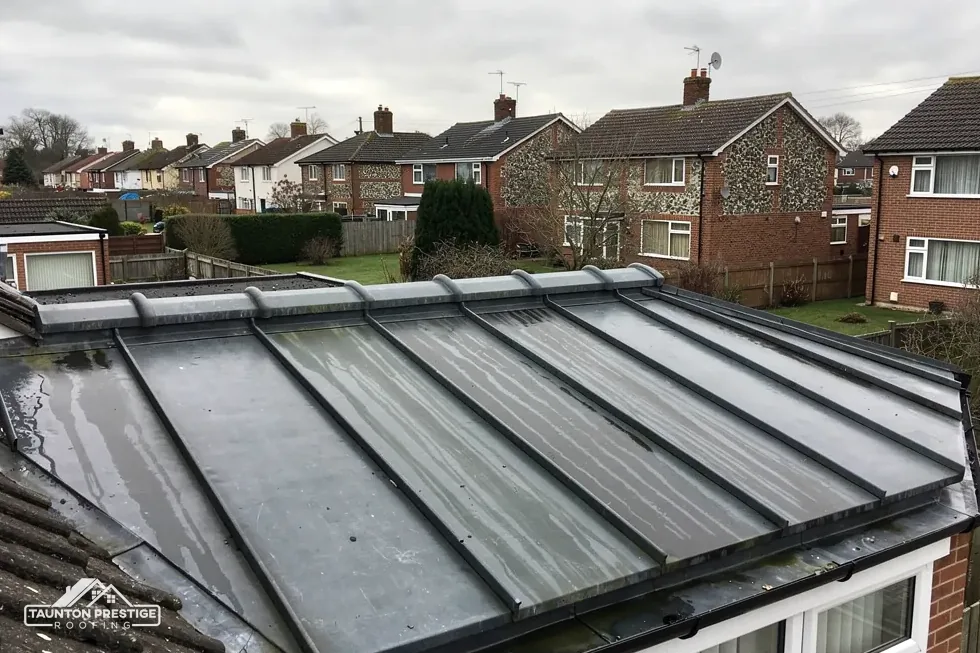
Some drain over the edge into gutters on brackets. Others drain into lead-lined gutters set behind parapets or between roof slopes, which outlet through a hopper head and downpipe. Royston Lead's brochure points parapet, box and tapered valley gutters at the heavier codes 5 to 8, which shows how hard that part of the roof is expected to work. Our answer on what a lead parapet or box gutter is explains the shapes.
What should be checked on each visit?
Clear leaves, silt and nests from the gutter and outlet by hand. Look at the outlet grating, if there is one, and the first length of downpipe. Check that water runs to the outlet without pooling, because standing water is a sign that the fall has been lost. Watch for white staining, which is a sign of lead sitting wet. Inspect the joints between lengths of gutter and the areas where the lead is dressed over the parapet or into a wall.
Do all of this from a safe platform. Cleaning a gutter from a leaning ladder is the sort of job that ends in an accident. A neglected outlet also tends to be a neglected downpipe, so ask whether the bottom of it is clear, the gully is open, and the water reaches the drain.
Handling lead and keeping a clean site
Lead needs the ordinary care that any building material needs, and a little more because it is a metal that rubs off on hands and tools. None of this is complicated, but it is worth putting in writing for anyone who works on the roof.
What are sensible hygiene habits?
Wash hands and face before eating, drinking or smoking, and do not eat on the roof. Keep food and drink away from offcuts and tools. Do not use a lead sheet or scrap as a seat or a table. Leave work clothes at the site or wash them separately from the household laundry. Where there are children or visitors on the premises, keep offcuts and dust out of reach and sweep up before everyone leaves. HSE publishes guidance on working with lead, and anyone cutting, welding or stripping it should follow it.
What happens to old lead?
Old lead is recyclable, and a merchant or scrap yard will take it. Where a roof is stripped, we agree with the owner what happens to the metal and where it goes. Offcuts and rolled sheet should not be left lying about on site or in a yard, where a child or a passer-by could pick them up.
The roof void deserves care, too. Dust from old boards and from disturbed insulation should not be swept or blown around the building. If someone suspects asbestos in a roof built or refurbished before 2000, they should stop and arrange a test before work starts.
Our answer on fitting lead flashing yourself covers why we would ask a roofer to take on lead work, rather than learn on a customer's roof.
Trouble spots to point a roofer towards
When you ring for a visit, a short list of places to look saves time and gets the survey off to a good start. Lead roofs tend to show weakness at the same few spots, and an owner who knows them can describe a problem clearly.
Where do lead roofs usually give trouble?
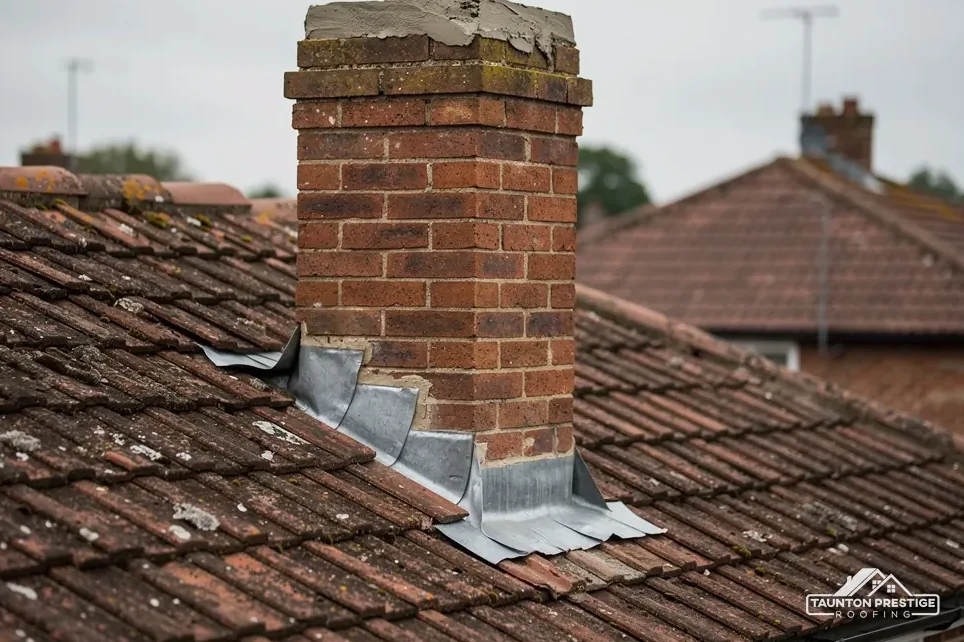
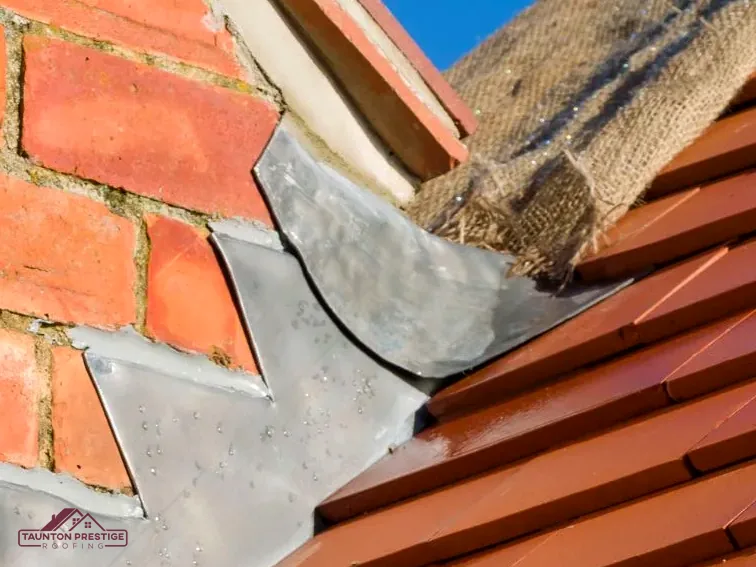
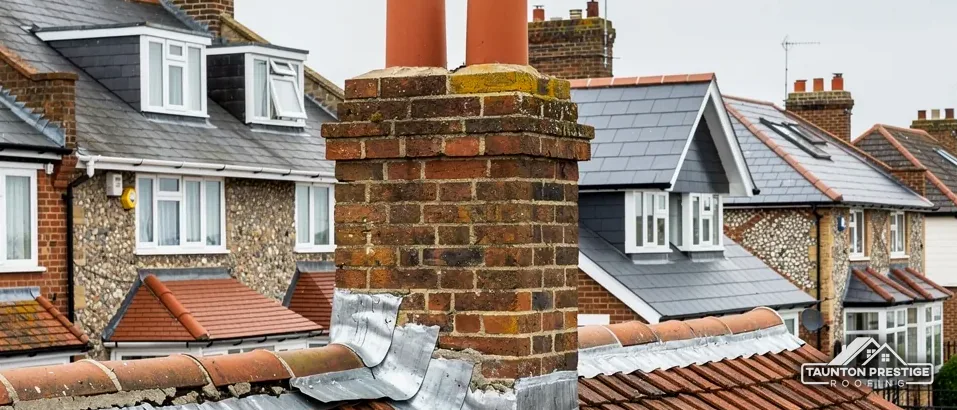
At the junction with a wall, where the lead is dressed up the brick and tucked into a mortar joint called a chase. At rolls and seams, where one sheet laps the next. At upstands, the vertical turn-ups around lights, chimneys and parapets. At outlets, where all the water arrives. And around anything that has been added since the roof was laid, such as an aerial bracket, a cable clip or a bolted-on sign. Each penetration needs its own flashing, and every one of them is a spot where sealant has probably been added.
Our answer on why lead flashing cracks goes through the causes at a wall junction.
How do I describe a problem on the phone?
Say which room the stain is in, which side of the building that is, how long you have noticed it, and whether it follows rain or wind. Say whether anyone has been on the roof lately, because a footprint on soft lead can start a crack months later. Send photographs of the ceiling, and of the roof from the ground if you can take them safely. A roofer can then arrive knowing what to look for, with the right access ready.
If work needs a scaffold, ask who is arranging it, how long it will be up, and what it means for the people who use the building. On a church, school or shop, the schedule matters as much as the repair.
Records, reports and what to ask a roofer
Good records help in four ways: they show what has changed, they help a roofer understand the roof, they support an insurance conversation, and they make the next owner's job easier.
What goes in the roof file?
The date and details of every inspection, with photographs; any repair, with who did it and what was done; copies of written quotes and invoices; reports from surveys; and any consent paperwork for listed or historic buildings. Add the lead code if it is known, the age of the roof, and a sketch showing the outlets and the direction of the falls.
What should I ask a roofer who has been to look?
Ask what they found, and ask for pictures taken on your roof itself. Ask what the cause is, not only what the symptom is. Ask whether a repair or a replacement is the better buy, and what each would involve. Ask how the work will be set up safely, what access there is, where waste goes, and what happens each day. And ask whether the price is a single written total, including access, once the survey is done.
When damage appears, the order is insurer first, then a temporary repair, with photographs and receipts kept throughout. Payment turns on the cover and the cause. If a dispute follows, the Financial Ombudsman Service takes complaints at no charge to you.
For a building that is listed or in a conservation area, check consent before work begins. Our page on lead work explains the jobs we take on, and the hub links on it lead to guides on codes, flashings and cost.
Owners ask about lead roofs
Can a volunteer or caretaker go up to clear the gutters?
Only if they are trained, have the right equipment and the roof has safe access. An unprotected edge and a wet lead surface are a poor combination. Ground-level checks are fine for anyone. Anything at the roof edge should be done by a competent team using a platform, tower or scaffold, not a leaning ladder.
How do I tell a lead stain from a leak?
White streaks on the surface come from the metal weathering, and they are not a leak. A leak shows as damp or discolouration on the ceiling, wall or boards below, and it often follows rain. Note dates and the weather, take photographs, and ask a roofer to trace the path of the water.
What should be written down after a lead roof inspection?
The date and who did it, what was seen, with photographs, which areas need attention and how soon, and what was done on the day. Keep it with the building file, along with quotes, invoices and any consents. A dated trail helps the next inspector and shows you kept the roof in order.
More on this subject: Lead work in Taunton