Most of a viewing goes on kitchens, bedrooms and the size of the garden. The roof gets a glance from the pavement, if that. Yet a hidden fault up there can cost more than almost anywhere else, and a survey will sometimes do no more than recommend that a specialist takes a look. By the time you read that line, you may be close to exchange with a deposit about to go down.
The checks below are ordered to match a viewing: first what shows from the pavement, then what shows in the loft if the seller allows access, then the questions to put to the seller or their agent. Two topics need extra care, spray foam insulation and asbestos in older buildings, because both can affect a mortgage or a repair bill. The last section covers when a proper roofer's inspection is worth paying for. Our roof inspections service is where that starts, and our homepage explains how we approach every roof.
Reading the roof from the pavement
You do not need to climb anything to learn a lot. Arrive a few minutes early or stay a few minutes late, step back across the road and look at the whole roof as a shape before you look at details.
Is the roof straight and the covering even?
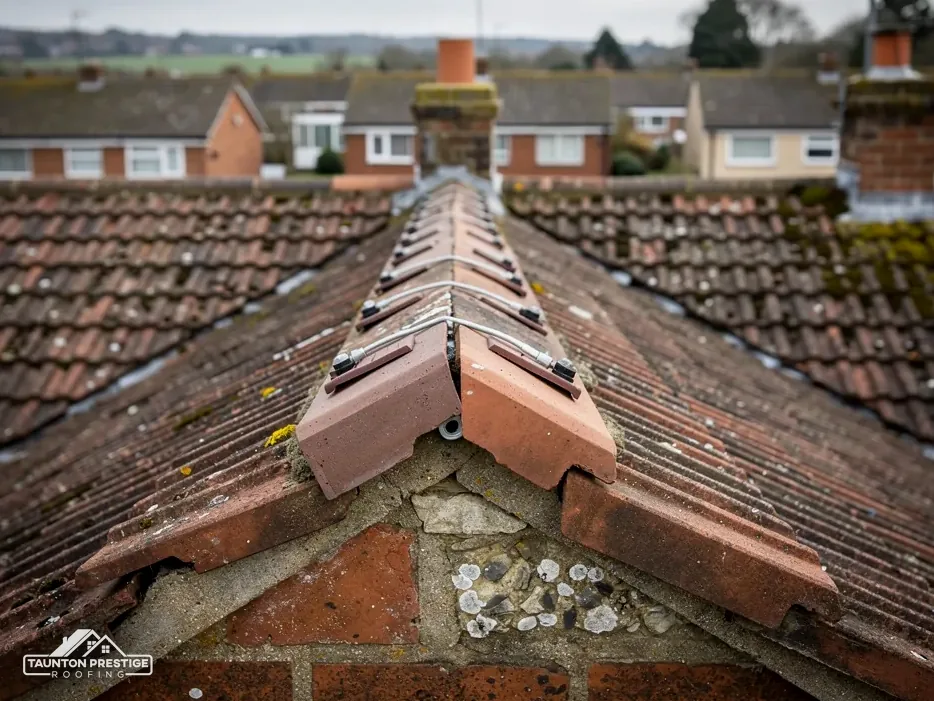
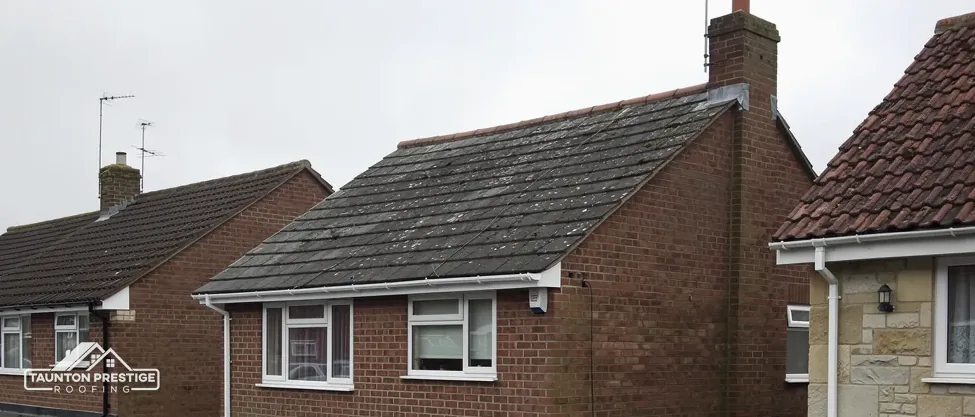
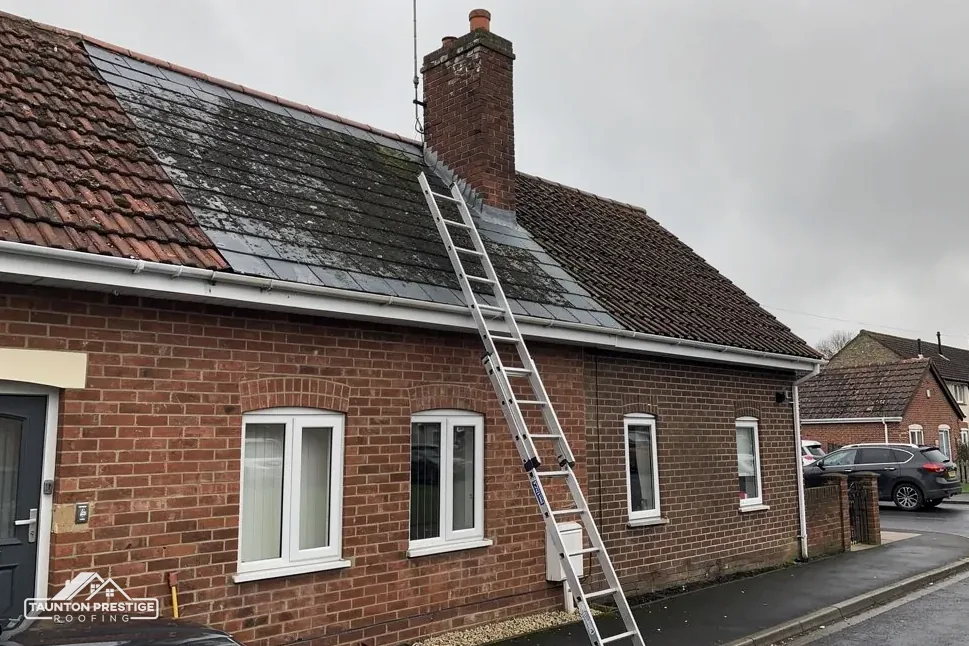
Look along the ridge, the line at the top. It should run straight, not sag in the middle or step. Then look at each slope. A covering in good order looks even, with courses running level. Gaps, dark patches where pieces are missing, tiles sitting proud of neighbours and patches that differ in colour all suggest repairs or trouble. If the roof is a mix of old and newer sections, ask why.
What about the gutters and the walls?
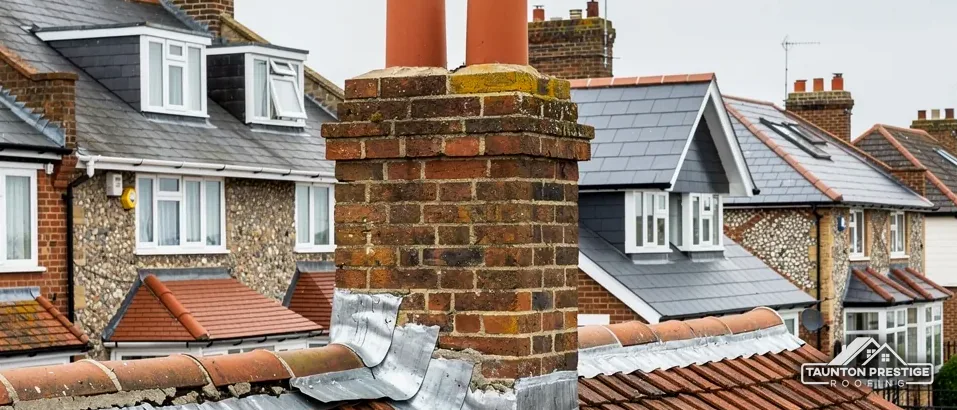
Check the gutters for sagging, rust, plants and joints that leak. Look for green or black staining on the wall under a gutter, which can mean water has been spilling for a while. Look at the chimney too: leaning, cracked mortar and loose pots are all worth noting, and the lead around the base should be tight to the stack.
Take photos of anything that worries you. A phone with a zoom is enough. These pictures help a roofer judge what to look at without anyone on the roof, and they give your solicitor something concrete to raise with the seller. Note the date and the direction you were facing, so the shots can be matched to the right slope later.
- A ridge that dips or steps.
- Slipped, missing or cracked slates and tiles.
- Moss or lichen thick enough to hold water.
- Sagging, rusty or overflowing gutters.
- A leaning chimney or crumbling pointing.
What you can see in the loft
If the seller agrees, the loft is the best place to judge a roof, because the underside shows what the outside hides. Ask before the viewing, take a torch, and step only on the joists or boards. The ceiling between joists will not hold a person.
What should I look for?
Look up at the timbers and at the back of the covering. Dark staining, tide marks, damp patches and mouldy timber show water has got in at some point, and the question is whether it is still doing so. Pinpricks of daylight around slates mean gaps. Look at the insulation as well: flattened, wet or stained patches under a suspected leak are telling. A smell of damp is also information.
If you see fine dust on the insulation, it may be from crumbling mortar, wood-boring insects or something else, so note it and ask. Do not touch anything that looks like insulation board or sprayed material. The next sections cover why.
Can I tell the age of the roof from the loft?
Sometimes. Old roofs with no underlay show battens and the backs of slates directly. Newer ones have a sheet of felt or breathable membrane under the battens. A mix of both, or a sudden change at one point, hints at a past repair or a partial re-roof. It cannot give a date. Our check a roof from the loft guide describes the signs in more detail.
Questions to put to the seller
The seller or agent can answer a good many roof questions in a sentence. Ask in writing through your solicitor, so the replies sit on the file.
Has the roof been worked on, and is there paperwork?
Ask when the roof was last repaired or re-covered, who did it and whether any invoice, guarantee or certificate exists. If the roof was replaced, ask whether building control was involved. Somerset Building Control says it keeps copy completion certificates for 15 years, and it takes regularisation applications for work done since 11 November 1985, so a missing certificate on older work is not necessarily the end of the matter, though it is a question for your solicitor.
Has anything been added to the roof?
A loft conversion, a new dormer, a fitted roof window or a freshly built chimney changes the roof and may need planning permission, Building Regulations approval or both. Ask whether those were obtained. Our planning permission for roof work guide sets out the tests. In a conservation area or a listed house, the consent routes differ again.
Are there known leaks or damp?
Ask directly whether the roof has leaked, whether any ceilings have been repaired or repainted, and whether the seller has made a home insurance claim for roof or storm damage. Do not accept a vague answer. Ask the seller to put it on the property information form, since a wrong answer there can matter later.
Where a building was built before 2000, add asbestos to the list. The next sections explain why.
Spray foam under the roof
Spray foam insulation goes on as a liquid that expands against the underside of the roof, either under the covering or in the gaps between rafters (the sloping beams that carry the covering). It was often sold as a quick way to insulate a loft. It can also make the roof timbers hard to inspect and may complicate a sale.
How do I spot it?
Shine a torch at the sloping roof from the loft hatch. Foam appears as a solid, often yellowish or off-white layer stuck directly to the felt, slates or tiles, covering the rafters and hiding the battens. If you cannot see the timbers at all, ask what has been applied, when and by whom.
Why does it matter to a buyer?
The RICS consumer guide on spray foam insulation advises owners to confirm with their mortgage provider if the lending policy permits such products. That check is a good one to make before you offer, not after a survey flags it. Ask the seller for any paperwork that came with the installation and tell your surveyor and solicitor that foam is present.
The Energy Saving Trust, in its advice on roof and loft insulation (updated May 2026), advises against covering a leaking roof with foam. Foam can hide the cause of a leak and the damage it has done to the timbers beneath.
Can it be removed?
It can, though the cost depends on how it was applied and what lies beneath, and the written quote follows a survey. Our roof inspection with spray foam answer explains what an inspector can and cannot see through it.
Asbestos in older roofs and soffits
Older roofs can contain asbestos, and HSE's rule of caution is to assume a building built or refurbished before 2000 has some. That is a cue to ask, rather than a finding, and it belongs on every buyer's list for a pre-2000 house, garage or outbuilding.
Where might it be?
Asbestos cement shows up in corrugated roof sheeting, flat sheets and rainwater goods, often on garages and outbuildings. Insulating board turns up in places such as external soffits, the boards under the eaves. HSE warns that insulating board products look much like their non-asbestos equivalents, so appearance alone settles nothing. It also describes asbestos-cement roofs as fragile, which means no one should step onto one.
What does it mean for the purchase?
Asbestos cement in good condition is not an immediate emergency, but it affects future work. Lifting asbestos cement out carefully, without breaking it, counts as non-licensed work, while smashing it up substantially makes the job notifiable non-licensed work. Under HSE's risk assessment rules, removing insulating board soffits is frequently licensed work, so we confirm that first. Asbestos waste is wrapped twice, labelled and moved under a consignment note, never put in a skip.
MyJobQuote (Sep 2026) gives around £2,750 as the average cost of removing asbestos from a roof and about £325 for an asbestos survey, as typical UK figures. Ask the seller whether a survey exists, and read our asbestos in roofs answer before you decide how to proceed.
When a roofer's inspection is worth it
You do not need a roofer for every purchase. A newish house with paperwork and a clean loft may need nothing beyond the surveyor's report. Some situations tip it the other way.
When should I book one?
Book an inspection when your survey says the roof needs specialist advice, when you saw staining, slipped coverings or sagging in the loft, when there is no paperwork for recent roof work, when the roof is slate or clay and old, or when foam or asbestos are present. Do it before exchange, because afterwards the repair bill is yours. Our homebuyer survey roof answer sets out how the two reports differ.
What does an inspection cost?
MyJobQuote (Oct 2026) gives around £300 as the average for a roof survey and £200 to £350 for a drone survey, as typical UK figures. That is small beside the figures for a new roof: MyJobQuote averages around £5,250, while HomeBuilding (Sep 2025) quotes £10,000 to £15,000 for a typical three-bedroom semi. The sources differ because they measure different things.
What do you get back?
We photograph your own roof from the ground and, where access is safe, from close range. You see them before you see any price, and they show what is sound, what needs work and what can wait. If the sellers need to reduce the price or fix the fault, those pictures give you something specific to negotiate with.
Tell us the address and your exchange date, and the survey can be booked around the sale.
Roof questions for house buyers
Does a homebuyer survey cover the roof properly?
It records what the surveyor can make out from outside and through the loft hatch, and flags anything that needs a specialist. It rarely lifts a slate or goes up a ladder. Where the report calls for further investigation of the roof, an inspection by a roofer provides it.
Should I walk away from a house with spray foam in the loft?
Not automatically, but do not ignore it. Speak to your mortgage provider before you offer, as the RICS consumer guide advises, and ask your surveyor to comment. Foam can hide timber damage, so a roofer's view of the roof beyond it may be worth paying for.
What if the seller has no paperwork for a re-roof?
Ask what was done, when and by whom, and pass the answers to your solicitor. Somerset Building Control lets owners regularise work done after 11 November 1985, so missing paperwork can sometimes be put right. A roofer's inspection shows the condition either way.
More on this subject: Roofers in Taunton