When a gale lifts ridge tiles or a heavy downpour finds its way through the slates, the first instinct is to ring a roofer. It is a sensible instinct, but with an insurance claim in mind the order matters. The company that wrote your policy needs to hear about the damage before the roof is changed, and it will want to see evidence of what happened.
This guide sets out the process in plain steps. It covers who to ring first, what a temporary repair should and should not involve, which photographs and receipts to keep, how a storm is defined for the purposes of a complaint, and what to do when the insurer says no. It is about process only. We cannot tell you whether your claim will be accepted or what a policy will pay, because that rests on your policy wording and your insurer's decision. What we can do is help you arrive at that conversation with a clear record. For the wider picture of how we approach roof problems, start at our Taunton roofing homepage.
Tell your insurer first, then arrange a roofer
Start with the policy documents. Your schedule or policy booklet names the insurer and gives a claims number, and the cover for buildings is usually separate from the cover for contents. If you rent, the landlord or their agent should hear about the damage first.
Which? reports that most insurers run emergency helplines for urgent damage, so a leak coming through a ceiling at the weekend is not a reason to wait until Monday. Write down the date and time of the call, the name of the person you spoke to and any claim reference you are given.
What should you ask on that first call?
Ask four things. Does the policy cover this kind of damage? Do you need to get an estimate before any repair? Is there a limit on emergency work you arrange yourself? Do they want to send their own assessor to look at the roof? Different policies answer these differently, which is why the call comes first. If the insurer wants an assessor to see the damage in place, a roof that has already been stripped and rebuilt gives them nothing to look at.
Should you start the claim in writing as well?
A confirming email is cheap and useful. It gives a time-stamped record of what you reported and what you were told. Keep the replies, because a final response letter later in the process builds on what is already on file.
It also pays to read the section on exclusions. Policies commonly separate sudden damage from slow deterioration, and a claim is judged against that line. Knowing where your own policy draws it before the assessor arrives saves a surprise later. You can find out how a roofer looks at the same question in our guide to storm damage versus wear and tear.
Making the roof safe without making things worse
Policies generally expect you to take sensible steps to stop damage getting worse, and a temporary repair is the usual way. The aim is to keep water out and keep people safe, not to restore the roof. A tarpaulin battened over an open slope, a few slates or tiles replaced to close a gap, or a ridge held down so it cannot fall into the garden are all the sort of thing a roofer can do quickly. The sequence we follow on a leaking roof is make-safe first, permanent repair second.
What can you do yourself from the ground?
Move belongings away from wet ceilings, put buckets under drips, and switch off the lights on any circuit where water is coming through a fitting. Stay off the roof. A wet slate or a loose tile is a poor place to stand, and a fall from a ladder is a worse outcome than a damp loft.
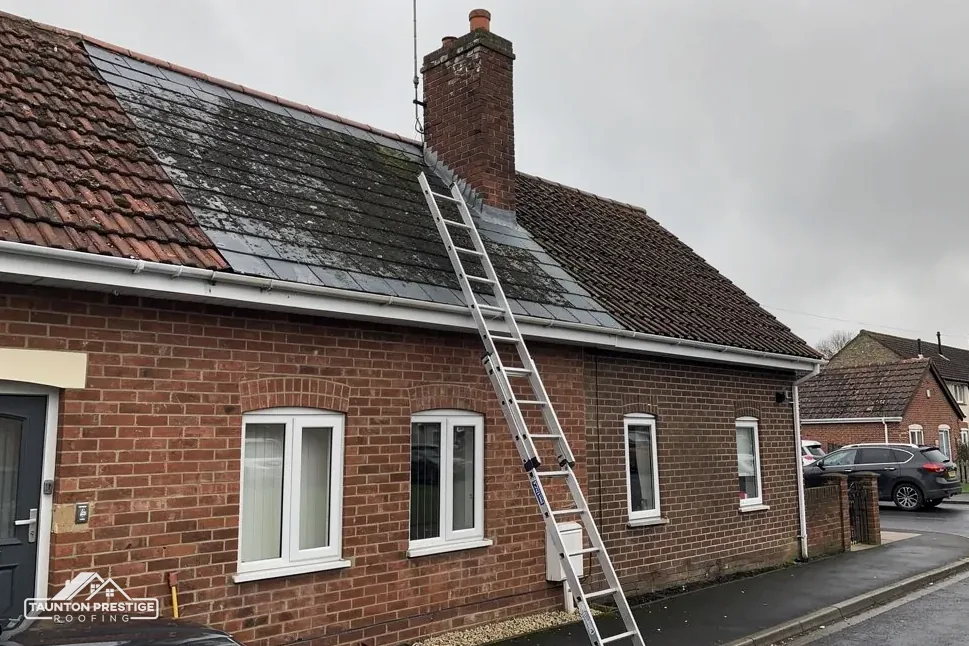
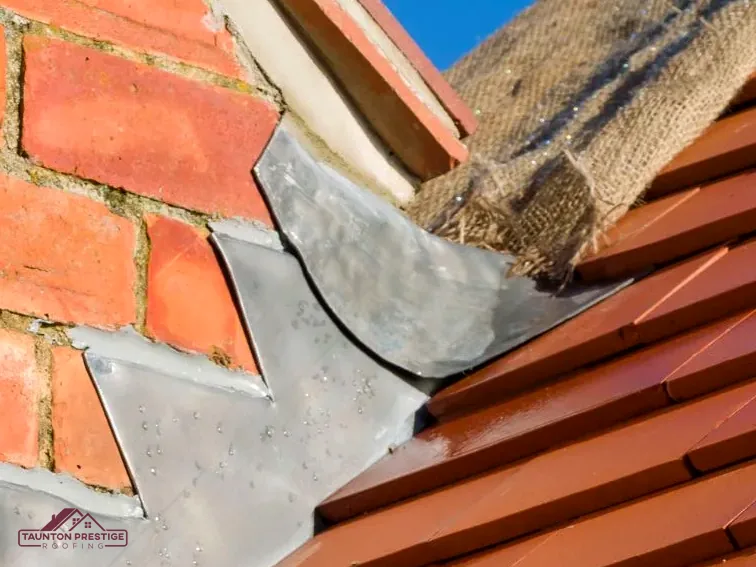
Do not throw away anything you take off or find. Slipped slates, a broken ridge tile, a length of cracked lead or a bent flashing is evidence of what failed, and the insurer may ask to see it or to see photographs of it.
Is a temporary repair part of the claim?
Often the cost of reasonable emergency work can be included, but that is for the policy to say. Ask when you ring, and keep the invoice. Our page on temporary roof repairs explains what a make-safe involves and how long one is meant to last, which is a matter of weeks and not years.
Photographs, receipts and the paper trail
The Institution of Structural Engineers tells homeowners that a claim depends on good visual evidence, which means clear pictures. Take them before anything is moved, tidied or patched, and take more than you think you need.
Which photographs actually help?
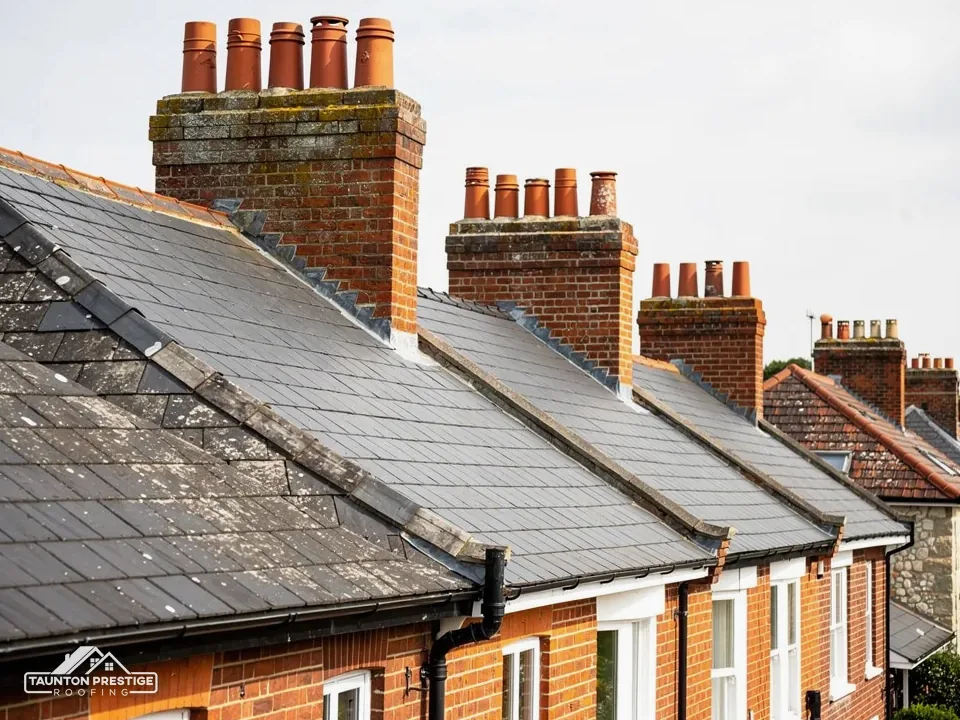
- The whole house from the road, so the roof is seen in context.
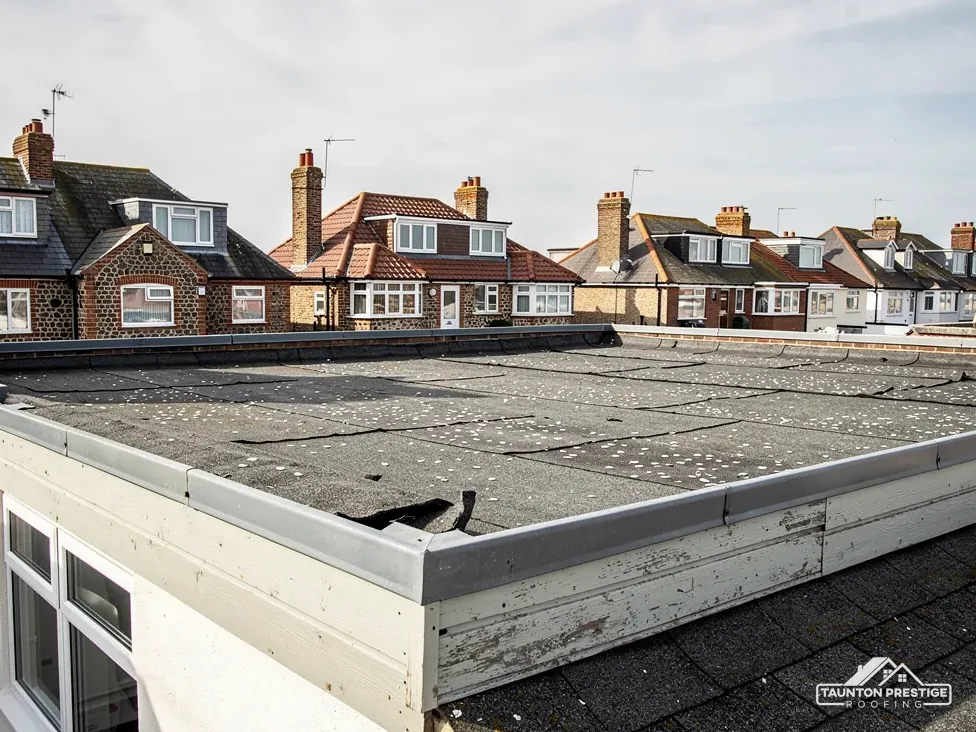
- Each damaged area close up, with something in frame to show its size.
- Debris in the garden or on the drive, such as slates, ridge pieces or a fallen branch.
- Water marks on ceilings and walls, and any wet insulation you can see from the loft hatch.
- The temporary repair once it is in place.
Phone pictures carry a date and time, which helps. Do not edit or crop the originals. Send copies to the insurer and keep the full set yourself.
What paperwork should you keep?
Receipts for emergency work, the name and contact details of whoever did it, and any written report. If you have the roof surveyed, ask for the photographs of your own roof that go with the findings. Our survey photos are part of every quote, and they are yours to send on. A recent set from before the damage, such as photographs taken when you bought the house or had the roof checked, also lets an assessor see what changed.
If a roofer is asked to describe the damage, the useful version states what is broken and where, not who is to blame. Our guides on roofer photographs and roof inspections for insurance cover what a good record looks like.
What counts as a storm, and why it matters
Many policies cover storm damage but not wear and tear, so the dividing line decides a lot of claims. Policies each carry their own definition, and you should read yours. The Financial Ombudsman Service, which decides complaints, describes a storm in everyday terms: violent wind, usually accompanied by rain, snow or hail.
That is a useful yardstick, not a rule that settles every case. A gust that is strong for the area can lift a ridge that was already loose, and the argument then turns on whether the storm caused the damage or simply exposed a fault. This is where evidence of the roof's condition matters, and why a dated record of the damage and a roofer's description of what failed are worth having.
Does a claim always succeed when there has been a storm?
No, and nobody can promise otherwise. Which? has reported that only 32% of storm-related claims made in 2024 resulted in a payout. We quote it because it shows why careful preparation helps, not to discourage you. The figure includes claims that were turned down for reasons that could have been anticipated, such as slow leaks described as sudden ones or damage that nobody reported promptly.
What if the damage came on slowly?
Slipped tiles after a long run of gales, or stained plaster from a flashing that has been failing for years, are harder to present as a single event. Say what you know and do not guess. Where the cause is wear, the roof still needs repairing, and our guide to home insurance and a leaking roof explains how the two situations differ.
Quotes, repairs and the roofer's part
Once the insurer has your report, it may ask for an estimate or send an assessor. A roofer's job here is to read the roof and say what is needed. The decision about what the policy pays belongs to the insurer, and the claim stays in your name. What we offer is a survey backed by pictures of your roof, then a single written total.
That price is for the work needed, so give the insurer the whole document. Look for VAT and scaffolding in the total, because both change it and an insurer may ask about them.
Should you agree the full repair before the insurer has seen it?
Not without checking. Policies often ask you not to start permanent work until the insurer has agreed, apart from emergency make-safe. A repair carried out early is not always refused, but it makes the conversation harder. If you are unsure, ask for the go-ahead in writing.
What do emergency repairs cost?
MyJobQuote (Oct 2026) puts an emergency roofer's call-out in a typical UK range of £150 to £300, with storm repairs at £1,200 or more. That is a guide to scale, not a price for your roof. The figure is driven by access, the size of the affected area, the covering, and whatever the survey finds when the damage is exposed. For a roof that needs more than patching, our page on insurance and a new roof sets out how that conversation usually goes.
Get the insurer to put in writing which repairs it has accepted, and store that reply with your photographs and invoices.
When the answer is no: how to complain
A refusal, a low offer or a long silence is not the end. The route is the same whichever it is.
How do you complain to the insurer?
Use the insurer's complaints process first. Write down what you are unhappy about and what outcome you want, attach the evidence, and send it to the complaints address on their website or policy documents. The insurer should then issue a final response letter.
When can you take it to the ombudsman?
The Financial Ombudsman Service gives two timings. Two clocks matter. If eight weeks go by with no final response letter, the complaint can be taken to the ombudsman. Once a final response arrives, the ombudsman allows 6 months from the date printed on it. Diarise both dates the day you complain. The service is free to use.
What if the dispute is about the roof itself?
A second opinion on the roof can help, especially if the insurer says the damage was age-related. A survey that names what is broken and shows it in photographs is a better exhibit than an opinion. Our guide to what to do when an insurer rejects a roof claim goes deeper into that stage.
If you have a separate complaint about a roofer, not an insurer, our guide to complaining about a roofer takes you through the route for that. If you would like a survey of damage already done, send us the quote form and we will book a visit.
Roof claim queries
Should I wait for the insurer before making the roof safe?
No. Tell the insurer about the damage first, but do not leave water coming in while you wait. A temporary repair is a normal step, so photograph the damage before it goes on, keep the receipt, and ask on the call whether there is a limit on emergency work.
What is the time limit for taking a complaint to the ombudsman?
The ombudsman will take a complaint after eight weeks with no final response letter, and gives six months from the date a final response is issued. Start with the insurer, and put both deadlines in your diary on the day you complain.
What photographs should I take before a temporary repair?
Take the whole house from the road, each damaged area close up with something to show its size, any debris on the ground, and water marks inside. Take them before anything is moved. Do not edit them, and send copies to the insurer while you keep the originals safe.
More on this subject: Roofers in Taunton