Capping is the quick fix of the roofline world. Instead of pulling off the old boards under the eaves, a fitter covers them with new uPVC, the hard plastic used for modern windows and fascias. The wood stays where it is, and the plastic hides it. The result looks fresh, needs no painting, and goes up much faster than a full replacement.
That speed is both its appeal and its risk. If the timber beneath is sound, capping is a sensible way to stop repainting a board that is otherwise fine. If the timber is wet, soft or crumbling, the plastic seals it in the dark, where rot carries on unseen until the cap sags or a gutter drops. This guide helps you tell the two cases apart. It covers what capping is, when it works, what hides behind it when it does not, the checks a roofer should make before fitting, what published guides say it costs, and how it compares with replacing the boards. It sits within our gutters, soffits and fascias work across Taunton and Somerset.
What capping is, and what it leaves behind
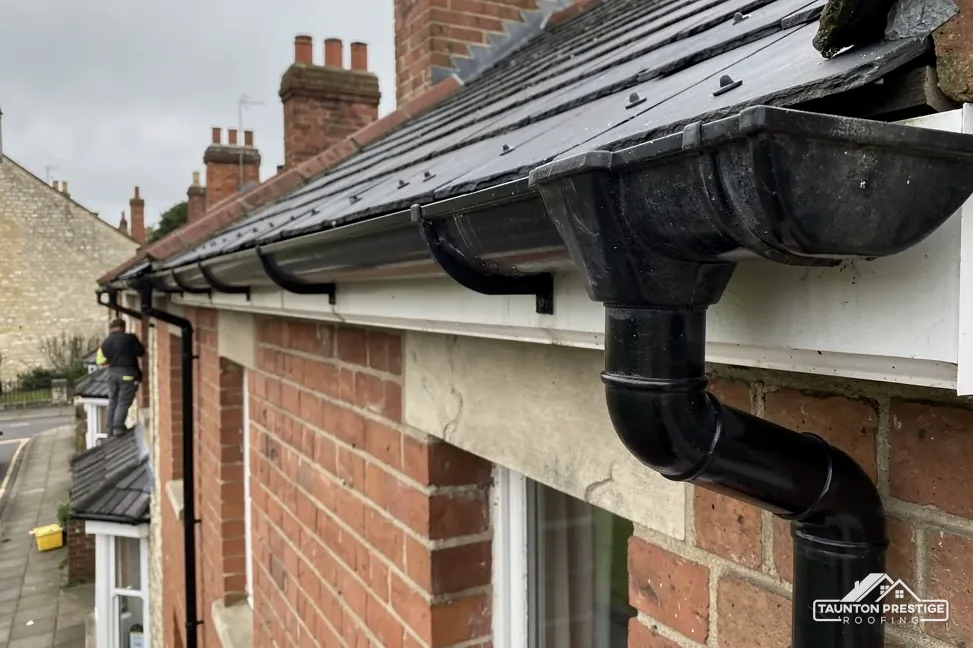
The fascia is the upright board running along the roof's lowest edge, with the gutter hung from its face. The soffit is the level underside panel below the eaves, spanning from the fascia back to the wall. Together with the rafter ends behind them, they form the roofline. On most houses of a certain age these boards are timber, painted every few years.
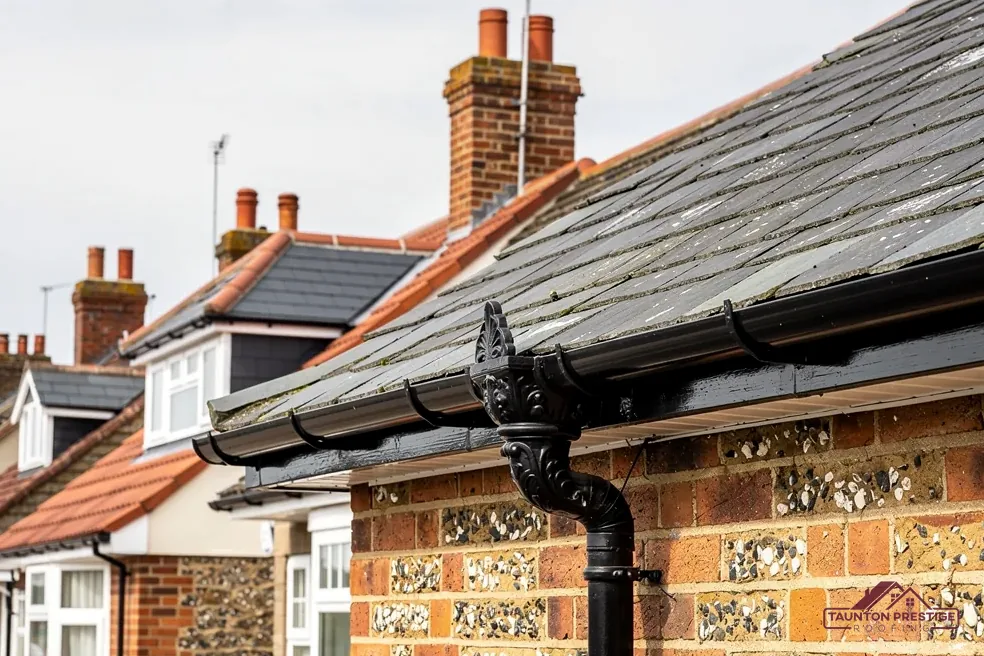
Capping, also called overcladding, covers those boards with thin plastic profiles. A cap is cut to fit over the fascia and clipped or pinned in place, with a matching cover for the soffit. Joints are trimmed and the gutters go back on, or are replaced. A tidy fitter cuts the cap to follow the roof edge exactly, so it sits snug under the tiles and tight against the wall. The original timber remains in position, supporting the plastic and the gutter.
That last point is the one to hold on to. A capped roofline is only as strong as the board under it. The plastic is thin, and it relies on the old timber for strength, so a rotten board cannot hold a gutter full of water however good the cap looks. Replacement removes the old boards and fits new ones, which resets that foundation.
Is capping fascias cheaper than replacing them?
Usually, on the day. For capping, MyJobQuote's average is around £800, a typical UK figure for fascias and soffits together (MyJobQuote, Sep 2026). The saving comes from skipping the removal and disposal of the old boards, and from quicker fitting. What it does not include is the price of a failure two or three winters later, so "cheaper" only holds when the old timber is sound.
When capping is a fair choice
Capping suits boards that are structurally sound but tired. The paint has failed, the surface is chalky or peeling, and the owner is tired of repainting from a ladder every few years. In that case a plastic cover can make sense, and a good fitter will do it neatly.
These are the signs that favour capping:
- Boards are straight along their whole length, with no dips or bows.
- Gutters run level and do not sag between brackets.
- Timber ends are firm when pressed with a screwdriver tip.
- No staining, fungus or black patches show on the soffit.
- The roof above is in good order, with no leaks running down onto the boards.
What does the price depend on?
Even for a simple cap, the total moves with a few practical things. The length of eaves and the number of elevations set the amount of material. Height sets the access, whether ladders, a tower or scaffold. The gutters either come off for the work and go back, or are replaced at the same time, which is worth considering since replacing guttering runs around £1,000 to £1,600 as a typical UK range (MyJobQuote, Oct 2026). Fascia details such as corners, bargeboards, soffit vents and dormers add time.
It is also worth thinking about how the cap will last. A uPVC retailer, which has an interest in the product, puts uPVC fascia boards at between 20 and 40 years, a range that applies to boards fitted correctly onto sound backing. Read any such figure as an expected span and never as a pledge, and remember that it describes the plastic, not the timber behind it.
When capping hides rot
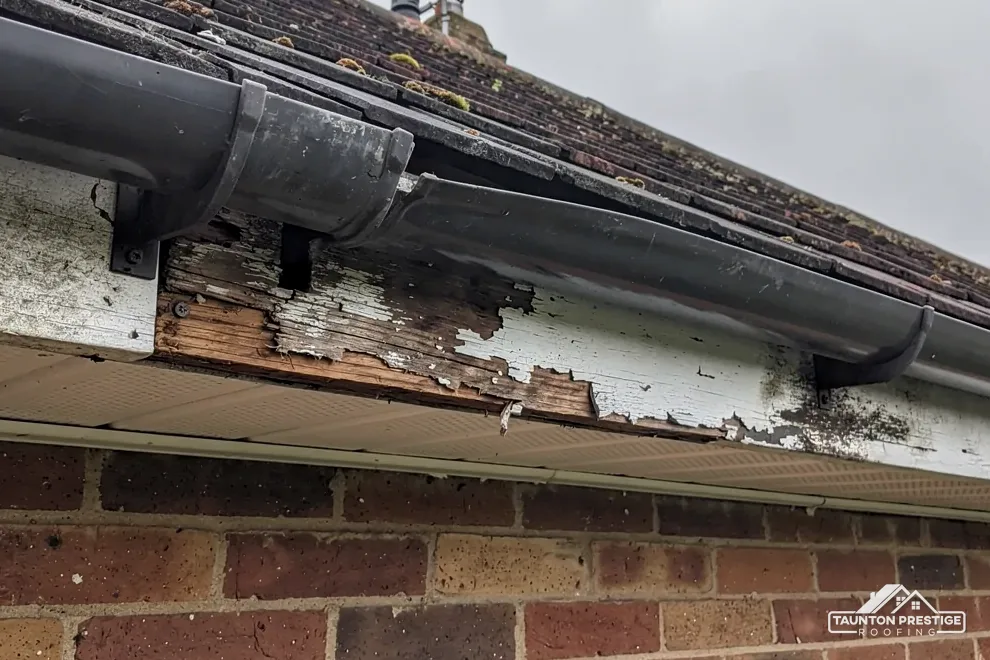
The worry with capping is not the plastic. It is everything that happens out of sight. Fascia timber rots from the inside, often starting at the joints, at the lower edge where water sits, or behind a leaking gutter joint. By the time the surface looks bad, the damage behind it may already be extensive.
What does rot look like from the ground?
- Paint blistering in lines along the board.
- A gutter that droops between brackets, or leaves a gap at the fascia.
- Black or green growth that keeps coming back in one patch.
- Sections of board that look wavy or bowed.
- Birds or insects getting in at the corners.
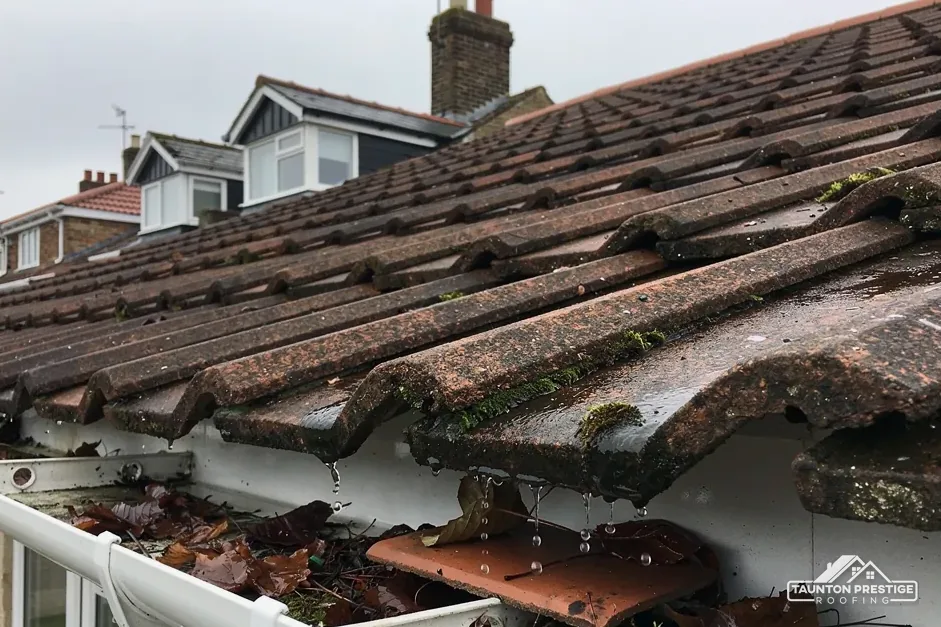
None of these proves the whole board is bad, but any of them should stop a quick capping job until someone presses the timber and checks the ends. The soft spot is usually where the rain gets in, often a failed gutter joint or an eaves felt that has slipped below the fascia. If the cause is not fixed, the cap simply covers the symptom.
Rot at the rafter ends is the costly version. The ends of the roof timbers rest on the wall plate right behind the fascia, and if they are wet, they weaken. A capped fascia that is fixed to a rafter end with no strength left will eventually pull away. Our page on replacing fascias without gutters describes what a full replacement involves and how the gutters are handled.
Trapped moisture also invites algae, mould and insects, which take hold in the damp cavity between old and new. A roofer who presses on the boards before quoting is doing the right thing.
Checks a roofer should make before capping
A proper survey takes in more than the front of the board. Before any plastic goes on, these checks should be made, and they are worth asking about.
- Press the timber along its whole length with a bradawl or screwdriver, particularly at joints and corners.
- Look at the rafter ends, by lifting a section of soffit if need be.
- Check the gutter fixings and how the eaves felt, the waterproof layer at the roof edge, runs into the gutter.
- Make sure the soffit can still ventilate the roof space, usually through vents set into the board.
- Find out whether the soffit board might contain asbestos.
Why does the soffit age matter?
In a house from before 2000, an asbestos insulating board soffit is possible, and HSE says it is hard to tell by eye. Fixing a cap means pinning and drilling at the edge of that board, which is exactly what should not happen without identification. Our guide to asbestos soffits explains how to treat them. This is not a reason to avoid capping altogether, but it is a reason for the check to come first.
What about bats and nesting birds?
Bats sometimes roost behind fascia boards, and GOV.UK includes roof repairs and replacements among the activities that can disturb them. Bats and their roosts are protected by law. A roofer should look for droppings, staining and gaps before covering anything, and if there are signs, work stops until you have taken advice from someone who knows the rules on roosts. Covering the gap first and asking afterwards is the wrong order.
Replacing the boards instead
Replacement means removing the old fascia and soffit boards, checking and repairing the timbers behind them, and fitting new boards. Those can be uPVC, timber or aluminium, and each suits different houses. On a rotten roofline it is the repair that actually fixes the problem, rather than hiding it.
Is it worth replacing the boards when the gutters go?
Often. The access that lets a fitter remove the gutters also lets them swap the boards, and the fascia has to come off to renew the gutters properly. Doing both together avoids setting up the same ladders or scaffold twice. If you are re-roofing, the eaves are open anyway, so the roofline is a natural job to add. A new roof and a new roofline share the same scaffold.
Replacement costs more than capping on the day, because there is timber to remove and dispose of and sound backing to prepare. What the total comes to turns on the length of eaves, the height, the type of board, the condition of the rafter ends and whether the gutters change too.
A cap over sound timber and a new board over damaged timber are both legitimate jobs. The mistake is a cap over damaged timber.
Replacing also lets you correct earlier mistakes. Boards that were fitted too low can be reset so the gutter drains properly, felts can be tucked into the gutter correctly, and ventilation can be restored. Capping tends to preserve whatever was there before. Which board suits depends on the age and style of the house and, for older homes, on what the council will accept.
Listed homes, conservation areas and how to decide
On a listed building, changing timber fascias for plastic may need listed building consent, since works altering its special character need it under the Planning (Listed Buildings and Conservation Areas) Act 1990 s7. In a conservation area, the rules on materials can be stricter, and some places have an Article 4 direction, which removes specified permitted development rights. Somerset Council lists directions for Taunton Staplegrove Road and several nearby places, but what each covers is a question for the council's planning team. Check with them before you change timber boards for plastic ones in any of those settings. Our page on fascia planning permission goes into the question.
How do you decide between capping and replacing?
Three questions settle most cases.
- Is the timber sound along its whole length, including the ends?
- Is the cause of any past damp understood and fixed, such as a leaking gutter or a slipped felt?
- Are the soffit and the ventilation in order, and has the board been identified if the house is old?
Three yeses make capping a sensible saving. A single no points to replacement, or at least to repairs first. A survey answers all three, and it should cover the rafter ends, not just the face of the board.
We look at the roofline from a ladder or tower, press the timber, and show you pictures of what is actually on your own house. If capping suits, you will hear that and see the price. If the boards need replacing, you see why. Either way you receive one written price, so the choice is made on evidence rather than on a headline figure.
Capping, answered plainly
Can capping be fitted over rotten fascia boards?
It can physically, but it should not be. The plastic is thin and relies on the old timber for strength, so a rotten board cannot carry a full gutter. The rot also carries on behind the cap, unseen. Soft timber needs cutting out and replacing before any cover goes on.
Will capping affect the ventilation of my loft?
It can, if vents in the soffit are blocked or covered by plain plastic. Roof spaces need airflow to stay dry, so a good fitter keeps the vents or fits matching vented soffit boards. Ask what the plan is for ventilation before the work, not afterwards.
Do capped fascias need any upkeep?
They need much less than painted timber, but not none. Wipe off dirt and algae gently, and keep the gutters clear so overflowing water does not run down the face and behind the cap. An occasional look from the ground for gaps or lifted edges catches problems early.
More on this subject: Gutters, soffits and fascias in Taunton