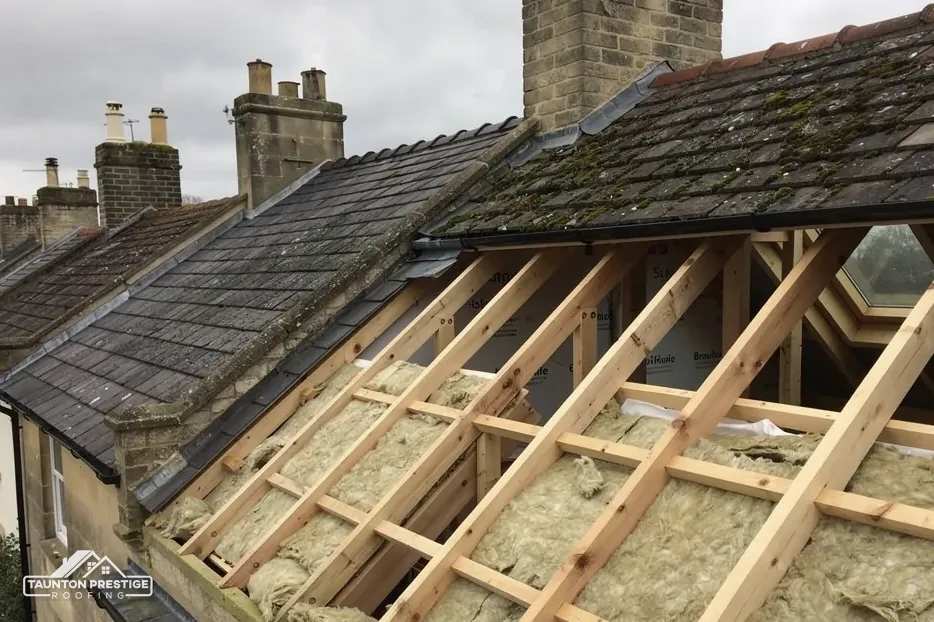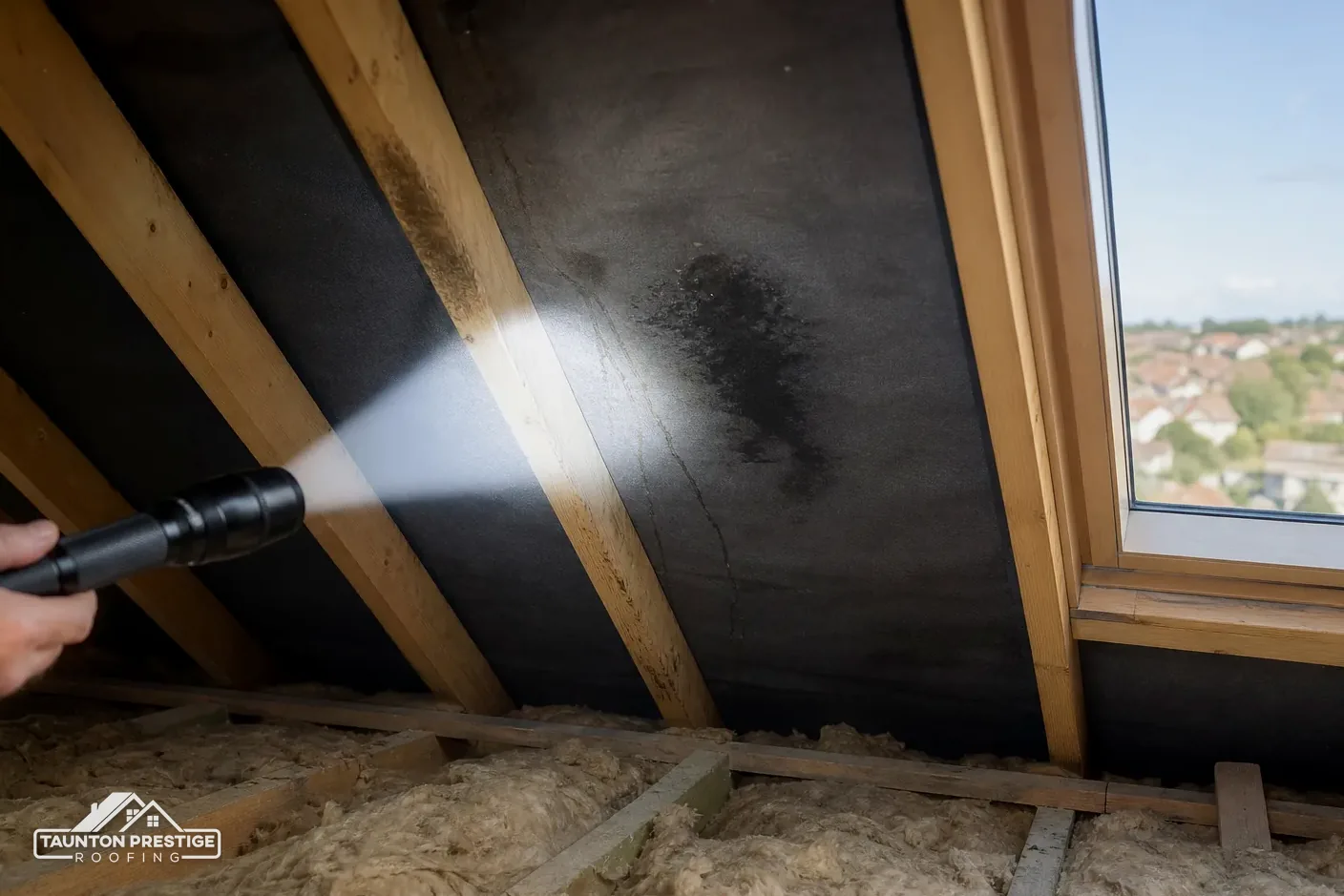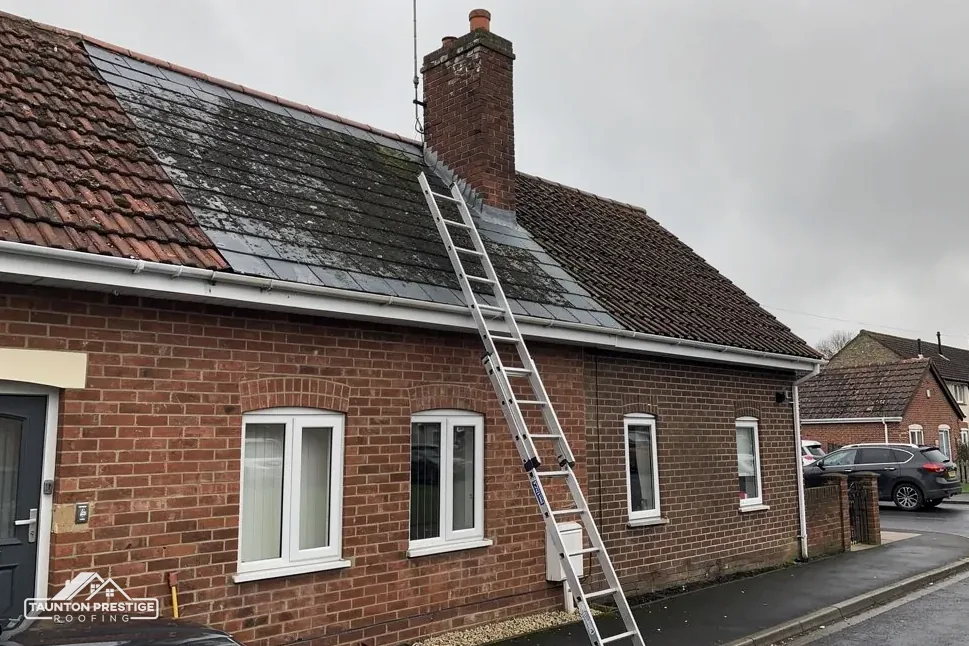
A roof survey can be done from the air, from a ladder or from a platform right at the eaves, and each method sees a different roof. A drone gives a quick, wide picture with no one on the slope. A ladder gets a person close to the covering and the gutters. A scaffold gives a safe working platform, so someone can lift, tap, test and photograph in detail.
None of the three is the answer to everything, and a firm that pushes one method for every house is selling its equipment, not reading your roof. This guide sets out what each method shows and misses, what the typical drone figure is, how pitch, height and the covering change the choice, and how to ask for a survey that answers your question. It belongs with our wider roof inspection advice for Taunton and Somerset, and it connects to our notes on roof inspection costs.
What a drone survey shows
A drone flies over the roof and takes high-resolution photographs and video. The strengths are obvious. Nobody has to climb onto a steep, high or fragile roof, and the whole roof can be seen at once, including areas you cannot make out from the ground: the back slope, the far side of a chimney, a valley between two ridges.
On a tall house, a three-storey terrace or a roof with a dangerous pitch, it is a safe way to get a first look. The pictures can be sharp enough to show slipped slates, missing tiles, moss, damaged ridge tiles, cracked chimney pots, flashing that has lifted and gutters packed with debris. You can zoom in, share the pictures, and compare them with earlier ones.
Can a drone find a leak?
It can find the likely cause on the outside, such as a slipped slate above a damp patch. It cannot confirm that a particular defect is the one letting water in, because water follows paths that stay hidden beneath the covering. Treat a drone report as strong evidence of what the surface looks like and a starting point for the next step.
A drone also needs the right conditions, and a flight is not something to rush on a gusty afternoon. Strong wind, rain or low sun that throws hard shadows will limit the images, and some sites are awkward for take-off and landing. Ask the operator to confirm what they could and could not see.
What a drone cannot see
A camera records the surface. It cannot lift a slate, press a batten, feel whether a ridge tile is bedded or loose, or look beneath a lead flashing to see what holds it. Many of the faults that matter most sit below the visible layer: nails that have rusted through, underlay that has torn, timbers that have softened and mortar that has crumbled behind the face.
Photographs also flatten detail. A hairline crack in a slate or a flashing that has lifted slightly can look sound from a few metres up. Moss and lichen hide defects in the same way they do from the ground. And a drone can say nothing about the loft, which is where leaks, condensation and timber rot show up first.
Does a drone survey replace a visit?
Not when the question is whether the roof is sound, how long it has left, or what a repair involves. A drone survey narrows the question. A hands-on check, with a ladder or a scaffold, answers it. Our guide to checking your roof from the loft covers what the inside tells you.
Thermal imaging, which reads surface temperature differences, is a separate tool with its own limits, and it answers questions about heat loss and trapped moisture more than it answers questions about slipped slates. See our page on thermal imaging a roof for what it can and cannot show.
What a ladder inspection gives you
A ladder gets a person close to the eaves, the lower courses, the gutters, the fascias and the edges of a single-storey roof. For a bungalow, a garage, an extension or the lower slopes of a house, it is quick and gives a close view without much setup.
At arm's length a roofer can see the condition of the gutters and brackets, the state of the fascia and soffit, the lower courses of slate or tile, and the flashing along a rear extension. They can check whether tiles are firm, photograph in close-up and look under overhanging edges.
How far can you trust a ladder check?
It stops where the ladder stops. On a house of two or more storeys, the upper slopes, the ridge and the chimney are out of reach, and a roofer cannot safely step from a ladder onto the roof. The roof ladder, a hooked ladder laid on the slope, adds reach for a trained roofer, but it is not a work platform, and it is not suitable on every covering. Fragile roofs, such as old asbestos cement sheets, must never be walked on.
A ladder also leaves the person at the eaves with a limited view of the back and far slopes. The sensible use for a ladder survey is a quick look at easy-to-reach parts of a smaller roof, or a pre-visit check to decide what else is needed. Ladders also come with their own rules: they need firm, level ground, a tied or footed top and a second person where the ground is soft, and no one should be leaning off one to reach a tile. Our page on inspecting your own roof sets out what is safe for an owner to try from the ground.
When a scaffold is the right answer
A scaffold gives a proper working platform and edge protection along the eaves, with room to carry tools and materials. It is the right choice when the question is detailed: finding out why a roof is leaking, preparing a repair, assessing a chimney, or surveying a roof before a re-roof.
From a platform a roofer can lift slates, test fixings, look under flashings, check the ridge and the bedding, and photograph defects at close range. It is also the right choice for a roof that is high, steep or in poor shape, where the safest way to see it properly is from a platform. The platform also lets a second person hand up tools, or hold a hatch cover, without anyone leaning out from a ladder, and that matters on a tall house.
Is scaffolding worth it just for a survey?
Often not, because it is costly for a look. For scale, MyJobQuote puts a front-elevation scaffold at £550 to £750 for a week-long hire (MyJobQuote, Oct 2026), and HomeBuilding puts a three-bed semi at approximately £1,000 once permits are counted (HomeBuilding, Sep 2025). Both describe scaffolding as a whole, and neither is a quote for your house. Where the scaffold is going up anyway for repairs or a re-roof, for instance on a Victorian terrace with tall, narrow frontages, the survey comes with it at little extra.
Any scaffold that obstructs the highway falls under section 169 of the Highways Act 1980, which means the highway authority has to give its consent. For Taunton addresses that is Somerset Council, whose published rules reserve scaffold permits for accredited contractors, so the application comes from the firm named on the job. That adds notice and a fee, which is worth knowing before you plan.
Typical drone figure and what sets the price
MyJobQuote gives an average roof survey cost of around £300, with drone surveys at £200 to £350 (MyJobQuote, Oct 2026). Both come from a national cost guide and describe the UK in general, so neither is our price. A drone survey costs less than a scaffold because it needs no platform, and more than a quick visual check from the ground. Weigh it against the cost of the alternative, which for a tall house is often a scaffold you would otherwise pay for twice: once for the survey and again for the repair.
What moves the price: the size and complexity of the roof, the number of buildings, the access and the site, the weather window, and what you get at the end. A set of raw images costs less than a written report that marks defects, explains them and recommends repairs.
What should a drone survey include?
Ask for photographs of every slope, the ridge, the chimney, the valleys and the gutters, a clear note of what could not be seen, and an explanation of what the pictures mean in plain words. If the images may end up with a buyer, an insurer or a neighbour in a dispute, ask how they are dated and stored. Our page on roof inspection reports shows what a useful write-up contains.
The cost of a survey also depends on whether it stands alone. Cheaper is not better if it leaves you without an answer. Our page on roof inspection cost explains what each level buys.
Choosing the method for your roof
Match the method to the question. If you want a quick overview of a high, steep or awkward roof after a storm, a drone is a sensible first step. If you want a close look at the gutters and lower courses of a low roof, a ladder will do. If you need to know why a roof leaks, or whether it is sound enough to keep, you need hands on it, and that means a platform.
Combining them is common sense, and it often costs little more than one method alone, because the same visit can cover the air, the eaves and the loft. A drone flight can show where to look, and a ladder or scaffold then lets someone check those spots. The loft adds the inside view. Together they give a picture that no single method can.
Which should I ask for?
Ask the firm which method it proposes, why that one, and what it expects to be unable to see. A firm that names its own blind spots is more believable than one promising to see everything. A good answer ties the choice to your roof: its height, pitch, covering and the question you want answered. A poor answer is the same method for every house.
Whatever method is used, you should get pictures of your own roof, plus a short written explanation of what each one shows. Because the best method varies from house to house, we look at the roof first, pick the method that answers your question, and send photos with one written price for whatever work follows.
Roof survey method questions
Is a drone survey as good as going up on the roof?
For the surface, a drone is good, especially on high or steep roofs. It cannot lift slates, test fixings, feel soft timber or look under flashings. Treat it as strong evidence of what the outside looks like, then use a ladder, scaffold or loft check to confirm the cause.
How much does a drone roof survey cost?
MyJobQuote gives drone surveys as £200 to £350, against around £300 as the average roof survey (MyJobQuote, Oct 2026). These are typical UK figures. What moves the price is roof size, access, the weather on the day and whether you receive raw images or a written report that marks each defect.
Does a roof inspection ever need scaffold?
When the question is detailed, such as tracing a leak, checking a chimney or planning a re-roof, or when the roof is too high or steep for a ladder. Where it stands on the highway, consent from the highway authority comes first, so build in time for that.
More on this subject: Roof inspections in Taunton