You have found a house in Taunton, the offer is in, and the surveyor's report comes back with a line about the roof. Perhaps it says the covering is close to worn out, or that part of it could not be seen, or that a specialist should take a look. Now you have to decide whether to spend more money on a house you do not own yet.
Often it is worth it, because the roof is one of the few parts of a house where a single finding can move the price by thousands. A survey is a broad look at the whole building, compiled by one person who also covers walls, damp, drains, wiring and floors in the same visit. A roofer looks at one thing for much longer, from nearer, and can say what a repair would involve. This post sets out what each kind of visit tells you, what a roof inspection typically costs on published figures, how to handle two awkward finds, spray foam and asbestos, and what to do with the answer.
What a buyer's survey says about the roof
A building survey or homebuyer report looks at the entire property in a day. The surveyor will normally view the roof from the ground, often with binoculars, and from inside the loft if there is a hatch and it is safe to enter. That is a sensible, proportionate way to look at a roof, but it has limits you should know about before you read the report.
What can a ground-level look miss?
The back slope may be hidden behind a neighbouring building. A chimney's flashing, the lead dressed around its base, is hard to read from fifteen metres away. Valleys, the folds where two slopes meet, can look sound from below and still hold split lead or a blocked channel. Loft insulation may hide the top of a wall plate or the lower ends of the rafters, and boarded areas cannot be checked at all.
Reports often use cautious wording as a result. A line saying that the roof "appears" serviceable, or that further investigation is advised, is a polite way of saying that the surveyor could not see enough to say more. It is not a verdict that the roof is fine, and it is not a verdict that it is failing. It is a pointer.
Does the survey tell you how long the roof will last?
Not reliably. Published life spans are ranges for a covering in good order: Marley, for instance, expects concrete tiles to last around 60 years, and adds that this figure promises nothing. Slate, clay and concrete each age differently, and the flashings, battens and underlay beneath them age on their own timetable. Our guide to roof inspection versus building survey goes through the difference in more detail.
What a roofer's close inspection adds
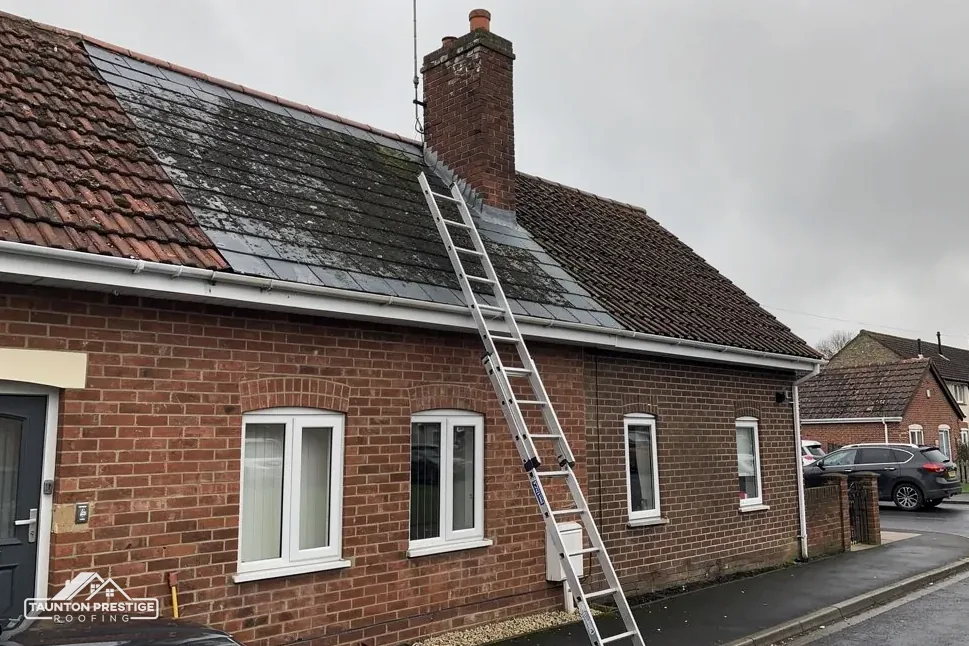
A roofer's inspection is narrow on purpose. It starts at the ridge and finishes at the gutter, and it includes parts a general surveyor cannot reach. We climb onto the roof when the pitch and material allow, or use a drone when the pitch, height or fragile material make that the better choice, and we go through the loft with a torch.
What do we actually check?
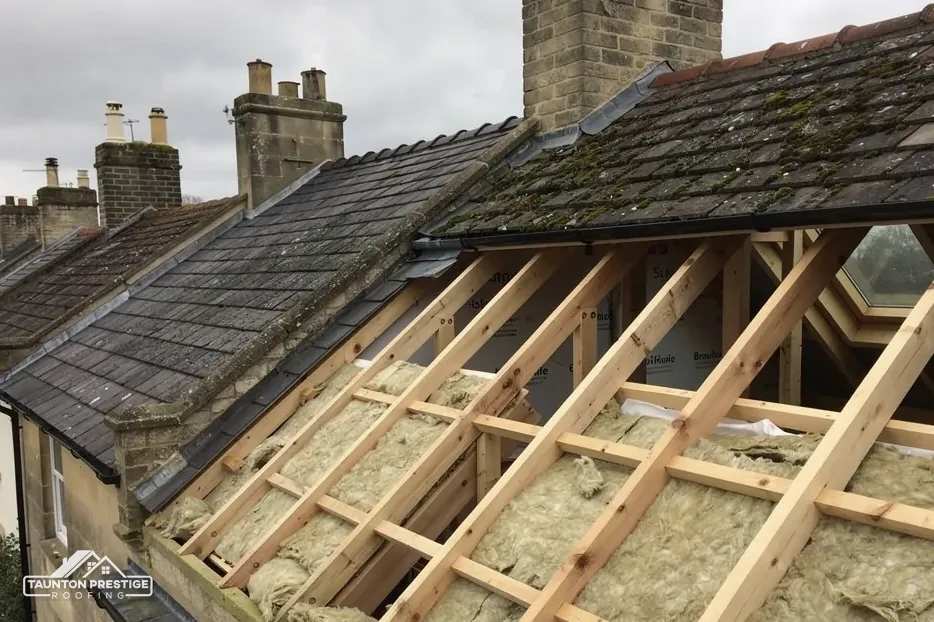
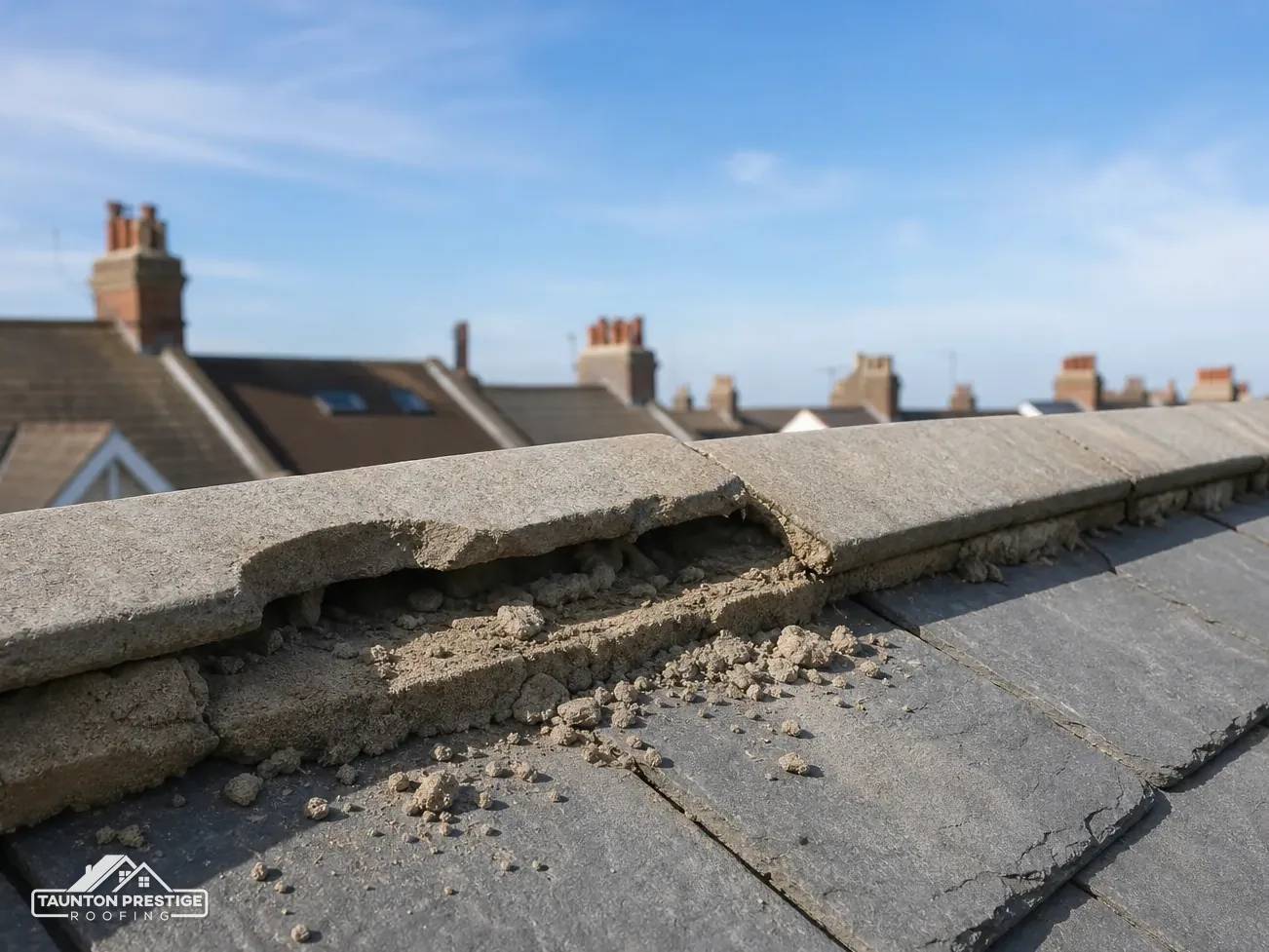
The list runs: tiles and slates that have slipped, cracked or gone; the state of the nails and fixings; mortar at the ridge, hips and verges; flashings and soakers, the thin lead sections slipped beneath each course where the roof meets a wall; valleys; flaunching, the mortar bed that sits around the chimney pots; the underlay and battens from inside; and the gutters and fascias at the edge. In the loft we look for tide marks, daylight where there should be none, and rot in the timbers.
The result is a set of photographs of the buyer's prospective roof, with a plain note of what needs doing now, what can wait, and what to keep an eye on. Our guide to the roof inspections we offer covers how that report is put together.
Can a roofer inspect a house I do not own yet?
Usually yes, with the seller's agreement, arranged through the estate agent. Allow time for that conversation, since a vendor may not welcome a stranger on the roof. Sometimes a drone is the easier route, because it needs no access beyond the garden. Ask the agent early, and tell us the address, the age of the house and the line in the survey that worried you.
Typical roof survey figures, as published
People worry about paying for an inspection on a property they may not buy. It helps to see the likely outlay against the possible finding.
What does a roof survey usually cost?
MyJobQuote's page on roof surveys gives an average of around £300, and drone surveys at £200 to £350 (Oct 2026). Those are typical UK ranges, not prices we charge. What moves a figure is the roof's size and steepness, how hard it is to reach, whether a drone or a scaffold tower is needed, and how much written detail you want. We fix the price in writing once we know the property, and give it as one total.
For a roof survey MyJobQuote (Oct 2026) gives a typical UK range, averaging around £300, and a drone survey at £200 to £350. Access and roof size move the figure.
How does that compare with what a defect costs?
MyJobQuote's cost pages (Oct 2026) give typical UK ranges for repairs you might meet: £225 to £550 for ridge tile replacement, and around £540 for a full roof valley replacement (Sep 2026). A full re-tile of an 80m² roof is £3,000 to £8,000 on the same site. HomeBuilding (Sep 2025) puts a new plain concrete tile roof on a three-bedroom semi, with scaffolding and insulation, at £10,000 to £15,000, while MyJobQuote's own figure for a new roof averages around £5,250. The two sources differ widely, so treat both as markers, not forecasts.
The comparison is the point. A few hundred pounds to learn that a roof needs a few ridge tiles is cheap. The same sum to learn that a roof needs re-covering gives you something to negotiate with.
Spray foam under the slates
Some houses around Taunton have had foam insulation sprayed against the back of the tiles or slates. It looks tidy from the loft hatch and it hides what a roofer would normally want to read: the rafters, the battens and the back of the tiles. Seeing it should not put you off, but it should change how you plan the purchase.
Why does spray foam matter to a buyer?
RICS tells buyers, in its consumer guide on spray foam, to raise it with their mortgage provider, asking whether foam on the roof fits their lending policy. Raise that with your own lender before you exchange contracts, not after. The Energy Saving Trust, in its guide to roof and loft insulation, advises against putting foam over a roof that is leaking.
On the roof side, the problem is visibility. With foam stuck to the timbers, damp, rot and nail sickness cannot be seen from inside, and a surveyor may only be able to say that. A roofer can look from outside and judge the covering, but cannot see what is happening in the timbers behind the foam.
What can I do about it?
Request any paperwork on the installation from the seller, and pass the details to your surveyor and conveyancer. A guarantee for the foam, or a record of who fitted it and when, is worth having in the file. Read our answer on roof inspection with spray foam before you decide how far to go. Whether the foam is a reason to walk away, to renegotiate or to budget for removal depends on what is found, and on the answer from your lender. We do not guess at that without seeing the roof.
Asbestos in older roofs and roof edges
For a house built or refurbished before the year 2000, HSE's starting point is that asbestos may well be in it. That does not mean every older Taunton house is a hazard, but it does mean the question should be asked of any property of that age, particularly one with a garage, an extension or an outbuilding.
Where does asbestos hide on a roof?
Asbestos cement was used for roof sheeting and for rainwater goods. HSE's A14 guidance treats an asbestos cement roof as fragile in every case, so nobody walks across one. Asbestos insulating board (AIB) can be the material of external soffits, the boards that close off the underside of the eaves. HSE notes that AIB items are hard to distinguish from non-asbestos equivalents by eye, which is why a visual check is not a test.
Can a roofer tell if it is asbestos?
A roofer can say what looks suspect, and can point out the places where it is likely to be. We do not identify asbestos by looking. The answer is a sample taken and tested, or a survey by a specialist. MyJobQuote gives a typical UK asbestos survey price of £325, and asbestos roof removal averaging around £2,750 (Sep 2026). Those are guides, and the cost depends on the roof's area and condition.
If you are buying such a property, ask for any existing asbestos register, and do not let anyone disturb the material before it is identified. Lifting sheets of asbestos cement off whole and with care falls into non-licensed work under HSE's rules, but smashing them up substantially makes the job notifiable, so the method is planned first. AIB soffit removal is frequently licensed, which is checked before any date is set. Waste travels with a consignment note, never in a skip. Our answer on whether a roofer can check for asbestos explains what we can and cannot do on the day.
Turning findings into a decision
Once the inspection is done, you hold three things: a set of photographs, a written list in plain English, and a rough sense of scale. How you use them depends on what was found.
Should I ask the seller to drop the price?
If the roof needs repair or covering now, that is a fair matter for negotiation, and your solicitor and the agent can pass the findings on. Photographs make the case far better than a general remark. Where the finding is minor, you may prefer to take the work on after completion and book it yourself. If the work is substantial, ask us for a written price, which arrives once the survey is done, as a single total. Do not exchange on the strength of a verbal guess about the roof.
What if the house is old or protected?
Find out early if the house is a listed building or sits in a conservation area, because either changes the consent route for a different covering. Ask Somerset Council's planning team, or Exmoor National Park Authority if the address is inside the Park. Listing does not remove Class B and C permitted development, yet a listed house needs listed building consent for any work that would change its character. For a house in Taunton, your solicitor's searches should show the status, and our guide to the roof inspection versus building survey helps you choose what to commission.
If you are already in the middle of a purchase, tell us the address, the seller's agent and the wording from your surveyor's report, and we will arrange an inspection that fits the timetable you have.
Questions from buyers about the roof
Is a roof inspection still worth having if my survey rated the roof as fine?
It can be. A survey rating reflects what could be seen from ground level and the loft hatch in a single visit. A roofer reaches the slopes, flashings and chimney, and photographs them. If the survey was thin on the roof and the house is older, an inspection adds evidence at a small cost.
Will a seller let a roofer onto the roof before exchange?
Many will, if the request comes through the agent and the buyer is serious. A drone survey is easier to agree to, since it needs no ladder and no entry to the house. Ask early, say how long it will take, and offer to share the photographs.
Do I need a roof inspection if the house has a new roof?
Ask for the paperwork before you rely on it: who laid it, when, and whether a completion certificate or other record exists. A newer roof can still have poorly dressed flashings or gaps at the verge. A quick inspection confirms that the work matches the documents.
More on this subject: Roof inspections in Taunton