A gale blows through, and the next morning there are slates on the lawn. It feels like an obvious case for the insurer. Sometimes it is. Other times the slates came away because the nails holding them had rusted for years and the wind simply finished the job, and that is a different thing in the eyes of most policies.
The difference matters, because the first is often treated as sudden damage and the second as wear and tear. This guide explains why nail fatigue, the slow corrosion of the fixings, is usually placed on the wear side, how the Financial Ombudsman Service describes a storm, how to tell the two apart from the ground and the loft, and what evidence is worth gathering either way. It gives no promise about any claim, because the insurer decides under your policy wording. What a roofer can do is look at the roof and record what is there. This guide forms part of our slate roofing advice.
Why insurers treat nail fatigue as wear
Most household policies cover some events and leave others out, and the wording differs from one policy to the next, so the first step is to read yours. A common pattern is that cover applies to damage from an identifiable event, such as a storm, and does not extend to the gradual decline of materials with age. Rusting nails belong in the second group, and a policy may say so in terms such as gradual deterioration, corrosion or lack of maintenance. Corrosion builds over years in damp air, so no single day caused it, and an insurer is likely to say the roof was wearing out before the weather arrived.
Slates that slip across a whole slope because their nails have failed look, to a claims handler, like a roof at the end of one stage of its life. A single slate cracked by a flying branch looks like an event. The roof tells the story, and so do the photographs.
Does that mean a nail-fatigue claim never succeeds?
No one can say that in advance, and no roofer can promise it either way. What can be said is that outcomes are mixed even for genuine storm damage. Which? reported that only 32% of storm-related claims made in 2024 resulted in a payout. That figure should not alarm anyone, but it is a reason to document everything and to read the policy before assuming the roof is covered.
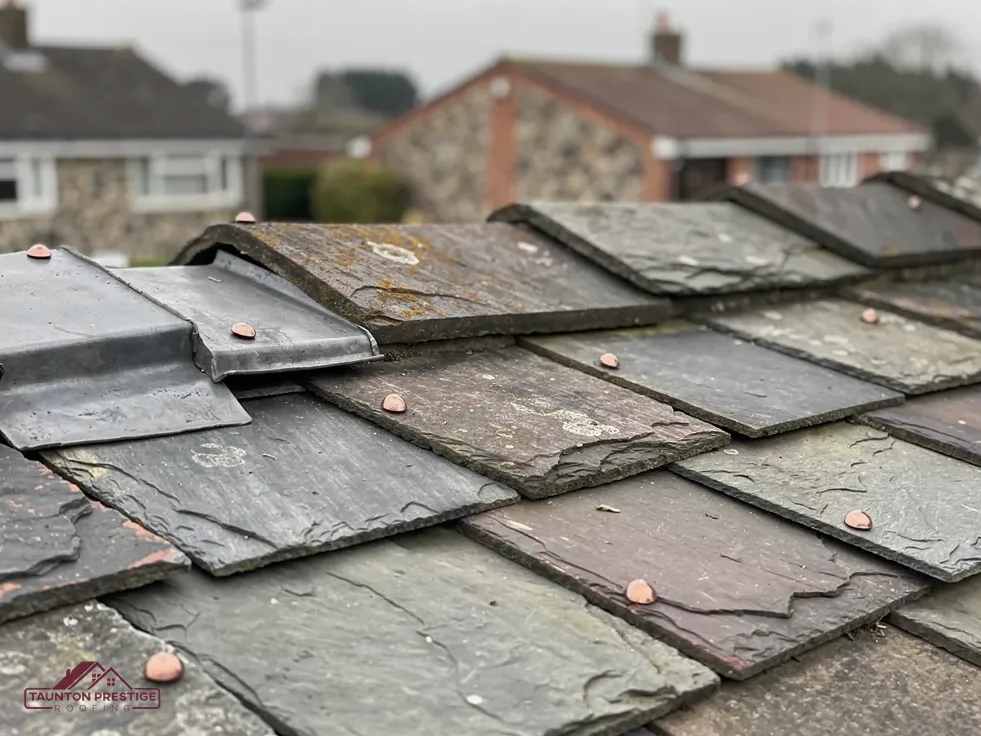
Our answer on nail sickness on slate shows what the corrosion looks like when a slate is lifted, which is the kind of evidence a roofer can photograph for you.
How the Financial Ombudsman describes a storm
The word storm is not defined by the weather forecast alone. The Financial Ombudsman Service, which settles disputes between consumers and financial firms, explains how it approaches the term: it treats a storm as severe wind, typically with rain, hail or snow arriving alongside it. A damp week with a stiff breeze is not that, and nor is the slow work of ordinary weather on an old roof.
That wording is a useful yardstick. If slates came off during a day of severe wind with rain, hail or snow behind it, and the damage is concentrated where the wind would strike, the event fits the description. If the slates slipped on a calm day, or the damage is spread evenly across a roof that has been shedding slates for seasons, the description is a poorer fit.
Does a storm on the news count as a storm for my policy?
Not automatically. The question the insurer asks is whether the damage to your roof was caused by an event that meets the policy definition, and the wording of the policy itself comes first. The Ombudsman's description tells you how it looks at a dispute; it is not a rule that binds your insurer in the first instance.
It helps to note the date and the weather when the damage appeared, and what you saw and heard. Even a short note made that day is more useful than a memory a few weeks later, and a photograph of the sky or the garden on the day can fix the weather in the record. If the slates went in a recorded gale, say so plainly. If you only noticed them later, say that too.
Telling storm damage from nail fatigue on the roof
The roof itself holds clues, and a careful look from outside and from the loft can pick them up. None of these signs is conclusive on its own, and none replaces the insurer's own assessment, but together they give a picture.
Signs that point towards sudden damage:
- Missing or broken slates concentrated on one windward slope.
- Fresh breaks, with clean edges and no weathering on the cracked face.
- A fallen branch, a displaced chimney pot or a damaged fence nearby.
- Slates and fragments scattered in a line downwind of the damage.
Signs that point towards ageing nails:
- Slipped slates spread over a whole slope rather than one patch.
- Intact slates lying on the ground or caught in the gutter.
- Rust-stained or thinned nail heads where a slate has dropped.
- Further slipping soon after a repair, in the slates beside it.
Can a loft check help settle the question?
It can. From the loft, look for daylight at the slates that moved, stains on battens, and rusty nail points protruding through the timber. Take care to walk only on the joists. Our guide to frost, wind and slate in winter explains how weather exposes weak fixings, which is often the case in both categories. Many roofs show both causes at once: nails that were already tired, and a gale that finished the job. That is why the photographs matter more than any single sign, and why an honest description of both is better than forcing the roof into one box.
The evidence worth gathering
The Institution of Structural Engineers (IStructE) calls photographs vital when you make a claim, because they show the damage to anyone who was not there. That applies to slate roofs as much as to anything else, and a good set of pictures does more than a long letter.
- Wide shots of the whole house and each affected slope, taken from the ground or a safe spot.
- Close pictures of damaged slates, with a coin or a tape measure for scale if you can reach them safely.
- Slates on the ground, left where they fell until they have been photographed.
- Any fallen branch, tile or debris from a neighbouring property.
- Photographs from the loft showing leaks, stains or daylight.
- The date and time of each picture, with a short written note of the weather.
Should I climb up to take pictures?
No. A ladder against wet slate is a bad idea, and a slate roof is not something to walk on. Use a zoom lens, a drone if a friend has one, or an upstairs window. If you need a close look at the damage, a roofer can take those pictures safely during a visit.
Keep every receipt for the temporary repair, any emergency call-out and any scaffold, because costs of making safe are part of the story. Hold on to any written report from a roofer, including their photographs, and ask for the date each picture was taken to be on it. A report that describes what is found, rather than guessing who is responsible, is the most useful kind to put before an insurer.
Telling the insurer and making the roof safe
The sequence matters. The sensible order is to ring the insurer, then stop further water getting in, and then keep a file of pictures, receipts and notes. Calling first lets you check what your policy requires, such as whether a particular contractor must be used or an estimate approved, and it starts the record of when you reported the damage.
A stopgap repair prevents things getting worse. Tarpaulin fixed over a bare slope, a few slates refixed over a leak, or a bucket under a drip are all reasonable, and most policies expect the owner to prevent further damage. If water is coming in, a roof that is leaking gets made safe first, and what we find is photographed as we go.
Who should write the report that goes with a claim?
A roofer can describe and photograph what is on the roof. The insurer may send its own assessor, and the decision on the claim is theirs. A roofer cannot say that a claim will succeed, and a roofer who does so is overreaching. What we can do is state what we see: which slates are broken and which are intact, what condition the nails are in, and what the battens look like.
Do not agree to permanent repairs before the insurer has had a chance to look, if your policy asks for that, but do not leave the house open to the weather either. If the two pull against each other, tell the insurer what you are doing and why.
Report the damage, make it safe, keep everything. These three steps protect you whatever the insurer later decides.
If the claim is declined or you disagree
A refusal does not close the matter. Begin by asking the insurer for its reasons in writing, naming the policy term it is applying. Compare that against the evidence you gathered and the roofer's report, and write back if you think a fact has been missed.
If you remain unhappy, the Financial Ombudsman Service is the next step. Where 8 weeks pass without a final response letter from the insurer, the Ombudsman can take the complaint. Once you do have a final response, the clock allows 6 months for you to bring it. The Ombudsman describes its service as free, so a solicitor is not needed to begin.
Where can I get advice before complaining?
The Citizens Advice consumer helpline is 0808 223 1133. It can help you understand your position before you decide how to proceed.
The roof needs attention whichever way the decision falls. If the insurer treats the damage as wear, the repair or re-slate is yours to fund, and the sensible plan is to decide between a repair and a wider renewal on the evidence. Our guide to slate roof costs gives the published figures, and the survey photographs show what the roof needs.
A written price follows the survey, in one figure, so you can weigh the cost of the work against the cost of leaving it.
Slate claim queries
Can a roofer fix my slates before the loss adjuster calls?
A stopgap to keep water out is sensible, but read the policy and phone the insurer before permanent work, since some policies ask to inspect first. Photograph everything before it is moved, keep damaged slates where you can, and file receipts for the stopgap. A written note of what was found is useful evidence.
Does my insurer have to accept my roofer's report?
No. It is evidence the insurer will consider, alongside its own assessment, but the decision rests with the insurer under the policy wording. A clear report with dated photographs is more persuasive than a general opinion, because it shows what was on the roof and where.
Can I claim for slates lost in a gale if the roof is old?
You can report it, and the insurer will decide. Age alone does not rule a claim out, but an insurer will look at whether the slates failed from the wind or from long-term wear. Photographs of fresh breaks, the wind direction and the condition of the nails all bear on that decision.
More on this subject: Slate roofing in Taunton