A slate roof can sit quietly through a dozen mild winters and then lose several slates in a single gale. The slates did not suddenly wear out. The storm simply found something that had been waiting: a nail that had rusted thin, a slate with a hairline crack, a length of lead that had lifted at one corner.
Understanding how winter works on a roof turns that from bad luck into something you can plan for. Wind gets under any slate that has slipped and pulls at its neighbours. Rain is driven sideways into laps and joints that stay dry in a calm shower. Frost works on slate that has already started to break down. And the metalwork in valleys and around chimneys has to carry far more water than it does in summer. Below we go through each of these, set out what to do when a storm is under way, and finish with an autumn check that takes an hour. It belongs to our wider slate roofing work across Taunton and Somerset.
How winter tests a slate roof
Slate is a tough material, and the covering is built to shed water by overlap rather than by sealing. Each slate sits over the joint between the two below it, and every course laps the one beneath. In normal weather that overlap sends rain straight down the slope and into the gutter, which is all the roof asks of it. In a gale, rain arrives sideways and can be pushed up and across the laps, so a roof that is dry in September can show damp patches in January.
Which parts of a slate roof fail first in winter?
Weak points fail first, and they tend to be the same few places every time. Slates held by tired nails are the first to go, because wind loads each one with a pull it was never meant to carry for long. After them come the edges beside a gable wall, where wind gets in underneath, then the ridge and hip lines, which take the wind broadside, and the metalwork round chimneys and in valleys.
Somerset slate roofs face a range of winter conditions, from sheltered terraces in town to exposed farmhouses out on the Levels or up in the hills. Rain, wind and frost behave the same way wherever the house stands: a slate roof in good order shrugs weather off, and one with a hidden fault shows it.
That is encouraging, because it means an inspection before winter catches what winter would otherwise find. A roofer reading the nails, the battens and the metalwork in September has already seen the places a gale in January would test.
Wind lift and the slipped slate
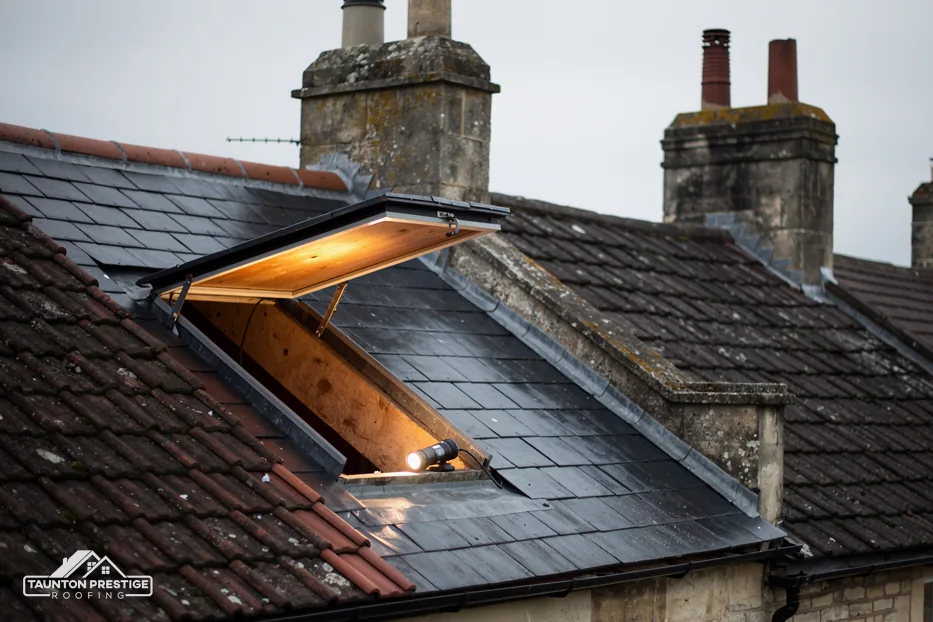
A single slipped slate is a small thing in calm weather. In wind it becomes the start of a chain. Once a slate has slid down, the tail of the slate above is no longer covered, and the gap beneath it is open to the air. Wind gets in, pushes up on the underside of the neighbours and can lift them. Every slate it lifts weakens the next one's fixings.
Why does wind pull slates off a roof?
Wind moving over a roof creates suction on the lee side and on the edges, just as it does on an aeroplane wing. A properly fixed slate resists that pull through its nails and the weight of the courses overlapping it. When the nails are rusted or the batten is soft, the slate has little to hold on with, and the suction does the rest. This is one of the reasons why we take nail sickness seriously and fix with copper nails on a re-slate.
What does the standard say about fixing?
BS 5534:2014+A2:2018 is the slating and tiling code, and the idea running through it is that a covering should be held by fixings, not left to rest on friction or bedding mortar. Marley points out that the code is not a legal duty, yet it is what a careful roofer builds to.
If you find a slipped slate after a gale, treat it as the start of a pattern, not an isolated event. Look along the same course and the courses above for others that have moved. A tingle, which is a small metal strip bent over the tail of a slate, can hold a new slate temporarily. Repair methods for slipped slates are a separate subject.
Frost, water and slate that is breaking down
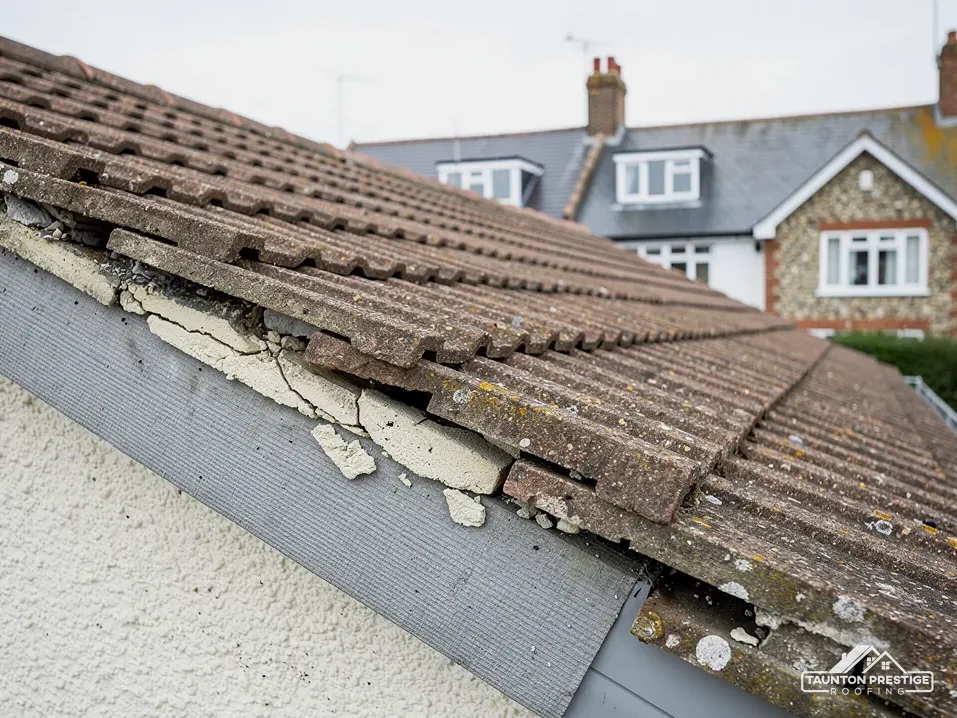
Frost matters on a slate roof for one reason: water. A sound slate takes up very little of it. A slate that has begun to flake or delaminate, meaning it is peeling apart along its natural layers, has gaps and cracks where water can sit. When temperatures fall, water in those gaps freezes and expands, and it can push the layers further apart. A slate that was merely tired in the autumn can be visibly worse by spring.
How can I tell if frost is damaging my slates?
The signs show at ground level as much as on the roof. Look for thin fragments of slate in the gutters or on the path below, and for slates whose faces have gone rough, pale or layered like pages in a book. These are the symptoms of slate that is breaking down, and our page on flaking slates goes into the causes.
Is poor-quality slate the problem?
Sometimes. Slate varies by source, and a slate that was poor quality from the start will break down sooner than a good one. If a roof carries a mix of slates from repairs made over the years, the weaker ones tend to go first. Replacing them with sound slate of a matching size stops the decline spreading.
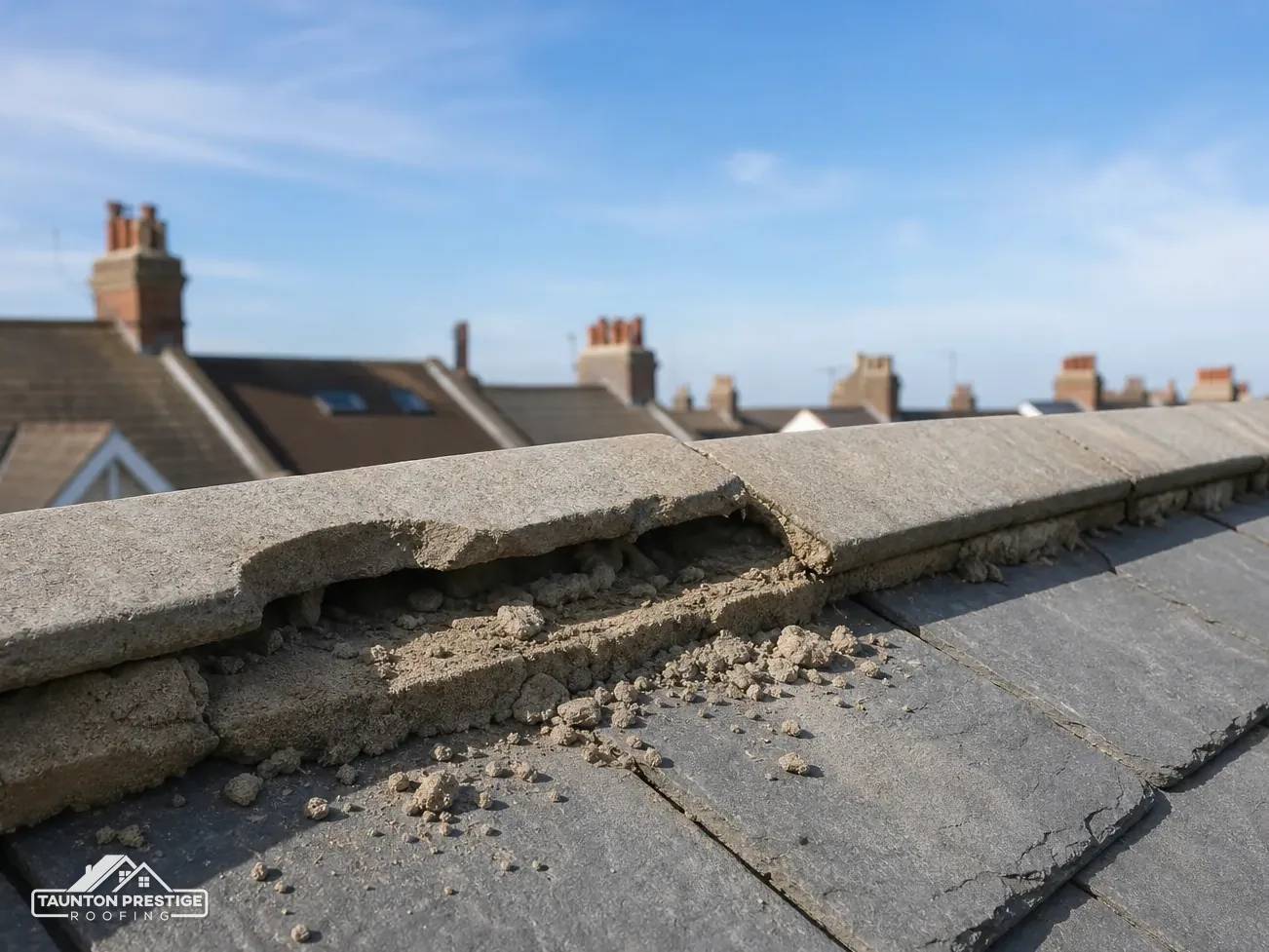
Frost also affects what sits around the slate. Water in a cracked ridge mortar joint or a failed bit of pointing around a chimney can freeze and open the crack wider. That is one more reason to have the roof read as a whole rather than slate by slate. A roofer should look for frost damage across everything the water can reach.
Valleys, flashings and ridges in a storm
If slates are the roof's surface, valleys and flashings are its drains. A valley is the lead-lined channel where two slopes run together, collecting water from both and delivering it to the gutter. Flashing is the metal fitted where slates butt up against a chimney, a wall or a dormer cheek. In a winter storm both carry much more water than in a quiet summer, and at greater speed.
What goes wrong with a valley in winter?
Two things, mainly. Leaves and moss build up in the dip, damming the water so it spills over the edge of the lead and runs under the slates. And old lead can split at a fold or lift where it has been pulled by thermal movement. A full valley replacement averages around £540 on MyJobQuote's figures (Sep 2026), a sum worth weighing against a winter of water in the loft. Our page on the slate roof valley explains the options.
Why do chimneys leak in storms?
Because the joint between masonry and roof depends on a few details: lead tucked into a mortar joint, a lead tray or soaker at the base, pointing that keeps rain from running behind the lead. Wind drives rain at that joint from the side. Lead can last well beyond a lifetime, but the pointing that holds its edge wears out sooner, and once the mortar has gone the lead can lift.
Ridge tiles complete the picture. A ridge bedded in mortar and nothing else is a candidate for wind damage, so check whether yours also has mechanical fixings.
What to do when a storm has hit
After a gale, the first rule is simple: stay off the roof, and watch your step around any broken slate lying in the garden. Slate is slippery when wet, a cracked slate can give way underfoot, and what looks like a minor repair from the loft hatch can be a serious fall from the ladder. There is plenty you can do from the ground.
What should I check first?
Walk round the house and look at the path, the garden and the gutters for slate fragments, then look at the roof from several angles. Take photos, because they help any roofer or insurer understand what happened. Indoors, check the loft and top-floor ceilings for stains or drips, and put a bowl under any leak.
Who do I tell?
If the damage is covered by home insurance, tell the insurer first, then make a temporary repair to stop things getting worse, and keep the photos and receipts. The Financial Ombudsman handles complaints about how a claim is dealt with. The insurer alone decides how a claim is settled. What we do is make a leaking roof safe first and record what we find. Our page on slate roof insurance claims covers the steps.
What does an emergency visit cost?
Emergency call-outs run from £150 to £300, with storm repairs at £1,200 or more, as a typical UK range (MyJobQuote, Oct 2026). Your own cost depends on access, the extent of the damage and whether scaffold is needed.
Cancellation rights depend on how the contract was made: a 14-day right covers work agreed at home after a survey, but a visit you request to deal with an urgent repair is excluded (reg 28(1)(e)). Ask any roofer which applies.
An autumn check before the weather turns
An hour in October is worth more than a call-out in January. Most of this can be done with both feet on the ground, and a roofer can do the rest.
Which jobs can an owner do from the path?
- Look along each slope for slipped slates, gaps and dips in the courses.
- Check that gutters are clear and that water runs away from the wall without overflowing.
- Look for slate fragments in the gutters or on the ground.
- Check the chimney and ridge from a distance for cracked or missing mortar.
- Note any stain on a ceiling or wall that appeared after rain.
What should be left to a roofer?
Anything that needs you to step onto the roof or lean a ladder on the slates, because a ladder resting on slate can crack the courses it touches. A roofer can check the nails and battens, look into valleys, test the lead and renew failing sections before the first gale, which is far easier than doing it in the rain with water already running into the loft. If the roof is an older one, ask for photos of each problem area, so the description matches what is up there.
How much does a check cost?
MyJobQuote (Oct 2026) puts a roof survey at around £300, as a typical UK range. A survey of our own comes before any price, and it ends with photos of your slates and flashings. If it finds only a few slipped slates and a tired valley, that is the job. If it finds failing nails across a whole slope, you hear that too, before the winter and not during it.
Winter slate questions
Can frost crack a slate roof?
Sound slate takes up little water, so frost bites on slate that is already flaking or cracked, where water collects in the gaps and expands as it freezes. It can also widen cracks in ridge mortar and chimney pointing. An autumn check catches the slates and joints most at risk of that.
Why did my slates slip after a storm?
Often the nails had rusted thin or the batten had gone soft, and the wind simply exposed it. Once one slate slides, the wind can get under its neighbours. Look along the same course for other movement, and have the fixings checked, not only the slate that fell.
Should I go up and put a slipped slate back myself?
No. Slate is slippery in winter and cracks underfoot, and a slate that has slid will slide again, because its nail has already let go. Take photos from the ground and call a roofer, who can fix the slate, trace the cause and check the neighbouring courses.
More on this subject: Slate roofing in Taunton