Ask five people what a slate roof costs and you will hear five different answers, each from real experience. A small terrace and a large detached house can both have slate roofs and sit at opposite ends of the scale. The covering is part of the story. The rest is the area of the roof, how easy it is to reach, what is hiding under the old slates and how fussy the details are around chimneys, valleys and dormers.
Cost guides make a useful sense-check, provided they are read as national averages and never as quotes. This guide gives the figures that are published, names the source and the date on each, explains what makes one slate roof dearer than another, sets repairs against a full re-slate, and says what a sensible written price should tell you. A roof nobody has inspected cannot be priced, so the closing sections turn to what the survey records. It sits within our slate roofing work in Taunton and Somerset.
The published average for a slate roof
The most direct figure comes from MyJobQuote, which gives an average of around £7,800 for a new slate roof (MyJobQuote, Oct 2026). Read it as a typical UK average, the middle of a wide spread, not a price for any particular house. A roof can come in well below it or far above, and the guide itself does not describe the house that sits behind the average.
Other published guides cover new roofs generally rather than slate. MyJobQuote's average for a new roof is around £5,250 (MyJobQuote, Oct 2026), while HomeBuilding (Sep 2025) gives £10,000 to £15,000 for re-roofing a 65 square metre semi in plain concrete tile, a range that includes labour, scaffolding and insulation. Two guides, two very different bases: one mixes every kind of roof, the other prices one named house with insulation added.
Why do the published figures disagree so much?
Because they answer different questions. One may average small and large roofs together, and another may stick to houses of a single size. Another may be quoting a specific house with a specific list of work. A figure that includes insulation and scaffold will always look bigger than one that does not, and a guide may not say which basis it uses. That is why the sensible way to use any of them is as a rough marker of scale, and then ask a roofer to price your own roof.
Leave published figures as they stand, without adding VAT or taking it off. When a quote arrives, ask whether it takes in VAT, which GOV.UK sets at the standard 20% for existing homes, repairs and re-roofing included.
What pushes a slate roof price up or down
Slate is hard-wearing and the work is skilled, so labour counts for a lot. A short list of things does most of the moving, and each can be checked on your own roof.
- Area. A bigger roof needs more slates, more battens and more days.
- Pitch and shape. A steep slope costs more to work on safely, and a roof with several slopes, hips and valleys takes longer to set out than a plain gable.
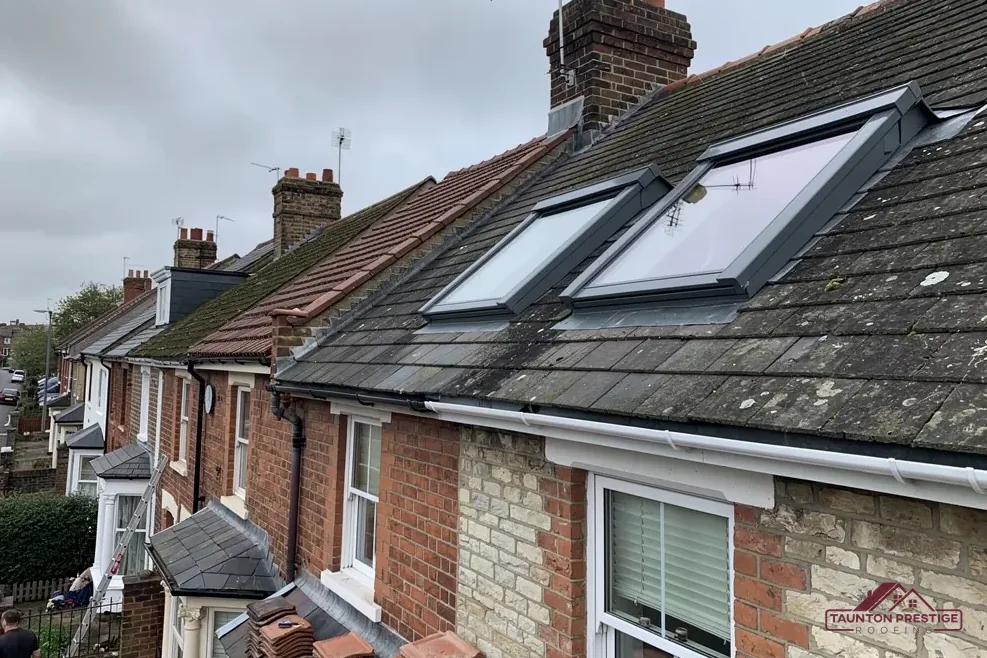
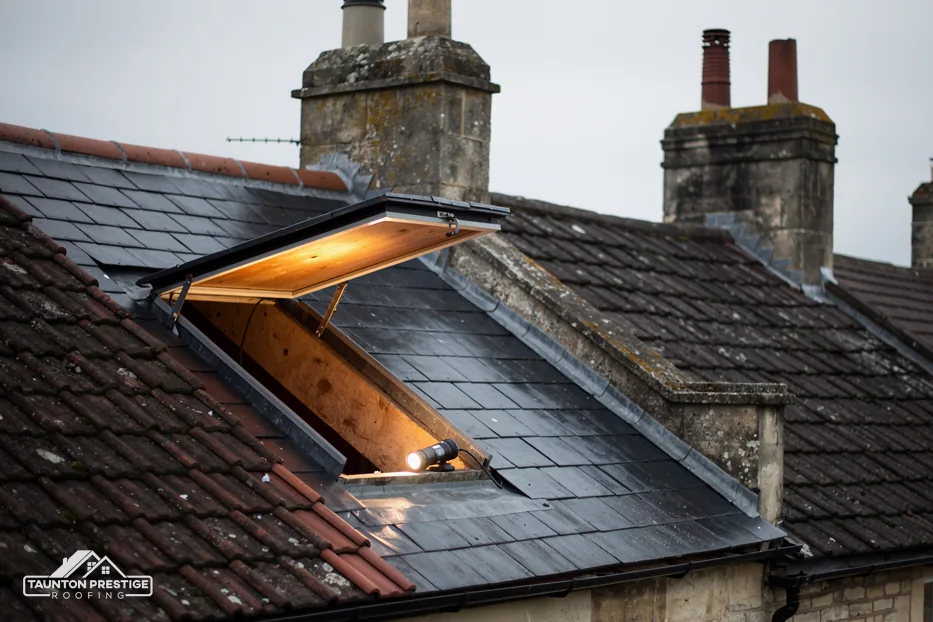
- Details. Chimneys, dormers, roof windows and lead flashings each need careful work around them.
- The slate chosen. Natural and man-made slate are bought from different suppliers at different rates, and size and thickness shift the cost again.
- Condition underneath. Battens, underlay and sometimes rafters may need renewing once the slates are off.
- Reuse. Sound old slates that go back on reduce what has to be bought, though sorting and grading them takes time.
- Timing. A roof that is already leaking may need a make-safe visit first, which is separate from the main job.
Is natural slate always dearer than the alternative?
The material price differs by product, so there is no single answer, and the two types are not interchangeable on every roof. Our guide to natural against man-made slate compares them on weight, look and lifespan.
The long view matters here. CORC, the Confederation of Roofing Contractors, publishes a figure of 100+ years for slate that gets proper upkeep. A covering is a long-term purchase, and an initial saving that brings forward the next replacement is no saving at all.
Scaffold, access and waste
Scaffold is the part of the bill that surprises people. A slate roof on a two-storey house cannot be worked on safely from ladders, and the scaffold has to stand for the duration of the job. HomeBuilding (Sep 2025) quotes approximately £1,000 with permits for a typical semi, while MyJobQuote (Oct 2026) says £550 to £750 covers a week of hire along one elevation. They are national figures, not local ones. A house with a long side access, a rear extension or a steep slope behind will need more.
Scaffold standing on the public highway needs a highway authority licence. Somerset Council charges £124.60 per 28 days (April 2026) for a licence, grants it to accredited contractors only, and expects the appointed contractor to apply with 10 working days' notice. That wait affects your start date, so the paperwork is raised early with the scaffolder.
Does waste disposal change the price?
It does. Old slates, battens, nails and underlay have to leave the site, and the volume turns on the roof area and on how much of the timber has rotted. Sound slates are kept, and broken ones go. A tidy site is part of the job: waste is taken away and not left in the garden for weeks, and each day you hear what is planned for the next. Skips and carry-away both add cost, and on a tight street the choice is often made for you. Wet timber and old felt weigh more than they look, which can change the number of loads.
None of these costs is exotic. They are the ordinary mechanics of getting a roof done safely, and they explain why two quotes for the same roof can differ even when the covering is the same.
Repair, re-slating or a new roof
The least costly roof is the one that does not have to be done twice. A repair is the lowest outlay when the fault is local. MyJobQuote gives an average roof repair at around £650 (MyJobQuote, Oct 2026), which will not cover a slope of failing nails. A full re-slate costs a lot more, and it is the right buy when repairs begin to come round faster than the value they add. Weigh what the next five years of patching would cost against one proper job, and the answer is often plain.
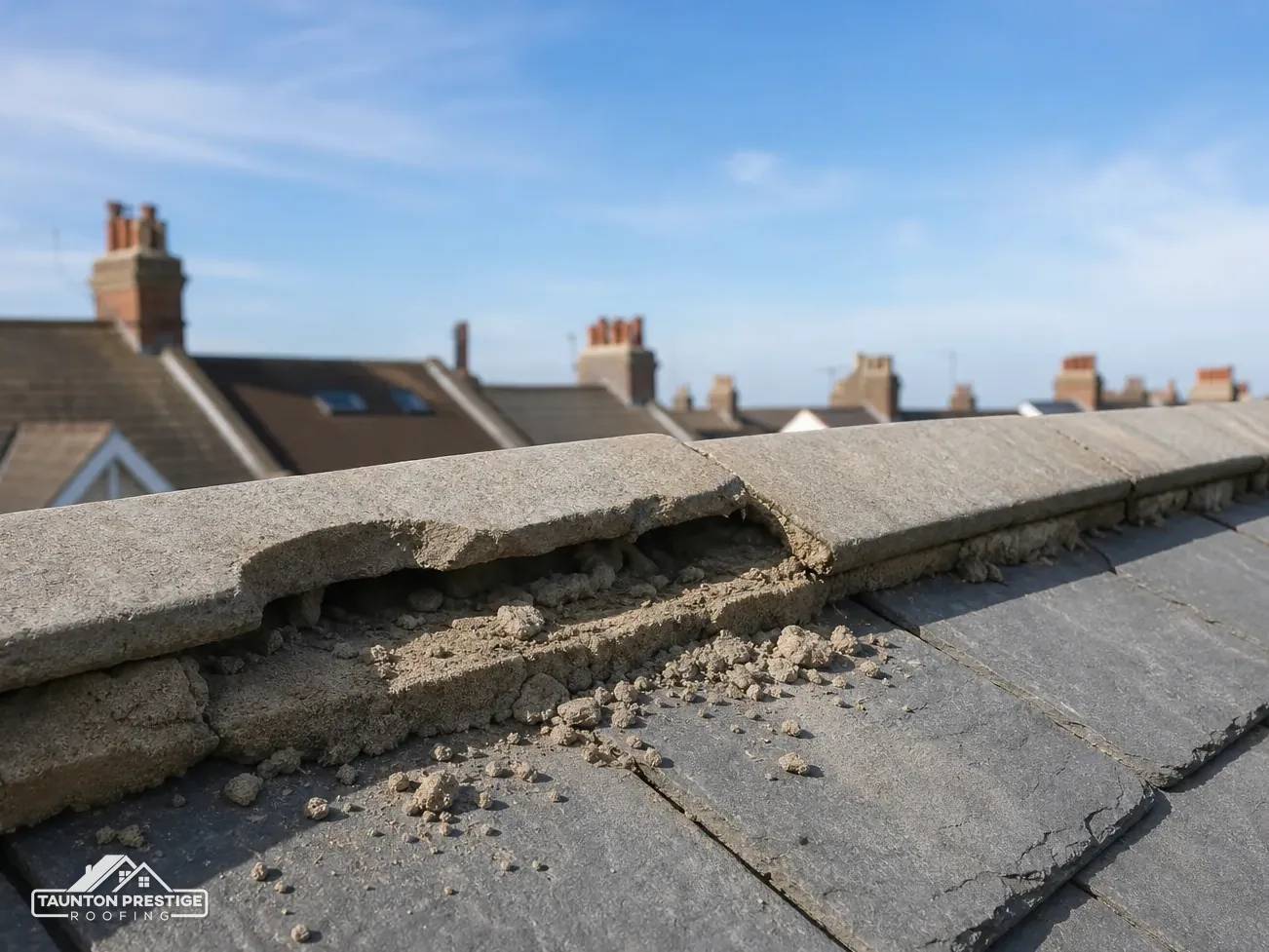
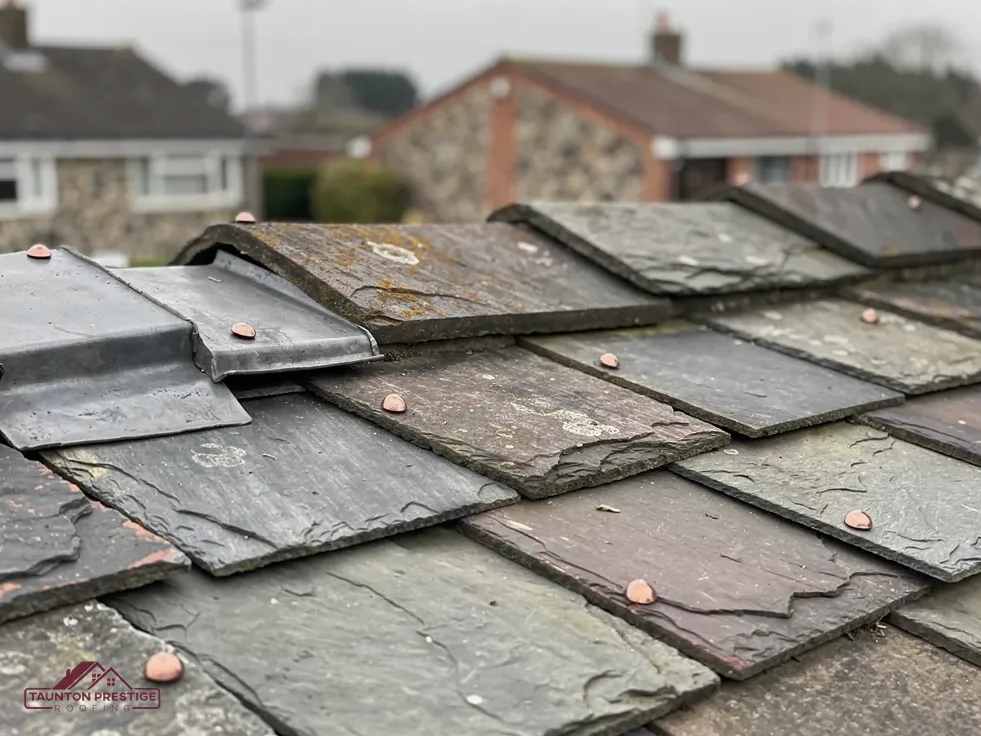
The decision turns on cause and spread. If a few slates have slipped because of storm damage or a branch, repair is the right answer. If the nails along a whole slope have rusted through, repairing slate by slate puts money into a roof that will need the same work again next year. Our guide to re-slating a roof sets out the signs.
Is a repair really worth paying for on an old slate roof?
Insist on a survey that comes with photographs. Slates lifted in a few places show the condition of the nails and battens, and the pictures let you see it for yourself. A roofer who explains what repair will buy, and for how long, is giving you what you need to decide, and a roofer who pushes for a whole new roof without showing evidence deserves a second opinion.
Do not forget that a repair may be the better buy for years, and a re-slate may be a better buy than a new roof. Slate is the one covering where sound slates can be saved and re-laid, which is why a re-slate often costs less than stripping a roof and starting over with new material.
Reading a quote without being misled
A quote that tells you nothing is hard to compare. A good one is short, specific and clear about what the job includes. Check these points on any slate roof quote you receive.
- Which slates, from which maker, and in what size.
- Whether the old slates are being reused, and which slopes.
- Whether new battens and underlay are included.
- Whether scaffolding is part of the price, and who handles any licence.
- Whether VAT is included.
- How waste is dealt with.
- What happens if the survey underneath turns up rotten timber.
Should I get several quotes?
Citizens Advice recommends gathering at least 3 written quotes, from separate traders, prior to choosing. That is sound advice, and the point of it is to see the range of answers for your roof, so a figure that is far above or below the others becomes a question you can ask.
Do not judge quotes by the total alone. A low figure can mean old slates reused where they should be replaced, thinner timber, or scaffold left out. A higher figure can reflect a better specification. Ask each firm what its price covers, and weigh the answers. A short phone call usually clears up the gaps, and a firm that is sure of its figures will not mind the question. Ours is one written total, sent after the survey, so the covering and the scope are named together in a single document.
Our prices are good and fair, which you can test by holding the written figure up against what the photographs show.
Grants, insurance and when to book
There is no national grant towards a roof replacement. Some schemes help with insulation or energy efficiency, and the Disabled Facilities Grant in England covers adaptations, up to £30,000. None of them pays for a slate roof to be replaced, so plan to fund the work yourself, and read the current rules before assuming any help applies. Eligibility is never certain.
Insurance is a separate matter. After storm damage to a slate roof, the order is: contact the insurer, put a temporary repair in place, and keep photographs and receipts. Ageing nails are a different category from sudden damage, a distinction our slate roof insurance guide explains.
Is there a best time of year to have a slate roof done?
Roofing can be done in most months, but dry weather helps. Winter work is possible, with slopes stripped and re-covered in short stages so rain never gets a way in. Booking in spring or early autumn tends to give calmer weather and easier scheduling, though a leaking roof should not wait for the season: it is made safe first, and the rest is planned afterwards, once the roof is dry and the picture is clear.
What you can do now is gather what a roofer will ask for: the age of the house, any past repairs, photographs of slipped slates, and any papers showing listing or a conservation area. With those in hand, a survey is quick, and the price that follows is a single figure you can set against pictures of your own roof.
Slate cost queries
Is a slate roof worth the money?
For a house that will be lived in for years, often yes. Slate has a published expectation of 100+ years if well maintained, and it can usually be repaired or re-laid rather than replaced. Whether it suits your budget depends on the roof, the access and the covering. A survey sets out the options in writing.
Does a bigger house always mean a dearer slate roof?
Not always. Roof area counts, but so do the shape, the pitch and the details. A large plain roof with easy access can cost less per square metre than a small one with valleys, dormers and a chimney to work around. The survey is where all of that gets measured and priced in.
Can I pay less by reusing my old slates?
Sometimes. Reusing sound slates cuts what has to be bought, but sorting, cleaning and re-fixing them takes time, and cracked or flaking ones still have to be replaced. How many can go back is clear only once the slopes are stripped, so the survey gives a sensible estimate of the share.
More on this subject: Slate roofing in Taunton