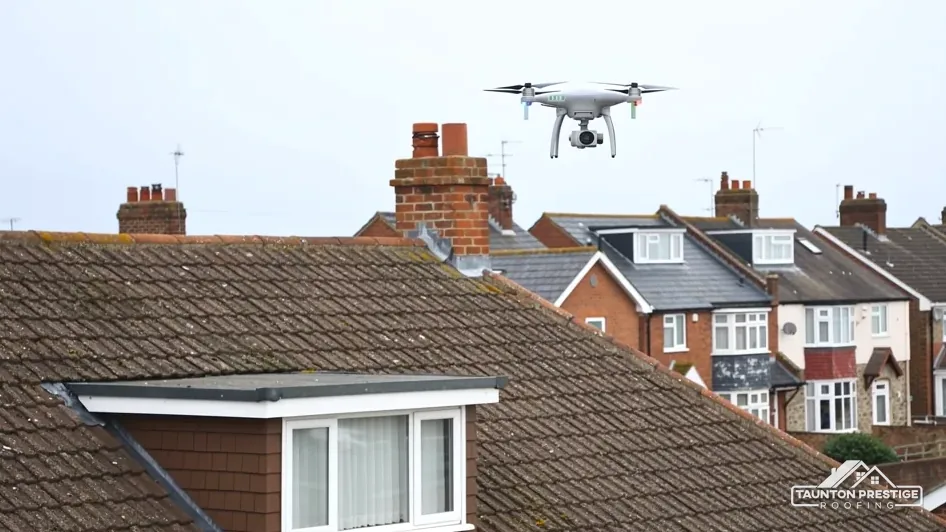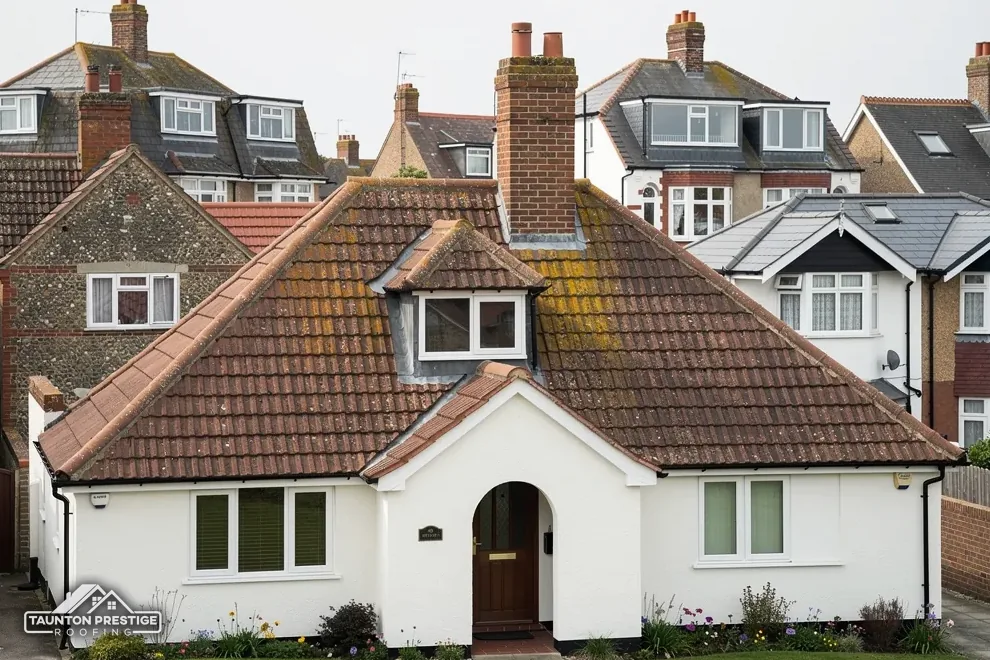
Homes beside the business park
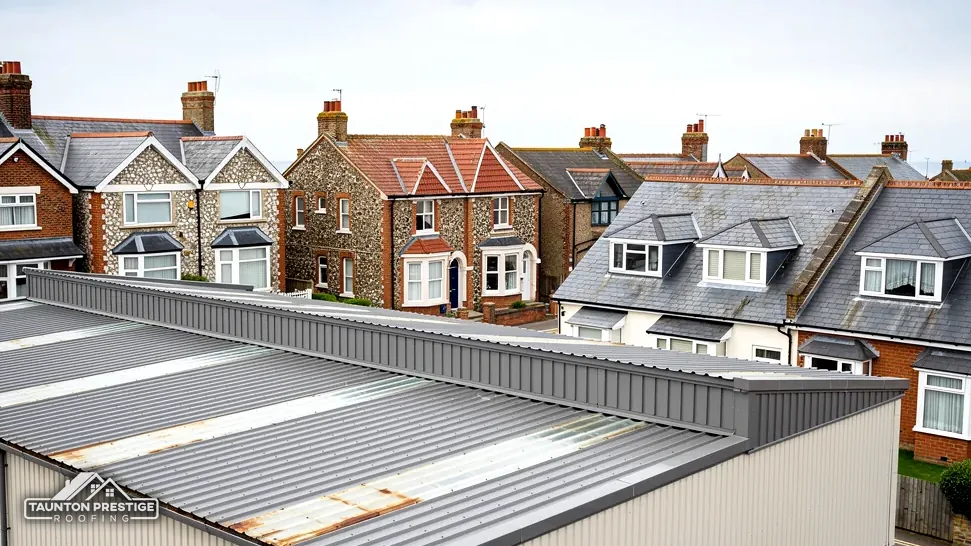
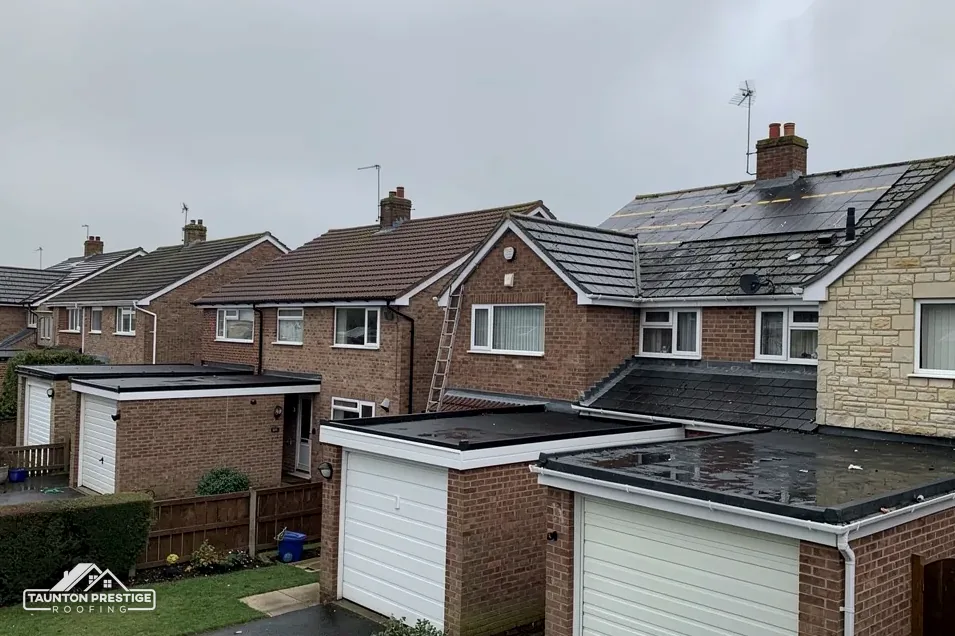
The estate sits by the M5 junction 25 business park, so domestic and commercial roofs stand close together.
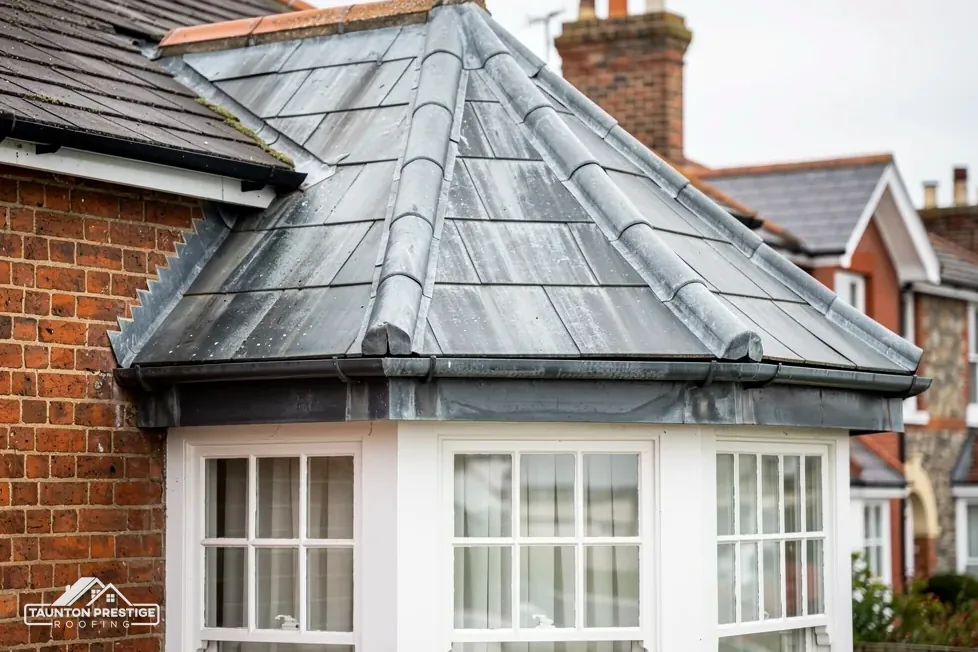
Homes by the junction 25 business park, near a Grade II building
Blackbrook is an eastern Taunton estate by the M5 junction 25 business park, with one listed building within 500 metres. We survey every roof first.
The estate sits by the M5 junction 25 business park, so domestic and commercial roofs stand close together.
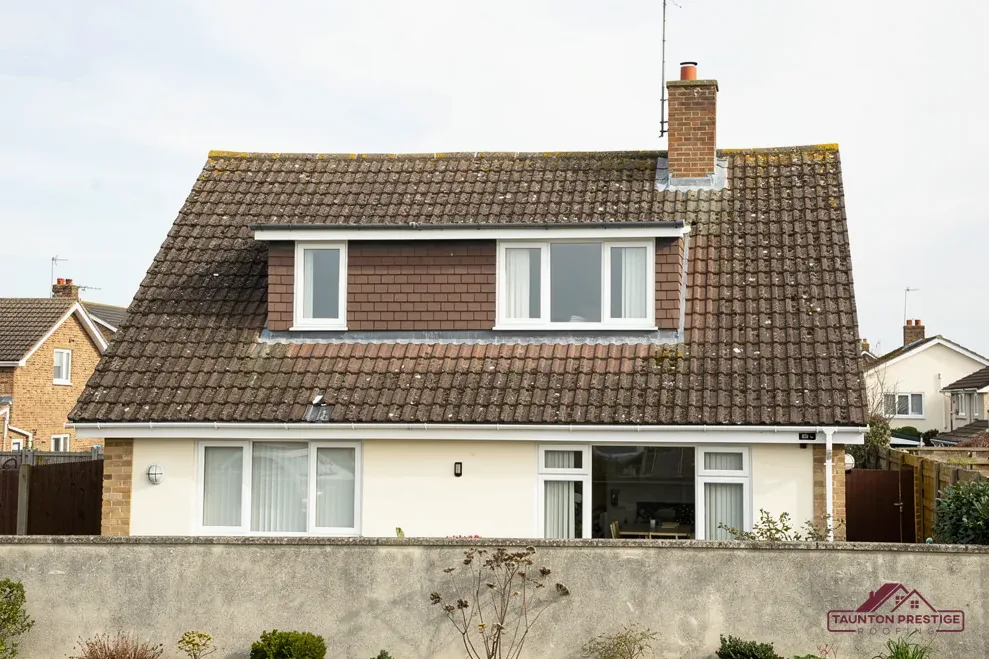
Listed on 4 July 1975; it is the one list entry within 500 metres of Blackbrook's centre.
The Environment Agency's planning map puts some land within about 250 m of the centre in Flood Zone 3.
Street map of Blackbrook with Halcon, Holway, Haydon, Ruishton marked around it, and Taunton.
Halcon lies to the north of Blackbrook, Holway to the south-west, Haydon to the south-east and Ruishton to the east.
About 1 miles east of Taunton, Somerset Council (unitary).
Four checks east of the town centre
Four checks for Blackbrook roofs: commercial duties, loft ventilation, a listed neighbour and what grants and VAT allow.
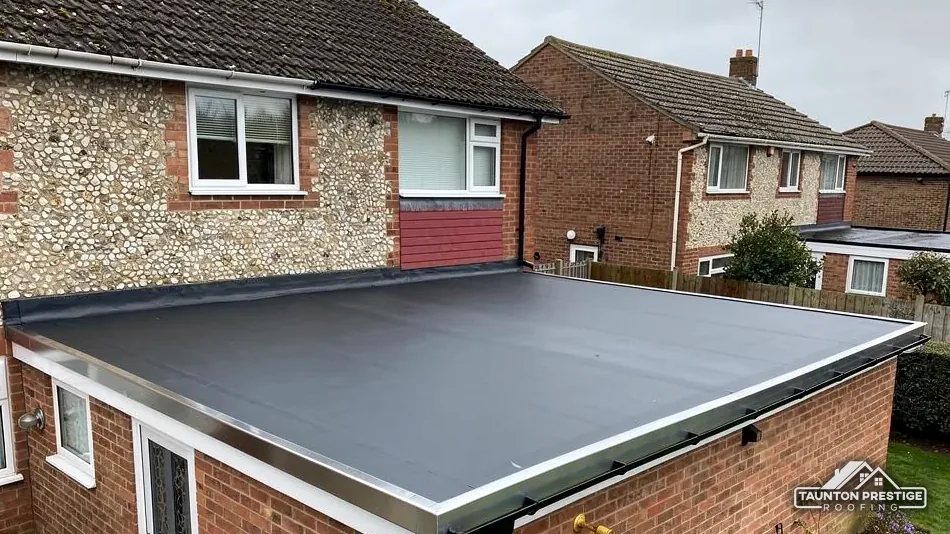
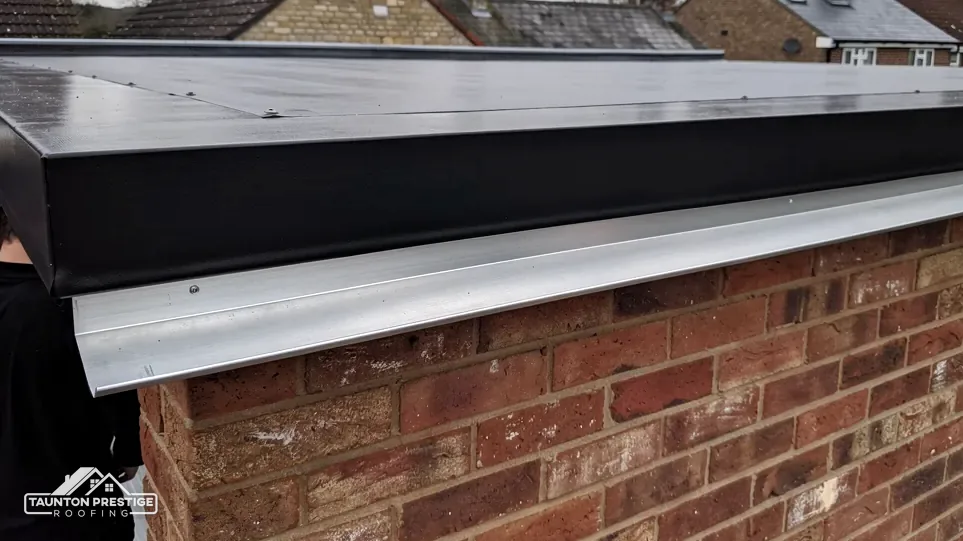
Blackbrook is an estate beside the M5 junction 25 business park, so units and homes share the same neighbourhood. Commercial roofs raise their own questions. They can be low-slope or flat, covered in single-ply membrane, a factory-made sheet laid in one piece, or in built-up felt. Falls matter just as they do on a house. BS 6229:2025 sets a minimum finished fall of 1:80 for general roof areas, and it covers flat roofs with flexible coverings, not lead.
Under the Construction (Design and Management) Regulations 2015, a commercial client carries duties that a homeowner passes to the contractor. Where several contractors are, or may be, on site, the client must appoint, in writing, a principal contractor and a principal designer. Whatever the number, a construction phase plan is required, and a lone contractor writes it. We build that into the survey and the programme for a unit, so the paperwork is not an afterthought.
For a building dating from before 2000, HSE's starting point is to assume asbestos is present. Sheets that are removed carefully without being broken up are non-licensed work, while substantially breaking them up makes it notifiable non-licensed work. Nobody should walk across a fragile sheet without proper protection, and the waste is double-wrapped and labelled, then carried away under a consignment note.
Commercial work also depends on access for ladders, hoists and delivery lorries, on whether the unit stays open while we work, and on how the old covering is disposed of. Those are survey questions, and the answers set the programme as much as the price.
For the roof itself, our commercial roofing page covers membranes, panels and repairs, and flat roofing goes further into falls and coverings. Parts of the land near the centre of Blackbrook lie in Flood Zone 3, so ask where water goes when an outlet blocks, and use the flood-risk checker on GOV.UK for your own address.
Look for
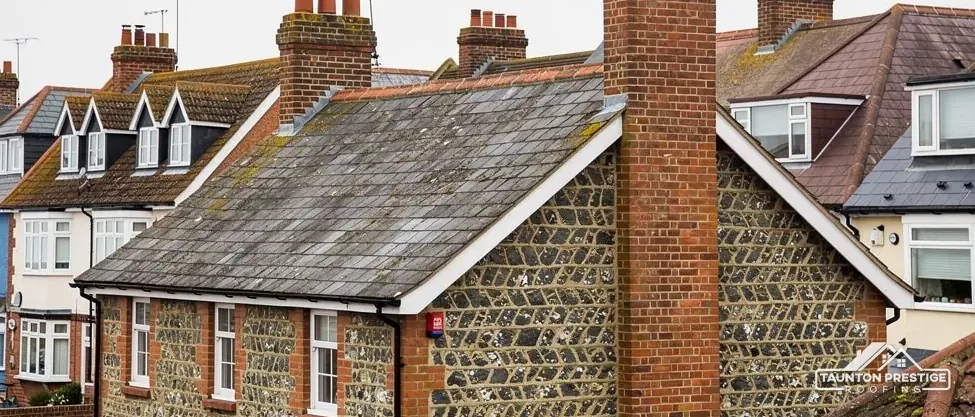
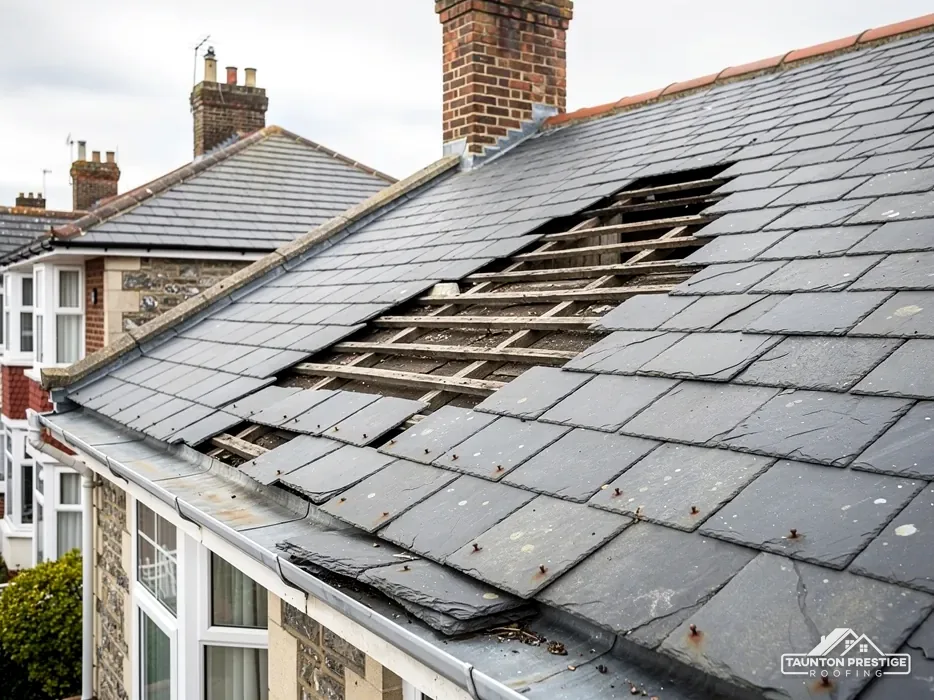
A pitched roof has to breathe. Warm, damp air from kitchens and bathrooms rises into the loft, and if it cannot get out it condenses on cold timber and felt. BS 5250:2021, the code of practice on managing moisture in buildings, is current at BSI. It sits behind the ventilation advice manufacturers give, which is why ventilation belongs in a re-roof and is not an extra.
Not necessarily. HR underlay is non-breathable. Marley's guidance for a cold roof with an HR underlay is 25 mm of eaves ventilation along the length of the eaves for pitches of 15 degrees or less, and 10 mm for pitches of more than 15 degrees. Under an LR (breather) underlay, a ceiling that is well sealed may need only the 3 mm that normal eaves construction provides, subject to third-party certification. Which type you have decides how much ventilation is needed, and a new covering can change it.
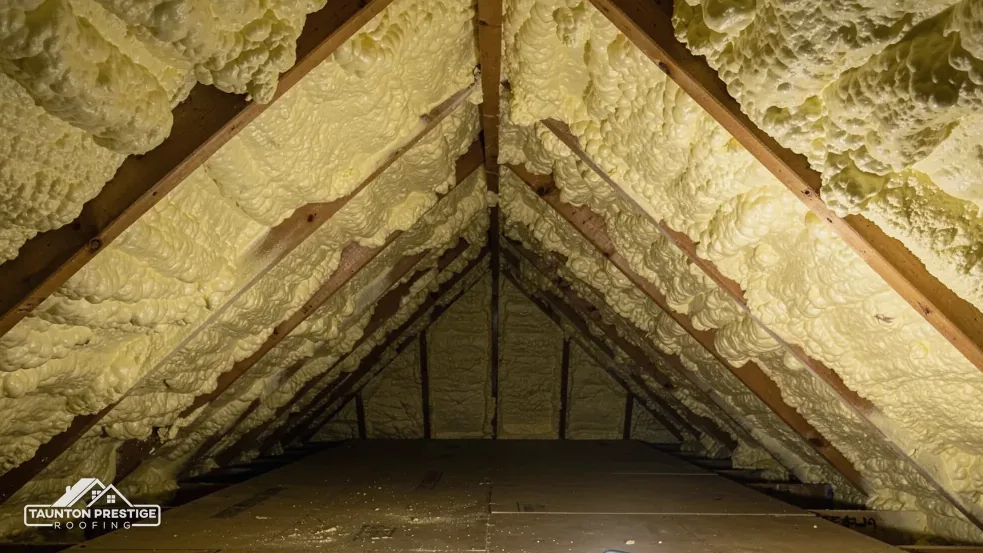
Foam sprayed under a roof covers the timbers, which makes leaks and rot harder to see. RICS's guide for consumers advises asking your mortgage provider first, since lender policy decides whether such products are acceptable, and the Energy Saving Trust advises against foam sprayed over a leaking roof. Removal is specialist work, and our spray foam insulation removal page explains what is involved.
If you see damp patches or mould and cannot tell whether the cause is condensation or a leak, photos of the area help us decide what to look at first. The survey tells the two apart by checking the underlay, the eaves gaps and the covering above.
A re-roof is the moment to put ventilation right, because the covering is off and the eaves are open. Fitting vents, clearing the gap at the eaves and making sure insulation does not block the airflow can all be done while the roof is open. Doing them afterwards means lifting the covering again.
The Halcon Centre carries a Grade II listing dated 4 July 1975, and it is the one list entry within 500 metres of Blackbrook's centre. A listed building is not the only thing that shapes how a house nearby is treated. Its setting can matter, and so can the conservation areas around the town. The nearest in the national dataset, within about 2.5 km, include Castle Green and Bath Place, Fons George, and Haines Hill and Trull Road.
A listed building next door is a reason to ask a question, not a reason to worry.
Not by itself. Listed building consent attaches to the listed building. For the Halcon Centre itself, and anything its listing covers, the consent route applies, and our page on listed building consent for roof work explains it. For an ordinary house nearby, repair and re-roofing follow the usual rules.
Search the National Heritage List for England on Historic England's site. An entry gives the grade, the list entry number, the date first listed and a description of what is protected. If your address is not named, ask the planning team before assuming it is unlisted, since an entry can cover attached structures, and a neighbour's entry may still say something about the setting.
Castle Green and Bath Place was designated on 15 January 1975 and revised on 26 April 2007. Fons George dates from 12 November 1998, and Haines Hill and Trull Road from 14 March 2023. None of them is shown as touching the centre of Blackbrook, and your own street still needs checking on the council's map.
We photograph the existing covering at the survey. If you are near any boundary, ask the planning team a plain question first and keep its answer in writing. That record protects you if a neighbour, a buyer or a surveyor asks later what was approved.
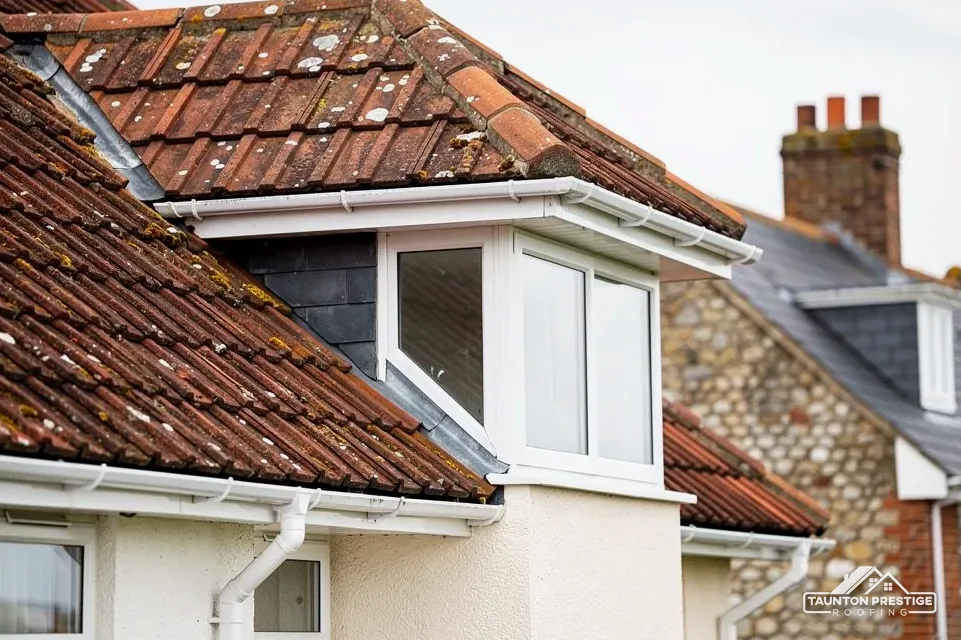
A new roof has no national grant behind it. The schemes that do exist are about insulation and heating, not roof coverings, and several have closed or carry conditions. It is better to know that before a quote arrives than after, because a firm promising a free roof through a scheme is describing something the schemes do not offer.
What decides the price
Ofgem says ECO4 will run until 31 December 2026. The Great British Insulation Scheme has ended: installations had to be complete by 31 March 2026. The Warm Homes: Local Grant covers insulation, and GOV.UK says household income must usually be £36,000 a year or less. We cannot say whether you qualify, so read each scheme's own page and apply through it.
The standard VAT rate is 20%, which covers repair work and re-roofing to existing homes. GOV.UK's Notice 708/6 covers energy-saving materials installed between 1 May 2023 and 31 March 2027 at the zero rate, and gives a reduced rate of 5%. That is for qualifying energy-saving installations, not roof repairs, and what qualifies depends on what is installed. The domestic reverse charge applies between CIS-registered businesses, not to homeowners.
Some funding is for other work. The Disabled Facilities Grant in England pays up to £30,000 for adaptations to a disabled person's home, and it is not a roof grant. The Warm Homes Plan is a £15 billion programme aimed at heating and insulation, and GOV.UK describes each scheme on its own page, so read the one that matches your situation before assuming it helps.
Ask whether a quote includes VAT and scaffolding. The survey ends with pictures of what we found and one written total covering the job. Send your Blackbrook address and what you want done, and we will arrange the visit.
Walked the roof?
When you have read the checks, we walk the roof and show you the photos.
Yes, every project does. Where only one contractor is working, that contractor draws it up. With several, the client appoints a principal contractor and a principal designer in writing, and the principal contractor writes the plan. We raise this at the survey for a unit, so you know the paperwork before the first ladder goes up.
It can. HR underlay is non-breathable, so a cold roof with one needs ventilation at the eaves, 25 mm for pitches of 15 degrees or less and 10 mm for steeper ones. Fit an LR breather membrane below a well-sealed ceiling and the gap left by normal eaves construction may do, though third-party certification has to back that. We check which you have first.
Yes, though it is specialist work and the foam has to be assessed first. RICS advises asking your mortgage provider whether a lender allows spray foam, and the Energy Saving Trust does not recommend spraying it onto a leaking roof. Photos of the loft help us advise on what removal would involve.
No. Listed building consent attaches to the listed building itself, not to every house around it. A listed neighbour can make the setting a point of interest to the planning team, so a visible change such as a new roof window deserves a question to Somerset Council first. A like-for-like repair needs no such step.
Send your Blackbrook address, say whether it is a home or a unit, and we will arrange the survey.