All Saints church
Listed Grade II* on 5 April 1966 and shown as an Anglican church in use, so repairs follow a faculty.
A Grade II* church, twelve listed entries and the Blackdown edge
Culmstock is a Devon village with 12 listed entries within 500 metres of its centre and All Saints church at Grade II*. Each roof gets a survey first.
Listed Grade II* on 5 April 1966 and shown as an Anglican church in use, so repairs follow a faculty.
Both are listed Grade II, Cadbury Cottage first listed on 17 March 1988, so changes to their roofs need care.
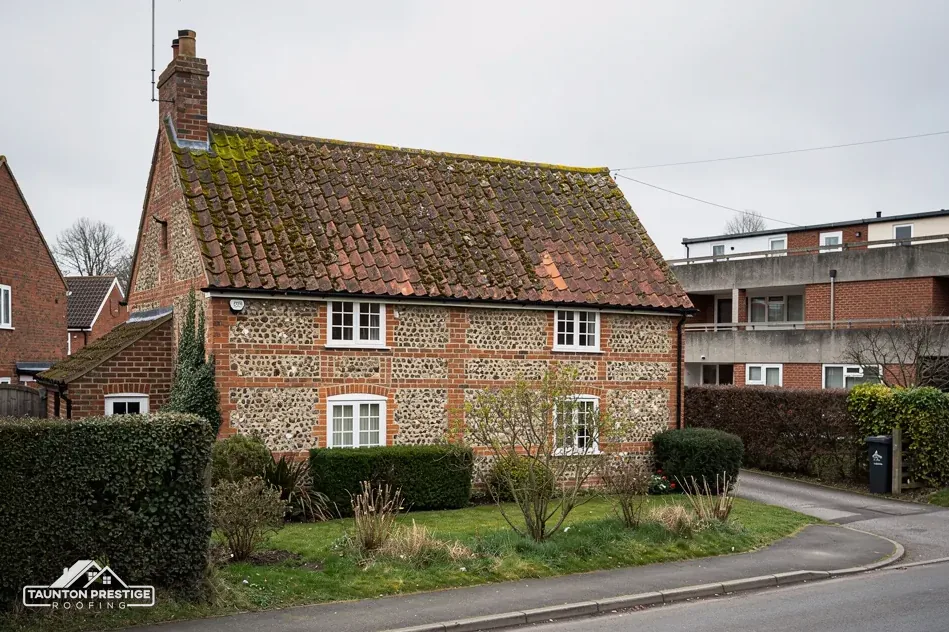
One list entry covers Cleeve Cottage, Cobblestones and Craven Cottage at Grade II, among 12 entries near the centre.
Street map of Culmstock with Uffculme, Hemyock, Burlescombe, Ashculme marked around it, and Taunton.
Uffculme lies to the west and Kentisbeare to the south-west, with Burlescombe to the north-west, and Hemyock, Ashculme and Clayhidon all to the east.
About 10 miles south-west of Taunton, Mid Devon District Council and Devon County Council.
Four checks on the Devon side of the border
Which bodies decide what, how a listed neighbour affects a repair, flat roofs on garages and extensions, and what to do when weather takes tiles off.
Culmstock sits in Devon, so the offices you deal with are not the ones in Taunton. Planning belongs to Mid Devon District Council, the roads belong to Devon County Council, and building control comes from a service Mid Devon runs jointly with North Devon. Each answers different questions about the same roof. Somerset Council has no say here. A roofer who works across the county line has to know which of the three applies to a job, and we ask before a quote is written.
Mid Devon District Council. It can say whether your address lies in a conservation area, whether a direction has removed permitted development rights, or whether a listing applies. Ask before anything visible from the lane changes, and keep the written reply with the deeds.
Devon County Council is the highway authority. Devon County Council's licence page says scaffolding firms make the application for their customers, and asks for 10 working days at minimum. A licence costs £158 for a run of up to 12 weeks, and amending or extending one costs £100. Poles and boards kept inside your own boundary are off the highway, so they need no licence from the county. At the survey we tell you which case your house falls into, and brief the scaffolder accordingly.
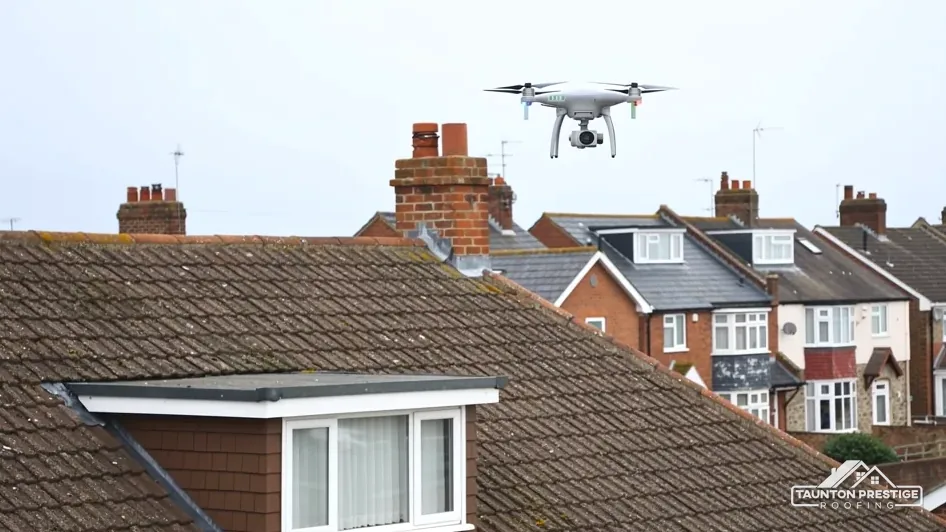
For a full re-roof the Planning Portal's tests apply: under 25 per cent of the building envelope and under 50 per cent of the roof, and no new covering that adds 15 per cent or more to the weight. Our pitched roofing survey records exactly what covers each slope, so any application can begin from facts and not from guesswork. Where a heavier tile is on the table, an engineer or surveyor can advise on the structure before the order is placed, and we build that step into the plan.
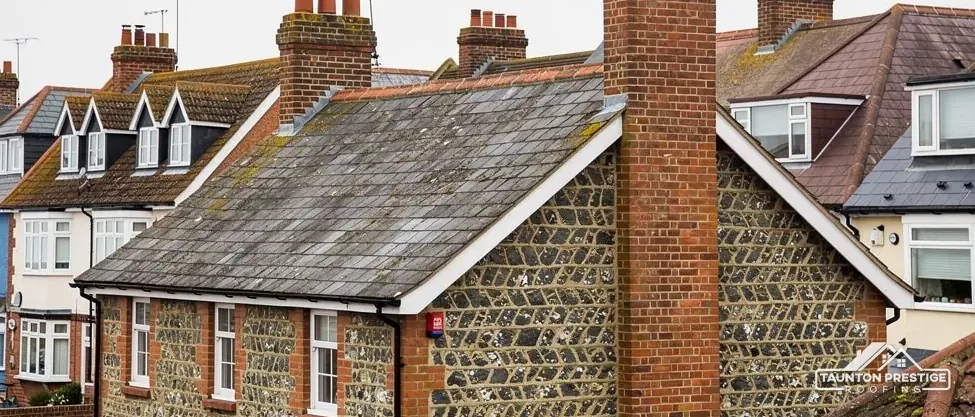
All Saints holds a Grade II* listing (entry 1325886 on the National Heritage List, first listed on 5 April 1966), and a mapping layer of places of worship records it as an Anglican church in use. The Church of England has its own route for a church in use, the faculty system, and it replaces listed building consent from the council. The parish arranges it, and the roofer then builds to the specification that is approved, whether that is slate, clay tile or stone. A house owner has no part in that process, though neighbours see the scaffold go up.
Look for
A cottage mended in the wrong colour of tile shows from the lane and from the planning desk.
The National Heritage List shows 12 entries within 500 metres of the centre. Cadbury Cottage (entry 1106438, first listed on 17 March 1988) and Cadbury House are both Grade II, and so is the group of Cleeve Cottage, Cobblestones and Craven Cottage. A house is listed only when an entry names it, and a neighbour's grade changes nothing about yours. If yours is listed, anything that affects its special character needs listed building consent from Mid Devon District Council, even though ordinary permitted development rights remain.
Matching is the place to start, and it is also how a disagreement with a planning officer is avoided. A cottage patched in the wrong colour of tile shows from the lane, and the planning desk notices too, so a replacement that merely keeps the rain out is not enough. Where a piece must be replaced we aim for the same size, colour, texture and fixing, and we photograph the existing covering slope by slope so you can show what was there. Our guide to planning permission for roof work sets out how the national rules fit together, and the survey fills in the local facts.
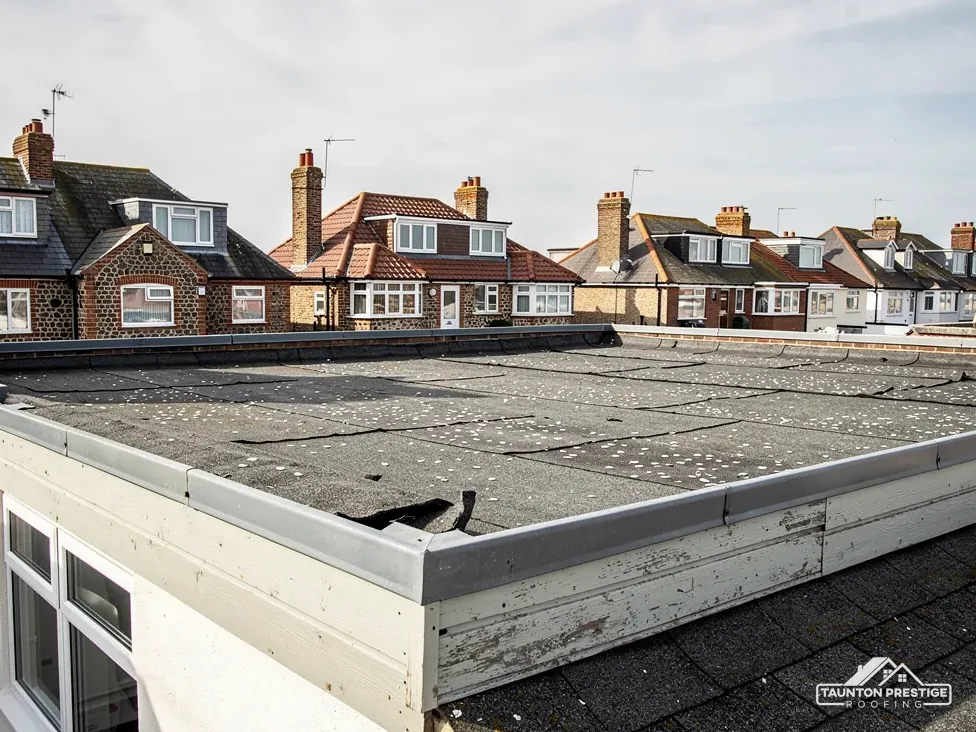
Environment Agency mapping puts Flood Zone 3 within about 250 metres of the centre of Culmstock. It is a planning map of the land, so a particular address is best looked up on GOV.UK's flood risk checker, and neither says anything about how a roof performs in a downpour. What a roof contributes is simpler: it sheds rain, and when rain is heavy the flat roof on a garage or extension is where a weakness shows first, because it has no slope to help.
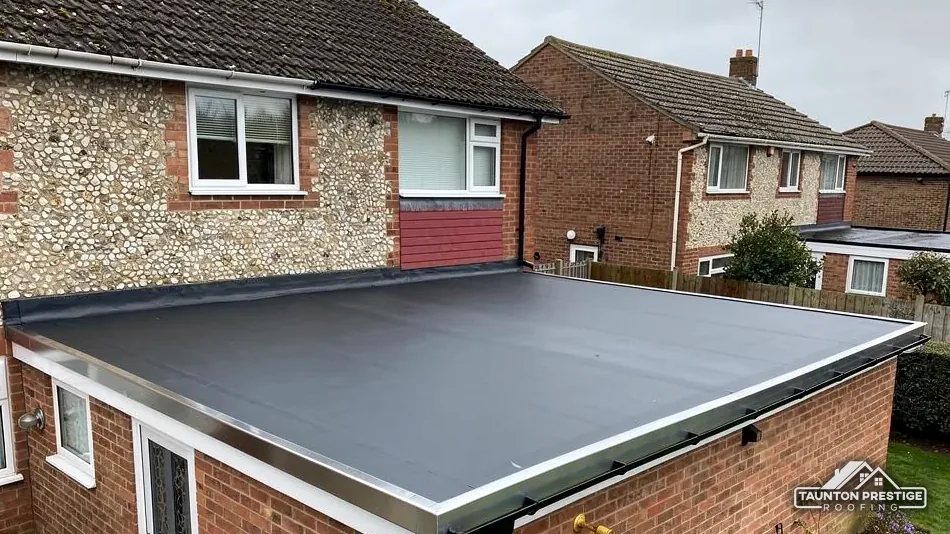
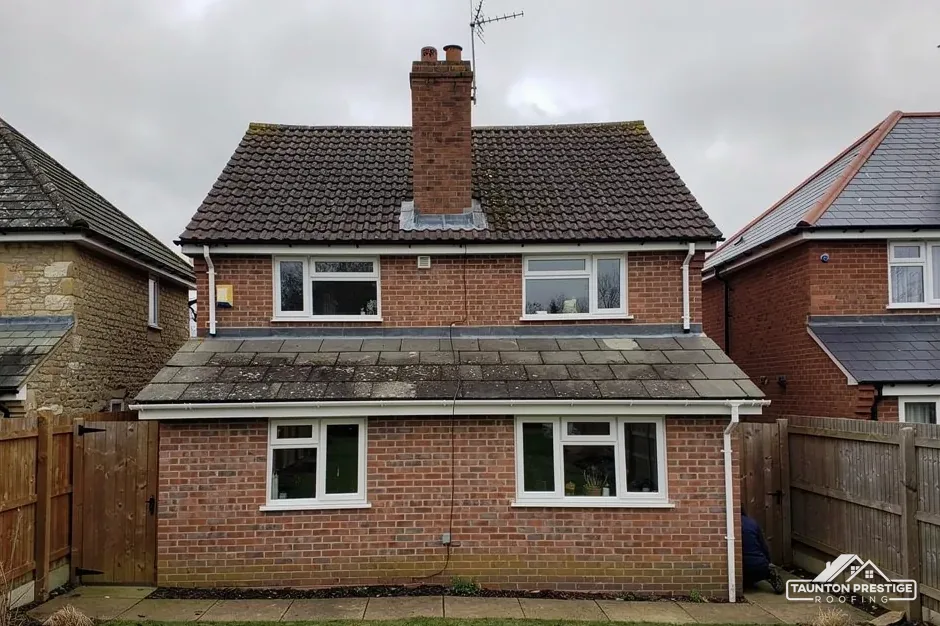
A flat roof has to slope slightly towards its outlet. BS 6229:2025 sets a minimum finished fall of 1:80, and IKO says to design for 1:40 so the finished roof still reaches it. Water that sits after the rain has gone means the fall is lost, the deck has sagged or an outlet is blocked. Pooled water then works into the seams, into the upstands (the short turned-up edges at a wall) and into the deck beneath, and it freezes in winter, which opens joints further. Our flat roofing page sets out the coverings in turn.
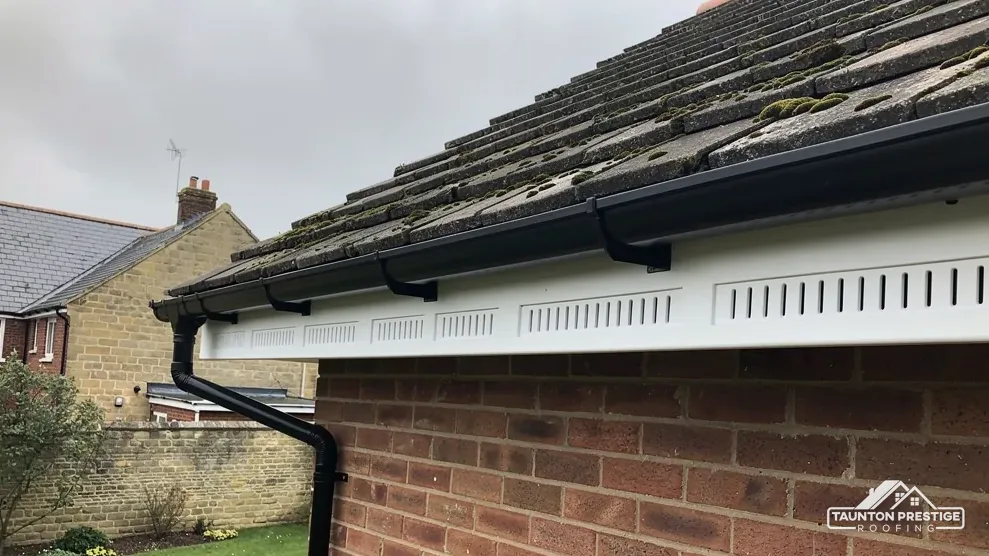
As a typical UK range, MyJobQuote puts a garage roof at between £750 and £3,500 with an average of £1,500 (Oct 2026), and Less gives £1,200 to £2,500 for a 15 m² garage (Oct 2026). The coverings differ in life and price: felt, EPDM, which is a rubber sheet, and GRP, which is glass-reinforced plastic laid wet. Approved Document L treats a replacement waterproof membrane as renovation, so a heated room underneath can bring insulation into the job. Water has to leave the roof somewhere, so the gutters and downpipes matter as much as the covering.
The Blackdown Hills National Landscape touches the ground around Culmstock: about 5 per cent of a 1.5 km square drawn around the village falls inside it, while the centre itself is outside. The designation was renamed in November 2023 from AONB, and the new name leaves the law as it was. Inside the designation, permitted development does not cover dormers. Mid Devon District Council can show you where the line runs. Roof windows set flat into a slope are a separate question from dormers, and the guide to planning permission linked below deals with them.
What decides the price
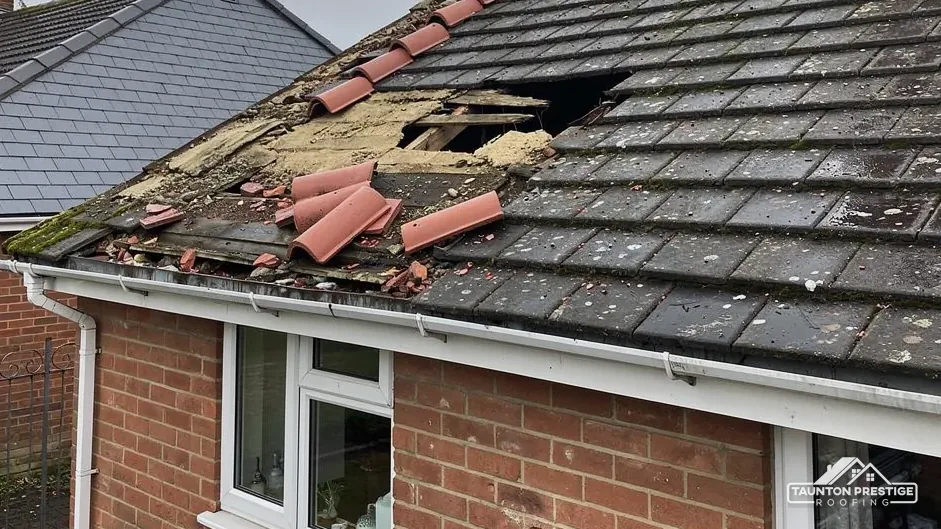
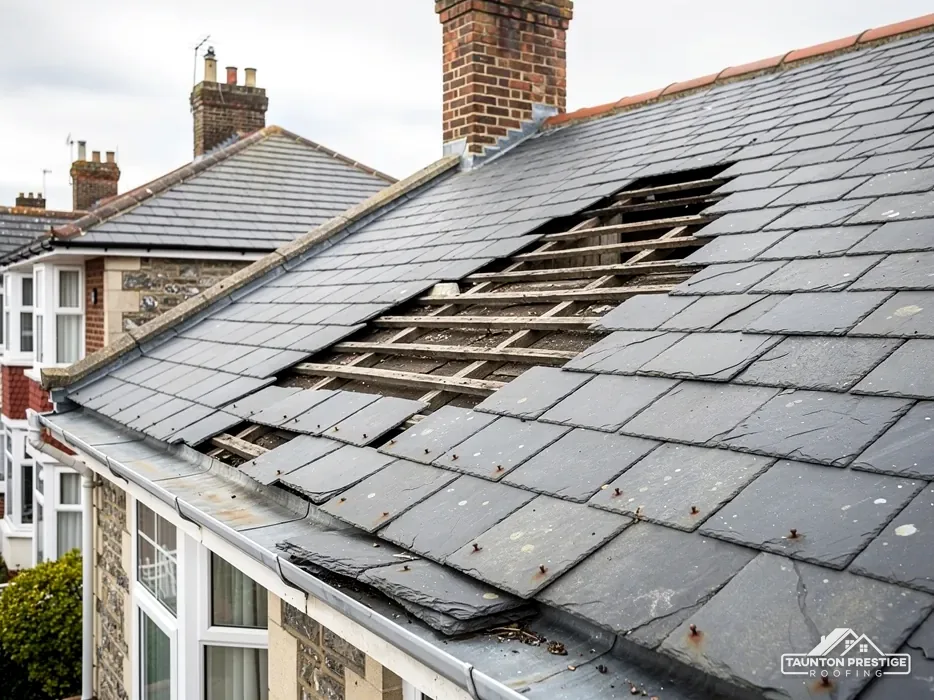
Ring your insurer first. After that, have the roof made safe with a temporary cover, and keep every photo and receipt. IStructE calls photographs vital evidence for a claim. We stop the water getting in and then survey the cause; nothing we say promises a payout, and the claim itself stays with you and your insurer. If the insurer's final response letter is still missing after eight weeks, the Financial Ombudsman Service will take up the complaint, and it costs you nothing.
No. Regulation 28(1)(e) of the Consumer Contracts Regulations takes the right away when you yourself asked the trader to call for urgent repairs or maintenance. A contract agreed in your own home after a planned survey is another matter, and the 14-day right covers that. For advice, call the Citizens Advice consumer helpline on 0808 223 1133. Our emergency and general roof repairs page explains how a make-safe works: tarpaulins and battens over the opening, loose pieces secured, and photographs taken of the damage before and after.
The written price follows the survey. Tell us what the wind took, and from which slope, and we will arrange the visit. A phone photo from the ground is plenty to start with, and a note of when the damage appeared helps your insurer.
Walked the roof?
When you have read the checks, we walk the roof and show you the photos.
Mid Devon District Council, as local planning authority. Its planning team can confirm whether a conservation area boundary takes in your address, so put the question before the look of a roof changes, quote the full address, and keep the reply; we raise it at the survey too.
All Saints is listed Grade II* and recorded as an Anglican church in use. Church of England buildings in use use the faculty system instead of listed building consent from the council. The parish arranges that faculty, and the roofer then works to whatever specification it approves, whether slate, clay or lead.
Under Approved Document L, a flat roof given a replacement waterproof layer is being renovated. Where the space beneath is heated, insulation figures can come into play, such as the 0.35 threshold and 0.16 improved value. Mid Devon's building control service can confirm which parts of your own job it covers.
Tell your insurer, then arrange a temporary cover, and keep photos and receipts. Do not climb up yourself. Our first visit is about stopping water, and the survey of the cause follows. Nothing here promises a payout, and if a dispute arises the Financial Ombudsman Service handles complaints about insurers.
Tell us what the weather has done, and mention any listing, so we can set a date.