St Mary's, Grade II*
First listed on 5 April 1966, and in Church of England hands, so roof work goes by faculty.
A Grade II* church, Castle House and the Blackdown Hills National Landscape
Hemyock has 2,291 residents, a Grade II* church and Hemyock Castle House, all in the Blackdown Hills National Landscape. Each roof is seen in person before pricing.
First listed on 5 April 1966, and in Church of England hands, so roof work goes by faculty.
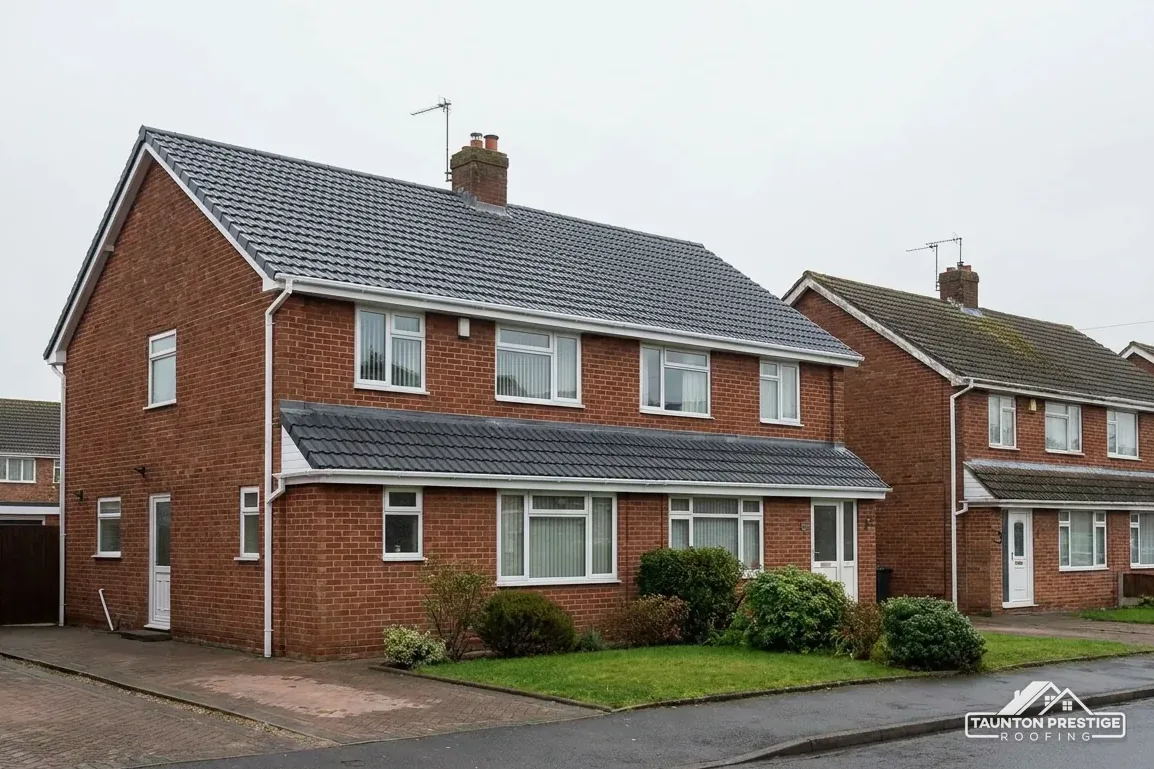
Listed Grade II on 5 April 1966, with a pair of outbuildings by the gatehouse that have their own entry.
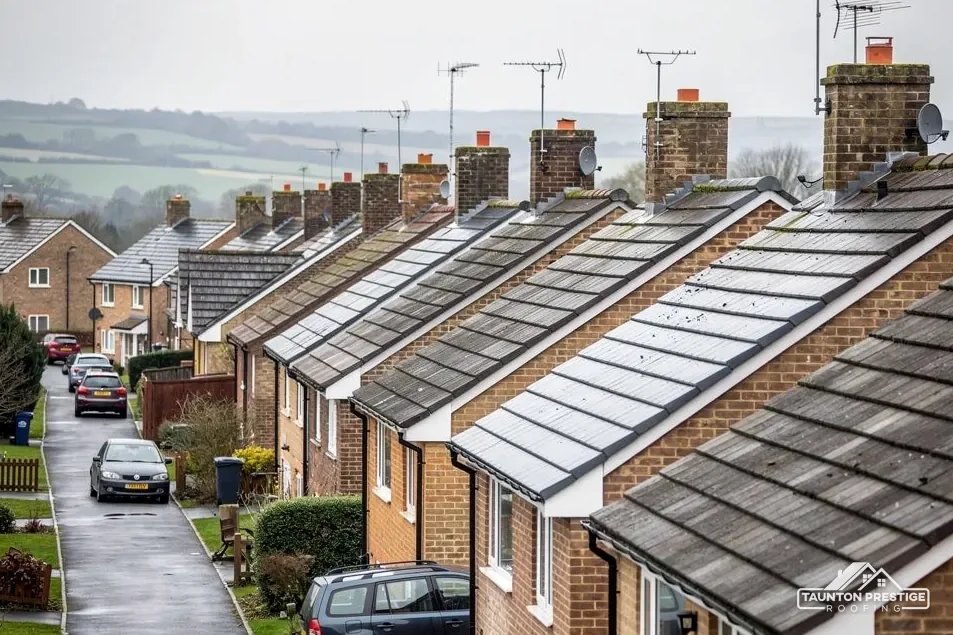
The National Heritage List has thirteen entries within 500 metres of the centre, so check your own address's status.
Street map of Hemyock with Ashculme, Culmstock, Clayhidon, Dunkeswell marked around it, and Taunton.
Ashculme lies north-east of Hemyock, with Clayhidon and Burnworthy further north-east; Culmstock is west, Dunkeswell south and Churchstanton east.
About 9 miles south-west of Taunton, Mid Devon District Council and Devon County Council.
Hemyock roof notes
A National Landscape, two listed landmarks, a Devon scaffold licence and the lives of slate, clay and concrete: four checks for Hemyock owners.
Hemyock lies inside the Blackdown Hills National Landscape, which used to be called an Area of Outstanding Natural Beauty. The Blackdown Hills partnership records that the change came in November 2023, when AONBs across England were renamed. GOV.UK makes clear the new name carries no legal weight, which is why planning law keeps the old wording. For a roof owner the label matters because the designation brings extra limits on what can go ahead without a planning application.
The designation counts most when the shape of a roof changes, and a new dormer is the classic case: put it to Mid Devon District Council, the local planning authority, before anything is drawn up. Whatever the status, a like-for-like repair in matching material preserves the look the roof had, and that is the easiest case to argue. Our guide to planning permission for roof work sets out the routes and the questions worth asking. Neighbours and the parish council may comment on an application too, so a clear set of survey photographs and a plain description of the covering make yours easier to decide.
It depends on the question. Mid Devon District Council handles planning. Devon County Council is the highway authority, which matters for scaffold. Building control is shared between North Devon Council and Mid Devon District Council. Somerset Council has no say here, even though Hemyock is only 10.6 road miles from Taunton, so check the postcode before dialling the wrong office.
Mid Devon District Council is also the place to ask whether your address lies inside a conservation area. If it does, or if the house is listed, send the survey photographs and a short written note of the covering with your question, which saves a second visit and a second round of letters.
Look for
Hemyock's two best-known listed buildings could hardly be more different. The Church of St Mary is Grade II*, first listed on 5 April 1966, and Hemyock Castle House is Grade II with that same 1966 date. A pair of outbuildings by the castle gatehouse carries a Grade II entry, and so does the war memorial. Thirteen list entries fall within 500 metres of the centre, which makes Hemyock a place where the first job on a survey is to ask what protection the building has.
Sound or needs work
What decides the price
St Mary's is a working parish church of the Church of England, so the work goes through the faculty system. Under the Planning (Listed Buildings and Conservation Areas) Act 1990, ecclesiastical buildings in use are exempt from the council's listed building controls, and a 2010 order names the Church of England's faculty jurisdiction. The parish applies; we price to the approved scheme. Planning permission for exterior work still applies.
No. A listed house in private hands needs listed building consent for any alteration that affects its character, and the body to ask is Mid Devon District Council. Where part of a site is a scheduled monument, the Secretary of State decides scheduled monument consent, not the council, so ask which designations apply, and ask early. The outbuildings by the gatehouse have their own National Heritage List entry, and each entry is read on its own terms.
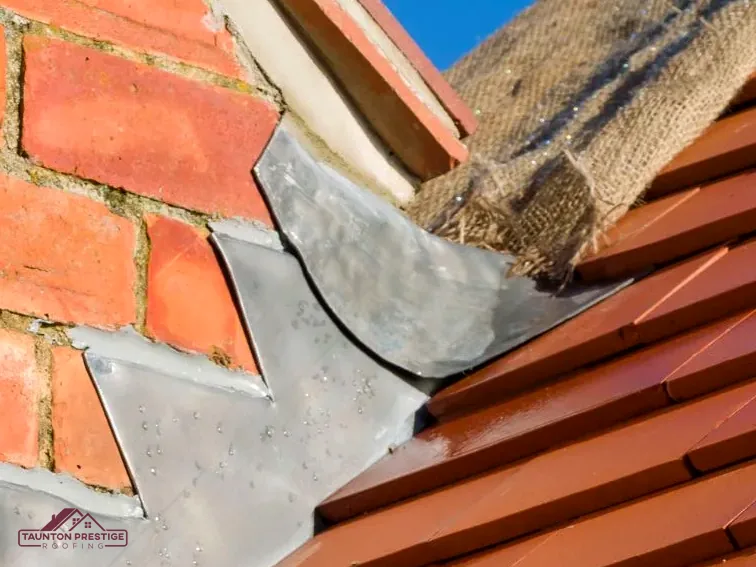
On a tower or parapet, lead does most of the weatherproofing. Royston's cast-lead brochure lists codes 5 and 6, at 2.24 mm and 2.65 mm, for flashings and parapet gutters, and MyJobQuote gives over 80 years for lead flashing, a floor rather than a forecast. Our chimney repairs page explains the flashing work.
If scaffolding has to go up on the public highway, section 169 of the Highways Act 1980 makes the highway authority's licence a must. In Hemyock that is Devon County Council, whose page has the scaffolding company make every application for its customer. It asks for 10 working days to process one. A licence costs £158 and runs for the works dates, for up to 12 weeks, while an emergency application on shorter notice costs £238 and an extension or amendment £100. If an officer has to visit the site, £103.95 is added.
Scaffold wholly inside your boundary is not on the highway, so section 169 does not reach it. A small repair may be reachable by ladder or tower. After the survey you hear which access the job calls for, and where a licence is needed the scaffolding firm makes the Devon application, so the paperwork never lands on you. HomeBuilding (Sep 2025) quotes roughly £1,000 for scaffolding with permits on a three-bed semi, and your own figure follows the survey. Ask each roofer whether the price includes scaffold and VAT, because the licence fee is a small part of the bill.
The Planning Portal's test asks whether the work touches under 25 per cent of the building envelope and under 50 per cent of the roof; if so, an application is not normally needed. A covering at least 15 per cent heavier is different, because that needs Building Regulations approval, and a check with a structural engineer or surveyor is advised first. In Hemyock the service is the North Devon and Mid Devon joint team.
Everything above feeds the price, which is why we survey first and quote once.
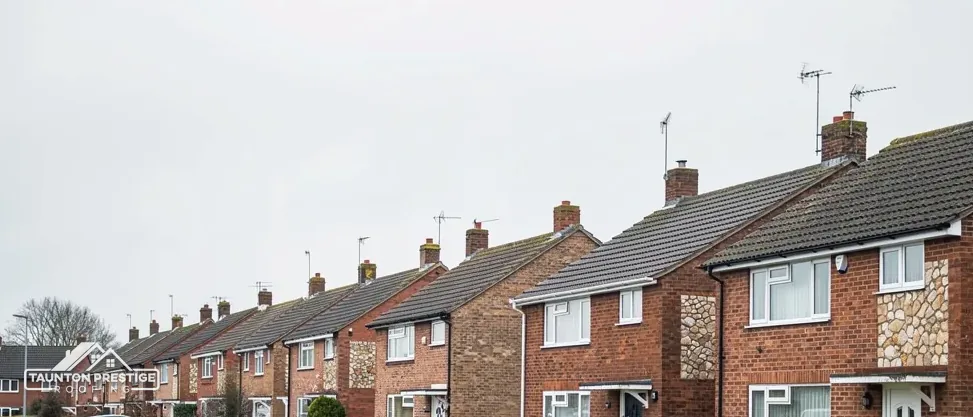
When a roof starts to fail, the question every owner asks is whether to repair it or replace it. Published lifespans help, but they describe typical ranges and promise nothing. The Confederation of Roofing Contractors says well-kept natural slate can last 100+ years. For clay tiles the BRE minimum life expectancy is 60 years, a figure Marley limits to clay, and an old peg tile can fall well short of it. For concrete tiles Marley's estimate is also around 60 years, which it describes as no guarantee or warranty.
Look for
What decides the price
Not necessarily. A sound slate roof of that age may have decades left, while a concrete tile roof with failing battens or nail fixings may need work much sooner. Age is one factor beside the condition of the timbers, the state of the fixings and how many pieces have already been patched. We lift a few pieces on each slope and show you the underside, then explain what we found.
The guides disagree widely. MyJobQuote (Oct 2026) gives an average of around £5,250 for a new roof, and around £7,800 for a new slate roof. HomeBuilding (Sep 2025) puts a three-bed semi with plain concrete tiles at £10,000 to £15,000, including labour, scaffolding and insulation. Roof size, covering, access and what is found beneath explain the gap.
It does. Cupa warns against hook fixings on any pitch under 25 degrees, and BS 5534 gives 20 degrees as the slate minimum. A shallow slope that has been re-covered with the wrong material will leak at the laps, however well it is fixed. Our slate roofing page explains the material in detail.
Tell us what has gone wrong on your Hemyock roof, and the survey comes before any price.
Walked the roof?
When you have read the checks, we walk the roof and show you the photos.
Not by itself. A roof window and a dormer are treated differently, and our planning guide explains why. For your own house, put the size and position of the window to the planning team at Mid Devon District Council, and remember that a listed building or conservation area adds its own controls. Ask before ordering the window, not after fitting.
No. St Mary's is run by the Church of England and still used for worship, so repairs follow the faculty system. A listed house like Castle House needs listed building consent from Mid Devon District Council for work affecting its character. The outbuildings by the gatehouse are separate list entries, and each one is checked on its own terms.
No. Hemyock is in Devon. Planning sits with Mid Devon District Council, highways with Devon County Council, and building control with the North Devon and Mid Devon joint team. Hemyock is 10.6 road miles from Taunton, which is why we cover it, but the Somerset Council rules about scaffold and building control do not apply here.
Devon County Council asks for at least 10 working days, and the scaffolding company, not the homeowner, makes the application. A licence costs £158 and can run for up to 12 weeks, while an emergency application costs £238. Plan the start date around that paperwork and the weather; the scaffolding firm handles the application itself.
Tell us your Hemyock address and what worries you up top, and a survey date follows.