115 and 117 Galmington Road
Listed Grade II* on 16 October 1973, so any change to the roof starts with the listed building route.
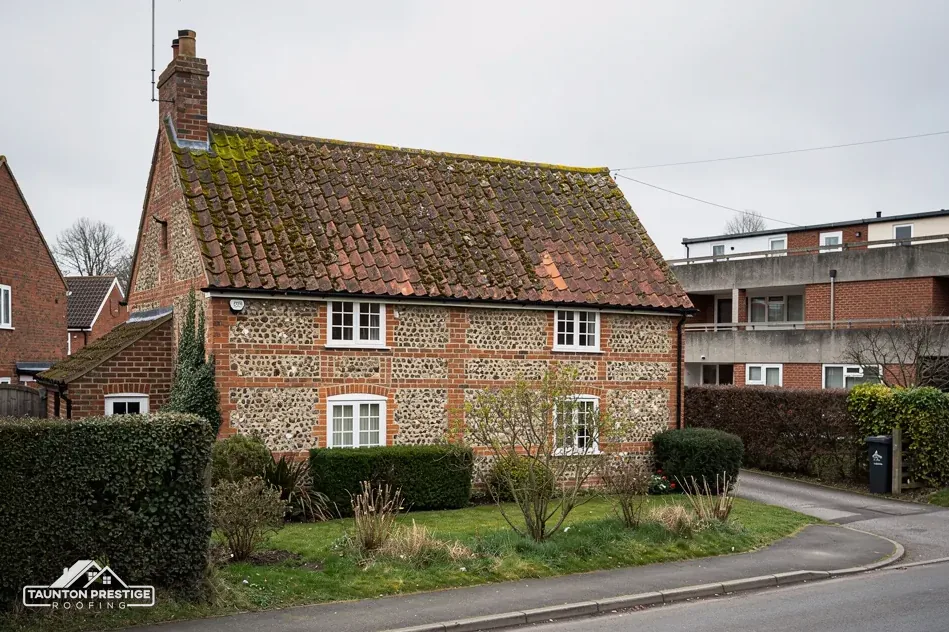
Two listed houses and a conservation area on Taunton's western edge
Galmington has a Grade II* pair of houses on Galmington Road, a Grade II manor house and a 2023 conservation area close by. We survey before we price.
Listed Grade II* on 16 October 1973, so any change to the roof starts with the listed building route.
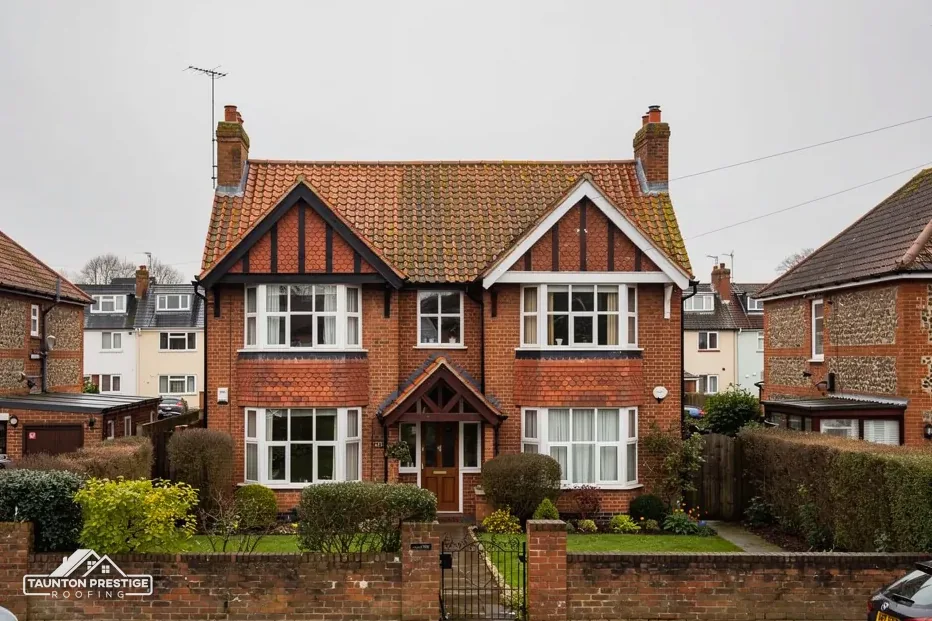
First listed on 4 July 1975; repairs need materials and methods that respect a building of special interest.
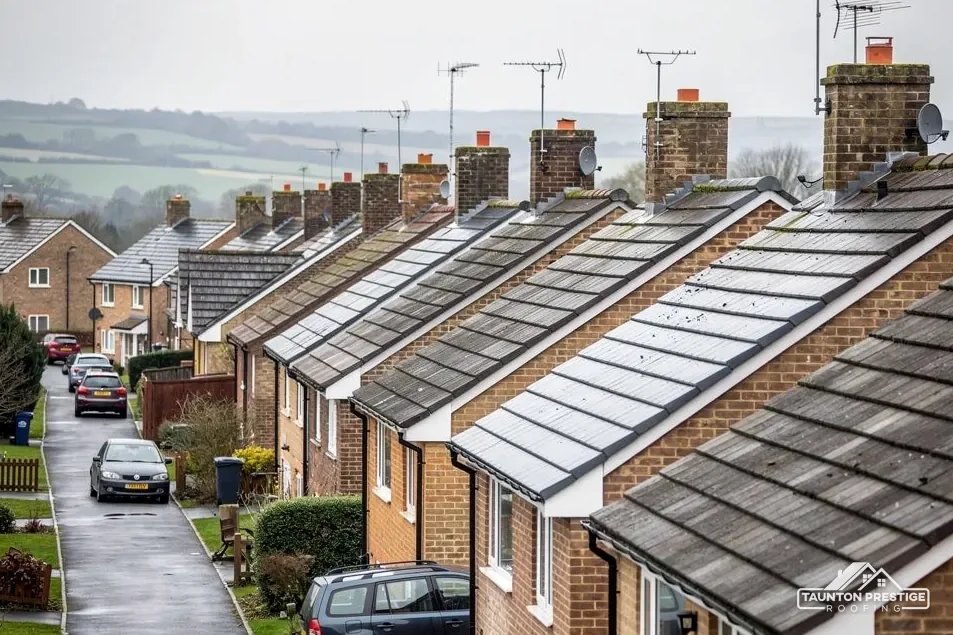
A conservation area designated on 14 March 2023, reaching to within about 0.75 km of the centre.
Street map of Galmington with Comeytrowe, Bishops Hull, Trull, Rumwell marked around it, and Taunton.
Comeytrowe lies to the south-west of Galmington, Bishops Hull to the north-west, Trull to the south and Rowbarton to the north-east.
About 1 miles west of Taunton, Somerset Council (unitary).
A roof walk on the western edge
Four things to look at before anyone prices work on a Galmington house, and how each one shapes the job.
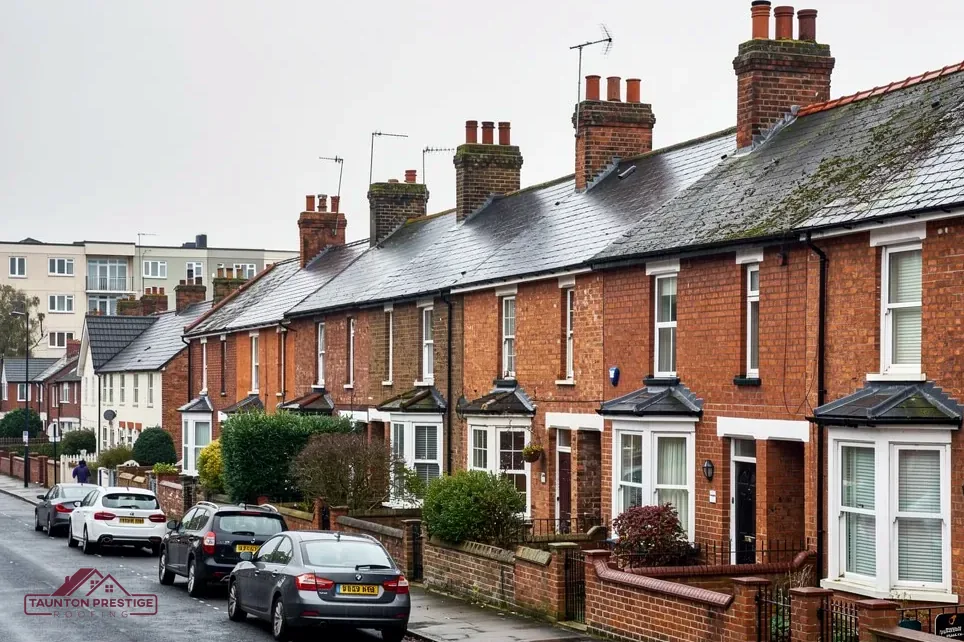
Galmington has two listings on its own doorstep. Numbers 115 and 117 Galmington Road are listed Grade II*, a higher grade than most houses ever reach, and The Manor House has a Grade II listing. The National Heritage List for England counts 2 entries within 500 metres of the centre. If your house is one of them, or shares a boundary with one, start by finding out who must approve the work. That question comes before any talk of slate or tile.
Replacing like with like, laid to the same pattern, is often a repair. Listed status leaves the usual permitted development in place, yet work touching the qualities that earned the listing also needs listed building consent. Swapping the covering, altering the ridge, adding a window to the road slope or rebuilding a stack may each count as a change of character. Our page on listed building consent for roof work sets out the route, and the planning team at Somerset Council will confirm the position for your address.
Historic England runs the National Heritage List for England, and your address can be looked up there. Each entry names the grade, a reference number and the date of first listing. Plenty of listed houses look ordinary from the street, and a house beside a listed one may sit within its setting. If the entry names your address, tell us before the survey, because it changes how we record the roof.
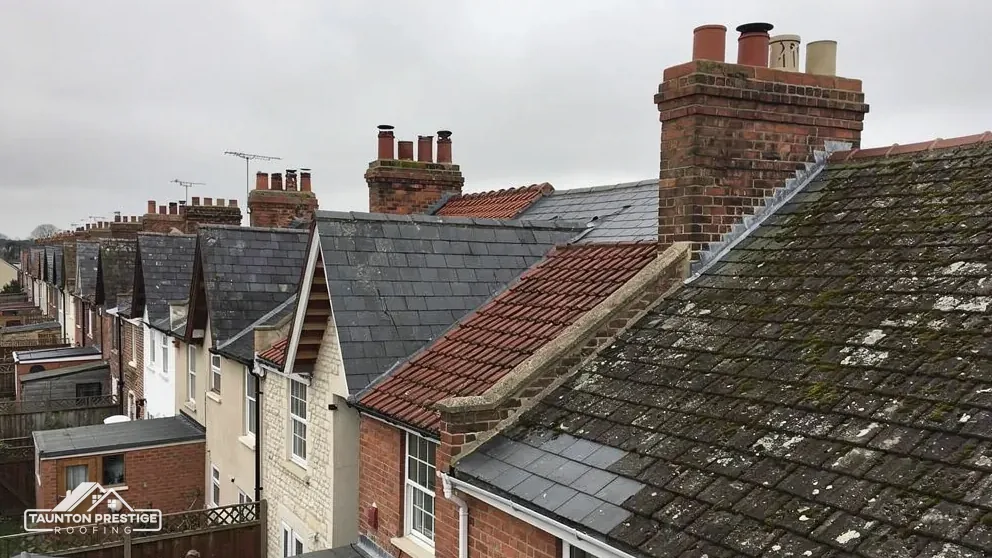
At the survey we photograph each slope and note what it is covered in. We also look at the battens, the thin laths nailed across the rafters that carry the slates or tiles. You see all of those photos, and so does the planning officer if an application is needed. Matching old and new is where listed work succeeds or fails: size, colour, texture and the run of the courses all count.
Look for
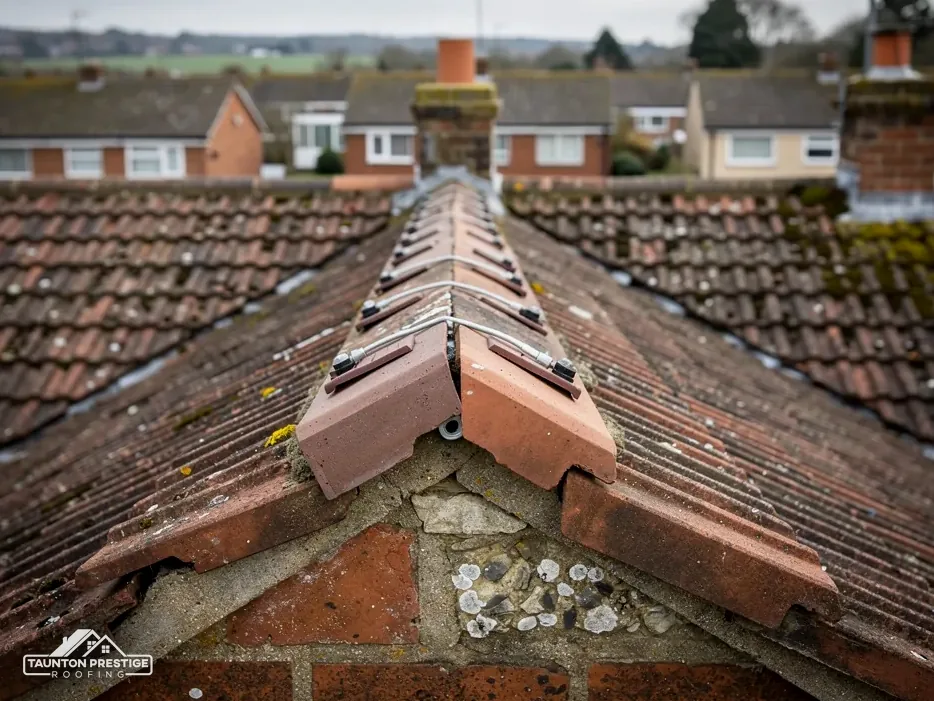
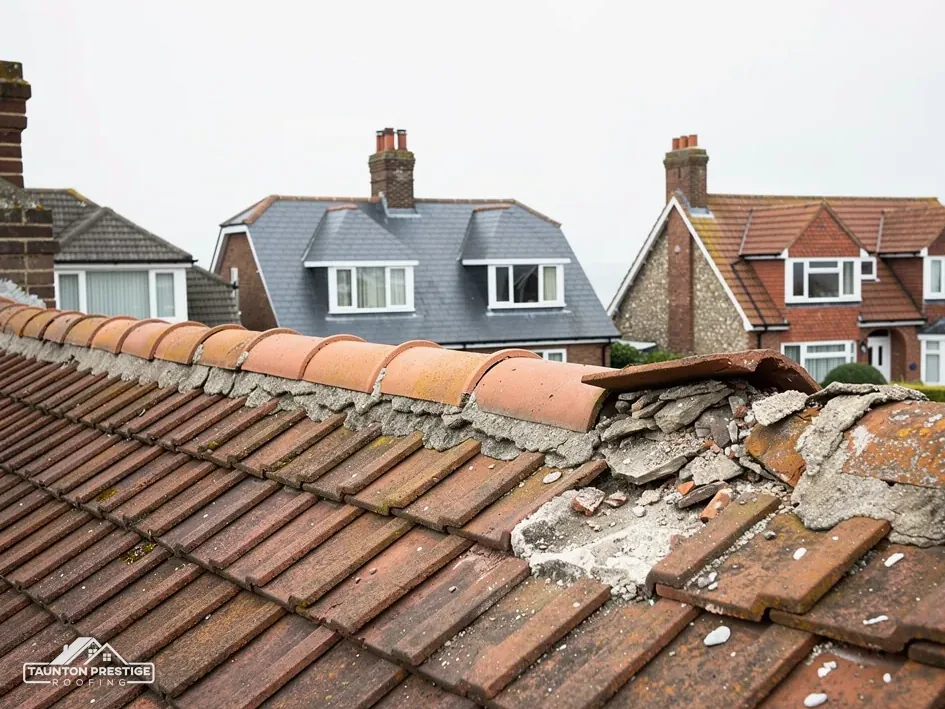
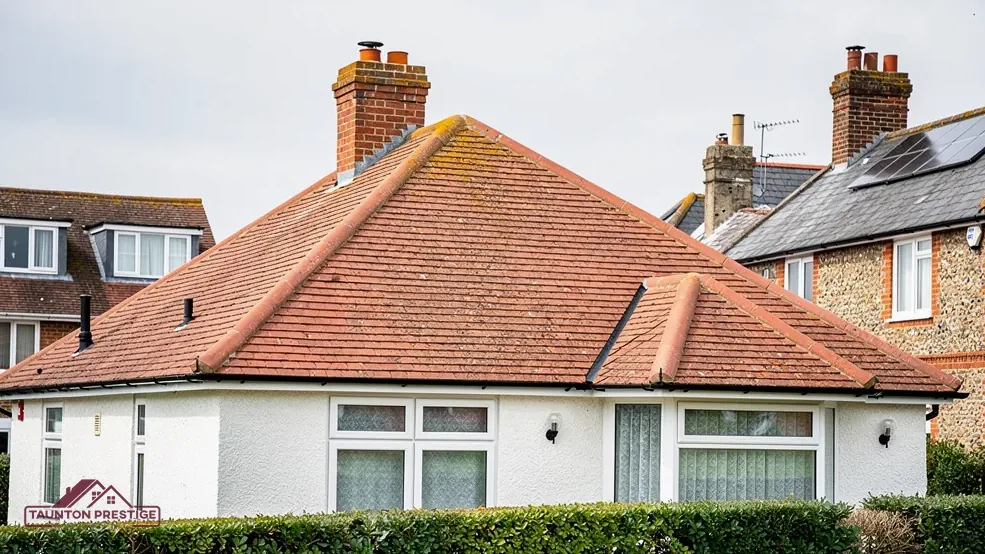
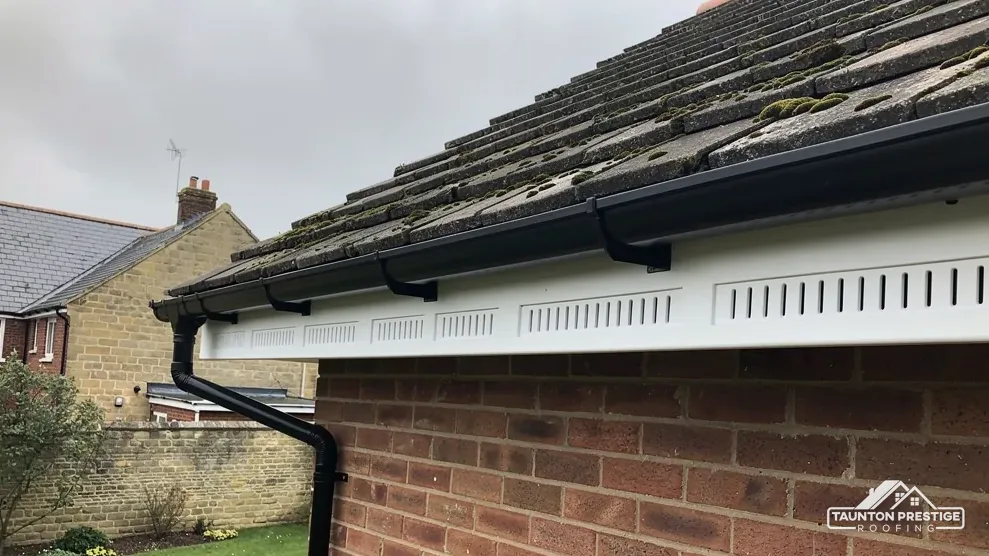
Capping tiles run along the top of the roof to form the ridge, and on an older house it is often the first part to show its age. Below it, every slate or tile hangs by a nail or hook, and when that fixing fails the piece slips.
What decides the price
One cracked joint can be raked out and refilled. A ridge that rocks under a gloved hand, or has dropped tiles into the gutter, wants taking off and relaying. Marley notes that since the 2014 revision of BS 5534, mortar's own strength is no longer trusted for ridge and hip tiles, which is why a relaid ridge now carries clips or screws as well. BS 5534 is a code of practice, not the law, and mortar is not banned; it simply cannot be left to do the job alone. A dry-fix ridge, held by clips and screws in place of a mortar bed, is the other route, and our dry ridge and verge page compares the two.
Sometimes. A lone slate can be slid up and clipped, or swapped for a close match. We read the whole slope first, since a single slip beside several neighbours points to a bigger fault. Beneath the battens lies the underlay, a membrane whose condition shows whether water has been getting in. When many fixings have gone, patching turns into a string of call-outs, and taking the slope off and laying it again makes better sense.
Lifespans are ranges, not promises. CORC (the Confederation of Roofing Contractors) gives natural slate 100+ years when it is well maintained. Marley puts roof tiles at around 60 years, adding that the figure is no warranty. A young roof can fail at its fixings and an old one can still be sound, so we judge the roof in front of us. If the survey shows the whole covering is tired, our pitched roofing page weighs patching against a full re-cover.
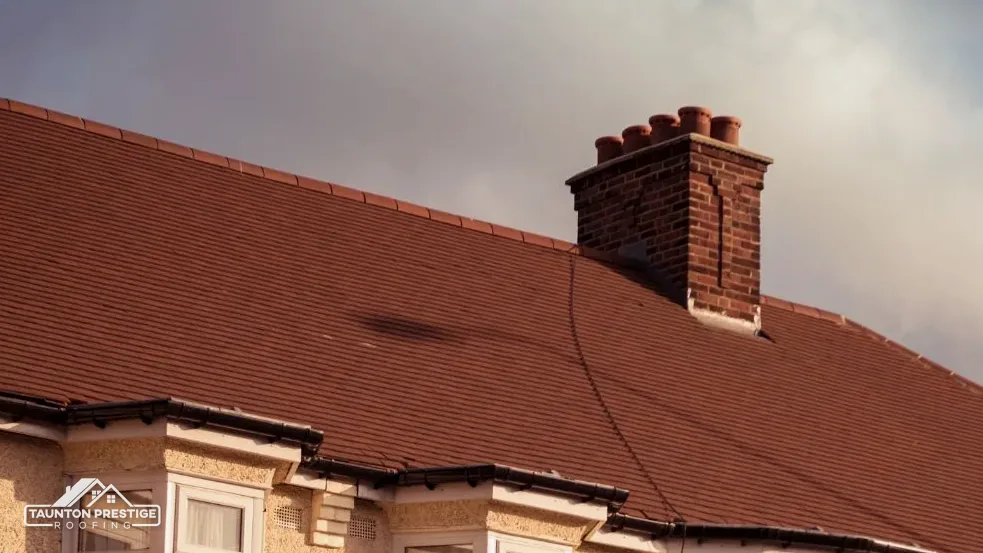
A chimney stack takes a lot of weather and gets little attention. Brickwork, flaunching and flashing hold it together. Flaunching is the sloped cement cap that seats the pots and sends rain away from the flue. Flashing is the lead strip that closes the joint between stack and slope. When either one fails, water tracks down the flue wall and appears as a brown stain on a bedroom ceiling.
Most often the water is entering at the flashing or through cracked flaunching, not through the slates around it. MyJobQuote gives lead flashing a life of over 80 years, so a failed one is often a fixing or a joint problem rather than old age, and a repair may be enough. Cracked flaunching can be renewed with the pots left in place. Repointing is a separate job, and we check whether the bricks themselves are sound before suggesting it.
Taking a stack down above the roofline is one thing; removing a chimney breast inside the house is another. Removing a chimney breast is structural work, so Building Regulations approval is needed every time. If the breast is shared with next door, the Party Wall etc. Act 1996 gives the neighbour a say, and they must be served notice a full two months in advance. That question belongs with a party wall surveyor, not building control. On a listed house, taking down a stack may also need listed building consent, so ask before anyone orders a scaffold. Our chimney repairs page covers the repair options.
Stacks and eaves can also hold nests. A nest in use is protected against intentional damage under the Wildlife and Countryside Act 1981, so we look before we start and plan around it.
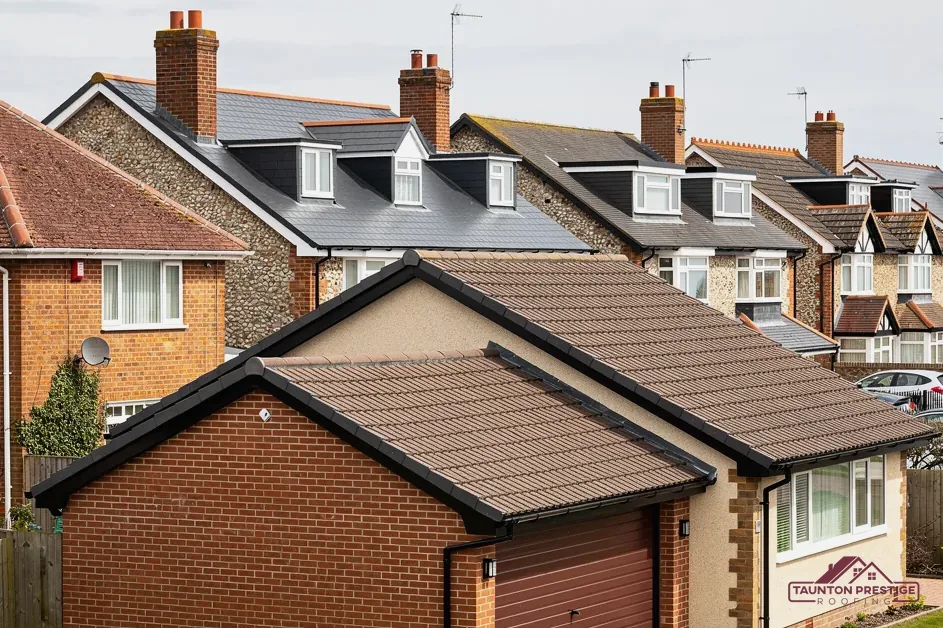
Some Galmington jobs need only ladders or a mobile tower. A re-roof or a chimney rebuild usually calls for scaffold. If it has to sit on the pavement or the carriageway, the highway authority must license it under section 169 of the Highways Act 1980. Scaffold that stays within your own land, such as a drive or front garden, stays off the highway, so no licence applies.
What decides the price
In Galmington the highway authority is Somerset Council, and the appointed contractor applies, because the council hands scaffold licences to accredited contractors only. The council asks for at least 10 working days' notice and charges £124.60 for each 28-day period (April 2026). If the work runs past the permit period, an extension has to be bought, which is why the start date we quote already allows for the wait.
The Planning Portal's test turns on the size of the job: while the work stays under 25 per cent of the building envelope and under 50 per cent of the roof, no building control application is normally needed. Where the new covering is 15 per cent or more heavier, Building Regulations approval is needed, and the structure should be checked beforehand. Somerset Building Control, on 0300 303 7790, covers Galmington and publishes no re-roofing threshold itself, so the Planning Portal test is the one to use. Work close to the Haines Hill and Trull Road conservation area also merits a call to the planning team before anything is ordered.
When the survey is finished, you are given photos from the roof and one price in writing for the work. All site waste leaves with us at the end. Photos of the stack, the ridge and the listing entry, if there is one, are the best things to send with your first message.
Walked the roof?
When you have read the checks, we walk the roof and show you the photos.
Where the house itself is not listed, like-for-like repair is the usual route, and we match size, colour and profile as closely as the old covering allows. If your address is on the National Heritage List, the repair may need listed building consent when it affects the building's character. Check the grade and the list entry first, then speak to Somerset Council's planning team.
It was designated on 14 March 2023 and lies within about 0.75 km of the centre of Galmington, so some addresses will fall inside it and others will not. Inside a conservation area there are no permitted development dormers, and a change of covering is worth raising with the planners first. Check your address with Somerset Council's planning team before ordering materials.
Often, yes. Lead flashing can last for over 80 years, so a leak at the stack is frequently a failed joint, a lifted edge or cracked flaunching, not worn-out lead. We check the flashing, the cap round the pots and the nearby slates before suggesting a repair, and we say plainly when renewal is the better buy.
When the same slope keeps needing visits. A few slipped slates with sound battens are a repair. A run of failed fixings, soft battens or an underlay that has perished suggests the covering is worn out. The survey photos show which case you are in, and we price the job that fits.
Send your Galmington address and any listing details, and we will fix a date to look at the roof.