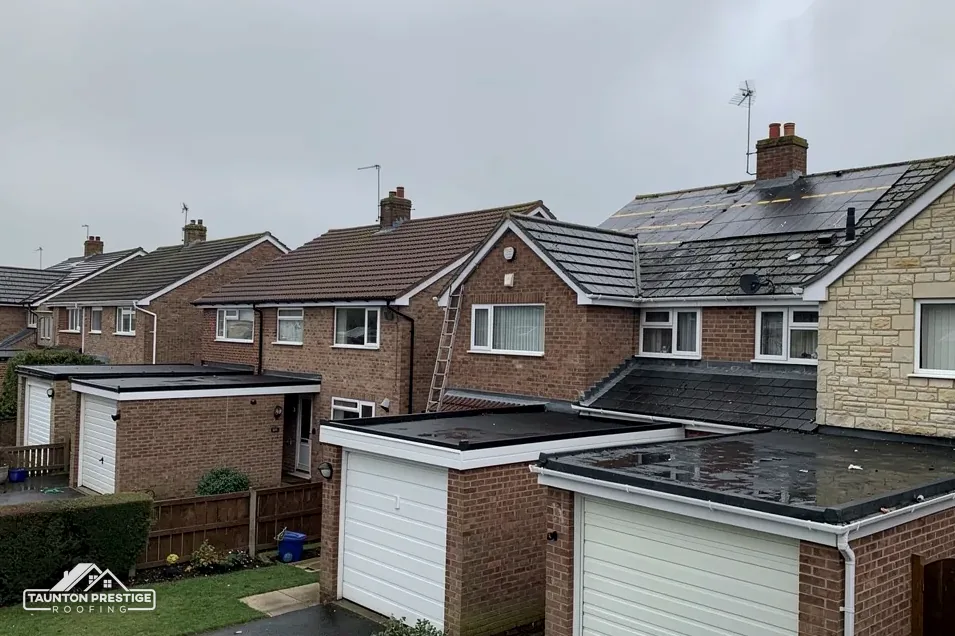
55 Kingston Road, Grade II
Listed on 4 July 1975, so any repair to the roof has to respect what makes it special.
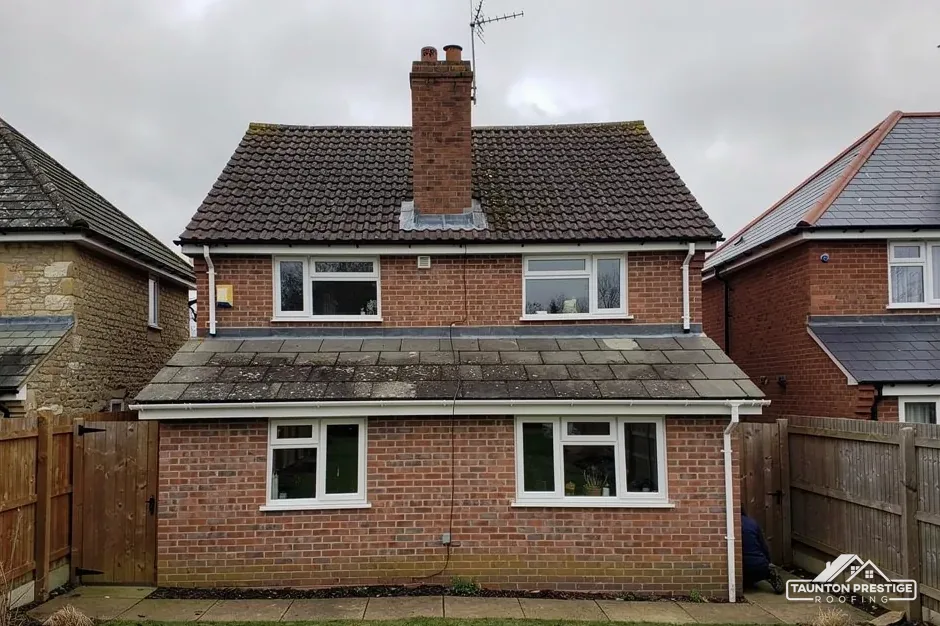
Listed Kingston Road addresses beside the Staplegrove Road conservation area
Rowbarton lies north of Taunton station, with 6 listed entries inside 500 metres and the Staplegrove Road conservation area close by. We survey first and price after.
Listed on 4 July 1975, so any repair to the roof has to respect what makes it special.
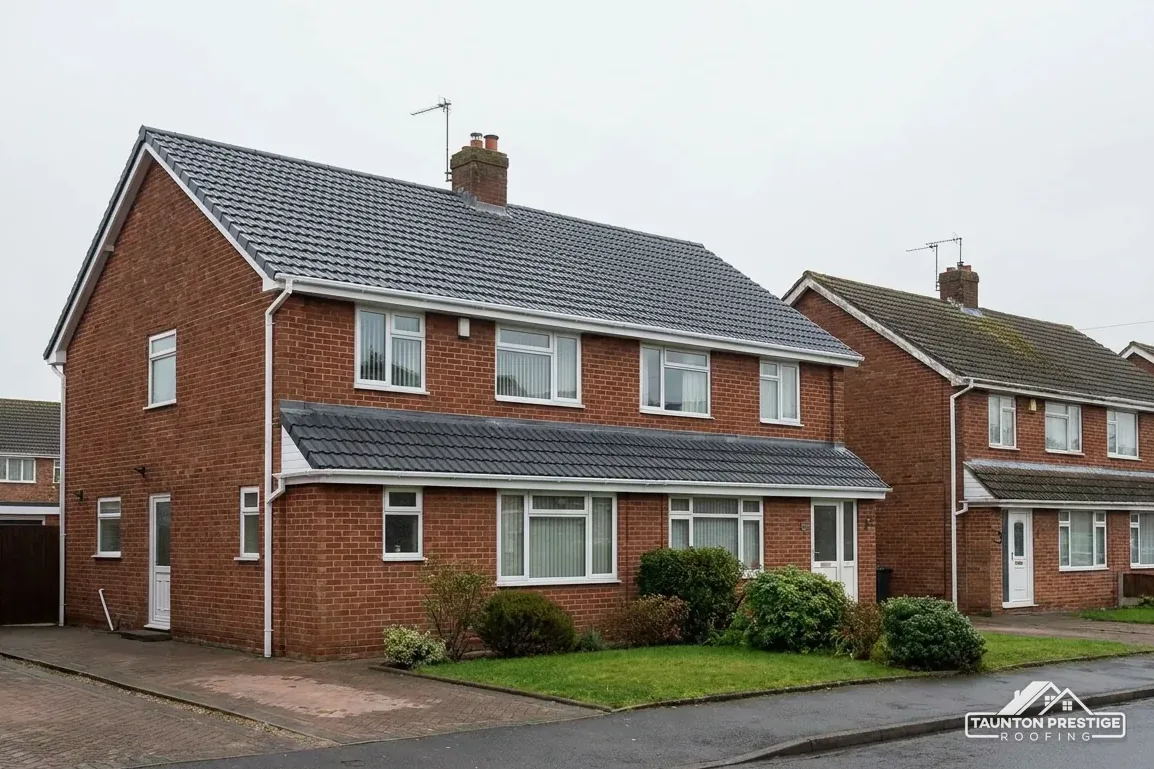
Also Grade II and first listed on 4 July 1975; work affecting its character needs listed building consent, as for a house.
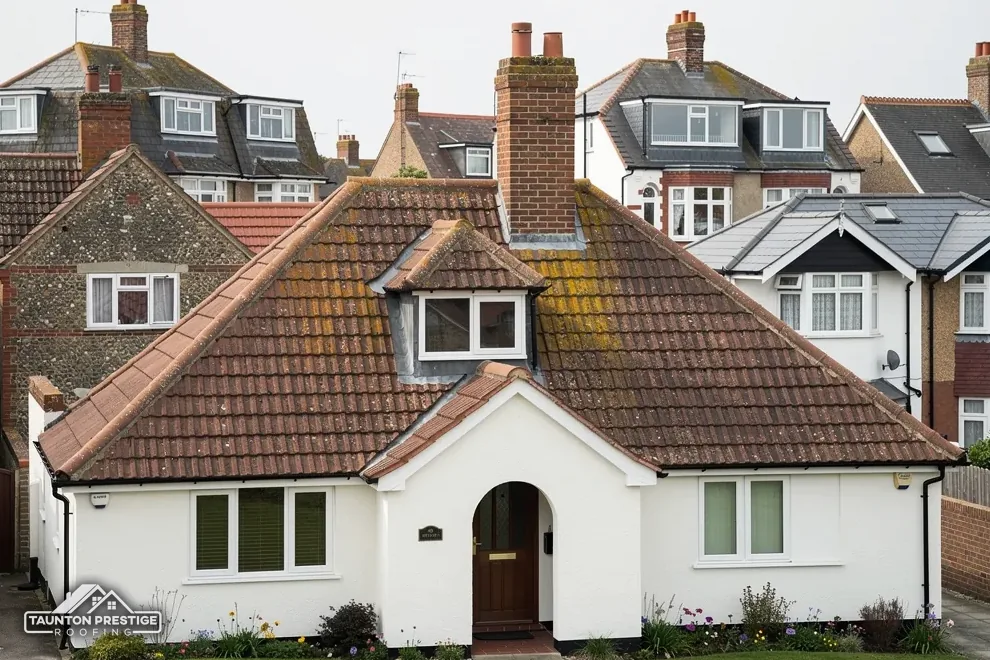
Designated 15 January 1975 and revised 12 November 1998; it lies within about 0.75 km of the centre.
Street map of Rowbarton with Lyngford, Staplegrove, Priorswood, Bishops Hull marked around it, and Taunton.
Lyngford lies just to the east of Rowbarton, Staplegrove to the north-west, Priorswood to the east and Bishops Hull to the south-west.
About 1 miles north of Taunton, Somerset Council (unitary).
Four checks north of the station
Four things worth knowing before a Rowbarton roof is priced, from consent and listings to lead and nesting birds.
The Staplegrove Road conservation area lies within about 0.75 km of the centre of Rowbarton. Somerset Council's table shows it as designated on 15 January 1975 and revised on 12 November 1998. The same council's list of Article 4 directions includes one for Taunton, Staplegrove Road, confirmed in 1977. Article 4 directions take away named permitted development rights within a set area, and Somerset Council's page warns that an application may then be needed for work that would otherwise not require one. What this direction takes away is for the planning team to confirm.
The national dataset places the area within about 0.75 km of Rowbarton's centre, so some streets may sit inside it and others outside. The council publishes a map and an appraisal for it. Find your street on the map, and if the house is close to an edge, ask the planning team to confirm in writing. That one email can save you from ordering a covering that then has to come off again.
Three questions are worth asking. Does a conservation area apply to my address? Is an Article 4 direction in force, and does it touch roofs or roof windows? Will a change of covering, ridge style or chimney need an application? If the answer to any of them is yes, the application goes in before work starts, and our survey photos support it.
Where nothing about the roof's appearance changes, the job runs as an ordinary repair. A slipped slate put back, a cracked tile swapped for a close match and a gutter re-fixed are all examples. Even then, we note the existing covering slope by slope, because a record made before the work starts settles any later argument about what was there.
What decides the price
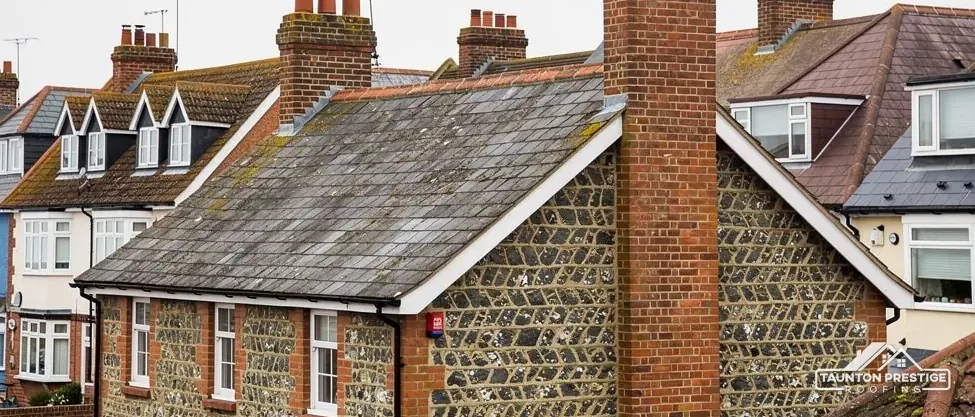
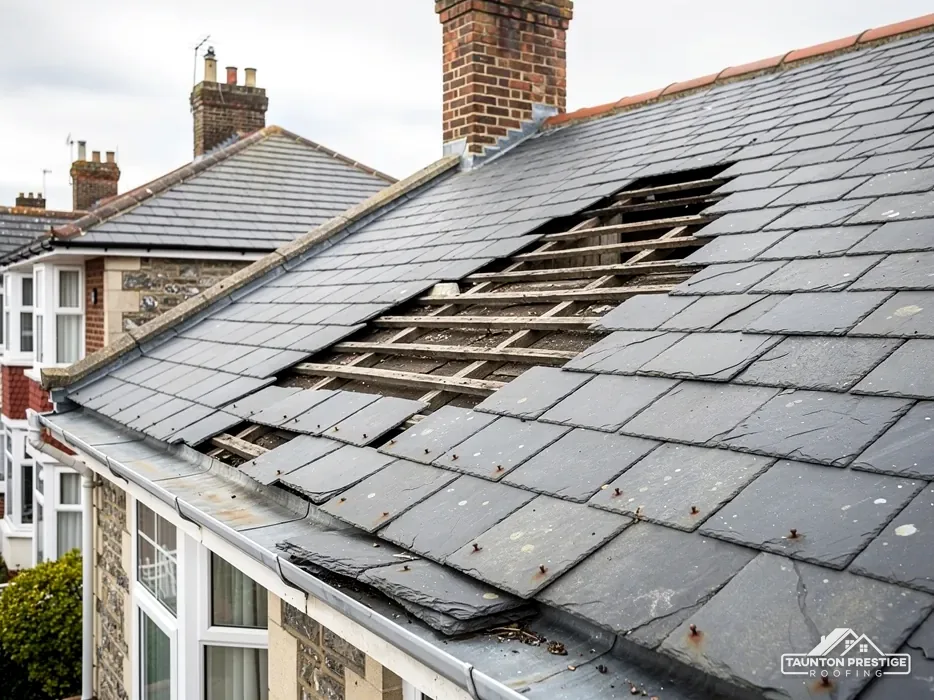
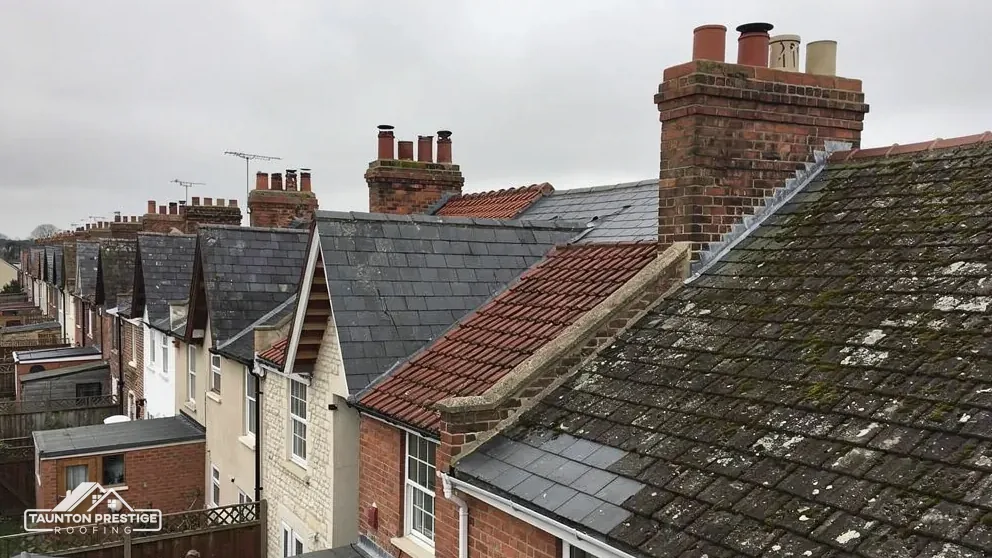
Historic England's list records 6 listed buildings or other entries within 500 metres of the centre of Rowbarton. Among them are 55 Kingston Road, listed Grade II on 4 July 1975, and the Cottage Inn (Centre Building), also Grade II and first listed on 4 July 1975. Fairwater is a further Grade II entry, and Taunton School, Wellsprings and St Andrew's Church make up the rest of the six, each Grade II as well. A listing covers the whole building, roof included, so it matters to anyone with a leak under a listed ridge.
Look for
Not freely. Any change to its special character needs listed building consent, and a new covering often counts. Our page on listed building consent for roof work sets out the route. Repairs in matching materials are the gentler path, and the survey tells you which kind of job yours is.
Listing covers the whole building, so a roof repair and a roof change are two different conversations.
The same rules apply. A listed commercial building is no different: work touching its character needs consent, and the owner, the tenant and the landlord should agree who is responsible for the roof before anyone is called out. The survey photos give every party the same picture of the problem.
Not every address near a listing is itself listed. A neighbouring house may not be, though its setting can matter. Check the address against Historic England's published list before assuming either way. We list the covering slope by slope. An application, if one is needed, then rests on what is up there today and not on memory. Quote the list entry number when you write to the planning team, and ask for the grade and date at the same time, since both appear on the list page.
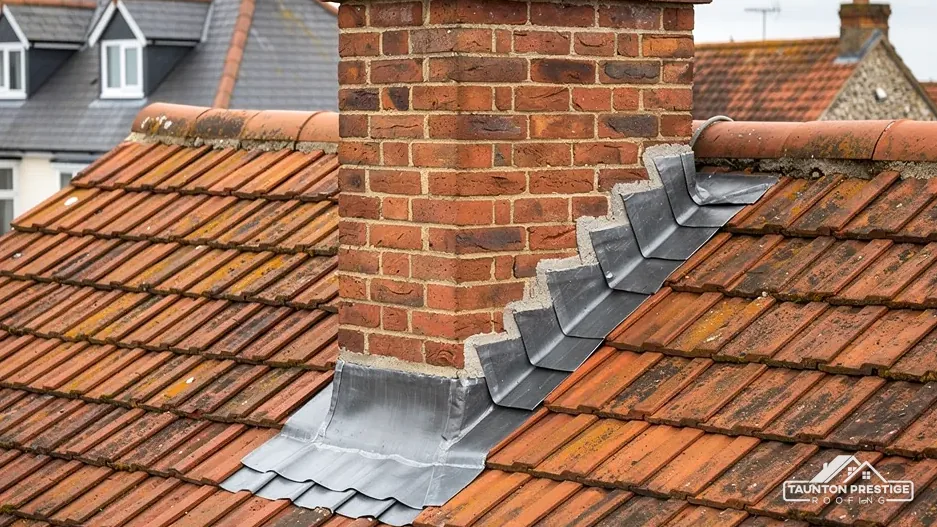
Where two slopes run together at an inside corner they form a valley, which drains both. On a slate roof the valley may be lined with lead. Soakers are small lead pieces tucked under each slate or tile along an abutment with a wall or stack, turning water back out onto the covering. Both sit out of sight under the slates, which is why a leak from them can reach a ceiling long before anyone sees a fault on the roof.
What decides the price
Lead flashing "can last for over 80 years" (MyJobQuote), and the figure is a floor, not a ceiling. A leak therefore often means a split along a fold, a lifted edge or a slipped fixing, not a worn-out sheet. A lead code is a number that stands for sheet thickness: Royston's cast-lead brochure gives code 3 as 1.32 mm and code 5 as 2.24 mm, with code 3 listed for soakers only and the heavier codes for flashings and valley gutters. The code we choose follows the job and the conditions, not habit.
Sometimes, when the split is short and the metal around it is sound. If the lead has cracked in several places, patches fail again quickly and the valley should be renewed. We lift the slates beside the valley to see its true state, and the photos show you what we saw. Our lead work page explains flashings, valleys and soakers in more detail.
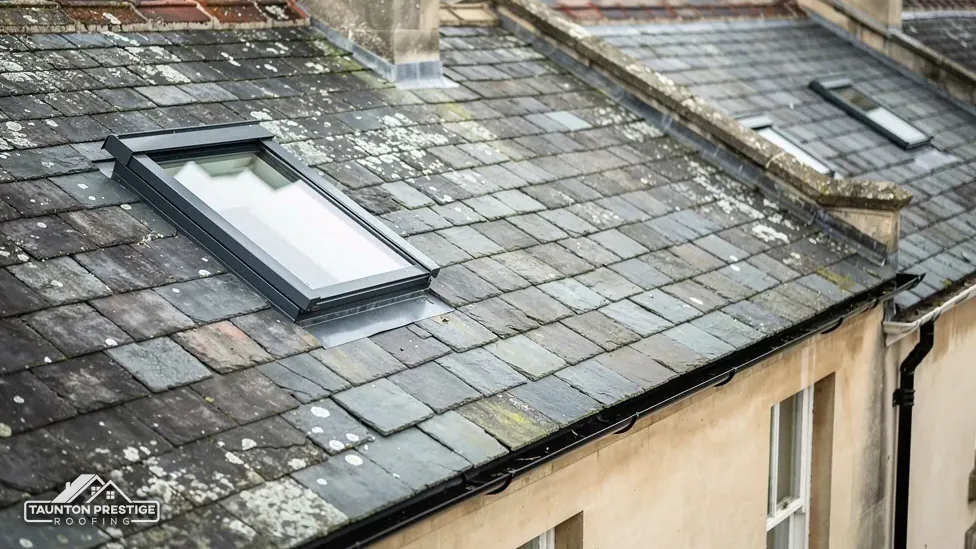
Slate beside a lead valley deserves a look as well. Slates along the edge are cut to follow the line of the valley, and if their fixings have rusted they slip into the channel and block it. Clearing and refixing them is cheaper than relaying the whole slope, and it is usually where we begin. Where the valley lead itself is sound, that refix may be the whole job.
Sound or needs work
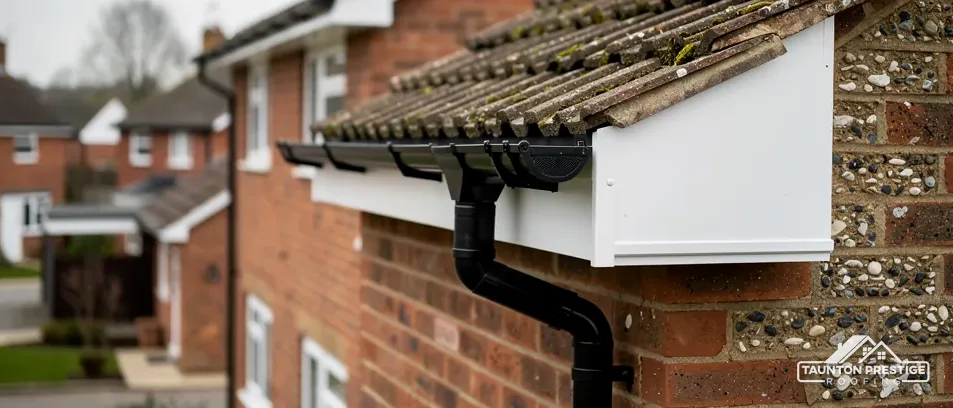
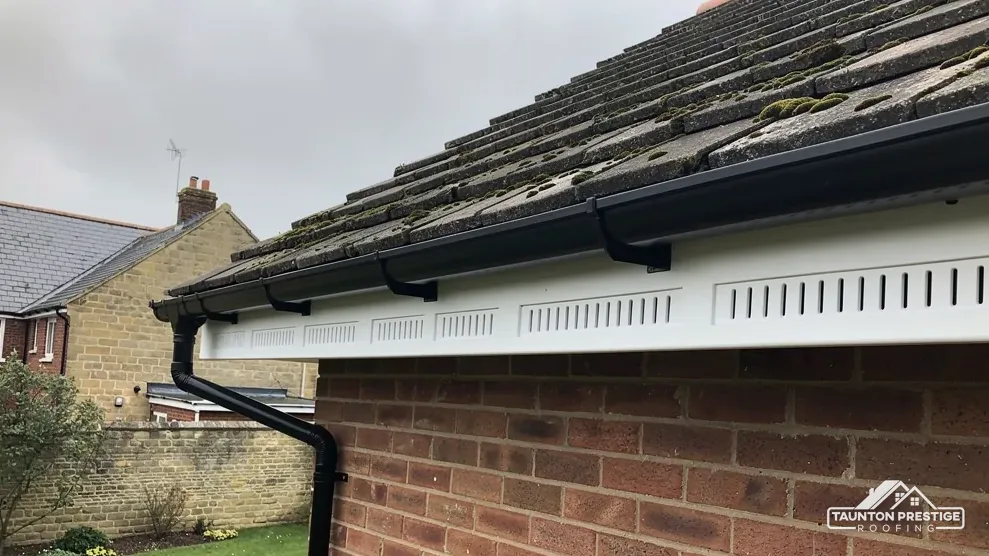
Under the gutter line, the fascia and soffit close the roof off from the weather and from birds. Gutter brackets fix to the fascia, the upright board, and the soffit lines the underside of the overhang. On a house built or refurbished before 2000, HSE advises assuming there is asbestos in it, and says it is difficult to tell asbestos insulating board (AIB) from a non-asbestos equivalent by eye. Whether taking out AIB soffits counts as licensed work depends on HSE's risk assessment rules, so we establish that before planning the job.
A nest in use does. A wild bird's nest that is being built or used may not be intentionally harmed: section 1 of the Wildlife and Countryside Act 1981 makes that an offence, and GOV.UK confirms there is no licence to allow it for construction. Any nest found under the eaves at survey decides when work can begin.
All bat species, with their roosts, have full protection, and GOV.UK lists repairing a roof as work that may disturb them. Section 9(4) of the 1981 Act makes it an offence to trouble a roosting bat or close its access, intentionally or recklessly, and regulation 43 of the Habitats Regulations 2017 treats damage to a roost as a distinct offence, where intent need not be shown. Should droppings or similar signs turn up, we pause and tell you the next step.
None of this is a reason to put off a repair. It is a reason to look first. Our gutters, soffits and fascias page covers the board work. Send your Rowbarton address and a photo of the eaves, and we will book the visit.
Walked the roof?
When you have read the checks, we walk the roof and show you the photos.
Often, yes, because repair in matching slate keeps the look of the roof as it was. We refix slipped slates, replace broken ones with a close match and check the battens underneath. The conservation area and the Article 4 direction listed for Staplegrove Road are worth checking before the covering or ridge style changes, so ask the planning team first.
Not directly. Listed building consent attaches to the building that is listed, and your house needs it only if it is listed itself. A listed neighbour can still make the planning team take more interest in a visible change. Look your house up on Historic England's list, and talk to the neighbour about any shared roof or wall.
Often, if the split is short and the rest of the lead is sound. Lead can last for over 80 years, so one failed fold does not mean the whole valley has gone. If the lead has cracked in several places, renewal is the better buy. We lift the slates alongside to see the real condition and photograph it for you.
We pause the affected part of the work and tell you the next step. Bats have full legal protection, roosts included, and roof repair is one of the activities GOV.UK flags as able to affect them. Specialist advice is needed before anyone disturbs the roost or blocks access to it.
Send your Rowbarton address and a photo of the area that worries you, and we will book the survey.