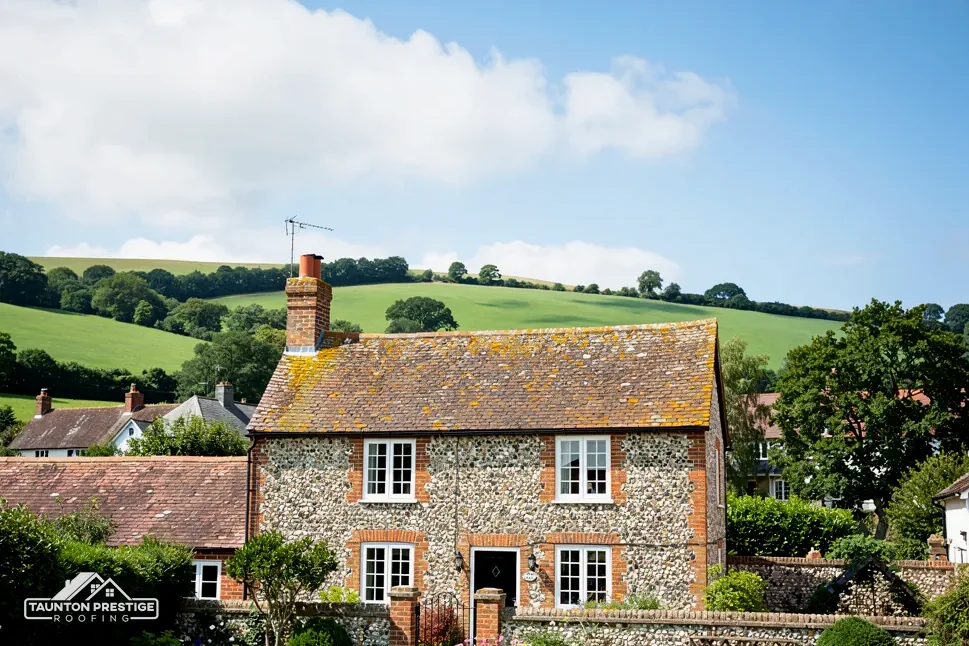
Burnworthy Lodge
Listed Grade II on 18 December 1986; it is the only list entry within 500 metres of the centre.
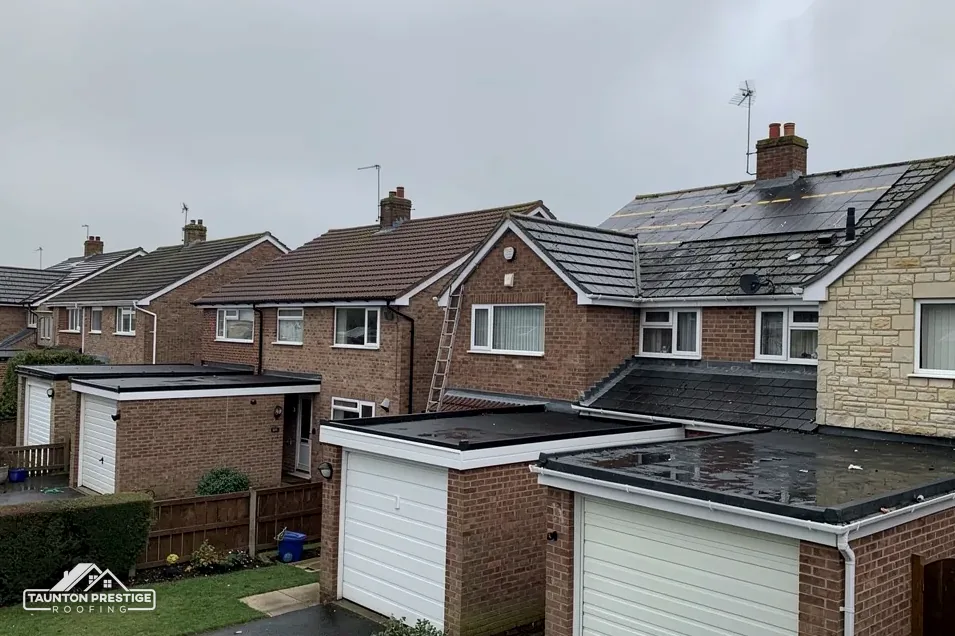
A Blackdown Hills hamlet with a Grade II lodge
Burnworthy is a hamlet in Churchstanton parish, inside the Blackdown Hills National Landscape, with Burnworthy Lodge listed Grade II. We read the roof before we price it.
Listed Grade II on 18 December 1986; it is the only list entry within 500 metres of the centre.
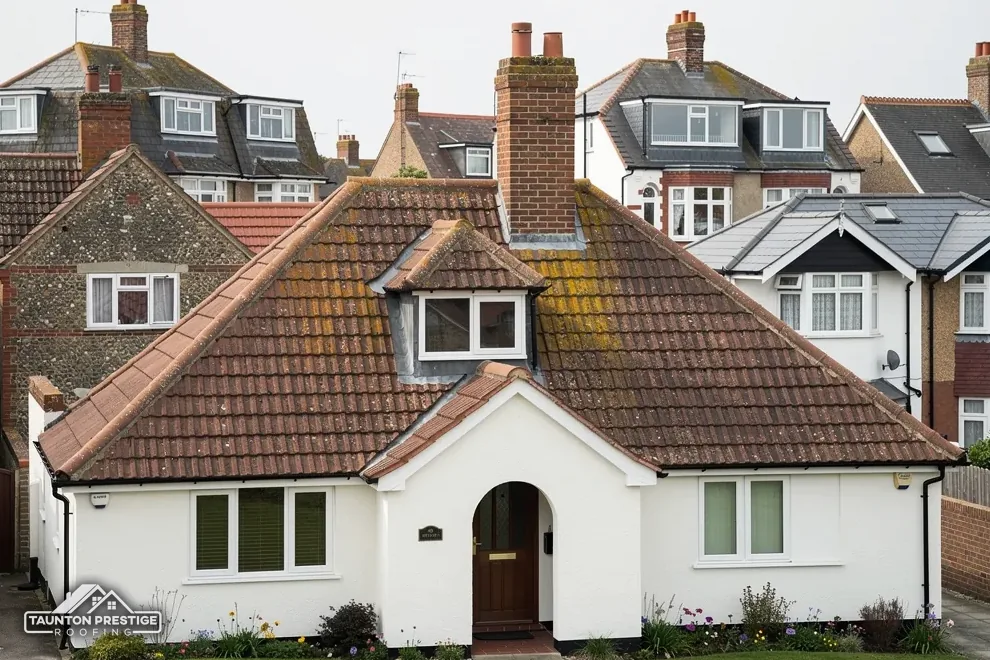
Burnworthy lies inside the area renamed from AONB in November 2023, where dormer plans meet tighter rules.
A heritage record notes a 200 m bank of chert pieces forming a field boundary south of Burnworthy.
Street map of Burnworthy with Churchstanton, Clayhidon, Angersleigh, Blagdon Hill marked around it, and Taunton.
Churchstanton and Churchinford lie to the south-east, Clayhidon and Ashculme to the west, and Blackmoor to the north-west, while Angersleigh sits north and Blagdon Hill north-east.
About 6 miles south-west of Taunton, Somerset Council (unitary).
Four checks on the Blackdown slopes
How to learn whether a house is listed, who holds the planning boundaries, what published lifespans mean and what to do with an old garage roof.
The list entry for Burnworthy Lodge is Grade II, dated 18 December 1986, and it is the only entry within 500 metres of the hamlet's centre. That makes the question of whether a house is listed a live one here: a listed lodge can stand a few fields from unlisted houses that look much alike, and neither the age of a building nor its appearance settles the matter.
Historic England's register of listed buildings can be searched online by address or name, and Somerset Council's planning team can confirm an entry for a particular house. Ask for the answer in writing. Do not rely on a neighbour's say-so or a sale particular; they are often wrong in both directions, and a roof job done on the wrong assumption is expensive to undo.
A listed house keeps its permitted development rights, but listed building consent from the council is also needed once work starts to alter what makes the building special. Renewing the same covering in the same way is repair. A new covering, a different ridge or new roof windows are changes. Our short answer on listed building roof consent takes the steps in order.
It records what covers every slope, along with ridge, verges, valleys and stack, with photographs and a note of what could not be reached from the ladder. For a listed house that record is what an application starts from, and for any house it is a dated picture of the roof before work began. Burnworthy's small size means the next owner may well be a neighbour who has watched the work go on, and a clear record answers the questions they ask. It also gives a buyer's surveyor something firm to read when the roof comes up in a sale, which a verbal account never does.
Look for
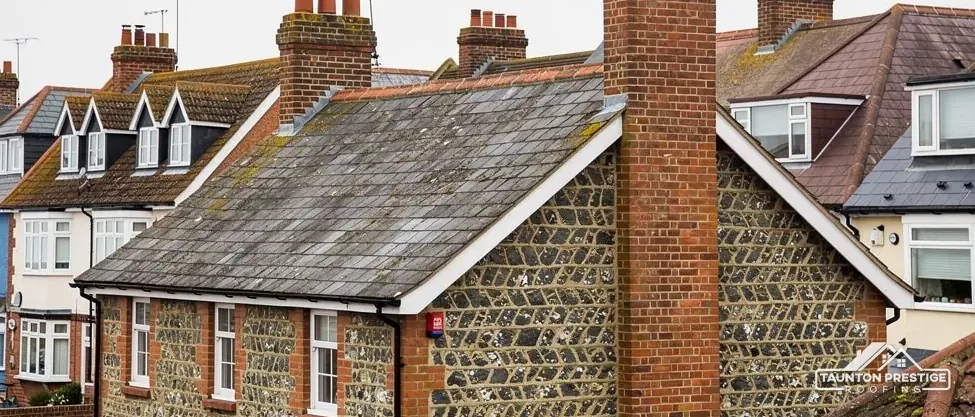
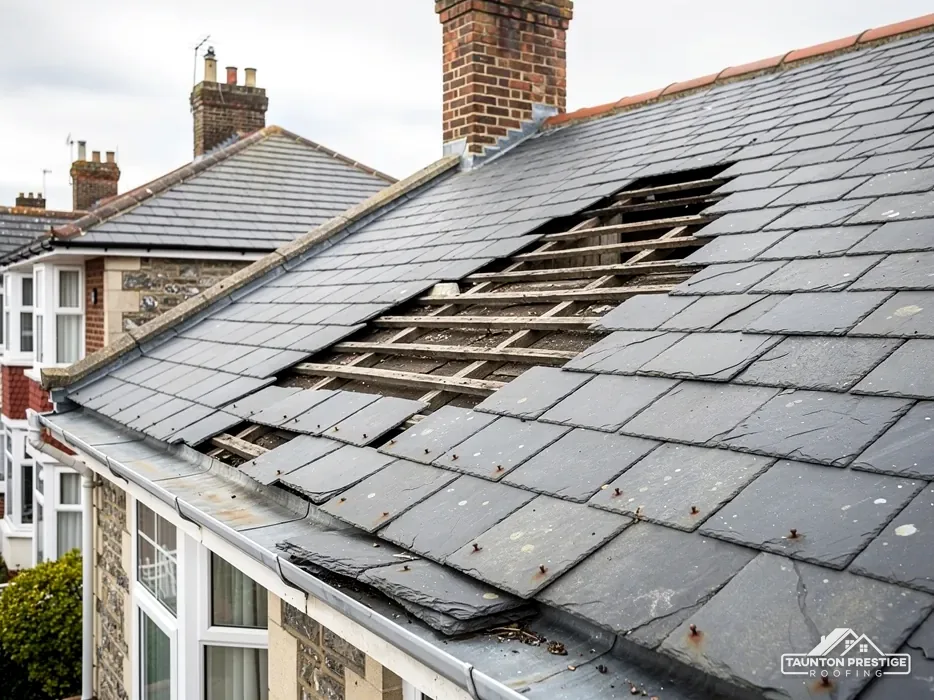
Burnworthy lies inside the Blackdown Hills National Landscape. The area's own website records the rename from AONB, which happened in November 2023 across the country, and government guidance says the new name is not statutory. What matters for a roof is the effect: the rules on dormers are tighter inside a National Landscape, so an owner planning one should speak to Somerset Council's planners before drawings are made.
What decides the price
Somerset Council holds the conservation area boundaries for the whole county, and its planning team can say whether one touches your address. Ask with the full address and ask for the reply in writing, because a written answer settles the point for you, for us and for anyone who buys the house later.
Inside a conservation area, a changed covering or a dormer should be discussed with the council before anything is ordered. Relaying the existing slate or tile, matched in size and laid to its old pattern, rarely raises a question. Outside one, the National Landscape still shapes what a dormer can be. On an exposed hillside the colour and texture of a new covering also show from a long way off, which is one more reason to match what is there. In both cases a straight like-for-like repair carries on as normal, and the survey notes which category applies. We would rather lose an afternoon to a phone call than lose a customer's money to an order that has to be sent back.
Think of what a mistake costs. A re-roof that has to be reversed after the council objects means the covering is bought twice, the scaffold stays up longer and the weather gets a second chance at an open roof. A short phone call, made before the order is placed, is the least costly part of the whole job.
Every covering has a published lifespan, and every one of them is a range with conditions attached. They are useful for planning and no use as promises. We give each figure with the source beside it, so you can see whose estimate it is.
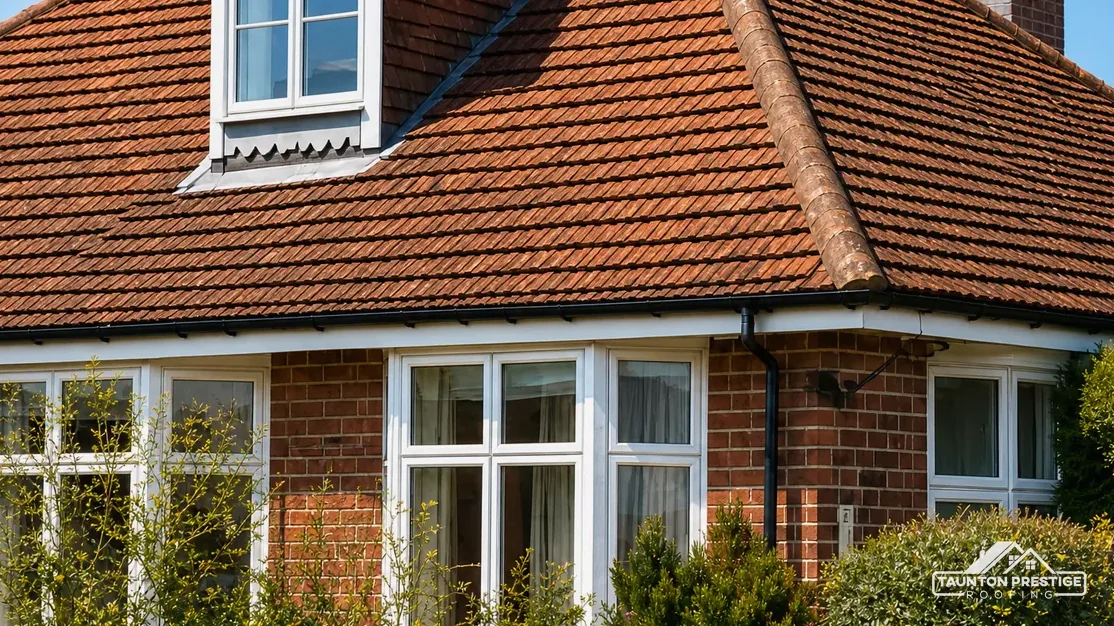
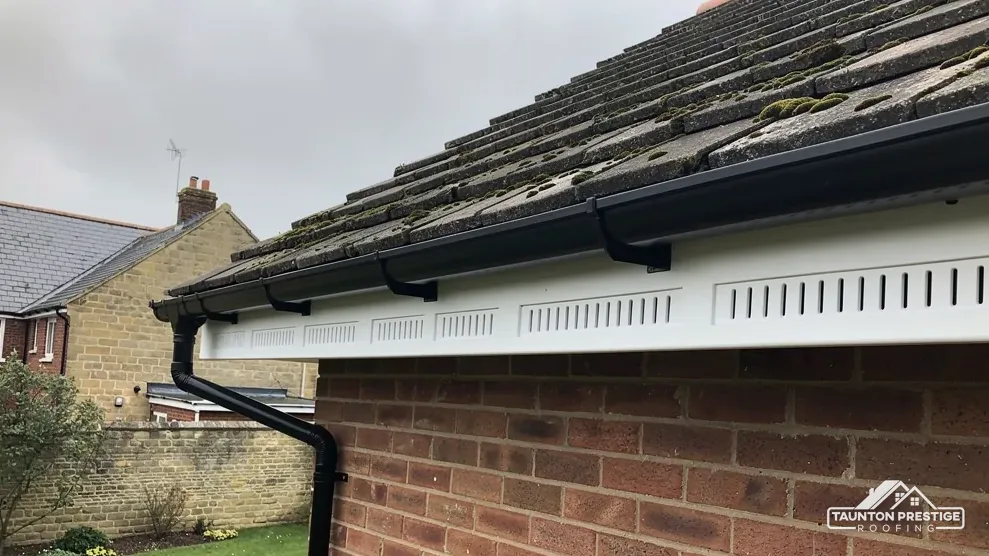
The Confederation of Roofing Contractors (CORC) gives well-maintained natural slate 100+ years. For clay tile, Marley cites the BRE minimum life expectancy of 60 years, which applies to clay only, and Building Conservation observes that this figure is clearly not a reliable guide for old peg tile. Marley's own estimate for concrete tiles is around 60 years, with the warning that it is not a promise of longevity.
A lifespan is what a material might do; a warranty is what a business promises.
On flat roofs the sources disagree. GreenSpec puts EPDM at 20 to 30 years and Less at 30 to 50. Less gives GRP 25 to 40 years and torch-on felt 10 to 20. VM Zinc says its BRE Environmental Product Declaration states 100 years for zinc, and lead can last for over 80 years.
No. A lifespan is an estimate of how long a material can last in the right conditions. A warranty is a promise from a business about defects over a stated period. Ask any roofer to show you in writing exactly what is promised, and for how long. A promise about workmanship, a maker's cover on the product and an estimate of lifespan are three different things, and a quote that blurs them together deserves a second look.
A roof near the end of its range is a candidate for replacement when repairs begin to chase each other across the slopes. Our roof replacement page explains how a full re-roof proceeds, and the survey shows whether your own roof is nearing the point where replacing beats repairing.
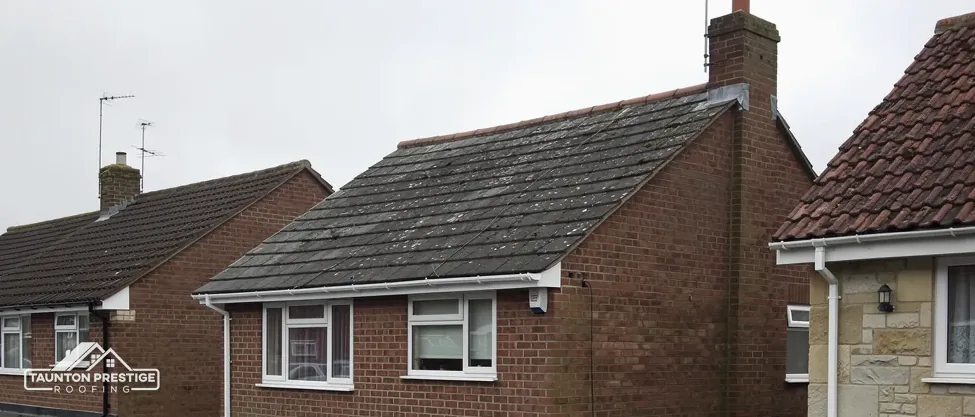
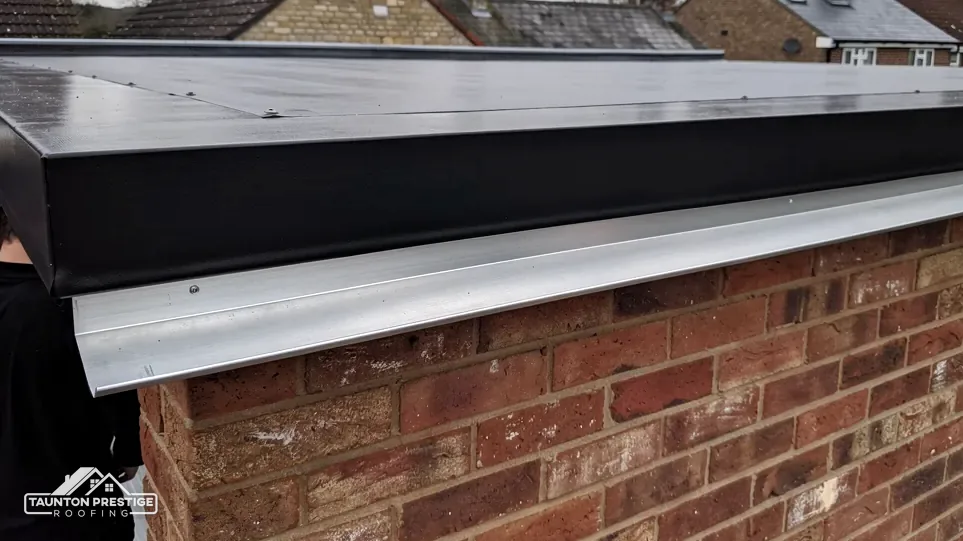
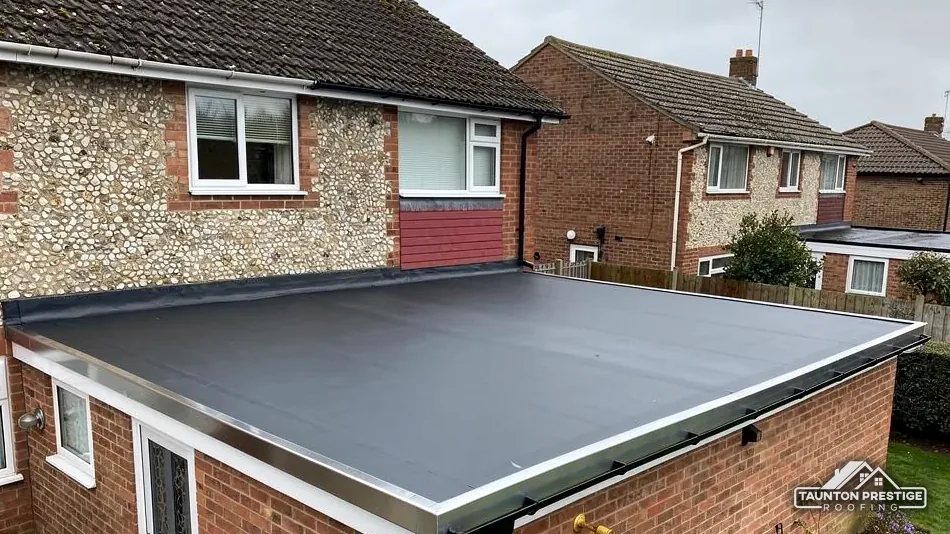
A garage or workshop roof is often the one nobody looks at until it drips onto something that matters. Felt, corrugated sheet and cement sheet are all common, each has a different set of questions behind it, and a Burnworthy outbuilding may carry a roof that was patched several times before you owned it.
MyJobQuote (Oct 2026) gives £750 to £3,500 as the typical UK range for a replacement garage roof, averaging £1,500. For felt, it puts the average at around £1,500, and for a 15 square metre garage in SBS felt, £1,200 to £1,800 (Oct 2026). Less (Oct 2026) gives £1,200 to £2,500 for the same size across materials. Torch-on felt lasts 10 to 20 years, according to Less, and the quality of the work decides which end.
For a garage put up before 2000, HSE's starting point is to treat the sheets as asbestos until a test says otherwise. Whole sheets lifted with care count as non-licensed work, while smashing them up turns it into the notifiable kind. The waste travels on a consignment note, and our garage and asbestos roofs page covers the detail.
When the covering has been patched more than once, when water has reached the deck or the walls, or when the structure sags along its length. A garage that is also a workshop or a store makes the case stronger, since what sits beneath the roof is worth protecting. A new deck and a new covering cost more than a patch, but a patch on a failed deck only holds until the next storm, and the cost of the second visit soon passes the cost of doing it once.
After the survey, one total price arrives in writing. Send the Burnworthy address with a note of the sheet or felt on the garage, and the visit goes in the diary.
Walked the roof?
When you have read the checks, we walk the roof and show you the photos.
Search Historic England's online register by address, or ask Somerset Council's planning team to confirm in writing. Burnworthy Lodge is listed Grade II, but a house nearby may not be, whatever its age or appearance. If yours is listed, work that changes its character needs listed building consent before it begins.
Somerset Council's planning team holds the conservation area boundaries and can tell you whether one includes your address. It is the body to ask, not a map found online or a neighbour's memory. Ask in writing, and keep the reply with the deeds, since a buyer's solicitor may ask for it.
Patching suits a sound deck with one failed seam or edge. If the felt has been patched several times, if the deck is soft, or if the fall is lost, replacement is the better buy. Less puts torch-on felt at 10 to 20 years, so the roof's age matters too. The survey checks the deck before we suggest either.
A covering that is 15 per cent or more heavier needs Building Regulations approval, and the Planning Portal advises asking a structural engineer or surveyor first. The question arises whenever one material replaces another. Somerset Building Control is on 0300 303 7790, and we raise the weight question at the survey.
Send the Burnworthy address and a line on what the roof is doing, and the survey gets a date.