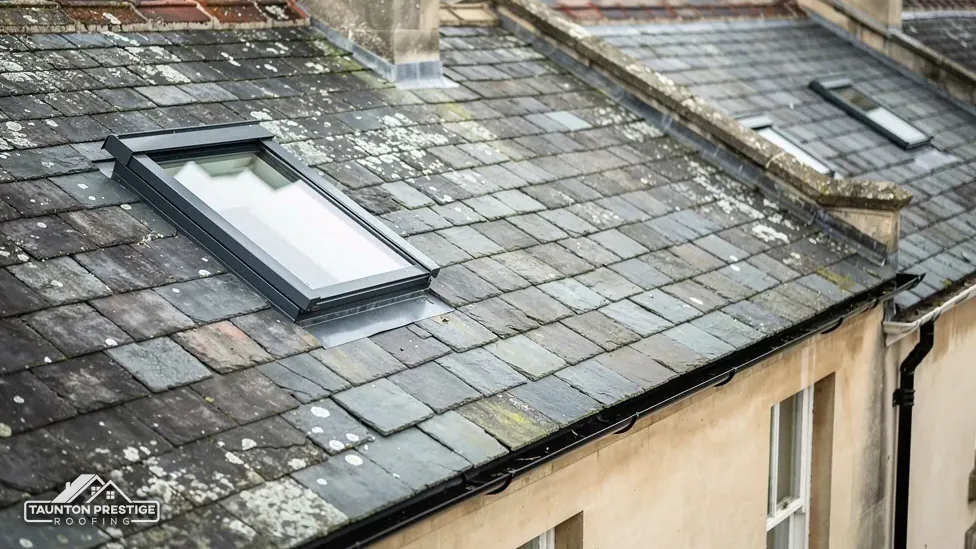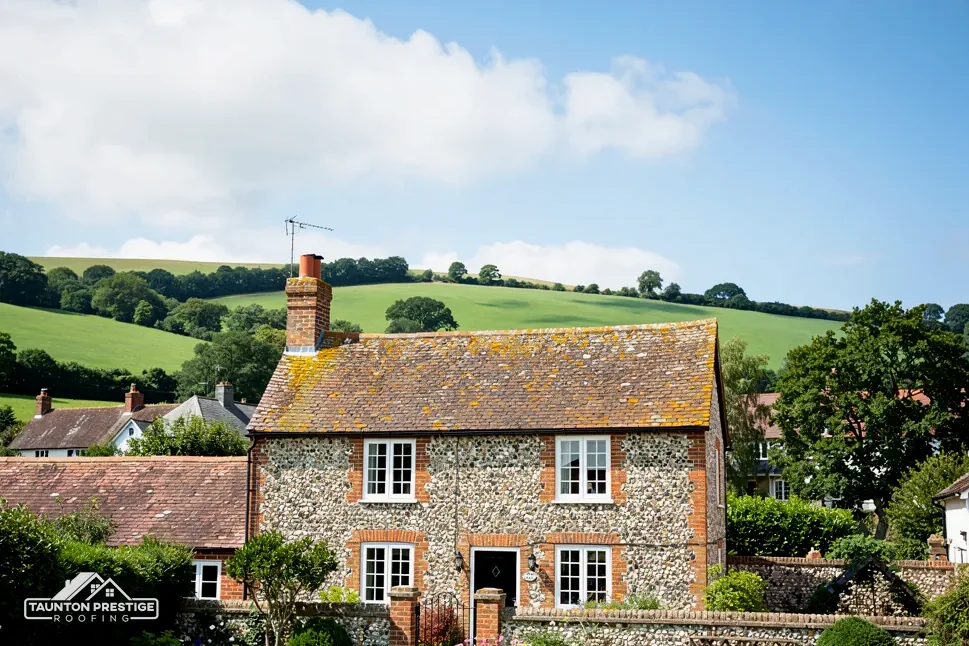
The Grade I parish church
First listed on 25 February 1955 and still in use for worship, so its roof work follows the faculty route.
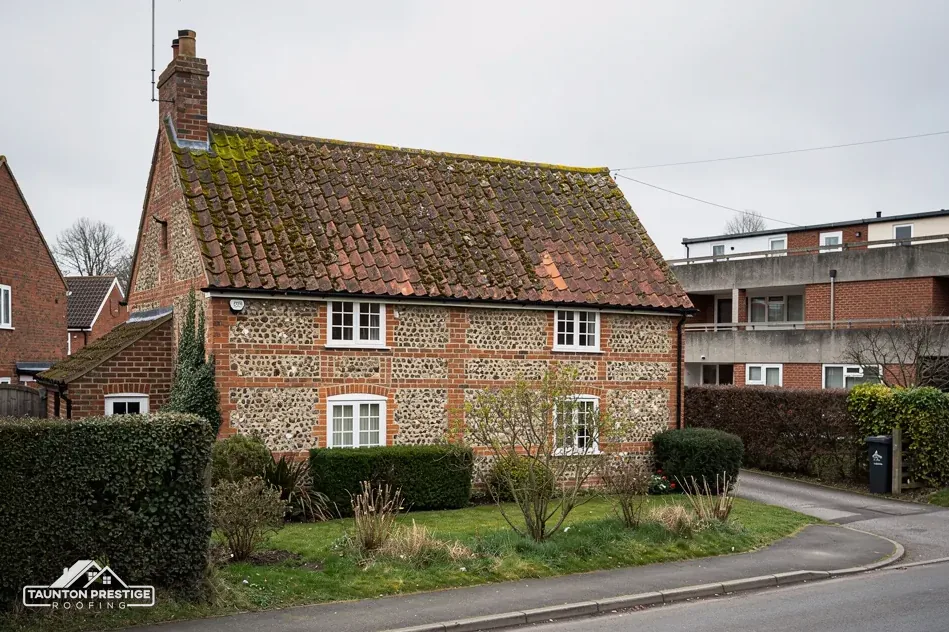
A Grade I church, a silk mill site and the Blackdown Hills
Churchstanton is a scattered Blackdown Hills parish on the Devon border, with a Grade I church and a 1973 Article 4 direction on the council's list. Surveys come first.
First listed on 25 February 1955 and still in use for worship, so its roof work follows the faculty route.
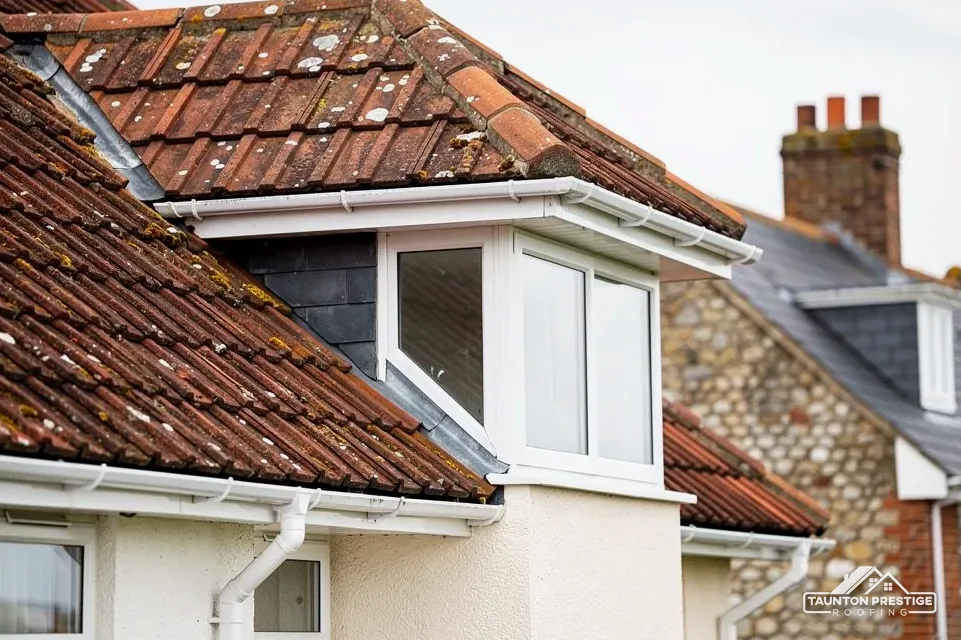
A silk mill worked here until the 1880s, and a large pond and wheel pit remain on the site.
All of the parish centre lies inside the Blackdown Hills National Landscape, formerly an AONB.
Street map of Churchstanton with Burnworthy, Churchinford, Clayhidon, Blagdon Hill marked around it, and Taunton.
Burnworthy lies just north-west of Churchstanton and Churchinford to the south-east, while Clayhidon sits to the west, with Blagdon Hill and Angersleigh further north.
About 6 miles south of Taunton, Somerset Council (unitary).
Four checks on the Somerset-Devon border
Four points that shape a roof job here, from a 1973 direction to the moss on a north-facing slope.
Somerset Council keeps a list of Article 4 directions, and Churchstanton is on it, with a date confirmed of 1973. In the council's words, an Article 4 direction takes away permitted development rights within a specific area or site, so a planning application may be needed for development that would otherwise have been permitted. What the Churchstanton direction covers is set out in the direction itself, so the council's planning team is the one to say how it bears on your house. A roof is a poor place for guesswork, and a written answer from the council is worth having before any order is placed.
It depends on what the direction removed, and that is for the planning officers to answer rather than a roofer. What we can tell you is what to bring them: your address, a photograph of the slope, and a line or two on the change you have in mind. Ask whether the work you have in mind needs an application, and get the answer in writing. Our guide to planning permission for roof work explains the national rules in general terms. Where a direction applies, those general rules may not be the end of it, and a slate roofing job is no exception.
Because it changes what the survey is looking for. If an application may be needed, we record the existing covering slope by slope, with measurements and photos, so that a case officer can see exactly what is being matched. If no application is needed, the same record becomes the specification for the job. Either way you hold a clear picture of your roof before any slate comes down.
The same caution applies to a home inside the Blackdown Hills National Landscape, the name that replaced AONB in November 2023 (the old term survives in legislation). It is a second reason to ask before ordering anything that shows from the lane, and a third if the house has a listing of its own, since five list entries lie within 500 metres of the hamlet's centre.
Look for
Churchstanton's church, dedicated to St Peter and St Paul, was listed Grade I on 25 February 1955. The Church of England uses it for worship, so the way into any roof repair is a faculty, granted through that church's own system and not through listed building consent from the council. The parish brings the application. Whoever mends the roof then follows the specification that the faculty approves. Our part is to survey the roof, report what we find with photographs, and price only what the approved scheme asks for.
Sound or needs work
What decides the price
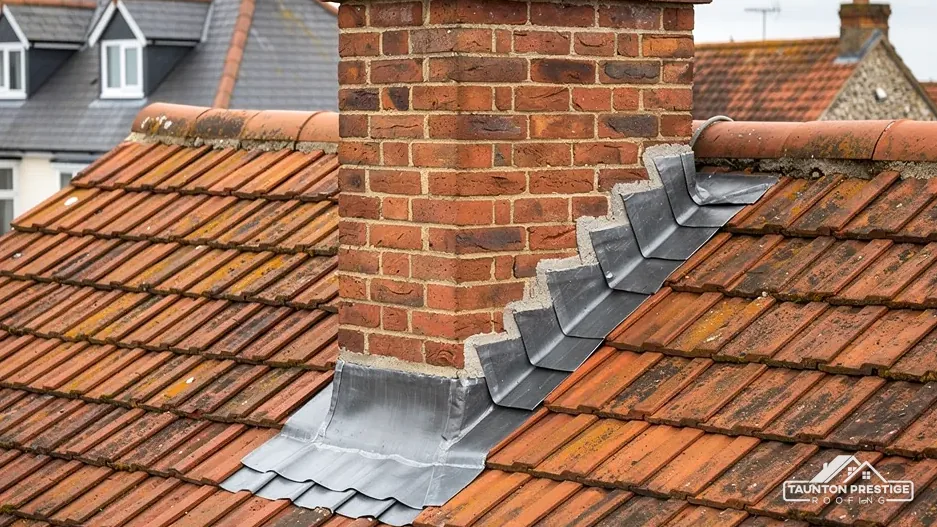
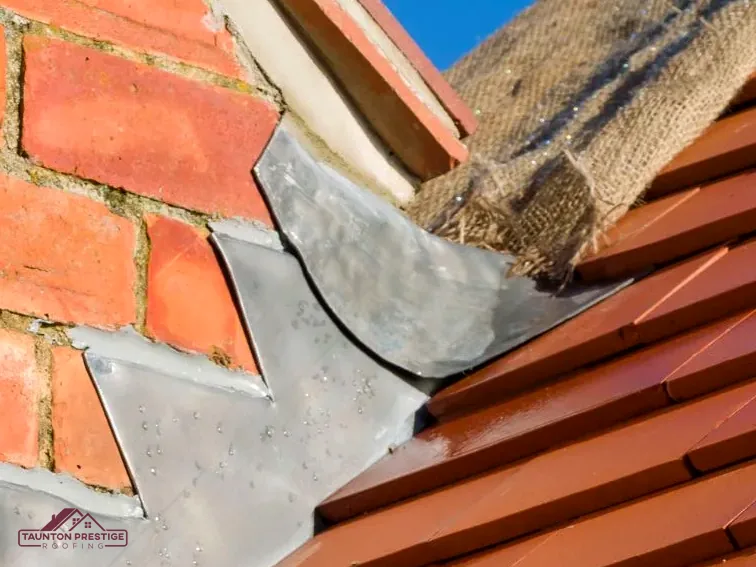
Lead is the usual answer where a roof meets a tower, a parapet or a valley. Lead sheet is graded by code, a number that fixes its thickness and weight. Royston Lead's cast-lead brochure lists code 3 for soakers only, and codes 4 to 6 for flashings, so what lies on a given roof shows what its builders expected of it. Lead flashing can last for over 80 years, which makes a crack along a fold a reason to mend rather than renew. Our lead work page covers the repairs in more detail.
Old stone buildings with roof voids are the kind of place where bats may roost. GOV.UK says every bat species and its roosts are fully protected, and that mending or replacing a roof is among the work that can disturb them. Before any slate or sheet is lifted we look for droppings, staining and gaps, and if there are signs we stop and take advice. The Habitats Regulations also catch damage to a roost itself, whether or not anyone meant it.
A silk mill worked at Stapley until the 1880s. The Somerset Historic Environment Record shows field names that put a mill on the site by 1802, and the remains include a large pond and a wheel pit about 16 ft by 3 ft. By the 1904 Ordnance Survey map it was disused. What the story gives us is a reminder that this corner of the parish has working buildings from before modern roof carpentry, and that old roof timbers deserve respect.
On any older working building we look hard at the wall plate, the timber laid along the top of the wall that carries the feet of the rafters. Damp masonry rots it first, and a rafter foot that has slipped shows from the ground as a bulge or kink along the eaves. Finding that before a new covering goes on saves stripping the same slope twice.
Ask it before a heavier covering is chosen. The Planning Portal puts a new covering that adds 15 per cent or more to the weight of the roof covering under Building Regulations approval, and suggests a structural opinion before the work is ordered. Approved Document A defines a significant change in loading as an increase of more than 15 per cent. We tell you what a covering weighs before you choose it, not after.
Published lives are only guides. The Confederation of Roofing Contractors gives 100+ years to natural slate that is well maintained, while Marley's estimate for concrete tile is around 60 years, with the note that it is not a guarantee. The BRE minimum of 60 years applies to clay tiles alone. A close look at the battens and rafters tells us far more about your roof than its age on paper, and it is the first thing we record.
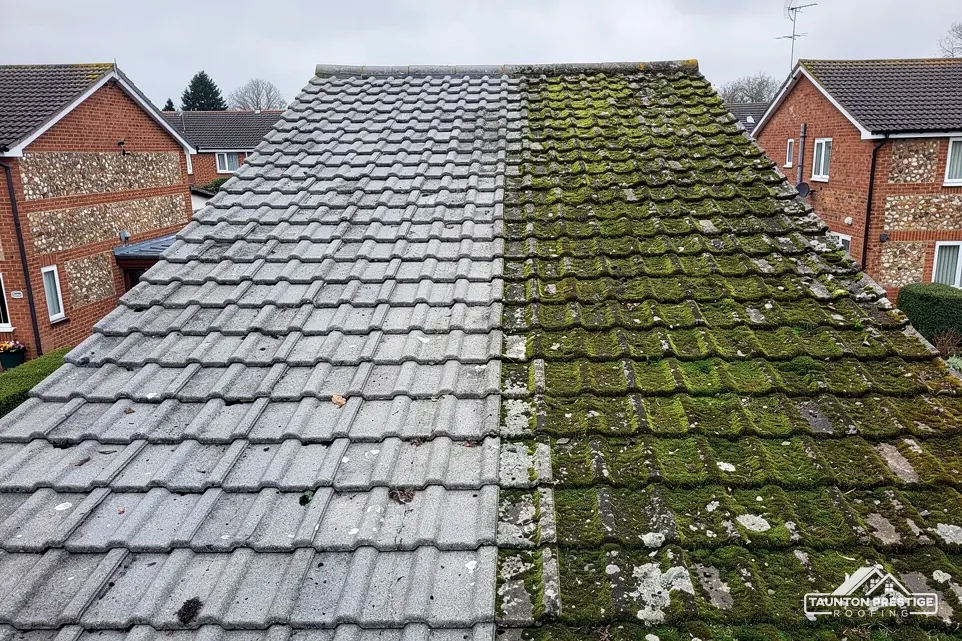
Moss holds water against a roof like a sponge and lifts the edges of slates and tiles as it grows. Shade from trees and slopes that rarely see the sun green over first, so a house near a hillside wood can suffer on one side only. Cleaning is not a job for the strongest nozzle on the van. Marley's advice is that strong jet washes are not recommended, because they can wear the face of the covering and cut its life.
What decides the price
HSE guidance is that the public should not use biocidal products meant for professionals, and an unapproved product is not one anybody may use. Read the label, and choose only what is sold for household use. A roofer applies a treatment within its authorisation, brushes loose growth off by hand where that is safe, and tells you if the surface beneath has worn. Our roof cleaning and moss removal page covers the methods.
Sometimes. Under BS 5250, Marley explains, a cold roof with non-breathable HR underlay (underlay that does not let vapour through) needs 25mm of eaves ventilation along the eaves at pitches of 15 degrees or less, and 10mm on steeper pitches. A breather underlay laid above a well-sealed ceiling may need nothing beyond the gaps that ordinary eaves construction leaves. Water beading on the underside of the covering is a sign worth chasing before the timbers suffer, and a survey of the roof space settles which case you have. We note the vent positions and take a photo of each.
Once we have looked, pictures of every slope reach you together with a single written price covering all of it. Send us your Churchstanton address and say which of these four checks sounds like your house, and the survey will start there.
Walked the roof?
When you have read the checks, we walk the roof and show you the photos.
That depends on what the direction removed, and whether a straight re-roof in matching slate is touched is for Somerset Council's planning team to confirm. Send them your address and a short description of the work, and keep the written reply with your quote, so everyone starts from the same facts.
The parish. The church is Grade I and in use for worship, so the Church of England faculty system governs the work, and the parish brings the application. A roofer then quotes against the approved specification. Houses near the church are judged on their own listing, not the church's, and we check each address at the survey.
By where the lead sits and what the water does there. Royston Lead's brochure lists code 3 for soakers only, codes 4 to 6 for flashings, and codes 5 to 8 for parapet and box gutters. We read the code already on your roof and explain why we would match it or step up a grade, with the lead in front of you.
Gently. Marley advises against forceful washing of slate or tile, because it can wear the surface and shorten the roof's life. Brushing by hand and an approved treatment are kinder to the covering. A product made only for professionals should not be used by the public, so check the label before you buy a tub.
Give us your Churchstanton address and name the slope you are unsure about, then choose a weekday.