Anyone planning work to the bottom edge of a roof soon meets the same puzzle. Guttering, fascias and soffits are priced in separate guides, the house types vary, and a figure quoted online rarely says what sits behind it. This post pulls the published ranges together in one place and then explains what sends a total up or down on a Taunton house.
Each figure below is a typical UK range lifted from a named, dated guide, so read it as the guide's number rather than ours. They are useful for judging whether a quote is in the right area, not for fixing a budget to the pound. A terraced house in Wellington with a short, low run and a four-bedroom detached house outside Bridgwater with a two-storey gable do not sit in the same band, and Finlock gutters, a concrete channel built into the eaves, belong to a separate job again. Read the ranges first, then the section on house type.
The three questions behind the searches
People who search for what an eaves job costs are usually asking one of three things, and each has a different answer. First, what is a sensible price for new guttering on a three-bedroom house? Second, what should a four-bedroom detached house expect, where the roof edge is longer and often taller? Third, what is the average, so they know whether a quote they have been given is sensible?
The published guides do not break their figures down by bedroom count. What they give is a typical range for the job, plus separate ranges for capping and for Finlock replacement. So the honest approach is to show those ranges and then explain which features of a house push towards the top or bottom of them. That is what the rest of this post does.
Why is guttering priced apart from fascias and soffits?
They are different parts doing different jobs. The gutter collects rain and carries it to the downpipes. The fascia is the board that holds the brackets, and the soffit is the panel fixed beneath the overhang. Many houses need all three replaced together, because a new gutter fixed to a rotten board does not last, but a house with sound boards may need only the gutter. A quote should tell you clearly which parts are included and which are not, and that is the first thing to check when two totals look far apart.
Guttering: the typical range
On replacing guttering, MyJobQuote's guide lists a typical UK range of around £1,000 to £1,600 (MyJobQuote, Oct 2026). That is a national figure drawn from many jobs, so it covers short runs on small houses and long runs on large ones without separating them.
What pushes guttering towards the top of the range?
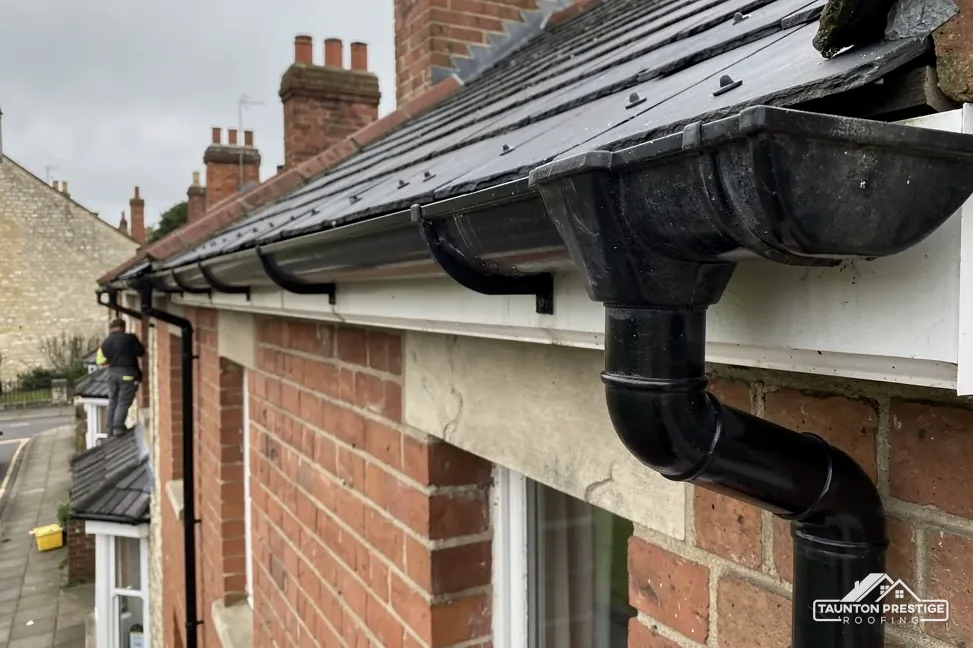
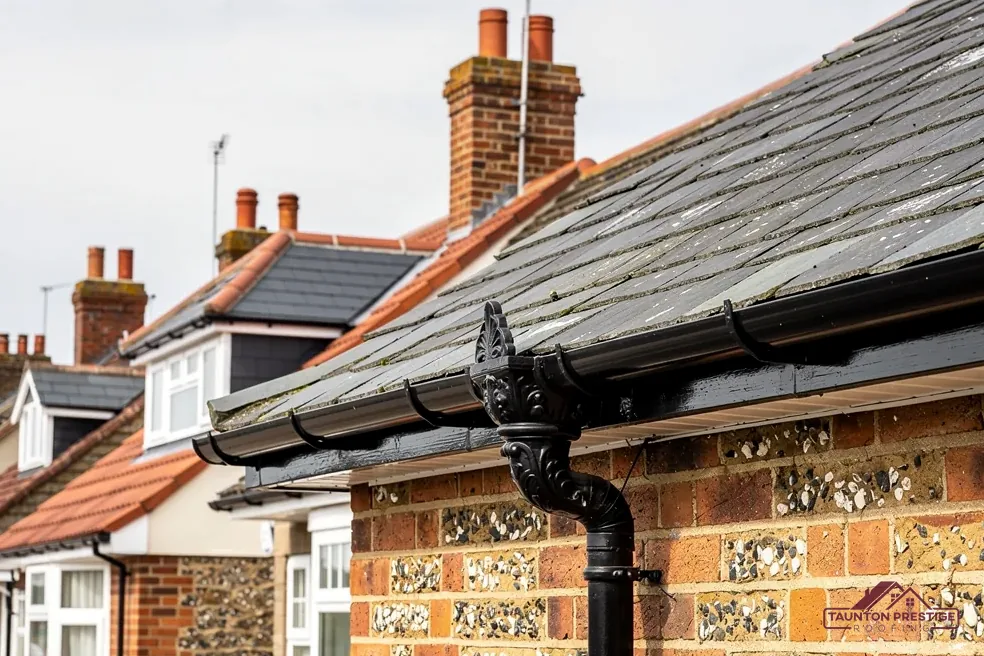
Length of run is the first factor. A detached house has four sides of roof edge where a mid-terrace has two, and a gable end adds a short return. Height comes next, because anything above the first floor needs scaffold or a tower instead of a ladder. Material also matters. uPVC is the usual choice, but aluminium and cast iron are priced differently, and each needs its own fitting time.
What about the downpipes and the fittings?
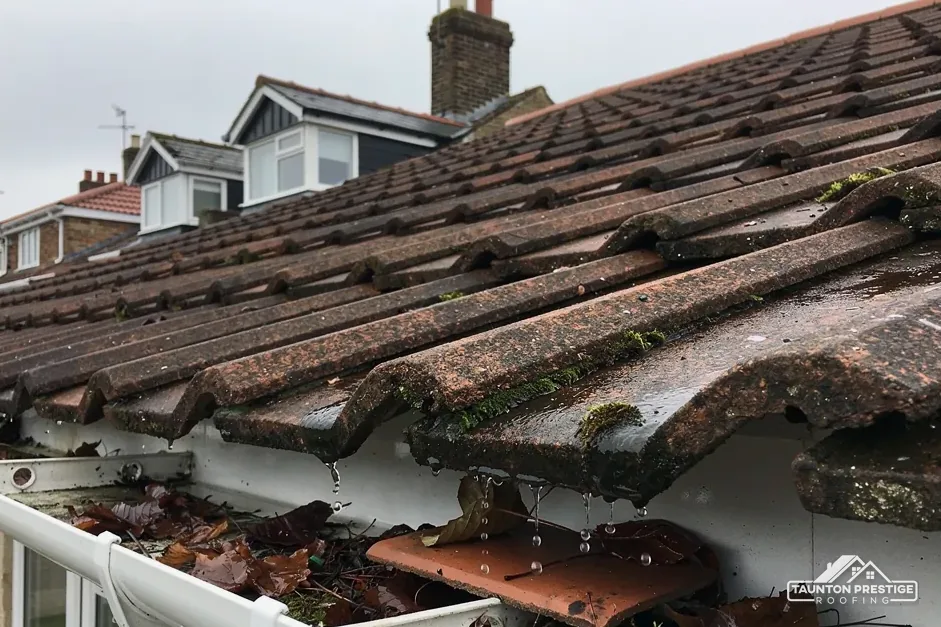
Corners, stop ends, outlets and the brackets that carry the gutter all make up the job, and so do the downpipes. A house with many corners, such as an L-shaped bungalow or a property with a rear extension, needs more of them. Ask what the quote assumes about downpipes, because swapping the gutter and keeping tired pipes sometimes leaves the old problem in place. Cracked or loose pipes, and blocked bends at ground level, put water back where the fault began. A good survey also follows each downpipe to its outlet and checks that the drain beneath can take the flow.
Fascias and soffits: what capping costs
Capping means fitting new cover boards over existing fascias and soffits that are still sound, rather than stripping everything off. The typical UK average for this work is around £800 (MyJobQuote, Sep 2026). As with guttering, that is a national figure and it is not tied to house size.
Is capping the same as replacing?
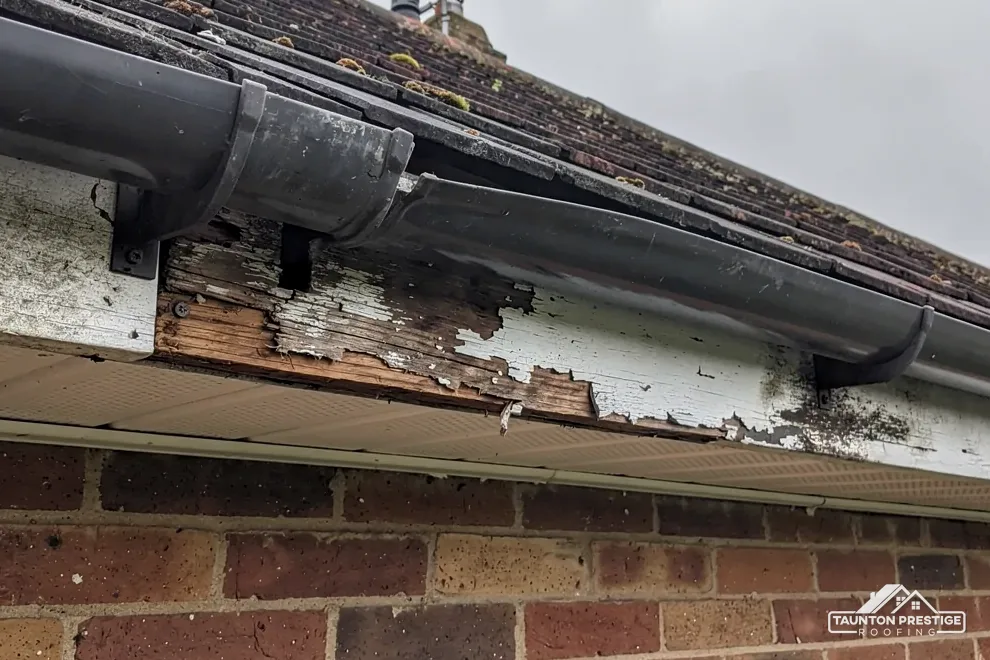
No. Capping leaves the old timber in place under a cover board. That saves time and mess, and it works well when the wood behind is dry and firm. It is the wrong choice when the rafter ends or the original boards have gone soft, because the cover hides the rot but does not stop it. Replacement strips the old boards, tackles any decayed timber and fits new ones. It costs more, and it is sometimes the only sensible route. Our guide to capping fascias explains how to tell which one your house needs.
Which houses cost more to cap?
The same factors apply again: a longer perimeter, a second storey, awkward corners and the state of the timber. Bay windows and porches add short returns of fascia that take as long to fit as a long straight run, and each corner has to be cut and sealed so rain has no way in behind the board. A bungalow with a low, simple eaves line is easier than a three-storey townhouse with a deep overhang, and access equipment matters most on the tall house.
Some houses have asbestos insulating board soffits, which changes the job entirely. If your house was built or refurbished before 2000, ask for the soffit board to be checked before anything is taken down.
Finlock gutters and concrete eaves channels
Finlock-type gutters are concrete units that form a channel at the eaves, built into the structure of the wall and roof edge rather than hung from a fascia. They appear on many mid-twentieth-century houses and look like a plain concrete lip below the roof. The typical UK average cost to replace a concrete gutter is £2,400 (MyJobQuote, Jan 2026).
Why does a Finlock gutter cost more than a hung one?
Because it is part of the building, not an attachment to it. Replacing one often means careful work at the wall head, lining or replacing the channel, and making good around it. There is also more to inspect, such as the timber ends set into the structure. Our short answer on Finlock gutters explains what the channel is and what usually fails.
Is a lining a cheaper alternative?
Sometimes a damaged concrete channel can be repaired or relined rather than removed, and that can change the price a good deal. Whether it is possible depends on how cracked or broken the units are and whether water has been reaching the wall below. A survey finds that out, because photographs of the channel from the roof edge show what is happening where the eye from the ground cannot see.
If a Finlock channel is leaking, tell the roofer at the start. It changes what equipment and what time the job needs, and it is a different job from replacing plastic guttering on a hung fascia. A leak at the wall head can also show as a damp patch inside the house, which is another reason to mention any stain on an upstairs ceiling or in a corner of a bedroom.
How a three-bed or four-bed house changes the total
House type moves the cost through the length and height of the roof edge, and the bedroom count has little direct effect. A three-bedroom semi-detached house has two long sides of roof edge and a short front and back to each pitch. A four-bedroom detached house has more of everything, and often a gable or a two-storey rear that raises the access work.
What does scaffolding add?
Scaffold can take up a big part of the total, so check whether it is in the quote. For a three-bed semi, HomeBuilding puts scaffolding at approximately £1,000 with permits included (HomeBuilding, Sep 2025), and that figure is for a full-roof job. For one elevation hired for a week, MyJobQuote gives £550 to £750 (MyJobQuote, Oct 2026). A short job to a single low side may get by with a tower or a ladder, while a four-bed detached with a second storey on both faces may need much more.
When scaffold stands on the highway, the highway authority must licence it, and the fee is £124.60 for each 28-day period in Somerset (Somerset Council, April 2026). Ask who applies and who pays, so the paperwork cannot delay the day work begins.
What about terraces, bungalows and Victorian houses?
A mid-terrace has a short run front and back, which keeps the work smaller. A bungalow is low, so access is cheaper, but the roof edge can be long. Victorian terraces often have timber boards and sometimes cast iron, so the material and the rot behind both affect the total. Repair or replace is the main decision on older houses, and our answer on repair or replace guttering helps with it.
Reading a quote for the eaves
When a quote arrives, check what it covers before you look at the total. Does it name the gutter material and the length? Does it say whether the fascias and soffits are included, capped or replaced? Are the downpipes part of it? Is scaffolding in, and does the sum include VAT? Those are questions a quote should answer on its face.
Is one quote enough?
Citizens Advice recommends collecting written quotes from 3 or more traders before you decide, and that applies to an eaves job as much as to a new roof. Compare what each one says it will do and which materials it names, not only the total. Two totals that look alike can cover very different jobs if one includes the soffits and the other does not.
What will a survey tell you that a phone call cannot?
It will show whether the boards are sound, whether the gutter has the right fall, and whether anything has been hidden by years of paint. We go up, look at the eaves, and send you photographs of your own roof edge with the quote, so the same evidence is in front of you.
That evidence is why a survey is worth waiting for, and it is also what lets you query a point in a quote with something firmer than a guess. A phone estimate for guttering can be right when the roof is simple, and badly wrong when a rotten board or a leaking Finlock channel turns up halfway through. See our gutters, soffits and fascias page for the work itself, and compare any quote against the ranges above.
Eaves costs in Taunton
Do guttering and fascia prices include the scaffold?
Not always, and it is worth asking. Published guides treat scaffolding as its own cost, so a quote that omits it will look smaller than one that includes it, though the real bill is not. Ask whether the scaffold and any highway licence are in the total, along with VAT, before comparing two prices side by side.
Is a new gutter on old boards worth it?
Only if the boards are sound. A gutter is heavy when full, and it pulls on whatever holds it. If the timber has softened, the brackets work loose and the new run sags within a few winters. We check the boards on the survey and show you photos, so the decision rests on what we found.
What makes a Finlock job more complicated?
The channel is built into the wall head, so the work reaches the structure, not just a board. Cracked units, damp brickwork below and timber set into the concrete all need looking at. That takes more time and care than clipping a plastic gutter to a fascia, which is why the average cost is higher.
More on this subject: Gutters, soffits and fascias in Taunton