Someone tells you the roof "has been surveyed", and it is easy to assume that means it has been looked at properly. Sometimes it has. Sometimes a surveyor glanced at the slope from the pavement with the rest of the house still to cover, and wrote a careful sentence that says very little. The words inspection and survey get used as if they were the same job, and they are not.
A building survey is a report on the property as a whole: walls, floors, damp, drains, services and the roof among them. A roofer's inspection is narrower and deeper. We climb up, look at individual slates, tiles, ridge, valleys and lead flashing, then go into the loft and check the timbers, the underlay and the insulation from underneath. This guide sets out what each one covers, how to read the roof section of a survey report, what to do when it raises a concern, and how the two fit together if you are buying or selling in Taunton. It belongs with our wider roof inspections work.
Two reports with two different jobs
The easiest way to hold the difference in your head is scope. A survey is wide: it has to say something about every part of the building, so the roof gets a share of the surveyor's time, not all of it. An inspection by a roofer is deep: the roof is the whole job, so every slope, junction and chimney gets looked at, and the loft gets a proper go.
Neither is better in the abstract. A survey is how you learn whether the house has a damp problem, a settling wall or a failing drain, which a roofer is not there to judge. A roofer's inspection is how you learn what the roof itself needs, in terms a roofer can price.
Does a roofer's visit count as a survey of the house?
It does not. The two overlap on the roof and nowhere else, and the roofer says nothing about walls, floors or drains. A survey names the roof covering, says what condition the surveyor believes it is in, and may recommend that a roofer look closer. That recommendation is the point where the two jobs join. The roofer's visit is the closer look the survey asked for.
Think of it as the difference between a general check-up and a visit to a specialist. The first tells you where to look. The second tells you what is actually wrong, and what fixing it involves. Either can be arranged without the other, though if the house is changing hands the order matters, and we come back to that further down.
What a roofer's inspection looks at
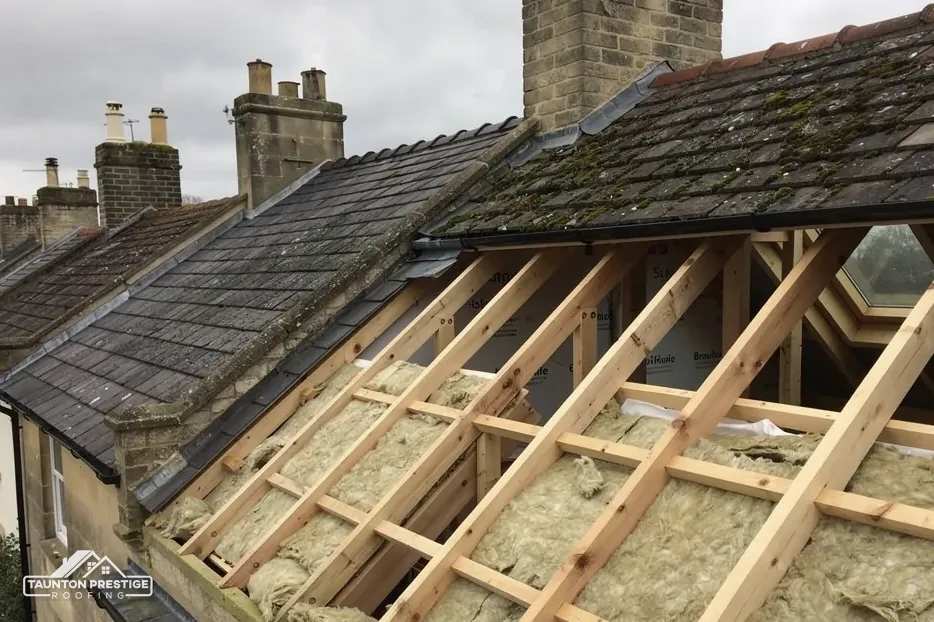
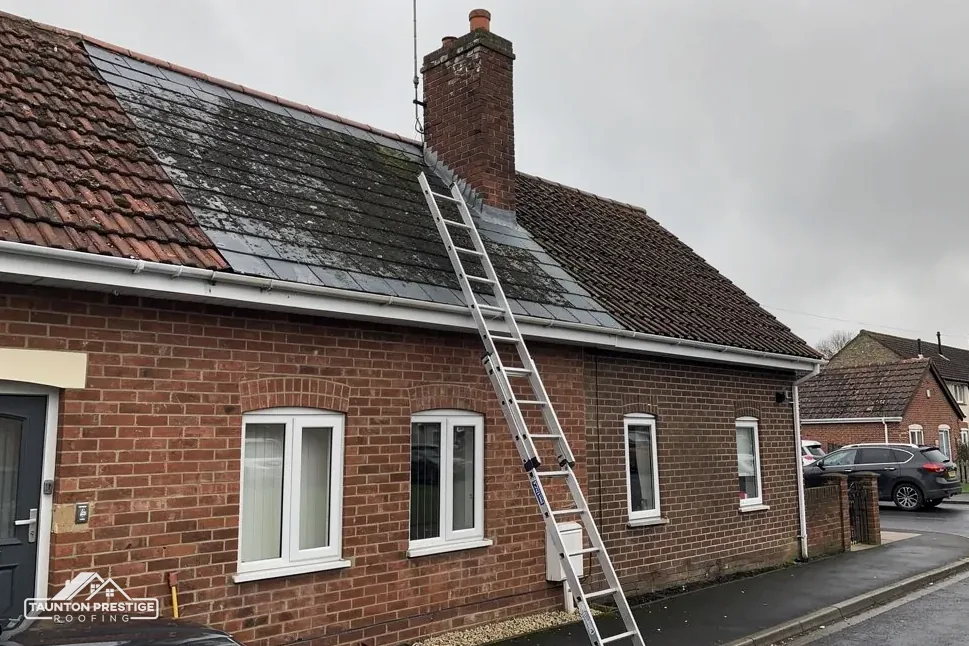
We start outside, from the ground, reading each slope for slipped or cracked slates and tiles, gaps in the courses, a sagging line or a ridge that has moved. Then we go up. Close to, a roof tells you things the ground cannot: hairline cracks across a tile, a flashing that has lifted from the wall, mortar crumbling beneath a ridge tile, a valley gutter silting up with moss.
- The covering itself, slate by slate or tile by tile where the roof shows a problem.
- The ridge, the row of capping tiles at the apex where the slopes meet, and the hips and verges, the sloping and gable edges.
- Valleys, the internal channels between two slopes, and any lead flashing, the sheet metal that seals the joint between roof and wall or stack.
- Chimney stacks, including the flaunching, the mortar slope that holds the pot and sheds water.
- Gutters and the roofline timbers they hang from.
What happens in the loft?
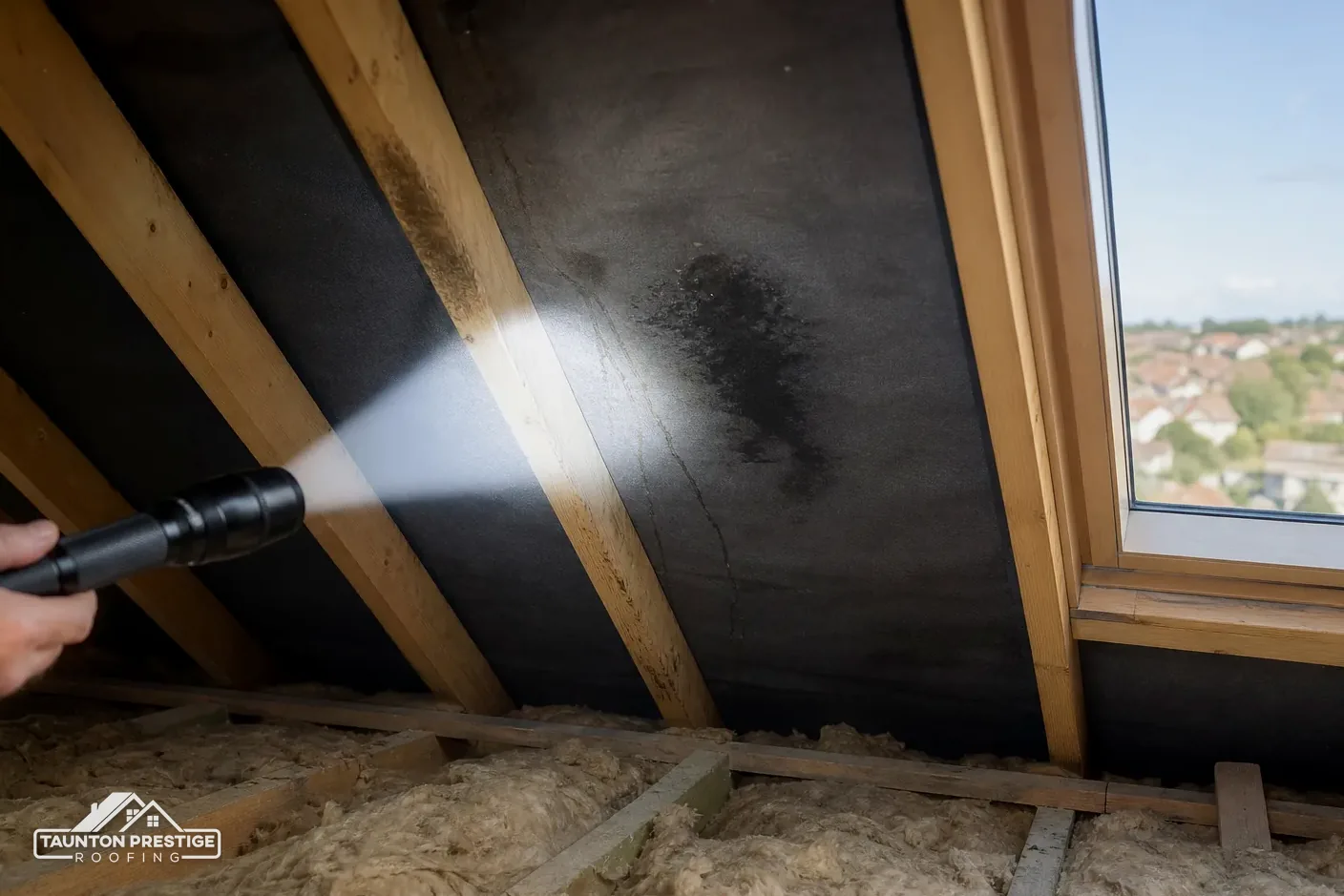
This is where a roofer's inspection earns its place. With the hatch open we study the roof from below: the battens, the sloping rafters that carry them, the underlay, any daylight showing through, and damp staining on the timber. We note how the insulation sits and whether the eaves can breathe, because a covering can look sound outside while the timber behind it is not. Our guide to checking a roof from the loft shows what you can look for yourself with a torch.
The visit ends with pictures of your own slopes and loft. Each comment in our notes then matches something you can see, and you can pass the set to a buyer, a lender or a surveyor if you need to.
What a building survey covers
A building survey is written for someone deciding whether to buy, or what to budget for after buying. It runs through the structure, the walls, the floors, the damp, the services and the outside of the property, and the roof is one heading among those. The surveyor is trained across the whole building. The roof section is built from what could be seen on the day.
That last phrase matters. A report will normally say how the surveyor viewed each element. A roof seen from the ground, or from a window, or through binoculars, is described as seen that way. A loft the surveyor could not enter, because the hatch was blocked or painted shut, is described as not entered.
Does a building survey include the loft?
It depends on access on the day, so read the report's own wording. If the roof section says the loft was not entered, or that views were limited, then nothing has been said about the timbers or the underlay, and a roofer's inspection fills that gap. If the loft was entered, the report will usually describe what was seen, but a survey cannot price a repair, because the surveyor is not setting out to quote the work.
Our answer on a homebuyer survey and the roof covers what to ask before you rely on that kind of report for the roof.
It also pays to ask who wrote the roof section and how much of the roof they could see. Two reports can use the same headings and still rest on very different amounts of looking.
Reading the roof section of a survey report
It is natural to read the summary page and skim the rest. For the roof, the detail is where the useful sentences hide, and a one-line verdict can sit on top of very little looking. Go through the roof paragraphs slowly, with a pen, and mark these.
- How the roof was viewed: from the pavement, from an upstairs window, through binoculars, or from a ladder or the roof itself.
- Whether the loft was entered, and if so how much of it was visible.
- Words such as "further investigation", "specialist inspection" or "recommend a roofer".
- Any estimate of the covering's age or remaining life, and what it is based on.
What does a stated life expectancy mean?
Treat it as a rough guide. Published lives for roof coverings are typical figures, not promises. CORC puts well-maintained slate at 100+ years. Marley puts concrete roof tiles at around 60 years and states plainly that the figure is no promise of longevity. A survey that gives a roof fifteen years left is offering an informed opinion from a distance, and a roofer on the same slope may agree, or may find a cracked batten or tired nails that change the answer. Our page on how long a roof should last sets out the published figures by covering.
A condition rating on its own, such as a colour or a number, is only a prompt to read the paragraph beneath it. If the wording is vague, such as "some wear noted", ask the author what was actually seen and from where. A good surveyor will tell you, and the answer helps us too when we plan the visit.
When a survey flags the roof
A flagged roof is not automatically a failed roof. Surveyors flag things they cannot fully judge from where they stand, and a cautious sentence about cracked or slipped slates can describe a handful of small repairs or a roof that is close to spent. The only way to know which is to get someone up there.
When should you book a roofer after a survey?
Early, and before you exchange contracts if you are buying. A roofer's visit turns a worry into a defined job with a defined cost, which is useful both for deciding whether to go ahead and for negotiating on the price of the house. If you are selling, the order is reversed: a roofer's inspection before you list tells you what a buyer's surveyor is likely to pick at, so you can fix it or explain it, and the buyer's side of the table sees a roof that has already been looked at by someone who goes up. The thinking behind that is in our guide to roof checks when buying a house.
Take the survey report to the roofer's visit. The surveyor's notes tell the roofer which slopes and which details caused the concern, and we can answer them one by one.
On an older house, a roofer's inspection should also consider what the roof is made of. Where it is slate on a Victorian terrace, clay tile on a cottage, or a lead valley, the right repair keeps the same material, and that shapes both the visit and the repair that follows.
Cost, and which one to book
The two cost different amounts for different reasons. A building survey is priced as a service on the whole property, and its fee tracks the size and type of the house. For the roof alone, MyJobQuote gives the average roof survey at "around £300" and a drone survey at £200 to £350 (MyJobQuote, Oct 2026), as typical UK figures for the roof on its own. What you pay depends on the roof's size, how hard it is to reach, and whether a drone is suitable. Our page on roof inspection cost goes into what moves the number.
Do you need both?
If you are buying, usually yes, in sequence: the survey first, then a roofer if the report raises the roof. If you own the house already and want to know about the roof only, a roofer's inspection is the one that answers the question, because it gets up close and into the loft. If you are worried about a leak, go straight to the roofer.
The tidy way to decide is to ask what you need to learn. For "is this house sound overall?", book the survey. For "what does this roof need, and what will it cost?", book the inspection. If a repair or a new roof follows, a single total comes to you on paper, with the pictures beside it, so the reason for the work is plain. The advice might equally be that a small repair is the better buy than anything bigger, and you hear that too.
If the house is old, listed or in a conservation area, tell us at the start, because the material and the consent route shape what a sensible repair looks like.
Inspection and survey queries
Is an inspection the same as a survey?
No. An inspection of the roof is a close look at the covering, flashings, chimneys and loft timbers by someone who can price the repair. A survey describes the whole building in one report. The roof is one section of it, written from what could be seen on the day.
Can a roofer's report replace a building survey when buying?
It cannot. A roofer's inspection says nothing about walls, damp, drains or structure, which is what a building survey is for. It works alongside the survey, answering the roof questions the survey raised, and it can help you decide whether to go ahead or reopen the price.
What should I send a roofer from my survey?
Send the roof section and any paragraph that mentions the chimneys, flashings, loft or drainage, plus the page that explains how the surveyor viewed the roof. Those pages tell us which slopes caused the concern, which parts the surveyor could not see, and where to start looking.
More on this subject: Roof inspections in Taunton