Damp on a chimney breast is one of the most common complaints in older houses, and one of the most often misread. The stain shows in a bedroom or living room, so people repaint it, treat the wall or call a damp specialist. Yet the water almost always arrives from somewhere else, usually from above, travelling down through or around the brickwork before it reaches the plaster.
That is why the roof matters. The stack rises above everything else on the roof, and it has more joints between brick, mortar, lead and clay than any other part. This guide sets out the usual causes: rain entering at the flashing, flaunching or pointing, condensation inside a flue that has been closed off, and salts left in the brick that keep a damp patch alive after the leak is fixed. It then explains how a roofer tells them apart. It belongs to our chimney repairs service, and it is general advice rather than a diagnosis of your wall.
Reading the stain on the breast
Where the damp appears, and when, are the best clues you have before anyone goes up on the roof.
Does the damp follow the weather?
If the patch darkens after heavy rain and dries over a few days, water is entering from outside, and the stack or its surroundings are the first suspects. If it stays much the same in dry weather, or grows in cold spells without rain, think of condensation or salts. Keep a short note of dates beside your photos, since the pattern helps.
Where is it on the wall?
A stain near the ceiling suggests water coming down from the roof or the top of the stack. A band at skirting height, below an old blocked fireplace, is more likely to involve the flue itself. Damp that sits at the level of the loft floor often points to the flashing or the damp proof tray at the base of the stack.
What does it look and feel like?
- Brown or yellow stains, sometimes with a darker edge.
- Peeling paint, blown plaster or wallpaper that will not stay up.
- A white or grey powder on the surface, sometimes called efflorescence.
- A musty smell, or mould in the corner of the room.
None of these tells you the cause on its own. They tell you where to start looking, and the roof is where we start.
Mark the edge of the stain lightly in pencil and date it. A week later you can see whether it has spread, and that tells you whether the water is still arriving.
Keep furniture and curtains clear of the breast while you watch it.
Rain getting in at the top of the stack
The most common route is rain, and it has several ways in.
Why does failed flashing cause damp?
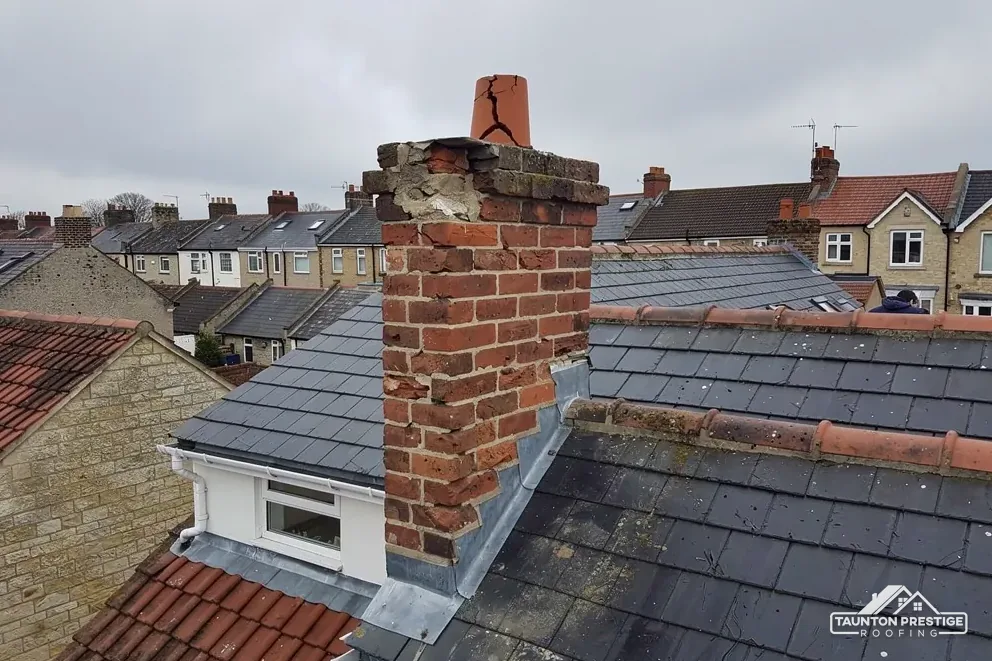
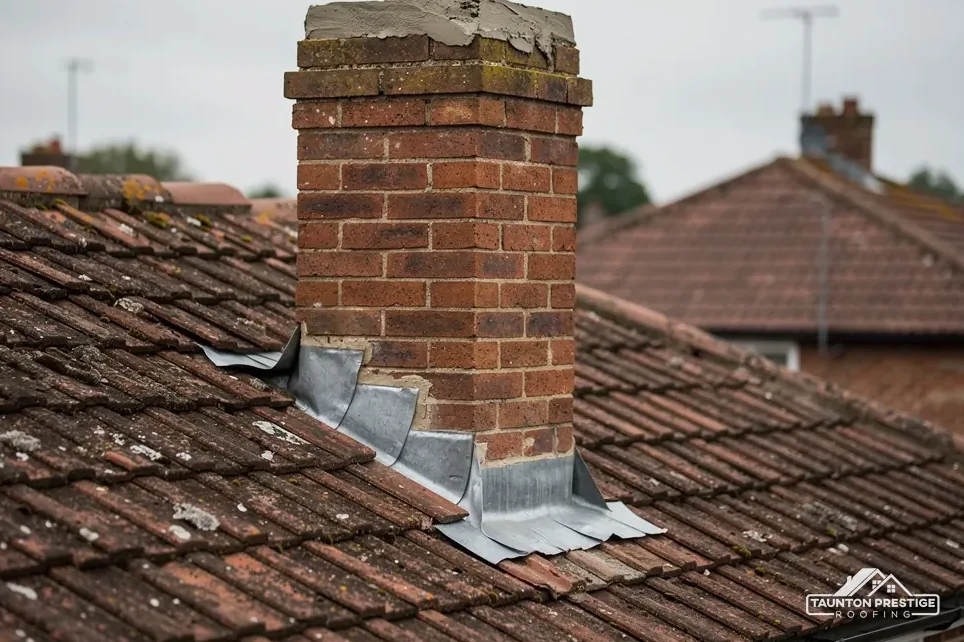
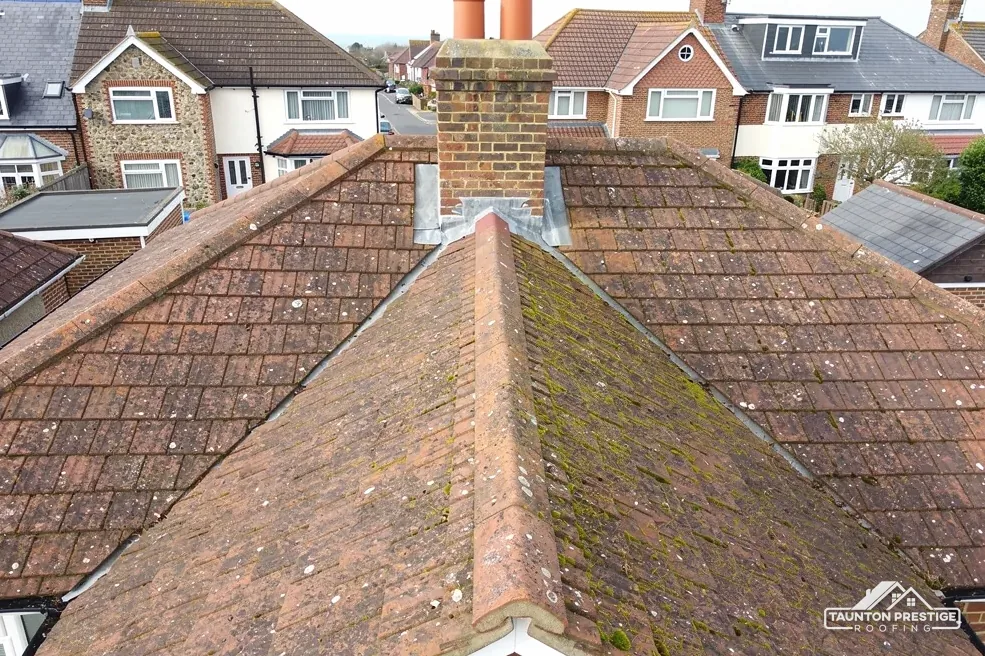
Flashing is the lead collar where the stack meets the slope, and it is tucked into a groove in the brickwork and laid over the slates or tiles. When the groove loses its mortar, or the lead lifts or splits, water runs behind it and down inside the stack. That water works down to the breast in the room beneath and appears as a mark a few weeks on. Lead "can last for over 80 years" as a lower bound (MyJobQuote, Sep 2026), so the lead itself is often fine and it is the fixing that has failed.
What about the flaunching and pots?
Flaunching is the sloping mortar around each pot, which sends rain off the flue. Once it cracks, water pours straight into the flue. Our page on chimney damp proof trays covers the other layer that is meant to stop water going further.
Could it be the brickwork?
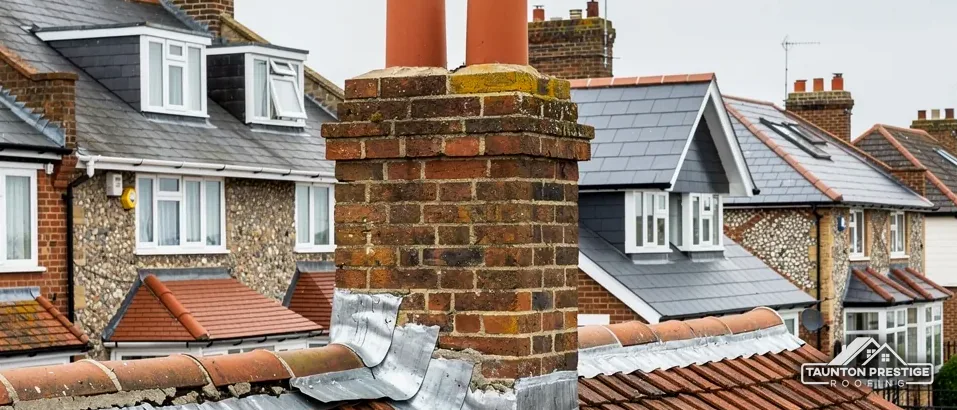
Yes. Open joints and soft bricks let rain soak into the stack, and a stack that takes in water on every face can pass it down the wall inside. Repointing and replacing weathered brick often puts that right.
If the damp coincides with a leak elsewhere, such as a lifted slate or a blocked gutter, the stack may be innocent. A proper survey looks at all of it, including the roof around the stack.
Do not forget the cap on the top of the stack, where one is fitted. A cowl or cap that has slipped can leave one flue open to driving rain, while its neighbour stays dry, and that explains a breast that is damp on one side only.
Condensation inside a capped or unused flue
A chimney in use is warm and dry. One that has been closed off for years is cold, and cold air carries damp.
Why does a sealed flue go damp?
Warm, moist air from the house finds its way into the cold flue, meets the cold brick and condenses. If the flue has been capped or sealed with nowhere for that air to escape, the water settles and soaks into the breast. The result is damp that follows cold weather and does not need rain to appear.
What puts it right?
A flue that is closed at the top and bottom needs a way for air to pass through, usually a ventilated cap on the pot and a vent in the room. Without it the moisture has no route out. BS 5250 deals with moisture in buildings, which is why roofs and cavities are ventilated rather than sealed. Our page on capping a chimney explains what a ventilated cap looks like.
Should I block the flue in the room?
We would not seal it solid at the bottom without a vent. A sealed fireplace opening with a small air brick lets the flue breathe while keeping draughts out.
If you have lately had a flue capped, bricked up or filled to cure a leak, and the damp has got worse, say so at the survey. That is a useful clue.
Rooms that are heated hard and ventilated little feed the problem. Drying washing indoors, a bathroom without an extractor and a bedroom with the window shut all add moisture that the cold flue then collects.
Salts and stains that keep returning
Some damp stains come back after the repair and look like the leak was never fixed. Often it was, and the wall is still holding the evidence.
What are salts in a chimney breast?
A flue that has carried smoke, soot or fumes for years leaves deposits in the brick. Those salts pull moisture out of the air, so the wall stays damp in humid weather even after the leak above has stopped. They show as brown stains that bleed through new paint, bubbling plaster and a white crust when the surface dries.
How do you deal with them?
First the water has to be stopped. Then the wall is left to dry, which can take many weeks, and the old plaster and the salt-laden surface are removed rather than painted over. Fresh plaster goes on once the masonry is dry. Skipping that stage is the usual reason a stain returns. A sealant or paint on its own does not cure it, as we explain on our page about chimney waterproofing and sealant.
Is it worth waiting before I redecorate?
Yes. Decorating over a damp wall traps moisture and brings the stain back. Wait until the wall has dried, and use a breathable finish on a chimney breast.
A stained breast does not always mean the roof is leaking now. It can mean the roof leaked once and the wall is still drying. The survey tells you which.
Salt problems are slow. Expect the wall to look worse before it looks better, as moisture and salt come to the surface, and be patient before judging the repair.
How a roofer finds where the water enters
Finding the cause is a process of elimination, working from the top down.
- Look at the room: the position, shape and age of the stain, and any signs of earlier treatment.
- Check the loft around the breast with a torch for wet brick, staining, daylight and drips.
- Inspect the stack from the roof: pointing, bricks, pots, flaunching and flashings, with photos of each.
- Check the roof around it: slates or tiles, valleys and gutters that could be sending water to the same spot.
- Decide, with you, whether to repair the stack, test the rest of the roof or call in a heating engineer for the flue.
Can the cause be tested?
Sometimes. If the evidence does not point to one fault, water can be applied to one part of the stack at a time while someone watches the room below, so each source is ruled in or out. It is slower than guessing, and it gives an answer you can trust.
Why do I need photos?
Because you should see the fault with your own eyes. We show you pictures of the flashing, the flaunching and the brick, and point out the one we think is responsible.
If the survey finds that the stack is sound and the damp comes from somewhere else, a leaking pipe or a gutter, we tell you that too.
Throughout, we explain what we are doing and why. A fault you have been shown is one you can trust has been dealt with.
Fixes, price drivers and your next step
The repair follows the cause, so the cost does too.
- Rain at the flashing: renewing or re-fixing the lead and pointing the groove. MyJobQuote gives chimney leadwork as £150 to £250 for a patch and £350 to £920 for a full replacement (MyJobQuote, Sep 2026).
- Cracked flaunching: rebedding the pots in fresh mortar.
- Open joints: repointing, for which a typical UK range is £450 to £1,200 (MyJobQuote, Oct 2026).
- Condensation: a ventilated cap and a vent in the room.
- Salts: waiting for the wall to dry, then replastering.
What decides the price of the roof end?
The access matters most, since a stack that needs a scaffold carries that cost. After that come the size of the stack, the amount of lead and how much of the brickwork has to be pointed or replaced. Plastering and decorating inside are separate trades and the roof price does not include them.
Will fixing the roof dry the wall?
It starts the drying, but the wall may take weeks or months to dry fully, depending on how wet it became. Do not repaint until it has.
You will get one written total after the survey, with photos of what we found and why. Book the survey, and write down where the damp appears and when it worsens.
If the damp is bad enough to affect electrics, such as a socket on the breast, switch the circuit off and call an electrician first.
Damp breast questions
Will a damp specialist cure a damp chimney breast?
Only if the cause is inside the wall. Most chimney breast damp starts above, at the flashing, flaunching, pointing or a closed flue, so treating the plaster leaves the source running. Have the stack checked first, then decide what the wall needs. The wall can wait for the survey.
Is damp on the breast always the chimney's fault?
No. A lifted slate, a blocked gutter or a leaking pipe near the breast can cause the same stain. So the survey covers the stack together with the roof surrounding it, and you hear plainly if the chimney is sound. Photos help both of us.
Can I seal the top of the chimney myself to stop the damp?
We would not. Sealing a flue with no ventilation often turns a rain leak into a condensation problem. A ventilated cap keeps rain out and lets air through. Ask a roofer to check the stack, and photograph the damp as it changes. Then we can plan together.
More on this subject: Chimney repairs in Taunton