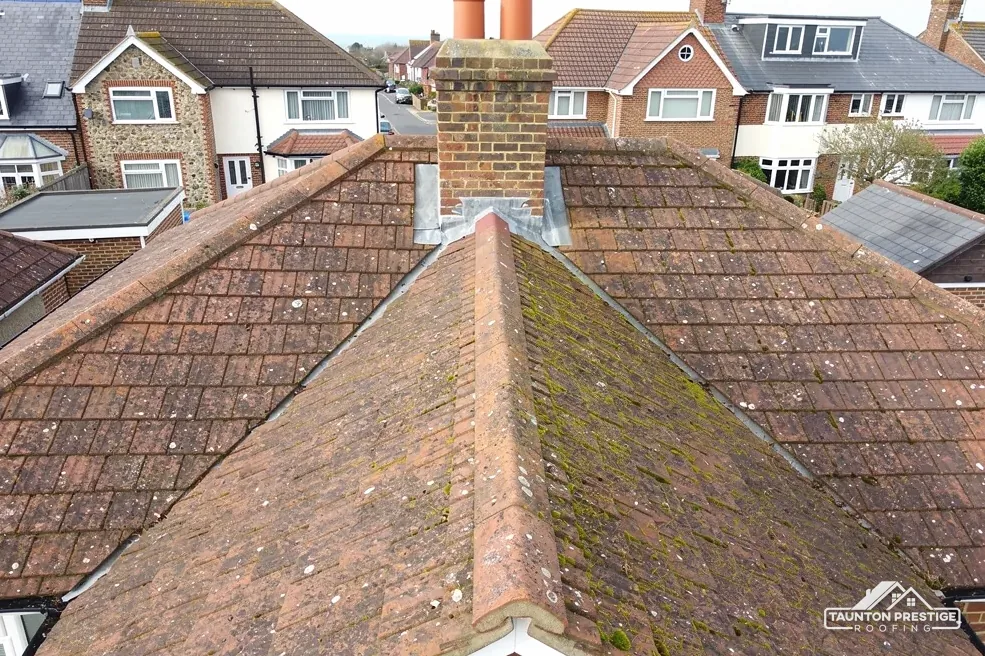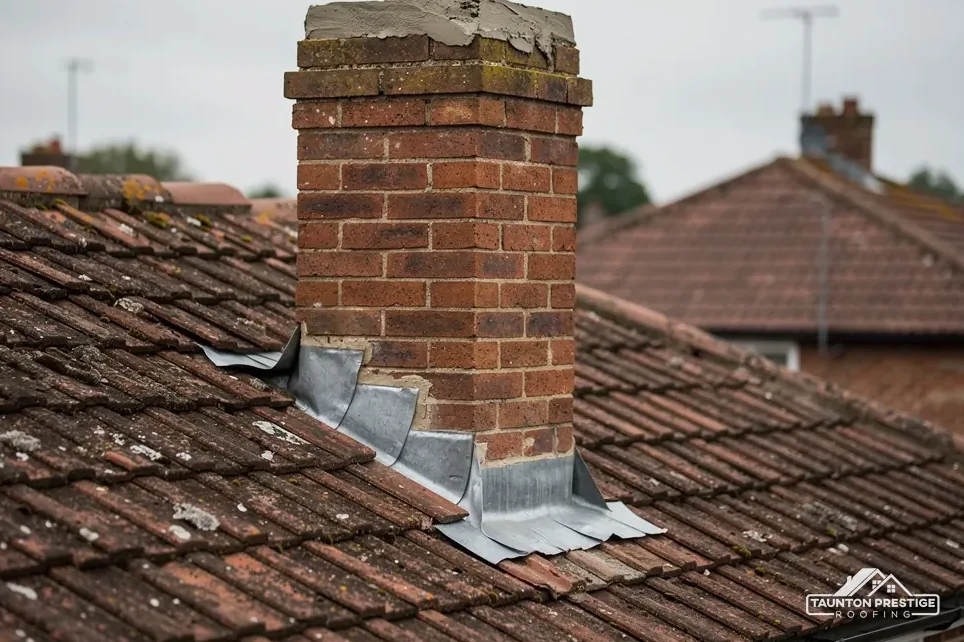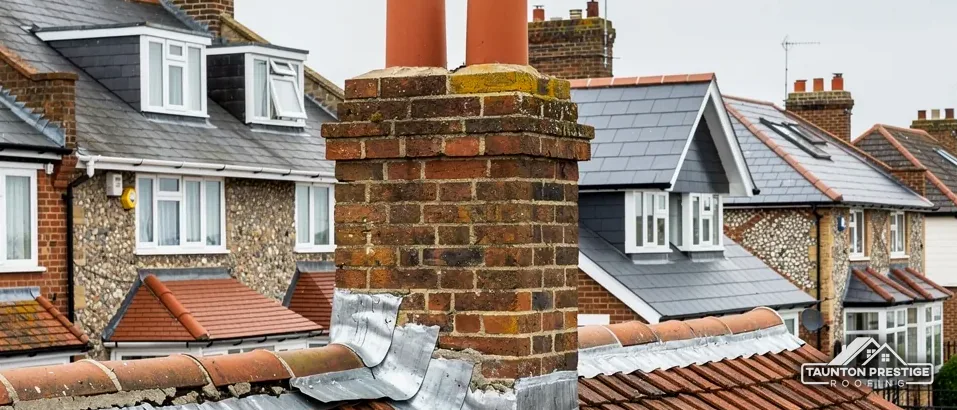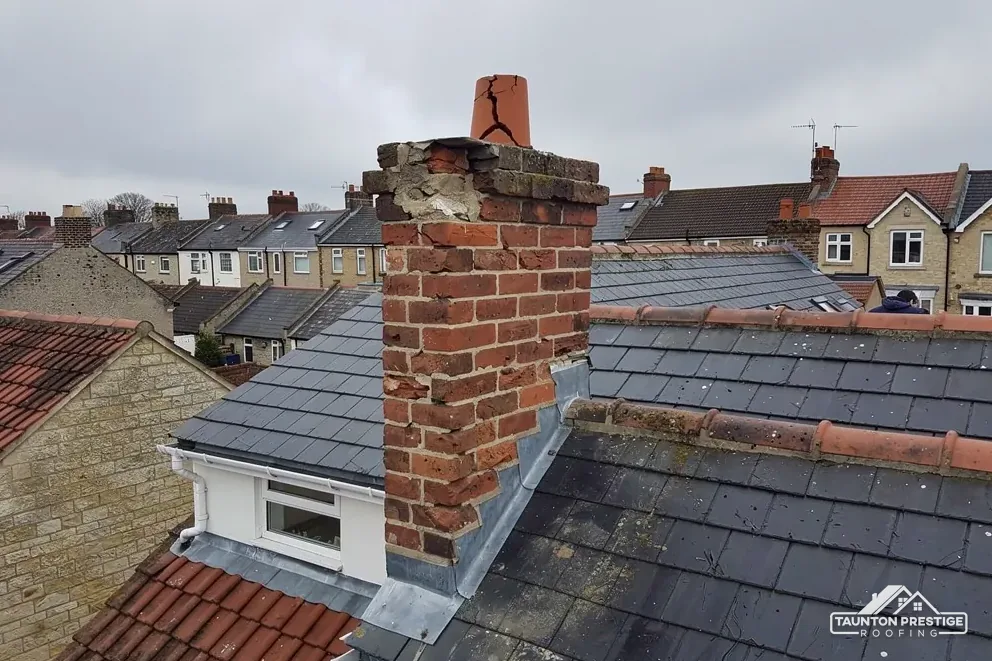
Look at the top of any chimney stack and you will see the pots sitting in a sloping band of mortar. That band is the flaunching. It holds each pot upright, seals the gap between the pot and the brickwork, and sheds rain outward and away from the flue. It is a small amount of material doing three jobs at once, and it takes the full force of the weather up where the house is tallest.
Because it is so exposed, it is among the first parts of a stack to show age. Cracks open, edges crumble and the mortar lets go of the pot, and rain finds its way into the stack. Often, when a stain appears on the chimney breast inside, the damage may have been building for a winter or two. This guide explains how flaunching works, how to spot trouble from the ground, when a patch is enough and when re-flaunching or a partial rebuild is the better answer, and what decides the price. It belongs to our wider chimney repairs pages for Taunton and Somerset.
What flaunching does for the pot and the stack
A chimney stack is a column of brick with the flue inside. On top is the stack head, a slab or set of courses called the cap or top, and the pots rise from it. The flaunching is the mortar fillet bedded round the foot of every pot, and in older stacks it is a mix of sand and lime or cement, trowelled into a smooth slope.
Its first job is mechanical. It locks the pot in place against wind, so the pot does not rock or tilt. Its second job is to keep water out. Rain landing on the stack head runs down the slope, away from the flue and off the edge, instead of pooling around the pot. Its third job is to protect the bed joint under the pot, the layer of mortar the pot actually stands on, from direct weather.
Why does the slope matter?
Water that cannot run off will sit. A flat or hollowed flaunching holds rain against the pot, and in winter that rain freezes, swells and splits the mortar. A good slope is the least expensive protection a stack has, and it costs nothing to keep once it is right. If water also gets in at the edges, the brickwork below becomes saturated, which can lead to the staining and salts we describe in our guide to a damp chimney breast.
Is flaunching the same as repointing?
No. Repointing renews the mortar joints between the bricks of the stack, while flaunching is the sloped mortar on the top. The two often need attention together, since both are exposed, and the guide to chimney repointing explains the joints.
The mortar mix matters on an older stack. Hard cement can trap moisture in soft brick, and our page on lime mortar for chimneys explains when a softer, lime-based mix suits the brick.
Cracks, gaps and other signs from the ground
You cannot judge flaunching properly from a distance, but you can see a good deal. Binoculars from the garden or the road, on a bright day, will tell you more than a quick glance.
What does failing flaunching look like?
- Cracks running across the mortar, or between the mortar and the pot.
- Pieces of mortar on the roof below, in the gutter or on the ground.
- A pot that leans, or looks loose when it catches the wind.
- A hollow or flat surface where there should be a smooth slope.
- Dark streaks running down the stack below the pot, which show where water has been escaping.
- Plants or moss growing in cracks at the top.
Why does it crack?
Several causes work together. Mortar shrinks slightly as it dries, and a thin or poorly made mix cracks early. Frost expands water that has entered small cracks and opens them wider each winter. Heat from the flue, wind loading on the pot and movement in the stack all add stress. A pot that has been knocked by a fallen branch or a television aerial bracket loosens the bond. The pattern of cracking suggests the cause: fine hairlines are often shrinkage, while open gaps around the pot point to movement.
Once the crack is open, the stack is taking in water. Where there is any chance that loose material could fall, keep people away from the area below. Somerset Building Control lists "Unstable chimneys" as a dangerous-structure example, and leaves whoever owns such a building to pay for the work that makes it safe.
Our guides to a loose chimney pot and a cracked chimney stack cover the wider picture when the problem goes beyond the top.
Re-flaunching: what the repair involves
A proper re-flaunch is more than a skim of mortar over the old. The stack head is reached with safe access, which is covered under the scaffold heading below. The loose or cracked flaunching is chipped away, and the bed under each pot is checked. If the pot is sound it is lifted or held clear, and the bed is renewed so it sits level and firm.
How is new flaunching made?
A fresh mortar mix is made to suit the brickwork. It is laid in a sloping fillet from the pot's rim down to the edge of the stack head, with enough depth to shed water and enough thickness to resist frost. The surface is finished smooth, because rough surfaces hold water. Fresh mortar is protected while it sets, since rain or frost on new work can damage it. For that reason the repair is planned for a settled spell of weather, and the joint between the fillet and the pot rim is checked a second time before the access comes down. A pot that is bedded level, with a fillet that falls away evenly on every side, is what gives the stack its protection through the next winter.
When is a patch enough?
A small local crack in otherwise sound flaunching can be raked out and filled. If the mortar is sound and bonded, the patch will last. It stops being a good idea when the mortar is hollow, loose or crumbling across most of the stack head, because a patch laid over a bad base fails again. At that point, renewing the whole fillet is the better buy.
What about the pot itself?
While the top is open, a cracked or leaning pot can be replaced or reset. Our page on replacing a chimney pot covers the details. If the flue is no longer used, a vented cap may replace the pot, and our guide to capping a chimney explains the ventilation point.
After a storm, a quick look at the top is sensible, since gales can loosen what frost has started. See our guide to chimney storm damage.
When the stack needs more than flaunching
Flaunching sits on the top of the stack, so its health depends on what lies beneath. A new fillet will not hold on crumbling bricks or on a stack that is moving. The survey has to look past the top.
Which signs point to a deeper problem?
A stack that leans, bricks that are spalling or flaking, mortar joints washed out down the stack, and white salt stains on the chimney breast inside all suggest more than flaunching. So does a crack that runs down through several courses instead of stopping at the top. Our guide to a leaning chimney explains why those signs matter.
What is the next step up from re-flaunching?
Repointing the stack, replacing the worst bricks, or rebuilding the top few courses and fitting a new flaunch. If the stack is weak all the way down, a full rebuild may be needed, and we describe that in our guide to a chimney rebuild. A stack that is no longer needed can also come down, which we cover under chimney stack removal.
What about flashings and the roof around the stack?
Water that gets into a stack often entered through the lead flashing at the base, where the stack meets the roof, and not through the top at all. A survey checks both. If the lead has lifted or cracked, fixing the flaunching alone will not stop the leak. See chimney apron flashing for how that detail works.
Birds are another reason to look before starting. A nest on the stack head is protected while it is occupied, because section 1 of the Wildlife and Countryside Act 1981 reaches anybody who intentionally harms a nest with birds still inside, so the repair is timed around the birds.
Access, consent and what decides the price
Working on a stack is working at the highest, most exposed point of the building. Safe access may mean a roof ladder with edge protection, a small tower or a full scaffold. A scaffold that blocks the pavement needs a highway licence under the Highways Act 1980 s169. In Taunton the issuing body is Somerset Council, and its page says the application comes from the contractor who has the job. See scaffolding for chimney repairs.
Does flaunching need consent?
Normally a like-for-like repair does not change the building's appearance. A listed house is different: listed building consent covers works that would affect its character, and the choice of mortar and the shape of the fillet can count. In a conservation area or on an older house, ask Somerset Council before changing the look of the stack. Our guide to listed building consent for chimneys sets out the route.
What decides the price of re-flaunching?
How many pots there are, how tall the stack stands and what access is required. The condition of the bed and the pots. Whether the stack also needs repointing or a flashing repair. And whether this is a stand-alone visit or one piece of a bigger job, since sharing a scaffold with other roofwork changes the total. A single pot on a low stack is a short visit, while a stack with several pots, loose bricks and a failed flashing is a bigger one.
That is why the written quote follows a survey. On the survey we go up to the stack, take photographs of the flaunching, the bed and the flashing, and give one total price for the job. Photos taken from the garden, sent with the enquiry form, help us plan the visit before we arrive, and the survey itself settles the details.
Flaunching queries
What is flaunching on a chimney?
It is the sloping band of mortar around the base of a chimney pot. It holds the pot in place and sheds rain outward and away from the flue. When it cracks or crumbles, water gets into the stack and the pot can loosen, which is why it is worth checking after winter.
Can cracked flaunching be patched or does it need renewing?
A small crack in sound, well-bonded mortar can be raked out and filled. If the flaunching is hollow, loose or crumbling across the stack head, a patch will not last and the whole fillet should be renewed. A survey will show which, because the bed under the pot matters.
Does bad flaunching cause damp inside the house?
It can. Rain entering through a cracked fillet soaks the stack and may show as staining or salts on the chimney breast. The same signs can come from a failed flashing or a sealed flue, so the cause needs confirming before anything is repaired.
More on this subject: Chimney repairs in Taunton