Condensation is the commonest reason people ask us to look at a conservatory roof, and it is also the easiest to mistake for something else. Drips along the glazing bars can be rainwater coming in, or they can be water that formed inside the room and ran down the cold surface. The fix for one is a repair. The fix for the other is a change in how the room is heated, ventilated and used, and no amount of sealant will cure it.
This guide starts with telling the two apart, then covers why single glazing and polycarbonate sweat, where the moisture comes from, what a tired polycarbonate sheet does, and what a solid roof changes. It also says plainly when the roof is not the problem. It sits within our wider conservatory roofs work across Taunton and Somerset, and it explains what we look for on a survey so you know what a roofer should be checking on your own roof.
Condensation or a leak: how to tell
The timing gives the answer away. A leak shows up during or soon after rain and tends to appear in the same place each time: under a joint, below the wall flashing (the strip of metal that seals the roof where it meets the house wall), or at the ridge. Condensation appears on cold, still mornings, in the evening after a shower or cooking, and across a wide area of glass rather than in one spot.
Does the water come in when it has not rained?
If the drips appear on a dry day, it is almost always condensation. If they only come after rain, and a dry spell stops them, look at the roof joints. Our guide to a leaking conservatory roof covers where water gets in.
- Beads of water across the whole underside of the glazing point to condensation.
- A single dark line or stain beneath one bar points to a leak.
- Black spotting along the seals and on the frame is mould, and mould follows damp air.
- Wet patches only on the side that gets the morning chill tell you the cold surface is doing the work, not a failed joint.
Can both happen together?
Yes, and that is the awkward case. A roof that lets in a little rain and also runs with condensation can look hopeless, yet the two problems are fixed separately. We sort the leaks first because they are cheaper to put right, then see how much condensation remains once the roof is watertight. A cold bright morning after a dry night is the best time for the check, and a phone photo of the glazing at that hour is worth keeping.
Why glass and polycarbonate sweat
Air holds moisture, and warm air holds more than cold air. When that warm, damp air touches a surface colder than itself, some of the moisture turns back into water. In a house that surface is usually a window. In a conservatory it is the whole roof.
Why is a conservatory roof worse than a window?
Because it is thin. Single glazing and a single sheet of polycarbonate offer very little resistance to heat leaving the room, so their inner face is close to the outside temperature on a cold night. The warm air in the room finds a large, cold surface straight above it, and water forms in quantity. A double glazed unit or a multiwall polycarbonate sheet, which is made with air channels between its skins, keeps its inner face warmer, so less condensation forms, though it can still happen on the coldest mornings.
The frame matters too. An old aluminium or timber frame with no thermal break, a layer of insulating material that stops cold passing straight through, becomes a cold bridge, and the beads of water gather along it first. Glazing bars that run with water every morning will eventually stain, and aluminium bars can pit where water sits on them.
None of this means the roof is faulty. It means the roof is doing what an uninsulated surface does. The question is whether you want to live with it, manage the room's moisture, or replace the surface with something warmer, and the later sections cover each choice.
Condensation on the inside of the roof is a sign of damp air meeting a cold surface. It tells you nothing, on its own, about whether the roof is watertight.
Where the moisture comes from
Every household puts water into the air. People breathe it out, kettles and hobs boil it off, washing dries on radiators, showers steam, and gas heaters without a flue add more. Plants give off water too, and a conservatory full of them in winter is a damp room.
Is a dehumidifier or a vent the better answer?
Ventilation takes damp air out of the room and a dehumidifier takes the water out of the air, so each does a different job. Opening roof vents or trickle vents, and the door to the house when it is dry outside, lets moist air leave. A dehumidifier suits a room that stays shut for weeks. Our page on conservatory roof ventilation explains the vent options that can be fitted to the roof itself.
Heating makes a difference as well, though not always in the direction people expect. A conservatory that is heated hard in the evening and left cold overnight cycles between warm and cold air, and the moisture is released onto the glass each time the room cools. A steady, modest temperature does less harm than a blast of heat. If the room is used as a utility space or a home office, the moisture load is different again, so tell the surveyor how it is really used.
- Close the door to the house while cooking or drying washing, so steam stays out of the conservatory.
- Keep furniture a little way from glass so air can move.
- Wipe the glazing bars in the morning; standing water rots timber and corrodes metal.
A room that stays damp whatever you do points to the roof build-up, and that is where we turn next.
Tired polycarbonate and trapped water
Polycarbonate is a plastic glazing sheet, often multiwall. It does not last as long as glass. HomeBuilding gives a typical lifespan of 10 years for a polycarbonate conservatory roof, while The Eco Experts put glass or polycarbonate at roughly 10 to 15 years. Treat both as typical figures rather than guarantees of anything, because a well-kept sheet can outlast them.
Why does water collect inside the sheet?
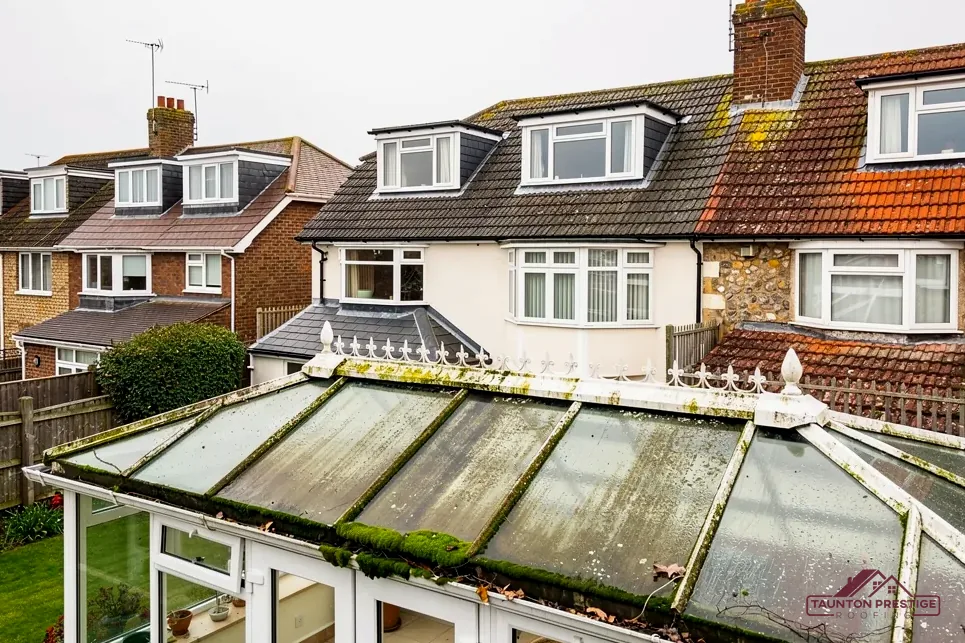
A multiwall sheet has channels running from the top of the slope to the bottom. They are meant to be closed at the ends with a tape or a profile that lets vapour out but keeps insects and water away. When that tape fails, damp air gets into the channels, condenses there, and leaves green algae or a cloudy, stained look that cannot be wiped off. Light also starts to pass poorly through such a sheet, and the room can feel gloomier than it did when the roof was new.
Sheets in this state do not improve with cleaning. If only one or two are stained, a single panel can be replaced, as our page on replacing a conservatory roof panel describes. If many are, the sheets are close to the end of their life and the better buy is a new roof.
Would glass cure it?
Modern glass with a low-emissivity coating, a thin layer that reflects heat back into the room, keeps the inner pane warmer than polycarbonate does. Our guide to replacing polycarbonate with glass compares the two for heat, noise and weight on the frame.
What a solid roof changes
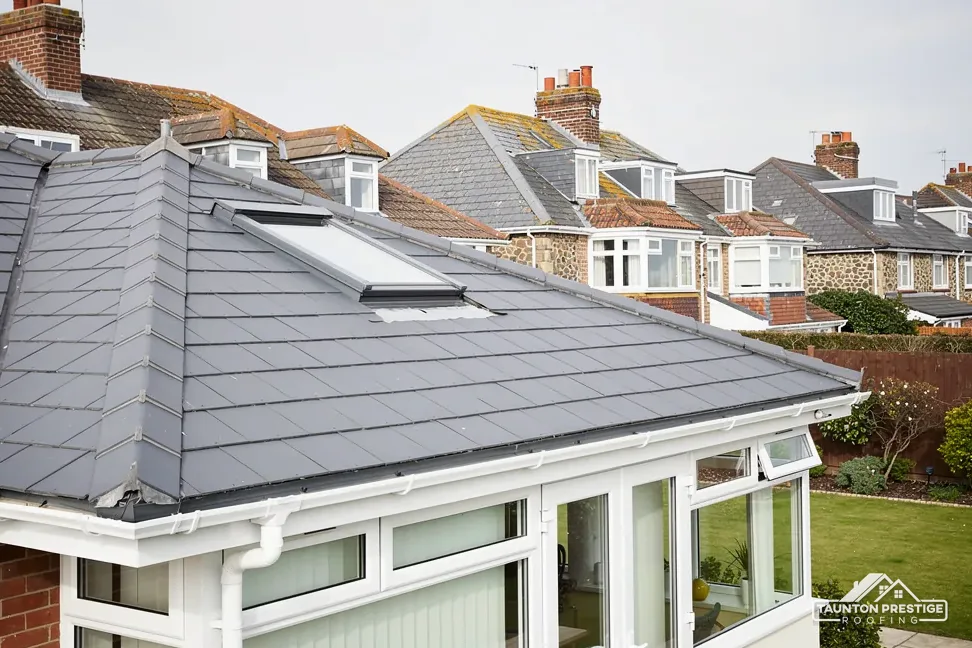
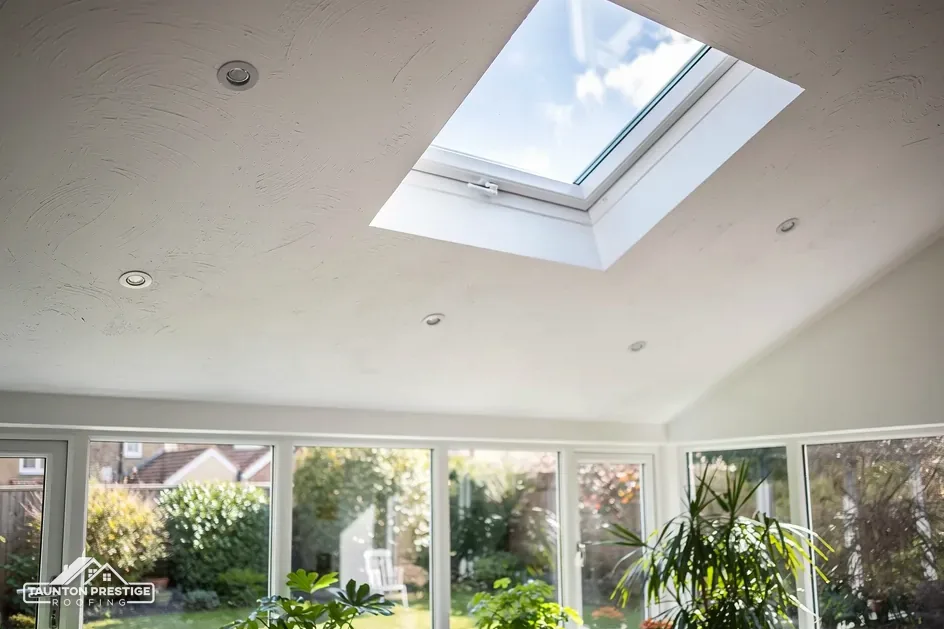
A solid roof on a conservatory swaps the glazing for a built-up covering: tiles or slates on battens, an underlay, insulation between or under the rafters, and a plasterboard ceiling. Because the inner face is a plastered ceiling kept warm by insulation, there is no cold sheet for moisture to land on, and the ceiling is where the problem ends.
Does the new ceiling stay dry?
Only if the build-up is designed to. Insulation reduces heat loss but it also means the roof structure itself is colder, so moisture that finds its way into the build-up can condense there, out of sight. That is the reason BS 5250, the standard on moisture in buildings, matters. A vapour control layer under the plasterboard stops damp room air from reaching the insulation, and the covering is ventilated or breathable as the design requires.
For a cold roof using non-breathable HR underlay, Marley's guidance asks for 25mm of eaves ventilation on pitches of 15° or less and 10mm on steeper pitches. Where the design pairs breather underlay with an airtight, well-sealed ceiling, Marley describes normal eaves construction as enough, subject to third-party certification. Your drawings state which applies, and a roofer who cannot tell you which is a roofer to question.
Part L of the Building Regulations sets 0.15 W/m²K for a new or replacement roof in an existing dwelling (Table 4.2), which is a far warmer surface than any glazing. Our insulating a conservatory roof guide shows the layers, and a solid roof is one of the ways to end the condensation for good.
Where to start, and what decides the price
Begin with the steps that cost nothing. Note when the water appears, wipe it away each morning, open vents and the door in dry weather, and stop drying washing in the room. Two or three weeks of notes make a survey far more useful, because the pattern tells us whether the roof or the room is the cause.
When is the roof worth changing?
Change the roof when the sheets are stained inside, when the frame is cold-bridged and rotting, or when the room is unusable for half the year. Do not change it for a problem that better ventilation would fix. A roofer who suggests a new roof without asking about the room's use has not looked at the cause.
What decides the price?
The covering you choose, the shape and area of the roof, whether the frame needs strengthening for the extra weight, the access for scaffolding, and what the survey finds in the frame. A vent and a repair to the end tape cost a fraction of a new roof, and we will tell you if that is the sensible route. We also say so when a new roof is the better buy, for instance where the frame is rotting or half the sheets are stained.
For typical UK ranges on a full replacement, read our guide to conservatory roof replacement cost. When you are ready, book a survey. We check the roof, the frame and the room, send you photos of your own conservatory, and give you one written price afterwards.
Condensation queries
Why is my conservatory wet inside when it has not rained?
Warm, damp air from the room is meeting a cold roof and turning back into water. It forms on single glazing and thin polycarbonate because they hold little heat. Ventilating, heating steadily and keeping washing out of the room all reduce it, and a survey shows how much is left.
Is mould on the roof seals a sign of a leak?
Not by itself. Mould grows on damp surfaces, and condensation keeps seals and frames damp every morning. A leak leaves a line or stain beneath one joint after rain. If the black spotting is spread across the whole roof, the room's moisture is the likelier cause.
Does a solid roof stop condensation completely?
It removes the cold glazing that water forms on, so the ceiling stays dry in normal use. The build-up still has to be designed with a vapour control layer and ventilation or breather underlay, because moisture can condense inside an insulated roof if the detail is wrong.
More on this subject: Conservatory roofs in Taunton