A conservatory is a roof with a few walls to hold it up. The walls take a share of the weather, but the sloping top is where the sun lands in summer and where warmth drains away on a still winter night. That is why two conservatories on the same road can feel nothing alike. One has a thin multiwall panel over the frame, another has a tiled roof with a plastered ceiling beneath it, and a third has glass that has clouded and scratched since the day it went in.
This guide sets out the three common ways to change the temperature from above: new glazing, a solid roof, and lightweight insulated panels. It looks at what ventilation does whichever you choose, how long conservatory roofs are published to last, and what a replacement tends to cost across the UK. It belongs to our conservatory roofs work around Taunton, and it points to the guides on frame strength and condensation where those questions come up.
Why the roof sets the temperature
Sunlight comes through a glazed roof from above, where the sun sits high for most of the day in summer. It heats the floor, the furniture and the air, and the heat has nowhere to go if the vents are few and the glass is clear. In winter the same roof works against you. A thin covering lets warmth pass through it quickly, and the glass or plastic surface stays cold enough to chill the room below.
So the complaint is usually one problem seen twice: a roof that does very little to slow the movement of heat in either direction. Walls and floors matter, but the roof is the biggest single surface, and it is the part you can change without rebuilding the room.
Is it the roof or the room?
Before you spend anything, look at what else is going on. Gaps around the doors, a roof that has sagged and let in draughts, blinds that were never fitted, and a frame with no opening vents all make a conservatory harder to live in. A roofer who reads the whole structure on a survey will tell you whether the roof is the cause or simply the part that shows the symptom, and will show you photographs of your own roof rather than ask you to take it on trust.
Any replacement roof has to satisfy Building Regulations on three counts: the structure must carry it, the room must not waste energy, and air has to move through it. Keep those three tests in mind as you read the options below, because each covering meets them in a different way.
Glazed roofs: glass, polycarbonate and solar control
Most older conservatories have a polycarbonate roof, which is a plastic sheet made of channels, or a glass roof in a uPVC or aluminium frame. Both keep the room bright, and that brightness is the reason people choose them. It is also the reason they run hot.
Can glass be made to behave better?
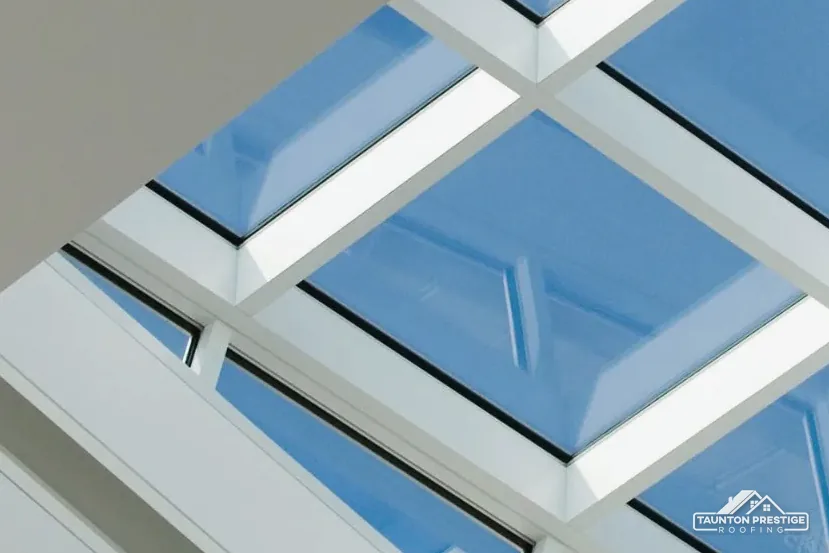
Yes, to a degree. Modern glazing can carry a solar control coating that turns away some of the sun's warmth, and certain units add a low-emissivity coating that holds heat in during winter. Self-cleaning glass reduces the grime that dims a roof, though it does not change the temperature. If your roof is polycarbonate, replacing the sheets with glass is a common upgrade, and our guide on solid, glass or polycarbonate conservatory roofs sets the materials side by side.
Glazing never stops being glazing, though. Even a good coated unit lets more heat through than a built-up roof of tiles, insulation and plasterboard. If you want to keep the light, you accept that blinds, roof vents and some management of the room will stay part of daily life.
How long does a glazed roof last?
Published figures differ. For polycarbonate roofs on conservatories, HomeBuilding gives "a typical lifespan of 10 years", while The Eco Experts says glass or polycarbonate lasts "about 10 to 15 years". Those are typical ranges, not promises, and a roof in a sheltered spot with clean gutters will often do better than one under an overhanging tree. A tired, yellowed or leaking glazed roof is often the point at which owners start asking about alternatives.
A solid tiled roof: warmer, cooler and heavier
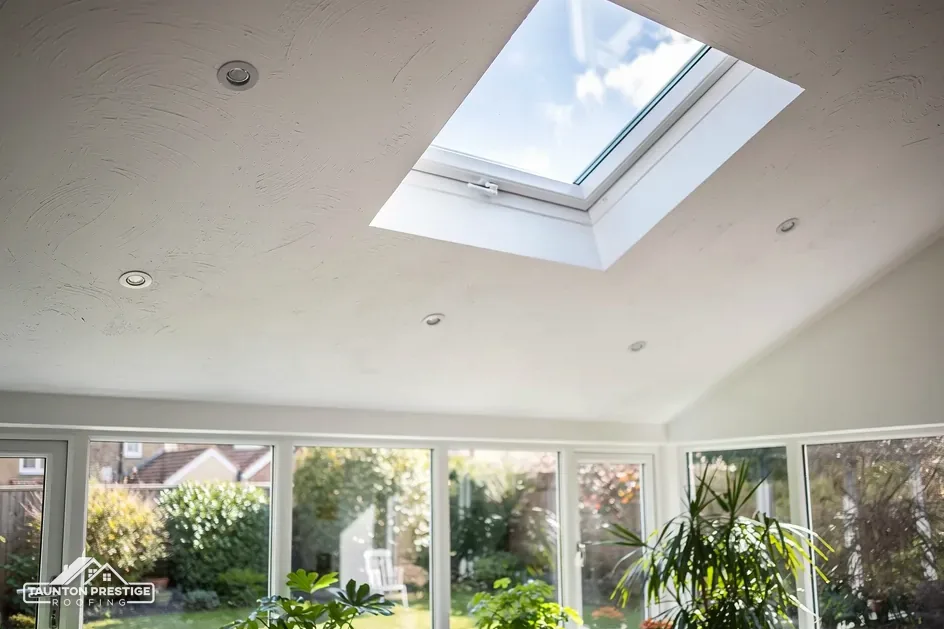
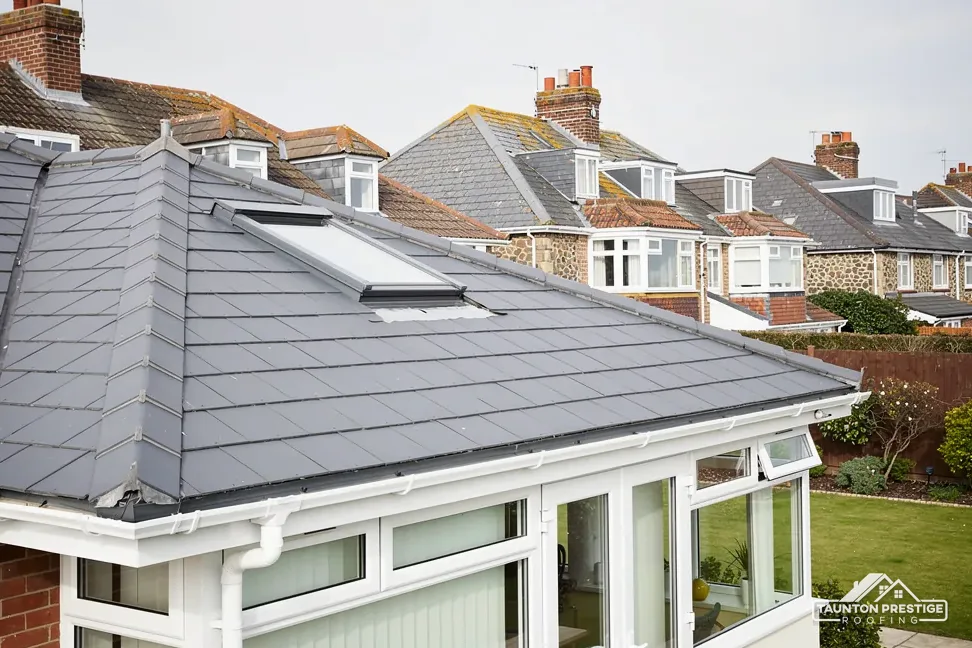
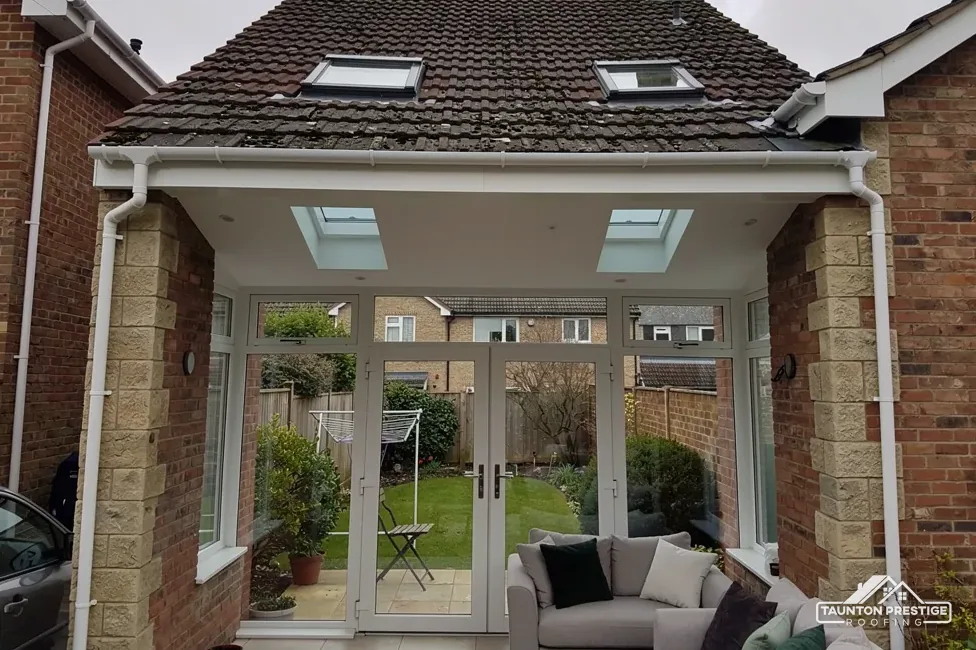
A solid roof replaces the glazing with a built-up structure: a timber or steel frame, a waterproof layer, tiles or slates outside, and insulation and a finished ceiling inside. The room becomes quieter in rain, holds its heat in winter and does not bake in summer the way a glass box does. It also loses the overhead light, so many owners keep a roof window or a lantern, a raised glazed section set into the roof, to bring daylight back.
The catch is weight. A tiled roof weighs a great deal more than a glazed one, and the conservatory frame, its base and the supporting walls were designed for the lighter load. Whether yours can carry it is a structural question, and our page on whether a conservatory frame can take a solid roof explains how that check goes.
Does a solid roof need Building Regulations approval?
A replacement conservatory roof has to comply with Building Regulations according to the Planning Portal, so the work goes through a building control body. At a Taunton address that body is Somerset Building Control, on 0300 303 7790. Raise the question before work starts, not after, and ask the person fitting the roof who is handling the application. Leaving it until afterwards can mean opening up finished work for inspection.
A properly built solid roof is the most effective answer to a conservatory that is too hot and too cold, because it does what a house roof does. It is also the most expensive change, and the one with the most decisions about frame, weight and finish.
Insulated panels and lightweight tiles
Between thin glazing and a full tiled roof sits a middle option: insulated roof panels, or a lightweight tiled system that sits on the existing frame. These are made to weigh far less than a conventional roof, so the frame is more likely to take them without strengthening. They give you the look of a tiled roof from outside and a plastered or panelled ceiling within.
The trade is mostly about thickness and detail. A factory-made panel carries its insulation in a fixed depth, so you cannot add more later. The joints between panels, the junction with the house wall and the roof edge are where the quality of fitting shows. Poor detailing at those points lets in water and cold air whatever the panel is made of, which is why the fitting counts for as much as the product. Our guide to condensation in a conservatory covers what goes wrong when a roof is closed up without thought for moisture.
Will insulated panels make the room feel like part of the house?
They will make it feel far less like a greenhouse. A conservatory with a solid, insulated lid stays closer to an even temperature through the day, and the difference between the first warm morning in spring and the hottest afternoon in August is much smaller. Daylight will drop, as it does with any solid roof, and it is worth deciding how much you want back with roof windows before the roof is built, not after.
Panels still need the building control route that applies to any new conservatory roof, so ask who will deal with it at the quote stage.
Ventilation: vents, fans and the air gap
Ventilation does two jobs. In summer it lets hot air out at the top of the room so the temperature does not build. All year it carries away the moisture that people, plants and wet washing put into the air, which would otherwise settle on cold surfaces and run down them as condensation.
A glazed roof usually gets this from opening roof vents, which are small hinged or sliding sections in the glazing, and from doors and windows. A solid roof needs a plan of its own. The British Standard that deals with damp in buildings is BS 5250. BSI lists the 2021 edition as current, though it is marked under review.
What does a cold pitched roof need under the tiles?
Marley's guidance for a cold roof built over non-breathable HR underlay, which is the sheet laid under the battens, asks for a 25mm opening at the eaves when the pitch is 15 degrees or less, and 10mm when the pitch is steeper than 15 degrees. A breather membrane with a well-sealed ceiling is treated differently, and depends on certification of the product. The numbers matter less to you than the principle: a tiled conservatory roof with insulation inside it should be designed with air movement in mind, not have it added when damp appears.
If you have an existing solid roof that sweats or smells musty, raise it at a survey. A roofer can inspect the underside of the tiles or sheets, plus the eaves detail, and tell you whether the ventilation was ever built in.
Upgrade, repair or replace the roof?
Not every hot or cold conservatory needs a new roof. If the glazing is sound and the room only struggles in the sunniest weeks, blinds, roof vents or a solar control film on the glass may be all that is needed. Where polycarbonate has yellowed, panels have cracked or the seals have failed, repairing panels one at a time is a short-term fix on an ageing roof and replacing the whole roof usually works out better.
What does a conservatory roof replacement cost?
As a typical UK range, MyJobQuote gives "between £3,200 and £6,000" for conservatory roof replacement (MyJobQuote, Oct 2026), and The Eco Experts gives "between £2,300 and £6,000". Your own figure turns on the footprint and outline of the roof, the covering you choose, how much the frame needs, and the access and scaffold needed to reach it. A quote should also say whether VAT is included.
Ask whether the quote includes scaffold, since a conservatory roof is often reached from a lawn or a narrow side passage and the access can change the work. Where the scaffold has to be erected on the highway, the highway authority issues a licence for it, and we arrange that with the scaffolder.
A tiled roof sits at the top of that range or above it once the frame has been strengthened, and a straight swap of one glazed roof for another sits lower. Neither figure tells you what your own conservatory needs, which is why the survey comes first.
A roof that is too hot in July and too cold in January usually needs more than a patch. Choose the covering first, then check the frame can carry it.
Every conservatory job begins with a survey, and you receive photographs of your own roof and frame, followed by one total price put in writing. If a glazed roof is the right call, we will say so, and where the frame is too light for a solid roof, you will be shown why before any money is spent.
Hot and cold roof questions
Will blinds alone stop a conservatory overheating?
Blinds help most when they sit outside the glass or are reflective, because they stop the sun before it warms the room. They do nothing for winter heat loss, and a roof that swings between baking in summer and chilly in winter usually needs a change to the roof itself. Treat blinds as a useful extra.
Is a tiled roof always cooler than glass in summer?
A built-up roof with insulation and a ceiling stops the sun heating the room directly, so it stays steadier than a glass roof. How well it does depends on the insulation depth, the ventilation and the detailing, so the answer depends on how the roof is built.
Can I add roof windows to a solid conservatory roof?
Usually, yes, if the roof structure is planned for them. A roof window brings daylight back, and it is easier to place one while the roof is being built than to cut one into a finished roof. Raise it at the survey so the frame and flashings are sized for it.
More on this subject: Conservatory roofs in Taunton