Ask three people what a conservatory roof costs and you will hear three very different numbers, and all three can be right. A replacement might mean new polycarbonate sheets on a sound frame, a glass roof, or a solid tiled roof that needs the frame strengthened and the walls checked. They share a name and very little else, which is why the spread is so large.
This guide gives the typical UK ranges that two published cost guides print, names each source and its date, and then goes through what decides where a job lands. It is a guide to the market, not a price list: these are not our prices, and we do not post a figure for a roof we have not looked at. If you want the wider picture of the choices first, our conservatory roofs hub covers the options for Taunton and Somerset homes.
The published figures
Two national guides give a range for replacing a conservatory roof. MyJobQuote gives between £3,200 and £6,000 (MyJobQuote, Oct 2026), and The Eco Experts give between £2,300 and £6,000 on a page that carries no date. Both are national figures, typical UK ranges, and neither prices any particular home. Treat them as a starting point only.
Why do the two guides differ at the low end?
Because each guide draws on its own data and its own mix of jobs, and neither says what sits behind its lowest figure. We quote both with their names and dates rather than pick the one that looks better, and the gap between them is itself a reason to treat any single number with care.
The top figure is the same in both, at £6,000, and that is a useful reminder: the guides describe a typical range, not a ceiling. A large or complicated conservatory, or a solid tiled roof with a strengthened frame, can sit above it, and a listed house can add costs that neither guide includes. Even within the range, the same size of roof can land far apart, depending on the method used and on what lies underneath the old covering when it comes off.
For scale, MyJobQuote puts an average roof repair at about £650 in 2026, a general figure across every roof type. A single leak is therefore rarely a reason to replace the whole roof. Our guide to repairing or replacing a conservatory roof sets out how to tell which you are looking at.
Treat any single number from a website, including those above, as a starting point for questions, never as the price of your roof.
What sets the price of your roof
The ranges are wide because the same label covers very different work. Four things do most of the moving.
What are you replacing the roof with?
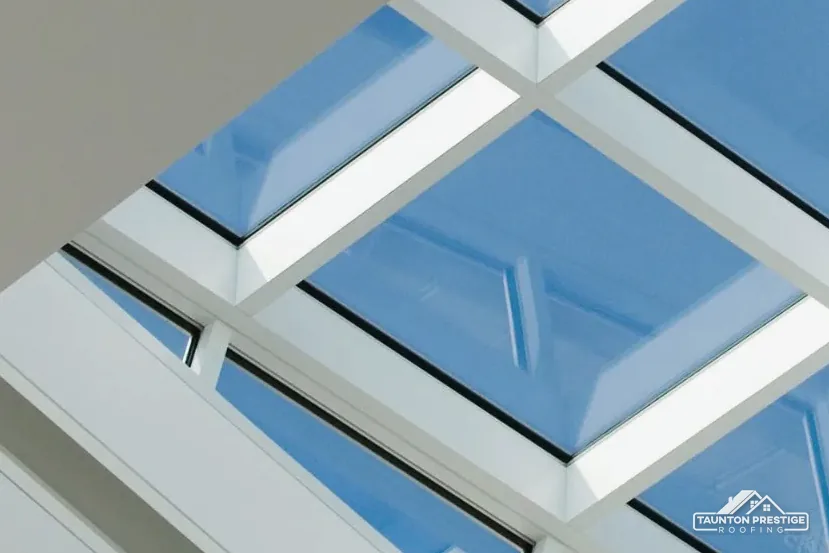
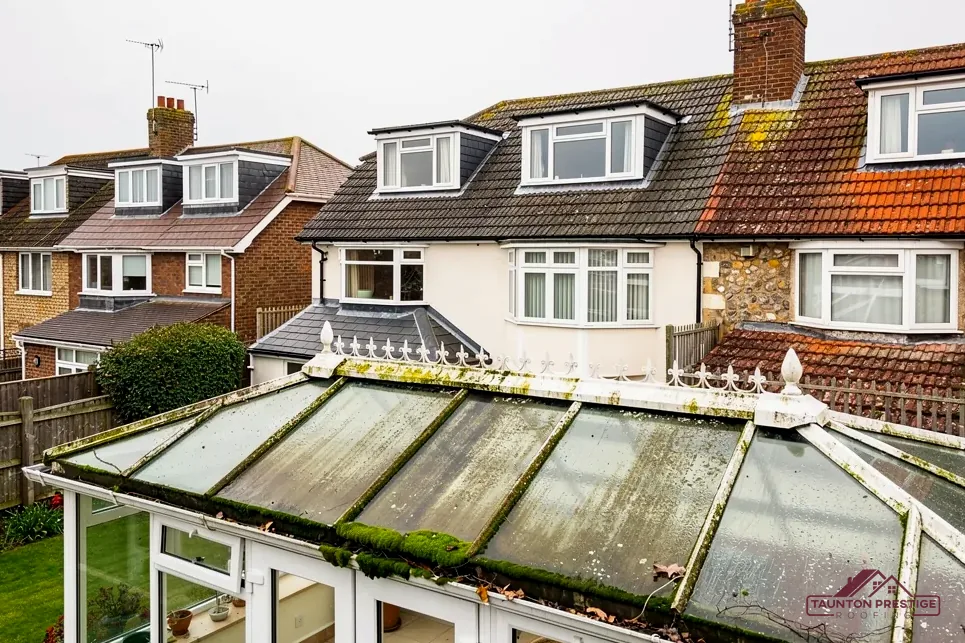
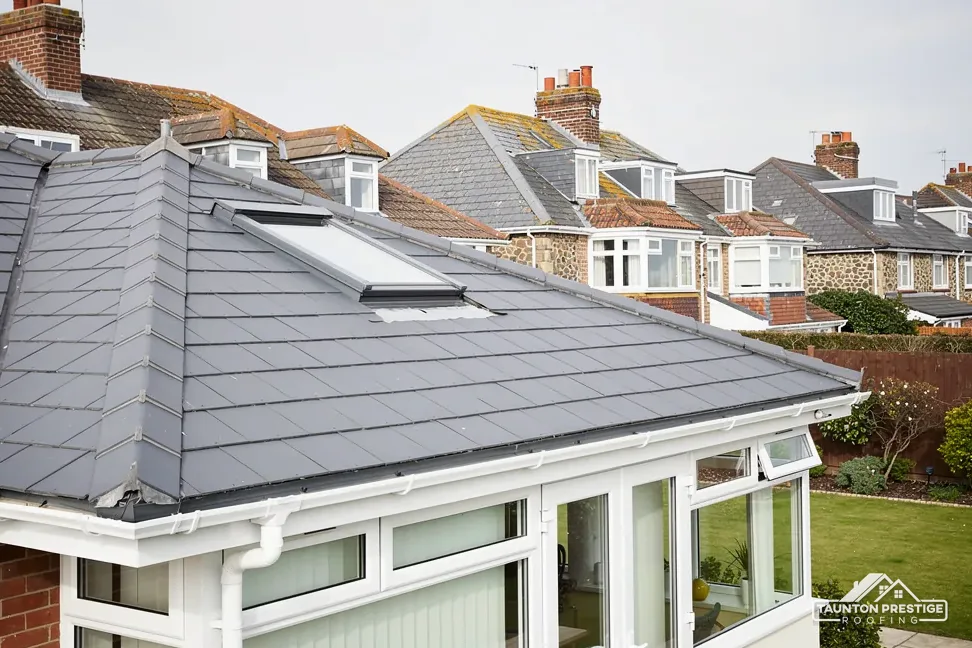
Polycarbonate is the lightest and the quickest to fit. Glass is heavier, calls for a frame able to take the load, and costs more in materials. A solid roof, with tiles or slates laid over insulation and a plasterboard ceiling, is the heaviest and involves the most trades and the most time. Choosing between them is the biggest single decision, and our page on replacing polycarbonate with glass explains the trade-offs.
How big is the roof, and what shape?
A small lean-to is a simple rectangle. A Victorian or Edwardian conservatory has a faceted, hipped shape with many more joints, ridges and cuts. More angles mean more labour even where the area is the same, and every extra cut is another joint that has to be sealed and checked.
What state is the frame in?
The frame has to carry the new roof. A sound frame is a bonus. A frame with rot, or one never meant to carry the weight, may need repair or strengthening first, and that can change the whole job. We look at the frame before anything else, and you see photos of the timber before any decision is made.
How easy is the access?
A conservatory at the back of a terrace with a narrow side passage is harder to work on than one with open garden around it. Scaffold or a platform, where it is needed, adds to the price, and so does a long carry for materials.
Why a solid roof sits towards the top
A solid conservatory roof is the option that most often takes a job to the upper end of any range. The reason is not mystery; it is the extra work involved.
What does a solid roof involve that glazing does not?
It involves a structure strong enough to carry tiles, battens, insulation and a plasterboard ceiling. Where a new covering makes the roof 15 per cent or more heavier, the Planning Portal says Building Regulations approval is needed, and it points to a structural engineer or surveyor for a check first. It also involves plastering and finishing the ceiling, working out how the roof joins the house wall, and usually electrics for new lights. Each stage is a cost that a polycarbonate swap does not have.
It also brings building control into the job, because a new roof has to meet the Building Regulations for strength, energy efficiency and ventilation. Our guide to conservatory roof building regulations covers that, and fees and timing vary by body, so ask for the current position.
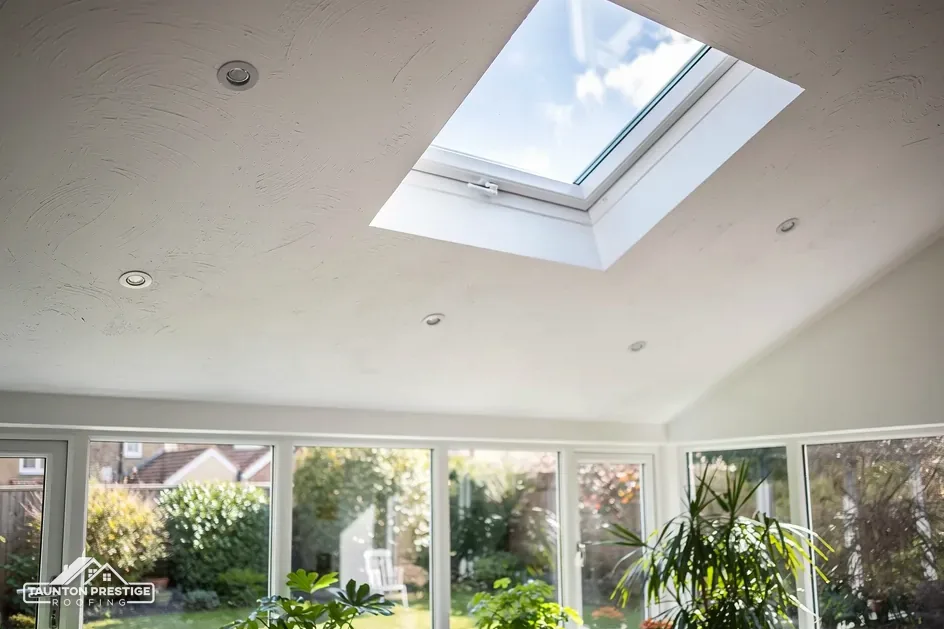
The benefit is a far lower U-value, the measure of heat loss. Table 4.2 of Part L sets 0.15 W/m²K for a roof of this kind in an existing home, which behaves like the rest of the house and not like a cold sheet of glazing. For a conservatory that is too hot in summer and too cold in winter, that is often the reason for paying more.
It does not suit every frame, and it does not suit every house. If the frame cannot carry tiles, a lighter solid roof is a possibility, and the survey is where that gets raised, not a push towards the heaviest option.
Scaffolding, VAT and the other extras
When you compare quotes, two questions save arguments later: does it include VAT, and does it include scaffolding or other access? VAT at the standard 20% applies to this kind of work on an existing home, so a figure that omits it can look a good deal lower than the bill will be. Never assume that a figure includes it. MyJobQuote's headline figures do not say which basis they use, so we do not label them either way.
How much does scaffold add?
It depends on the job. HomeBuilding (Sep 2025) gives roughly £1,000 for scaffolding on a three-bed semi with permits included, and MyJobQuote (Oct 2026) gives a front-elevation scaffold at £550 to £750 for a week-long hire. Those are house-scale figures. A conservatory, being low, often needs a platform or a tower and less than a house does, so those numbers are a ceiling for thinking, not a guide to your job. Where scaffold stands on the public highway, we arrange the licence from the highway authority with the scaffolder.
What else can show up on the quote?
Removal and disposal of the old roof, particularly glass, which is heavy. New guttering or fascia if the old ones do not fit the new roof. Making good the wall where the old flashing was fixed. Roof windows or vents if the design includes them, as our conservatory roof ventilation page describes. Ask which of these are included and which are not, in plain words, and ask what happens if the survey or the stripping-out turns up something unexpected such as rotten timber.
A quote should state its total, what the total covers and what would change it. If a number is vague on any of those, ask until it is not.
How long a roof lasts, and why that matters
The cost of a roof looks different when you divide it over the years it lasts. Published figures are typical lifespans, not promises, and they differ by material.
What lifespan can a conservatory roof expect?
HomeBuilding quotes 10 years as typical for polycarbonate, and The Eco Experts say about 10 to 15 years for glass or polycarbonate. A solid roof takes on the lifespan of its covering: well-maintained slate is given as 100+ years by CORC, while the BRE minimum of 60 years applies to clay tiles only. The framework matters just as much, because whatever goes on top depends on the frame beneath it, and a weak frame spoils a good covering. Soft timber, failed seals or movement in the low walls can add work that no cover price anticipates.
The point is not that the longer-lived roof always wins. A polycarbonate roof near the bottom of the range may be the right purchase for a conservatory you only use in summer, or one you plan to alter within a few years. A solid roof earns its extra cost in a room used all year, where comfort and heating costs matter.
A roof you do not need is not one we want to sell you. A repair that keeps a sound roof going for a few more years gets recommended as such. A rotting frame gets named, with photos, because patching a roof on a failing frame is money wasted, and nobody should find that out in the first winter.
Funding is a separate question: our page on conservatory roof grants explains what exists.
Getting a price you can trust
The cleanest way to compare is to ask each firm to price the same thing. Give every roofer the same description, and send the same photos: the roof type you want, the approximate size, the state of the frame as far as you know it, and any consent issues such as a listed house. A quote for polycarbonate and a quote for a solid tiled roof cannot be compared by the bottom figure.
What should a good quote say?
The covering, with its make or type. The work to the frame and walls. What happens to the old roof. Whether VAT and scaffolding are in. Who deals with building control. And a clear statement that the price is one total in writing. Citizens Advice advises collecting written quotes from at least 3 traders, which suits a job of this size.
Why not price it from photos alone?
Because the frame is the part you cannot see in a photo. A roof can look sound and sit on a frame that has soft timber at the base of the bars. A survey comes first so the price fits the roof as it really stands, and the photos from it are yours to keep. We note the state of the frame, the low walls and the junction with the house on the day, so nothing is guessed from a distance.
To see where your own conservatory sits against these ranges, we survey the frame, the roof and the access, then send one written price that you can set beside any other.
Conservatory roof price queries
What is the average cost of replacing a conservatory roof?
Published guides give typical UK ranges: MyJobQuote has between £3,200 and £6,000 (October 2026), and The Eco Experts between £2,300 and £6,000. Neither is a quote for your home, and a solid roof, a complicated shape or a frame needing work can sit above them.
Why is a tiled conservatory roof dearer than polycarbonate?
It is heavier and involves more work. The frame must carry the load, insulation and a plasterboard ceiling go in, and building control is involved. The result is a warmer roof that behaves like the rest of the house, at the cost of more labour and a structural check first.
Is VAT included in conservatory roof prices?
Check each quote. VAT at 20% is the standard rate for this kind of job on an existing home, while a published cost guide may not state its basis, so a lower number can simply leave VAT out. Check that VAT and scaffolding are included in the total before comparing.
More on this subject: Conservatory roofs in Taunton