A conservatory roof has a harder life than the roof on the rest of the house. It is lightly built, mostly horizontal across the top, and often sits on a frame that was not built with heavy loads in mind. It also has a job the main roof does not: letting daylight in while keeping heat in and out. No single material does all of that perfectly, so the choice is a trade-off.
Polycarbonate is the light, twin-wall plastic sheet that many older conservatories were built with. Glass is the clear, usually double-glazed panel, often with a coating to cut glare and heat. A solid roof is an insulated, plastered or tiled structure that turns the room into something closer to an extension. Each has strengths, and each has a weakness that can catch an owner out.
This guide sets the three side by side, then looks at light and heat, weight and the frame, published lifespans and costs, and finally how to match a material to the room you actually have. It sits within our conservatory roofs service for Taunton and Somerset.
The three roofs side by side
The table gives the broad picture. Weight and warmth depend on the exact product, so treat the comparison as a guide to how the materials behave, then ask for the maker's data on any specific system.
| Point of comparison | Polycarbonate | Glass | Solid roof |
|---|---|---|---|
| Weight on the frame | The lightest of the three | Heavier, and varies with the glass | Usually the heaviest, so the frame needs checking |
| Keeping heat in | Modest, and varies with sheet thickness | Better than polycarbonate, but still a glazed surface | Best of the three, closest to a normal roof |
| Daylight | Diffused light, less clear | The clearest view and the most light | Little or none, unless roof windows are added |
| Life as published | HomeBuilding: a typical lifespan of 10 years. The Eco Experts: about 10 to 15 years | The Eco Experts: about 10 to 15 years, for glass or polycarbonate | Depends on the system; ask the maker for its published figure |
| Where cost sits | Generally the lowest of the three | Generally in the middle | Generally the highest of the three |
On cost, MyJobQuote gives a typical UK range of £3,200 to £6,000 for a conservatory roof replacement (MyJobQuote, Oct 2026), and The Eco Experts give £2,300 to £6,000. These cover the whole job across materials, so use them as a frame for what to expect, not a price for one type.
Your own price turns on the roof's size and shape, the material chosen, the condition of the frame and the access, and a single total price in writing comes after the survey. A small plain lean-to and a large faceted front are very different jobs, so the same material can land at opposite ends of the published ranges. Ask any firm to name the exact product and grade in the quote, because two roofs called glass or polycarbonate can differ a great deal in thickness, coating and fittings.
Polycarbonate: light, simple and short-lived
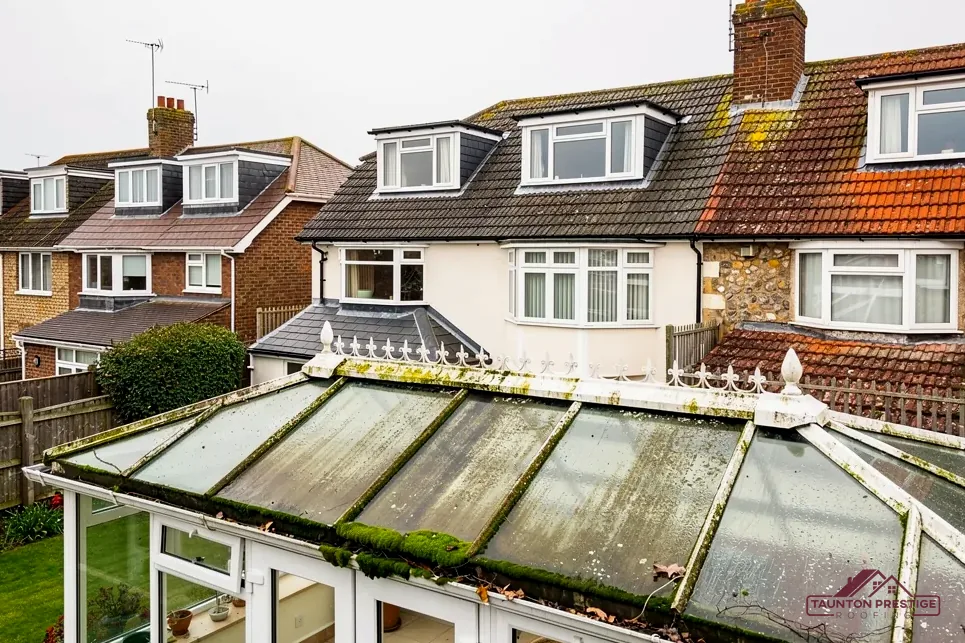
Polycarbonate roofing is a tough plastic made as a sheet with hollow channels running through it, called twin-wall or multiwall. The channels trap a layer of air, which gives a little insulation for very little weight. The sheets are held in aluminium or uPVC bars with seals along each edge.
Its strengths are weight and simplicity. A frame that cannot carry much can usually carry polycarbonate, and replacement of one panel is quick. Its weaknesses are noise, because rain drums on it, and heat, because a thin plastic roof lets a room swing from warm to chilly with the weather.
How long does a polycarbonate roof last?
HomeBuilding gives a typical lifespan of 10 years for polycarbonate, and The Eco Experts give about 10 to 15 years for a glass or polycarbonate roof. These are typical figures, not promises. Sun, algae and dirt in the channels all shorten the life. Seals tend to go before the sheet does, and moss gathers along the bars. If you already have one, our answer on polycarbonate conservatory roof lifespan explains what to look for.
Polycarbonate suits a small conservatory used occasionally, a room where the budget decides, or a lightweight frame that cannot take more. It is a poor fit for a room you want to use as a year-round living space, because comfort is what you give up in return for the low weight.
Glass: bright and clear, harder to keep cool
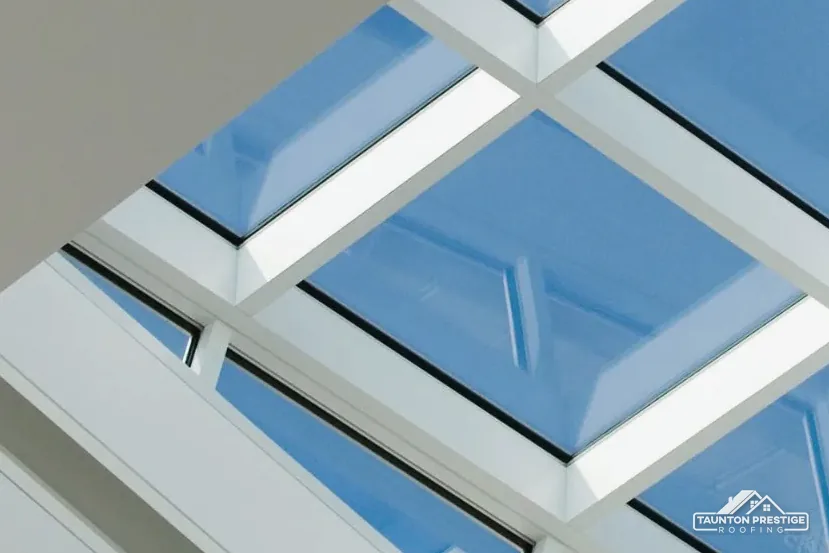
Glass roofs use sealed double-glazed units set into a roof frame. Many have a solar-control coating on the glass, which reflects part of the sun's heat, and some are self-cleaning, with a coating that breaks down dirt when it rains. Our answer on self-cleaning conservatory glass explains how that works.
The big advantage is light. Glass keeps the clear, bright feeling that makes a conservatory worth having in the first place, and it gives a view of the sky. It is also quieter in rain than a thin plastic sheet.
Why does a glass roof still get too hot and too cold?
Because glass is a glazed surface, and glazed surfaces behave like windows in a way an insulated roof does not. Heat gets in through the roof in summer and leaves through it in winter. A coating helps, but it cannot make a pane insulate like a solid roof. Our guide on a conservatory too hot and too cold goes through the choices.
Glass is also heavier than polycarbonate, so it needs a frame that can carry it. If you are replacing polycarbonate with glass, the frame and its roof bars have to be checked first, and the answer on replacing polycarbonate with glass explains why.
The Eco Experts give about 10 to 15 years for glass or polycarbonate roofs. In practice, it is usually the seals, bars and gaskets that need attention before the glass itself does. Fogging between the panes of a sealed unit, a cracked pane or a drip along a bar are the signs to watch, and a single failed unit can often be replaced without touching the rest of the roof.
A solid roof: warm, quiet and heavier
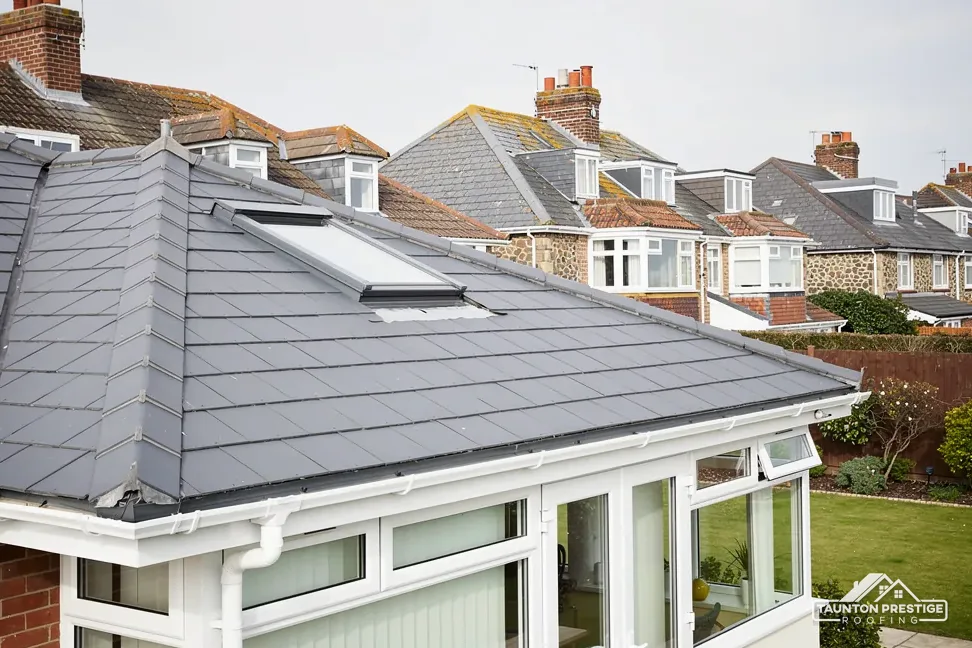
A solid conservatory roof replaces the glazing with an insulated structure. It can be a tiled roof, a lightweight tile system or a plastered ceiling with a roof covering above. The result is a room that behaves much more like part of the house: warmer in winter, cooler in summer and quiet in the rain.
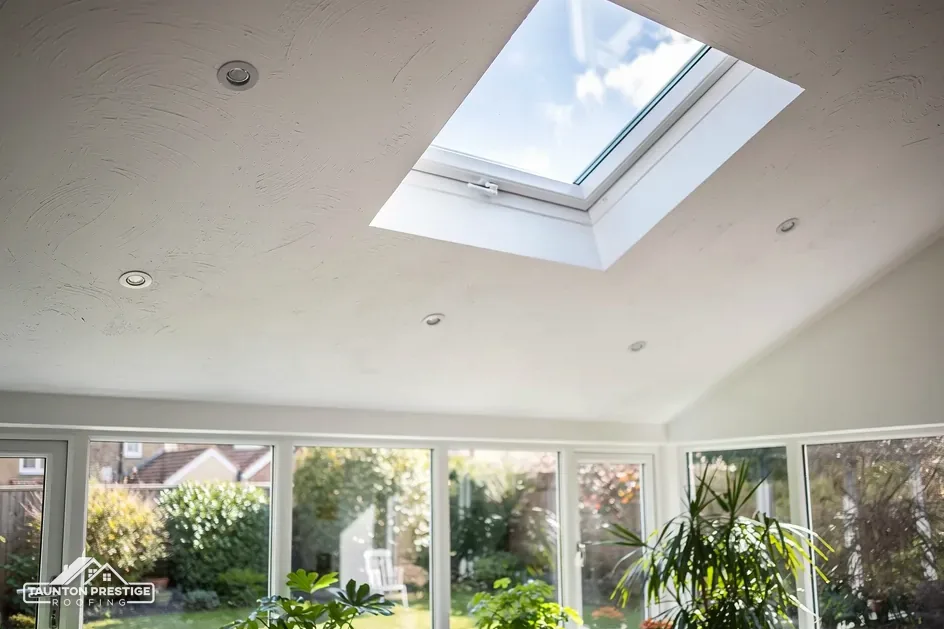
The compromise is light. A solid roof removes the overhead sky, so many are fitted with roof windows or lantern lights to bring daylight back. The answer on roof windows in a conservatory roof covers the options.
Does a solid roof need Building Regulations approval?
According to the Planning Portal, Building Regulations apply to a replacement conservatory roof, covering structural safety, energy efficiency and ventilation. A solid roof is heavier, so the frame and the base need a structural check. Approval is required where the new covering is 15 per cent or more heavier, and the Planning Portal suggests an engineer or surveyor inspects beforehand. Your building control body decides, which is Somerset Building Control for most Somerset addresses.
Our guide to conservatory roof Building Regulations covers the process, and the page on whether a conservatory frame can take a solid roof explains the checks on the frame.
Solid roofs cost more than glass or polycarbonate, and the frame work can add to it. The pay-off is a room you can use in January.
Life and cost, and what figures miss
Any lifespan quoted in print is a typical range and not a promise. A warranty is not a lifespan either, and a maker's warranty covers the product on its terms, not the whole roof.
What do conservatory roofs really cost to replace?
The guides give wide ranges, because a conservatory is not a standard product. MyJobQuote puts a typical UK conservatory roof replacement at £3,200 to £6,000 (MyJobQuote, Oct 2026). The Eco Experts give £2,300 to £6,000. The overlap is worth noting, but so is the spread: a small lean-to and a large Edwardian-style room are different jobs.
What pushes a price up or down:
- The roof area and its shape, such as a lean-to, a gable or a multi-faceted front.
- The material chosen, and whether it is glass with a coating.
- The condition of the frame, bars and eaves beam.
- The access, including scaffold and the height from the ground.
- Whether the existing roof, guttering and flashings come out or stay.
- Whether roof windows, ventilation or new internal ceilings are included.
A tempting shortcut is to pick the lowest-cost material and plan to replace it again in ten years. That can be a sensible choice for a little-used room, and our guide to the lowest-cost way to replace a conservatory roof looks at it. For a room used every day, the extra comfort of glass or a solid roof is often what the money is buying.
Keep in mind too that the figures on a page are not a quote for your room. We survey, show you photographs of the frame and give one written price.
Choosing for the room you have
Start with how the room is used, then check the frame, and only then choose the covering. That order saves money, because a frame that cannot carry a heavy roof rules some options out before you look at price.
Which roof suits which conservatory?
If the room is a sunroom used in summer and the frame is light, polycarbonate is a sensible match. If you want brightness and a view and the frame is sound, glass is usually the pick. If you want a dining room or a home office that works in all seasons, a solid roof makes the best case, provided the base and frame are up to it.
Where it gets harder is the middle ground. A south-facing room that overheats may need glass with a solar coating, or a solid roof with roof windows. A north-facing room that stays cold may do better with a solid roof than with any glazing.
- Light frame, occasional use: polycarbonate.
- Sound frame, daylight matters most: glass.
- Sound frame and base, year-round use: solid roof, after a structural check.
- Tired frame: ask whether the frame should be rebuilt before any roof goes on.
Conservation areas and listed houses can add consent questions, so ask Somerset Council's planning team before work starts if yours is one. Our guide to a conservatory roof in a conservation area explains what to ask.
The next step is a survey of your conservatory, where we measure the roof, look at the frame and show you photographs before we recommend a material.
Choosing a conservatory roof
Is a solid roof always better than glass?
Not always. A solid roof keeps heat better and is quieter, but it cuts out daylight and weighs more. For a room used mainly for light and a view, glass often suits better. A solid roof earns its cost in a room lived in all year.
Can any conservatory frame take a heavier roof?
No. Older frames and light bases were often designed for polycarbonate. Before you fit glass or a solid roof, the frame, eaves beam and base need checking, and a structural engineer may need to confirm the load. A survey tells you which roofs are possible.
How long should a new conservatory roof last?
Published guides give about 10 to 15 years for glass or polycarbonate, and HomeBuilding gives 10 years for polycarbonate. Solid roof systems vary, so ask for the maker's published figure. These are typical ranges, not promises, and the care of seals and gutters affects the real result.
More on this subject: Conservatory roofs in Taunton