When slates come down in a gale, it is natural to assume home insurance will pay. Sometimes it does. Often the argument that follows is about a single question: was this damage caused by a storm, or was the roof already worn out and the wind just finished the job? The answer decides whether a claim is accepted, and it turns on evidence more than on the weather forecast.
This guide explains how the Financial Ombudsman Service describes a storm, why a policy treats gradual deterioration differently from a sudden event, what a roofer can and cannot say about cause, and how to build a record that helps your insurer reach a fair decision. We are roofers, not insurers, and nothing here promises that a claim will be paid. Your policy wording and your insurer decide that. The guide sits within our emergency and general roof repairs work around Taunton and Somerset.
How a storm is described
The Financial Ombudsman Service settles disputes between consumers and insurers, and on its storm-damage page it describes a storm as usually involving violent winds, often with rain, hail or snow. That is guidance from the body that decides complaints, not a wind-speed table, and it fixes no number. It gives you the elements an adjudicator looks for: strong, violent wind, and often something falling with it.
Policies often define a storm in their own terms as well, so your wording matters. A bright, breezy day with a few tiles slipping is a harder case to call a storm than a night of violent wind with a fallen branch on the roof. Our page on home insurance and a leaking roof goes through the basics of cover.
What does the Ombudsman look at when it decides?
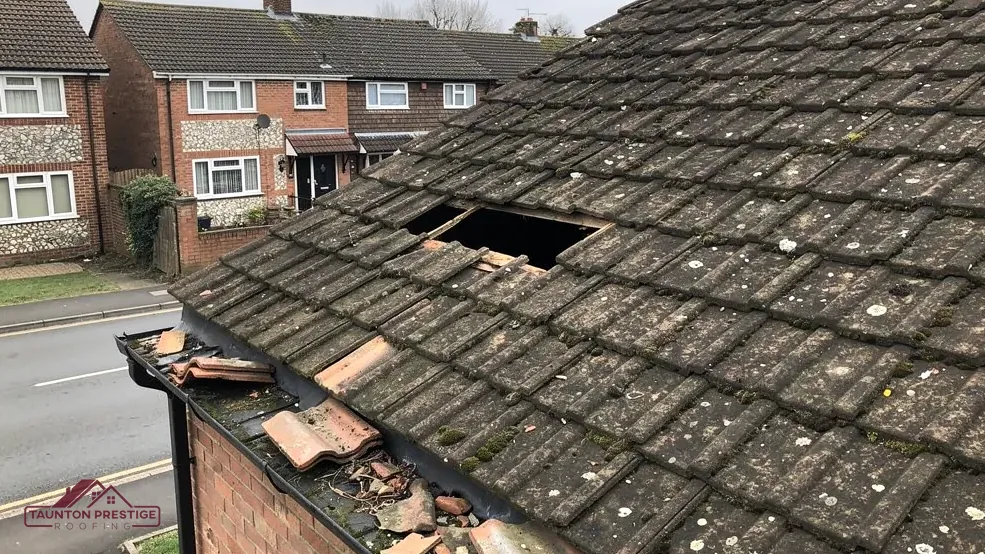
It considers whether the weather on the day fits the description of a storm, whether the damage matches that kind of event, and whether the roof was in reasonable condition beforehand. Evidence of the weather in your area on the date is useful, as are neighbours' roofs, fallen trees and fence panels. A single lifted ridge tile with the rest of the roof tired and mossy invites the question of whether the roof was already failing.
Nothing in this section tells you the outcome of a claim. It tells you what is looked at, so you can see which records are worth having. The weather on the day matters as much as the roof: a gusty afternoon with no rain is a thinner case than a night of violent wind with debris across the garden.
Why gradual deterioration is treated differently
Insurance is built around sudden, unexpected events. A policy generally covers named events, such as a storm, and lists exclusions for what falls outside. Check whether storm cover sits in the buildings section, whether outbuildings and garage roofs are included, and how an excess applies to each claim. Wear and tear, gradual deterioration and lack of maintenance are the usual ones. Read your own wording for the exact terms, because policies differ and we have not seen yours.
The reasoning is simple. A slate nail that has rusted over many winters, an underlay that has perished, a lead flashing that has fatigued and split are the result of time and weather over years, not of one event. An insurer will say the loss was coming anyway. A storm that tears slates off a sound roof is different: the roof was working until the event.
Can a storm still count when the roof was old?
It can be argued, and the line is not fixed. A roof in good order for its age that loses covering in violent wind is a storm case. An old roof with nail sickness, which is nails rusted through so slates slip, and moss packed under the tiles is a harder one, because the insurer can point to the condition. The fact that a roof is old is not an exclusion by itself. How it was maintained, and what the damage looks like, count for more.
A roofer's written description can say what is visible: broken edges that look fresh, rust on old fixings, staining that suggests a long-term leak. The decision on the claim stays with your insurer.
Telling a storm break from age on the roof
Roofers look for signs that point one way or the other. None is conclusive alone, and a surveyor's judgement comes from the whole picture.
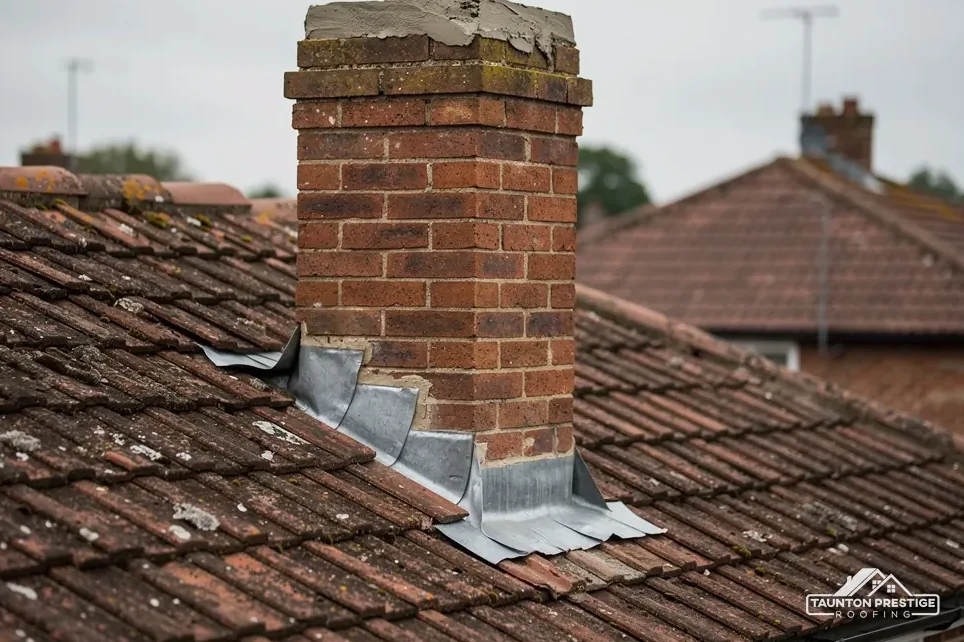
- Fresh, clean breaks and bright edges on slates or tiles suggest a recent event. Weathered, mossy or rounded edges suggest older damage.
- Debris from the same direction, such as a branch, a neighbour's fence panel or a chimney pot, points to an impact.
- Rusted, snapped nails and crumbling pointing suggest age, though wind can finish a tired fixing.
- Damage on one exposed face fits wind; damage spread all over fits age.
- Tide marks in the loft that are dark and layered show repeated leaking; a single clean wet patch fits one event.
Does the way a ridge is fixed change the picture?
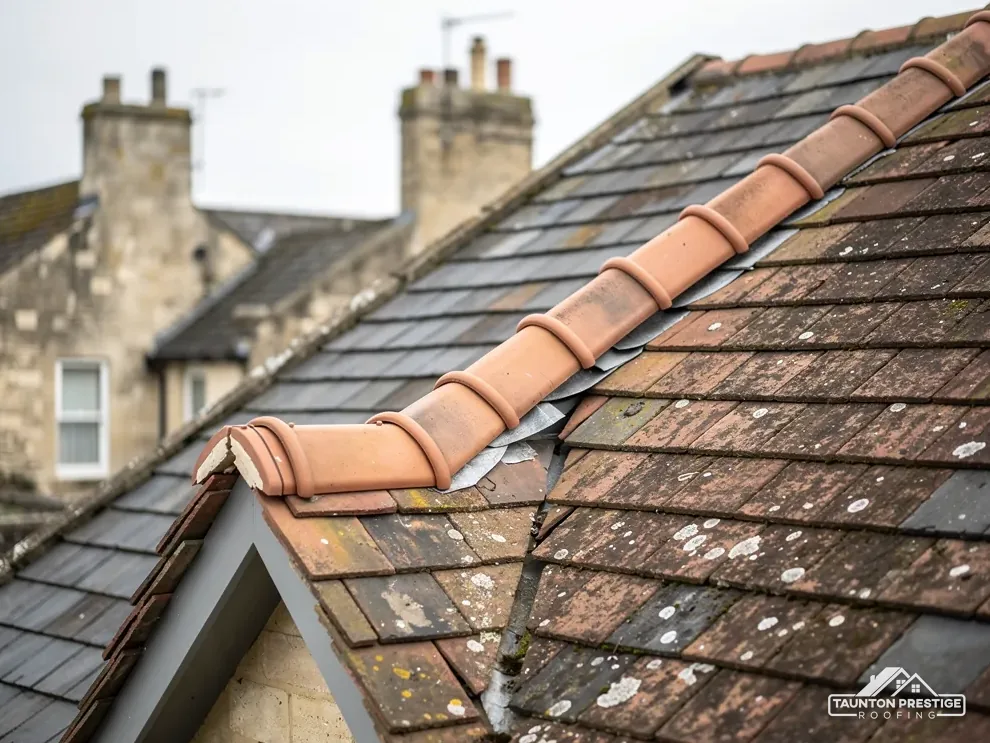
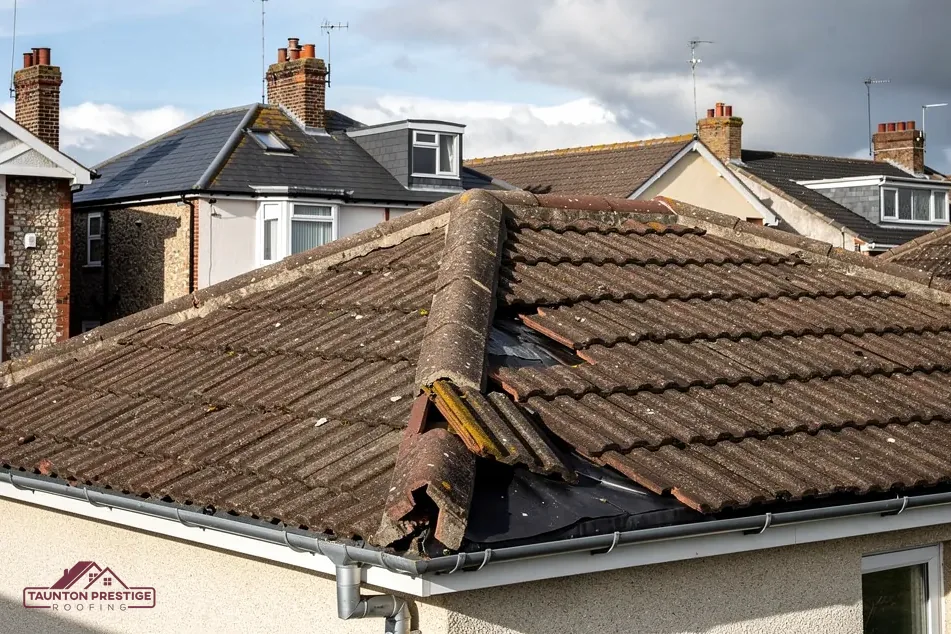
It can. A ridge or verge held with mechanical fixings, as BS 5534 now expects for ridge and hip tiles, either stays on or lets go at the fixing, and the broken clip or screw is visible evidence. Mortar that crumbles away points to age. Our guide to ridge tiles and insurance looks at that case.
Photograph everything before it is touched: the roof from the ground, the debris in the garden, the inside of the loft and the ceiling stain. Dated photographs of the roof from before the weather, even in the background of a family picture, are very useful. Look through old holiday and garden pictures for one that shows the roofline, because a before-and-after pair is hard to argue with. Hold off clearing up, bagging or binning broken slates until the insurer has seen them or said they are not needed. A pile of slates at the foot of the wall tells its own story about direction and force.
What to do in the first day or two
The sequence is plain and it protects both the roof and the claim. Tell the insurer first. Make the property safe with a temporary repair so that no further damage occurs. Keep photographs and receipts. Which? notes that insurers run emergency helplines for this, and IStructE advises that pictures are the visual evidence a claim rests on.
A temporary repair is a good idea for a second reason: letting water keep pouring in after a storm can make the loss worse, and an insurer may ask what you did to limit it. Our page on temporary roof repairs sets out the options.
Should you wait for the insurer before any repair?
Not for make-safe work. A leaking roof needs covering now, and the receipt is part of the claim. For a permanent repair, tell the insurer what you plan, ask whether they need to inspect first and whether they use their own contractor or accept a quote from yours. Policies differ, so ask, and write down who said what.
Water is stopped first on our side, with pictures of the damage taken before and after the cover goes on. You keep control of the claim, and we supply the photographs, the dates and a written description of what we found, which many owners send straight to the insurer.
What the payout figure tells you
Which? reported that only 32% of storm-related claims made in 2024 resulted in a payout. That figure comes from a consumer-group article and covers claims in general, not roof claims in Somerset or any single insurer, and it does not predict what will happen to yours. It does show that a claim made on the assumption of automatic cover can be disappointed.
The reasons behind a refusal vary: the damage did not meet the insurer's idea of a storm, the cause was judged to be wear and tear or poor maintenance, the policy excess was higher than the repair, or the evidence was thin. Several of those can be improved with preparation. Photographs, dates, a roofer's written description and a copy of your policy all help.
What if the insurer says no?
You can ask for the decision in writing, with the reasons, and use the insurer's complaints process. If the insurer sends no final response letter inside eight weeks, the Financial Ombudsman Service will take the complaint. After a final response, the window to approach it is six months, and the service costs nothing. Our page on what to do when an insurer rejects a roof claim covers the steps, and it links to the Ombudsman's own pages.
Whatever the outcome, the roof still needs fixing, and putting it off while a dispute runs only lets the next shower do more harm. A repair you pay for yourself is worth pricing on a clear scope, and a survey can show whether the job is local damage or the first sign of a wider problem. Ask for the findings in writing with pictures, so the same record serves a complaint if you make one.
Check your policy before the weather arrives
The easiest time to understand your cover is when nothing is wrong. Policies differ in how they define a storm, in what they exclude and in what excess applies, and a quick read of the booklet on a dull afternoon saves a bad surprise in January. If the wording is unclear, ask the insurer or broker to explain it in writing before you need it.
What should you look for in the wording?
- How the policy defines storm, and whether it names wind speeds or rainfall.
- The wear and tear, gradual deterioration and maintenance exclusions.
- Whether damage to the roof, chimney, gutters and outbuildings is covered separately.
- The excess for storm claims.
- Whether you must notify within a set time, and how to reach the emergency line.
A maintained roof is easier to defend. Even a note of the date the gutters were last cleared, or a receipt from an earlier repair, shows the roof was looked after. An inspection after winter, clear gutters, secure ridge tiles and a record of repairs show that the roof was cared for. Photos from our surveys come with dates, which many owners keep with their policy papers.
If a storm has already hit, book a survey and keep the photos. We will describe what we find up top and in the roof space, and the quote that follows is a single total in writing, whatever your insurer decides.
Storm and insurance queries
Does home insurance cover roof repairs?
Home insurance can cover roof damage from an insured event such as a storm, though wear and tear or poor maintenance are usually left out. Wording, excess and exclusions differ, so read your policy and tell the insurer first.Nobody can promise a claim will be paid.
Does the Ombudsman define a storm by wind speed?
Its storm-damage page gives no mph figure. The Financial Ombudsman Service describes a storm as usually involving violent winds, often with rain, hail or snow. Your policy may add its own definition, so check whether it names a wind speed or gives other terms.
What proof helps a storm claim most?
Dated photographs of the damage, the debris and the loft, receipts for any temporary repair, and a written description from a roofer of what the broken parts look like. Keep broken slates until the insurer says they can go, and ask for decisions in writing.
More on this subject: Emergency and general roof repairs in Taunton