Ridge tiles are the caps that finish the crest of a roof, and they are often the first pieces to go when a gale arrives. One morning there are fragments on the drive, a gap on the skyline and a call to make. If you hold buildings insurance, the next step is a claim, and that is where the argument often begins: was this storm damage, or a ridge that had been wearing out for years?
The answer matters because insurers treat sudden damage from a storm differently from gradual deterioration, and the same fallen tile can be described either way. This guide does not promise an outcome, and nobody can. It sets out the order to do things in, what counts as a storm, what kind of evidence helps your case, how poor fixing can enter the conversation, and what the Financial Ombudsman Service offers if the insurer says no. It belongs to our dry ridge and verge work, and it ends with the repair itself.
First steps after tiles come down
Safety comes ahead of paperwork. Keep people and pets away from the area below the ridge, since more tiles may be hanging loose. For Somerset Building Control, a dangerous structure can mean tiles working loose or dropping from the roof, and the owner carries the costs involved in making such a building safe. So a loose ridge is a matter to act on, and not one to leave for a fine day.
The sequence that works best is short. Ring the insurer before anything else, stop further damage with a temporary repair, then keep each photograph and receipt in one folder. Telling the insurer first matters because a policy may set conditions on repairs, and a call before any work starts avoids a dispute afterwards.
Should the repair wait for the insurer?
A temporary repair should not wait. Stopping rain getting in limits the damage, and the cost of doing so is usually part of what you record. A lasting repair is another matter. Before it begins, find out from the insurer what it requires, whether an inspection comes first, and whether it prefers a particular approach. Hold on to the broken tiles and any lumps of old mortar until the insurer agrees they can be thrown out, since they are evidence.
Where water is coming in, our first job is to make the roof safe. For scale, MyJobQuote's emergency roofer guide gives £150 to £300 for call-outs and £1,200 or more for storm repairs, both typical UK ranges (MyJobQuote, Oct 2026). Your own cost rests on what the survey finds.
What an insurer means by a storm
Policies differ, so the wording of yours is the first thing to read. A storm claim rests on whether a storm took place. The Financial Ombudsman Service describes its approach in everyday terms: violent winds, normally with rain, hail or snow.
That definition has two practical effects. A normal windy day may not meet it, and a ridge that failed on such a day may be treated as a maintenance matter. Equally, a night of gales that brought down trees along the road will point towards a storm. Weather records for the date, local news and photographs of other damage nearby all help to show which kind of day it was.
Is wear and tear covered?
Check the policy for how it treats gradual deterioration, wear and tear and lack of maintenance. Many buildings policies are written to pay for sudden, accidental damage and to leave the cost of ageing parts with the owner, but the exact terms vary and the document you hold is the one that counts. If a section is unclear, request a written explanation from the insurer.
Which? reported that only 32% of storm-related claims made in 2024 resulted in a payout. That describes claims in general and says nothing certain about yours. It is a reason to prepare the evidence well, not a reason to give up.
Evidence that helps your case
Photographs come first, and the Institution of Structural Engineers calls them vital because they are visual evidence of the damage. Take them from the ground, from a safe distance, and widen the view as well as zooming in. Show the gap on the ridge, the fallen pieces where they landed and anything else the weather has damaged.
Date everything. Note the time you noticed the damage, what the weather was doing and whether neighbours had damage too. If the previous winter or summer had any visible problem with the ridge, such as a crack in the mortar or a tile that looked out of line, be ready to say so. An insurer will ask about the history, and a candid answer lasts longer than an evasive one.
What can a roofer's survey show?
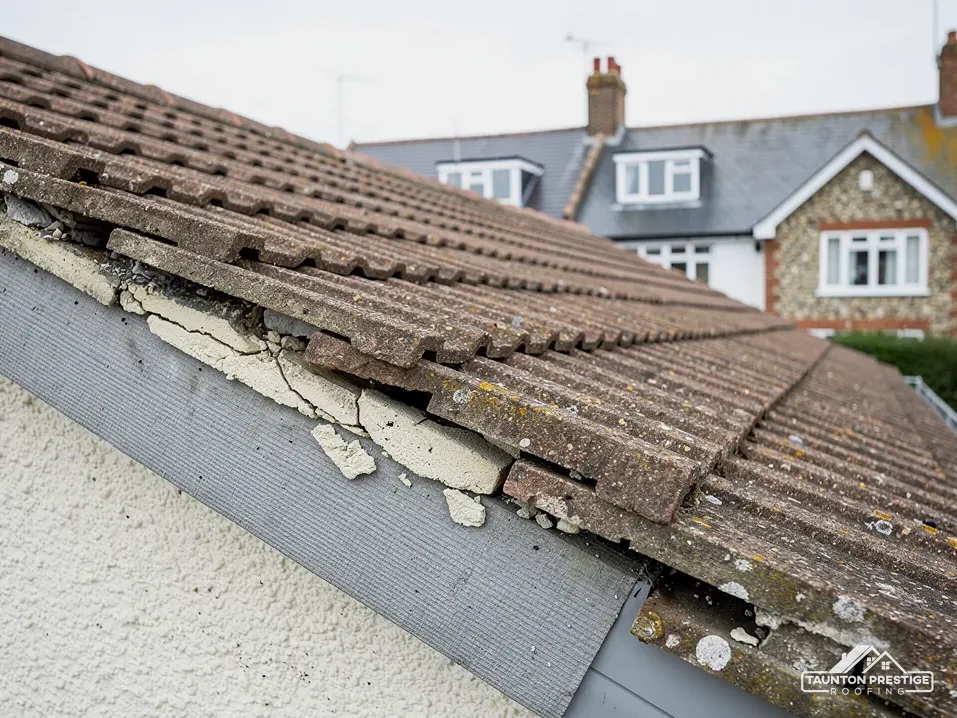
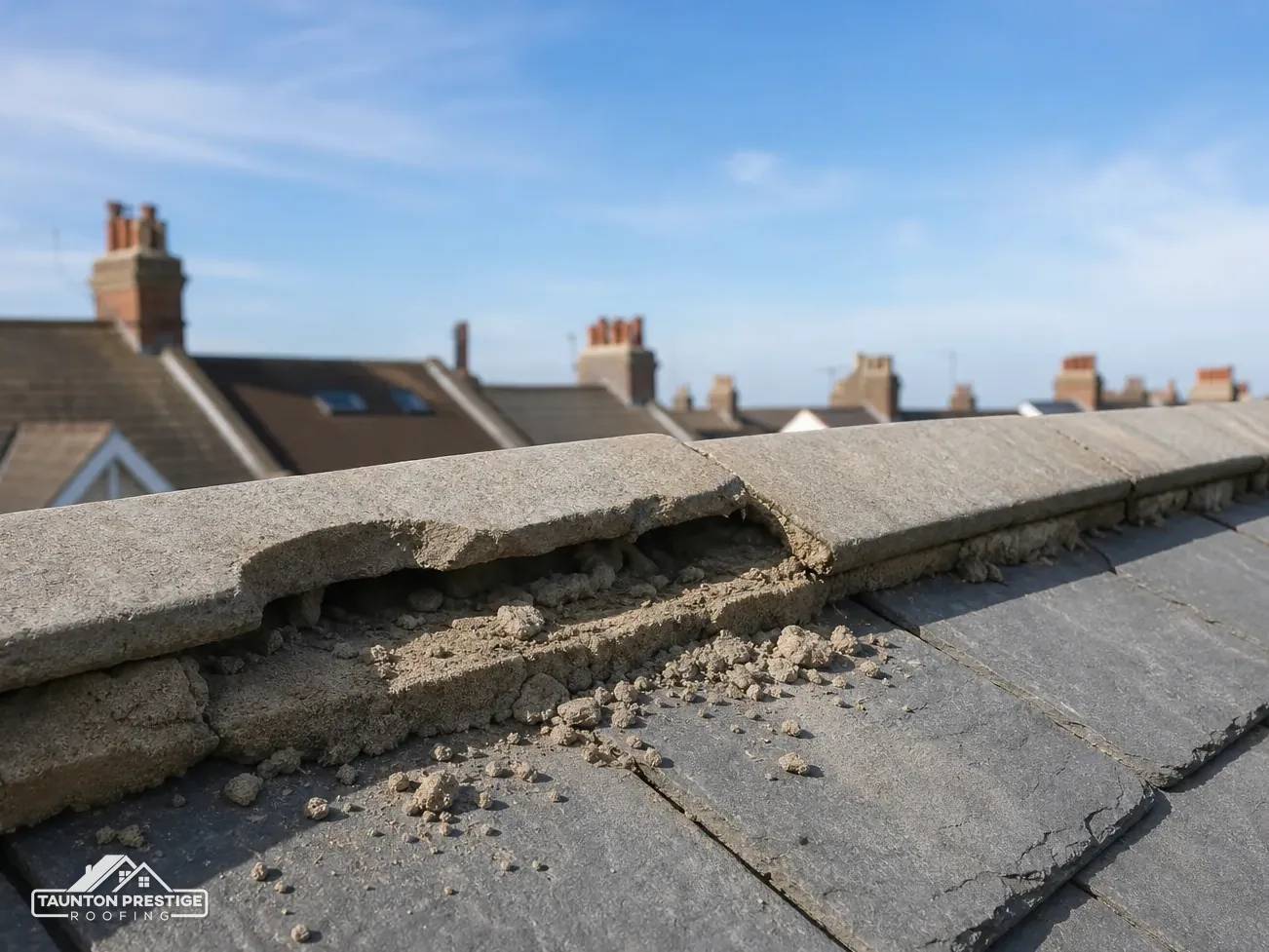
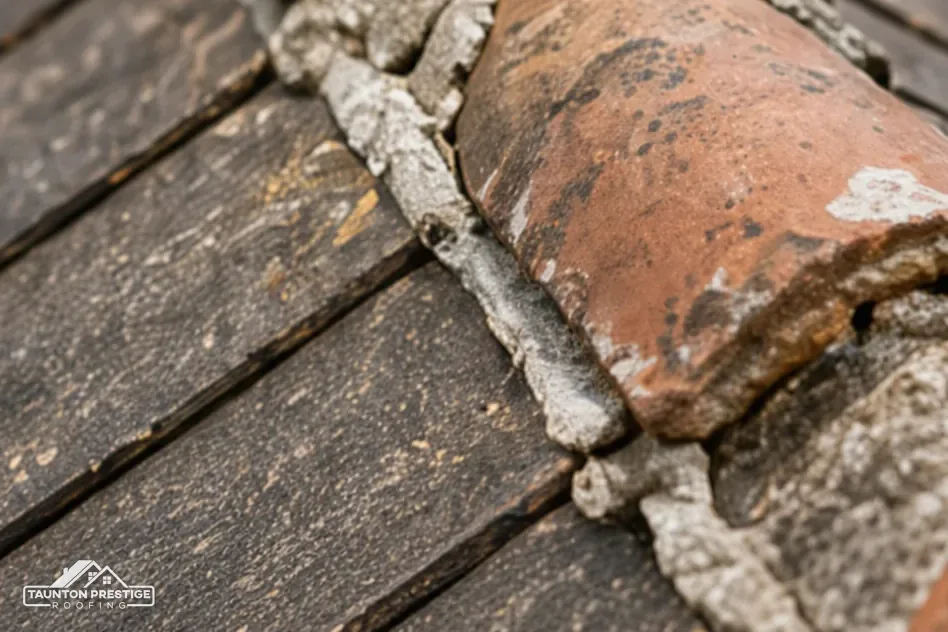
A survey looks at the ridge as it was found, and it can record things from the roof that cannot be seen from the ground. The sort of observations that matter are whether the broken edges of a tile are clean and bright, which suggests a recent break, or dull and stained, which suggests an old one. They include whether the mortar was crumbling beneath, whether the tiles had mechanical fixings, whether a hip iron had rusted and whether the timber below was sound.
The photographs belong to you. They can go to your insurer with the claim, or stay in your own records. They show what the roof looked like and let you ask better questions of whoever is paying. If a neighbour's ridge also came down in the same night, photographs of that help too, since they show what the weather was capable of.
Storm damage or poor fixing
The tension in many ridge claims is between two descriptions of the same event. One says the wind was strong enough to lift a sound ridge. The other says the ridge was held by mortar that had given up, so almost any wind would have moved it. Both can be partly true, and a fair decision looks at each.
BS 5534:2014+A2:2018, the code for slating and tiling, expects ridge and hip tiles to have a mechanical fixing, and Marley reports that mortar alone is not to be relied on for them. Installing to BS 5534 is not required by law, as Marley notes, but it describes sound practice. An insurer might point to the standard if a ridge had mortar and nothing else. You might, in turn, point out that the weather on the day was exceptional.
Does a ridge without fixings affect a claim?
It can enter the discussion, and the outcome depends on the policy and the facts. An older ridge built before the 2014 revision was built to the practice of its day. Whether an insurer treats that as wear, as a defect in the original work or as a risk that was covered is for the policy and the insurer to decide, and for the Ombudsman to look at if you complain.
The practical lesson is to describe what you find without guesswork, and to say so plainly when you do not know. If a roofer reports that the ridge had no fixings, say so. If the tiles were held by clips and still failed, say that. Accurate detail helps a fair decision, and exaggeration undermines trust in the rest of the evidence.
For the signs that a ridge is on its way out before a storm arrives, see our page on cracking ridge mortar.
If the insurer says no
A first refusal does not close the matter. Start by asking the insurer to explain, in writing, which part of the policy it relies on and what evidence it considered. If you have survey photographs or a report that it did not see, send them and ask for the decision to be looked at again.
If you remain unhappy, complain formally to the insurer. It then has a set time in which to send a final response. Should eight weeks pass with no final response letter, the Financial Ombudsman Service accepts the complaint from you directly. Once a final response letter does arrive, you have 6 months from its date to bring the case, and the Ombudsman states that bringing a case costs you nothing.
What does the Ombudsman look at?
It looks at whether the insurer acted fairly and reasonably, including how it read the policy and the evidence. It does not take a side in advance, and it does not guarantee a result. A well-kept file of photographs, dates, receipts and correspondence is the best preparation, which is why the first steps matter so much.
For general advice on a consumer dispute, the Citizens Advice consumer helpline is 0808 223 1133. Nothing here is legal advice, and each case turns on its own policy wording.
We do not decide your claim, and no roofer does. What a survey does is record the condition of the roof so that you have something firm to discuss with whoever does.
Repairing the ridge afterwards
Once the insurer has agreed what it needs, or the temporary repair has held, the question becomes the permanent fix. A ridge that has failed once will fail again if it is simply put back the way it was, so the repair should address the reason.
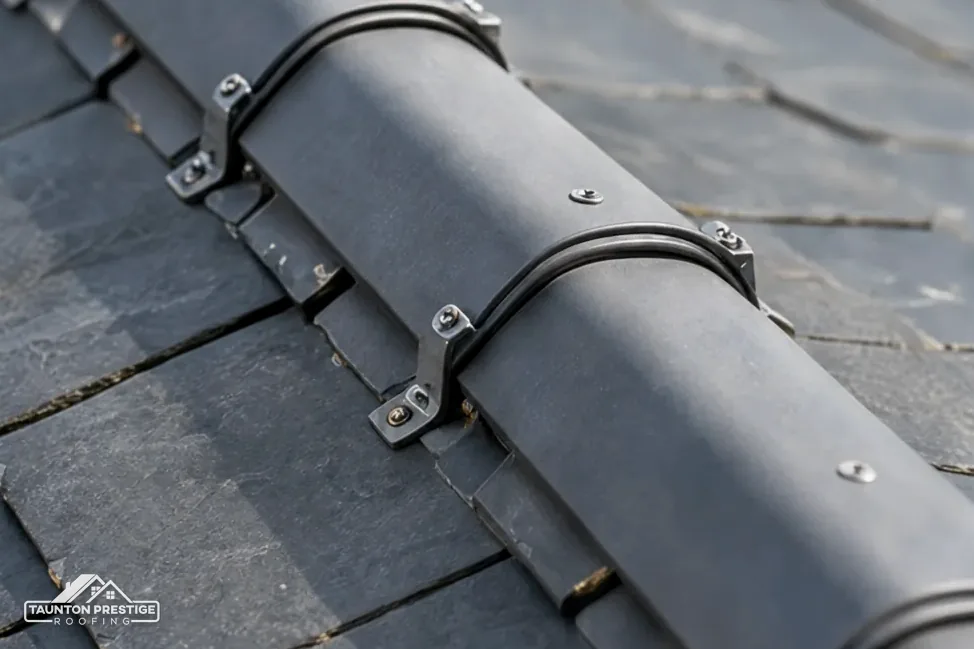
The options are the ones covered elsewhere in this section of the site. A re-bedded mortar ridge with mechanical fixings is a proper repair, and our guide on a slipped ridge tile covers what to do when only one has moved. A dry ridge system tested to BS 8612:2018 is the other route. Which suits your roof depends on the tiles, the pitch and the age and listing of the house, and that is worth settling before the insurer's repair figure is agreed. Listed and conservation-area homes need the right consent first.
What does a permanent ridge repair cost?
The typical UK range MyJobQuote publishes for replacing ridge tiles is £225 to £550 (MyJobQuote, Oct 2026). Access moves it, since HomeBuilding (Sep 2025) quotes scaffold at "approximately £1,000" for a three-bed semi with permits, and so does the state of the timber under the old bed.
If an insurer is paying, ask it what it needs from a quote. Some want to see one before work begins. The quote itself should state one total price in writing, say what fixes each tile, and say whether scaffold and VAT are included.
Our survey of the ridge comes with photographs of what was found, including the old tiles and the bed beneath. After the repair, a walk round the house each spring, and again after rough weather, shows whether the line is holding. Our blog post on loose ridge tiles in Somerset lists what to watch for.
Insurance and ridge questions
Will my buildings insurance pay for a new ridge after a storm?
It may, if the damage was caused by a storm as your policy defines one and the ridge was in a fair state beforehand. Policies vary, so read yours, tell the insurer before permanent work begins, and file your photographs and receipts. No outcome can be promised in advance.
Should I throw away the tiles that came down?
Not straight away. The broken pieces show whether the edges are fresh or old, and the insurer may want to see them. Keep them somewhere safe, out of the way of children, and photograph them where they landed before you move anything. Check with the insurer first.
Can I ask for a second opinion if the insurer blames poor workmanship?
Yes. A second survey with photographs can record what the ridge was fixed with and how it failed. Pass it to the insurer with a request to reconsider. If that fails, the Financial Ombudsman Service can take up the complaint after a final response has been issued.
More on this subject: Dry ridge and verge repairs in Taunton