Nobody thinks about roof battens until a slate lets go. They are lengths of sawn timber fixed across the rafters, the sloping beams that form the frame of the roof, and each course of slates or tiles hangs from or is nailed to them. When battens soften, split or work loose, the covering above them starts to drift, and patching the slates or tiles alone will not stop it.
The useful part is that you can learn a fair amount without going near a ladder. A torch in the loft and a slow look at the roof from across the road tell you whether the timber is sound, tired in a few places, or failing across a whole slope. This guide covers what to look for, how rotten battens differ from battens that were too thin to begin with, when a short length can be renewed in a repair, and how new battens, a fresh layer of underlay and proper fixings go back on during a re-tile. It sits within our wider pitched roofing work across Taunton and Somerset.
What battens do and why spacing matters
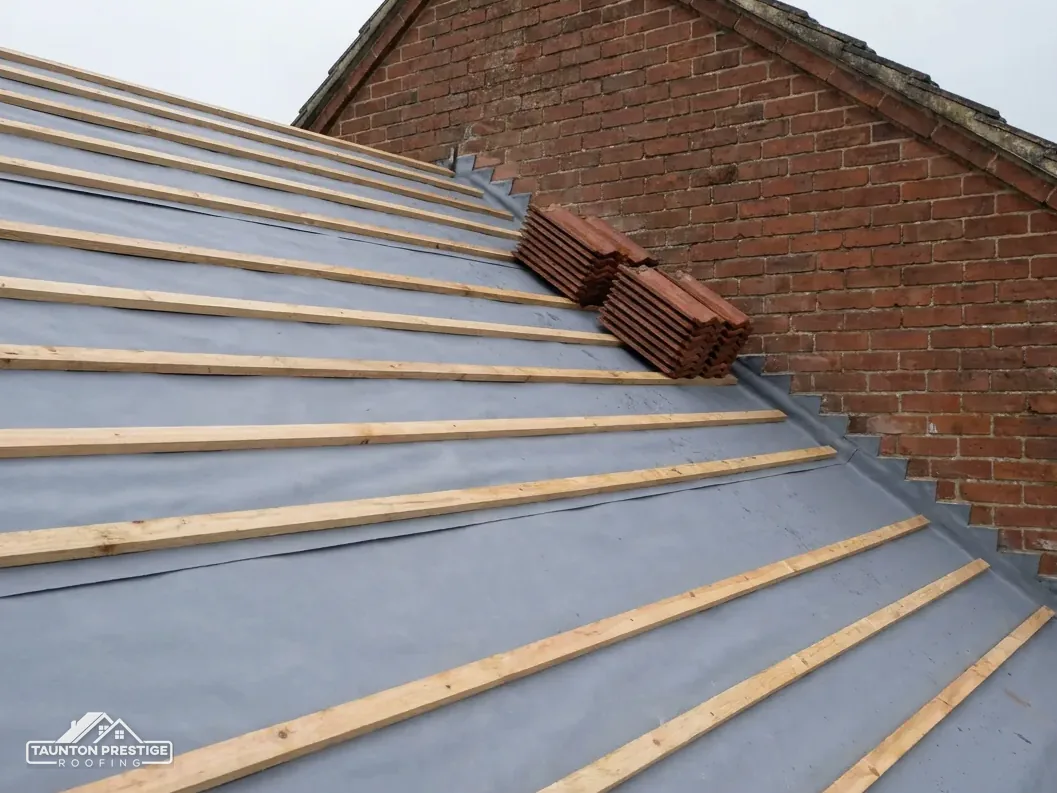
Think of battens as the shelves of the roof. They run horizontally, nailed to every rafter, and they carry the whole weight of the covering down into the frame. A plain or interlocking tile has small lugs on its back, called nibs, that hook over a batten. Natural slate has no nibs, so each slate is nailed through to the batten, or held with a metal hook on some roofs. Either way, the batten is the only thing gripping the covering.
Under the battens on many roofs sits the underlay: a sheet of felt or membrane that catches any rain or snow driven past the slates and runs it down into the gutter. The battens pin that sheet to the rafters as well.
Why does the spacing between battens matter?
The distance from the centre of one batten to the next is called the gauge. It is worked out from the length of the slate or tile and the headlap, which is how far each course overlaps the course below it. Get the gauge right and every course sits with enough cover to shed water. Set it too wide and the overlap shrinks, so wind-driven rain can creep up and over the top edge. Our page on roof tile gauge explains the setting out in more detail.
This is why battens matter even when they are not rotten. A slope battened at the wrong gauge, or with timber too slender for the gap between rafters, can leak or sag from day one. Age simply makes those faults easier to see.
Checking the battens from inside the loft
Pick a dry, bright day, take a good torch and walk only on the joists or on boards laid across them. Never step between joists: the ceiling below will not carry you. Look up at the underside of the roof and work along each slope slowly.
What can you actually see from up there?
That depends on the roof. On an older roof with no underlay the battens are in plain view beneath the undersides of the slates or tiles, which makes them easy to judge. Where there is felt or membrane, the battens sit on the far side of it, so you may only glimpse them at the eaves, around the loft hatch line, at the edges near the gable walls, or wherever the felt has torn.
- Dark staining or tide marks on the timber, a sign it has been wet more than once.
- Splits running along the length, especially around nail holes.
- Rusty nail heads, or nails that have backed out of the rafters.
- Battens that dip between rafters instead of running straight.
- Fine, crumbly timber dust or fragments of slate and tile on the loft floor or insulation.
- Pinpricks of daylight around slates that have shifted.
If you can reach a batten safely, press it gently with your thumb. Sound timber feels hard. Rotten timber gives, flakes or feels spongy. Do not prod hard or pull at anything near broken felt.
Take a few phone pictures of anything you find. They help any roofer judge whether a closer look is worth arranging.
Outside signs, and rot versus undersizing
From the ground, the covering tells you a lot about the timber under it. Stand across the road or at the end of the garden and look along each slope rather than straight at it.
- Slates or tiles slipping in several places at once, rather than one stray piece.
- Courses that wave or dip when they should run in straight lines.
- Tiles that rattle or lift in a strong wind.
- A patchwork of past repairs, with tingles (small metal clips) holding slates in place.
A single slipped slate usually has a local cause: a broken slate or one corroded nail. When slipping spreads across a slope, the fixings or the battens they grip are the likelier culprit. On slate roofs this is often called nail sickness, meaning the nails have rusted through. New nails driven into soft timber will not hold for long, which is why the battens get checked at the same time.
Rotten or undersized: how do you tell them apart?
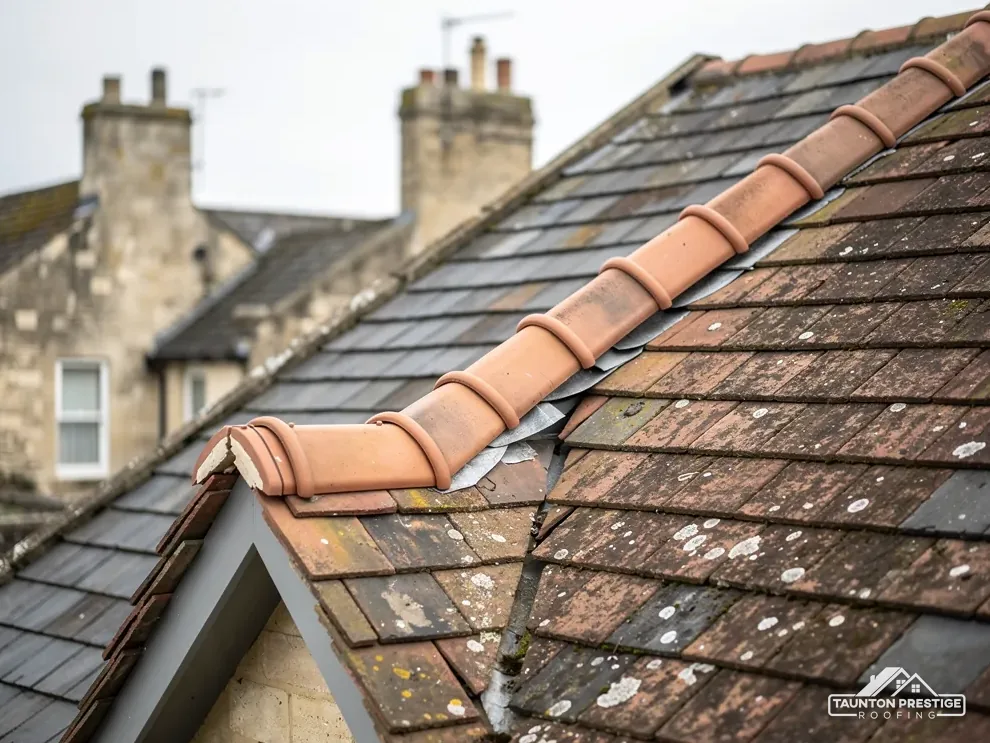
Rot is a problem of age and water. It shows as staining, softness and splits, and it tends to be worst near the eaves, around chimneys and below valleys, where water has found its way in.
Undersizing is a problem of how the roof was built. The timber may look clean and dry, yet it bows between rafters, flexes when a roofer leans on it, or splits where it was nailed too close to the end. You sometimes find it where an earlier repair used whatever offcuts were to hand. Both faults have the same answer, which is new battens of the right size and grade for the covering and the rafter spacing, but undersizing will not show up as damp, so only a roofer lifting a few slates can confirm it.
When a repair will do, and when it won't
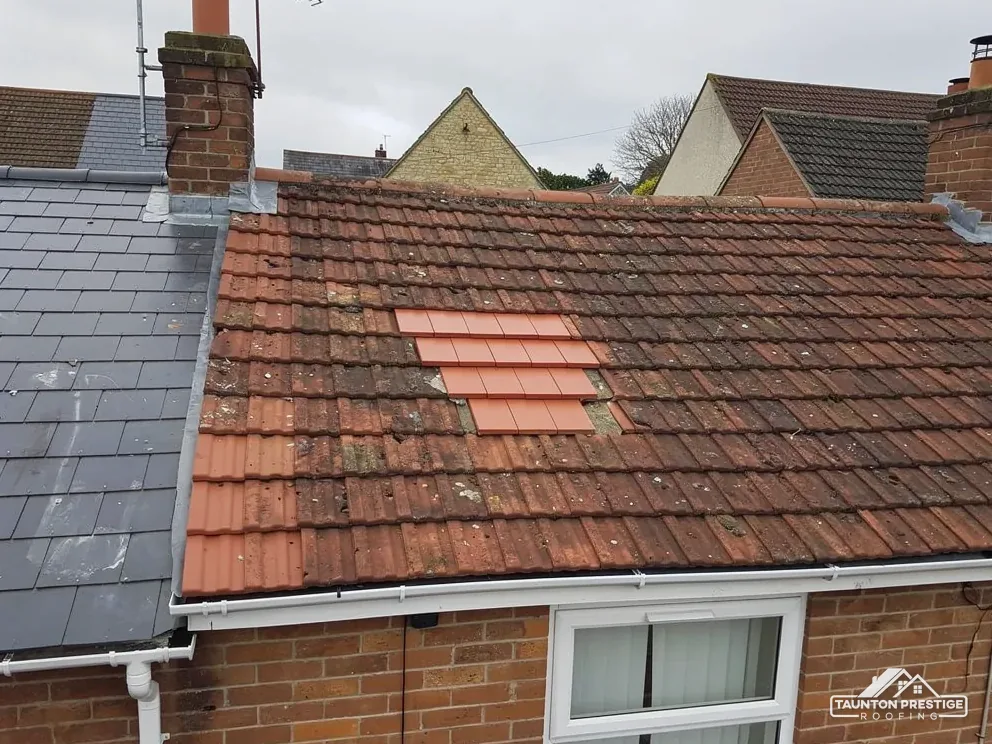
Not every tired batten means a new roof. Where the damage is confined to a short run, say below a cracked slate that let water in for a winter, a roofer can lift the covering over that area, cut out the poor timber, fix a new length to the rafters and hang the slates or tiles back on. Everything else on that slope stays as it is. That is a normal repair, and often the better buy.
It stops being good value once the soft timber is spread across the slope. Every slate lifted for a patch disturbs the ones around it, and on an old roof the nails holding those neighbours may be close to failing too. At that point the covering is coming off anyway, so stripping the slope and starting again costs less over time than chasing patches. Our guide to re-tiling one slope versus a full re-roof covers that choice.
Does re-battening a slope need building control?
Under the Planning Portal's guidance, an application to the building control body is normally unnecessary when "Less than 25 per cent of the total 'building envelope'" is affected and "Less than 50 per cent of the roof is affected." Bigger re-roofs are notifiable, and for those Somerset Building Control makes a charge. Building Regulations approval is needed when a covering is 15 per cent or more heavier, so the Planning Portal recommends having an engineer or surveyor assess the timbers first.
Swapping old battens and covering for matching new ones on a house is normally permitted development under Class C. A listed house also needs listed building consent where the work touches its special interest.
Renewing the underlay and battens together
Replacing the battens means taking the covering off, and once it is off there is little sense in leaving old felt behind. On a re-batten we work a slope at a time so the house is never left open for long.
- The slates or tiles are stripped and stacked, sorting the sound ones for reuse.
- Old battens, nails and felt are cleared, and the rafters are checked for rot, splits and sagging.
- New underlay goes on, lapped and run into the gutter at the eaves.
- New battens are set out to the gauge for the covering and nailed to each rafter.
- The slates or tiles go back on with the right fixings, then the ridge and verge, the edges where the slope meets the gable, are finished.
Which underlay goes under the new battens?
There are two broad kinds. HR underlay is non-breathable, so the loft needs proper ventilation: Marley gives 25mm along the eaves for pitches of 15° or less and 10mm for pitches over 15° on a cold roof. LR, or breather, membrane lets water vapour pass out. Our page on roof underlay types compares them.
Can the old slates or tiles go back on?
Often, yes. CORC puts well-kept slate at "100+ years", and the BRE sets 60 years as the minimum for clay tiles, so a slope of good slate or clay may well outlive its battens. Putting it back keeps the roof's original appearance, and on older homes it matters that slate is relaid as slate and clay as clay.
Bats may roost under old slates. Before any stripping starts we look for signs of roosting, because bats are protected and GOV.UK lists "repairing or replacing a roof" as work that can disturb a roost.
Fixings, pitch and what decides the price
New battens only help if the covering is fixed to them properly. Slating and tiling work is covered by BS 5534:2014+A2:2018. Marley points out that BS 5534 is not a legal requirement, yet careful roofers follow it, and it calls for mechanical fixing. After the 2014 revision, Marley explains, ridge and hip tiles cannot depend on bedding mortar by itself. Mortar still has a place, but clips, screws or a system proven to BS 8612 do the gripping.
Does the pitch of the roof change the fixings?
Yes. BS 5534 indicates a minimum pitch of 20 degrees for natural slate, and the slate maker Cupa advises against hook fixings on anything under 25 degrees. For tiles, every profile has its own minimum: Marley lists 22.5 degrees for its smooth concrete Double Roman, a profile Bridgwater tile works also made in clay. A new batten gauge has to suit the slate or tile actually going back on.
What does re-battening cost?
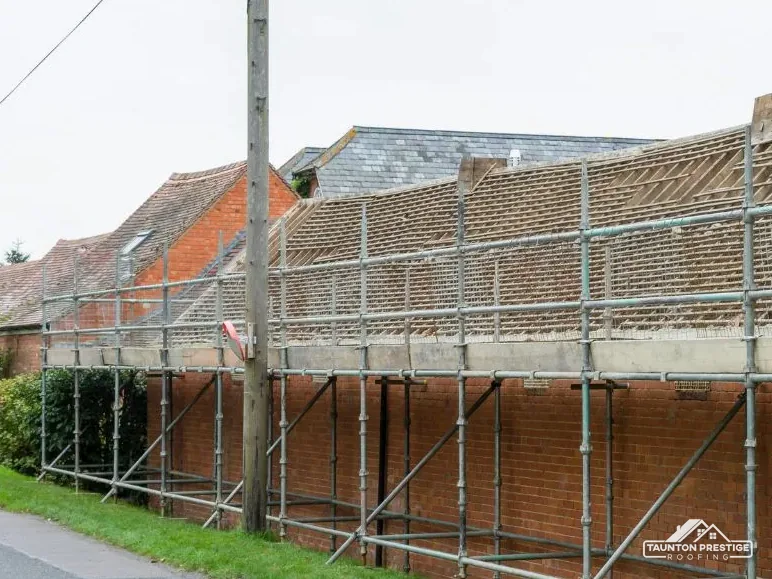
A full re-tile of an 80m² roof runs £3,000 to £8,000 as a typical UK range (MyJobQuote, Oct 2026), and that work includes new battens and underlay. For a complete new roof, HomeBuilding (Sep 2025) puts a three-bed semi in concrete tiles at £10,000 to £15,000. The price for your own roof turns on how much is re-battened, the access and scaffold, whether the slates or tiles can be reused, and what the rafters look like once the covering is off. We give one written price after the survey.
Batten questions, answered
Can you replace the felt and battens?
Yes, but only with the slates or tiles off that slope. Felt sits under the battens, so the covering is stripped, the old felt and timber are cleared, new underlay and battens go on, and sound slates or tiles are hung back. It is a re-roof of that slope, planned and priced as one job.
Can battens rot while the slates on top still look fine?
They can. Slate and clay are far tougher than timber, so a covering can look tidy from the street while the battens behind it have softened from years of small leaks or condensation. The loft is where that shows first, with staining, splits and rusty nails along the underside of the slope.
Is it worth re-battening when only a few tiles have slipped?
Not usually. A few slipped tiles in one spot point to a local fault, and a repair that lifts the covering there and renews a short length of batten is often enough. Re-battening the whole slope earns its cost when slipping keeps spreading and the timber is soft in many places.
More on this subject: Pitched roofing in Taunton