On most houses the opening question about a roof is what has gone wrong with it. On a listed or historic building there is a second question: what is the roof allowed to become? The covering, the way the ridge is bedded, the lead in the valleys and even the line of the eaves can be part of the reason the building is protected. A survey that ends with a recommendation to strip everything and start again has missed half of the job.
This guide is for owners of listed houses, cottages in conservation areas, converted chapels and anyone who looks after a church roof. It explains how an older roof is read, which consent route applies, how slate, clay and old tiles are judged, why lead and mortar need their own notes, what the law says about bats in old roof voids, and what a historic roof report should hold. It sits inside our wider roof inspections work around Taunton and Somerset.
Why an old roof is read differently
On a recent house, an inspection is mostly a condition check. On an older one it is a condition check plus a piece of detective work. The same slope may have been re-laid twice, patched with whatever was to hand in the 1950s, and given a cement fillet along the chimney in the 1980s. Part of the survey is working out which layers are original, which are repairs, and which repairs are now causing damage.
What gets looked at first?
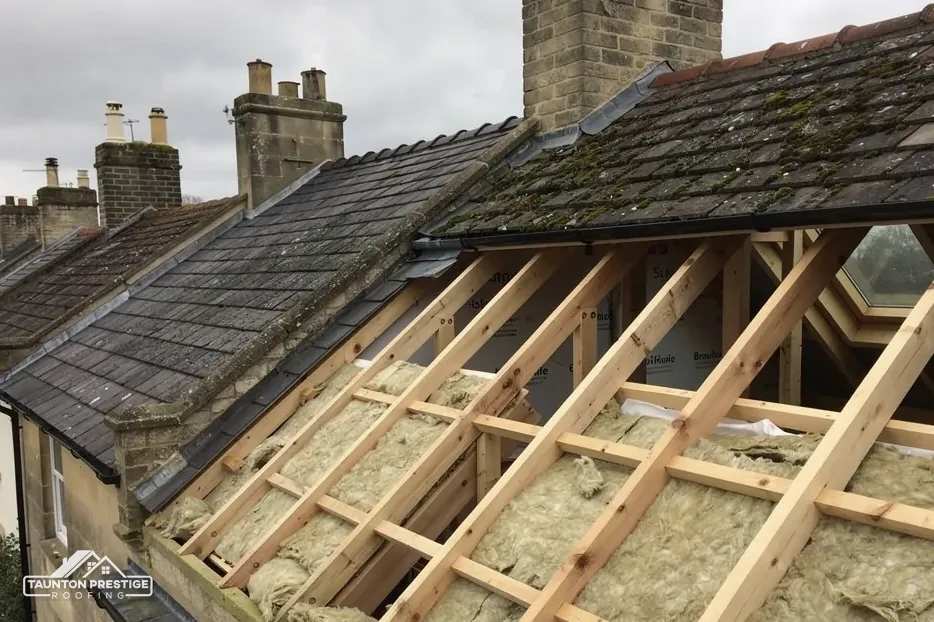
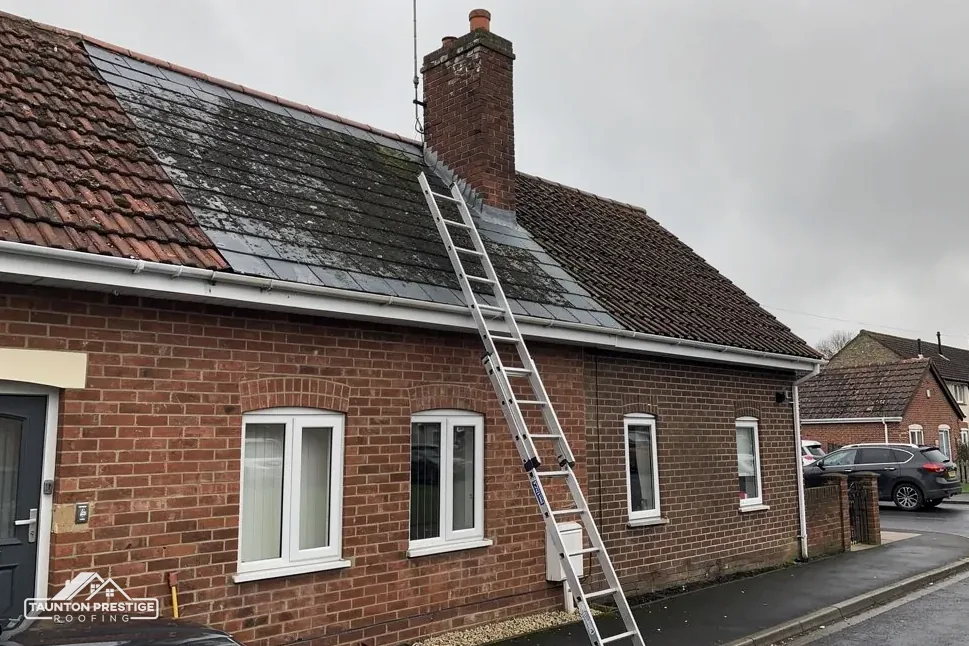
We begin on the ground with the whole building in view. The pitch, the ridge line, the overhang at the eaves, the way the verge meets the gable wall and the position of each chimney show how the roof was put together. Then we go up for a close look at the covering: how each slate or tile is fixed, whether the courses stay the same size all the way up the slope, and whether any patches use a different material.
Photos of every slope, ridge, valley and chimney go into the report, so you see your own roof and can pass the same pictures to a conservation officer or an architect without anyone having to climb up again.
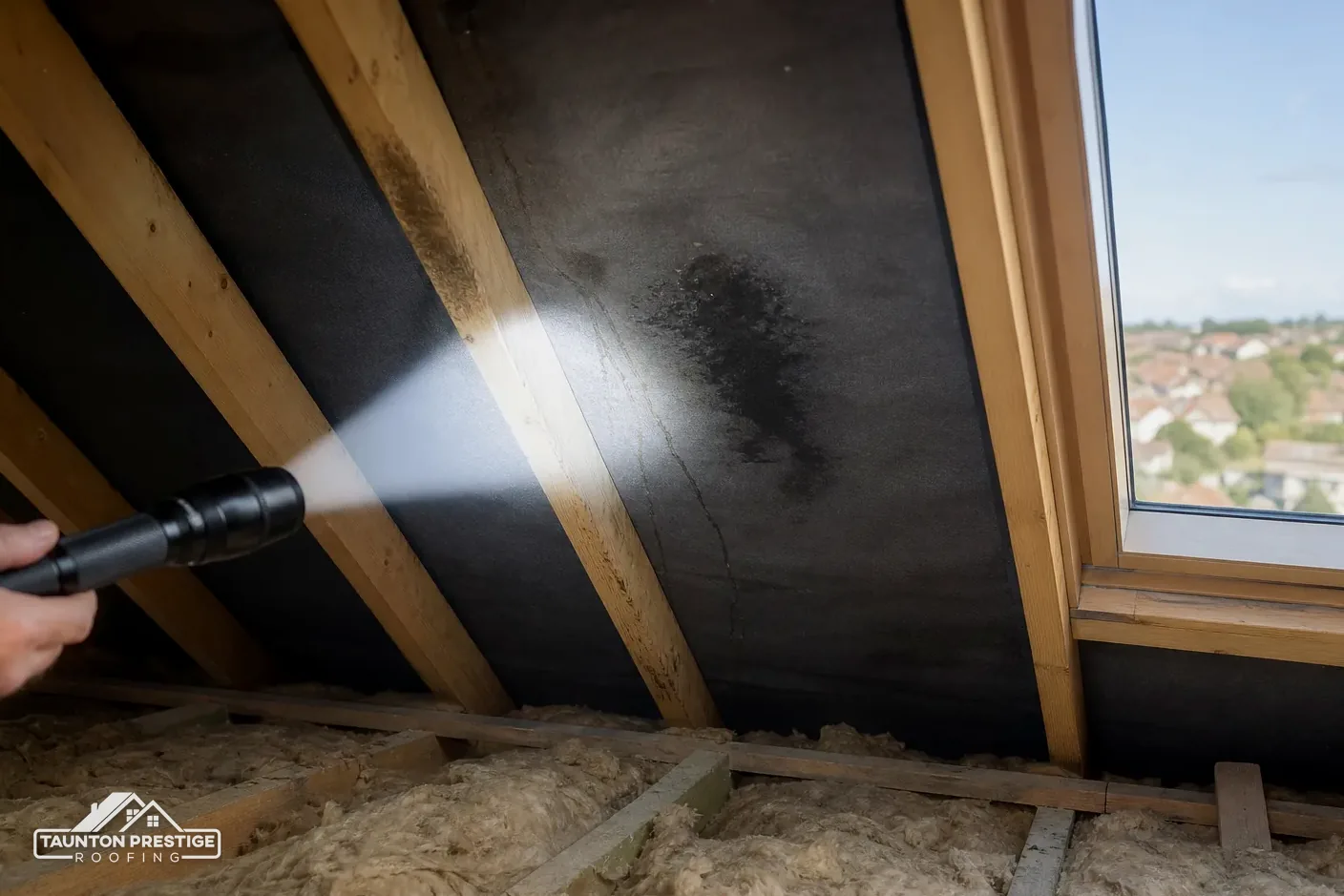
The loft matters just as much. An old roof may carry timbers that belong to the age of the building, such as rafters sawn by hand or wide boards laid under the covering where a modern roof would have felt. Those are photographed and left alone unless something is failing. Wet timber, insect damage and daylight showing through the covering are the signs that count.
Which consent route covers your roof?
Consent is the part owners most often get wrong, so it is worth sorting out before anyone lifts a slate. A house, a church and a scheduled monument each follow a different route, and the wrong guess can cost a repair that has to be undone.
What if the house is listed?
A listed house still has its Class B and Class C permitted development rights for roofs. Listing brings a second layer on top, which is listed building consent for any works that change what makes the building special. Whether a particular repair counts as like for like is a judgement made by the conservation team, so the question goes to Somerset Council before the work is booked. Inside Exmoor National Park the decision sits with Exmoor National Park Authority, so Somerset Council is not the office to ring there.
What about conservation areas and Article 4?
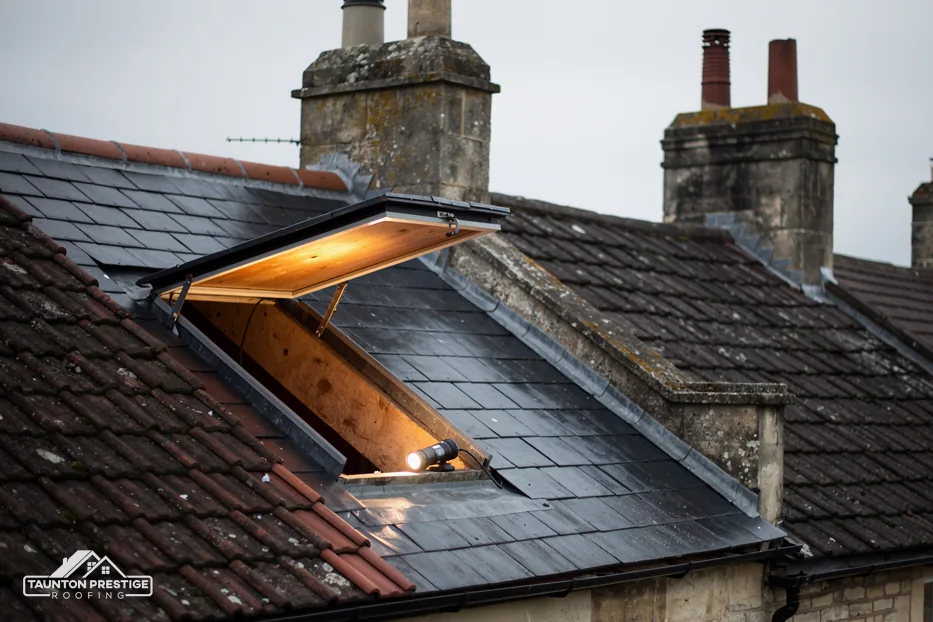
Several of Taunton's conservation areas were designated on 15 January 1975, among them Staplegrove Road, South Road and The Crescent, while Haines Hill and Trull Road came on 14 March 2023. A dormer, the little roofed box that carries an upright window out of the slope, cannot be added under permitted development in a conservation area or a protected landscape. Somerset Council also publishes a list of Article 4 directions that names Taunton's Staplegrove Road and Wellington among others. The scope of each direction is for the planning officers to explain, so email them before you book any work.
Church, chapel and monument roofs
Places of worship in use split four ways. An Anglican parish church in use is covered by the faculty system, so the diocese rather than the council gives consent. Methodist, URC and Roman Catholic churches in use each answer to their own denomination for approval, and so does a Baptist church held through a Schedule 1 trust corporation. Every other faith falls outside the ecclesiastical exemption, so a Unitarian or Quaker meeting house applies to the council, or to the Park Authority on Exmoor, for listed building consent.
Closed churches and those held by the Churches Conservation Trust need listed building consent as well. So does a chapel that has become a house, if it is listed. A scheduled monument is different again: it needs scheduled monument consent, which is a matter for the Secretary of State and never the council.
Does the church exemption cover everything?
No. DCMS guidance says the exemption leaves planning permission for exterior development in place, and it leaves scheduled monument consent in place too. That matters when a tower roof, a flat lead area behind a parapet or a new access route is involved.
For a church survey we keep the findings in a form the parish can hand to its advisers: photographs of each roof area, the covering named, the lead and the gutters described, and the problems ranked by how soon water will get in. The consent route is then the parish's to follow, with the evidence already in hand and nobody needing to return to the roof just to take more pictures.
Reading slate, clay and old tiles
Where the look of the building depends on the material, a like-for-like repair uses the same stone or fired clay, so the first job on a historic covering is deciding how much is still sound. CORC puts well-kept slate at a century or more. The BRE sets a floor of 60 years for clay tile, though that applies to clay alone and is no use for concrete. With old peg tiles even the 60-year figure is a poor guide, so each tile is judged on its condition, not its age.
Is a slipping slate a sign of a worn-out roof?
Not by itself. A slate that drops may have lost its nail to rust, a trouble roofers call nail sickness, or it may be sitting on a split batten, or it may simply have cracked. Slipping that spreads over a whole slope points at the fixings. On a historic roof the answer is often to lift the slates, sort the sound ones and relay them on new fixings, so the old covering keeps working.
Somerset has its own clay story. The South West Heritage Trust writes that brickyards in Bridgwater made bricks, tiles and terracotta wares in great variety, and a leaflet from a local heritage group lists plain tiles, pan tiles and the Bridgwater Double Roman as well. Matching a Double Roman or a pantile means finding the right profile, because a different shape changes both the appearance and the path the water takes.
Pitch limits what a repair can use. Natural slate wants at least 20 degrees according to BS 5534, and Cupa warns off hook fixings below 25 degrees, which matters on a shallow old roof where a repair has to suit the pitch already there.
Lead, mortar and what hides underneath
Lead is the metal in the valleys, flashings and soakers of most older roofs. Flashing is lead that seals the line along a chimney stack or wall, and a soaker is the folded piece worked in beneath each course of slates next to it. Sheet lead comes in numbered grades called codes, running from code 3 at 1.32mm to code 8 at 3.55mm; Royston Lead names code 5 and code 6 for flashings and valley gutters. MyJobQuote gives over 80 years as what well-fitted lead flashing can reach, a minimum and never a guarantee of life, so old lead is read for cracks, splits and lifting, not for its age.
Why does mortar need care?
Older ridges and hips were commonly set in a bed of mortar with nothing else holding the tiles. BS 5534 is a code of practice, not legislation, and mortar has not been banned. Marley reads the 2014 revision of BS 5534 as meaning that bedding alone should not carry the load on ridge and hip tiles, so clips or screws are added. On a listed building the choice of mortar and any added fixings are matters to raise with the conservation team first. The survey records what is there, with photos, so that conversation starts from facts.
Could bats or nesting birds change the plan?
Roofing jobs are named on GOV.UK as one way owners end up affecting bats. Section 9(4) of the Wildlife and Countryside Act 1981 makes the test intent or recklessness: anyone who intentionally or recklessly upsets bats at a roost, or stops them reaching it, is guilty. Regulation 43 of the Habitats Regulations 2017 separately covers damaging or destroying a resting place. For birds, section 1 of that Act bites when a person intentionally harms a nest in use or under construction. Signs are looked for before slates come off.
What a historic roof report should record
A good report on a listed or historic roof is one that a conservation officer, a mortgage valuer or a future owner could pick up and understand. It needs more than a list of faults.
- The covering on each slope, named, with the fixings and any patches in a different material.
- Ridges, hips and verges, and whether they are bedded in mortar, fixed dry or both.
- Every valley, flashing and soaker, with the lead condition shown close up.
- Chimneys: the stack, the flaunching (the mortar cap that sheds water away from the pots) and the lead tray around the base.
- Gutters, downpipes and the roofline timber.
- The loft: timbers, any old underlay or boarding, damp and signs of wildlife.
- Problems ranked by how soon they matter, so urgent ones come before improvements.
It should also say plainly which parts look original and which are later repairs, because that is what decides the consent route. Where a past repair used the wrong material, the report should name it so a conservation officer can see what to put right. For a roof survey, MyJobQuote gives an average of around £300 as a typical UK range (MyJobQuote, Oct 2026). An older building with a church tower or several levels takes longer, so the price follows the access and the time on the roof.
Our guide to roof inspection cost explains what moves a survey price, and the page on what a roof inspection report holds shows the standard layout. For a lead flat behind a parapet, flat roof inspections covers the method.
Listed roof queries
Can I repair a listed roof like for like without asking?
Ask first, and ask before the work is booked. Listed building consent covers works that change what makes the building special, and whether a repair is truly like for like is the conservation team's call at Somerset Council, or the Park Authority inside Exmoor. Survey photos make that conversation much quicker.
Does a church roof need a faculty or listed building consent?
Where an Anglican church is in use, the route is a faculty. Methodist, URC and Catholic churches follow their own denominational systems, and Quaker or Unitarian buildings need listed building consent from the council. A closed church or a listed chapel conversion also needs consent.
Will looking at an old roof disturb bats?
Bats are protected in their roosts, and roof work can reach them. A survey looks for droppings, staining and gaps before anyone lifts a slate, and a roost found at that stage changes the plan. Section 9(4) of the Wildlife and Countryside Act 1981 turns on whether someone acted intentionally or recklessly.
More on this subject: Roof inspections in Taunton