A roof window in a modern semi is a simple job. In a listed cottage, a Georgian terrace or a house inside one of Taunton's conservation areas, the same window can change the look of the street, and the rules treat it that way. The glass itself is rarely the problem. The trouble is how far the frame stands proud of the slates, how thick its sides are and whether the owner asked the right authority before anyone cut a hole.
This guide covers what people mean by a conservation roof window, which consent route fits a listed home and which an unlisted house in a conservation area, why an Article 4 direction needs checking, and the permitted development limits that still apply. It also sets out the energy figures a new unit has to meet. It sits within our roof windows and skylight section, and nothing here is legal advice: the planning team makes the call.
What makes a roof window suit a period home
People use the phrase conservation roof window for a unit built to sit quietly in an old roof. There is no single legal definition, and a manufacturer's label does not decide whether a council will accept it. The features are about appearance.
What should I look for in the unit?
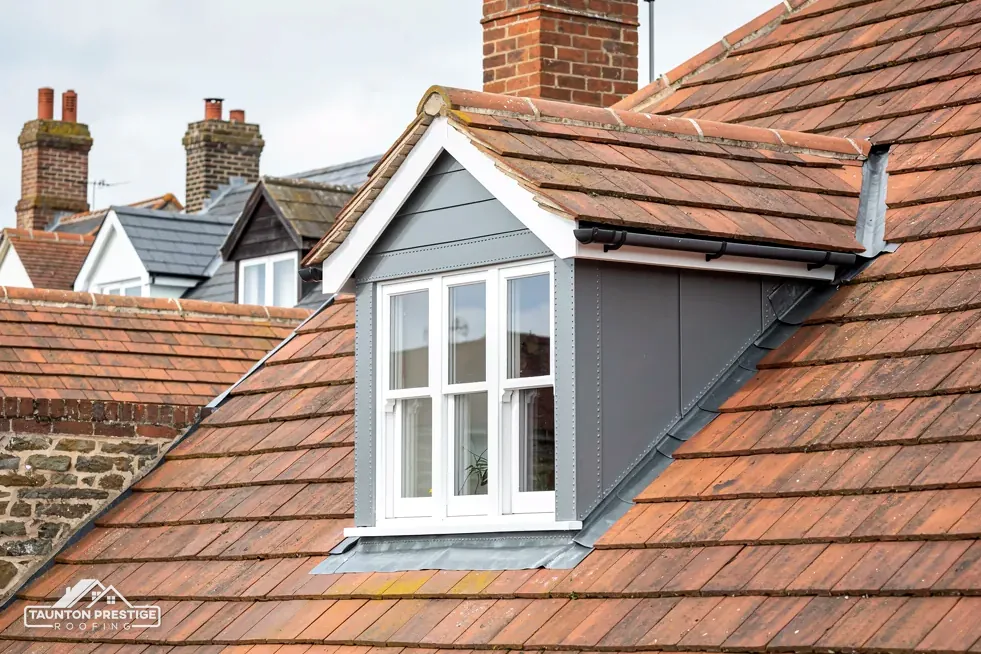
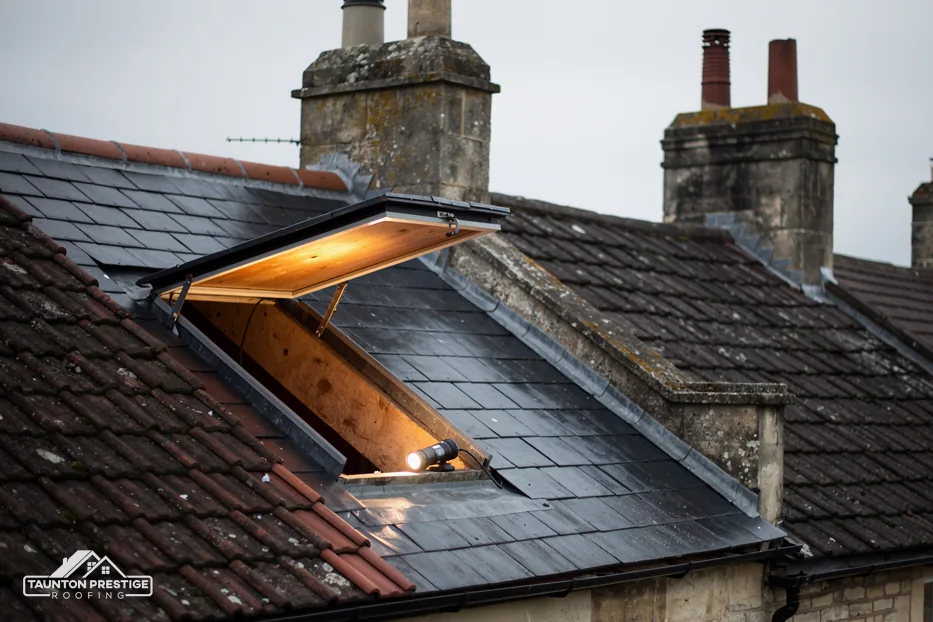
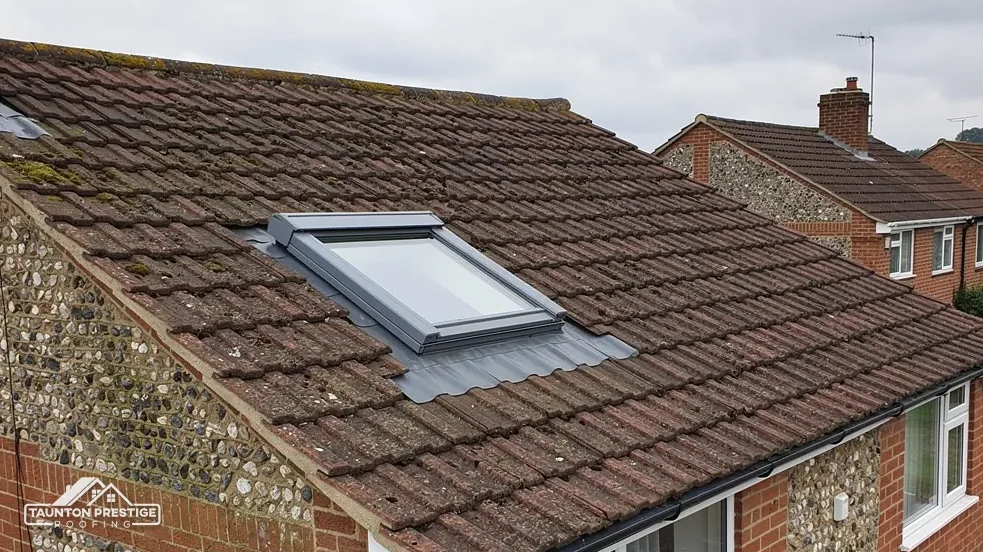
A flush-fitting window has a frame that lies in line with the slates or tiles, instead of standing proud on a raised kerb. A slim frame keeps the glass dominant. One central vertical glazing bar, in the style of the old cast-iron rooflights seen on farm buildings and outhouses, echoes what the roof might once have carried. A dark, matt finish stops the frame glinting in low sun. Size matters as much as style: a smaller window lined up with the rafters usually looks better than a large one.
The flashing counts too. It is the metal strip that seals the gap between frame and covering, and on a period roof it is fitted so that the slates run close to the frame without a thick border. Our types of roof windows guide describes the main designs.
Does it have to be heritage-styled to be accepted?
Not automatically. What the planning team judges is the effect on the building and on the area around it, including the public view. A discreet modern window on a rear slope may be treated more kindly than a heavily styled one on the front. Ask before you buy, because a refusal after installation is expensive, and where you put the window may matter more than which frame you choose.
Listed homes: consent comes first
A listed building is protected for what makes it special, and the roof is usually part of that story. The shape, the slates, the timbers and the openings all contribute.
Do listed houses lose their permitted development rights?
No, and this surprises many owners. A listed house keeps its Class B and Class C permitted development rights, because neither class excludes listed buildings. Listed building consent is a separate regime laid on top. Section 7 of the Listed Buildings Act (the Planning (Listed Buildings and Conservation Areas) Act 1990) forbids works that change a listed building's character unless they are authorised. A new roof window almost always does that, so consent is needed before the work starts.
Cutting into a listed roof without consent is an offence, and the owner can be told to put things right, at their own expense and on the council's timetable. It can also cause trouble at sale. Do not rely on a window supplier saying it is fine. Consent comes from the local planning authority, or from Exmoor National Park Authority for a house inside the Park, where it replaces Somerset Council as the decision maker.
What about churches and chapels?
Church buildings follow their own routes. An Anglican church still in use goes through the faculty system, for example, while a converted chapel or a closed church returns to listed building consent. Scheduled monuments have a separate consent route altogether.
In every case, ask first, and ask in writing. A pre-application conversation with the planning team costs nothing but time, and it tells you what a refusal would turn on.
Conservation areas: what changes and what does not
Somerset Council publishes a table of its conservation areas, and Taunton has several. Trull Village was designated on 12 November 1998, and the Haines Hill and Trull Road area followed on 14 March 2023. The table also lists Mount Street with Vivary Park, and Wellington, without a usable year for either.
Does a conservation area stop me fitting a roof window?
Not on its own. The permitted development order covers a wide category of alterations to a house roof as Class C, and that class has no carve-out for conservation areas. A roof window that stays inside the class limits can therefore remain permitted development there, unless an Article 4 direction or a planning condition has taken the right away. Dormers are a different matter and need a planning application.
What are the Class C limits?
A roof window must not stand more than 0.15 metres above the surface of the existing slope, measured at right angles to it. A flush unit meets that comfortably, where a raised one may not. Side slopes carry an extra condition, covered below.
Even where permission is not needed, a conservation area is a place where appearance matters, and neighbours and the council notice a mismatched unit quickly. A window on a front slope facing the road is far more visible than one on a rear slope. If you are unsure whether your house falls inside the boundary, the council's maps and its planning team will tell you.
Village conservation areas in the Quantock and Blackdown Hills add to the picture. Bishops Lydeard, Milverton and North Curry each have one, with dates in the same council table.
Article 4 directions: check, don't assume
An Article 4 direction is a tool a local planning authority uses to remove chosen permitted development rights from a defined area. Where one applies, some jobs that are usually free of any application can suddenly need one.
Is there an Article 4 direction on my street?
Somerset Council lists its directions with the year each was confirmed, and several sit in the Taunton area: Staplegrove Road, Wellington and Ford Street in Wellington, Milverton, Halse and Combe Florey among them. Appearing on the list tells you nothing about what a particular direction removes. The notice itself defines that, and the council's planning team can say whether roofs, chimneys or windows are caught. Never guess.
Owners sometimes find out only after the work that a direction applied. If your home is in or near one of these places, or in any conservation area, ask before you order a window. The question is short: does an Article 4 direction touch roof windows or roof alterations at this address? Get the answer by email so you have it on record.
What about National Landscapes and Exmoor?
The Quantock Hills, Blackdown Hills and Mendip Hills are National Landscapes, the rebranded form of the old AONB designation, and they count as article 2(3) land. Dormers lose permitted development there, but Class C roof window rights stay. Inside Exmoor National Park, planning and listed building questions go to the Park Authority and not to Somerset Council.
The renaming was a change of label only. Ask the right authority, in writing, before you commit.
Rules that still apply to the window itself
Whatever the consent route, a roof window must also meet the Building Regulations for energy performance and safety. These rules bind a conservation window as firmly as any other, and old-house charm does not excuse a poor figure.
What if the window faces a side slope?
Condition C.2 handles side elevations. On a slope facing the side of the house, the glass has to be obscure, and the sash can open only if its opening part is higher than 1.7 metres from the floor inside. The obscure-glass requirement never falls away; the 1.7 metre height only decides whether the window may open. Our guide to side-slope roof windows and obscure glass goes further.
What energy figures does a new unit have to meet?
In an existing home, Approved Document L (2021 edition) puts a roof window in the same row as other windows. The minimum is 1.4 in U-value terms (W/(m²·K)), with a Band B rating as the alternative way to comply. The figure of 2.2 belongs to rooflights. Our roof window U-value page explains the numbers. The next edition of the document starts to apply on 24 March 2027, and until then the 2021 tables hold.
A thin traditional frame can be hard to pair with a high-performance unit in an older roof, which is one reason to raise the energy figure with the planning team and the installer together. Building control, not the planning team, answers structural and energy questions, and Somerset Building Control is on 0300 303 7790.
A bedroom in a loft conversion raises separate escape-window rules, which have a page of their own. Our survey notes record which rules apply to each house.
Positioning, flashings and what decides the price
Where the window goes matters as much as which one you choose. A rear slope hidden from the road is the easiest to agree. A front slope in a terrace is the hardest, and for a listed building the position will be examined along with the frame.
How is a window fitted into an old roof?
The crew lifts the slates around the opening, which may mean cutting rafters and trimming the gap. Trimming means fixing timbers across the opening to carry the load of the cut rafters, so the structure around the window still works. In an older roof the timbers can be irregular or slightly decayed, which slows the work. Slates are then cut and dressed back to a flashing that fits the frame. On natural slate every cut is made by hand, so a tidy edge takes time.
The covering matters too. A slate roof with a flush window needs slate flashings that sit neatly, and a clay roof needs pieces of the right profile. Matching what is already there is part of the brief, because a mismatch shows more on a period roof than on a plain tile one.
What does it cost?
MyJobQuote (Sep 2026) gives a typical UK figure of £1,100 for a mid-range roof window, and about £100 less for a plain swap. Period work is rarely plain. The price moves with the unit chosen, the covering, the access and scaffold, how many rafters need trimming, the plasterwork inside and any application fees.
Arrange a survey and we will assess the position, the covering and the consent route for your house before anything is priced. You then get one written total, with photos of your slope.
Period roof window questions
Will a roof window in a listed house need consent?
Almost certainly. Permitted development rights remain, but section 7 of the Listed Buildings Act requires authorisation for works that change a listed building's character, and a new opening in the roof usually does. Ask the local planning authority, or Exmoor National Park Authority inside the Park, before any work starts.
Is permission needed for a roof window in a conservation area?
Class C has no conservation area exclusion, so a window inside its limits can still be permitted development. That changes if an Article 4 direction or a condition applies, so ring the planning team at Somerset Council with your postcode before the unit is ordered.
Why does the height of the frame matter for planning?
Under Class C the new window must not stand more than 0.15 metres above the original slope, measured at right angles to it. A flush-fitting unit stays within that limit more easily than a raised one, and it looks quieter on a period roof. The measurement is taken from the original slope, not from the new covering.
More on this subject: Velux roof window and skylight installation in Taunton