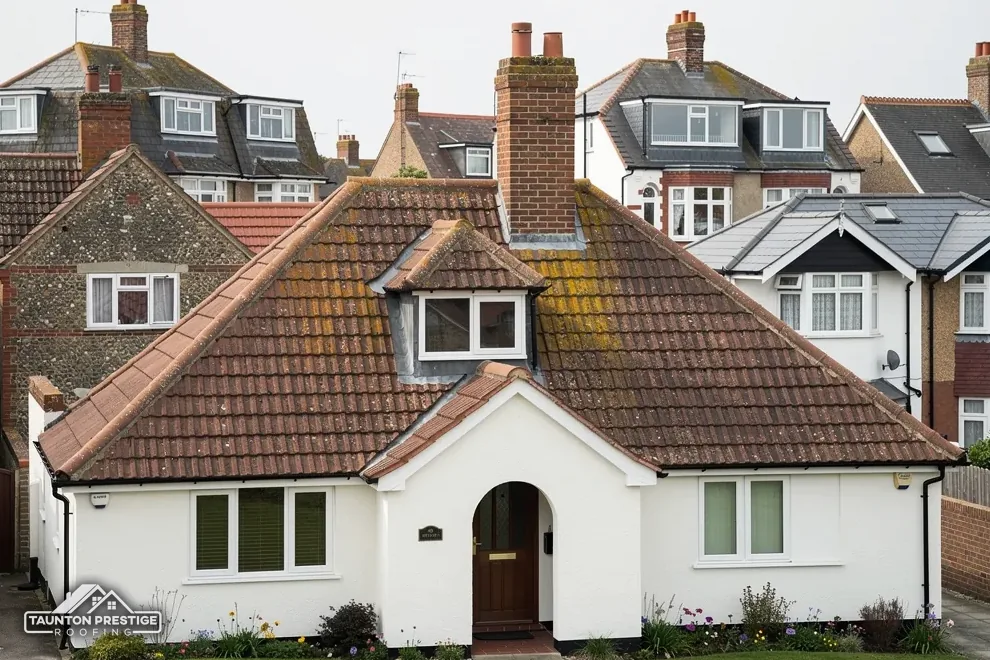
Blackdown Hills National Landscape
Blackmoor lies inside an area renamed from AONB in November 2023, where a dormer calls for a full application.
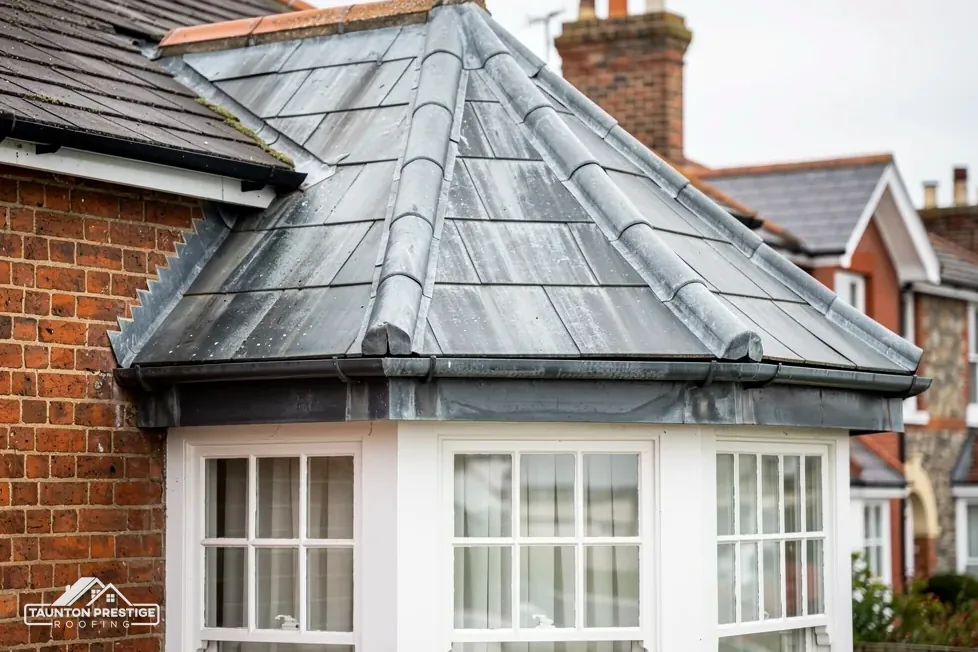
A Blackdown Hills hamlet between Wellington and Taunton
Blackmoor is a hamlet in West Buckland parish, inside the Blackdown Hills National Landscape, with Wellington's conservation area the nearest on the planning map. We look first, then price.
Blackmoor lies inside an area renamed from AONB in November 2023, where a dormer calls for a full application.
Blackmoor sits in a civil parish of 1,136 usual residents at the 2021 Census, between Wellington and Taunton.
The nearest conservation area in the national dataset, though its boundary lies more than about 750 metres from Blackmoor.
Street map of Blackmoor with West Buckland, Hockholler, Clayhidon, Angersleigh marked around it, and Taunton.
West Buckland lies to the north-east, Wellington to the north-west and Hockholler to the north, with Angersleigh to the east, Clayhidon to the south and Burnworthy to the south-east.
About 5 miles south-west of Taunton, Somerset Council (unitary).
Four checks beyond Wellington's edge
Which Blackmoor you mean, what loose tiles cost an owner, how a flat roof should drain and what may sit behind a soffit board.
Blackmoor is a place name found more than once, so we always pin down the right one. This is the hamlet in West Buckland parish, between Wellington and Taunton, about 6.7 road miles south-west of Taunton. That matters on a practical level: when a surveyor books a day, a wrong turn to a different Blackmoor loses hours, so we confirm your postcode and a nearby landmark on the first call. The same care helps with the paperwork, since a planning enquiry or a quote that names the wrong parish wastes everyone's time. If your house is further from Wellington than from West Buckland, tell us which road you live on and we will fix the right place on the map before anyone sets out.
The Blackdown Hills National Landscape is the new name for the Blackdown Hills AONB. The area's own website says that in November 2023, along with Areas of Outstanding Natural Beauty across England, it was renamed. A name does not alter the law, and the planning order still uses the older words. In practice, a like-for-like re-roof on a house is treated as ordinary work, and the designation bites on changes of form: an owner who wants a dormer, for example, must apply to Somerset Council in full, as in a conservation area. Our guide to planning permission for roof work sets out where the lines fall.
Wellington is the nearest conservation area in the national dataset, and its boundary lies more than about 750 metres from Blackmoor's place point. If your house is near the town edge, ask the planning team whether your address is inside. Blackmoor itself lies inside the National Landscape, so the check is never wasted.
Look for
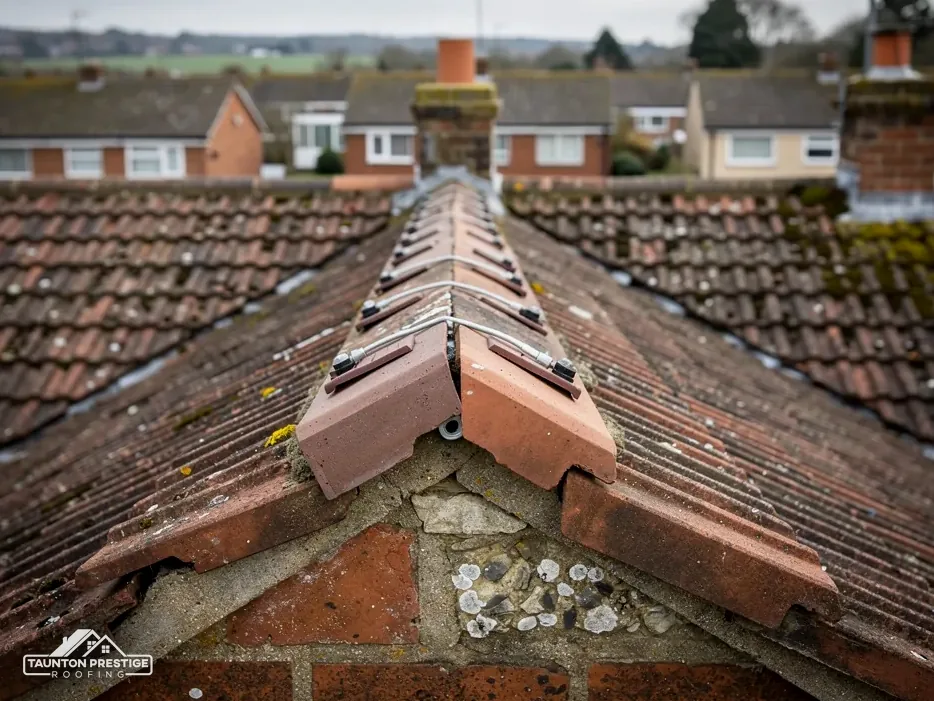
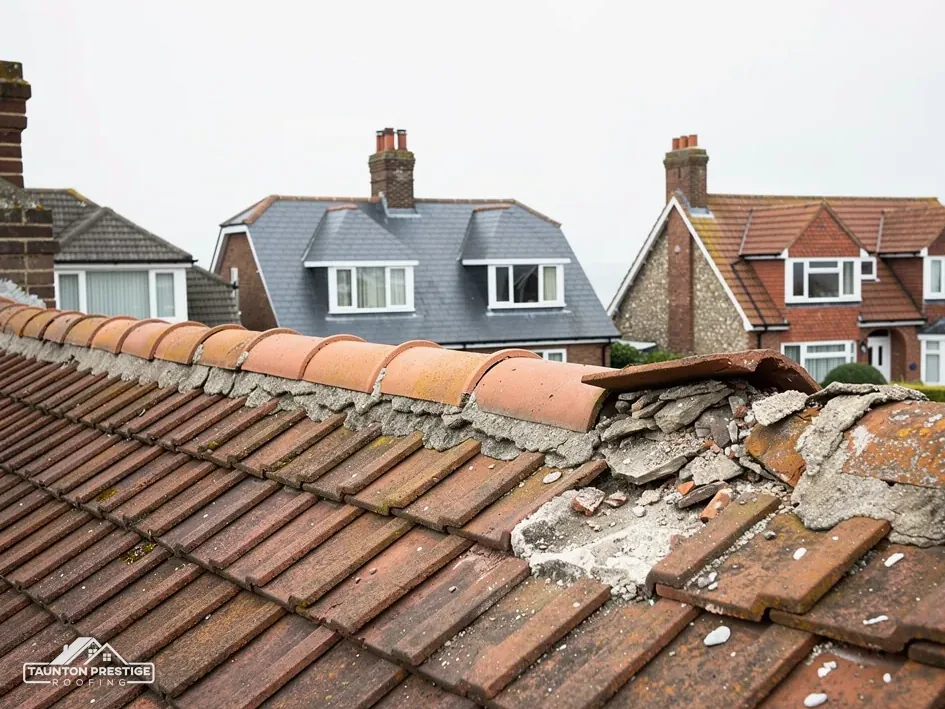
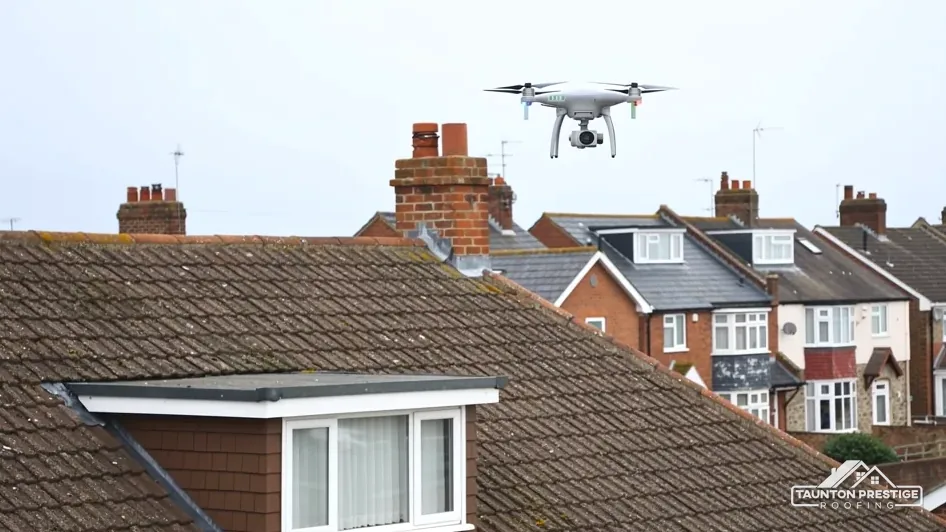
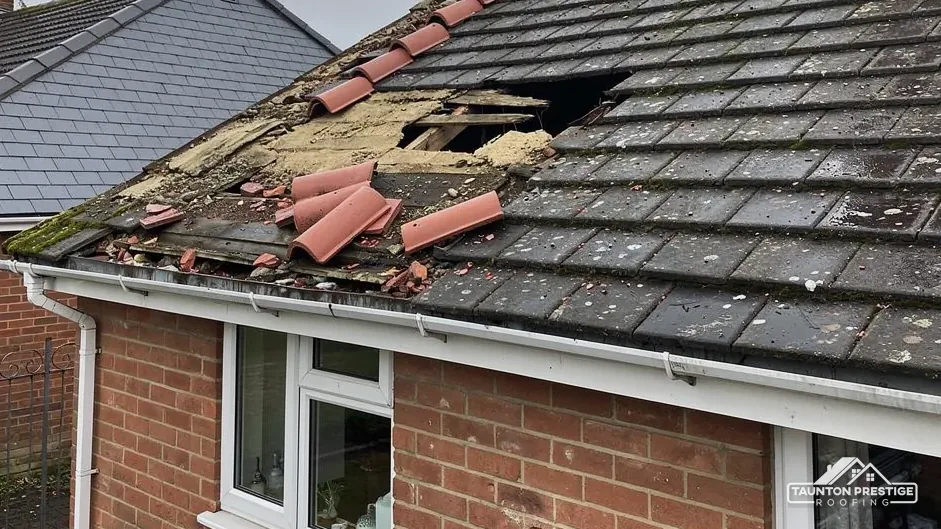
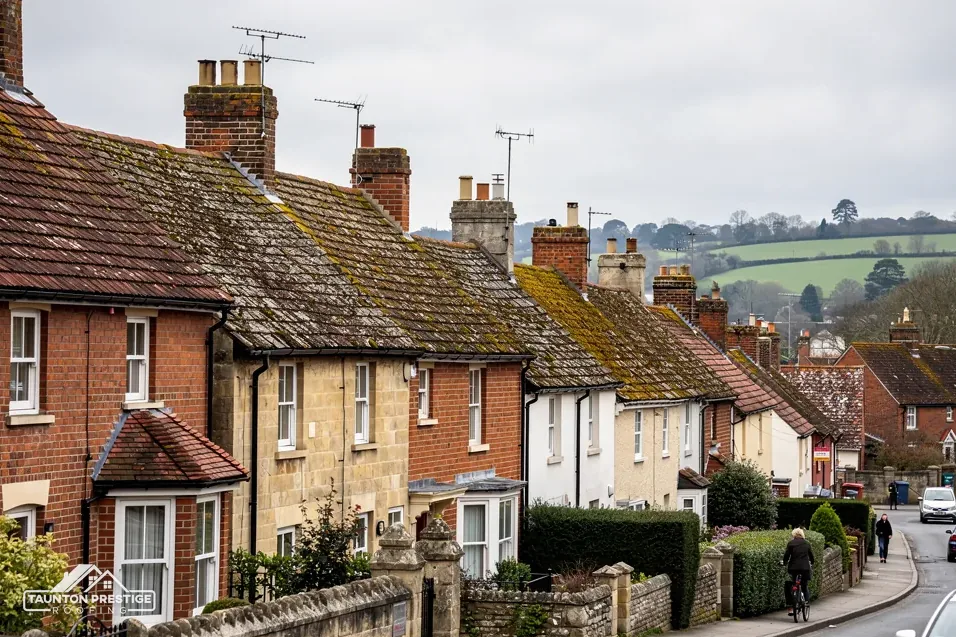
Somerset Building Control runs a dangerous structures service, and among the examples on its page are slipping tiles that could drop and chimneys that have gone unsteady. The same page sets out who pays: the owner of a building that turns dangerous carries every cost of making it safe. That is a sobering line for anyone who has watched a stack lean over a garden path, and it is the best reason to act on the early signs, such as a tile edge hanging below the line of its row, before they become emergencies. A cheap fix now is a better position than a bill later, and the survey pictures show exactly what has moved.
What decides the price
We make a leaking or loose roof safe before anything else: tiles or bricks that could fall are taken down or secured, and an open section is covered. Then the survey finds the cause. Sometimes that is a single failed fixing, sometimes a stack whose pointing has gone, and sometimes a flashing that let water into the brickwork over several winters, so the damage is a long way from the drip. Somerset Building Control can be reached on 0300 303 7790 if a structure threatens a neighbour or the public.
MyJobQuote (Oct 2026) gives a typical UK range for an emergency roofer's call-out of £150 to £300, and says storm repairs run to £1,200 or more. Chimney repointing, the usual cure for a failing stack, is put at £450 to £1,200 by the same guide (Oct 2026). Those figures are national, not ours, and the real number depends on height, access and how much has moved. A repair that is wide of the original fault is poor value, so the survey photographs the whole stack before we suggest an approach. Our emergency and general roof repairs page explains how a make-safe visit differs from the repair that follows it.
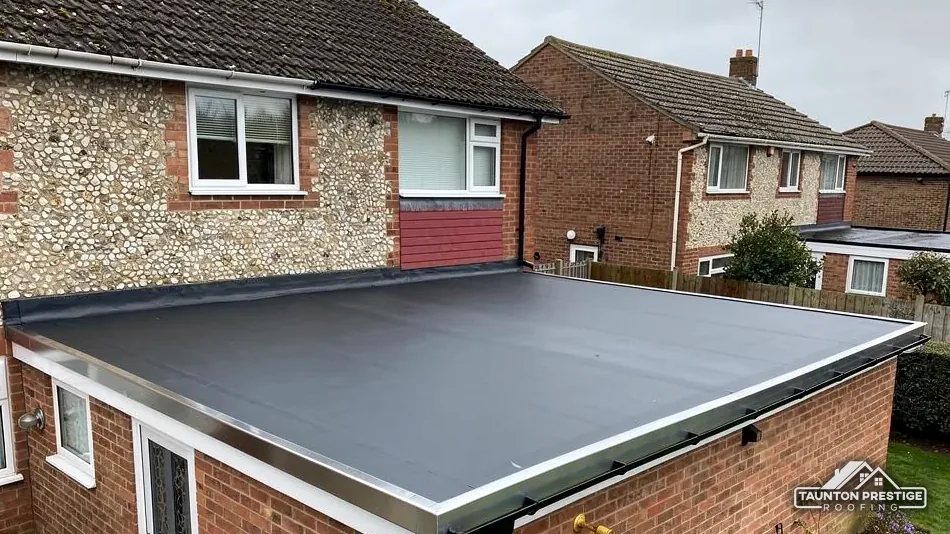
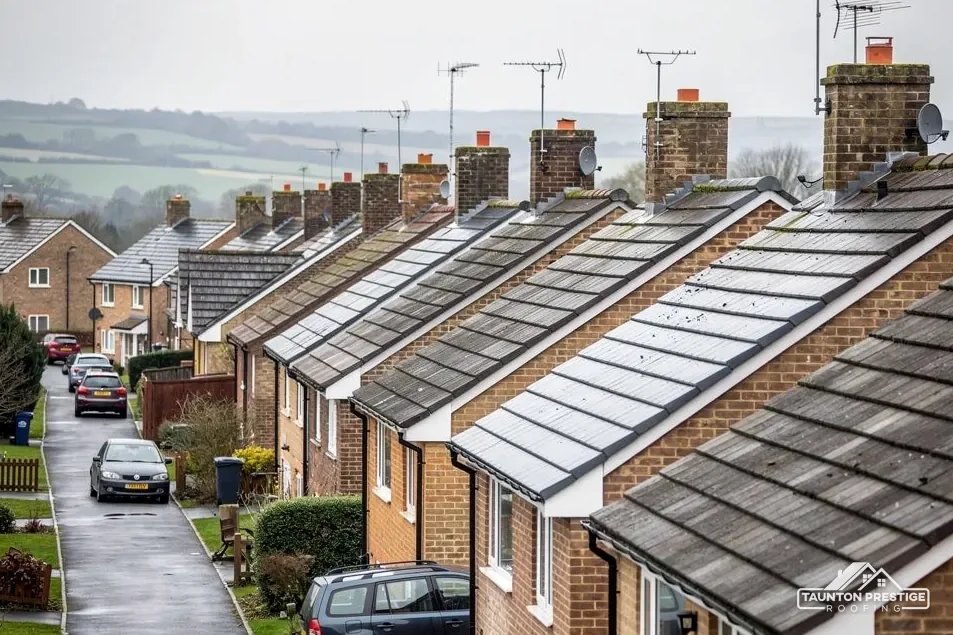
Many a Blackmoor house has a flat roof somewhere: a rear extension, a garage, a porch. A flat roof is never meant to be dead level. BS 6229 was reissued in December 2025 and the 2018 edition is withdrawn; the 2025 edition keeps a minimum finished fall of 1:80 for general areas, and IKO advises that a roof should be designed for a fall of 1:40, so that it still drains once everything settles.
A flat roof that holds a puddle after a day of dry weather is telling you something.
Ponding can mean the fall has been lost over the years, an outlet is blocked, or the deck has dipped under the weight. Water left sitting ages the covering faster, and a dip near an edge may mean the board beneath is wet. A flat roof also takes foot traffic from whoever clears the gutters or fixes an aerial, which wears the surface. A survey with a spirit level and a hose test finds out which it is, and the answer decides whether a patch will do.
The guides disagree, which is worth knowing. EPDM, a rubber sheet laid in a single piece, is given 20 to 30 years by GreenSpec and 30 to 50 years by Less. Less puts GRP, fibreglass resin laid wet over a board, at 25 to 40 years, and torch-on felt at 10 to 20, and it adds that careful felt work can reach 20 years where a careless job fails inside 10. MyJobQuote (Oct 2026) puts replacing a flat roof at £1,500 to £6,000, a typical UK range, and Less (Oct 2026) puts a 15 square metre garage at £1,200 to £2,500.
Approved Document L, 2021 edition, counts re-covering a flat roof's waterproof layer as renovation, so an insulation question can arrive with the job. Until 24 March 2027, that edition is the one that applies. Our flat roofing page covers the options in full.
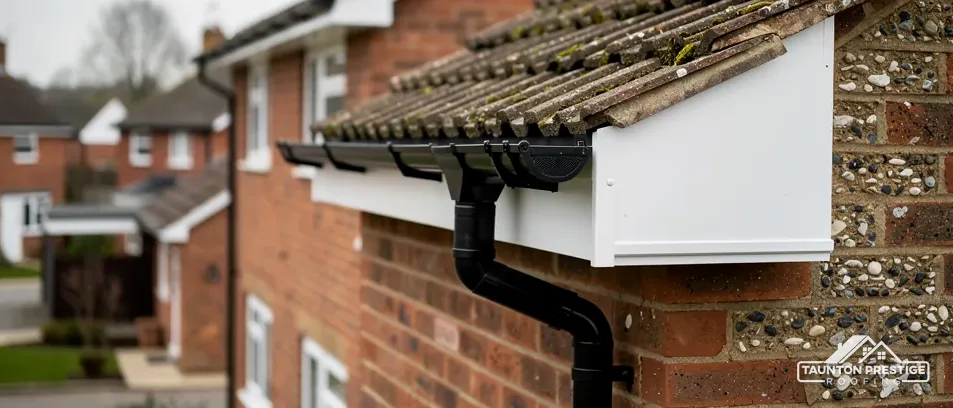
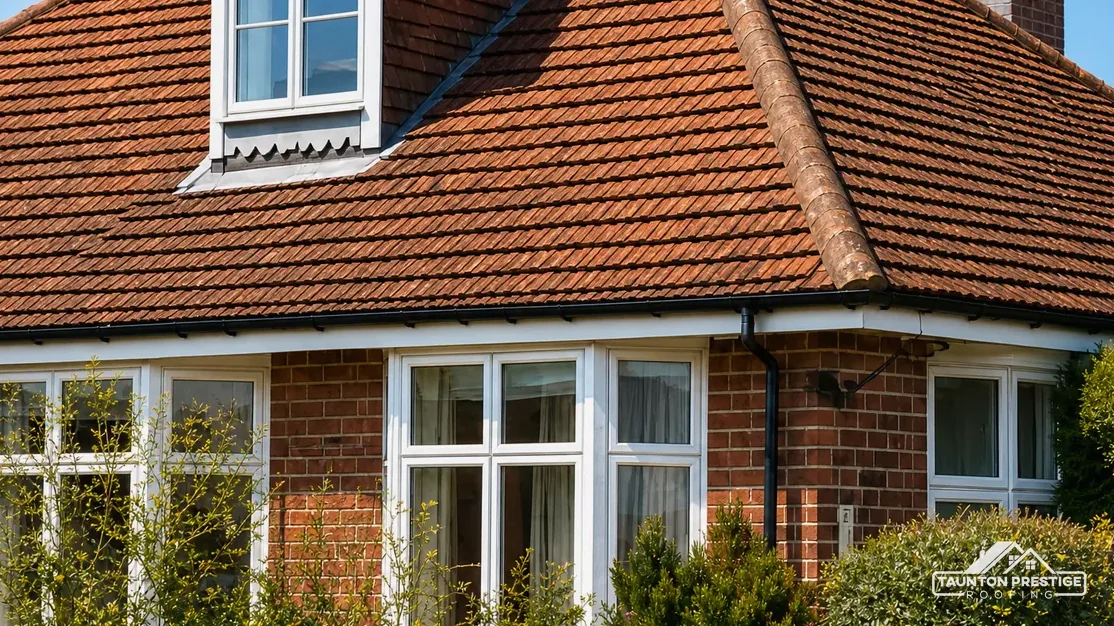
The fascia, the board along the roof's lower edge, carries the gutters, and the soffit is the underside panel that closes the gap beneath the eaves. When gutters overflow, they soak the fascia first. Brett Martin's guidance sets the fall of a gutter at 1 mm for every 600 mm of run, so a bracket that has sagged by a few millimetres is enough to send water over the edge instead of along it.
What decides the price
HSE tells owners to presume asbestos in any building built or altered before 2000. One form is insulating board, AIB, which HSE places in external soffits, and HSE adds that AIB is hard to tell from a board without asbestos by sight alone. Taking AIB soffits down is frequently licensed work, depending on HSE's risk assessment rules, so the check comes before any board is touched, and the waste travels under a consignment note. If your house is older, mention that at the survey, since it changes the order of the work.
MyJobQuote quotes around £1,000 to £1,600 as the typical UK range for new guttering (Oct 2026), and an average of around £800 for capping fascias and soffits (Sep 2026). Neither includes the unknowns: a rotten board behind a capping, or an asbestos check. A uPVC fascia is put at 20 to 40 years by one retailer, an interested party, so treat it as an upper marker. Our gutters, soffits and fascias page sets out the choices.
When the survey is done, a single total comes in writing, with pictures of your own roofline beside it. Send your Blackmoor postcode and a note of where the water spills, and we will book that visit.
Walked the roof?
When you have read the checks, we walk the roof and show you the photos.
Putting back a like-for-like covering is ordinary work on a house, while a change of form, such as adding a dormer, means applying to Somerset Council for planning permission. A listed house also needs listed building consent for any work touching its character. If you plan anything beyond a straight replacement, check with the planning team first.
Only the council's boundary map can say. Wellington is the nearest conservation area in the national dataset, but its boundary lies more than about 750 metres from Blackmoor's place point. Somerset Council's planning team holds the boundary, so send them your full address, and keep the answer with the survey papers for the sale.
The owner is responsible for the costs of making a dangerous building safe, according to Somerset Building Control, whose dangerous structures service lists unstable chimneys. Ring us and we make it safe first, taking down what could fall. Then the survey decides between repointing and a rebuild. Somerset Building Control is on 0300 303 7790.
Often, yes. Gutters can be unclipped, the board replaced, and the same lengths refitted, if they are sound and can be set to the right fall again. The survey checks the brackets, the joints and the board together. If the soffit is old, the asbestos question comes first, before any board is cut or pulled.
Send your Blackmoor postcode and describe the trouble, and a roof survey date will follow.