St Michael's, Grade II*
A 15th-century west tower and embattled nave, in Church of England use, so roof work goes through a faculty.
A Grade II* church tower and farm courtyards on the Blackdown slopes
Angersleigh is a small hamlet in Pitminster parish on the lower Blackdown Hills, with St Michael's church listed Grade II* and eight list entries within 500 metres.
A 15th-century west tower and embattled nave, in Church of England use, so roof work goes through a faculty.
Both are listed Grade II, the farmhouse with a range of outbuildings forming a courtyard on its north front.
Listed in May 2002, so its roof also needs the listed building route before any change of covering.
Street map of Angersleigh with Blagdon Hill, Pitminster, West Buckland, Burnworthy marked around it, and Taunton.
Blagdon Hill lies close by to the east of Angersleigh, with Pitminster and Corfe beyond, while West Buckland sits to the north-west and Trull to the north-east.
About 4 miles south-west of Taunton, Somerset Council (unitary).
A roof walk on the lower Blackdowns
Four checks for a house, barn or church roof near Angersleigh, with what each one can do to the work and the written price.
The Church of St Michael is listed Grade II*, first listed on 25 February 1955. Its west tower dates from the 15th century and has Decorated two-light openings for the bells, and the nave is embattled Perpendicular work with straight-headed windows. An embattled nave has a parapet, a low wall along the roof edge, and behind a parapet there is often a lead-lined gutter. We look closely at that detail on any old church, because rain has nowhere to go if the lining splits, and the water then runs down inside the wall instead of out through the downpipe. Stained stone below the parapet is the usual first sign.
St Michael's is used as a Church of England place of worship, and the National Heritage List describes it as listed Grade II*. Buildings in that position are exempt from listed building consent. Instead the faculty system applies, which is the Church of England's own approval route and runs through the diocese. The parish applies, and a roofer works to the approved specification. It is not a matter for Somerset Council's listed building team, although an external change can still raise a planning question.
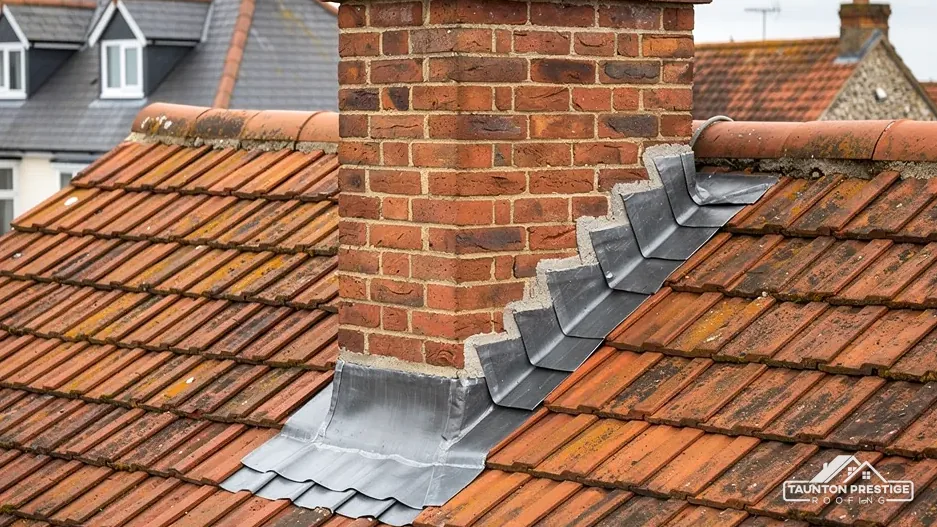
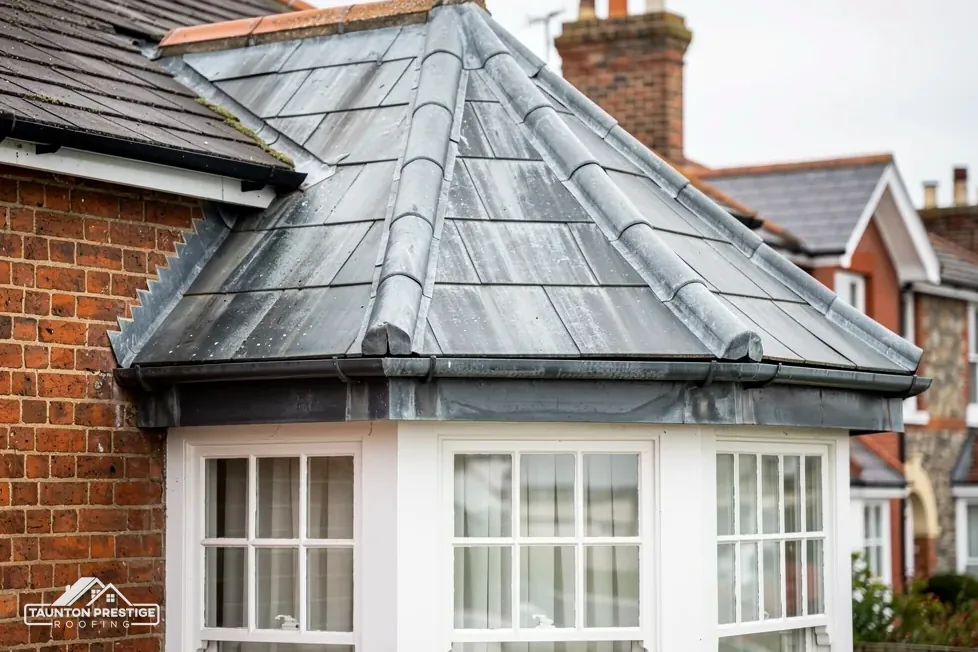
The Royston Lead brochure lists codes 5 to 8 for parapet and box gutters, and codes 4 to 6 for flashings. Lead codes are weights, so a higher number is a thicker sheet, and thicker lead resists the splitting that comes with movement and temperature change. Our lead work page explains the codes, and the survey tells us which job a particular gutter really is.
If you sit on a parochial church council or look after a village building, we are happy to walk the roof with you and explain what the faculty application will need to say.
Look for
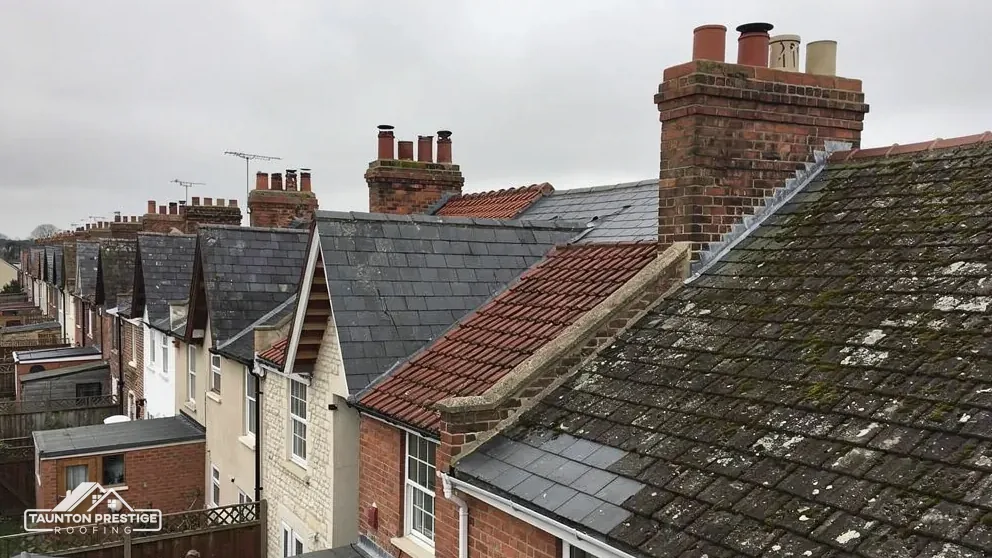
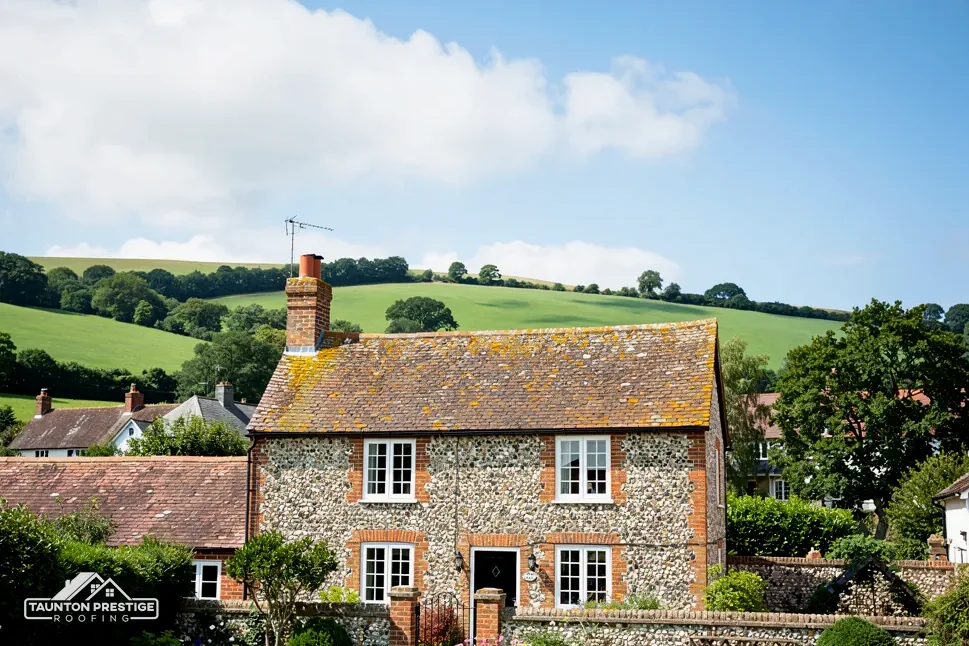
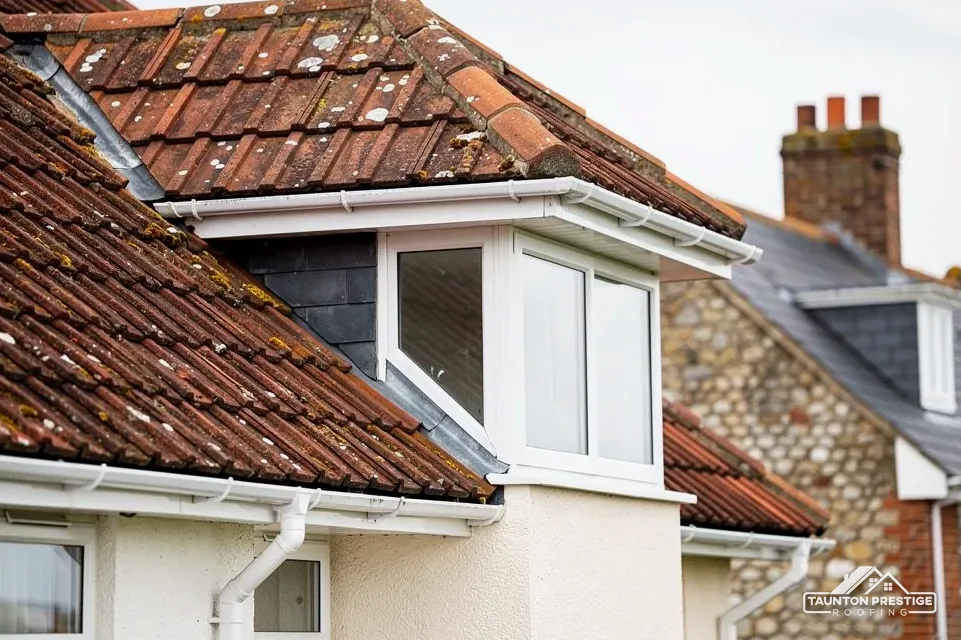
Leigh Farmhouse is listed Grade II together with its range of outbuildings forming a courtyard on the north front, and Leigh Court close by is listed Grade II too. A courtyard of connected ranges has a feature a single house lacks: several roofs meeting at angles, so the water from one slope runs into another. Where two slopes meet in a dip, the join is called a valley, and it carries the rain of both. Add a downpipe or a chimney in the angle and the number of joints to check grows quickly, which is why a courtyard survey takes longer than a house of the same size.
Sound or needs work
What decides the price
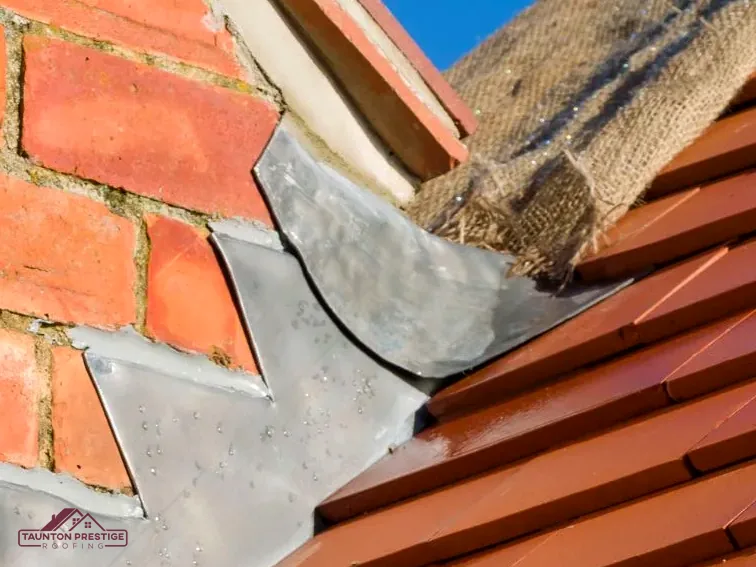
A valley takes more water than any slope beside it, and leaves, moss and bird mess settle there. Lead-lined valleys can split with age, and a lining that has lifted at the edge lets water creep under the slates. Concealed valleys, where the slates cross over the lining, hide the problem until a stain appears on a ceiling. We check the valleys first at the survey, from the ladder and, where it can be done safely, from inside the roof space as well, where a faint tide mark on a rafter tells a story the slates do not.
With the same care as the house. A listed range is covered by the list entry, so the old roof material should be kept or matched, and you are advised to check the entry before swapping for a different covering. A barn that takes rain through a few missing slates can lose a purlin in a few seasons, and replacing a purlin costs more than replacing the slates would have done. Our pitched roofing page covers the basics for roofs like these.
Gatchells is listed Grade II too, first listed on 15 May 2002, and the same questions apply there. Each building gets its own notes, so the written price reflects the roof you actually have and not an average of the group.
Angersleigh sits on the edge of the Blackdown Hills National Landscape. The point we use for the hamlet lies just outside it, but part of the area searched around that point falls inside, so some addresses may be in and some out. The Blackdown Hills Area of Outstanding Natural Beauty was renamed a National Landscape in November 2023, as the Blackdown Hills team records. What matters on a roof job is knowing which side of the line your own house is on, and that is a quick question for the council, not a reason to delay a survey.
A hamlet on the edge of a designation is a hamlet where the address matters.
Because it affects what you can do to the outside of the house. A dormer or other extension to the roof is treated differently inside the line, and a change of covering that alters the look of the house is worth asking about too. A loft room usually brings at least one of those. Our guide to planning permission for roof work sets out the national picture, and Somerset Council's planning team can confirm where your address falls.
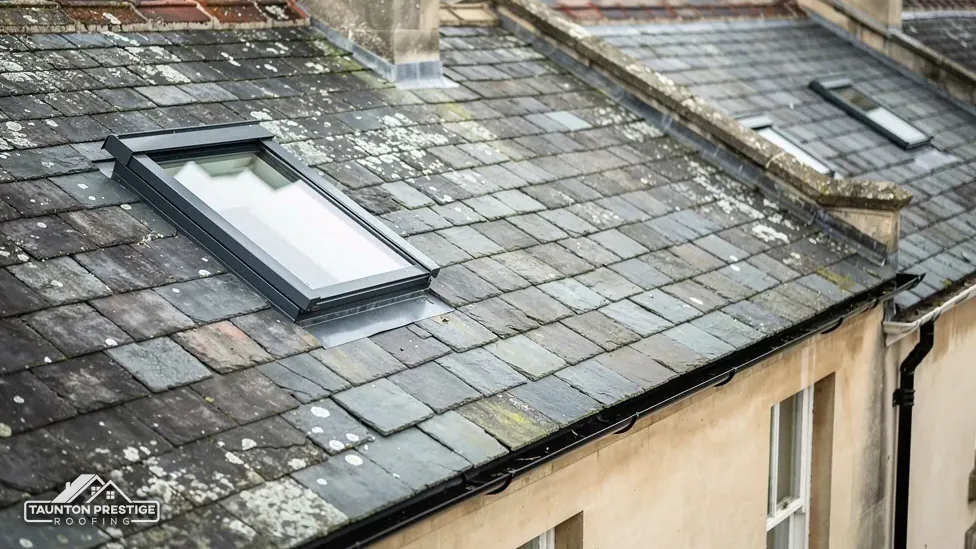
Approved Document L, the Building Regulations part on saving energy, asks for roof windows of 1.4 or Window Energy Rating Band B. Rooflights are held to 2.2, which is a different limit for a different product. Loft conversions are judged against a roof threshold of 0.35, and the roof is upgraded to 0.16 where that is feasible. We check the product before the order goes in, so a window bought on price alone does not fail on its figures. The same applies to the flashing kit that comes with it, which has to suit your covering, whether slate or tile. Our roof windows and skylights page covers the fitting.
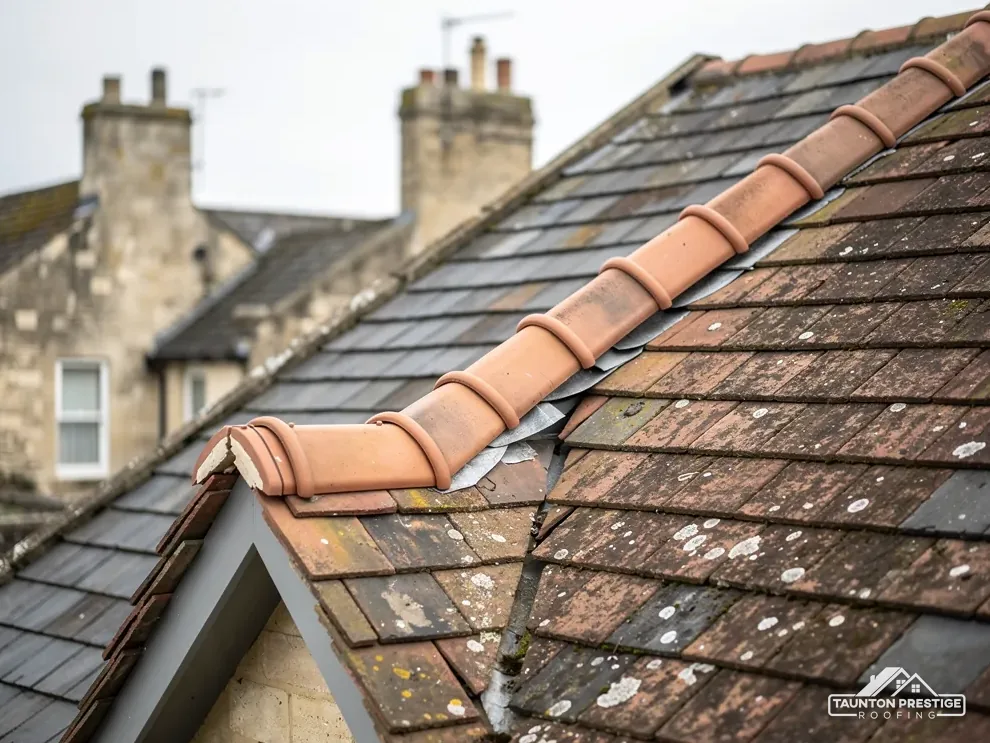
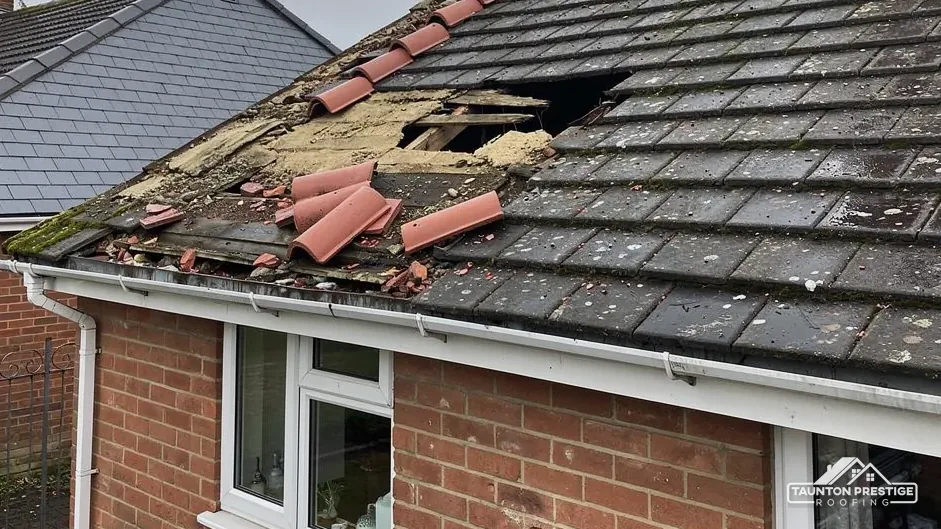
High wind on the Blackdown slopes can lift slates, shift a ridge or tear a lead flashing, and the first job afterwards is to stop the water coming in. A temporary repair, such as a tarpaulin fixed over the opening, does that without committing you to a long-term fix before the damage has been looked at. Making the roof safe comes first for us, and the permanent job waits for the survey.
What decides the price
Your insurer, before anything permanent is agreed. The Institution of Structural Engineers says photographs are vital for an insurance claim, so take pictures of the damage from the ground before any cover goes on, and keep every receipt for the temporary work. We add our own photos at the survey and send them to you.
The Financial Ombudsman Service describes a storm as violent winds, with rain, hail or snow, and its complaint route opens if an insurer has not sent a final response within eight weeks. After a final response you have six months to bring a complaint to the Ombudsman, whose service is free. The outcome of any claim rests with your insurer; our part is a set of clear photos and a plain description of what the survey found, which you can pass on.
The permanent repair is planned from what the survey finds under the temporary cover. Slates that look sound from below may sit on battens the wind has loosened, a ridge that moved may have cracked its mortar bed, and a lifted flashing can have let water into the wall head. We lift the cover, look at the full extent, and show you photos of each area so you can follow the reasoning.
When the roof is safe, send us your Angersleigh address and the date of the storm, and we will arrange a full survey and give you one written price for the permanent repair.
Walked the roof?
When you have read the checks, we walk the roof and show you the photos.
Not listed building consent, because St Michael's is a Church of England church in use and goes through the faculty system. The parish arranges the application and the roofer works to what is approved. Grade II* means the church is highly graded, so the specification matters and lead and stone should be matched.
The list entry reads Leigh Farmhouse With Range of Outbuildings Forming Courtyard On North Front, so the range is part of the listing, not a separate matter. Work that would change its character needs listed building consent, and a like-for-like repair is the simpler end. Somerset Council can confirm a particular building.
Not necessarily. The place point is outside it, but part of the area around the hamlet falls inside, so it varies by address. Check yours with Somerset Council's planning team before any change that alters how the roof looks, and ask us for the survey either way, since a repair needs the same careful look inside the line or outside it.
For roof windows, Approved Document L sets 1.4 or Window Energy Rating Band B. Rooflights, a different product, are held to 2.2. A loft conversion is judged against 0.35 for the roof and upgraded to 0.16 where feasible. We read the manufacturer's data sheet before ordering, so the window you pay for meets its figure.
Send your Angersleigh address and a short note on the problem, and we will suggest a survey date.