Bridge Farm's cruck hall
An early-14th-century four-bay hall roofed on tiered crucks, a frame that calls for a roofer who respects old timber.
A cruck hall, blue lias walls and a nave roof of 1844
Butleigh sits 5 km south-south-east of Glastonbury, with a conservation area and 30 listed buildings within 500 metres of its centre. We survey the roof first and price it afterwards.
An early-14th-century four-bay hall roofed on tiered crucks, a frame that calls for a roofer who respects old timber.
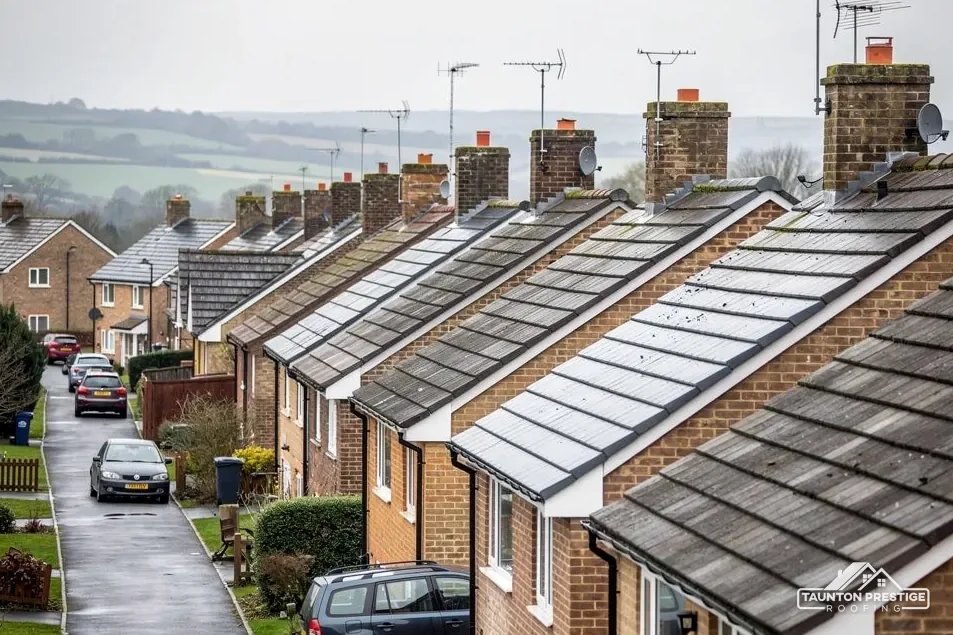
Listed Grade II*, with a new open nave roof built about 1844 and transepts added in 1850 and 1851.
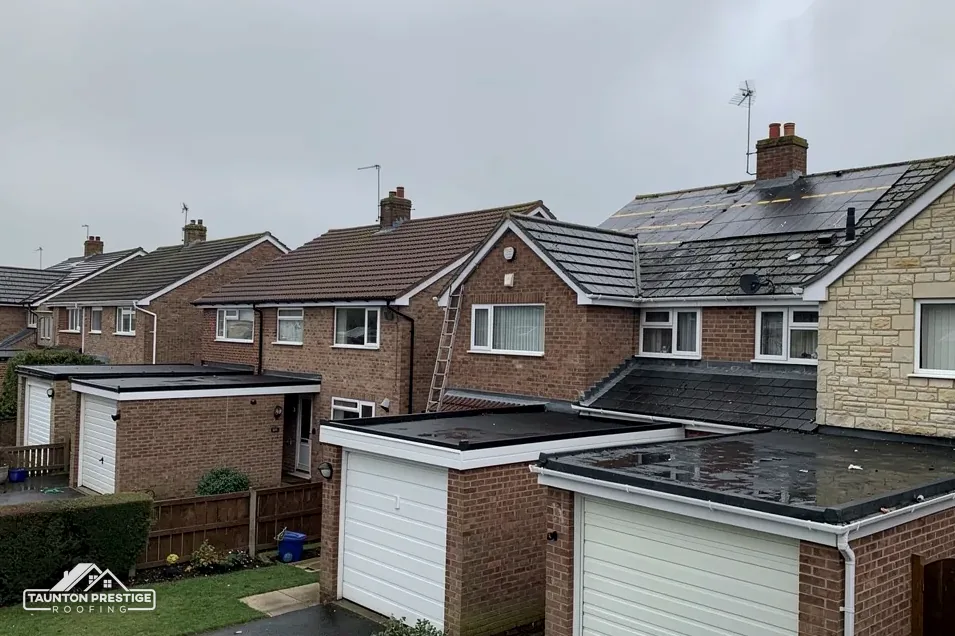
11 and 13 High Street are listed Grade II, in a village with a conservation area to check against.
Street map of Butleigh with Baltonsborough, Compton Dundon, Keinton Mandeville, Street marked around it, and Taunton.
Baltonsborough lies north-east of Butleigh and Compton Dundon west, with Keinton Mandeville to the south-east, Street to the north-west and Somerton to the south-west.
About 19 miles east of Taunton, Somerset Council (unitary).
Four checks on a blue lias lane
Four things to look at on an older Butleigh house, each tied to who must agree, how the work is done and what moves the price.
Butleigh has a conservation area, listed houses on High Street and a Grade II* parish church, and each calls for a different kind of permission. St Leonard's is an Anglican church in regular use, so a faculty, not the council, governs work on its roof. The houses are the council's business. The first thing we do on any Butleigh survey is sort your address into one of those boxes, and nothing is ordered until that sorting is done.
Butleigh has a conservation area, and its boundary, not the age of a house, decides whether the extra care applies. A call to Somerset Council's planning team settles whether your address falls within it. Inside the boundary, the look of a roof is protected as well as its soundness, which makes matching the existing covering part of the job.
11 and 13 High Street are listed Grade II. Listed status leaves the usual permitted development rights in place on a house, yet any work that affects its character also needs listed building consent from the council. Swapping one cracked tile for a match is repair. A rebuilt stack, an added roof window or a change of covering is not, and our guide to listed building roof consent walks through the application.
Because every consent decision starts from what is on the roof today. We take close photographs of each slope, each junction and each chimney, and we note original pieces, patches and later replacements separately. If an application is needed, those photographs are the record that supports it, and if one is not needed, they are the record of what we agreed with you before any scaffold went up.
Look for
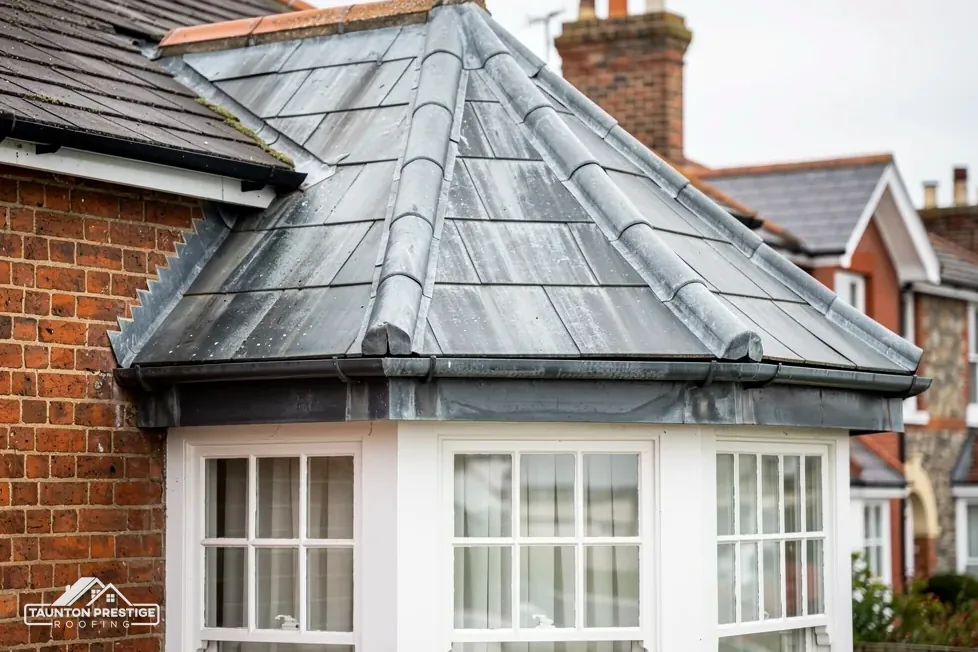
Bridge Farm has an early-14th-century hall with a roof of tiered crucks, and the parish church had a new open nave roof built about 1844. Most houses in the village are younger and plainer than either, but the lesson carries: the timber under a covering is as much a part of the job as the covering itself. A slate or tile roof is only as flat as the rafters beneath it. When a slope dips, the cause is often a tired timber, a rotted wall plate or a purlin that has been carrying too much for decades.
What decides the price
Sometimes. If the fault is a few battens, the thin timber strips the covering hangs from, they can be renewed as the slope is stripped. If the rafters themselves have sagged, the answer is a structural repair first, and a carpenter or engineer may need to look. You hear that at the survey, with photographs from the loft, and the roof is priced as it is found.
It can. The Planning Portal says a new covering that adds 15 per cent or more to the weight needs Building Regulations approval, and advises a structural check before work starts. Butleigh's brick and tile yard opened between 1847 and 1851 and first made field-drainage tiles, so the village's own history tells you little about which covering your roof carries. The roof does, and we identify it from close photographs before choosing a replacement.
An underlay, the sheet laid under the battens as a second line of defence, is worth renewing whenever a slope is stripped. It is cheap to fit then and expensive to reach later. If the loft shows daylight round a chimney or along the ridge, photograph that too, because that points us to the first place to inspect.
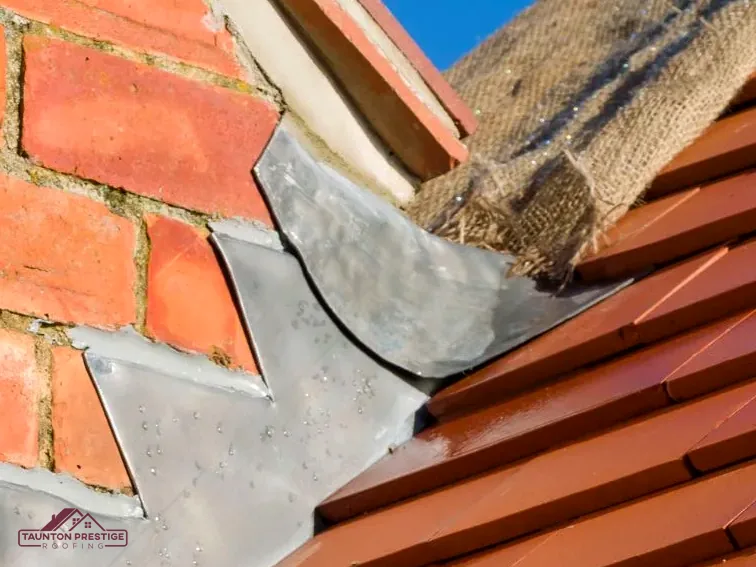
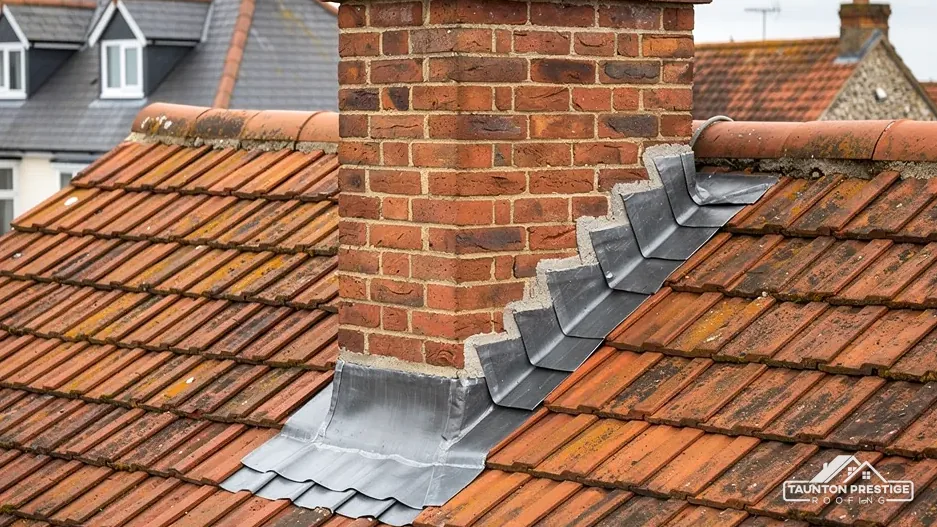
Blue lias was quarried near Quarry Lane, south-west of the village, from the late 18th century. Stone like that soaks up rain and gives it back slowly, so the places where a roof meets a wall are where Butleigh houses get damp. A flashing is lead let into the wall and folded down across the covering so rain cannot get behind it. A soaker is a small lead sheet that sits under each course of slates or tiles beside a wall or chimney and does the same job. Both are lead, and lead is sold by code, a number from 3 to 8 that stands for thickness: 4 is 1.80mm, 5 is 2.24mm and 6 is 2.65mm.
Sound or needs work
A stain beside a gable wall or below a stack usually means the lead has lifted, split or been bridged by old mortar that has let go. Re-pointing the joint alone buys little if the lead behind it has failed. We open the junction, look, and tell you which of the three faults it is before you decide.
Lead flashing can last for over 80 years, so a failure is usually a lifted edge or a joint that has opened up, not worn-out metal. That is why a lead repair can be small. Our lead work page shows the usual fixes, and our dry ridge and verge page covers the roof edge details that sit beside these walls.
Stone walls bring a second habit with them. Where a roof runs up against a wall of random stone, the joint is rarely straight, so the lead has to be cut and dressed to follow it, and a length made for a straight line will not sit. That is why we measure each junction on the day and cut the lead to suit, instead of ordering stock lengths from a list. A flashing that follows the stone closely also looks right from the lane, which counts for something in a conservation area.
Where scaffold must stand on the road or pavement, section 169 of the Highways Act 1980 says the highway authority must grant a licence first. Somerset Council, the authority for Butleigh, hands licences only to accredited contractors, which means the contractor appointed on your job does the applying. It costs £124.60 for each 28-day period (April 2026), and the council wants at least 10 working days' notice. In a lane with a narrow carriageway that matters, because there may be no room to set the scaffold anywhere else. A scaffold inside your own boundary needs no licence. Tell us about parking and gate width as well, since a delivery of battens and tiles has to reach the house.
What decides the price
Where it is needed, Somerset Building Control, on 0300 303 7790. It covers the former Mendip area, which includes Butleigh. The Planning Portal's test for a re-roof is under 25 per cent of the building envelope and under 50 per cent of the roof; go beyond either and you should speak to building control first.
Gaps under old tiles and in stone gables suit both. The Wildlife and Countryside Act 1981 protects an occupied nest from intentional damage, and GOV.UK lists roof repair and replacement among the work that can disturb bats, which are protected by law along with their roosts. We look for droppings and nest material before the first tile is lifted.
The survey gives you photographs of the roof and then one total price in writing, with scaffold and VAT stated in or out. To book it, send your Butleigh address, mention whether the house is listed, and say whether there is room on the lane for a scaffold.
Walked the roof?
When you have read the checks, we walk the roof and show you the photos.
Sometimes. If battens are the cause, they can be renewed slope by slope. If rafters or a wall plate have moved, a structural repair comes first, and a carpenter or engineer may be needed. We photograph the roof from the loft at the survey and tell you which case you have before anything is priced.
St Leonard's is listed Grade II* and is an Anglican parish church still holding services, so repairs need a faculty, the Church's own permission, rather than listed building consent from the council. The parish arranges it. About 1844 the church had a new open nave roof built, and the transepts followed in 1850 and 1851.
Not always. Lead flashing can last for over 80 years, so a leak usually traces to a lifted edge or a gapped joint, not failed metal. We open the junction, photograph it and refix or replace only what has failed. A listed stack may need consent if the work goes beyond like-for-like repair.
Any house in the conservation area where the covering, roof windows or ridge will look different afterwards, and any listed building where the work affects its character. Matching what was there is the easier route in every case. Not sure which side of the boundary you live on? The planning team can settle it.
Send your Butleigh address with a line about the fault, and say whether the house is listed.