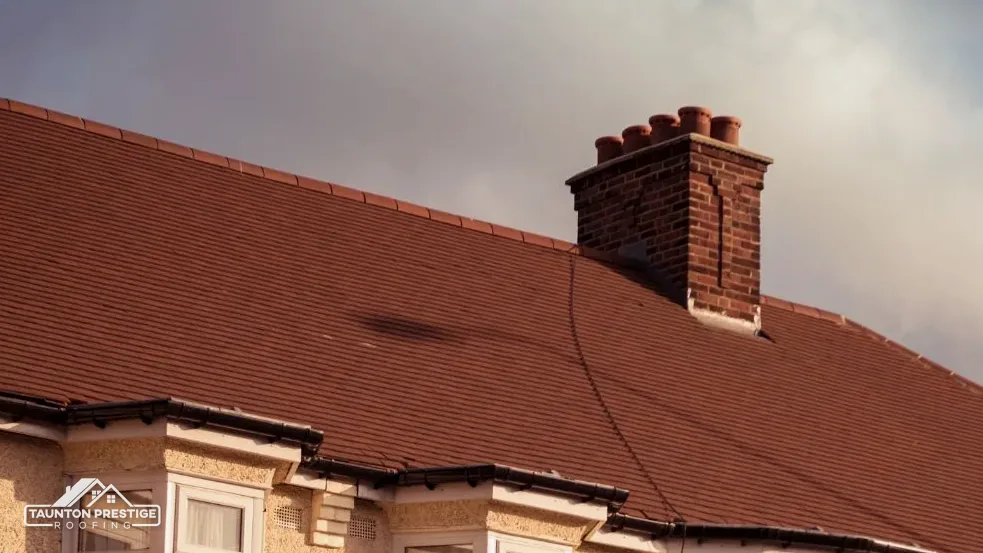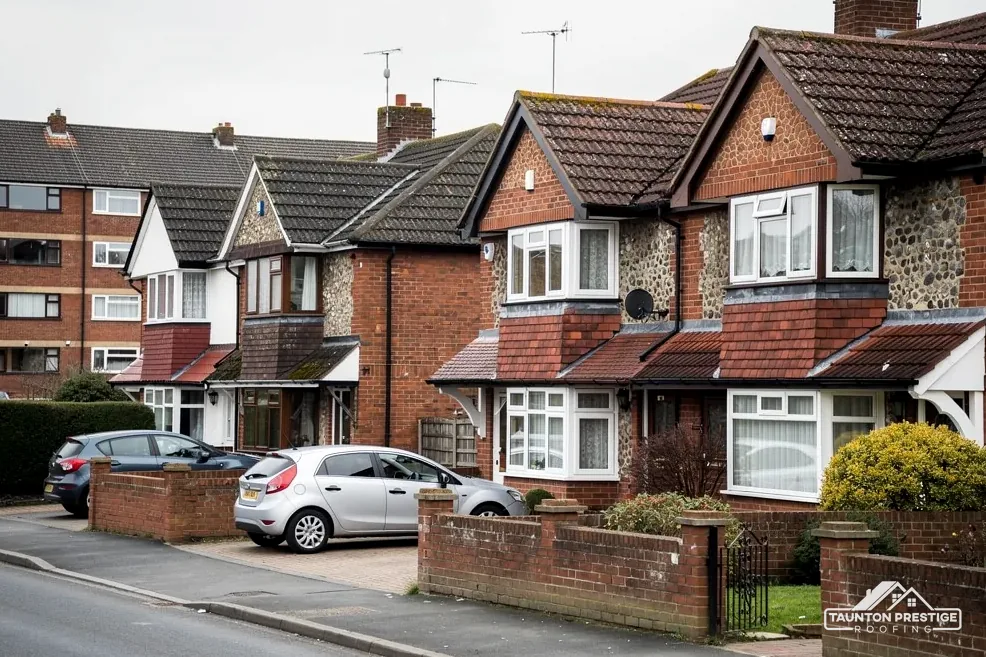
Clark family cottage rows
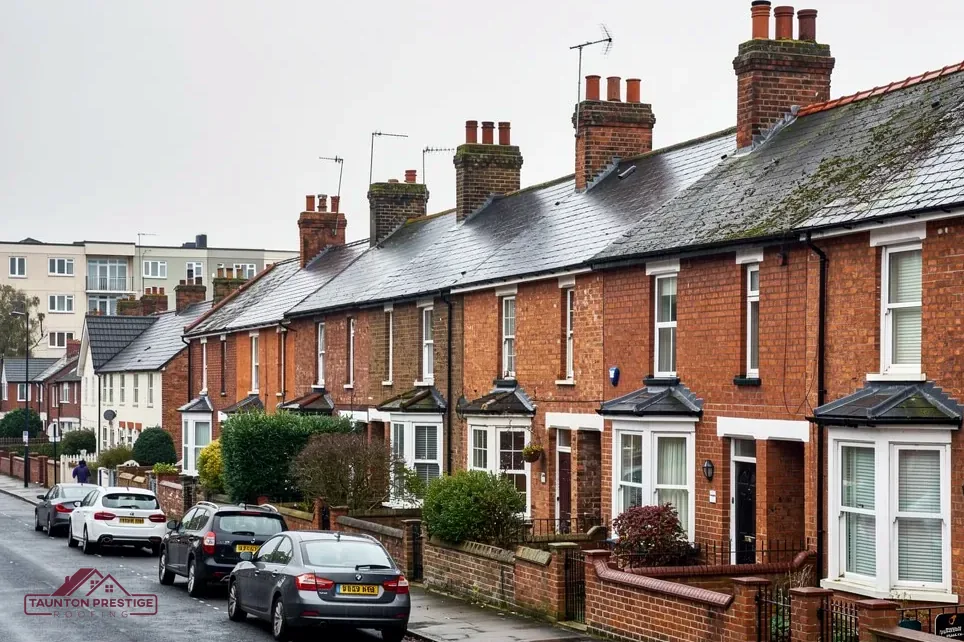
Off High Street, long rows of two-storeyed lias cottages with clay-tiled roofs, including Cranhill and Orchard roads.
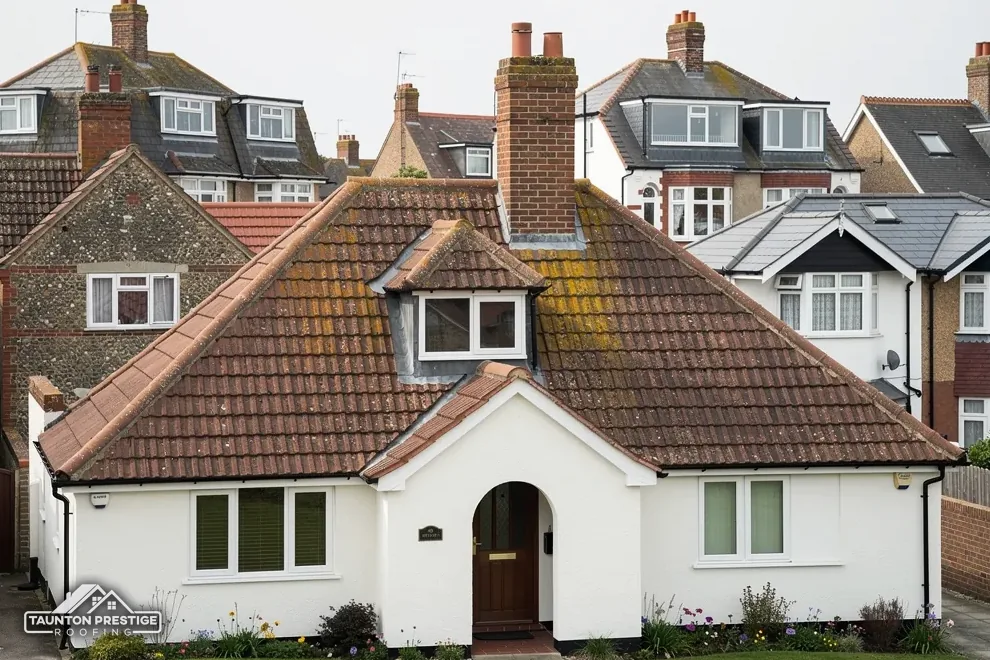
Clay-tiled Clark cottages, lias houses and interwar brick streets
Street's Clark family housing, its conservation area and its listed terraces make almost every roof job here a matching exercise.
Off High Street, long rows of two-storeyed lias cottages with clay-tiled roofs, including Cranhill and Orchard roads.
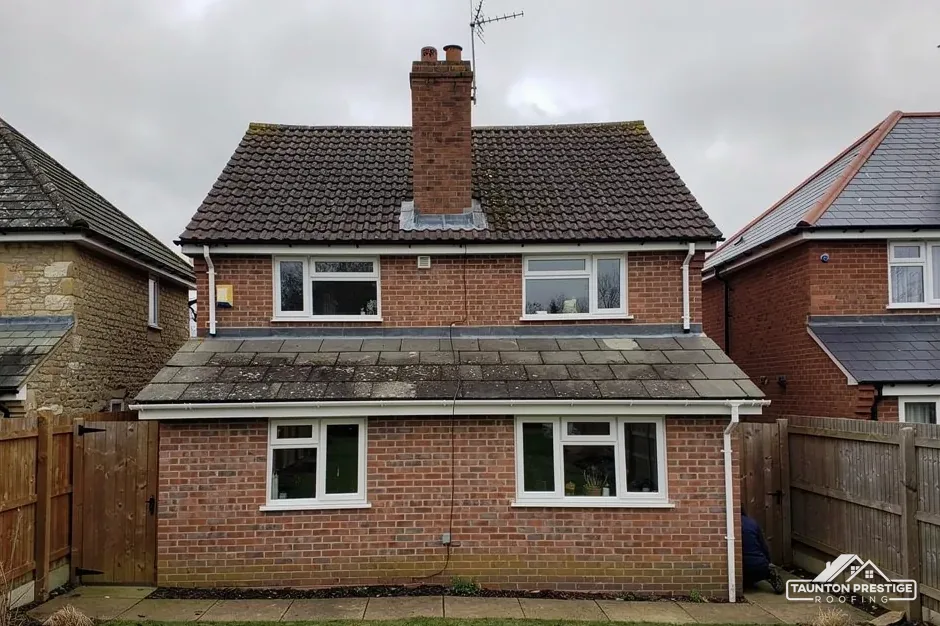
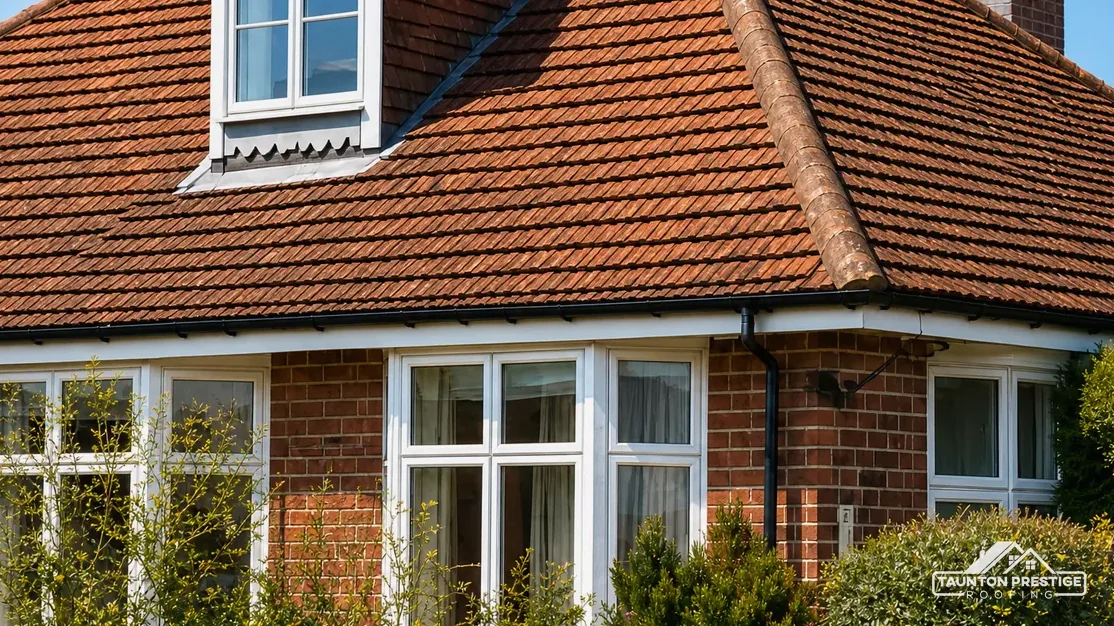
The most substantial late 18th and early 19th century houses had two storeys, three bays and clay pantiles.
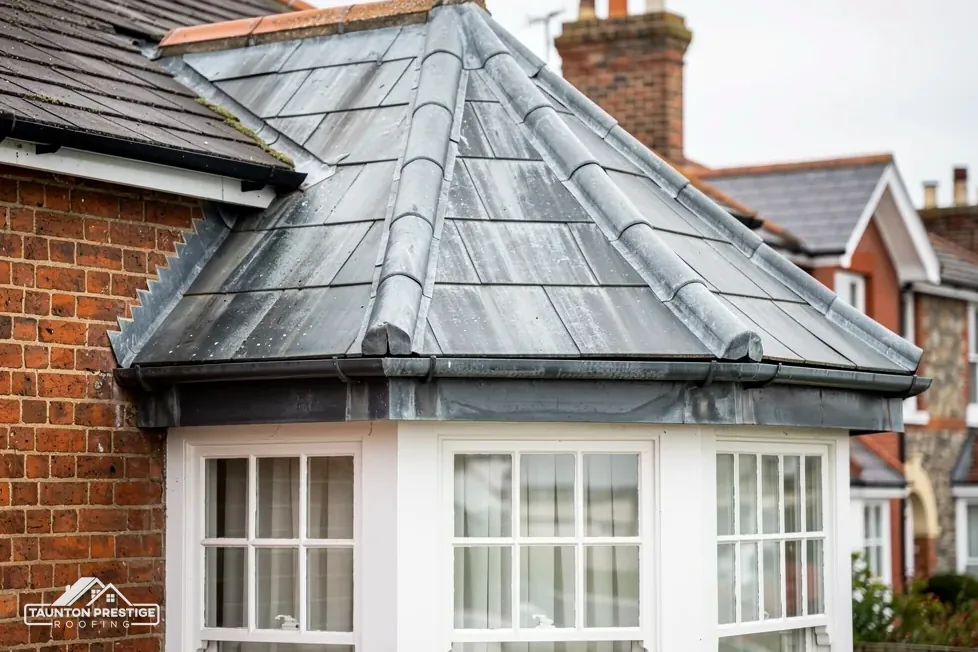
From 1920 the urban district council laid out brick and rendered houses between High Street and Middle Leigh.
Street map of Street with Walton, Glastonbury, Compton Dundon, Ashcott marked around it, and Taunton.
Walton lies west of Street and Glastonbury to the north-east, with Ashcott further west, Compton Dundon to the south, Butleigh to the south-east and Meare to the north-west.
About 18 miles north-east of Taunton, Somerset Council (unitary).
Roof checks in a shoemaking town
Four checks for roofs here, covering clay pantiles, terrace rows, the planning map and the interwar streets, and what each changes about the work.
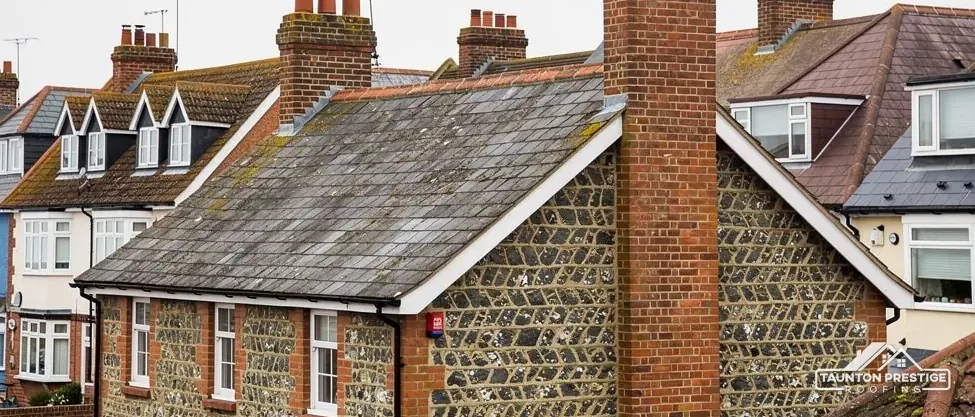
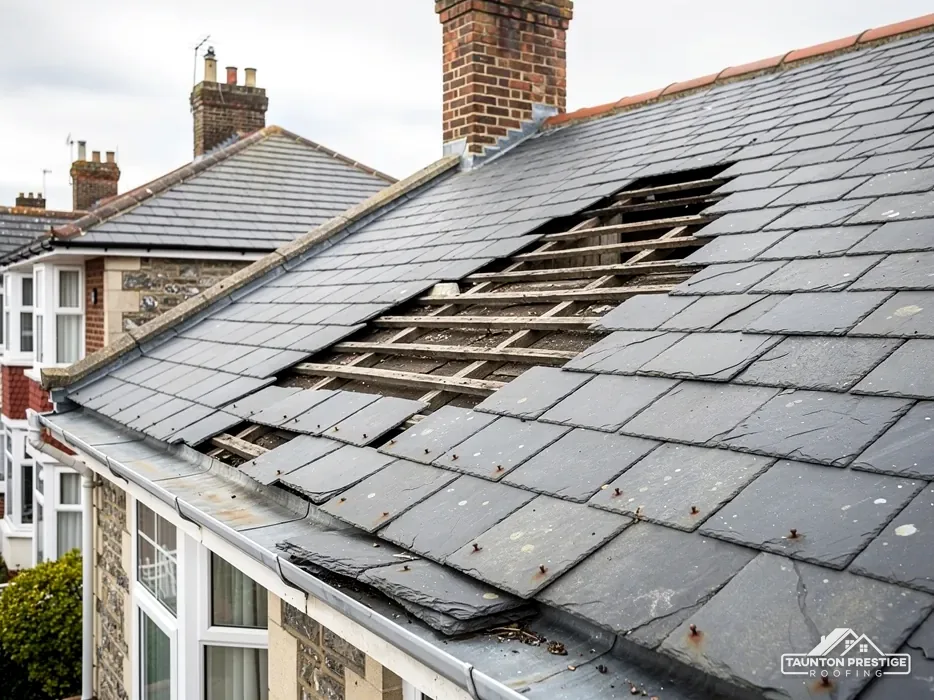
The Victoria County History describes two kinds of clay roof in Street. The most substantial late 18th and early 19th century houses were two-storeyed, three bays wide, of coursed lias blocks and covered in clay pantiles. The Clark family's housing off High Street, including Cranhill and Orchard roads, is described as long rows of plain two-storeyed cottages of coursed lias with clay-tiled roofs. A pantile is a clay tile that curves in a wave; a plain tile lies flat and overlaps its neighbours in courses.
What decides the price
Looks, first. A clay roof has a colour and a slight unevenness that concrete tiles do not copy. Then weight: concrete is heavier, and a new covering that adds 15 per cent or more in weight needs a structural check and Building Regulations approval. Then life: the BRE puts a minimum life of 60 years on clay tiles, a figure Marley applies to clay only, and a conservation article on old peg tile calls the 60-year figure an unreliable guide for them. We judge your roof by its own condition, tile by tile, and not by a table.
Usually. Tiles are lifted, the cracked ones replaced with a close match, and the rest refixed. Salvaged tiles from a stripped slope are valuable for this, since a matching clay tile is hard to buy new, and a mismatch in a terrace row shows from the pavement. We keep sound ones aside and lay them on the front slope, with newer pieces set at the back, out of sight. If the tiles are flaking across the whole slope, repair is a short-term answer and we tell you so. Our pitched roofing page sets out the choices.
A row of cottages shares more than a wall. It shares a ridge line, a run of gutter, sometimes a chimney stack serving two houses, and the verge, which is how the roof edge finishes at each end of the terrace. The result is that a fault in one roof is rarely contained to it. Water that gets in at a failed stack flows along the timbers into a neighbour's loft.
On a terraced row, one neighbour's loose verge is soon everybody's wet ceiling.
Both owners rely on it. Taking a chimney off a party wall falls under the Party Wall etc. Act 1996, with the notice due on the neighbour at least two months in advance, and GOV.UK adds that you cannot assume silence means agreement. A party wall surveyor handles disputes, not building control. Repair work such as flaunching, pointing and flashing is lighter, but we still tell the neighbour when ladders and scaffold go up.
The verge takes the worst of the wind. Old verges are bedded in mortar, which cracks and falls. A dry-fix verge system holds the end tiles with clips and screws, and BS 8612 is the test specification for these. Whether it suits depends on the look of the row, and on whether the terrace sits in a conservation area. Our chimney repairs page covers the stacks.
At the survey we photograph the whole terrace roofline from the road, so you can see where your section ends and the next begins. If a neighbour wants work done at the same time, one scaffold can serve two roofs, which saves both households a licence fee and a fortnight of poles outside the window. Neighbours who plan together also tend to agree on one tidy start day.
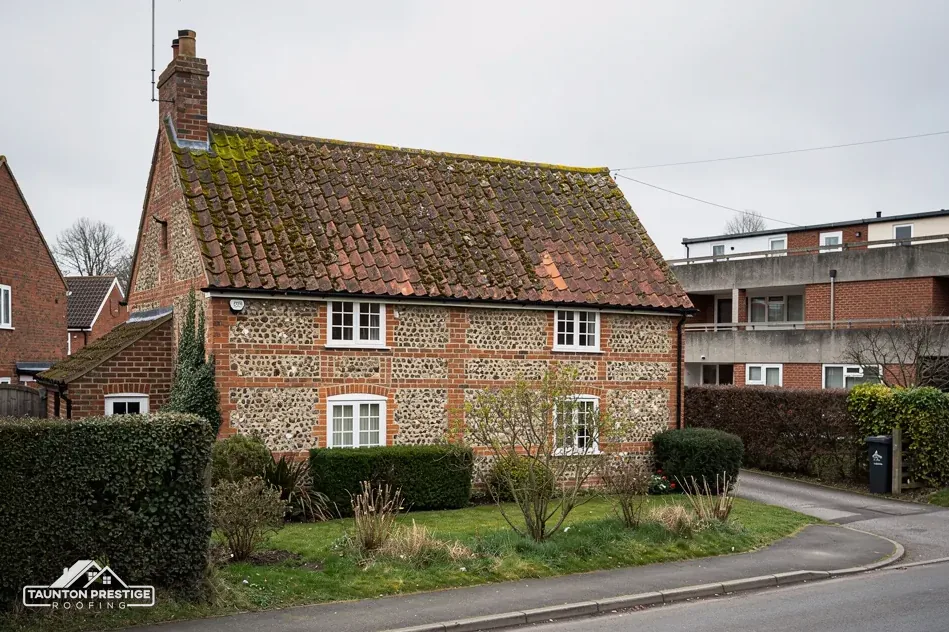
Street's conservation area lies within about 0.75 km of the town centre. The National Heritage List includes 14, 18, 22 and 24 Somerton Road, 148 High Street and 25 to 29 Farm Road, all Grade II. In a town with that many protected buildings and a defined boundary, finding out which category your house is in comes before choosing a covering.
Look for
Somerset Council holds the boundary map, so the council's planners can confirm whether your house is inside it. Inside the boundary, the less a repair changes the look of the roof, the fewer questions it raises. Switching material, fitting a roof window to the front slope or building a dormer raises more, and those are questions for the council's planners at the outset. Our planning permission for roof work guide explains the lines.
Listed building consent applies to work that affects what makes the house special, on top of any planning question. A listed terrace like Somerton Road also raises the question of matching: neighbouring roofs are judged together, so a new covering on one has to sit comfortably beside the others. We record the covering, ridge and chimneys as they stand today, so any application starts from facts. Where a listed terrace has lost an original feature, such as a ridge style or a chimney pot, the photographs can help show what the roof once looked like and what a sympathetic repair should aim to restore.
An unlisted house outside the boundary has a freer hand, but a roof that matches its neighbours still looks better, and the survey notes what the adjoining roofs are covered with so you can judge the match yourself.
From 1920 Street urban district council laid out streets of red brick and rendered houses between High Street and Middle Leigh, extending them in the following decade as far as Overleigh. What each of these houses carries overhead varies from street to street and from one re-roof to the next, which is exactly why the survey comes first and why we name the covering on your own roof before talking about repairs. Houses of this age were built long before today's insulation standards, so the loft is worth a look whenever the roof is open. We check the depth of insulation, whether it blocks the eaves, and where the bathroom and kitchen extracts end up, since a duct that finishes in the loft feeds moisture straight onto the timbers.
What decides the price
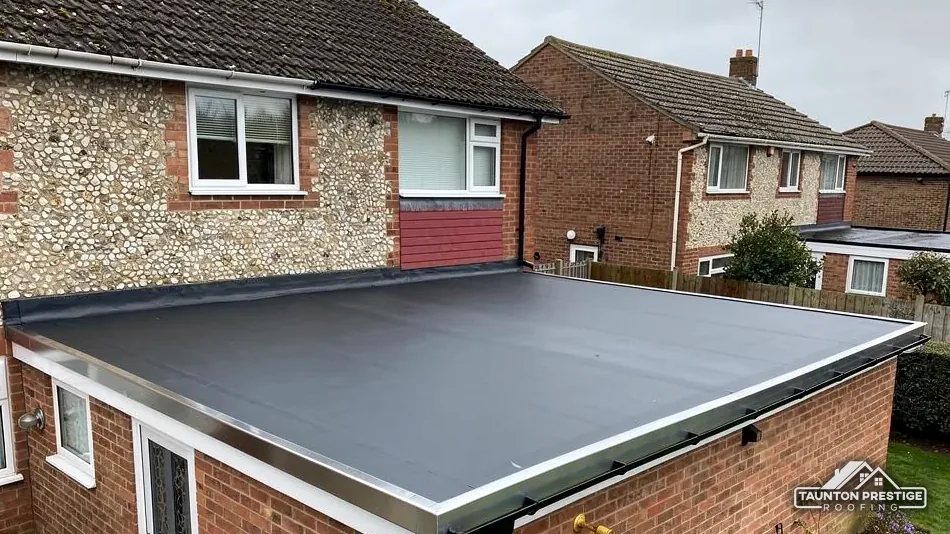
For AD L, a fresh membrane on a flat roof is renovation, and a loft that becomes a room falls under the same rules. For existing elements, Table 4.3 sets a threshold U-value of 0.35 and an improved value of 0.16 W/(m²K). If that is not feasible, or the saving would take longer than 15 years to repay, the best feasible standard is used instead. Until 24 March 2027 the 2021 edition applies; the 2026 edition takes over then. A roof window takes the window figure, 1.4 or Window Energy Rating Band B.
A house set back behind a garden can take the frame on its own land, and then no licence is needed. Where it must stand on the footway, section 169 of the Highways Act 1980 calls for a licence, and Somerset Council works only through accredited contractors, so the firm on your job applies. Allow 10 working days at the least, at £124.60 for each 28-day period (April 2026).
You finish the survey holding pictures of every slope and a single written figure for the job. Tell us your Street address and we will agree a date that suits you.
Walked the roof?
When you have read the checks, we walk the roof and show you the photos.
It is possible on an unlisted house outside the conservation area, but it changes the look of the row and adds weight. A covering 15 per cent or more heavier needs Building Regulations approval and a structural check. In the conservation area or on a listed house, check with Somerset Council's planning team first. We usually advise keeping clay where it sits beside neighbours.
If a seam has split on a sound deck, a patch is reasonable. Water that sits for days, or a spongy deck, means replacement. Less gives GRP 25 to 40 years and torch-on felt 10 to 20, and gives EPDM 30 to 50 years where GreenSpec says 20 to 30. BS 6229:2025 sets a minimum finished fall of 1:80.
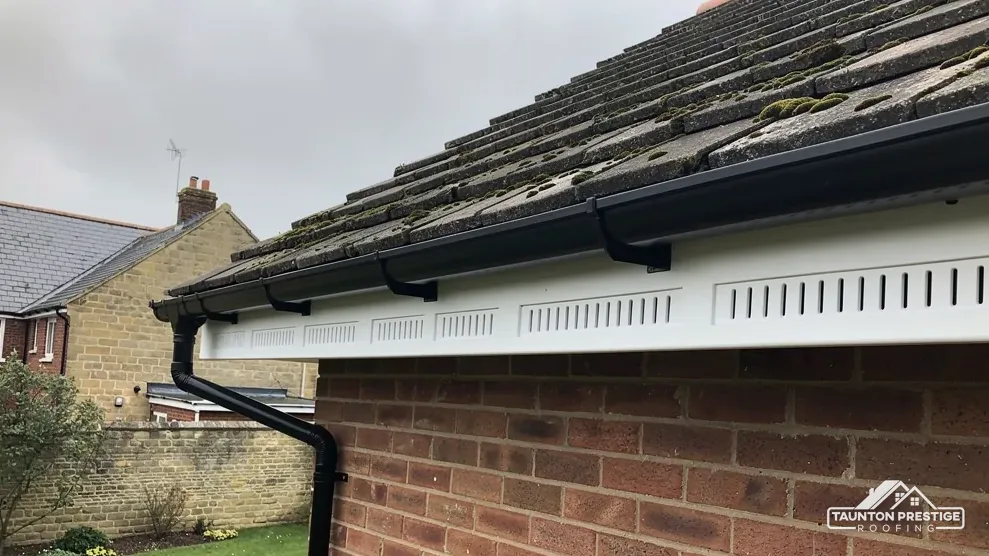
A blocked outlet, an opened joint or a lost fall. Brett Martin advises 1mm of fall for every 600mm of gutter, so one slipped bracket leaves water standing. The overflow then soaks the fascia behind. We trace the cause, replace what has failed and check the fascia timber, so the new gutter is not fixed to a rotten board.
The price depends on the length of lead, the stack and the access, and it is fixed in the written quote after the survey. Lead flashing can last for over 80 years, says MyJobQuote, and that is a lower bound. Lead sheet comes in codes, and Royston Lead shows code 4 or 5 for flashings, so the specification names the code.
Tell us your Street address and which kind of roof you have: cottage row, listed house or interwar semi.