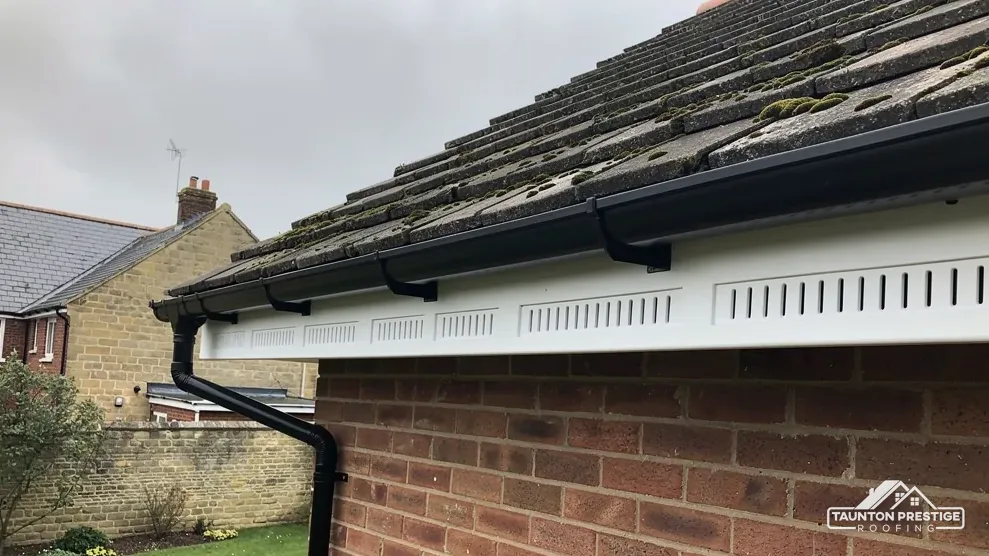
St Andrew's church roof
Clay tiles replaced stone slates on the nave in 1804; the chancel tiles became slates in the 1970s.
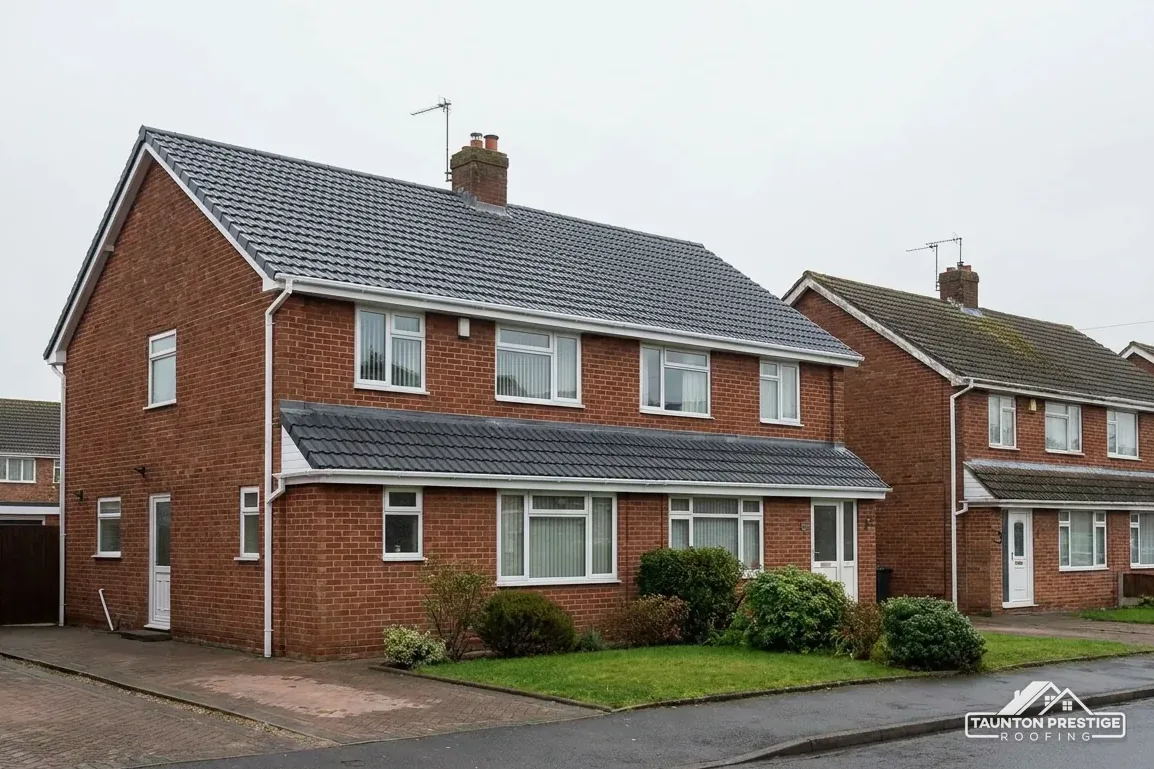
Lias walls, St Andrew's clay tiles and a Grade II tithe barn
Compton Dundon is two villages at the eastern end of King's Sedgemoor, below the Dundon and Lollover hills. Our survey comes before any price, and the photographs come with it.
Clay tiles replaced stone slates on the nave in 1804; the chancel tiles became slates in the 1970s.
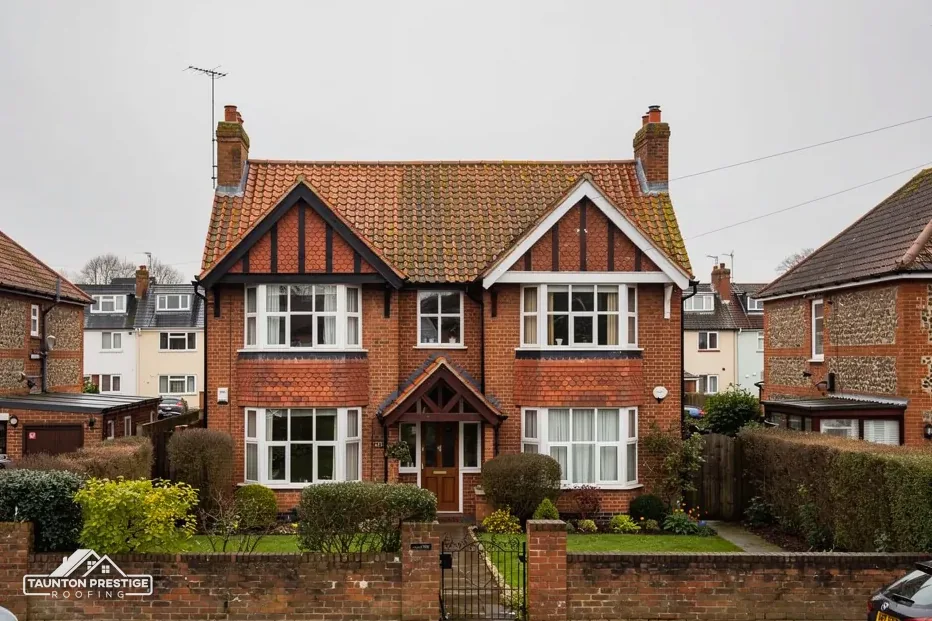
Listed Grade II on 17 April 1959, which puts any new covering under listed building consent.
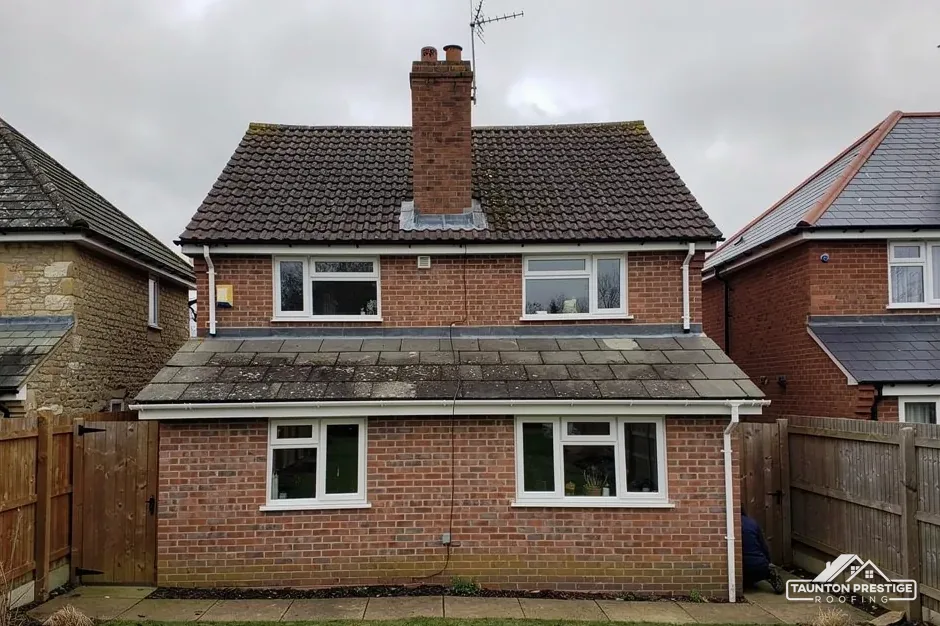
Several cottages date from the late 15th century, and two keep evidence of open halls with jointed-cruck roofs.
Street map of Compton Dundon with Butleigh, Street, Somerton, Walton marked around it, and Taunton.
Street and Glastonbury lie north of Compton Dundon, Walton north-west, Baltonsborough north-east, Butleigh and Keinton Mandeville to the east, and Somerton to the south.
About 17 miles east of Taunton, Somerset Council (unitary).
Four checks below Dundon Hill
Two villages, one old quarry hill and several centuries of re-roofing: four things worth knowing before a roofer climbs a ladder.
Seven entries within 500 metres of the Compton Dundon centre appear on the National Heritage List. They include the Former Tithe Barn at Castlebrook Farm, listed Grade II on 17 April 1959, together with The Old Farmhouse and The Old Tavern, both Grade II. A barn that large has a very large roof, and a roof of that size is a big part of the building's character. Before we say anything about slates or tiles, we find out whether your address is listed, since the answer changes who must be consulted.
Matching repairs on a listed building raise the fewest objections, though any change to its look or its materials calls for listed building consent from Somerset Council. That applies to a change of covering, a new rooflight in a barn slope, or a different ridge. A barn converted to a home keeps its listing, so conversion does not remove the need for consent. Barn conversions also tend to have large, steep roofs that need careful access, and scaffold can be a larger part of the cost than owners expect. The owner applies, and our survey photographs make the case easier to read. Our page on planning permission for roof work covers the broader rules.
Street, within about 2.5 km, has the closest conservation area to Compton Dundon. Whether a given address falls inside any boundary is for Somerset Council's planning team to say. Ask before you order materials, not after, since a designation limits what can be added to a roof without an application.
For a church, the denomination decides the route. Anglican churches in worship use go to the faculty system, and other faiths and closed buildings follow different routes, so the parish tells us which one applies before we plan anything.
Look for
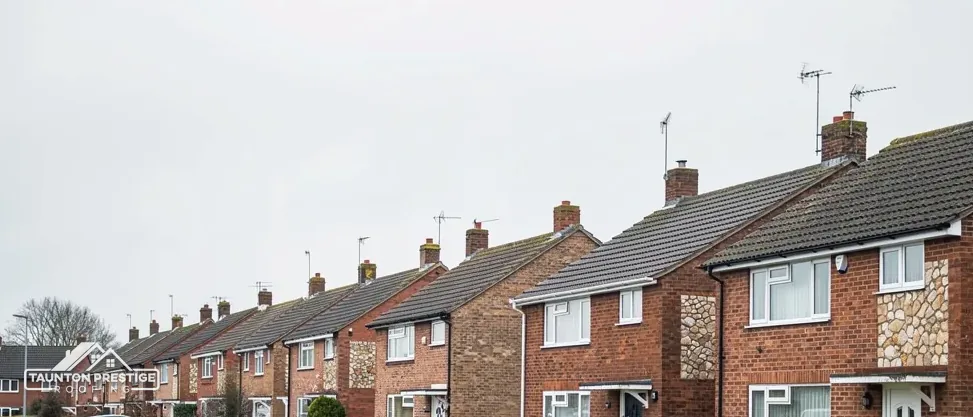
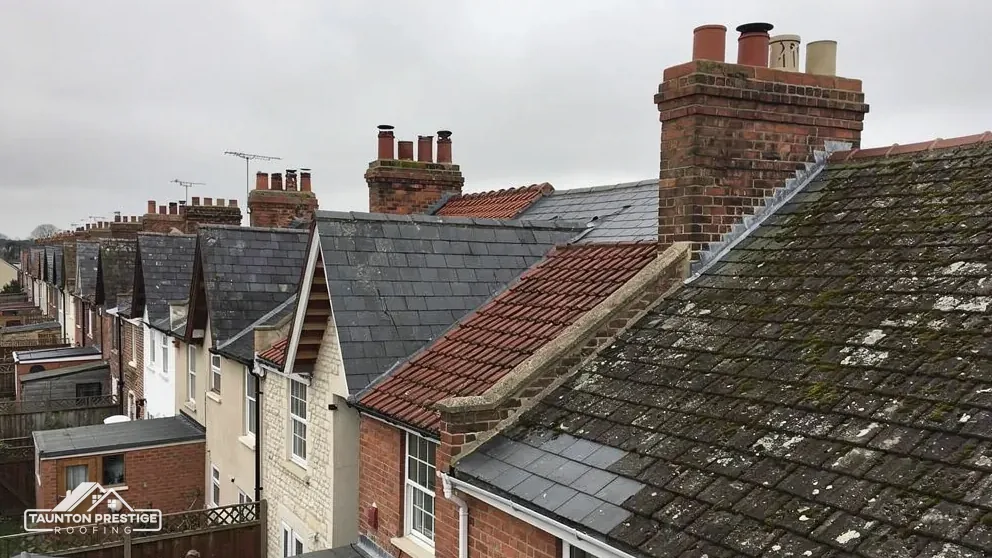
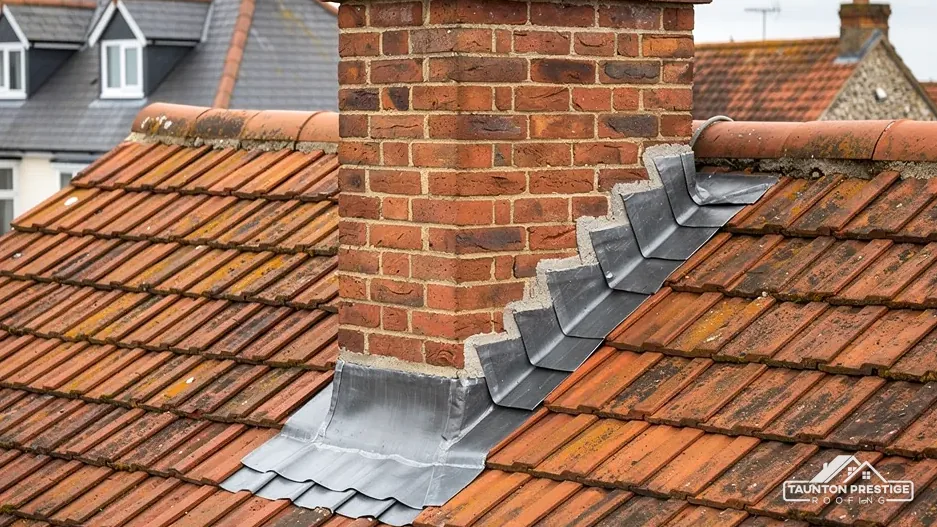
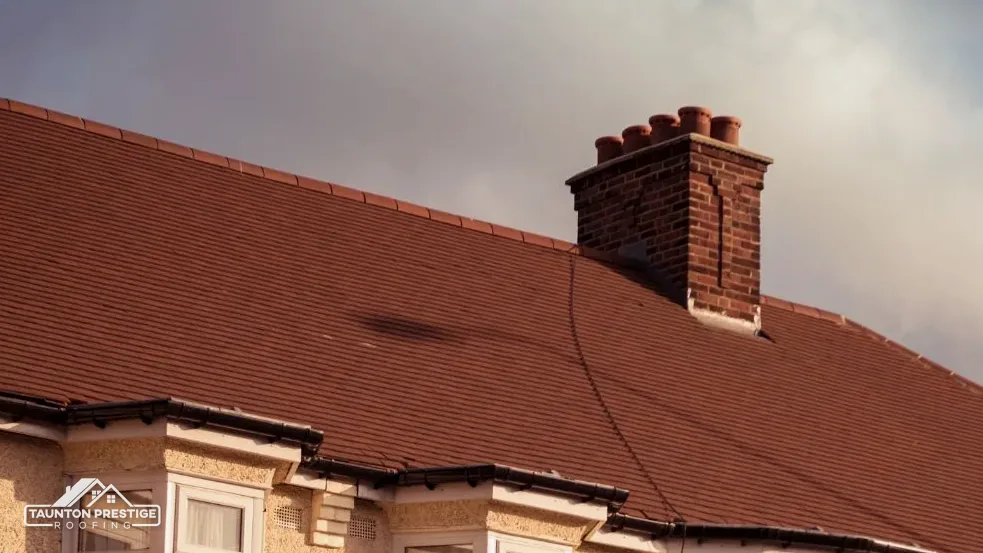
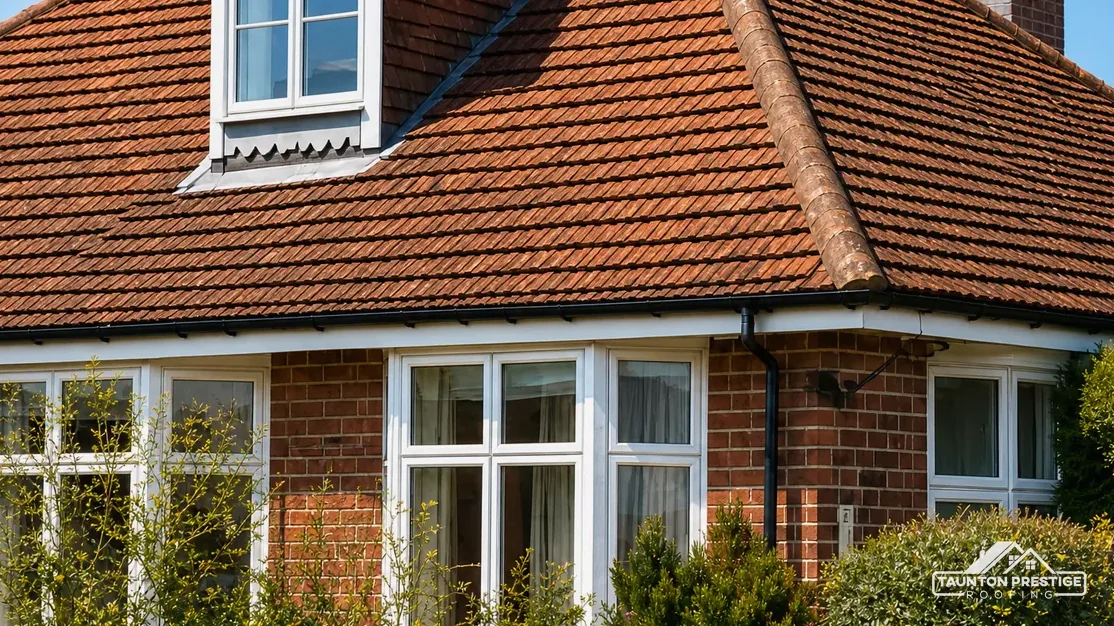
St Andrew's church keeps a record of its own re-roofing. Its nave is covered in clay tiles, with an eaves course of stone slates on the north side that seems to be what remains of a stone-slated roof replaced by clay tiles in 1804. The chancel tiles were later replaced by slates, in the 1970s. Stone quarries on Dundon Hill produced tiles and stone for sale in 1494 and 1535, so roofing material is part of the village's history. One building can carry three coverings in two hundred years.
What decides the price
Match the roof that is there, tile for tile where we can, and ask yourself whether the supply of reclaimed pieces will last for the whole slope. Clay tile has a minimum life expectancy of 60 years according to BRE, a figure Marley applies to clay only, and an old hand-made peg tile can fall well either side of it. Concrete tile is put at around 60 years by Marley, with a note that the figure is no guarantee or warranty. Neither number is a promise for your roof; both are starting points for the survey. A survey checks fixings and battens first and age second, because a young roof with poor fixings fails sooner than an old one with good ones.
Each product has a lowest pitch below which it will not keep water out. Marley lists 30 degrees for its Hawkins clay tile and 15 for the Lincoln pantile, and gives 22.5 degrees for a concrete Double Roman, which is a large interlocking tile with two rolls and a flat. The data sheet is the authority, so we measure your pitch and read the sheet before choosing. Our pitched roofing page lists the repairs.
Sound or needs work
The Victoria County History records houses in Compton and Dundon built before 1616 from lias with thatch. Several cottages date from the late fifteenth century, and two keep evidence of open halls with jointed-cruck roofs. Roofs like that are made of big old timbers with generous voids, which suits owls, swallows, house martins and bats as well as people. Add barns, outbuildings and a church, and the village is full of the sort of space wildlife likes. Swallows and house martins return to the same eaves year after year, so a nest you see in summer is a clue for the next survey.
Roofs that shelter wildlife are often better repaired than stripped.
Work can go ahead around a nest, but not on it. Under section 1 of the Wildlife and Countryside Act 1981, a person who intentionally damages, destroys or takes an active nest, or one still under construction, commits an offence. Roof work is not a purpose for which a licence is available, says GOV.UK, so the answer is to wait or to work on another part of the roof. We check at the survey and plan the programme around any active nest.
Disturbing a bat in its roost, or blocking its way in, is an offence under section 9(4) if done intentionally or recklessly. Harming a breeding site or resting place falls under regulation 43 of the Habitats Regulations. GOV.UK names roof repair and roof replacement as work that can affect bats. If we find signs, work stops and you are told how to get advice.
Ventilation matters in old roofs, and a dry timber is a long-lived timber. A roof that is closed up without airflow can start to rot from the inside. For a cold roof with a non-breathable underlay, Marley gives eaves ventilation of 25 mm for pitches of 15 degrees or less and 10 mm for steeper ones.
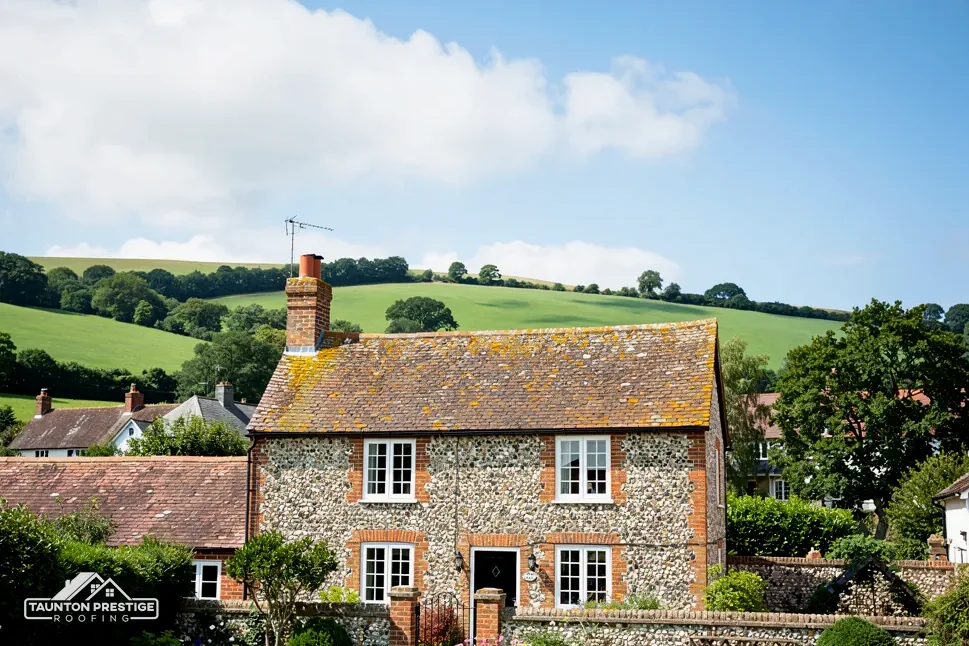
King's Sedgemoor lies on the Somerset Levels, which GOV.UK counts among the lowest ground in the country, with 18 per cent of Somerset below average tide level. Records of flooding there go back to the 1600s. All of that concerns the land and not any single roof. The long-term flood risk service on GOV.UK answers for a single address. A roof's own task is to shed its rain, and that is done by sound gutters and downpipes. Our gutters, soffits and fascias page lists the repairs.
On a lias wall, a gutter that spills soaks the stone and its pointing at the same spot every storm. We check the brackets, the fall towards each outlet and whether the downpipe shoe sends water clear of the wall. Brett Martin's fitting guidance is a fall of 1mm for every 600mm of gutter, which one dropped bracket is enough to undo.
Section 169 of the Highways Act 1980 requires a licence for scaffold that stands on a public lane or verge, and in Somerset the highway authority is Somerset Council. Somerset Council licenses scaffold for accredited contractors only, so whoever is appointed to the job lodges the request. £124.60 covers each 28-day period (April 2026), and the council wants 10 working days' warning. A farmyard or private drive keeps scaffold off the highway altogether.
By the Planning Portal's yardstick, a job on under 25 per cent of the building envelope and under 50 per cent of the roof is normally exempt from an application. A covering heavier by 15 per cent or more brings Building Regulations approval and a structural check, so we work out early how heavy the new covering will be. Somerset Building Control is on 0300 303 7790.
First come the photographs of the roof, then one written price covering everything. Pass on your Compton Dundon address and what is going wrong, and a survey slot is found.
What decides the price
Walked the roof?
When you have read the checks, we walk the roof and show you the photos.
Often yes, if enough sound tiles survive. We lift the slope, sort the good tiles from the cracked ones, refix on sound battens and make up the shortfall from reclaimed stock that matches. This keeps the look of the roof. On a listed building, check with Somerset Council whether the work needs listed building consent.
Its Grade II listing means changes touching its historic character need listed building consent from Somerset Council. Repairs in matching material are the easier case, while a change of covering, such as clay tile in place of stone slate, raises questions. Converting a barn to a home does not remove the listing.
Stop work on that part of the roof and tell us. Bats and their roosts are fully protected, and disturbing a bat in its roost intentionally or recklessly is an offence under section 9(4). We pause that section, tell you how to get advice and plan the rest of the programme around it.
The flood record describes land, not a roof, so it does not change the roofing method. It does make sound drainage more important, because gutters, downpipes and fall decide how quickly rain leaves the building. For an answer about your own address, use GOV.UK's flood risk checker, and we will check the gutters at the survey.
Say which Compton Dundon roof worries you, and a visit with photographs of what we find follows.