Abbot's Kitchen and Tithe Barn
Both are listed Grade I, so the consent route is settled before anyone works on either roof.
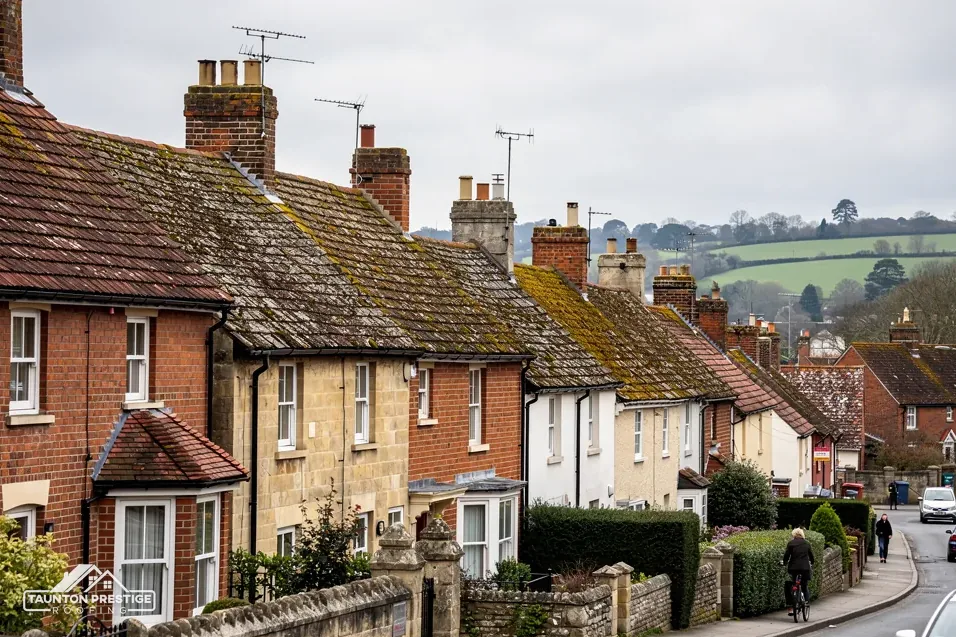
Parapets on High Street, Grade I landmarks and clay tile roofs
Glastonbury has 148 listed buildings within 900 metres of its centre, Grade I landmarks and brick parapets on High Street. We inspect the roof before any figure is given.
Both are listed Grade I, so the consent route is settled before anyone works on either roof.
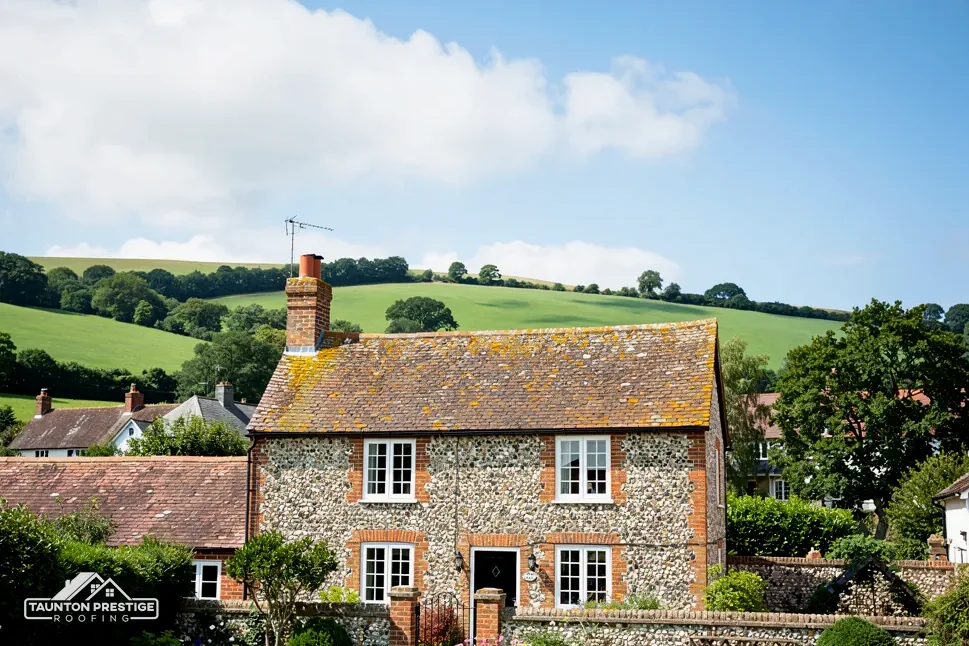
Grade I, built with an elaborate stone front in the medieval town, so its roof belongs to a protected whole.
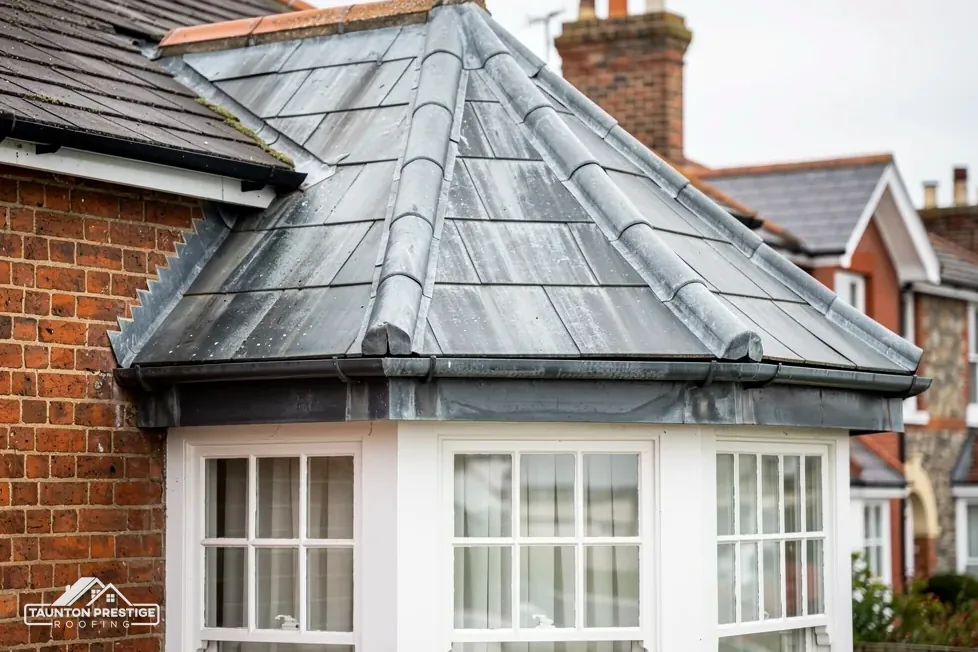
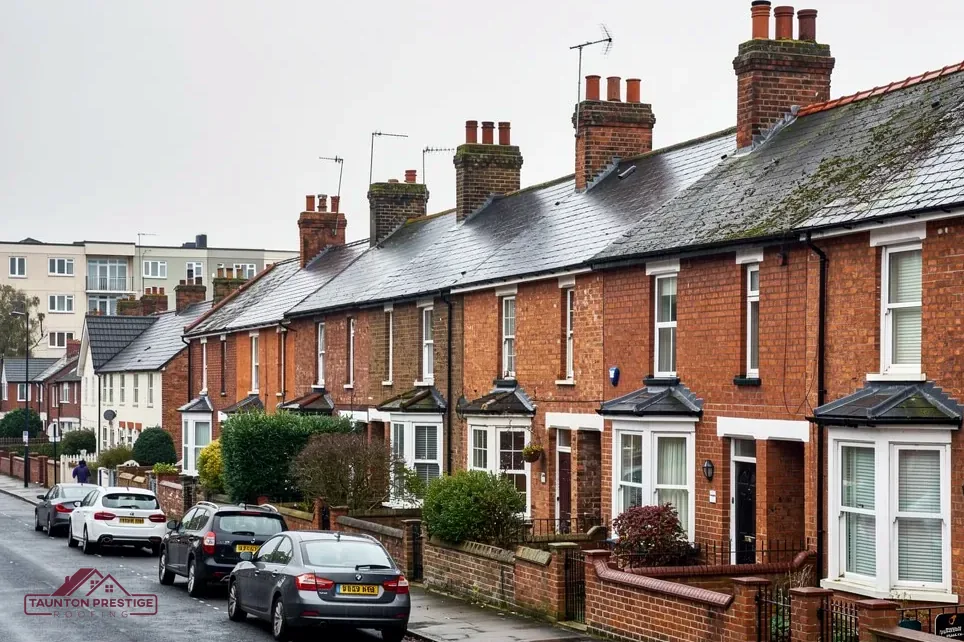
After about 1840 High Street was rebuilt in red brick to three storeys, the top floor hidden behind raised parapets.
Street map of Glastonbury with Street, Walton, Meare, Butleigh marked around it, and Taunton.
Street lies south-west of Glastonbury, with Walton beyond it and Meare to the north-west, while Butleigh and Baltonsborough lie south-east and Compton Dundon due south.
About 19 miles north-east of Taunton, Somerset Council (unitary).
Four checks beneath the Tor
Four checks for a Glastonbury building, each showing who has to agree, what the roof is made of and how the price is reached.
Glastonbury has 148 listed buildings within 900 metres of its centre, and the Abbey Tithe Barn, the Abbot's Kitchen and the George and Pilgrims Inn are all Grade I. The church of St Benedict is Grade I too. There is also a conservation area at the heart of the town. In streets like that, the first question about a roof is not what it is made of but who has to agree to touching it.
St Benedict's is an Anglican church in use, so its roof is dealt with by faculty, the Church's own permission, which the parish applies for. Other church buildings follow other routes. Methodist and Roman Catholic buildings in use have their own systems, and a chapel converted to a house needs listed building consent from Somerset Council.
A listed house still has its ordinary permitted development rights, yet listed building consent is needed as well whenever the work would change the building's special character. Shops and flats are different again, because a flat lacks the permitted development rights a house has, so the safe step is to ask Somerset Council's planning team before you plan anything beyond a matching repair. Our guide to listed building roof consent explains the application.
Our survey records every slope, valley and parapet in close photographs, and notes which parts are original and which were replaced later. If an application is needed, that record goes with it, and if one is not, the record shows what we agreed with you before the scaffold went up. No slates, tiles or lead are bought until we know which permission applies, and the customer is told in plain words what that means for the dates. On a street where neighbours share party walls and parapets, we also look at where one roof ends and the next begins, because a fault on a shared line is a conversation to have early.
Look for
After about 1840 there was considerable rebuilding on High Street in red brick to three storeys, with the top floor hidden behind raised parapets, according to the Victoria County History. A parapet is a low wall that rises above the edge of the roof. Behind it sits a parapet gutter, a lined channel that collects rainwater from the slope and carries it to a downpipe. Everything about that arrangement is clever for the street and awkward for the roof, because the channel is out of sight and out of reach.
A parapet hides the gutter from the street, and its faults from the owner.
Water finds the weakest spot in a gutter that has no overflow to the outside. A split in the lining, a seam that has opened or a blocked outlet will send it down the wall inside the building. Lead is the usual lining, and lead flashing, on MyJobQuote's figure, can see out more than 80 years, so a fault is often a poorly dressed joint or a clogged outlet and not worn-out metal. A repair that ignores the cause comes back within a season. Royston's cast-lead chart lists codes 5 to 8, which run from 2.24mm to 3.55mm thick, for parapet gutters. A lead code is the number that names a sheet's thickness, and thicker sheet suits a longer, deeper channel.
Often, yes. We open the lining, find the failed joint and fix it. When the sheet has crept, split in several places or been patched repeatedly, relaying it is the better buy. Our lead work page covers the choices, and the survey shows you the damage in photographs before you decide. Whichever you choose, ask for the outlet and the downpipe to be tested with water at the end of the job, because a lining that is perfect above a blocked outlet is still a leak waiting to happen.
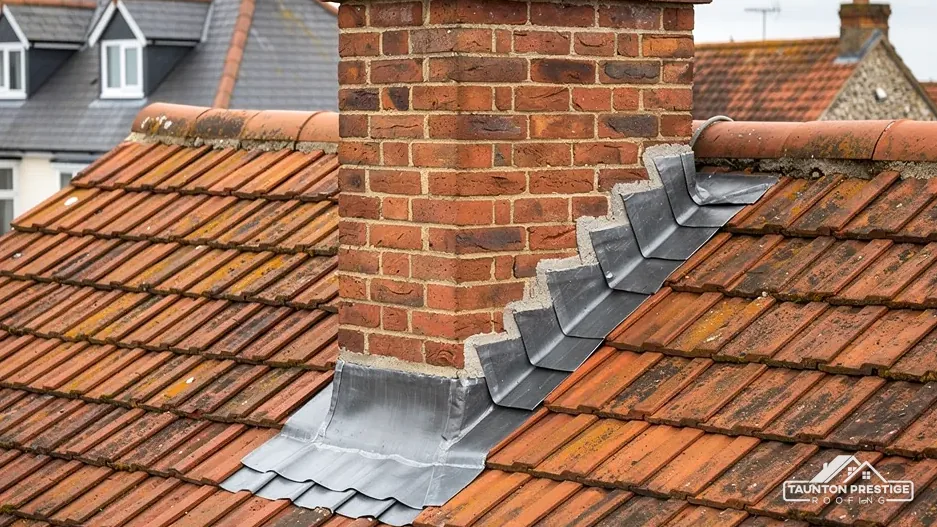
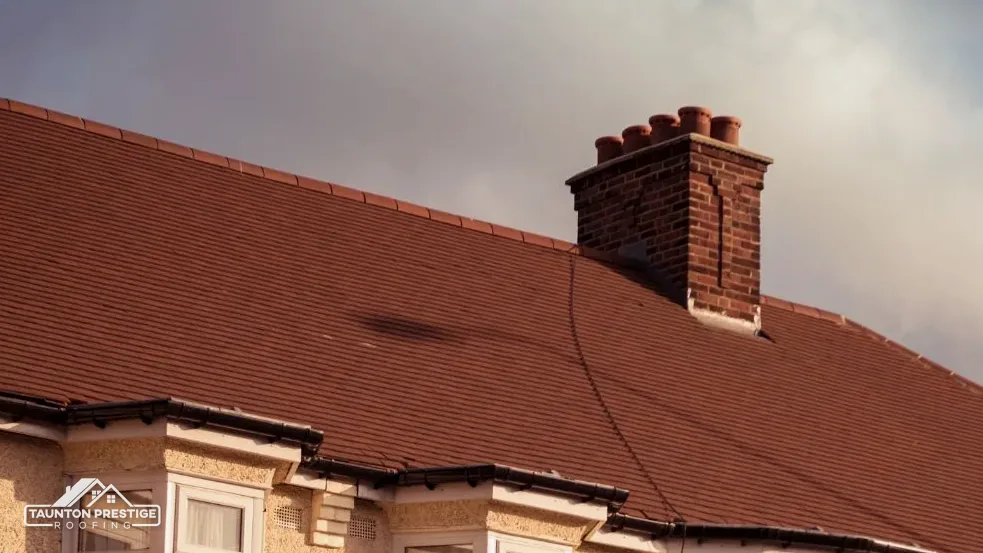
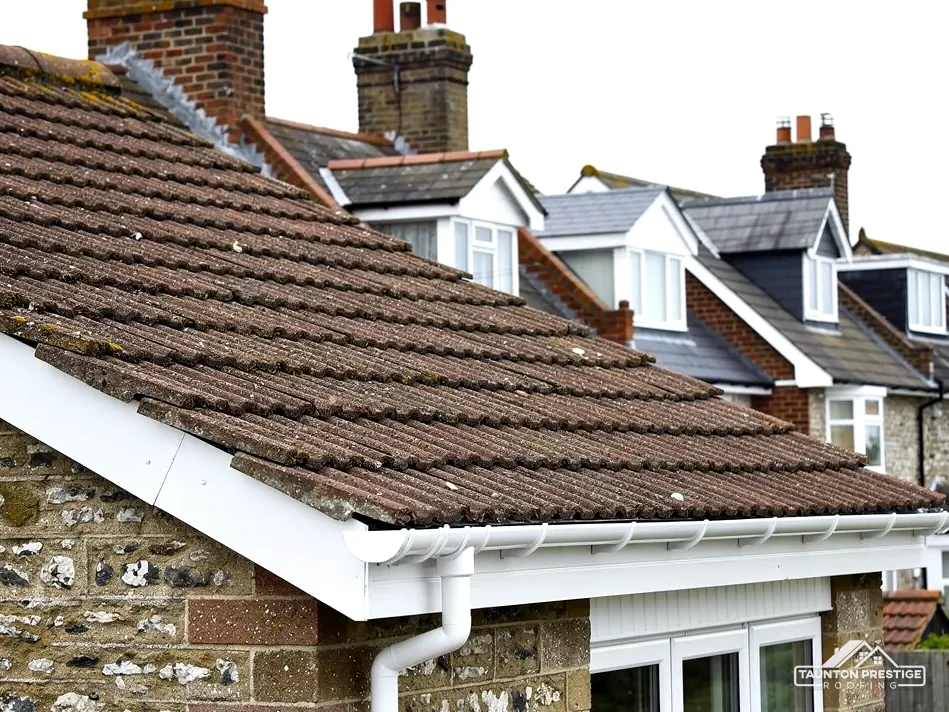
The Victoria County History records that from the mid 18th century roofs in Glastonbury were being covered with clay tiles, and that clay near the old and new Wells roads was in use for brickmaking by 1817. There were brick and tile works in Northload Street and on the new Wells road by 1851. A town with its own tile makers has a long habit of clay on its roofs, and it makes sense to keep clay where it belongs.
What decides the price
BRE gives a minimum life expectancy of 60 years for clay tiles, a figure that applies to clay only, not to concrete. For old hand-made peg tiles, conservation writers call that number an unreliable guide, because old tiles vary in firing and thickness. Some will outlast it. Others fail early. That is why we handle a few tiles from a roof in the survey, and look at the battens beneath, before offering an opinion on how much life remains. The photographs of those tiles, front and back, go in your survey pack so you can see what we saw.
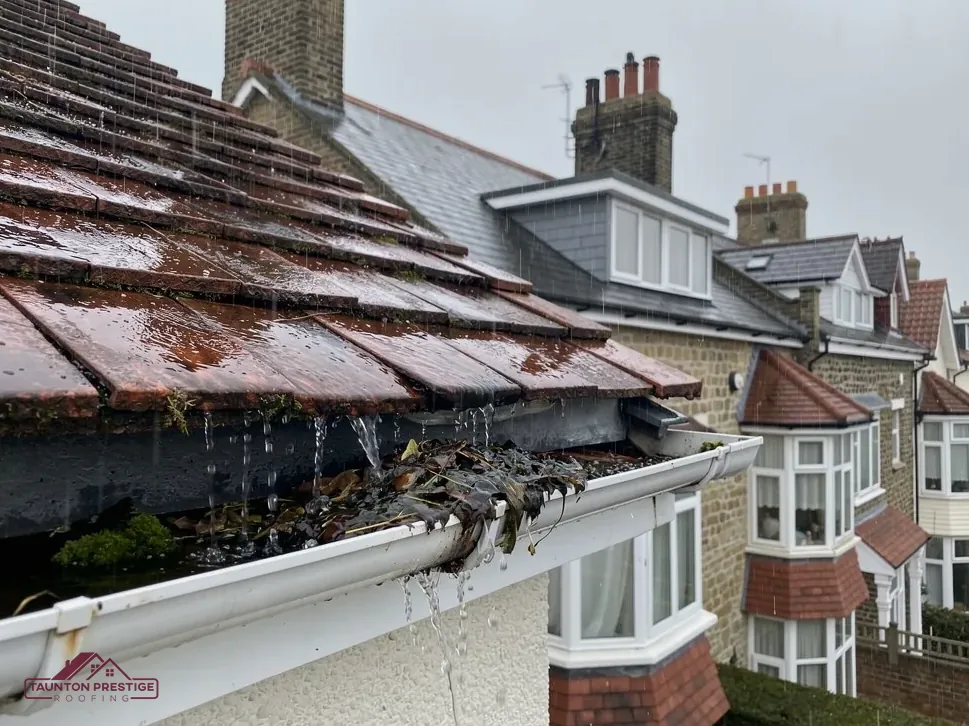
One cracked tile is a quick swap. A dozen, scattered across a slope, say the slope is ageing and the fixings with it. If the tiles are still good and only the battens and underlay have failed, the tiles can often be lifted, stacked, and relaid on fresh timber, which keeps the old clay on the roof. Our pitched roofing page sets out repair, partial relay and full replacement, and the written price follows the survey, not before it. Clay also pairs well with a mortar-bedded or clipped ridge in matching colour, so the finished slope reads as one roof rather than a patchwork of repairs. Where a few tiles have to be new, we spread them across the slope instead of grouping them.
Sound or needs work
Section 169 of the Highways Act 1980 is the law behind a scaffold licence, and it bites wherever the poles would obstruct the pavement or road. Somerset Council, the highway authority in Glastonbury, grants these permits to accredited contractors and expects the contractor on the job to apply. The charge is £124.60 for each 28-day period (April 2026), and the notice period is at least 10 working days. A scaffold inside your own yard is off the highway. A low roof at the back of a shop can sometimes be reached from a tower, and you will be told which access suits yours once the roof has been seen.
What decides the price
It might. The Planning Portal weighs a re-roof against two limits, 25 per cent of the building envelope and 50 per cent of the roof, and below both no building control application is normally needed. Covering the roof in something 15 per cent or more heavier changes that and brings in Building Regulations approval. Somerset Building Control, on 0300 303 7790, serves the old Mendip area.
Old stone and brick buildings with deep eaves and gaps behind parapets suit both. Bats and their roosts are legally protected, and anyone who intentionally damages a nest while birds are using it breaks the Wildlife and Countryside Act 1981. We look before the first tile is lifted, check the gaps behind parapets and under the eaves, and build the dates around anything we find.
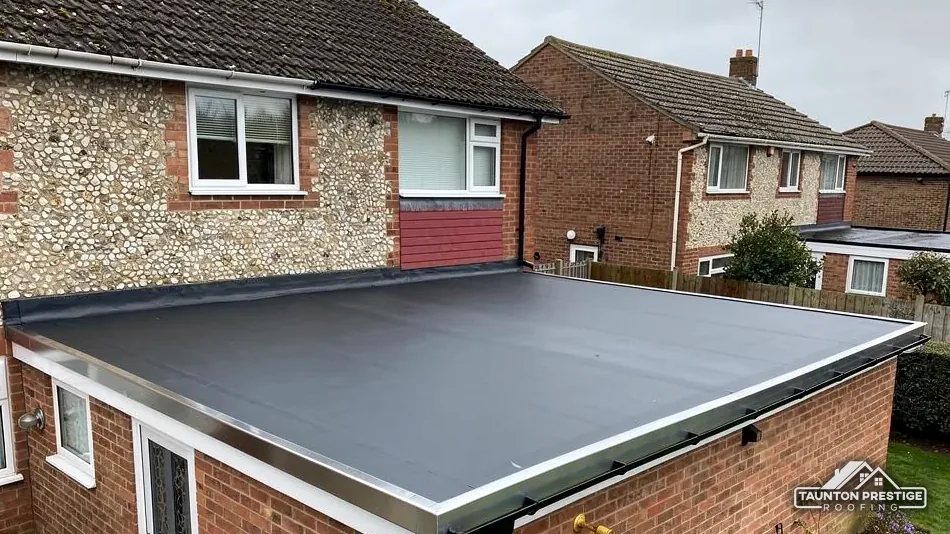
After the survey you are given close photographs of the roof and a single total in writing, saying whether scaffold and VAT are included. For your next step, send your Glastonbury address, say if the roof has a parapet or a flat section, and mention a listing if you know of one.
Walked the roof?
When you have read the checks, we walk the roof and show you the photos.
Rarely. The channel sits behind the parapet on the outside, and the fault is usually in the lining, a seam or the outlet, so the repair is on the roof. We open the lining, photograph the failure and show you the options. A local repair is often enough, but a gutter patched repeatedly is better relaid.
St Benedict's is listed Grade I and is an Anglican church in use. Roof repairs there need a faculty, a permission the Church of England grants through its own courts, with the parish as applicant. Listed building consent from Somerset Council does not apply. The roofer builds to whatever terms the faculty sets.
Often, yes. Clay has a long record on Glastonbury roofs, and sound tiles can be lifted, stacked and relaid on new battens. BRE's 60-year minimum life applies to clay tiles only, though old hand-made ones vary. We handle some of your tiles at the survey before giving an opinion on how much life they have left.
No. Permitted development rights for a house do not extend to a flat, because a flat is not a dwellinghouse in the Order's definition. If the building is listed or in the conservation area, the position is stricter again. Ask Somerset Council's planning team before planning anything beyond a like-for-like repair.
Send your Glastonbury address, say if the roof has a parapet or flat section, and we will book the survey.